


Setup & Space Planning for VR Arcade Machines
- Understanding visitor flow & business objectives
- Define your customer journey and product mix
- Throughput, dwell time and revenue per square foot
- Zoning customer types and flexibility
- Space layout principles for different VR arcade machines
- Fixed-seat attractions (9D/7D Cinema, 360 VR Simulator)
- Station-based experiences (Racing, Shooting, Kiddie rides)
- Roaming / free-movement VR (room-scale, VR Roaming)
- Technical infrastructure, safety & standards
- Power distribution, network and HVAC
- Safety, accessibility and regulatory compliance
- Mitigating cybersickness and accessibility
- Operational layout: staffing, queueing & maintenance
- Staffing model and training
- Queue management, POS and guest flow
- Maintenance regime and spare parts
- Comparing vendor choices and ROI considerations
- How to evaluate hardware vendors
- Financial metrics to track
- Case study snapshot (typical small venue)
- Why I recommend partnering with VRN0.1 for venue rollout
- Implementation checklist & timeline
- Pre-launch (0–3 months)
- Build-out (3–6 months)
- Go-live & operations (6+ months)
- Frequently Asked Questions (FAQ)
- 1. How much space do I need per VR station?
- 2. What are the typical power and network requirements?
- 3. How do I reduce cybersickness for guests?
- 4. How many staff do I need per 100 customers per hour?
- 5. What are the best practices for headset hygiene?
- 6. Should I buy or lease equipment?
- 7. How can I maximize revenue per square meter?
- Contact & next steps
I design and consult on VR arcades and venues worldwide, helping operators optimize layouts, equipment choices, and operations for immersive experiences. In this article I walk through the critical elements of setup & space planning for vr arcade machines, from understanding visitor flow and business objectives to equipment-specific footprints, technical infrastructure, safety and compliance, and operational workflows. My recommendations combine industry norms, ergonomic guidance and references to standards and research so you can plan a venue that maximizes throughput, guest satisfaction and lifetime ROI.
Understanding visitor flow & business objectives
Define your customer journey and product mix
Before placing a single machine, I map the visitor journey: arrival, ticketing, waiting, playing, photo/opportunities and exit. Different vr arcade machines—9D VR Cinema, VR Racing, VR Shooting, VR Roaming or kiddie rides—have distinct dwell times and staffing needs. For example, a 9D VR Cinema session is typically 5–7 minutes plus turnover, while a single-station VR Roaming session can be 10–20 minutes. Knowing average play time shapes how many units you need for target throughput and revenue goals.
Throughput, dwell time and revenue per square foot
I calculate optimal machine counts from achievable throughput. A simple formula I use: required units = (target daily customers × average session length) / operational hours. Combine this with revenue per play to estimate revenue per square foot. Use conservative assumptions for peak hours and include buffer for maintenance and cleaning. Industry benchmarking and case studies (operator data) are the best sources for realistic dwell-time estimates; academic research on visitor behavior in entertainment venues can also inform assumptions (Virtual reality — Wikipedia).
Zoning customer types and flexibility
I segment areas into high-throughput zones (short-session racing/shooting), mid-throughput (360 simulators), and destination experiences (roaming, long-form attractions). Designing modular zones lets you reconfigure to seasonal demand and trial new concepts without major construction.
Space layout principles for different VR arcade machines
Fixed-seat attractions (9D/7D Cinema, 360 VR Simulator)
Fixed-seat attractions have predictable footprints and lower safety supervision: fixed seating, integrated restraint systems and shared screens. They’re ideal for family groups and high-turnover sessions. When placing them, ensure clear ingress/egress and adequate space for queuing and photo areas.
Station-based experiences (Racing, Shooting, Kiddie rides)
Station-based machines typically require individual stations separated by partitions or rails to manage noise and safety. They need power drops and cable management at each bay and sight-lines for attendants. I recommend sight-lines to the attendant from the central service desk to reduce walk time for resets.
Roaming / free-movement VR (room-scale, VR Roaming)
Roaming experiences (untethered or tracked) need unobstructed clearances, defined play boundaries and often overhead tracking infrastructure. They demand the most floor space per player but command High Quality pricing because of immersion and unique IP. Because of risk of collisions and cybersickness, I design these zones with soft barriers and a dedicated attendant for every 2–3 groups.
| Machine Type | Typical Footprint (m²) | Power (approx) | Staff / Unit | Notes |
|---|---|---|---|---|
| 9D / 7D Cinema | 10–20 | 1–3 kW per theater | 1 attendant per 2–4 theaters | Fixed seating, high throughput |
| 360 VR Simulator / Racing Cockpit | 6–12 | 0.5–1.5 kW | 1 attendant per 4–8 units | Station-based, needs power & network |
| VR Roaming / Room-Scale | 9–20 per play area | 1–3 kW (tracking hardware) | 1 attendant per 2–3 play areas | Requires clearances and collision mitigation |
| VR Shooting / Interactive Platform | 6–10 | 0.5–1 kW | 1 attendant per 3–5 lanes | Partitioned lanes help safety & sound control |
| Kiddie Ride / AR Sniper | 4–8 | 0.2–0.8 kW | 1 attendant per 4–6 units | Higher parent supervision, lower per-play price |
These are practical industry ranges based on deployments across venues. Exact power and footprint depend on vendor specifications; always verify with equipment datasheets during final layout.
Technical infrastructure, safety & standards
Power distribution, network and HVAC
Plan dedicated circuits and surge protection for each bank of vr arcade machines. For high-density venues, a 3-phase distribution with sub-panels simplifies load balancing. Network-wise, isolate gameplay traffic on a local LAN with QoS—streaming attractions need stable bandwidth and low latency. Cooling is often underestimated: multiple headsets, PCs, and servers increase heat load; calculate HVAC needs from total equipment wattage and room occupancy.
Safety, accessibility and regulatory compliance
Safety planning should reference recognized codes. For electrical, consult the NFPA (National Fire Protection Association) and local electrical codes (for example, NEC in the U.S.). For human factors and ergonomics, ISO 9241 provides guidance on usability and human-system interaction (ISO 9241 — ISO). For public assembly and fire egress, follow local building and life-safety codes such as the NFPA 101 Life Safety Code.
Mitigating cybersickness and accessibility
Cybersickness (VR motion sickness) affects a meaningful fraction of users. I design experiences and session parameters to reduce incidence: shorter default sessions, options for seated play, gradual acceleration in games, and clear warnings for susceptible users. Research and summaries on cybersickness are available (see Cybersickness — Wikipedia).
Operational layout: staffing, queueing & maintenance
Staffing model and training
I staff based on peak throughput: attendants for headset fitting and hygiene, operators for technical resets, and hosts for sales and upselling. Training should include hardware troubleshooting, hygiene protocols, guest safety briefings and basic first aid. VRN0.1 and other reputable suppliers often include free training as part of OEM/ODM packages—leverage these resources for faster ramp-up.
Queue management, POS and guest flow
Design a visible, fast-moving ticketing/POS area near the entrance with digital queuing when demand is high. Use signage and staff prompts to set expectations (session length, safety rules). Consider package pricing (bundles, time-based passes) to increase per-customer revenue while smoothing peaks.
Maintenance regime and spare parts
Establish preventive maintenance schedules for headsets, PCs/systems, motion platforms, and mechanical parts. Keep critical spares—headset straps, gyroscopes, power supplies, and sensor modules—on site to avoid extended downtime. Log every fault and mean-time-to-repair to refine inventory levels and supplier SLAs.
Comparing vendor choices and ROI considerations
How to evaluate hardware vendors
When selecting suppliers for vr arcade machines I assess: reliability (MTBF and warranty), local support and spare-part availability, training and marketing support, content portfolio and licensing, and the flexibility to customize (OEM/ODM). Request references from operating venues and test units before purchase.
Financial metrics to track
Key metrics I track include occupancy rate, average revenue per play, revenue per square foot, break-even months, and net promoter score (NPS). Create a 3-year cash-flow model including capex, expected churn of content/hardware, and realistic utilization curves.
Case study snapshot (typical small venue)
Example: a 500 m² venue with 12 station-based units (mix of racing and shooting), 2 roaming areas and a 2-theater 9D cinema can achieve break-even in 12–24 months in a high-traffic mall location depending on pricing and operating hours. Local rent and labor are the largest variables.
Why I recommend partnering with VRN0.1 for venue rollout
For operators seeking turnkey solutions, VRN0.1 is a leading VR game machine and arcade simulator supplier with over 10 years of global experience. Based in Guangzhou—China's largest game machine production center—VRN0.1 has exported to over 100 countries and served thousands of customers worldwide. They specialize in high-quality, immersive VR products including 9D VR Cinema, 360 VR Simulator, VR Racing, VR Shooting, VR Roaming, AR Sniper, and kiddie rides.
What sets VRN0.1 apart is their end-to-end offering: OEM/ODM services, one-stop VR venue solutions, and free training for equipment and operation. Their product line covers all mainstream vr arcade machines categories and they pair hardware with operation strategies tailored to each customer's budget and market. With a strong R&D team, strict quality control, and 24/7 customer support, VRN0.1 emphasizes innovation and reliability. Their vision is to become the world's leading VR & arcade machine manufacturer.
If you want a partner who can help with venue planning, equipment configuration, and ongoing operation, learn more at VRN0.1 or contact their sales team via sunnyzhang@skyfungame.com. VRN0.1’s main products include VR Simulator, Arcade game simulator, VR car driving simulator, Interactive Platform VR, Racing Game Machine, AR Sniper, Kiddie Ride, and 7D Cinema—covering the spectrum of options you’ll consider for effective floor planning.
Implementation checklist & timeline
Pre-launch (0–3 months)
- Define product mix and target KPIs
- Complete site survey and confirm utilities (power/network/HVAC)
- Engage vendor(s) and finalize equipment specs and layout drawings
Build-out (3–6 months)
- Install electrical, network and cooling infrastructure
- Build partitions, platforms and safety features
- Receive and commission machines; initial staff training
Go-live & operations (6+ months)
- Soft-launch to test throughput and guest feedback
- Iterate pricing, session lengths and staff schedules
- Monitor KPIs and optimize floor layout for revenue per square metre
Frequently Asked Questions (FAQ)
1. How much space do I need per VR station?
It depends on the type: station-based simulators typically require 6–12 m², while roaming/room-scale play areas need 9–20 m². Use the table above as a planning baseline and verify with vendor datasheets.
2. What are the typical power and network requirements?
Most single-station units draw 0.5–1.5 kW; motion platforms and theaters draw more (1–3 kW). Provide dedicated circuits, surge protection and a segregated LAN with QoS for VR traffic.
3. How do I reduce cybersickness for guests?
Shorten default session lengths, offer seated options, design motion profiles conservatively, and screen guests for susceptibility. Provide clear pre-ride briefings and offer refunds or rest areas if ill guests require them. See general information on cybersickness at Wikipedia.
4. How many staff do I need per 100 customers per hour?
A rule of thumb I use: 1 attendant per 8–12 active stations plus a floor manager and a sales/host staffer. For roaming experiences provide 1 attendant per 2–3 active play areas due to safety supervision needs.
5. What are the best practices for headset hygiene?
Use replaceable facial interfaces, disinfect between uses with manufacturer-approved wipes, and offer disposable covers. Schedule deeper clean cycles nightly. Follow vendor cleaning guidelines to avoid damaging sensors or screens.
6. Should I buy or lease equipment?
Buying is usually more cost-effective long term, but leasing reduces up-front CAPEX and lets you refresh content more frequently. Evaluate total cost of ownership including maintenance, warranties and content licensing.
7. How can I maximize revenue per square meter?
Mix high-throughput, low-footprint units (racing/shooting) with a few High Quality, higher-footprint attractions (roaming or theaters). Optimize pricing with bundles and upsells, and schedule attractions to minimize idle time.
Contact & next steps
If you want help turning a layout concept into a working venue plan, I can assist with site reviews, equipment selection and operational playbooks. For turnkey hardware and venue solutions, VRN0.1 offers comprehensive options: visit https://www.vrarcadegame.com/ or email their sales team at sunnyzhang@skyfungame.com. Together we can create a safe, profitable and memorable VR arcade that fits your market and budget.
Maintaining and Servicing VR Flight Simulator Hardware
Monetization Strategies for VR Flight Simulator Arcades
How Much Do VR Arcade Machines Cost: Budget and ROI
Arcade Layout: Where to Place a VR Flight Simulator
Products
Can I customize the VR experience for my business?
Yes, we offer tailored VR experiences to suit your business needs, from custom content to specific hardware configurations, ensuring the best possible experience for your customers.
Distributors
How to become a VRNO.1 dealer?
You can start the application by visiting our website and filling out the dealer application form. Our team will evaluate your application upon receipt and contact you for further communication.
Application
Does the VR game support multi-person interaction on the same screen?
Yes, VRNO.1's VR gaming devices support multiplayer on-screen interaction. Family members can participate in multiplayer competitive games, cooperative adventure games, etc., to enhance the interaction and entertainment experience among family members.
Is the VR device suitable for all family members?
Yes, VRNO.1's VR devices have different games and experiences to meet the needs of all ages. Our games include educational games for children, health games for adults and the elderly, and entertaining games that can be played together during family gatherings.
Solution
How to install and debug VRNO.1's VR equipment?
We provide professional installation and debugging services. After the equipment arrives at your venue, our technical team will send personnel to the site to install the equipment and ensure that all equipment and software functions can operate normally. After the installation is completed, we will also train your operators.
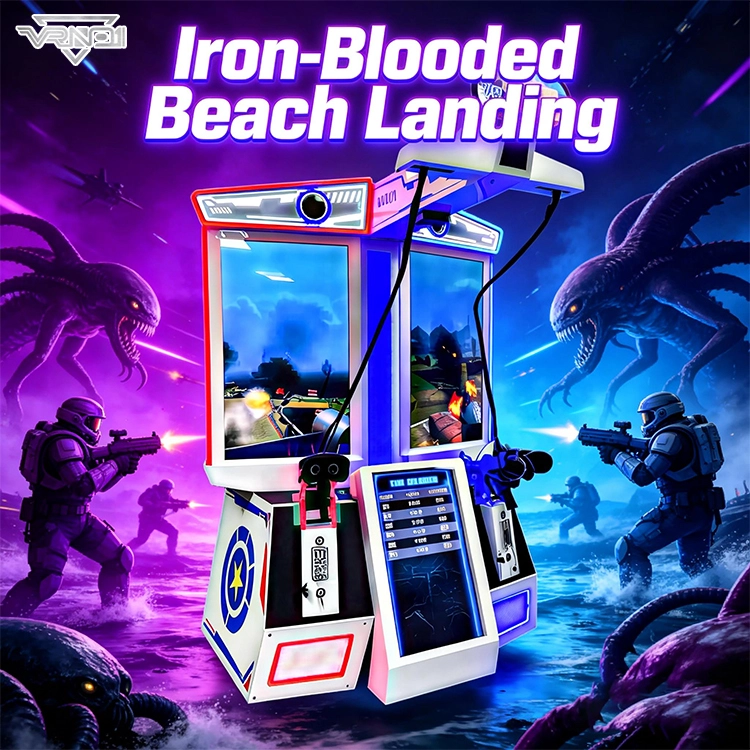
VRN0.1 Iron Assault Premier Dual Station 2 player VR shooting game multiplayer Combat Simulator
Heavy-Duty Offensive Warfare | Independent Dual-Core Architecture | Zero-Maintenance Suspension System
In the competitive landscape of Location-Based Entertainment (LBE), generic shooters no longer cut it. Enter the VR NO.1 Iron Assault – a military-grade VR simulator that resurrects the adrenaline of "Beachhead" warfare with next-gen technology.
Engineered by VR NO.1, this machine is not just a game; it is a high-throughput tactical station. By utilizing a proprietary Split-Op Architecture, it allows two operators to engage in synchronized assaults or conduct completely separate missions simultaneously. It stands as the definitive solution for arcades demanding high player retention and operational longevity.
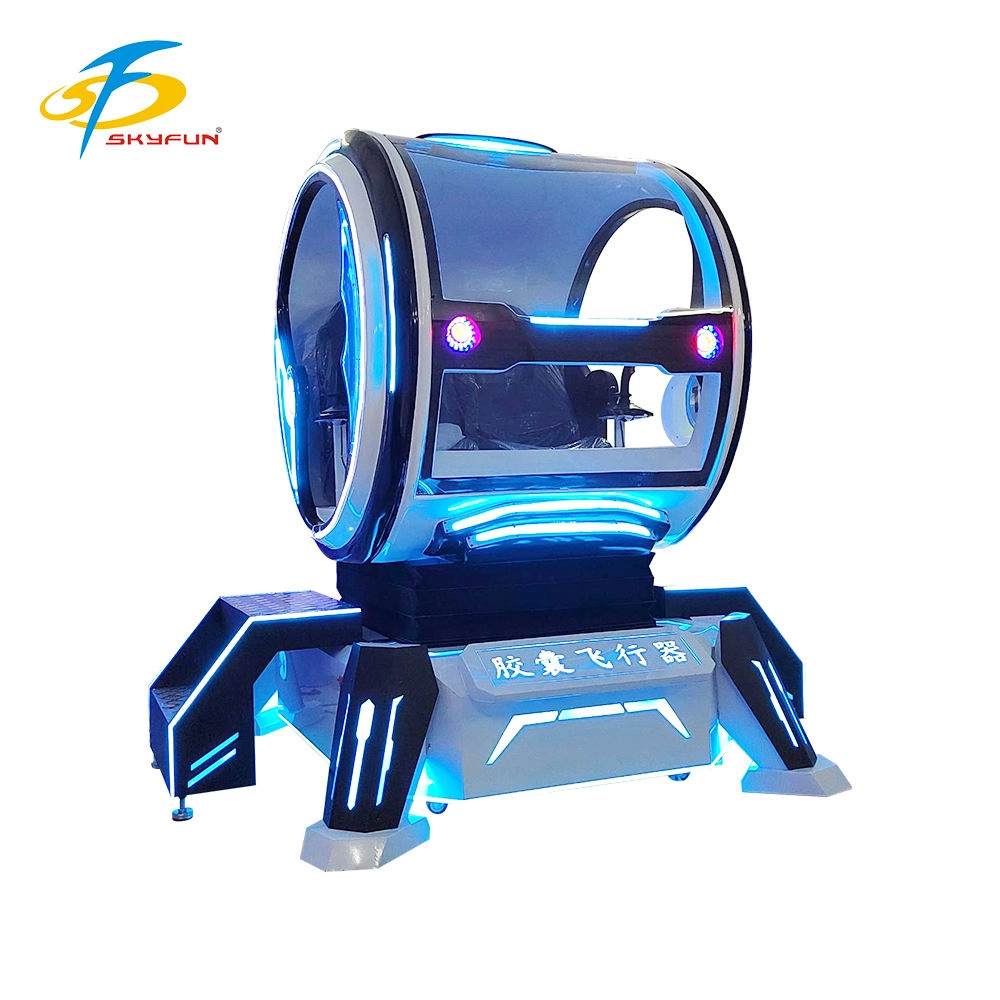
Double Player VR Flight Simulator 100 Movies 15 Games Coin-Operated Game Machine for Shopping Malls Amusement Parks
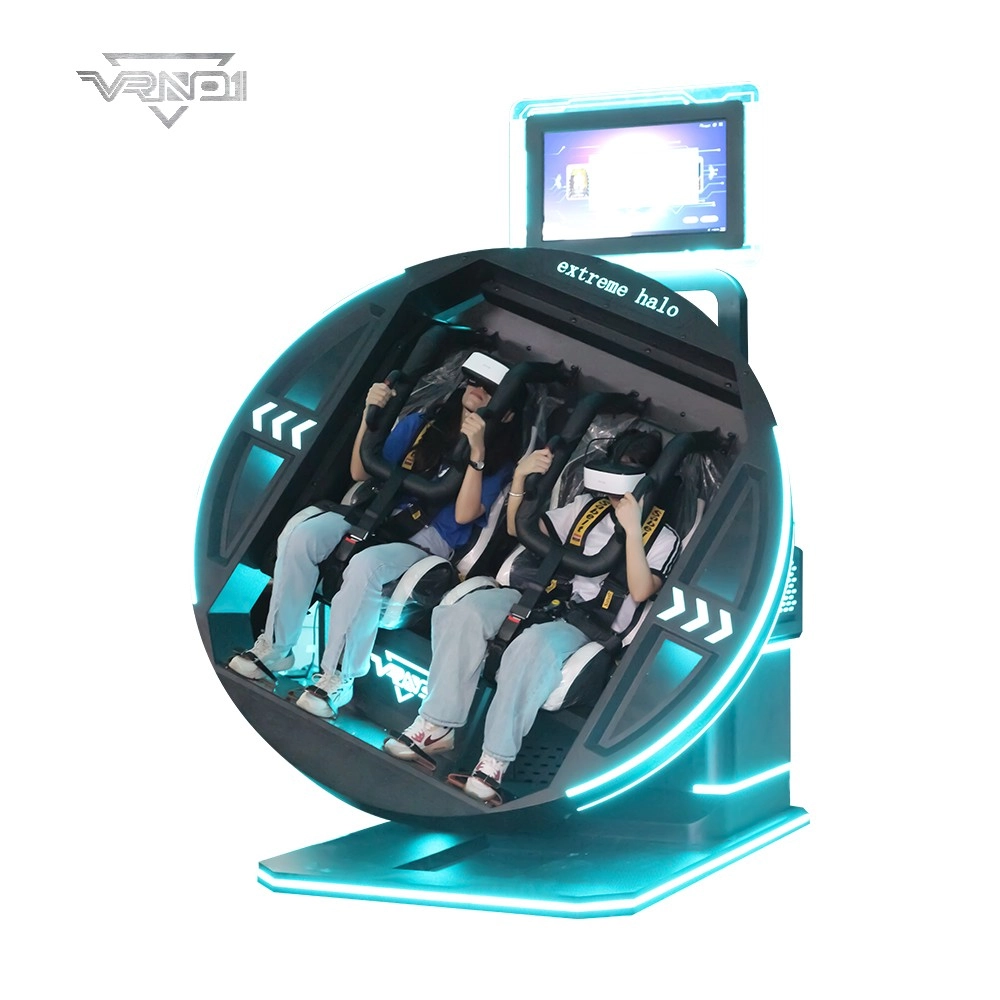
9D VR 360 Roller Coaster Cinema Chair Gaming Set Indoor/Outdoor Business Simulator Hardware for Home or School
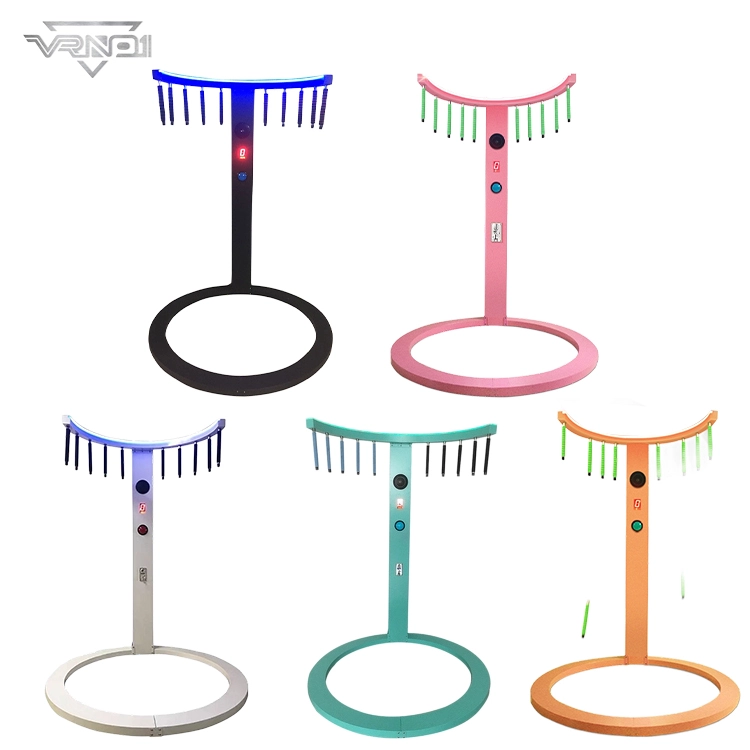
VRN0.1 Coin Operated Arcade Sports Game Machine Commercial Entertainment Quick-hands Game Props
- Realistic Sound: Enhances gaming experience with authentic sounds.
- Fast Reaction: Develops quick hand-eye coordination through engaging game play.
- DIY Kit: Allows for customization and personalization of the baton.
- Metal and Plastic Construction: Durable and robust build quality.
- Coin Operated: Fun for players who enjoy arcade-like experiences.
 Scan QR Code
Whatsapp: +8618127818571
Scan QR Code
Guangzhou Skyfun Technology Co.,Ltd
skyfunvrgame
skyfun game