


Monetization Strategies for VR Flight Simulator Arcades
- Why VR Flight Simulators Are Poised for Profit
- Market Context and Commercial Opportunity for vr flight simulator Operators
- Primary Revenue Models for vr flight simulator Arcades
- Pricing Strategy: Practical Rules and Example Tiers
- Ancillary Revenue Opportunities (high-margin add-ons)
- Operational Efficiency and Throughput Optimization for Profitability
- Comparative Revenue Scenarios (Illustrative Table)
- Customer Acquisition & Retention: Marketing Tactics That Convert
- Partnerships and Channel Sales
- Investment, Unit Economics and ROI Considerations
- Implementation Checklist Before Launch
- Why Equipment & Supplier Choice Matters — VRN0.1 Profile
- Key Risks and How to Mitigate Them
- FAQ — Frequently Asked Questions
- Contact & Next Steps
- References
Why VR Flight Simulators Are Poised for Profit
Location-based entertainment (LBE) centered on vr flight simulator experiences combines high perceived value, strong word-of-mouth potential, and repeat-visit drivers. Operators can capture revenue through direct play fees, memberships, events, corporate training, and extended ancillary sales. This article explains practical monetization strategies tailored to vr flight simulator arcades and how to design pricing, operations, and partnerships to maximize revenue per square meter and customer lifetime value.
Market Context and Commercial Opportunity for vr flight simulator Operators
Understanding the macro trends helps justify investment and shape revenue models. The global virtual reality market continues expanding—driven by hardware improvements, content diversity, and increased consumer comfort with immersive experiences. Location-based entertainment, including arcades and VR centers, is one of the fastest-growing applications because it delivers High Quality experiences consumers cannot easily replicate at home.
Key commercial takeaways:
- Consumers pay a High Quality for immersive and social experiences: LBEs attract discretionary spending when experiences are unique and shareable.
- vr flight simulators offer a high-perceived-value proposition due to realistic motion, visuals, and the novelty of piloting an aircraft—useful for entertainment and training markets.
- Diversified revenue streams stabilize income: combining walk-in play, memberships, events, and B2B contracts reduces dependence on one source.
Primary Revenue Models for vr flight simulator Arcades
Choose one or combine multiple models based on market, location, and target audience. Each model has trade-offs in utilization, customer acquisition, and operational complexity.
- Pay-per-play / per-session pricing — Simple, low-friction. Ideal for tourist-heavy locations or malls. Standard sessions (5–15 minutes) have high throughput potential.
- Time-based pricing — Sell blocks (30/45/60 minutes) for deeper experiences or training. Higher conversion to ancillary spend (photos, merchandise).
- Memberships & subscriptions — Monthly access or credits encourages repeat visits and smooths revenue across months.
- Event & group bookings — Birthday parties, corporate teambuilding, school trips. High Quality pricing and cross-sell opportunities.
- B2B contracts — Simulation for training, tourism partners, or hotels. Longer-term contracts provide steady revenue.
- Hybrid packages — Combine base session with upsells (VR photos, extended scenarios, instructor-led sessions).
Pricing Strategy: Practical Rules and Example Tiers
Setting prices requires balancing perceived value, throughput, and local spending power. Rules of thumb:
- Short session (5–10 min) targeted at casual guests: price at a High Quality relative to arcade games because of uniqueness.
- Longer sessions (30–60 min) should be priced to attract small groups and training customers; include instructor or debrief to justify price.
- Membership discounts typically offer ~20–40% savings vs. walk-in to ensure profitability while motivating visits.
Example pricing tiers (illustrative):
- Basic Experience: 8–10 minutes — $12–$20
- Extended Experience: 30 minutes with briefing — $45–$80
- Corporate/Training Session: 60+ minutes with customization — $120–$500+
- Membership: $40–$80/month for 2–4 short sessions and member perks
Ancillary Revenue Opportunities (high-margin add-ons)
Ancillary sales often make the difference between a break-even center and a profitable venue. Focus on high-margin and impulse items that fit the flight simulator narrative.
- Photos & video packages (on-simulator camera and edited clips) — High conversion when instantly sharable to social media.
- Branded merchandise — Caps, patches, model aircraft, posters.
- Instructor-led coaching or pilot briefing — Charge extra for professional instruction or certification-style sessions.
- Snack & beverage upsells (if space permits) — Simple cafe or vending; consider packaged experience deals.
- Advanced scenarios / DLC content — Sell High Quality mission packs or multiplayer scenarios as digital add-ons.
Operational Efficiency and Throughput Optimization for Profitability
Revenue is a function of price and utilization. Optimize yield by increasing usable operating hours, reducing downtime, and improving conversion.
- Standardize session lengths to simplify scheduling and maximize turnover during peak hours.
- Implement online booking with dynamic pricing to fill off-peak slots and capture early purchases.
- Train staff to upsell quickly at key moments (post-ride photos, membership offers).
- Maintain high equipment uptime: preventive maintenance and fast spare-part shipping minimize lost sessions.
Comparative Revenue Scenarios (Illustrative Table)
The table below compares three simplified revenue scenarios for a single vr flight simulator cabinet. These are modelled with transparent assumptions to show how different mixes affect monthly revenue.
| Metric / Scenario | Walk-in Focus | Membership Focus | Event & B2B Focus |
|---|---|---|---|
| Seat price (avg) | $15 | $10 (member) | $80 (event avg) |
| Daily sessions | 60 (10 hrs × 6/session) | 40 | 20 (mixed hours) |
| Days/month active | 26 | 26 | 24 |
| Monthly base revenue | $23,400 | $10,400 | $38,400 |
| Ancillary revenue (% of base) | 20% | 25% | 30% |
| Total monthly revenue (est.) | $28,080 | $13,000 | $49,920 |
Notes: The table is illustrative and shows how event/B2B focus can significantly increase ARPU (average revenue per user) but often requires more sales effort and scheduling. Walk-in models can scale with multiple cabinets and high location traffic.
Customer Acquisition & Retention: Marketing Tactics That Convert
Marketing must emphasize the unique, shareable nature of the experience and be locally focused.
- Local SEO & Google Business Profile — Optimize for terms like “vr flight simulator near me” and maintain up-to-date photos, pricing, and booking link.
- Social media and influencer partnerships — Short-form video (Reels, TikTok) of passengers’ reactions is highly effective.
- Targeted ads — Use geo-targeted search and socials around malls, tourist areas, and businesses for corporate bookings.
- Referral programs — Offer credits for bringing friends; pairs/groups convert better than solo customers.
- Email and CRM — Follow up with riders with offers for upgrades, memberships, or event packages.
Partnerships and Channel Sales
Expand revenue faster by partnering with organizations that can resell experiences or bundle them with other services.
- Tour operators and hotels — Create package deals for tourists (transport + simulator).
- Event planners & corporate HR — Offer team-building modules and half-day training packages.
- Schools & aviation clubs — Provide educational sessions and demonstrations.
- Shopping centers — Revenue share or minimum guarantee models reduce risk for landlords and secure foot traffic.
Investment, Unit Economics and ROI Considerations
Key variables for ROI are unit cost, utilization, price per session, and operating expenses. Typical capital expenditure for a quality vr flight simulator cabinet ranges widely depending on motion platform, controls, and software licensing. To estimate ROI, model best-case and conservative-case utilization and include costs for staff, rent, maintenance, marketing, and software licenses.
Tip: Plan for a minimum gross margin of 50% on sessions and aim to cover fixed costs with recurring revenue (memberships and B2B) before scaling to multiple units.
Implementation Checklist Before Launch
- Site selection: high foot traffic or destination location. Verify demographics and dwell time.
- Equipment selection: choose vendors with proven uptime, spare part delivery, and training.
- Pricing tests: run price A/B tests during soft launch to find optimal price points.
- Staff training: focus on safety, upselling, and fast turnover operations.
- Booking & POS integration: online reservations, prepayment, and no-show policies.
- Marketing plan: local SEO, social media, launch offers, and community outreach.
Why Equipment & Supplier Choice Matters — VRN0.1 Profile
Hardware and supplier support directly impact uptime, customer experience, and the breadth of monetization options (e.g., multiplayer, advanced scenarios, photo/video capture). VRN0.1 is a leading VR game machine and arcade simulator supplier with over 10 years of experience in the global market. Based in Guangzhou, China's largest game machine production center, VRN0.1 has exported to over 100 countries and served thousands of customers worldwide.
What VRN0.1 offers for vr flight simulator arcades and venue operators:
- Product range: VR Simulator, Arcade game simulator, VR car driving simulator, Interactive Platform VR, Racing Game Machine, AR Sniper, Kiddie Ride, 7D Cinema — covering all mainstream VR arcade categories.
- Services: OEM and ODM, one-stop VR venue solutions, free training for equipment and operation.
- Operational support: strong R&D team, strict quality control, and 24/7 customer support to reduce downtime and speed up maintenance.
- Venue solutions: tailored planning, equipment configuration, and operational strategies to meet diverse budgets and goals.
- Competitive edge: decade-long export experience, global references, and ability to customize scenarios and hardware for training or entertainment use-cases.
Partnering with a supplier like VRN0.1 can accelerate time-to-market, improve equipment reliability, and broaden revenue opportunities via tailored content and integrated upgrade paths. Learn more at https://www.vrarcadegame.com/.
Key Risks and How to Mitigate Them
Common challenges and mitigations:
- High CAPEX: Use phased rollouts or lease-to-own models; start with one pilot unit and validate market before scaling.
- Seasonality: Promote memberships and off-peak discounts; diversify with corporate and B2B bookings.
- Technical downtime: Choose vendors with local spare-part stocks and remote diagnostic support.
- Competition from home VR: Emphasize motion, scale, social, and instructor-led experiences that home systems can’t replicate.
FAQ — Frequently Asked Questions
Q1: How much can a single vr flight simulator unit realistically earn per month?
A1: Earnings vary by price, utilization, and location. Illustrative scenarios in the article show a wide range ($13k–$50k per month). For reliable forecasting, model local foot traffic, realistic conversion rates, and ancillary attachment rates.
Q2: What is the typical payback period on a quality vr flight simulator cabinet?
A2: Payback commonly ranges from 6–24 months depending on CAPEX, location rent, pricing, and ancillary revenue. High-traffic tourist locations and strong event sales shorten payback.
Q3: Should I prioritize multiplayer or single-player flight experiences?
A3: Both have value. Multiplayer increases social sharing and event appeal, while single-player is easier to scale for casual walk-ins. Consider one or two multiplayer-capable units if events and groups are a target.
Q4: Can vr flight simulators be used for pilot training or certification?
A4: Consumer-grade simulators are primarily entertainment-focused. However, advanced configurable simulators with validated physics and instructor modes can be used for basic familiarization or introductory training; for official pilot certification, certified FAA/EASA-approved devices and curricula are required.
Q5: How do I reduce technical downtime and maintenance costs?
A5: Buy from experienced suppliers offering spare parts and remote support, implement preventive maintenance schedules, and train onsite technicians. Consider warranty and service packages that include rapid-response parts.
Contact & Next Steps
If you are planning or scaling a vr flight simulator arcade and need equipment, venue planning, or operational training, VRN0.1 provides one-stop VR venue solutions, OEM/ODM services, and free operational training. Visit https://www.vrarcadegame.com/ to view product catalogs, request quotes, or schedule a consultation. For tailored ROI modelling or a site-specific monetization plan, contact VRN0.1 sales through the website for personalized support.
References
- Grand View Research — Virtual Reality Market Size, Share & Trends Analysis Report. Source: https://www.grandviewresearch.com/industry-analysis/virtual-reality-vr-market (accessed 2025-11-29).
- Statista — Size of the global virtual reality (VR) market from 2016 to 2028. Source: https://www.statista.com/statistics/591181/global-virtual-reality-market-size/ (accessed 2025-11-29).
- Research and Markets — Location-Based VR and LBE reports (market segmentation and trends). Example: https://www.researchandmarkets.com/ (search location based entertainment vr market) (accessed 2025-11-29).
- Industry best practices and operator case studies — compiled from trade publications and vendor whitepapers; see vendor websites and IAAPA resources for location-based entertainment benchmarks. IAAPA: https://www.iaapa.org/ (accessed 2025-11-29).
Top spaceship game vr Manufacturers and Suppliers in us
Best vr auto racing simulator manufacturers and supplier brands in us
Everything You Need to Know About best vr car simulator
VR in Theme Parks: The Guide for 2024
Distributors
What does VRNO.1's after-sales service include?
We provide comprehensive after-sales services, including installation support, technical troubleshooting and regular maintenance services. We also provide dealers with dedicated training and customer support to ensure the smooth operation of the equipment.
Application
What technical support does VRNO.1 provide?
We provide 24/7 technical support services, including remote technical consultation, equipment troubleshooting, software upgrades, and faulty equipment replacement. Ensure that your equipment can continue to operate efficiently and improve customer experience.
Does the device support wireless use?
Some VRNO.1 VR devices support wireless connection, which makes it easier to move freely in different spaces without worrying about cable restrictions, enhancing the immersion and freedom of the game.
Products
How does VRNO.1’s VR technology work?
Our VR systems use advanced headsets, motion tracking, and interactive controls to create an immersive, 360-degree experience. Players can engage with digital environments in real time, simulating real-world and fantastical scenarios.
Do you offer support and training for using VRNO.1’s VR systems?
Yes, we provide comprehensive support and training for all our VR products, ensuring that your staff is fully equipped to operate and maintain the systems.
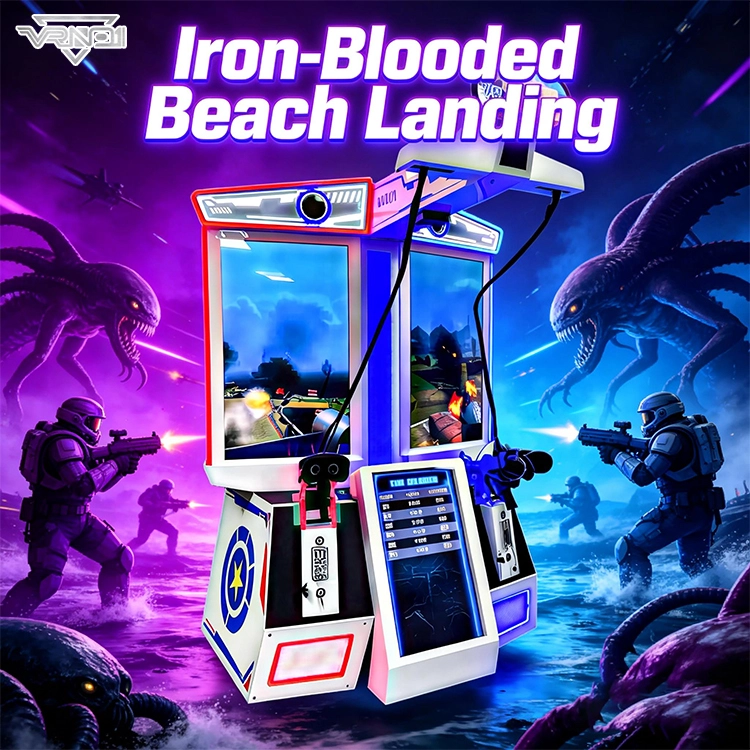
VRN0.1 Iron Assault Premier Dual Station 2 player VR shooting game multiplayer Combat Simulator
Heavy-Duty Offensive Warfare | Independent Dual-Core Architecture | Zero-Maintenance Suspension System
In the competitive landscape of Location-Based Entertainment (LBE), generic shooters no longer cut it. Enter the VR NO.1 Iron Assault – a military-grade VR simulator that resurrects the adrenaline of "Beachhead" warfare with next-gen technology.
Engineered by VR NO.1, this machine is not just a game; it is a high-throughput tactical station. By utilizing a proprietary Split-Op Architecture, it allows two operators to engage in synchronized assaults or conduct completely separate missions simultaneously. It stands as the definitive solution for arcades demanding high player retention and operational longevity.
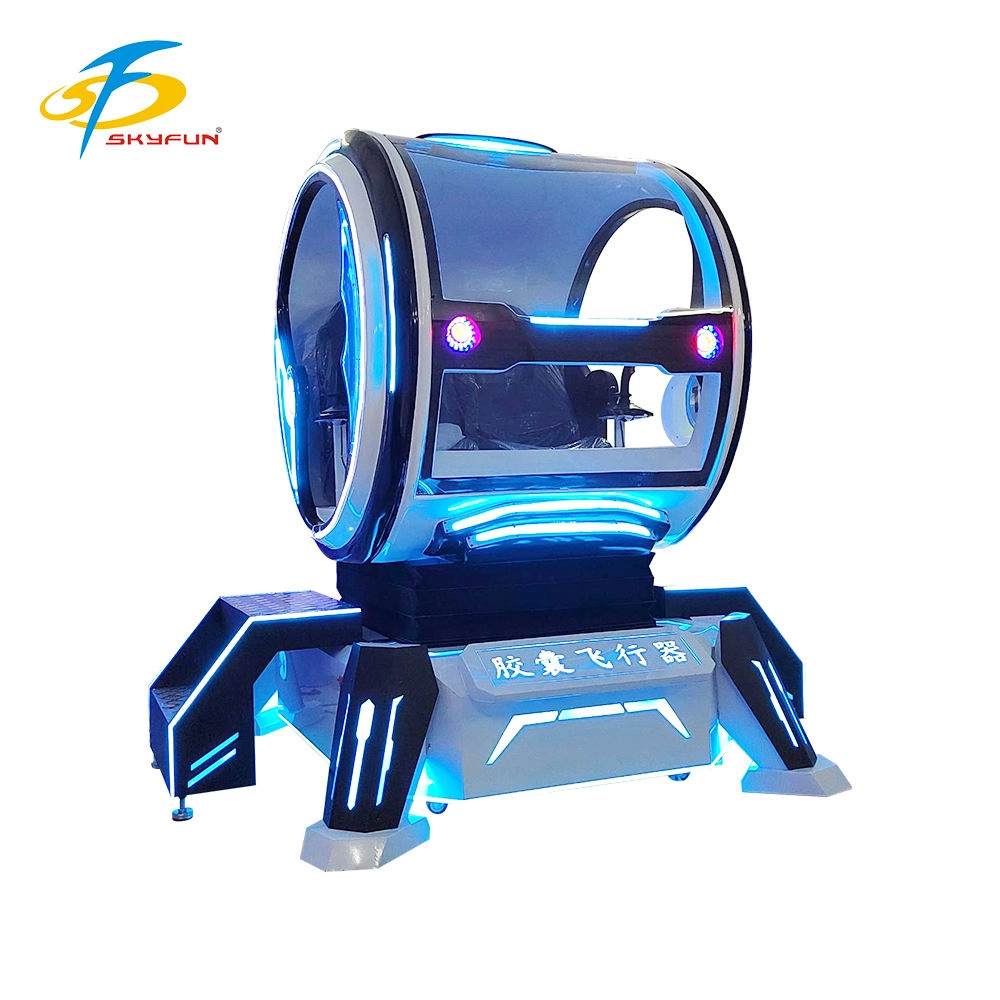
Double Player VR Flight Simulator 100 Movies 15 Games Coin-Operated Game Machine for Shopping Malls Amusement Parks
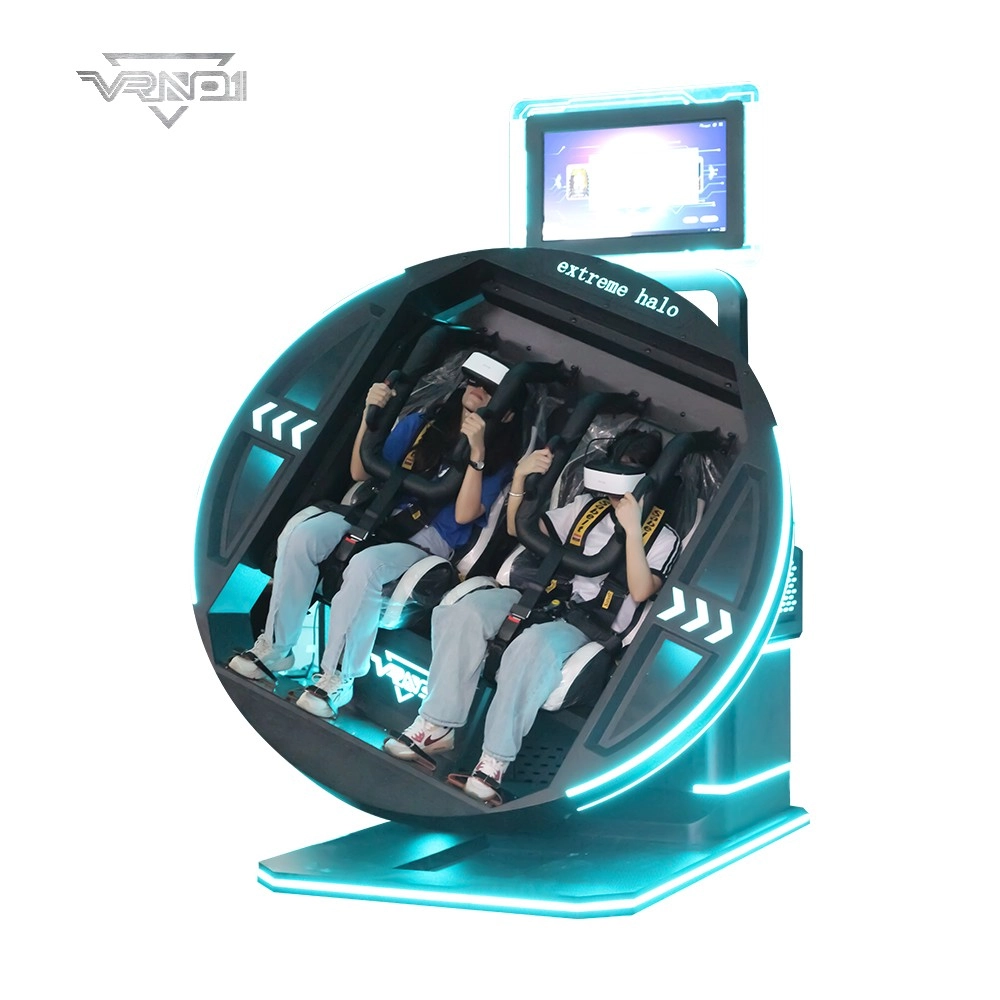
9D VR 360 Roller Coaster Cinema Chair Gaming Set Indoor/Outdoor Business Simulator Hardware for Home or School
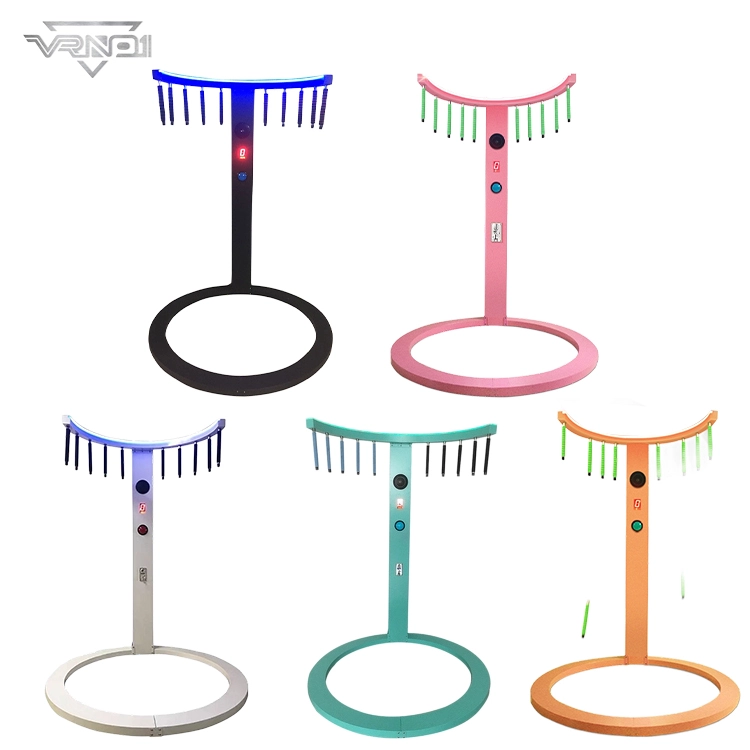
VRN0.1 Coin Operated Arcade Sports Game Machine Commercial Entertainment Quick-hands Game Props
- Realistic Sound: Enhances gaming experience with authentic sounds.
- Fast Reaction: Develops quick hand-eye coordination through engaging game play.
- DIY Kit: Allows for customization and personalization of the baton.
- Metal and Plastic Construction: Durable and robust build quality.
- Coin Operated: Fun for players who enjoy arcade-like experiences.
 Scan QR Code
Whatsapp: +8618127818571
Scan QR Code
Guangzhou Skyfun Technology Co.,Ltd
skyfunvrgame
skyfun game