


Customizing VR Simulators: Hardware and Content Options
- Designing Bespoke VR Simulator Experiences
- Why customization matters for VR Simulators machine deployments
- Typical use cases and matching customization priorities
- Hardware Components and Upgrade Paths
- Core system: PC, HMD and tracking
- Motion platforms, seating and haptics
- Peripherals, Safety and Durability
- Controllers, input devices and custom peripherals
- Safety, accessibility and maintenance planning
- Content Options and Software Integration
- Off-the-shelf content vs custom development
- Engines, SDKs and interoperability (Unity, Unreal, OpenXR)
- Business Considerations: ROI, Operations and Scaling
- Cost drivers and expected ROI for VR Simulators machine
- Operational workflows, staff training and support
- How VRN0.1 Supports Custom VR Simulator Projects
- Company profile and capabilities
- Services: OEM/ODM, venue solutions and training
- Product highlights and differential advantages
- Practical Steps to Spec and Deploy a Customized VR Simulator
- Step-by-step checklist
- FAQ
- 1. What is the most cost-effective way to upgrade an existing VR Simulators machine?
- 2. How do I decide between off-the-shelf content and custom experiences?
- 3. What maintenance schedule should commercial VR machines follow?
- 4. How important is tracking choice for competitive experiences?
- 5. Can VR Simulators machine environments be ADA-accessible?
- 6. How does VRN0.1 support venue design and profitability?
- References
Designing Bespoke VR Simulator Experiences
Why customization matters for VR Simulators machine deployments
Operators of VR arcades, training centers and location-based entertainment venues increasingly demand tailored experiences rather than one-size-fits-all boxes. Customization determines guest throughput, perceived value, durability and profitability of a VR Simulators machine. Choices in hardware and content directly affect immersion, safety, maintenance cost and revenue per session—so understanding trade-offs up front is essential.
Typical use cases and matching customization priorities
Different applications prioritize different attributes: arcade racing prioritizes motion feedback and controller fidelity; shooting galleries need accurate tracking and recoil simulation; training solutions emphasize repeatability, data capture and scenario branching. Identifying the primary use case early informs hardware selection, content strategy and operational workflows.
Hardware Components and Upgrade Paths
Core system: PC, HMD and tracking
The foundation of any VR Simulators machine is the compute and display subsystem. Modern options include tethered PC-VR (high performance), standalone HMDs (cost-effective, mobile) and hybrid systems. Key specs to weigh:
- GPU/CPU: Target GPU class (NVIDIA RTX 20/30/40 series or equivalent) appropriate to target frame rate and fidelity. Higher refresh rates (90–144 Hz) require more GPU headroom.
- HMD choice: resolution, FOV, refresh rate, IPD adjustment and durability. Choices (Valve Index, HTC Vive Pro series, Meta Quest 2/Pro) have different trade-offs in tracking and lifecycle.
- Tracking: inside-out (camera-based) vs outside-in (lighthouse/base station). Outside-in typically offers better room-scale precision for high-end simulators, while inside-out simplifies setup and reduces floor clutter.
Motion platforms, seating and haptics
Motion rigs are the most visible customization for simulators. Options range from single DOF (tilt) platforms to full 6-DOF motion bases. Considerations:
- Degrees of Freedom (DOF): More DOF increases realism but also cost, maintenance and power requirements.
- Seating: fixed, modular, or adjustable seating to match rider sizes and safety restraints.
- Haptics: vibration motors, force feedback wheels, recoil systems for shooting—these boost perceived immersion and differentiate experiences.
| Component | Typical Options | Pros | Cons |
|---|---|---|---|
| HMD | Valve Index, HTC Vive Pro, Meta Quest 2/Pro | Higher fidelity, more immersive | Cost, tethering/cabling or battery life |
| Tracking | Outside-in (lighthouses), Inside-out (cameras) | Outside-in: high precision; Inside-out: easy setup | Outside-in: setup & maintenance; Inside-out: occlusion limits |
| Motion Platform | Static seat, 2-DOF, 3-DOF, 6-DOF | More DOF = higher immersion & ticket price | Higher cost & maintenance; space & power needs |
Peripherals, Safety and Durability
Controllers, input devices and custom peripherals
Custom controllers (steering wheels, guns, joysticks) must be robust for commercial use. Consider industrial-grade encoders, sealed designs for hygiene, and modular mounts for quick replacement. Integrations with cashless payment, timed sessions and anti-cheat systems are common for arcades.
Safety, accessibility and maintenance planning
Commercial VR Simulators machine deployments require safety rails, clear signage, anti-entanglement cable management and routine maintenance schedules. Plan spare parts inventories for high-wear components (motors, belts, controllers) and design to allow quick swap-outs to minimize downtime.
Content Options and Software Integration
Off-the-shelf content vs custom development
Operators choose between:
- Off-the-shelf experiences: Faster to launch, lower upfront costs. Good for high-turnover arcades where variety matters.
- Custom content: Tailored branding, exclusive experiences and training-specific fidelity. Higher cost and longer lead time but can command High Quality pricing and repeat visits.
| Factor | Off-the-shelf | Custom |
|---|---|---|
| Time to market | Days–weeks | Months |
| Cost | Low–medium | Medium–high |
| Uniqueness | Low | High |
| Scalability | High | Depends on architecture |
Engines, SDKs and interoperability (Unity, Unreal, OpenXR)
Most commercial simulators use Unity or Unreal for rapid development and optimization. OpenXR is the industry-standard API for cross-platform runtime compatibility; choosing OpenXR-supporting middleware reduces vendor lock-in. Middleware for motion cueing, telemetry capture and analytics can add measurable business value for training and operations.
Business Considerations: ROI, Operations and Scaling
Cost drivers and expected ROI for VR Simulators machine
Primary cost categories: hardware capex (HMDs, motion rigs), software (licenses, custom dev), installation, venue build-out and recurrent costs (staff, maintenance, utilities). Revenue drivers: ticket price, throughput, ancillary sales (merch, F&B) and repeat visitation. A simple ROI model should include expected sessions/day, average ticket price, uptime percentage and lifecycle replacement schedule.
Operational workflows, staff training and support
Efficient operations depend on staff trained for onboarding, troubleshooting, safing protocols and content selection. Remote monitoring (telemetry) and 24/7 vendor support reduce downtime. Plan for predictive maintenance using usage logs and replacement part SLAs.
How VRN0.1 Supports Custom VR Simulator Projects
Company profile and capabilities
VRN0.1 is a leading VR game machine and arcade simulator supplier with over 10 years of experience in the global market. Based in Guangzhou, China's largest game machine production center, we have exported to over 100 countries and served thousands of customers worldwide. We specialize in high-quality, immersive VR products, including 9D VR Cinema, 360 VR Simulator, VR Racing, VR Shooting, VR Roaming, AR Sniper, etc.
Services: OEM/ODM, venue solutions and training
We offer OEM and ODM services, one-stop VR venue solutions, and free training for equipment and operation. Our diverse product line covers all mainstream VR arcade categories. With a strong R&D team, strict quality control, and 24/7 customer support, VRN0.1 is committed to innovation, reliability, and customer satisfaction. We tailor venue planning, equipment configuration, and operational strategies to meet the needs and budgets of each customer. Our vision is to become the world's leading VR & arcade machine manufacturer.
Product highlights and differential advantages
Key product categories: VR Simulator, Arcade game simulator, VR car driving simulator, Interactive Platform VR, Racing Game Machine, AR Sniper, Kiddie Ride, 7D Cinema. VRN0.1 differentiates through:
- Full-stack capability: hardware design, content integration and venue consulting.
- Commercial-grade reliability and spare-part support networks.
- Customizable rigs and content pipelines (OEM/ODM) for brand-exclusive experiences.
- Global logistics and local training to reduce time-to-revenue.
See product line and contact VRN0.1 for tailored proposals: https://www.vrarcadegame.com/
Practical Steps to Spec and Deploy a Customized VR Simulator
Step-by-step checklist
- Define business objectives: attraction vs training, target throughput and price point.
- Choose base hardware profile: HMD class, tracking approach and motion platform DOF.
- Decide content strategy: license off-the-shelf library or invest in custom content.
- Plan venue layout: space per unit, power, ventilation and spectator areas.
- Set maintenance and spare parts plan; negotiate SLAs with vendor (e.g., VRN0.1 provides 24/7 support).
- Train staff with standardized safety and operational protocols.
- Run a soft opening, collect telemetry, iterate on content and session length for optimal ARPU.
FAQ
1. What is the most cost-effective way to upgrade an existing VR Simulators machine?
Start with targeted upgrades: replace HMDs with higher-resolution models, add dedicated audio (headphones + amp), and upgrade controllers or steering peripherals. These deliver the most perceived improvement per dollar before adding motion platforms.
2. How do I decide between off-the-shelf content and custom experiences?
Use off-the-shelf content to validate demand and train staff quickly. If repeat visitation and brand exclusivity are priorities, invest in custom content after validating initial KPIs (utilization, NPS, ARPU).
3. What maintenance schedule should commercial VR machines follow?
Daily: visual inspection, cable routing and hygiene. Weekly: firmware & software updates, controller recalibration. Monthly: motor belts and mount inspections. Track usage hours to plan component replacement (e.g., 6–12 months for high-wear parts).
4. How important is tracking choice for competitive experiences?
Very important. Competitive racing or shooting benefits from precise, low-latency tracking (outside-in systems or high-quality inside-out rigs with marker assists). Tracking errors reduce fairness and immersion in competitive play.
5. Can VR Simulators machine environments be ADA-accessible?
Yes. Design options include adjustable seating, clear entry/exit paths, and controller mappings for limited mobility. Early planning ensures compliance and expands customer base.
6. How does VRN0.1 support venue design and profitability?
VRN0.1 provides venue planning, equipment configuration and operational strategies tailored to customer budgets, including free training and ongoing support to optimize uptime and revenue.
For personalized consultation, product demos or a venue plan, contact VRN0.1: https://www.vrarcadegame.com/ — their team can provide OEM/ODM quotes, sample ROI models and deployment timelines.
References
- Grand View Research — Virtual Reality Market Size & Trends. Link: https://www.grandviewresearch.com/industry-analysis/virtual-reality-vr-market (accessed 2026-01-08)
- Khronos Group — OpenXR Specification. Link: https://www.khronos.org/openxr/ (accessed 2026-01-08)
- Unity Technologies — Official Documentation. Link: https://docs.unity3d.com/ (accessed 2026-01-08)
- Epic Games — Unreal Engine Documentation. Link: https://docs.unrealengine.com/ (accessed 2026-01-08)
- Valve — SteamVR System Report and Recommended Specs. Link: https://store.steampowered.com/steamvr (accessed 2026-01-08)
- Wikipedia — Motion Simulator. Link: https://en.wikipedia.org/wiki/Motion_simulator (accessed 2026-01-08)
Data cited are from the referenced industry and technology sources above. For bespoke advice and configuration, contact VRN0.1 via their official site.
Customizing VR Arcade Machines for Branding and Markets
What are the application scenarios of arcade games simulators?
The latest trends for vr karting racing car game machine in us 2026 | VRN0.1 Ultimate Insights
Retro Arcade Consoles vs Modern Systems: A Practical Comparison for Operators and Players
Distributors
What types of products does VRNO.1 offer for dealers to sell?
We offer a variety of virtual reality entertainment equipment, including our flagship products 360 Kingkong and Crazy Motorcycle. In addition, we customize various VR solutions for amusement parks, theme parks and entertainment centers.
What does VRNO.1's after-sales service include?
We provide comprehensive after-sales services, including installation support, technical troubleshooting and regular maintenance services. We also provide dealers with dedicated training and customer support to ensure the smooth operation of the equipment.
Application
Does the VR game support multi-person interaction on the same screen?
Yes, VRNO.1's VR gaming devices support multiplayer on-screen interaction. Family members can participate in multiplayer competitive games, cooperative adventure games, etc., to enhance the interaction and entertainment experience among family members.
Is the VR device suitable for all family members?
Yes, VRNO.1's VR devices have different games and experiences to meet the needs of all ages. Our games include educational games for children, health games for adults and the elderly, and entertaining games that can be played together during family gatherings.
Products
What is VRNO.1’s main focus?
VRNO.1 specializes in providing cutting-edge virtual reality (VR) and arcade solutions, offering immersive entertainment experiences for both individual players and large-scale events.
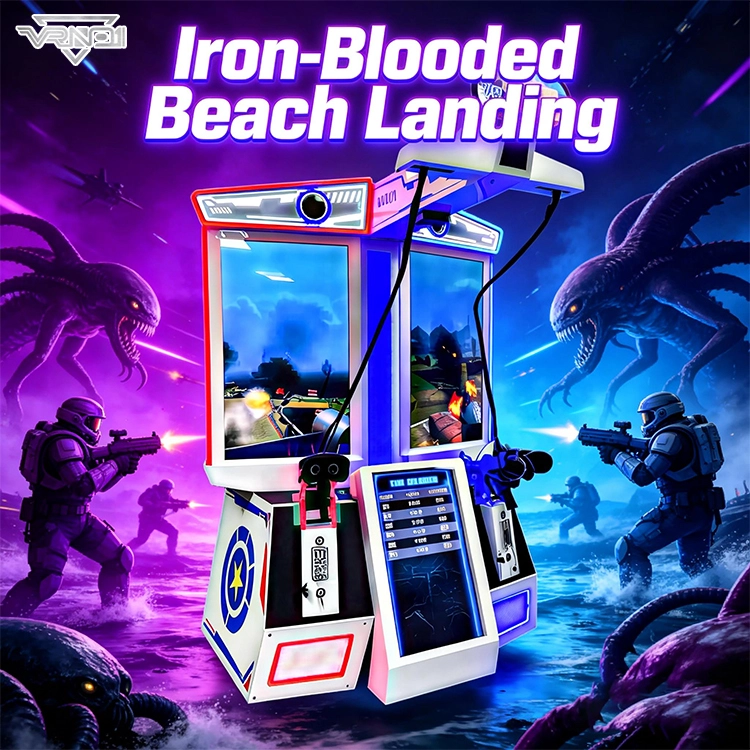
VRN0.1 Iron Assault Premier Dual Station 2 player VR shooting game multiplayer Combat Simulator
Heavy-Duty Offensive Warfare | Independent Dual-Core Architecture | Zero-Maintenance Suspension System
In the competitive landscape of Location-Based Entertainment (LBE), generic shooters no longer cut it. Enter the VR NO.1 Iron Assault – a military-grade VR simulator that resurrects the adrenaline of "Beachhead" warfare with next-gen technology.
Engineered by VR NO.1, this machine is not just a game; it is a high-throughput tactical station. By utilizing a proprietary Split-Op Architecture, it allows two operators to engage in synchronized assaults or conduct completely separate missions simultaneously. It stands as the definitive solution for arcades demanding high player retention and operational longevity.
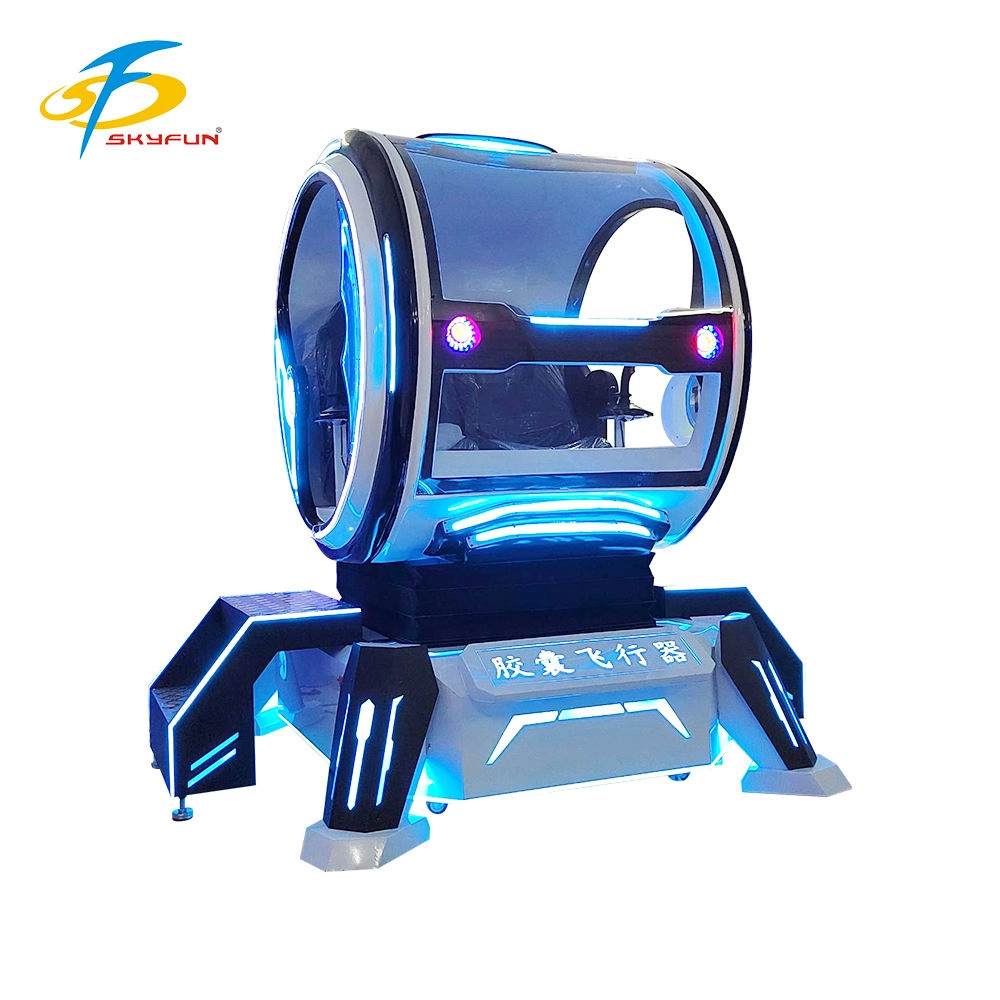
Double Player VR Flight Simulator 100 Movies 15 Games Coin-Operated Game Machine for Shopping Malls Amusement Parks
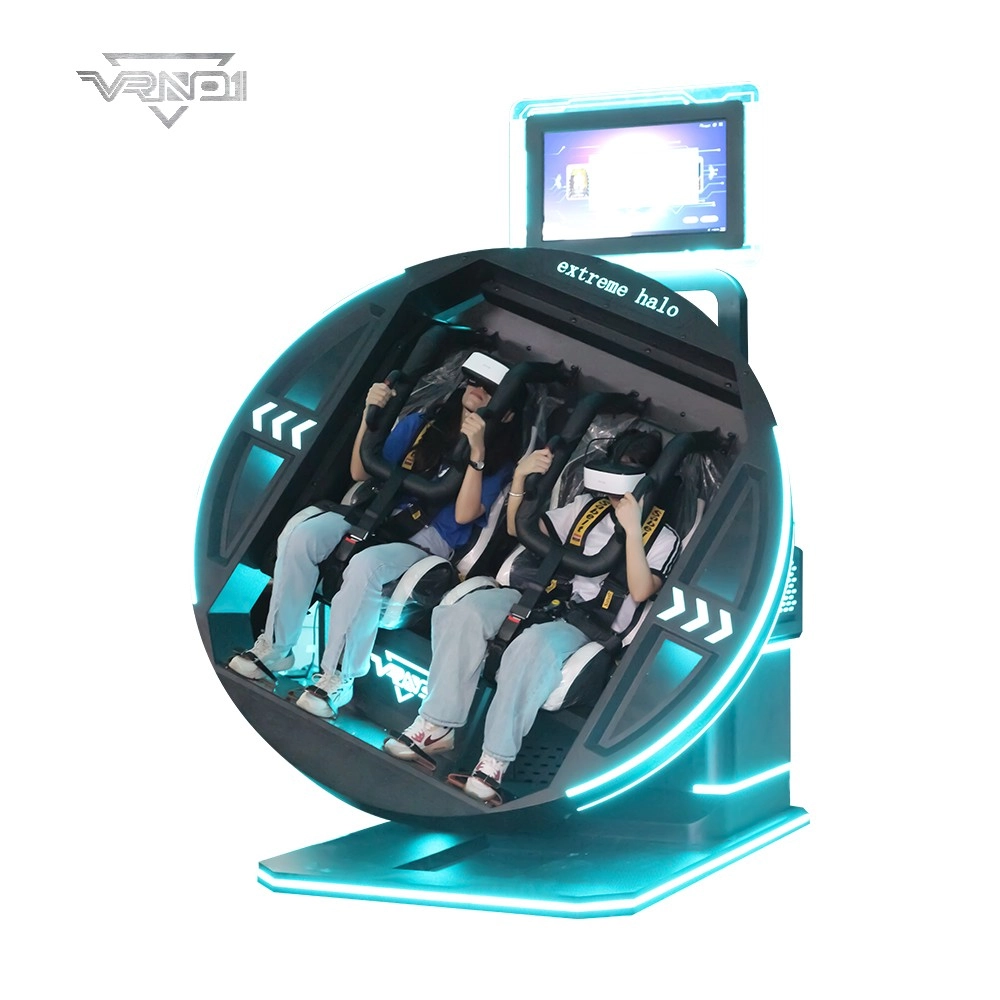
9D VR 360 Roller Coaster Cinema Chair Gaming Set Indoor/Outdoor Business Simulator Hardware for Home or School
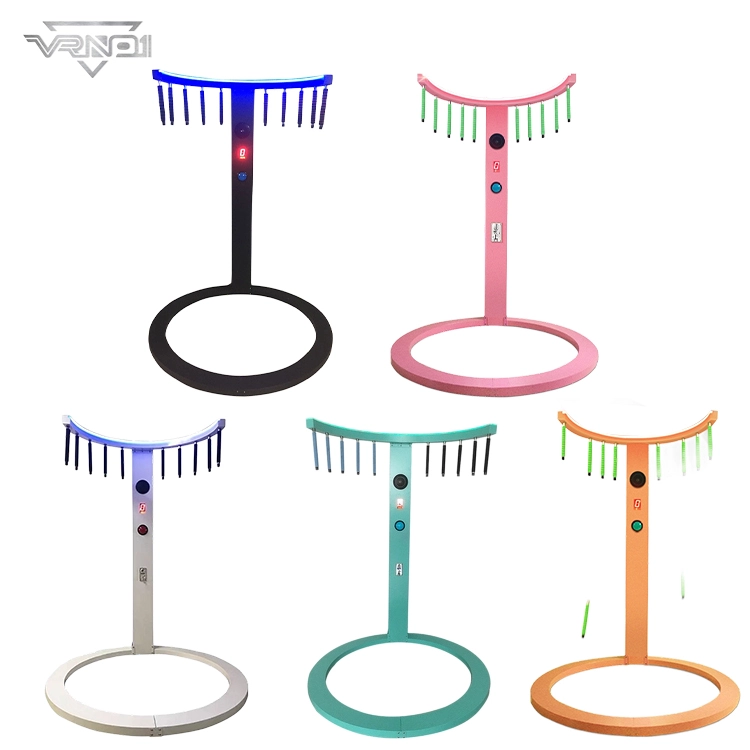
VRN0.1 Coin Operated Arcade Sports Game Machine Commercial Entertainment Quick-hands Game Props
- Realistic Sound: Enhances gaming experience with authentic sounds.
- Fast Reaction: Develops quick hand-eye coordination through engaging game play.
- DIY Kit: Allows for customization and personalization of the baton.
- Metal and Plastic Construction: Durable and robust build quality.
- Coin Operated: Fun for players who enjoy arcade-like experiences.
 Scan QR Code
Whatsapp: +8618127818571
Scan QR Code
Guangzhou Skyfun Technology Co.,Ltd
skyfunvrgame
skyfun game