


Personalización de simuladores de realidad virtual: opciones de hardware y contenido
- Diseño de experiencias de simuladores de realidad virtual a medida
- Por qué es importante la personalización para las implementaciones de máquinas de simuladores de realidad virtual
- Casos de uso típicos y prioridades de personalización correspondientes
- Componentes de hardware y rutas de actualización
- Sistema central: PC, HMD y seguimiento
- Plataformas de movimiento, asientos y hápticos
- Periféricos, seguridad y durabilidad
- Controladores, dispositivos de entrada y periféricos personalizados
- Planificación de seguridad, accesibilidad y mantenimiento
- Opciones de contenido e integración de software
- Contenido estándar vs. desarrollo personalizado
- Motores, SDK e interoperabilidad (Unity, Unreal, OpenXR)
- Consideraciones de negocio: ROI, operaciones y escalamiento
- Factores de costo y ROI esperado para máquinas simuladoras de VR
- Flujos de trabajo operativos, capacitación y apoyo del personal
- Cómo VRN0.1 admite proyectos de simuladores de VR personalizados
- Perfil y capacidades de la empresa
- Servicios: OEM/ODM, soluciones para eventos y capacitación
- Características destacadas del producto y ventajas diferenciales
- Pasos prácticos para especificar e implementar un simulador de realidad virtual personalizado
- Lista de verificación paso a paso
- Preguntas frecuentes
- 1. ¿Cuál es la forma más rentable de actualizar una máquina de simuladores de realidad virtual existente?
- 2. ¿Cómo puedo decidir entre contenido estándar y experiencias personalizadas?
- 3. ¿Qué programa de mantenimiento deben seguir las máquinas de VR comerciales?
- 4. ¿Qué importancia tiene la elección del seguimiento para las experiencias competitivas?
- 5. ¿Pueden los entornos de máquinas de simuladores de VR ser accesibles según la ADA?
- 6. ¿Cómo apoya VRN0.1 el diseño y la rentabilidad del lugar?
- Referencias
Diseño de experiencias de simuladores de realidad virtual a medida
Por qué es importante la personalización para las implementaciones de máquinas de simuladores de realidad virtual
Los operadores de salas de juegos de RV, centros de formación y espacios de entretenimiento en la nube exigen cada vez más experiencias personalizadas en lugar de soluciones universales. La personalización determina el número de visitantes, el valor percibido, la durabilidad y la rentabilidad de un simulador de RV. La elección del hardware y el contenido afecta directamente la inmersión, la seguridad, el coste de mantenimiento y los ingresos por sesión, por lo que es fundamental comprender las ventajas y desventajas desde el principio.
Casos de uso típicos y prioridades de personalización correspondientes
Diferentes aplicaciones priorizan diferentes atributos: las carreras arcade priorizan la retroalimentación del movimiento y la fidelidad del mando; las galerías de tiro requieren un seguimiento preciso y simulación de retroceso; las soluciones de entrenamiento priorizan la repetibilidad, la captura de datos y la ramificación de escenarios. Identificar el caso de uso principal con antelación facilita la selección del hardware, la estrategia de contenido y los flujos de trabajo operativos.
Componentes de hardware y rutas de actualización
Sistema central: PC, HMD y seguimiento
La base de cualquier simulador de RV es el subsistema de computación y visualización. Las opciones modernas incluyen PC-VR conectado (alto rendimiento), HMD independientes (rentables y móviles) y sistemas híbridos. Especificaciones clave a considerar:
- GPU/CPU: Clase de GPU objetivo (NVIDIA RTX series 20/30/40 o equivalente) adecuada para la velocidad de fotogramas y la fidelidad de imagen deseadas. Las frecuencias de actualización más altas (90–144 Hz) requieren mayor margen de GPU.
- Selección de HMD: resolución, campo de visión (FOV), frecuencia de actualización, ajuste de IPD y durabilidad. Las opciones (Valve Index, HTC Vive Pro series, Meta Quest 2/Pro) tienen diferentes ventajas y desventajas en cuanto a seguimiento y ciclo de vida.
- Seguimiento: de adentro hacia afuera (basado en cámara) vs. de afuera hacia adentro (faro/estación base). El de afuera hacia adentro suele ofrecer una mayor precisión a escala de sala para simuladores de alta gama, mientras que el de adentro hacia afuera simplifica la configuración y reduce el desorden en el suelo.
Plataformas de movimiento, asientos y hápticos
Los rigs de movimiento son la personalización más visible para los simuladores. Las opciones varían desde plataformas de un solo grado de libertad (inclinación) hasta bases de movimiento de 6 grados de libertad. Consideraciones:
- Grados de libertad (DOF): Más DOF aumenta el realismo, pero también los costos, el mantenimiento y los requisitos de energía.
- Asientos: fijos, modulares o ajustables para adaptarse al tamaño de los pasajeros y los dispositivos de seguridad.
- Háptica: motores de vibración, ruedas de retroalimentación de fuerza, sistemas de retroceso para disparar: todo esto aumenta la inmersión percibida y diferencia las experiencias.
| Componente | Opciones típicas | Ventajas | Contras |
|---|---|---|---|
| HMD | Índice de válvulas, HTC Vive Pro, Meta Quest 2/Pro | Mayor fidelidad, más inmersión | Costo, conexión/cableado o duración de la batería |
| Seguimiento | De afuera hacia adentro (faros), de adentro hacia afuera (cámaras) | De afuera hacia adentro: alta precisión; de adentro hacia afuera: fácil configuración | De afuera hacia adentro: configuración y mantenimiento; de adentro hacia afuera: límites de oclusión |
| Plataforma de movimiento | Asiento estático, 2 grados de libertad, 3 grados de libertad, 6 grados de libertad | Más profundidad de campo = mayor inmersión y precio de la entrada | Mayores costos y mantenimiento; necesidades de espacio y energía |
Periféricos, seguridad y durabilidad
Controladores, dispositivos de entrada y periféricos personalizados
Los mandos personalizados (volantes, pistolas, joysticks) deben ser robustos para uso comercial. Considere codificadores de grado industrial, diseños sellados para mayor higiene y soportes modulares para un reemplazo rápido. Las integraciones con pagos sin efectivo, sesiones cronometradas y sistemas antitrampas son comunes en las salas de juego.
Planificación de seguridad, accesibilidad y mantenimiento
La implementación de máquinas de simuladores comerciales de realidad virtual requiere barandillas de seguridad, señalización clara, gestión de cables antienredos y programas de mantenimiento rutinario. Planifique inventarios de repuestos para componentes de alto desgaste (motores, correas, controladores) y diseñe para permitir cambios rápidos y minimizar el tiempo de inactividad.
Opciones de contenido e integración de software
Contenido estándar vs. desarrollo personalizado
Los operadores pueden elegir entre:
- Experiencias listas para usar: Lanzamiento más rápido, menores costos iniciales. Ideal para salas de juego con alta rotación donde la variedad es fundamental.
- Contenido personalizado: Marca personalizada, experiencias exclusivas y fidelidad a la formación específica. Mayor coste y plazo de entrega más largo, pero puede ofrecer precios de alta calidad y visitas recurrentes.
| Factor | Fuera de la plataforma | Costumbre |
|---|---|---|
| Tiempo de comercialización | Días–semanas | Meses |
| Costo | Bajo-medio | Medio-alto |
| Unicidad | Bajo | Alto |
| Escalabilidad | Alto | Depende de la arquitectura |
Motores, SDK e interoperabilidad (Unity, Unreal, OpenXR)
La mayoría de los simuladores comerciales utilizan Unity o Unreal para un desarrollo y optimización rápidos. OpenXR es la API estándar de la industria para la compatibilidad multiplataforma en entornos de ejecución; elegir middleware compatible con OpenXR reduce la dependencia de un proveedor. El middleware para la señalización de movimiento, la captura de telemetría y el análisis puede aportar un valor comercial medible a la formación y las operaciones.
Consideraciones de negocio: ROI, operaciones y escalamiento
Factores de costo y ROI esperado para máquinas simuladoras de VR
Principales categorías de costos: inversión en hardware (HMD, plataformas de movimiento), software (licencias, desarrollo personalizado), instalación, acondicionamiento del espacio y costos recurrentes (personal, mantenimiento, servicios). Factores de ingresos: precio de la entrada, rendimiento, ventas adicionales (merchandising, restauración) y visitas recurrentes. Un modelo simple de ROI debería incluir las sesiones diarias esperadas, el precio promedio de la entrada, el porcentaje de tiempo de actividad y el calendario de reemplazo durante el ciclo de vida.
Flujos de trabajo operativos, capacitación y apoyo del personal
Unas operaciones eficientes dependen de personal capacitado en la incorporación, la resolución de problemas, los protocolos de seguridad y la selección de contenido. La monitorización remota (telemetría) y el soporte técnico 24/7 del proveedor reducen el tiempo de inactividad. Planifique el mantenimiento predictivo mediante registros de uso y acuerdos de nivel de servicio (SLA) para piezas de repuesto.
Cómo VRN0.1 admite proyectos de simuladores de VR personalizados
Perfil y capacidades de la empresa
VRN0.1 es un proveedor líder de máquinas de juegos de realidad virtual y simuladores arcade con más de 10 años de experiencia en el mercado global. Con sede en Cantón, el mayor centro de producción de máquinas de juegos de China, hemos exportado a más de 100 países y atendido a miles de clientes en todo el mundo. Nos especializamos en productos de realidad virtual inmersiva de alta calidad, como cine en realidad virtual 9D, simulador de realidad virtual 360, carreras en realidad virtual, disparos en realidad virtual, roaming en realidad virtual, francotirador en realidad aumentada, etc.
Servicios: OEM/ODM, soluciones para eventos y capacitación
Ofrecemos servicios OEM y ODM, soluciones integrales para salas de RV y capacitación gratuita sobre equipos y operación. Nuestra diversa línea de productos abarca todas las categorías principales de máquinas recreativas de RV. Con un sólido equipo de I+D, un estricto control de calidad y atención al cliente 24/7, en VRN0.1 nos comprometemos con la innovación, la fiabilidad y la satisfacción del cliente. Adaptamos la planificación de las salas, la configuración de los equipos y las estrategias operativas a las necesidades y presupuestos de cada cliente. Nuestra visión es convertirnos en el fabricante líder mundial de máquinas recreativas y de RV.
Características destacadas del producto y ventajas diferenciales
Categorías de productos clave: Simulador de RV, Simulador de juegos arcade, Simulador de conducción de coches en RV, Plataforma interactiva de RV, Máquina de carreras, Francotirador de RA, Atracción infantil, Cine 7D. VRN0.1 se diferencia por:
- Capacidad completa: diseño de hardware, integración de contenido y consultoría de espacios.
- Redes de soporte de repuestos y confiabilidad de nivel comercial.
- Plataformas y canales de contenido personalizables (OEM/ODM) para experiencias exclusivas de marca.
- Logística global y capacitación local para reducir el tiempo de obtención de ingresos.
Consulte la línea de productos y contacte con VRN0.1 para propuestas personalizadas:https://www.vrarcadegame.com/
Pasos prácticos para especificar e implementar un simulador de realidad virtual personalizado
Lista de verificación paso a paso
- Definir objetivos comerciales: atracción vs. capacitación, rendimiento objetivo y precio.
- Seleccione el perfil de hardware base: clase HMD, enfoque de seguimiento y profundidad de campo de la plataforma de movimiento.
- Decide una estrategia de contenido: licencia una biblioteca estándar o invierte en contenido personalizado.
- Planificar la distribución del recinto: espacio por unidad, energía, ventilación y zonas para espectadores.
- Establecer un plan de mantenimiento y repuestos; negociar SLA con el proveedor (por ejemplo, VRN0.1 brinda soporte 24 horas al día, 7 días a la semana).
- Formar al personal con protocolos de seguridad y operación estandarizados.
- Ejecute una apertura suave, recopile telemetría, itere sobre el contenido y la duración de la sesión para obtener un ARPU óptimo.
Preguntas frecuentes
1. ¿Cuál es la forma más rentable de actualizar una máquina de simuladores de realidad virtual existente?
Empieza con actualizaciones específicas: reemplaza los HMD por modelos de mayor resolución, añade audio dedicado (auriculares + amplificador) y actualiza los controladores o periféricos de dirección. Estas mejoras ofrecen la mayor mejora por precio antes de añadir plataformas de movimiento.
2. ¿Cómo puedo decidir entre contenido estándar y experiencias personalizadas?
Utilice contenido estándar para validar la demanda y capacitar al personal rápidamente. Si prioriza la repetición de visitas y la exclusividad de la marca, invierta en contenido personalizado tras validar los KPI iniciales (utilización, NPS, ARPU).
3. ¿Qué programa de mantenimiento deben seguir las máquinas de VR comerciales?
Diariamente: inspección visual, cableado e higiene. Semanalmente: actualizaciones de firmware y software, recalibración del controlador. Mensualmente: inspección de correas y soportes del motor. Controle las horas de uso para planificar el reemplazo de componentes (p. ej., cada 6 a 12 meses para piezas de alto desgaste).
4. ¿Qué importancia tiene la elección del seguimiento para las experiencias competitivas?
Muy importante. Las carreras o los tiros competitivos se benefician de un seguimiento preciso y de baja latencia (sistemas de afuera hacia adentro o plataformas de adentro hacia afuera de alta calidad con asistencia de marcadores). Los errores de seguimiento reducen la imparcialidad y la inmersión en el juego competitivo.
5. ¿Pueden los entornos de máquinas de simuladores de VR ser accesibles según la ADA?
Sí. Las opciones de diseño incluyen asientos ajustables, rutas de entrada y salida despejadas y mapeos de controladores para personas con movilidad reducida. La planificación anticipada garantiza el cumplimiento normativo y amplía la cartera de clientes.
6. ¿Cómo apoya VRN0.1 el diseño y la rentabilidad del lugar?
VRN0.1 proporciona planificación de lugares, configuración de equipos y estrategias operativas adaptadas a los presupuestos de los clientes, incluida capacitación gratuita y soporte continuo para optimizar el tiempo de actividad y los ingresos.
Para consultas personalizadas, demostraciones de productos o un plan del lugar, comuníquese con VRN0.1: https://www.vrarcadegame.com/; su equipo puede proporcionar cotizaciones OEM/ODM, modelos de ROI de muestra y cronogramas de implementación.
Referencias
- Grand View Research — Tamaño y tendencias del mercado de la realidad virtual. Enlace: https://www.grandviewresearch.com/industry-analysis/virtual-reality-vr-market (consultado el 8 de enero de 2026)
- Grupo Khronos — Especificación OpenXR. Enlace: https://www.khronos.org/openxr/ (consultado el 8 de enero de 2026)
- Unity Technologies — Documentación oficial. Enlace: https://docs.unity3d.com/ (consultado el 8 de enero de 2026)
- Epic Games — Documentación de Unreal Engine. Enlace: https://docs.unrealengine.com/ (consultado el 8 de enero de 2026)
- Valve — Informe del sistema SteamVR y especificaciones recomendadas. Enlace: https://store.steampowered.com/steamvr (consultado el 8 de enero de 2026)
- Wikipedia — Simulador de movimiento. Enlace: https://en.wikipedia.org/wiki/Motion_simulator (consultado el 8 de enero de 2026)
Los datos citados provienen de las fuentes de la industria y la tecnología mencionadas anteriormente. Para obtener asesoramiento y configuración a medida, contacte con VRN0.1 a través de su sitio web oficial.
ROI de simuladores de realidad virtual: Estimaciones de ganancias para salas de juego
Los 10 principales fabricantes y proveedores de máquinas de juegos de realidad virtual
Máquinas recreativas Boxer: Estrategias de monetización para operadores de salas de juego
Optimización del diseño del simulador de tiro de realidad virtual para el tráfico peatonal
Distribuidores
¿Cómo es el precio del producto VRNO.1?
VRNO.1 ofrece una estrategia de precios competitivos a sus distribuidores. Suministramos productos según el precio acordado en el acuerdo de colaboración y ofrecemos descuentos según su volumen de compra y la demanda del mercado.
Productos
¿Cómo funciona la tecnología VR de VRNO.1?
Nuestros sistemas de RV utilizan gafas avanzadas, seguimiento de movimiento y controles interactivos para crear una experiencia inmersiva de 360 grados. Los jugadores pueden interactuar con entornos digitales en tiempo real, simulando escenarios reales y fantásticos.
¿Son sus sistemas de realidad virtual adecuados para uso comercial?
Sí, nuestras soluciones de juegos de realidad virtual están diseñadas para uso comercial, ideales para salas de juego, centros comerciales y lugares de entretenimiento. Ofrecemos tanto máquinas independientes como configuraciones multijugador.
Hogar
¿Cómo funciona la tecnología VR de VRNO.1?
Nuestros sistemas de RV utilizan gafas avanzadas, seguimiento de movimiento y controles interactivos para crear una experiencia inmersiva de 360 grados. Los jugadores pueden interactuar con entornos digitales en tiempo real, simulando escenarios reales y fantásticos.
¿Puedo personalizar la experiencia de VR para mi negocio?
Sí, ofrecemos experiencias de realidad virtual personalizadas para satisfacer las necesidades de su negocio, desde contenido personalizado hasta configuraciones de hardware específicas, garantizando la mejor experiencia posible para sus clientes.
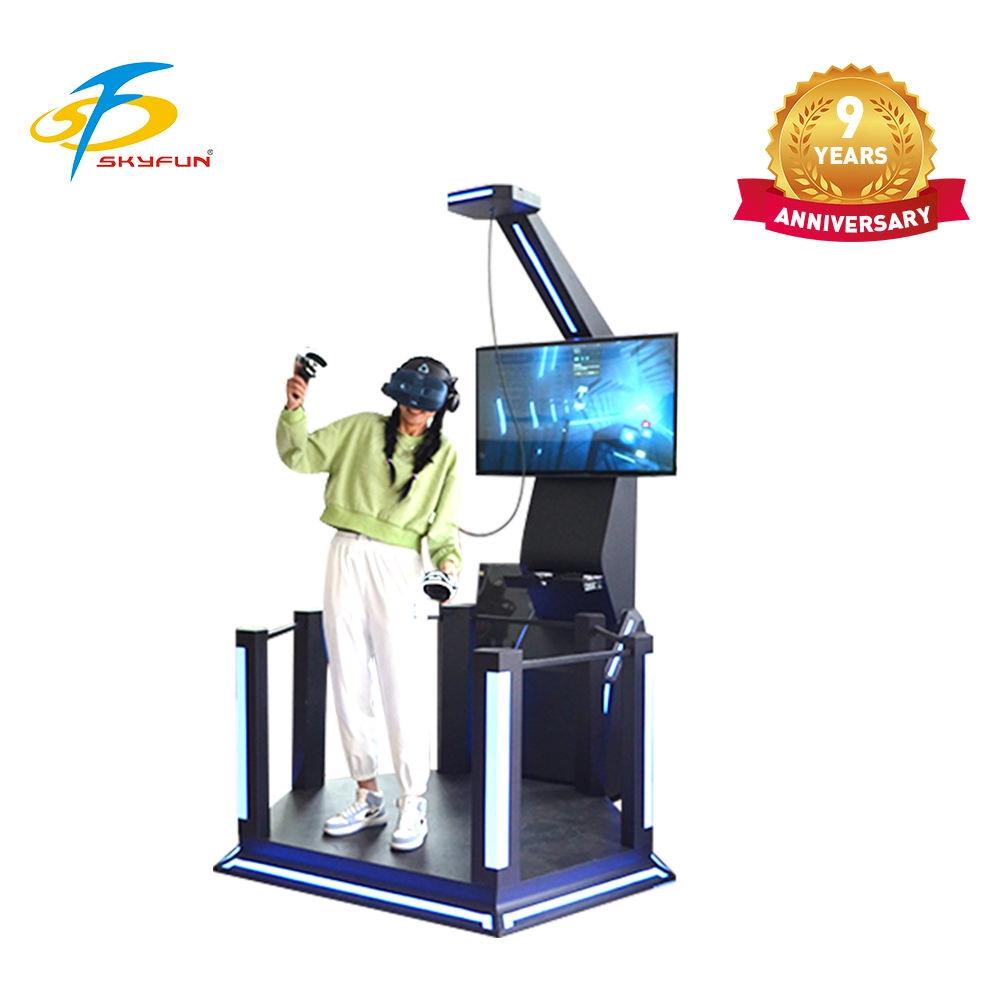
VRN0.1 VR Shooting HTC Adventure Park VR Game Simulador de juego de VR público Simulador de juego de VR de aeropuerto
Nuestro equipo de juegos de realidad virtual (VR) representa la cumbre de la tecnología de entretenimiento interactivo. Este sistema integral incluye funciones Mini HTC VR optimizadas para experiencias de juego de alta intensidad, en particular juegos de boxeo y simulaciones de acción. El equipo está diseñado para su uso comercial, priorizando la durabilidad, la seguridad del usuario y la eficiencia operativa.
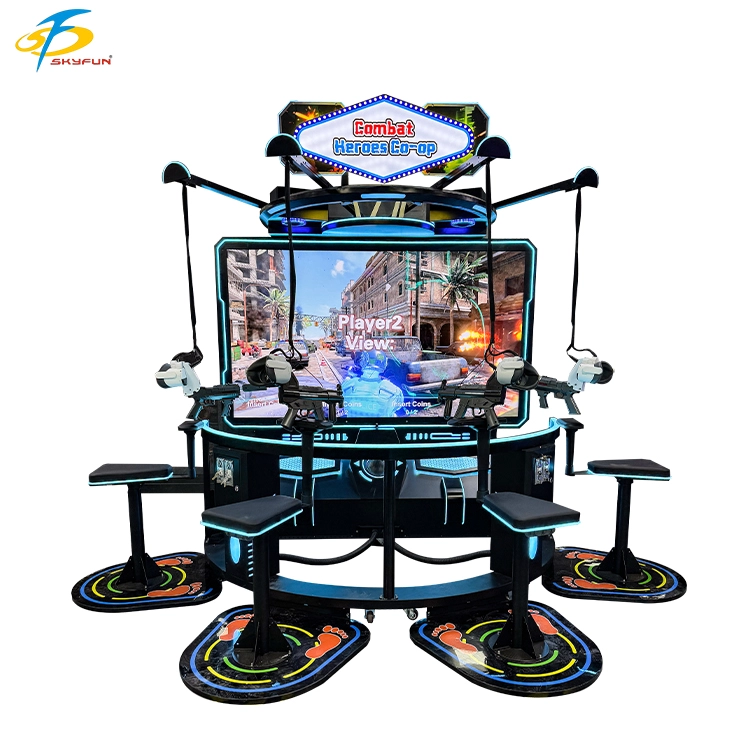
VRN0.1 Juego de disparos de realidad virtual para 4 jugadores, 360 grados, inmersivo, 4K, plataforma de movimiento, arcade, multijugador, simulador táctico
La industria de las salas de juegos de realidad virtual (RV) se ha enfrentado durante mucho tiempo a una dicotomía crucial: cómo ofrecer experiencias profundamente inmersivas sin comprometer la eficiencia operativa. Los sistemas tradicionales de RV basados en gafas, si bien tecnológicamente potentes, suelen presentar importantes inconvenientes: problemas de higiene, procedimientos de colocación y retirada lentos y el frecuente problema del mareo por movimiento. Además, los juegos de disparos de RV convencionales a menudo no ofrecen la interactividad dinámica y profundamente atractiva que realmente motiva a los jugadores a repetir la experiencia.
Skyfun, un pionero reconocido en soluciones de entretenimiento inmersivo conmás de una década de experiencia especializada,se revela con orgulloVR Strike Force: 4-Player Assault: una experiencia innovadoraJuego de disparos en realidad virtual sin gafas. Diseñado meticulosamente para maximizar los ingresos por metro cuadrado y ofrecer una satisfacción inigualable al jugador, VR Strike Force redefinirá el panorama del entretenimiento basado en la ubicación, ofreciendo una experiencia auténtica.Experiencia en "Operación de Asalto".
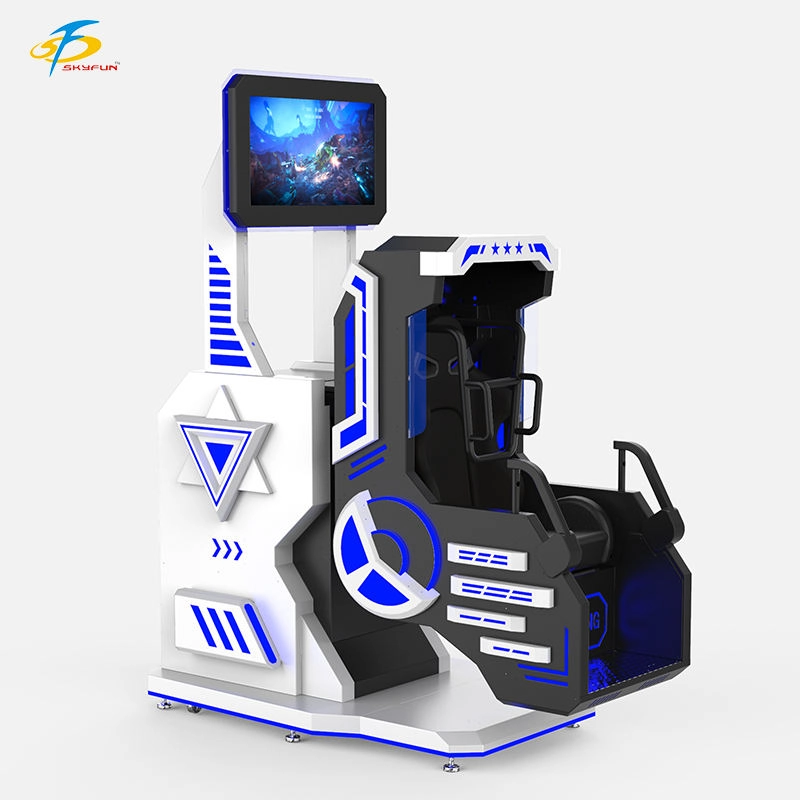
Equipo de cine de realidad virtual experiencial con rotación de 360 grados, máquina de juegos de entretenimiento de realidad virtual 360VR de un solo asiento.
Inversiones reales de 360° = Gritos reales.
Experimenta la fuerza G extrema con volteretas completas. La pantalla externa en vivo convierte cada partida en un espectáculo espectacular. Máxima emoción, cero riesgos y un alto retorno de la inversión para cualquier centro comercial o sala de juegos.
 Escanear código QR
WhatsApp: +8618127818571
Escanear código QR
Guangzhou Skyfun Technology Co., Ltd.
skyfunvrgame
Juego skyfun