


Installing and Maintaining VR Shooter Games: Best Practices
- Deploying VR Shooter Experiences: Key Considerations
- Understand your audience and venue type
- Define project goals and KPIs
- Hardware Selection and Installation
- Choosing headsets, controllers and tracking systems
- Space planning, mounting and cable management
- Software Setup and Game Optimization
- Platform compatibility, licensing and content management
- Performance tuning, network setup and safety features
- Maintenance, Operations and Safety
- Daily, weekly and monthly maintenance checklist
- Troubleshooting common issues and lifecycle management
- Operational Best Practices for Player Experience
- Staff training and throughput optimization
- Accessibility, safety and hygiene
- Vendor Solutions and Why Choose a Trusted Supplier
- What to expect from a VR supplier
- About VRN0.1 and how we support vr shooter game deployments
- FAQ
- 1. What space is required to run a vr shooter game safely?
- 2. How often should I clean and replace headset face foams?
- 3. Which tracking system is best for accuracy in shooter games?
- 4. How can I reduce motion sickness in players?
- 5. What should be included in a spare parts kit for a vr arcade?
- 6. How do I handle software updates without disrupting operations?
- References
Deploying VR Shooter Experiences: Key Considerations
Understand your audience and venue type
Before purchasing or installing any vr shooter games, clarify the venue model: pay-per-play arcade, fixed attraction in an entertainment center, mobile pop-up, or corporate/education deployment. Each model has different throughput, durability, safety and space requirements. Arcades prioritize high uptime and rapid player turnaround; location-based entertainment (LBE) centers may invest more in immersion and multi-player systems. Match hardware durability and software licensing to expected foot traffic and revenue targets.
Define project goals and KPIs
Set measurable goals: average plays per day, mean time between failures (MTBF), average session length, conversion rates from walk-ins to VR players, and ROI timeframe. These KPIs drive choices about redundancy (extra headsets/controllers), warranty/maintenance contracts, and staffing levels. Early alignment on KPIs reduces scope creep and avoids overspec’ing equipment that increases CapEx without matching revenue.
Hardware Selection and Installation
Choosing headsets, controllers and tracking systems
For vr shooter games, accurate tracking and low latency are critical for player confidence and aiming precision. Consider three major headset families for commercial use: tethered high-end PC VR (e.g., headsets compatible with SteamVR), standalone 6DoF devices (with optional PC streaming), and mixed reality systems. Key factors:
- Tracking type: outside-in lighthouse/base stations vs inside-out cameras vs hybrid optical solutions.
- Controller ergonomics and trigger fidelity for shooting mechanics.
- Durability and replaceable parts for high-use environments.
Below is a concise comparison to help you choose:
| Tracking System | Accuracy | Setup Complexity | Best Use |
|---|---|---|---|
| Outside-in (Lighthouse/Base Stations) | Very high (sub-centimeter) | Higher (laser/base calibration) | High-end arcades, multi-player arenas |
| Inside-out (On-headset cameras) | Good (dependent on lighting) | Low (plug-and-play) | Smaller venues, portability |
| Hybrid optical/infrared | High (environment-specific) | Medium | Custom installations, AR sniper concepts |
Sources: vendor documentation and developer guides recommend outside-in for maximum precision in competitive shooter experiences (see Valve and Unity references below).
Space planning, mounting and cable management
For vr shooter games, define play areas with at least 2.5m x 2.5m for single-player roomscale; multi-player or roaming setups require larger footprints. Important installation tips:
- Install robust ceiling mounts or wall brackets for sensors and displays to avoid tampering and accidental displacement.
- Use recessed cable channels, cable covers, or overhead cable reels for tethers to minimize trip hazards and extend cable life.
- Mark floor zones: staging, play area, and emergency egress to guide players and staff.
Software Setup and Game Optimization
Platform compatibility, licensing and content management
Confirm compatibility between chosen vr shooter games and your platform (SteamVR, Oculus/Meta for Business, or proprietary arcade management systems). For arcades, look for:
- Commercial licensing or arcade SDKs that allow operator controls, time-limited sessions and coin-op or POS integration.
- Remote content updates and rollback capability in case a new build breaks multi-player functionality.
- Monitoring and analytics hooks to capture play statistics and fault reports.
Performance tuning, network setup and safety features
Maintain stable 90–120 Hz headset frame rates to prevent motion sickness and maintain input accuracy. Key optimization steps:
- Use recommended GPU drivers and enable asynchronous reprojection or spacewarp per platform.
- Implement fixed foveated rendering and LODs where supported to reduce GPU load without compromising shooter target clarity.
- Utilize server-side authority for multi-player matches to avoid cheating and syncing problems.
Recommended minimum PC spec for high-fidelity vr shooter games (example):
| Component | Minimum | Recommended |
|---|---|---|
| GPU | NVIDIA GTX 1660 / RTX 3050 | NVIDIA RTX 3070 or AMD equivalent |
| CPU | Intel i5 / AMD Ryzen 5 | Intel i7 / Ryzen 7 |
| RAM | 16 GB | 32 GB |
| Storage | SSD 512 GB | NVMe SSD 1 TB |
Maintenance, Operations and Safety
Daily, weekly and monthly maintenance checklist
Preventive maintenance reduces downtime and replacement costs. Implement a checklist with clear ownership. Example schedule:
| Task | Frequency | Notes |
|---|---|---|
| Inspect headsets & controllers for physical damage | Daily | Check straps, lenses, trigger response |
| Sanitize contact surfaces (face foam, straps) | Daily | Use platform-approved cleaners (avoid alcohol on foam) |
| Check sensor/camera alignment and calibration | Weekly | Re-calibrate if drift observed |
| Review system logs and update software | Weekly/Monthly | Schedule updates during off-hours |
| Replace consumables (face covers, batteries) | Monthly or as-needed | Keep spares on-site |
Document each check with timestamp and operator initials. This audit trail helps warranty claims and performance analytics.
Troubleshooting common issues and lifecycle management
Common problems in vr shooter games include tracking loss, audio drops, controller desync, and overheating. Triage approach:
- Reproduce the issue and capture logs/screenshots.
- Check firmware and driver versions; roll back recent updates if issues began after a change.
- Swap components (headset, controller, PC) to isolate faulty hardware.
- For persistent issues, escalate with vendor support and provide logs and maintenance records.
Plan lifecycle replacement for high-wear items: face foams (replace monthly), batteries (every 12–18 months for rechargeable packs depending on cycles), and headsets (major refresh every 3–5 years depending on usage). Budget for spares equal to 10–20% of installed units for high-traffic venues.
Operational Best Practices for Player Experience
Staff training and throughput optimization
Well-trained staff reduce setup time and improve safety. Train employees on quick headset fitting, guardian/boundary setup, and basic troubleshooting. Use a station-based workflow: sanitize → fit → tutorial → gameplay → debrief. Monitor session length and adjust introductory tutorial length to maximize satisfied repeat plays versus turnover.
Accessibility, safety and hygiene
Provide adjustable IPD settings and clear age/health advisories per manufacturer guidance. For hygiene, follow platform cleaning guides (e.g., Meta/Oculus cleaning recommendations). Keep disposable face covers and non-abrasive cleaners on hand. Ensure venue liability insurance aligns with VR activities and emergency procedures are posted.
Vendor Solutions and Why Choose a Trusted Supplier
What to expect from a VR supplier
A good supplier offers robust hardware, reliable software integrations, training, spare parts availability, and 24/7 support. For complex venues, look for OEM/ODM flexibility and venue-planning assistance. Ask for case studies and references from similar deployments.
About VRN0.1 and how we support vr shooter game deployments
VRN0.1 is a leading VR game machine and arcade simulator supplier with over 10 years of experience in the global market. Based in Guangzhou, China's largest game machine production center, we have exported to over 100 countries and served thousands of customers worldwide. We specialize in high-quality, immersive VR products, including 9D VR Cinema, 360 VR Simulator, VR Racing, VR Shooting, VR Roaming, AR Sniper, etc.
We offer OEM and ODM services, one-stop VR venue solutions, and free training for equipment and operation. Our diverse product line covers all mainstream VR arcade categories. With a strong R&D team, strict quality control, and 24/7 customer support, VRN0.1 is committed to innovation, reliability, and customer satisfaction. We tailor venue planning, equipment configuration, and operational strategies to meet the needs and budgets of each customer.
Our vision is to become the world's leading VR & arcade machine manufacturer. Main products and competitive advantages include: VR Simulator, Arcade game simulator, VR car driving simulator, Interactive Platform VR, Racing Game Machine, AR Sniper, Kiddie Ride, 7D Cinema. We combine production scale, export experience, localized training and spare-part support to reduce downtime and accelerate ROI for customers. Learn more at VRN0.1.
FAQ
1. What space is required to run a vr shooter game safely?
For single-player roomscale shooter titles, plan at least 2.5m x 2.5m of clear floor area. For roaming or multi-player arena shooters, allocate larger areas (10–50+ sqm) with clear sightlines and separate ingress/egress paths. Always follow the specific game's recommended play area.
2. How often should I clean and replace headset face foams?
Sanitize contact surfaces after every use with platform-approved cleaners. Replace foam inserts and disposable face covers monthly in high-traffic venues, or more frequently if visibly worn or soiled.
3. Which tracking system is best for accuracy in shooter games?
Outside-in lighthouse/base-station tracking typically provides the highest positional accuracy and lowest jitter, making it ideal for competitive shooter experiences. Inside-out tracking has improved significantly and is suitable for many commercial uses where portability or simpler setup is prioritized.
4. How can I reduce motion sickness in players?
Ensure stable frame rates (90–120 Hz), provide comfortable locomotion options (teleportation or snap-turns), use comfortable field-of-view settings, and limit session length for first-time players. Pre-session briefings and gradual difficulty ramps also help.
5. What should be included in a spare parts kit for a vr arcade?
Include spare face foams, controller batteries or spare controllers, extra cables (USB/DisplayPort/HDMI), spare tracking sensors or base station mounts, replacement straps and a spare headset if budget permits. Keep firmware images and driver installers on a local USB or network share.
6. How do I handle software updates without disrupting operations?
Schedule updates during off-hours and maintain a rollback plan. Test updates on a staging machine before rolling out across the venue. Keep versioned backups of stable builds for quick restores.
Contact & Product Demo
For tailored venue planning, equipment quotes, or to schedule a demo of VRN0.1's vr shooter games and simulators, visit https://www.vrarcadegame.com/ or contact our sales team for a free consultation and training package.
References
- Valve SteamVR Tracking and Developer Documentation — https://partner.steamgames.com/doc/features/vr/steamvr (Accessed 2025-12-31)
- Meta (Oculus) Care and Cleaning Guide — https://www.meta.com/help/quest/articles/360126141/care-and-cleaning/ (Accessed 2025-12-31)
- Unity VR Overview and Optimization — https://docs.unity3d.com/Manual/VROverview. (Accessed 2025-12-31)
- Statista: Global Virtual Reality (VR) Market Size — https://www.statista.com/statistics/591181/global-virtual-reality-market-size/ (Accessed 2025-12-31)
- Grand View Research: Virtual Reality Market Analysis — https://www.grandviewresearch.com/industry-analysis/virtual-reality-vr-market (Accessed 2025-12-31)
- Steam Hardware & Software Survey (Headset trends) — https://store.steampowered.com/hwsurvey/ (Accessed 2025-12-31)
What are the application scenarios of vr car game machine?
How to Choose the arcade games simulator manufacturer and supplier ?
Best VR Flight Simulators for Multiplayer Races
Training and Demo Kits for Selling VR Shooting Simulators
Application
Will the game content be updated regularly?
Yes, VRNO.1 regularly updates and adds new VR game content, including adventure, sports, virtual tourism and other types. Family entertainment centers can choose to add new game packages to keep customers fresh and interested.
What hardware equipment is required for VR games?
Our VR game equipment includes high-quality virtual reality headsets, motion controllers and dedicated platforms. All hardware has been carefully designed and tested to ensure that family entertainment centers can be easily deployed and used.
Solution
What is the warranty period for VRNO.1 VR devices?
We provide a 1-year warranty for all VRNO.1 VR devices. If any device failure occurs during the warranty period, you can get free repair or replacement services. Outside the warranty period, we also provide paid technical support and repair services.
How to install and debug VRNO.1's VR equipment?
We provide professional installation and debugging services. After the equipment arrives at your venue, our technical team will send personnel to the site to install the equipment and ensure that all equipment and software functions can operate normally. After the installation is completed, we will also train your operators.
Distributors
What support does VRNO.1 provide after becoming a dealer?
We provide full support to dealers, including sales training, marketing materials, technical support and after-sales service. Our goal is to help you sell and operate our products successfully.
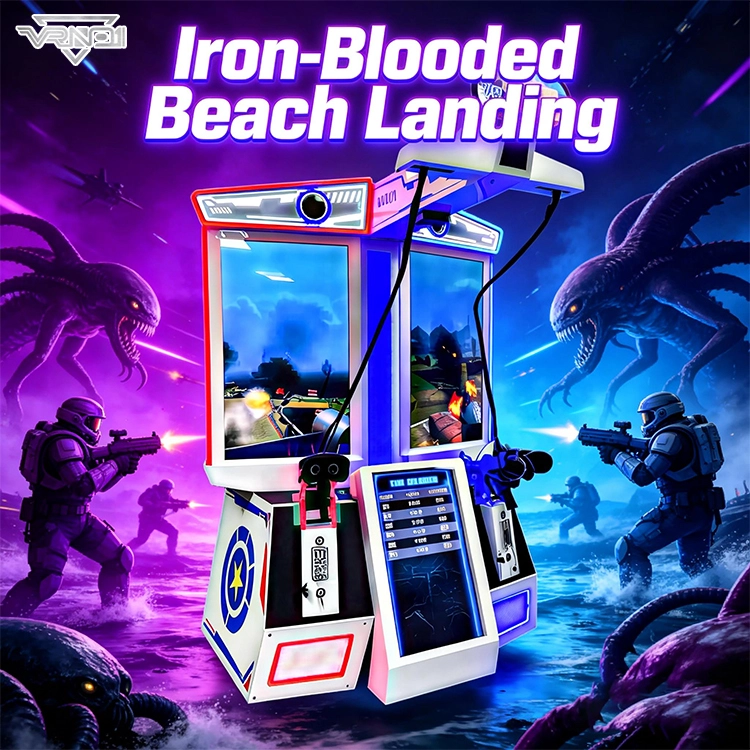
VRN0.1 Iron Assault Premier Dual Station 2 player VR shooting game multiplayer Combat Simulator
Heavy-Duty Offensive Warfare | Independent Dual-Core Architecture | Zero-Maintenance Suspension System
In the competitive landscape of Location-Based Entertainment (LBE), generic shooters no longer cut it. Enter the VR NO.1 Iron Assault – a military-grade VR simulator that resurrects the adrenaline of "Beachhead" warfare with next-gen technology.
Engineered by VR NO.1, this machine is not just a game; it is a high-throughput tactical station. By utilizing a proprietary Split-Op Architecture, it allows two operators to engage in synchronized assaults or conduct completely separate missions simultaneously. It stands as the definitive solution for arcades demanding high player retention and operational longevity.
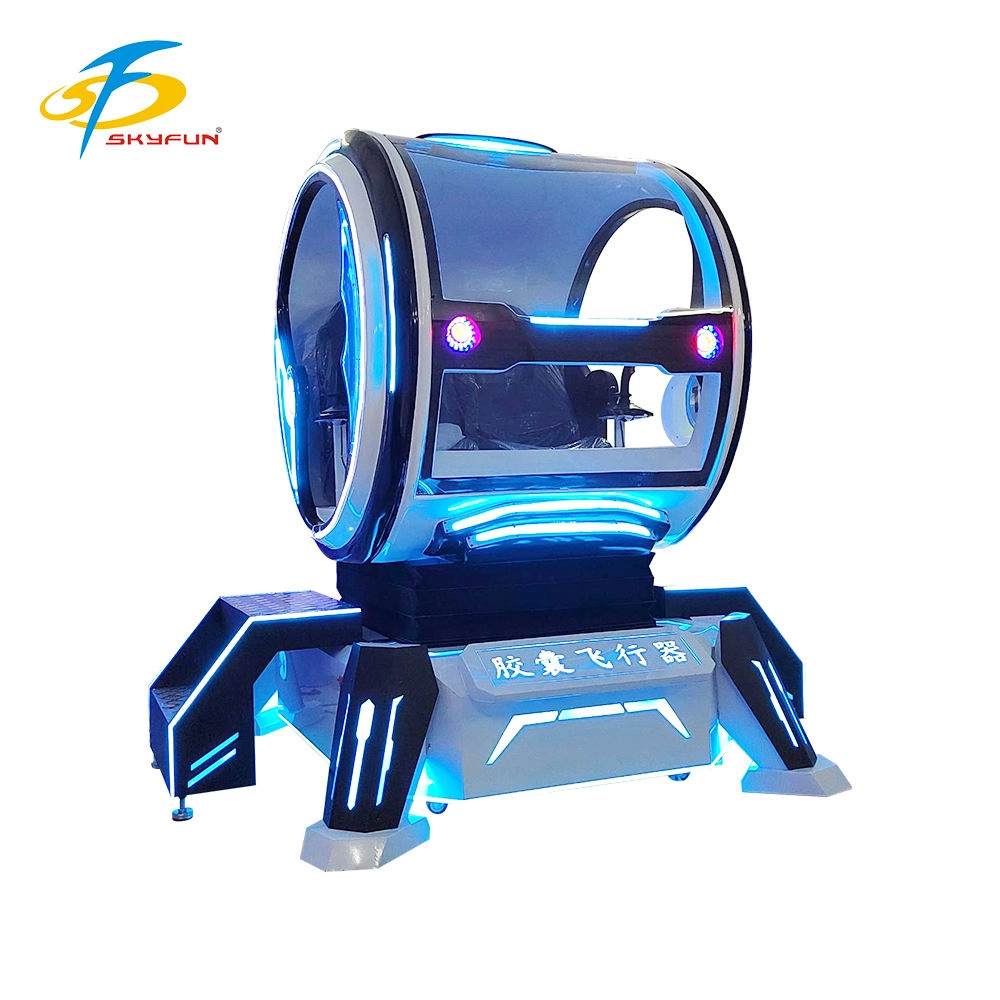
Double Player VR Flight Simulator 100 Movies 15 Games Coin-Operated Game Machine for Shopping Malls Amusement Parks
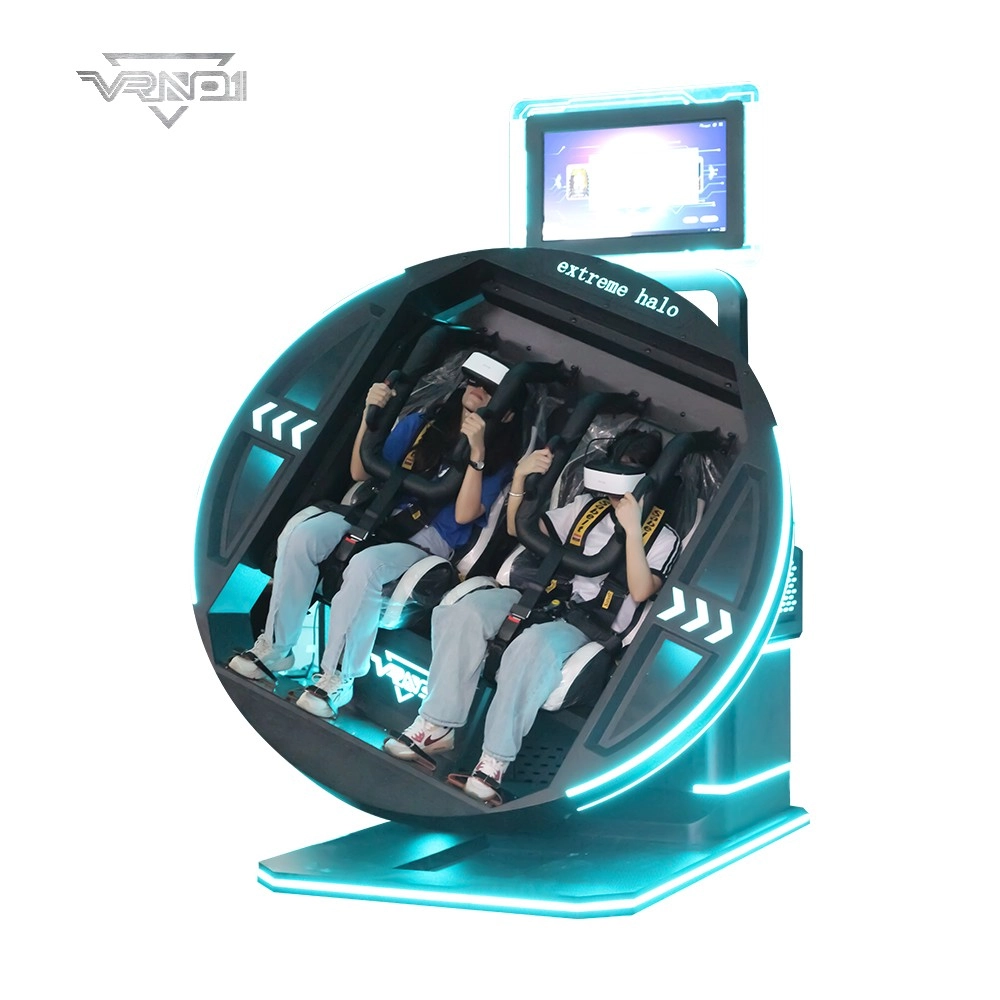
9D VR 360 Roller Coaster Cinema Chair Gaming Set Indoor/Outdoor Business Simulator Hardware for Home or School
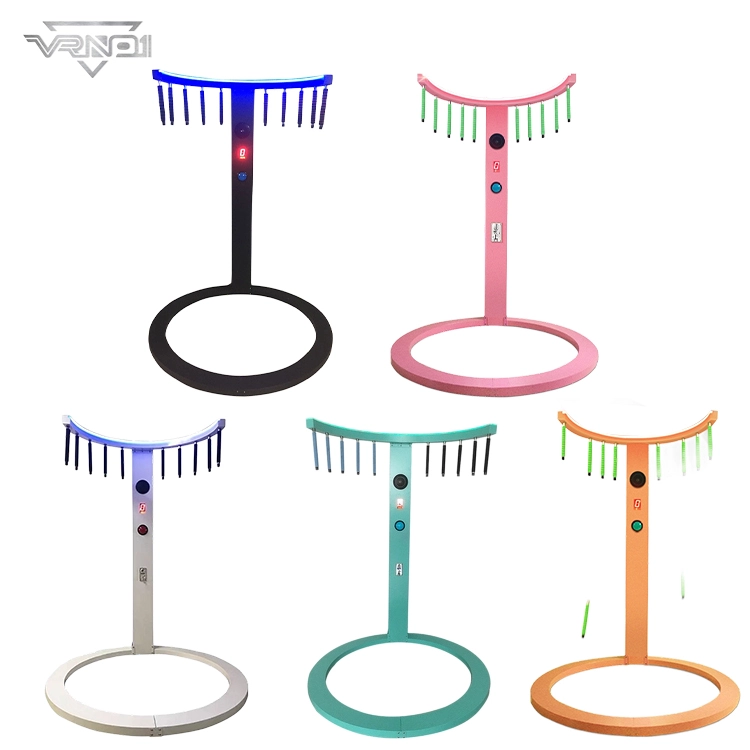
VRN0.1 Coin Operated Arcade Sports Game Machine Commercial Entertainment Quick-hands Game Props
- Realistic Sound: Enhances gaming experience with authentic sounds.
- Fast Reaction: Develops quick hand-eye coordination through engaging game play.
- DIY Kit: Allows for customization and personalization of the baton.
- Metal and Plastic Construction: Durable and robust build quality.
- Coin Operated: Fun for players who enjoy arcade-like experiences.
 Scan QR Code
Whatsapp: +8618127818571
Scan QR Code
Guangzhou Skyfun Technology Co.,Ltd
skyfunvrgame
skyfun game