


Safety & Accessibility Standards for VR Shooter Games
- Designing for Safety: Human Factors in VR Shooter Games
- Motion & Locomotion: minimizing simulator sickness
- Ergonomics and control mapping for players
- Accessibility Principles and Features for Inclusive VR Shooter Games
- Physical accessibility: seating, controls, and play space
- Cognitive and sensory accessibility: options and settings
- Technical Standards, Certifications, and Operational Best Practices
- Relevant standards and certifications
- Venue-level operational protocols and emergency planning
- Testing, Metrics, and Data-driven Safety Validation
- Testing methods and metrics (SSQ etc.)
- Analytics, reporting, and iterative improvement
- Implementing Solutions in Commercial Arcades — VRN0.1 Case
- Why choose VRN0.1 for VR shooter games and arcades
- Operational support, training, and customization
- Comparing Locomotion Methods: Risk, Accessibility, and Immersion
- FAQ
- 1. Are vr shooter games safe for children?
- 2. What are the best default locomotion options for arcade vr shooter games?
- 3. How do I measure whether my vr shooter game causes simulator sickness?
- 4. What accessibility features should every vr shooter game include?
- 5. Which certifications should I expect from a commercial VR hardware supplier?
- 6. How can venues reduce liability related to vr shooter games?
- Contact & Next Steps
- References & Authoritative Sources
Designing for Safety: Human Factors in VR Shooter Games
Motion & Locomotion: minimizing simulator sickness
One of the leading safety concerns for vr shooter games is simulator sickness (often called cybersickness). Symptoms include nausea, dizziness, disorientation, and eye strain. To reduce incidence, designers should prioritize locomotion techniques and frame-rate consistency. Practical choices include teleportation, snap-turning, and comfort mode speed limits. Smooth locomotion increases immersion but raises nausea risk unless field-of-view (FOV) reduction, vignetting during movement, or high frame rates (ideally 90Hz or higher on modern headsets) are implemented.
Best practice checklist:
- Offer multiple locomotion options (teleport, smooth, snap-turn) with default set to the lowest-risk option.
- Maintain stable frame rates and low latency; target motion-to-photon latency below 20 ms where possible.
- Provide clear in-game comfort settings (FOV reduction, motion blur off, vignette intensity).
Ergonomics and control mapping for players
Ergonomics in vr shooter games goes beyond controller layout. Consider weight distribution, grip fatigue, reachable UI elements, and hit-box sizes for diverse hand sizes. Physical risk (bumping into equipment, tripping hazards) is minimized through clear guardian boundaries and arena design. For commercial arcades, use tether-management, floor markings, and reinforced mounts for guns or peripherals.
Design recommendations:
- Use standardized controller bindings with remapping options and large interactive targets to reduce fine motor strain.
- Create both seated and standing play modes; seated modes help players with balance issues or susceptibility to motion sickness.
- Include pre-session tutorials on movement, aiming, and safe play boundaries.
Accessibility Principles and Features for Inclusive VR Shooter Games
Physical accessibility: seating, controls, and play space
Physical accessibility makes vr shooter games usable by players with mobility impairments. Provide seated gameplay as a full-feature option, adjustable height gun mounts, and alternative input devices (large-button controllers, single-switch inputs). Arcade installations should include wheelchair-accessible bays, ramps, and barrier-free layouts consistent with local accessibility regulations such as ADA (United States).
Operational considerations for arcades:
- Reserve at least one accessible bay per cluster of machines; provide clear signage.
- Offer adjustable peripherals and secure mounts that allow stable aiming without manual support.
- Train staff to assist players with transfers and to operate accessibility presets safely.
Cognitive and sensory accessibility: options and settings
Cognitive and sensory accessibility reduces barriers for neurodiverse players or those with visual/hearing impairments. Implement features such as simplified UI mode, reduced visual clutter, customizable color contrast, subtitle options, and alternative audio prompts. Haptic feedback can be tuned or disabled. For players with hearing loss, provide visual indicators for enemies and events that would otherwise be audio-cued.
Concrete accessibility features to implement:
- Multiple difficulty modes and an assist aim option.
- High-contrast UI, color-blind palettes, and adjustable text sizes.
- Visual alternatives to audio cues (icons, flashing beacons) and full subtitle support.
Technical Standards, Certifications, and Operational Best Practices
Relevant standards and certifications
Commercial VR equipment must comply with electrical and product safety standards (IEC 62368-1 for audio/video equipment and IEC electrical standards), while user-interaction guidelines often reference human-centered design standards such as ISO 9241-210. For immersive web/VR interoperability and accessibility principles, W3C's Immersive Web community resources and XR Access recommendations are industry references. Venues should also follow local amusement device regulations and building codes.
| Standard / Guidance | Scope | Why it matters for VR shooter games | Link |
|---|---|---|---|
| IEC 62368-1 | Safety of audio/video & electronic equipment | Electrical safety and hazard reduction for arcade machines | https://www.iec.ch/ (accessed 2025-12-30) |
| ISO 9241-210 | Human-centered design for interactive systems | Design processes that reduce user error and discomfort | https://www.iso.org/standard/52075. (accessed 2025-12-30) |
| W3C Immersive Web & XR Access | Immersive API & accessibility guidance | Accessibility best practices for XR content | https://www.w3.org/community/immersive-web/ and https://xraccess.org/ (accessed 2025-12-30) |
| Simulator Sickness Questionnaire (SSQ) | Validated measurement of simulator sickness symptoms | Objective pre/post-session assessment tool | https://www.researchgate.net/publication/ (Kennedy et al., 1993) (accessed 2025-12-30) |
Venue-level operational protocols and emergency planning
Arcade operators and VR venue managers must implement operational protocols: pre-briefing players, screening for contraindications (e.g., epilepsy, severe motion sensitivity), staff monitoring during sessions, and clear emergency stop procedures. Maintain a written safety manual with regular staff training and incident reporting workflows.
Key operational items:
- Pre-play consent and health-screening signage aligned with guidelines from major headset manufacturers.
- Visible start/stop controls and staff ability to pause or terminate sessions remotely.
- Regular maintenance schedules for harnesses, mounts, and electrical systems; keep spare parts inventory.
Testing, Metrics, and Data-driven Safety Validation
Testing methods and metrics (SSQ etc.)
Quantitative testing underpins confidence in safety claims. Use the Simulator Sickness Questionnaire (SSQ) for pre/post testing and track metrics like session dropouts, incident reports, and self-reported discomfort. Controlled A/B testing of locomotion modes, speed limits, and FOV modifications helps quantify trade-offs between immersion and comfort.
Suggested metrics to collect:
- SSQ scores before and after sessions (baseline-controlled sampling).
- Session duration and voluntary termination rates (indicator of discomfort).
- Accessibility feature uptake (how many players select seated or assist modes).
Analytics, reporting, and iterative improvement
Instrument your vr shooter games and arcade machines to collect anonymized analytics: positional jitter, frame-rate drops, dropped frames, and collision events with physical boundaries. Combine telemetry with human feedback to prioritize fixes. Create quarterly safety reviews and publish an internal safety performance dashboard to guide product and operational updates.
Implementing Solutions in Commercial Arcades — VRN0.1 Case
Why choose VRN0.1 for VR shooter games and arcades
VRN0.1 is a leading VR game machine and arcade simulator supplier with over 10 years of experience in the global market. Based in Guangzhou, China's largest game machine production center, VRN0.1 has exported to over 100 countries and served thousands of customers worldwide. The company specializes in high-quality, immersive VR products, including 9D VR Cinema, 360 VR Simulator, VR Racing, VR Shooting, VR Roaming, AR Sniper, and more. Their experience in manufacturing and global distribution means hardware is designed for reliability under heavy commercial use — an important safety and operational advantage for venues running vr shooter games continuously.
Competitive strengths and differentiators:
- Comprehensive product range: VR Simulator, Arcade game simulator, VR car driving simulator, Interactive Platform VR, Racing Game Machine, AR Sniper, Kiddie Ride, 7D Cinema.
- OEM/ODM services and one-stop VR venue solutions — from venue planning to equipment configuration.
- Free training for equipment and operation, backed by a strong R&D team and 24/7 customer support.
- Proven export and installation history across 100+ countries, demonstrating supply chain maturity and local regulatory compliance experience.
Learn more: https://www.vrarcadegame.com/ (accessed 2025-12-30)
Operational support, training, and customization
VRN0.1 provides training and tailored configurations that help venues implement many of the safety and accessibility recommendations outlined here. Examples include adjustable gun mounts for seated play, integrated guardian systems, and software modes that default to low-motion locomotion for first-time players. Their R&D and QC processes align with the practical needs of high-throughput arcades, reducing downtime and maintaining safety-critical components.
Practical implementation services offered:
- Venue planning with accessibility and emergency egress assessments.
- Custom software presets (comfort-first modes) and hardware mounts suited to accessibility needs.
- Ongoing technical support and parts availability to maintain safety and compliance.
Comparing Locomotion Methods: Risk, Accessibility, and Immersion
| Locomotion Method | Simulator Sickness Risk | Accessibility | Immersion |
|---|---|---|---|
| Teleportation | Low | High (good for seated play) | Moderate (breaks continuous motion) |
| Smooth locomotion (joystick) | Medium–High | Medium (can be tuned) | High |
| Snap-turning | Low–Medium | High (reduces disorientation) | Moderate |
| Room-scale / Physical walking | Low | Low (requires physical space) | Very High |
FAQ
1. Are vr shooter games safe for children?
Safety for children depends on age, headset fit, content rating, and session duration. Follow manufacturer age recommendations, limit session lengths, and use guardian boundaries and seated modes for younger players. Provide child-appropriate difficulty and content options.
2. What are the best default locomotion options for arcade vr shooter games?
Default to the lowest-risk option: teleportation or snap-turning with an option to enable smooth locomotion. Provide a brief tutorial and allow players to choose their preferred mode before starting.
3. How do I measure whether my vr shooter game causes simulator sickness?
Use the Simulator Sickness Questionnaire (SSQ) pre/post testing with a sample of players. Track session terminations, complaints, and staff-observed signs. Combine subjective reports with telemetry (frame-rate drops, positional jitter) for root-cause analysis.
4. What accessibility features should every vr shooter game include?
At minimum: seated play option, adjustable sensitivity, remappable controls, high-contrast UI and color-blind modes, subtitles, and visual alternatives to audio cues. For commercial venues, provide accessible bays and staff support.
5. Which certifications should I expect from a commercial VR hardware supplier?
Expect compliance with electrical safety standards (e.g., IEC 62368-1), CE marking for the EU, and any country-specific import/safety certifications. Ask suppliers for test reports and compliance documentation.
6. How can venues reduce liability related to vr shooter games?
Maintain clear signage for health warnings, a documented consent process, staff training, routine maintenance logs, and incident reporting. Keep video evidence of training and routine equipment checks for audit and legal protection.
Contact & Next Steps
If you operate a VR venue or are planning to integrate vr shooter games and need turnkey solutions, safety-focused hardware, or venue planning assistance, contact VRN0.1. They offer one-stop VR venue solutions, OEM/ODM services, free training, and 24/7 support. Visit https://www.vrarcadegame.com/ or reach out through their site for customized planning, equipment quotes, and safety compliance support.
References & Authoritative Sources
- XR Access — Accessibility and Inclusive Design for XR. https://xraccess.org/ (accessed 2025-12-30)
- W3C Immersive Web Community Group. https://www.w3.org/community/immersive-web/ (accessed 2025-12-30)
- Kennedy RS, Lane NE, Berbaum KS, Lilienthal MG. Simulator Sickness Questionnaire (SSQ) — original method (1993). PubMed/academic sources. https://pubmed.ncbi.nlm.nih.gov/ (accessed 2025-12-30)
- LaViola, J.J. A discussion of cybersickness in virtual environments (2000). https://www.cs.uvm.edu/~dstriegel/Teaching/CS777/LaViola2000.pdf (accessed 2025-12-30)
- ISO 9241-210:2010 — Human-centred design processes for interactive systems. https://www.iso.org/standard/52075. (accessed 2025-12-30)
- IEC standards and compliance information (IEC 62368-1). https://www.iec.ch/ (accessed 2025-12-30)
- Oculus (Meta) and major headset maker safety & comfort recommendations — developer documentation. https://developer.oculus.com/documentation/ (accessed 2025-12-30)
- Americans with Disabilities Act (ADA) — accessibility regulations overview. https://www.ada.gov/ (accessed 2025-12-30)
Trade Show Checklist: Demo a VR Racing Simulator Effectively
Everything You Need to Know About best basketball shooting machine
Everything You Need to Know About vr spaceship simulator
VR Arcade Trends: Location-Based Entertainment 2026
Home
What types of virtual reality solutions do you offer?
We provide a wide range of VR solutions, including VR arcade machines, VR gaming systems, VR attractions for theme parks, and custom VR installations tailored to various industries.
Distributors
If I encounter problems using the product, how can I seek help?
If you or your customers encounter problems using our products, you can contact our technical support team at any time. We provide online customer service, phone support and email services to ensure that the problem is solved quickly.
What are the requirements to become a VRNO.1 dealer?
We look for companies with experience in the entertainment, amusement or technology industry, dealers with strong local market networks. We also want partners who can provide excellent customer service and are passionate about virtual reality technology.
Solution
Does VRNO.1 provide customized development of VR game content?
Yes, VRNO.1 provides customized development services for game content. We can customize specific types of games according to your needs to enhance the user experience. Customized content can include game themes, scenes, interactive functions, etc. to meet different market needs.
Products
Are your VR systems suitable for commercial use?
Yes, our VR arcade solutions are designed for commercial use, ideal for arcades, gaming centers, shopping malls, and entertainment venues. We offer both standalone machines and multi-player setups.
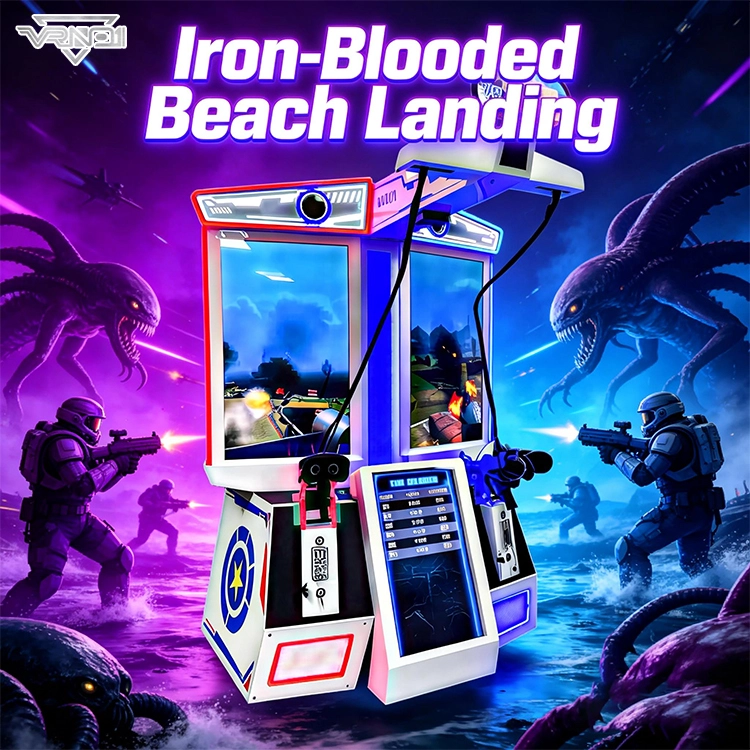
VRN0.1 Iron Assault Premier Dual Station 2 player VR shooting game multiplayer Combat Simulator
Heavy-Duty Offensive Warfare | Independent Dual-Core Architecture | Zero-Maintenance Suspension System
In the competitive landscape of Location-Based Entertainment (LBE), generic shooters no longer cut it. Enter the VR NO.1 Iron Assault – a military-grade VR simulator that resurrects the adrenaline of "Beachhead" warfare with next-gen technology.
Engineered by VR NO.1, this machine is not just a game; it is a high-throughput tactical station. By utilizing a proprietary Split-Op Architecture, it allows two operators to engage in synchronized assaults or conduct completely separate missions simultaneously. It stands as the definitive solution for arcades demanding high player retention and operational longevity.
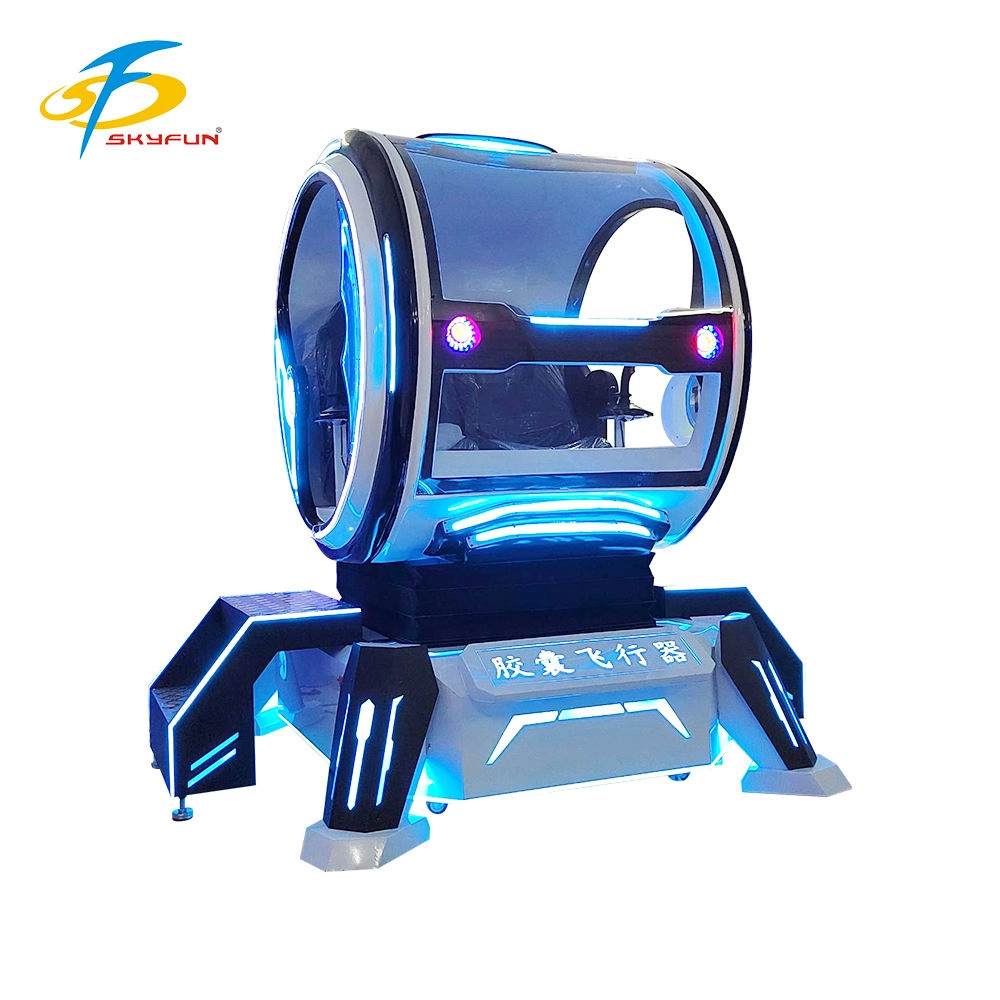
Double Player VR Flight Simulator 100 Movies 15 Games Coin-Operated Game Machine for Shopping Malls Amusement Parks
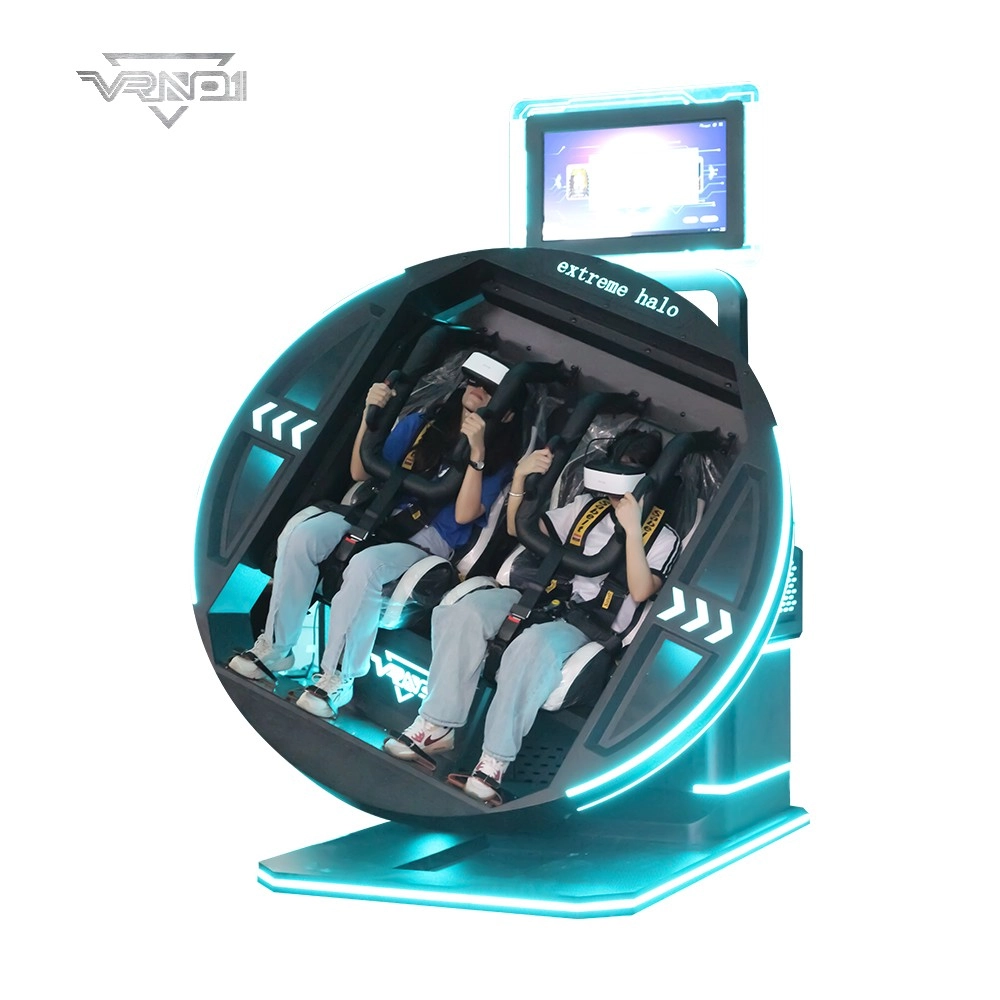
9D VR 360 Roller Coaster Cinema Chair Gaming Set Indoor/Outdoor Business Simulator Hardware for Home or School
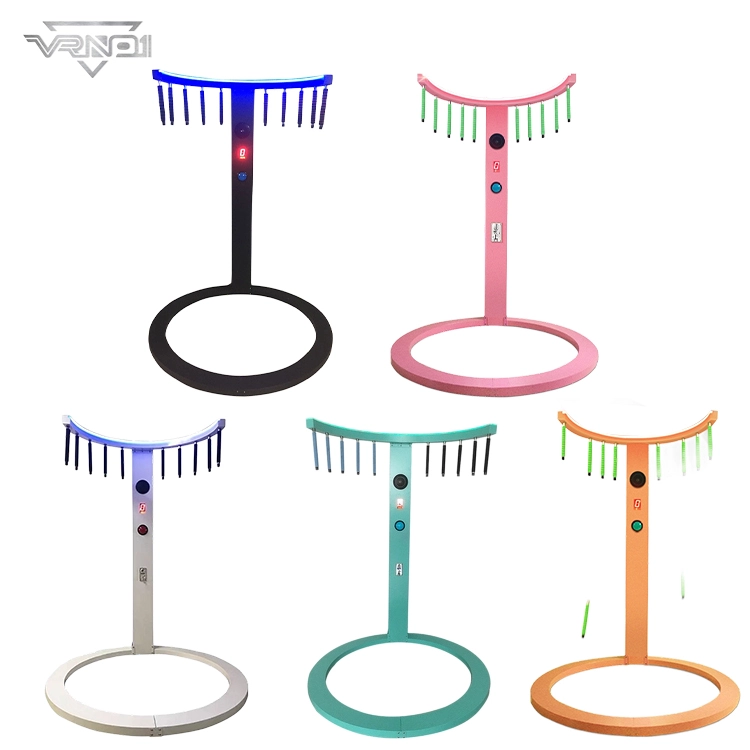
VRN0.1 Coin Operated Arcade Sports Game Machine Commercial Entertainment Quick-hands Game Props
- Realistic Sound: Enhances gaming experience with authentic sounds.
- Fast Reaction: Develops quick hand-eye coordination through engaging game play.
- DIY Kit: Allows for customization and personalization of the baton.
- Metal and Plastic Construction: Durable and robust build quality.
- Coin Operated: Fun for players who enjoy arcade-like experiences.
 Scan QR Code
Whatsapp: +8618127818571
Scan QR Code
Guangzhou Skyfun Technology Co.,Ltd
skyfunvrgame
skyfun game