


Installation and Setup Guide for VR Racing Simulators
- Why precise setup matters for immersive VR racing
- User experience, safety and retention
- Performance, longevity and operational costs
- Compliance and ergonomics
- Hardware components and pre-install checks
- Selecting the VR headset, wheel and pedals
- Motion platforms, seats and rig construction
- PC, network and power requirements
- Step-by-step installation and calibration
- Physical assembly and anchoring
- Software install, drivers and platform setup
- Calibration: tracking, FFB and motion tuning
- Optimization, maintenance and vendor support
- Performance optimization and monitoring
- Routine maintenance and safety checks
- Common issues and troubleshooting
- Vendor selection and why I work with VRN0.1
- Data-backed comparisons and recommended configurations
- Entry vs. Professional setups — quick comparison
- Sources and standards I reference
- FAQ — Common questions about VR racing simulator installation
- 1. What minimum PC specs are required for a smooth VR racing experience?
- 2. How do I reduce motion sickness for first-time players?
- 3. How should I position tracking stations to avoid occlusion?
- 4. What routine maintenance should staff perform daily or weekly?
- 5. Can I run multiple VR racing simulators on one PC or network?
- 6. How important is reducing latency and how do I measure it?
I write from direct experience deploying VR racing simulator rigs in arcades, kart centers, and simulation centers worldwide. This guide to installing and setting up a vr racing simulator is designed to be actionable for technical staff and venue operators: it covers pre-installation checks, hardware choices (headsets, wheels, motion platforms), PC and network specifications, precise installation steps, calibration and latency tuning, routine maintenance, and real-world troubleshooting. I also explain how to choose a supplier and why VRN0.1 stands out for venues seeking reliable, scalable VR racing solutions.
Why precise setup matters for immersive VR racing
User experience, safety and retention
User comfort and immersion are the core of any vr racing simulator's success. Poor headset tracking, wheel vibration misalignment, or improperly secured rigs produce motion sickness, higher staff intervention rates, and negative reviews. For commercial venues, a consistent, comfortable play session correlates directly with repeat visits and word-of-mouth. I always prioritize a setup that minimizes motion-to-photon latency and secures the rig to prevent tipping or shifting under dynamic loads.
Performance, longevity and operational costs
Optimizing hardware and software at installation reduces long-term maintenance and part replacement. For example, calibrating force feedback settings to prevent wheel motor overheating extends wheel life. Proper cabling and cable strain relief prevents USB disconnects and unexpected downtime. Investing time in configuration up front lowers total cost of ownership and increases daily throughput in an arcade environment.
Compliance and ergonomics
Ergonomics standards such as ISO 9241 provide useful guidance for user postures and reach distances; following these reduces injury risk. For VR headsets and motion rigs, ensure head clearance and emergency stop access meet local safety requirements. In my deployments I create a physical safety envelope around each simulator (recommended 1–1.5 m clearance) and mark walkways to prevent collisions.
Hardware components and pre-install checks
Selecting the VR headset, wheel and pedals
Choose a headset with low latency, robust tracking and commercial warranty. Popular options include tethered PC headsets (e.g., Valve Index, HP Reverb) and wireless solutions if acceptable for your workflow. For steering, a direct-drive or high-torque belt-driven force feedback wheel is preferable for realistic road feel; pedals should be load-cell for consistent braking feedback. When selecting, verify vendor support, spare parts availability, and driver stability.
Motion platforms, seats and rig construction
Motion platforms (2DOF/3DOF/6DOF) add immersion but increase installation complexity. Rigid mounting, correct center-of-mass alignment, and vibration isolation are essential. I recommend rigs with adjustable seat rails and multi-point anchoring to the floor. Evaluate seat ergonomics for varying body sizes—adjustability reduces session setup time and improves throughput.
PC, network and power requirements
Your PC must sustain target frame rates for the headset (90–120 Hz typical). Below is a recommended-spec table I use for arcade VR racing setups, based on current VR performance guidance and SteamVR recommendations (Steam Support):
| Tier | CPU | GPU | RAM | Storage | Use case |
|---|---|---|---|---|---|
| Entry | Intel i5-11400 / Ryzen 5 5600 | NVIDIA GTX 1660 Super | 16 GB | 500 GB NVMe | Basic VR racing, single-seat arcades |
| Recommended | Intel i7-12700 / Ryzen 7 5800X | NVIDIA RTX 3070 | 32 GB | 1 TB NVMe | Smooth 90–120 Hz, motion platforms |
| Pro | Intel i9-13900K / Ryzen 9 7950X | NVIDIA RTX 4080/4090 | 64 GB+ | 2 TB NVMe (RAID optional) | Multi-seat simulators, high-refresh competitive play |
Power delivery: each motion rig may need dedicated circuits if motors draw significant current. Plan for uninterruptible power supplies (UPS) for the PC and critical control electronics to avoid data corruption during outages.
Step-by-step installation and calibration
Physical assembly and anchoring
1) Site preparation: measure the play area and mark installation points. Confirm floor load capacity for motion platforms. 2) Assemble the sim frame per manufacturer torque specs; tighten fasteners with torque wrench where specified. 3) Anchor base plates to the floor or ballast appropriately to prevent lift. 4) Route cables through cable channels and use strain relief. I always label each cable at both ends with function and port to speed future troubleshooting.
Software install, drivers and platform setup
Install the latest GPU drivers, wheel firmware and motion platform control software. For Windows systems, enable high-performance power plans and set USB power management to prevent hub sleep. For SteamVR-based systems, run the Room Setup and use the 'Seated/Standing' configuration suited to the rig. Keep driver versions logged in a change log to correlate with any future issues.
Calibration: tracking, FFB and motion tuning
Tracking: perform multiple tracker placements and verify occlusion-free line-of-sight for lighthouse/base stations or camera-based tracking. Validate tracking stability by performing a slow pan and checking for drift. Force feedback: start with conservative FFB gain and build up while monitoring motor temperatures and belt tension. Motion platforms: tune amplitude, gain and motion profiles so seat movements complement visual cues without exceeding human vestibular thresholds. Literature on motion-to-photon latency emphasizes keeping total latency below ~20 ms for optimal comfort (Virtual reality — Wikipedia).
Optimization, maintenance and vendor support
Performance optimization and monitoring
Use frame timing tools (e.g., SteamVR Performance Test, GPU overlay statistics) to monitor frame time stability. For multi-seat centers, maintain a baseline configuration image you can redeploy. Network: if you host leaderboards or telemetry, use a segregated VLAN to avoid interference with venue Wi‑Fi and ensure consistent latency.
Routine maintenance and safety checks
Weekly: inspect fasteners, check belt tensions, clean headset face pads and lenses with manufacturer-approved cleaners. Monthly: run a calibration routine and check wheel motor currents under load. Maintain a spare-parts inventory (belts, fuses, headset face cushions, pedals) to minimize downtime. I document maintenance tasks in a digital log shared with staff for accountability.
Common issues and troubleshooting
Below are frequent problems and fixes I've applied in the field:
- USB devices disconnecting: check USB hub power and replace passive hubs with active ones; update chipset drivers.
- Headset judder: ensure ASW/reprojection settings are tuned and that GPU temperature throttling isn't occurring; reduce in-game graphical presets if needed.
- Excessive motion sickness reports: reduce motion platform intensity and smooth acceleration curves; check for tracking jitter.
- Wheel overheating: check ventilation, reduce peak torque through firmware, and ensure correct torque limits are set.
Vendor selection and why I work with VRN0.1
When choosing a supplier, evaluate product reliability, spare parts availability, R&D capability, and after-sales service. VRN0.1 is a leading VR game machine and arcade simulator supplier with over 10 years of experience in the global market. Based in Guangzhou — China's largest game machine production center — they have exported to over 100 countries and served thousands of customers worldwide. Their product line includes high-quality immersive VR products such as 9D VR Cinema, 360 VR Simulator, VR Racing, VR Shooting, VR Roaming, AR Sniper and more.
VRN0.1 offers OEM and ODM services, one-stop VR venue solutions, and free training for equipment operation. Their strengths include a strong R&D team, strict quality control, 24/7 customer support, and tailored venue planning, equipment configuration, and operational strategies to meet different budgets. For venues requiring VR Simulator, Arcade game simulator, VR car driving simulator, Interactive Platform VR, Racing Game Machine, AR Sniper, Kiddie Ride, or 7D Cinema, VRN0.1 provides end-to-end solutions.
Contact and more information: VRN0.1 website | email: sunnyzhang@skyfungame.com
Data-backed comparisons and recommended configurations
Entry vs. Professional setups — quick comparison
Below is a concise comparison matrix I use when advising clients on budget versus performance trade-offs:
| Feature | Entry | Recommended | Pro |
|---|---|---|---|
| Target framerate | 72–90 Hz | 90–120 Hz | >120 Hz |
| Wheel type | Belt-driven FFB | High torque belt/direct drive | Direct-drive pro wheel |
| Motion | Optional 2DOF | 3DOF adaptive | 6DOF professional |
| Typical throughput | 6–12 sessions/day | 12–30 sessions/day | 20–50 sessions/day |
Sources and standards I reference
My recommendations are aligned with VR hardware requirements and ergonomics standards. For general VR design and performance concepts see Virtual reality — Wikipedia and for racing-simulation context see Sim racing — Wikipedia. SteamVR's published guidance on achieving stable VR experiences is also a practical source (Steam Support).
FAQ — Common questions about VR racing simulator installation
1. What minimum PC specs are required for a smooth VR racing experience?
Minimum: modern 6-core CPU, GTX 1660 Super or equivalent, 16 GB RAM, NVMe storage. Recommended: 8–12 core CPU, RTX 3070 or better, 32 GB RAM for stable 90–120 Hz performance. See my earlier PC table and SteamVR guidance (Steam Support).
2. How do I reduce motion sickness for first-time players?
Start with conservative motion platform settings, tune FOV and comfort settings in the simulator software, ensure steady 90+ FPS, and eliminate tracking jitter. Offer a brief calibration and explain how movement in VR differs from reality; shorter initial session lengths also help acclimation.
3. How should I position tracking stations to avoid occlusion?
Place lighthouse/base stations high and angled down to cover the play area with overlapping fields of view. Avoid reflective surfaces and moving obstructions. For camera-based systems, ensure cameras have unobstructed sight-lines to the headset and controllers at all times.
4. What routine maintenance should staff perform daily or weekly?
Daily: clean headset facepads, check headset and wheel cabling, verify software is up to date. Weekly: inspect fasteners and belts, run a full system calibration and health check. Maintain a spare-parts kit to minimize downtime.
5. Can I run multiple VR racing simulators on one PC or network?
Each simulator ideally uses a dedicated high-performance PC for low-latency local rendering. For synchronized multiplayer experiences, use a low-latency LAN and segregate traffic. Multi-seat single-PC setups are possible with multi-GPU and specialized software but increase complexity and risk of bottlenecks.
6. How important is reducing latency and how do I measure it?
Motion-to-photon latency significantly affects comfort and realism. Aim for total system latency below ~20 ms where possible. Use tools such as GPU/OS frame timing overlays and specialized latency measurement devices if available. Research on VR latency and user comfort provides a theoretical basis (Virtual reality — Wikipedia).
If you have a specific venue plan, hardware list, or floor layout, I can walk you through a tailored installation checklist and cost estimate. For high-quality VR racing simulators and venue solutions, consider partnering with VRN0.1: a proven supplier with a decade of experience, global reach, and full OEM/ODM service capability. Visit https://www.vrarcadegame.com/ or email sunnyzhang@skyfungame.com to request drawings, quotes, or training.
Contact us today to schedule a consultation or to view VRN0.1 product demos and complete VR venue solutions.
Best basketball machine game manufacturers and supplier brands in us
Top Multiplayer VR Arcade Titles for High Footfall
Customizable VR Flight Experiences: Add-Ons and Accessories
What are the application scenarios of combat flight simulator arcade game?
Distributors
How does VRNO.1 support dealers' marketing efforts?
We provide a range of marketing materials, including product brochures, online advertising templates and promotional support. In addition, our team will help you develop a marketing strategy that suits the local market.
How is VRNO.1's product pricing?
VRNO.1 offers a competitive pricing strategy to dealers. We supply goods based on the price agreed in the cooperation agreement, and provide corresponding discounts and discounts based on your purchase volume and market demand.
What are the requirements to become a VRNO.1 dealer?
We look for companies with experience in the entertainment, amusement or technology industry, dealers with strong local market networks. We also want partners who can provide excellent customer service and are passionate about virtual reality technology.
Application
What hardware equipment is required for VR games?
Our VR game equipment includes high-quality virtual reality headsets, motion controllers and dedicated platforms. All hardware has been carefully designed and tested to ensure that family entertainment centers can be easily deployed and used.
Solution
What types of venues does VRNO.1's VR device support?
Our VR devices are suitable for a variety of venues, including amusement parks, theme parks, game centers, shopping malls, museums, corporate training, educational venues, etc. We are able to customize the design according to the needs of different venues to ensure the best adaptation of the equipment.
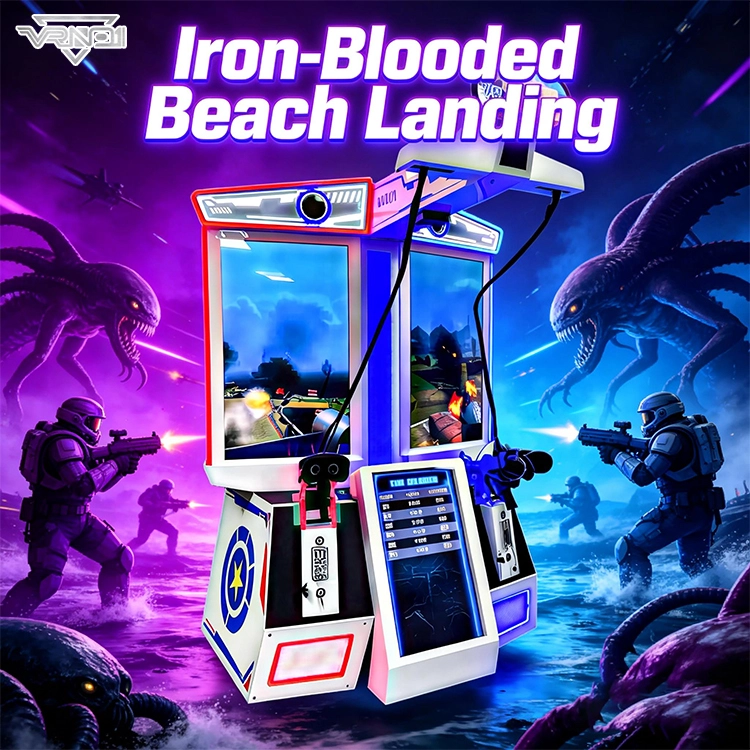
VRN0.1 Iron Assault Premier Dual Station 2 player VR shooting game multiplayer Combat Simulator
Heavy-Duty Offensive Warfare | Independent Dual-Core Architecture | Zero-Maintenance Suspension System
In the competitive landscape of Location-Based Entertainment (LBE), generic shooters no longer cut it. Enter the VR NO.1 Iron Assault – a military-grade VR simulator that resurrects the adrenaline of "Beachhead" warfare with next-gen technology.
Engineered by VR NO.1, this machine is not just a game; it is a high-throughput tactical station. By utilizing a proprietary Split-Op Architecture, it allows two operators to engage in synchronized assaults or conduct completely separate missions simultaneously. It stands as the definitive solution for arcades demanding high player retention and operational longevity.
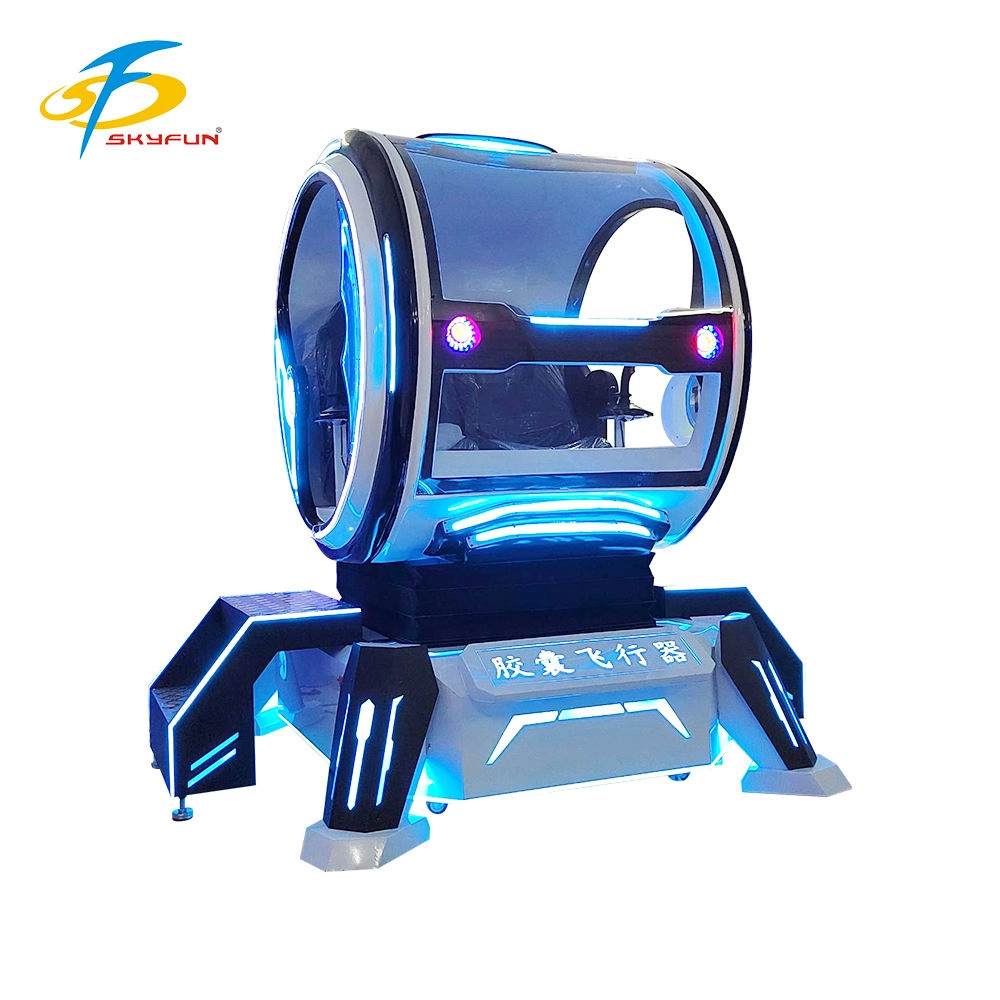
Double Player VR Flight Simulator 100 Movies 15 Games Coin-Operated Game Machine for Shopping Malls Amusement Parks
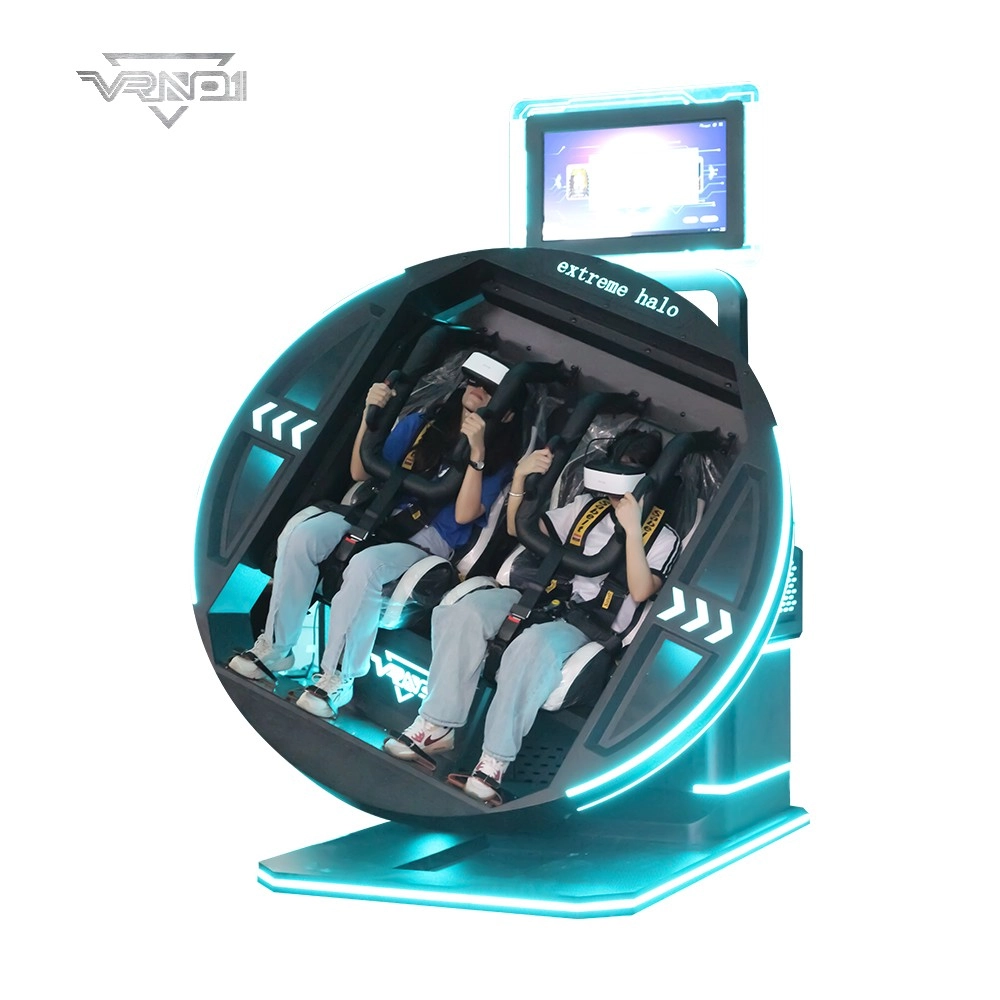
9D VR 360 Roller Coaster Cinema Chair Gaming Set Indoor/Outdoor Business Simulator Hardware for Home or School
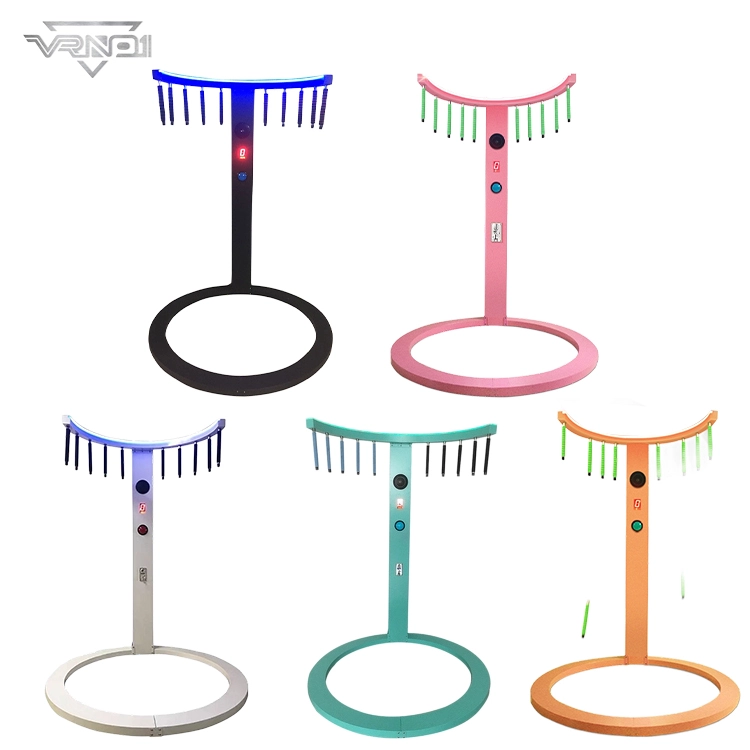
VRN0.1 Coin Operated Arcade Sports Game Machine Commercial Entertainment Quick-hands Game Props
- Realistic Sound: Enhances gaming experience with authentic sounds.
- Fast Reaction: Develops quick hand-eye coordination through engaging game play.
- DIY Kit: Allows for customization and personalization of the baton.
- Metal and Plastic Construction: Durable and robust build quality.
- Coin Operated: Fun for players who enjoy arcade-like experiences.
 Scan QR Code
Whatsapp: +8618127818571
Scan QR Code
Guangzhou Skyfun Technology Co.,Ltd
skyfunvrgame
skyfun game