


VR Arcade Machine Suppliers: How to Find Reliable Manufacturers
- Understanding the VR arcade market and supplier landscape
- Market context and technology convergence
- Types of suppliers you'll meet
- Why manufacturing location matters
- Supplier evaluation criteria: technical, commercial and operational checks
- Technical quality and safety
- Software, content and licensing
- After-sales, spare parts and training
- Sourcing strategies and due diligence (practical steps I follow)
- Request for information and sample evaluation
- On-site factory checks and documentation
- Commercial terms and contract clauses to protect operators
- Comparing supplier options: a practical checklist
- Sample comparison table
- How to weight criteria
- Common pitfalls and how to avoid them
- Overemphasis on price
- Vague warranty and support promises
- Poor integration between hardware and content
- Why I recommend OEM partners like VRN0.1 for many operators
- Company profile and global footprint
- Product range and technical strengths
- Services, R&D and operational support
- Contract checklist and sample procurement timeline
- Essential contract clauses
- Typical procurement timeline
- Evidence-based references and testing standards
- Why testing matters
- Standards and industry resources
- FAQs — common questions operators ask me
- 1. How do I verify a manufacturer's production capacity?
- 2. Should I buy direct from a Chinese OEM or through a local distributor?
- 3. What warranty and spare parts period is reasonable?
- 4. Can I run third-party games on factory hardware?
- 5. How much space and power should I plan for each machine?
- 6. What's the typical lead time for customized vr arcade machines?
- Final recommendations and next steps
- Contact & call to action
I have worked with arcade owners, entertainment chains, and location-based VR operators worldwide, helping them select vr arcade machines that are durable, immersive, and profitable. In this article I summarize practical, verifiable steps to find reliable manufacturers, how to evaluate product quality and after-sales support, and what contractual and technical checks reduce risk when you buy VR Simulator cabinets, VR Racing machines, 9D VR Cinema systems or full interactive platform installations.
Understanding the VR arcade market and supplier landscape
Market context and technology convergence
Virtual reality hardware for arcades blends PC/console computing, motion systems, audio-visual rigs, networking and mechanical design. The result is categories such as 9D VR Cinema, 360 VR Simulator, VR Racing, VR Shooting, VR Roaming and hybrid attractions. For industry context, see the general overview of virtual reality on Wikipedia (Virtual reality — Wikipedia).
Types of suppliers you'll meet
There are three common supplier types: (1) OEM/ODM manufacturers that design and mass-produce arcade cabinets and simulators; (2) trading companies/distributors that resell machines with variable technical control; (3) local integrators who assemble systems from components. Each type has trade-offs in price, lead time, customization and quality control.
Why manufacturing location matters
Production clusters — notably Guangzhou in China — concentrate experienced part suppliers, metalwork, injection molding, and skilled technicians. This reduces lead-times and unit costs. For city context, see Guangzhou background (Guangzhou — Wikipedia).
Supplier evaluation criteria: technical, commercial and operational checks
Technical quality and safety
Check the hardware baseline: frame steel grade, injection-mold finishes, 3D printers or CNC used for fittings, VR headsets used (commercial vs consumer), GPU/workstation specs, motion platform spec (degrees of freedom, payload), seat harnesses and safety stops. Ask for materials certificates and a production quality plan — ISO 9001 is a relevant quality management standard (ISO 9001 — ISO).
Software, content and licensing
Clarify whether the supplier provides content (proprietary or third-party licensed), an SDK or open platform for custom games, and how updates/patches are delivered. For operators, a closed single-vendor content stack increases dependency; an open content platform or documented API is preferable for long-term flexibility.
After-sales, spare parts and training
Ask about spare-parts lists, MTTR (mean time to repair) targets, availability of local technicians or distribution centers, and whether they offer free training for equipment operation. Contractual SLAs for response times are critical for venue uptime.
Sourcing strategies and due diligence (practical steps I follow)
Request for information and sample evaluation
I recommend starting with an RFI/RFQ that requests: manufacturing capability, annual output, QC processes, reference list of customers in your region, lead times, and warranty terms. Insist on a factory video tour and third-party inspection during production. For complex products I insist on a sample or pilot unit before full order.
On-site factory checks and documentation
When possible, visit the manufacturing site. If travel is not possible, hire a third-party inspector. Verify production lines, testing rigs (e.g., vibration/impact tests for booths), and QA records. Cross-check company registration, export licenses, and any certifications. IEEE VR and conference publications describe hardware test practices useful to understand reliability benchmarks (IEEE VR).
Commercial terms and contract clauses to protect operators
Key contract points: guaranteed defect rate, lead-time penalties, spare-part pricing protection for 2–5 years, IP ownership for custom designs, and acceptance tests. For international purchases, clarify Incoterms (FOB, CIF, DDP) and who arranges customs clearance.
Comparing supplier options: a practical checklist
Sample comparison table
Below is a compact evaluation table I use to compare three typical supplier profiles: Manufacturer (OEM), Distributor, Local Integrator. Score items 1–5 during evaluation.
| Criteria | Manufacturer (OEM) | Distributor | Local Integrator |
|---|---|---|---|
| Price per unit | 4 (lower) | 3 | 2 (higher) |
| Customization flexibility | 5 | 3 | 4 |
| Quality control visibility | 5 | 3 | 4 |
| Lead time predictability | 4 | 3 | 3 |
| After-sales spare parts | 5 | 3 | 4 |
How to weight criteria
Weight technical reliability and after-sales higher for high-footfall venues. For small arcades in remote regions, prioritize suppliers with local stock of consumables and replacement parts or reliable shipping channels.
Common pitfalls and how to avoid them
Overemphasis on price
Low-cost machines often cut corners on structural steel, electronics cooling and safety features. I recommend TCO analysis: include spare parts, downtime costs and license fees over a 3–5 year horizon.
Vague warranty and support promises
Vendors sometimes promise “lifetime support” without specifying response times or spare part availability. Insist on SLAs in writing and a spare parts list with SKU-level pricing.
Poor integration between hardware and content
Integrations that are not factory tested can create gameplay bugs and inconsistent guest experiences. Require acceptance tests: run a content loop for 72 hours at factory settings and request telemetry logs where available.
Why I recommend OEM partners like VRN0.1 for many operators
Company profile and global footprint
VRN0.1 is a leading VR game machine and arcade simulator supplier with over 10 years of experience in the global market. Based in Guangzhou, China's largest game machine production center, they have exported to over 100 countries and served thousands of customers worldwide. Their website: https://www.vrarcadegame.com/.
Product range and technical strengths
Their product line covers mainstream vr arcade machines and immersive attractions including 9D VR Cinema, 360 VR Simulator, VR Racing, VR Shooting, VR Roaming, AR Sniper, VR Simulator, Arcade game simulator, VR car driving simulator, Interactive Platform VR, Racing Game Machine, Kiddie Ride, and 7D Cinema. As an OEM/ODM they support customization of cabin design, motion platform parameters, and software integration. In my experience, choosing suppliers with a broad product portfolio reduces integration risks when you expand your venue.
Services, R&D and operational support
VRN0.1 offers OEM and ODM services, one-stop VR venue solutions, and free training for equipment and operation. They emphasize strong R&D capabilities, strict quality control, and 24/7 customer support. They tailor venue planning, equipment configuration, and operational strategies to customer budgets and local market needs. Contact: sunnyzhang@skyfungame.com.
Contract checklist and sample procurement timeline
Essential contract clauses
- Detailed technical specification appendix (materials, electronics, CAD drawings).
- Acceptance test procedures and KPIs (uptime, latency, motion accuracy).
- Warranty length and coverage (minimum 12–24 months recommended for electronics).
- Spare parts roadmap and lead times for replacement components.
- Intellectual property and custom content ownership.
- Penalties for missed delivery milestones or defective shipments.
Typical procurement timeline
From first contact to installation, a realistic timeline for custom VR arcade machines is:
- Weeks 0–2: RFI/RFQ and initial quotes.
- Weeks 3–6: Detailed design, tooling quotes and sample approval.
- Weeks 7–12: Pilot production, FAT (Factory Acceptance Test).
- Weeks 13–18: Mass production and pre-shipment inspection.
- Weeks 19–22: Shipping, customs clearance and on-site installation/training.
Evidence-based references and testing standards
Why testing matters
Reliability data should be provable. Ask suppliers for MTBF or documented field failure rates. Where possible, require that headsets and electronics pass recognized safety and EMC testing for your market.
Standards and industry resources
Refer to ISO quality management (ISO 9001) and industry forums such as IEEE VR (IEEE VR) for technical discussions. For product category overviews, see Wikipedia entries on virtual reality and arcade games (VR, Arcade game).
FAQs — common questions operators ask me
1. How do I verify a manufacturer's production capacity?
Request recent production reports, customer references, photos/videos of assembly lines, and independent factory inspection reports. Third-party inspection companies (e.g., SGS, Bureau Veritas) can perform acceptance checks.
2. Should I buy direct from a Chinese OEM or through a local distributor?
If you need customization, lower unit cost and control, buy direct from an OEM. If you prioritize local warranty handling and rapid spare parts in-country, a reputable distributor or local integrator may be better.
3. What warranty and spare parts period is reasonable?
A minimum 12–24 month warranty for electronics and motion systems is typical. Ensure a guaranteed spare-parts supply for at least 2–5 years, with SKU pricing and lead times in the contract.
4. Can I run third-party games on factory hardware?
Many manufacturers support third-party content, but require an SDK or documented API. Confirm plugin support and whether certification is required to ensure safe motion/content alignment.
5. How much space and power should I plan for each machine?
Space and power vary by product: a kiddie ride or VR simulator may need 2–4 m2, while a 360 VR simulator or 9D cinema requires larger footprints and higher power. Get the exact technical drawings and power consumption charts during the specification stage.
6. What's the typical lead time for customized vr arcade machines?
Custom units typically require 12–22 weeks from design approval to delivery, depending on complexity, tooling needs and global shipping conditions.
Final recommendations and next steps
Buying vr arcade machines is a strategic investment for any location-based entertainment business. My process is straightforward: define user experience and ROI targets, shortlist 3 credible suppliers (insist on factory proof and references), perform a pilot test, negotiate strong SLAs and parts support, and plan for local training and spare parts inventory. Prioritize suppliers who demonstrate rigorous quality control, transparent documentation, and structured after-sales support.
For operators looking for a proven OEM partner, VRN0.1 is an experienced supplier that covers the complete range of arcade and simulator categories and offers OEM/ODM capabilities, one-stop venue solutions and free operational training. They have a global footprint with exports to 100+ countries, strong R&D, and 24/7 technical support. Explore their product line and contact them at https://www.vrarcadegame.com/ or email sunnyzhang@skyfungame.com for quotes, venue planning, or to request factory acceptance testing details.
If you'd like, I can review supplier proposals you receive, help draft technical acceptance tests, or accompany you through supplier selection. Contact VRN0.1 directly for product specs and tailored OEM/ODM solutions — their core products include VR Simulator, Arcade game simulator, VR car driving simulator, Interactive Platform VR, Racing Game Machine, AR Sniper, Kiddie Ride and 7D Cinema.
Contact & call to action
Ready to evaluate manufacturers or request a quote? Visit VRN0.1 or email sunnyzhang@skyfungame.com to start a conversation about venue planning, OEM/ODM customization or to arrange a factory tour and pilot unit test.
Everything You Need to Know About kids claw machine game
Case Study: Arcades Succeeding with 9D VR Chair Simulators
Scaling an Arcade Business with VR Shooting Systems
Installing and Maintaining VR Shooter Games: Best Practices
Distributors
What are the unique features of VRNO.1's products?
VRNO.1's VR equipment uses the latest technology to provide excellent immersion and interactivity. Our equipment is uniquely designed to meet global market needs and undergoes strict quality control to ensure long-term reliability of each device.
Solution
What types of venues does VRNO.1's VR device support?
Our VR devices are suitable for a variety of venues, including amusement parks, theme parks, game centers, shopping malls, museums, corporate training, educational venues, etc. We are able to customize the design according to the needs of different venues to ensure the best adaptation of the equipment.
How to customize VR equipment and content for my venue?
VRNO.1 provides personalized customization services. You can choose different VR equipment and game content according to the type of venue, customer group and budget requirements. Our design team will communicate with you to ensure the best solution and design the venue layout.
Does VRNO.1 provide customized development of VR game content?
Yes, VRNO.1 provides customized development services for game content. We can customize specific types of games according to your needs to enhance the user experience. Customized content can include game themes, scenes, interactive functions, etc. to meet different market needs.
Products
How does VRNO.1’s VR technology work?
Our VR systems use advanced headsets, motion tracking, and interactive controls to create an immersive, 360-degree experience. Players can engage with digital environments in real time, simulating real-world and fantastical scenarios.
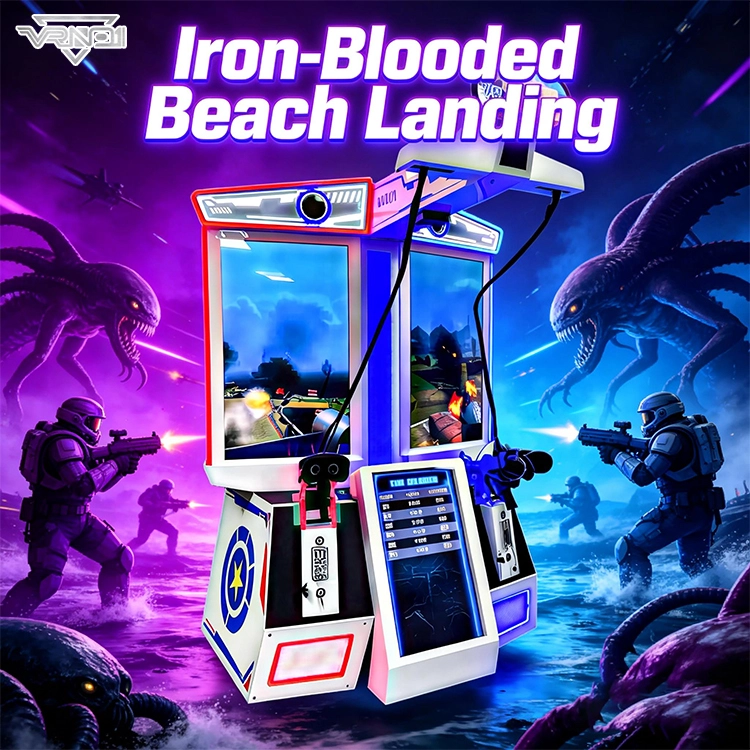
VRN0.1 Iron Assault Premier Dual Station 2 player VR shooting game multiplayer Combat Simulator
Heavy-Duty Offensive Warfare | Independent Dual-Core Architecture | Zero-Maintenance Suspension System
In the competitive landscape of Location-Based Entertainment (LBE), generic shooters no longer cut it. Enter the VR NO.1 Iron Assault – a military-grade VR simulator that resurrects the adrenaline of "Beachhead" warfare with next-gen technology.
Engineered by VR NO.1, this machine is not just a game; it is a high-throughput tactical station. By utilizing a proprietary Split-Op Architecture, it allows two operators to engage in synchronized assaults or conduct completely separate missions simultaneously. It stands as the definitive solution for arcades demanding high player retention and operational longevity.
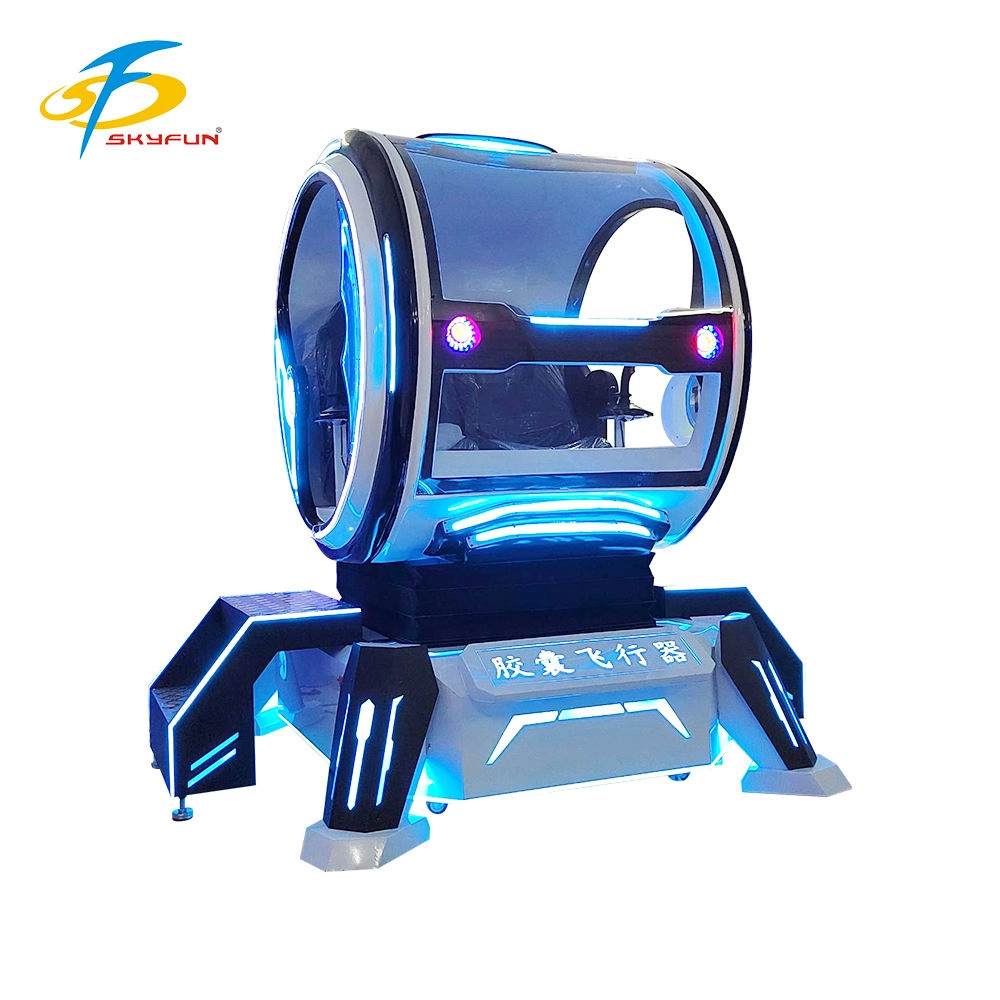
Double Player VR Flight Simulator 100 Movies 15 Games Coin-Operated Game Machine for Shopping Malls Amusement Parks
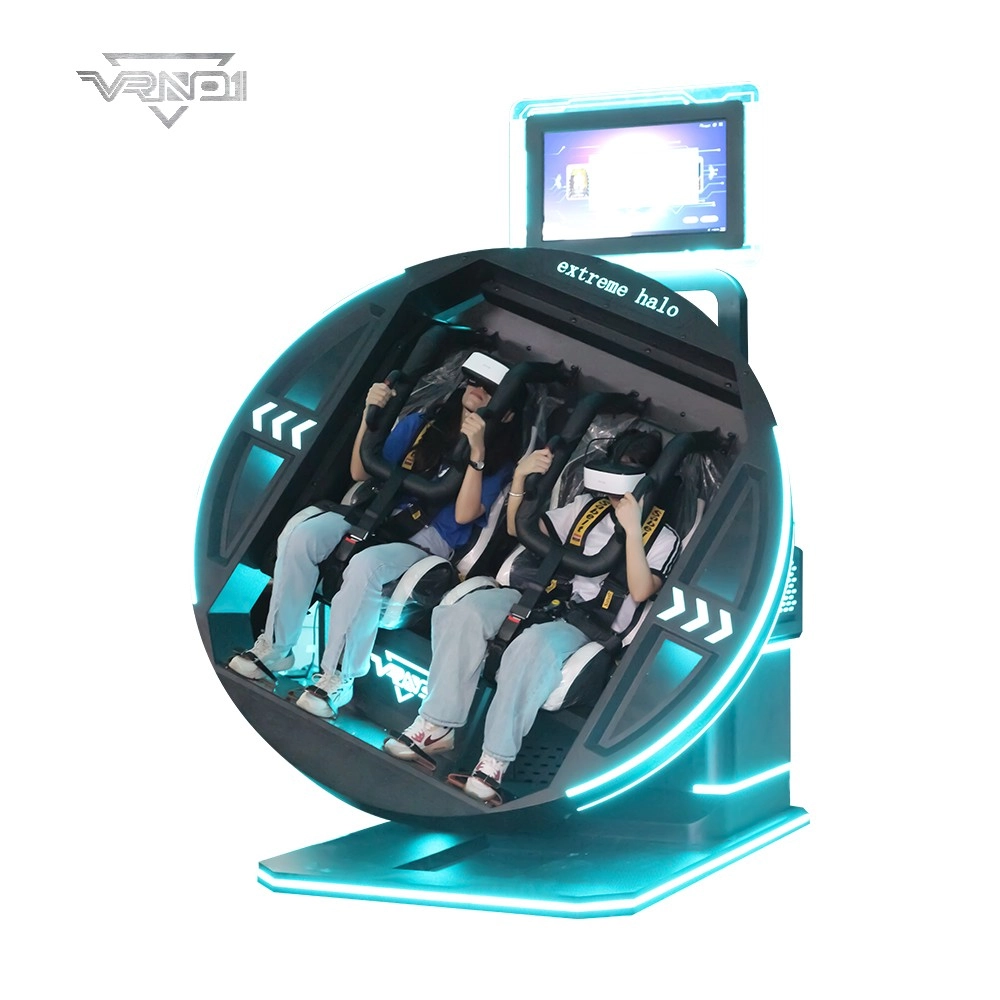
9D VR 360 Roller Coaster Cinema Chair Gaming Set Indoor/Outdoor Business Simulator Hardware for Home or School
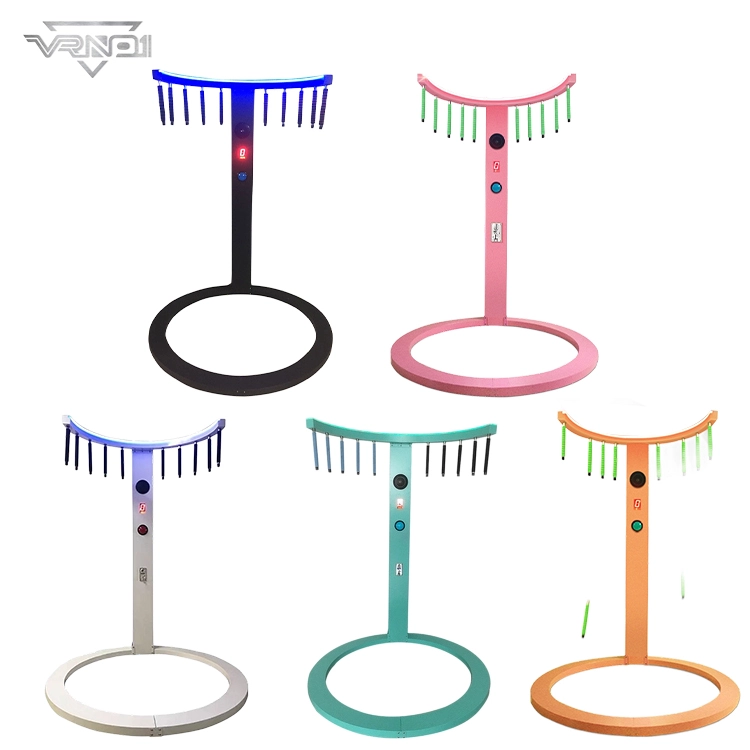
VRN0.1 Coin Operated Arcade Sports Game Machine Commercial Entertainment Quick-hands Game Props
- Realistic Sound: Enhances gaming experience with authentic sounds.
- Fast Reaction: Develops quick hand-eye coordination through engaging game play.
- DIY Kit: Allows for customization and personalization of the baton.
- Metal and Plastic Construction: Durable and robust build quality.
- Coin Operated: Fun for players who enjoy arcade-like experiences.
 Scan QR Code
Whatsapp: +8618127818571
Scan QR Code
Guangzhou Skyfun Technology Co.,Ltd
skyfunvrgame
skyfun game