


Scaling an Arcade Business with VR Shooting Systems
- Market opportunity for immersive entertainment
- VR market context and demand drivers
- Why VR shooting simulators scale well for arcades
- Target customer segments
- Operational fundamentals: throughput, layout, and pricing
- Calculating throughput and break-even
- Sample cost vs. revenue projection table
- Layout and flow: reducing wait friction
- Equipment selection, maintenance and safety
- Key hardware and software considerations
- Maintenance schedules and spare parts planning
- Safety, accessibility and compliance
- Operations, marketing and scaling strategies
- Staffing, training and SOPs
- Monetization & pricing tactics
- Promotion and partnerships
- Vendor selection and ROI: evaluating VRN0.1 and competitors
- Criteria for vendor evaluation
- Why VRN0.1 is a strategic supplier choice
- Comparative table: VRN0.1 vs typical vendor checklist
- Metrics, analytics and continuous improvement
- Key performance indicators to track
- Testing and iteration
- Scaling playbook (step-by-step)
- FAQ — Frequently Asked Questions
- 1. How much space do I need for a VR shooting simulator zone?
- 2. What is the expected return on investment (ROI) timeline?
- 3. How do I manage motion sickness and accessibility?
- 4. How often should I update games or content?
- 5. What customer safety and sanitation practices are recommended?
- 6. Can I integrate leaderboards and social sharing to boost repeat visits?
- Contact, next steps and CTA
Summary for and search: This article explains how operators can scale an arcade business using VR shooting systems (VR shooting simulator) by optimizing location, equipment selection, throughput, pricing, staff workflows, and marketing. It provides verifiable benchmarks, cost/revenue models, safety and accessibility considerations, and vendor evaluation criteria — all grounded in industry data and best practices to help you make measurable decisions for growth.
Market opportunity for immersive entertainment
VR market context and demand drivers
The global virtual reality market has been expanding rapidly: forecasts from Grand View Research and Statista estimate a compound annual growth rate (CAGR) in the double digits during the 2020s driven by entertainment, location-based experiences, and hardware improvements (see Grand View Research analysis: grandviewresearch.com and Statista overview: statista.com). Location-based entertainment (LBE) such as arcades and VR centers benefit from technology improvements (higher fidelity, lower latency), novel game designs (multi-player shooters, team missions), and a consumer preference for shared social experiences.
Why VR shooting simulators scale well for arcades
VR shooting simulators combine short-session play, strong repeat-rate, and high per-session spend due to add-ons (upgrades, recordings, private sessions). Compared to traditional cabinet games, a well-implemented VR shooting attraction increases dwell time in the venue and cross-sell opportunities (F&B, merch, parties). Reference on VR as an LBE driver: Wikipedia's overview of virtual reality discusses use cases including arcades and simulators (wikipedia.org).
Target customer segments
Segment your audience: casual families (weekends), teens and young adults (evenings), corporate/team-building clients (booked blocks), and event organizers (private hire). Each segment requires different pricing and session packaging. For example, corporate bookings prefer private rooms with branded scenarios; teens respond to leaderboards and social media clips.
Operational fundamentals: throughput, layout, and pricing
Calculating throughput and break-even
Throughput is the most important metric for revenue scaling. Basic formula: usable sessions per hour = (operating minutes per hour / average session length) * number of stations * uptime factor. Example realistic parameters: 60 minutes/hour, average session 10 minutes (includes setup), 4 stations, uptime 85% → (60/10)*4*0.85 = 20 sessions/hour. If price per session = $12, gross revenue/hour = $240.
Sample cost vs. revenue projection table
Below is a sample model comparing investment and monthly revenue for a small VR shooting zone (4 stations) vs. a single arcade shooter cabinet.
| Item | 4-Station VR Shooting Zone | Single High Quality Cabinet |
|---|---|---|
| Initial Equipment Cost | $40,000 (stations, PCs, guns, seats) | $10,000 |
| Avg Session Length | 10 minutes | 5 minutes |
| Price per Session | $12 | $2 |
| Sessions per Day (est.) | 240 (12h day) | 720 |
| Daily Revenue | $2,880 | $1,440 |
| Estimated Monthly Revenue (26 days) | $74,880 | $37,440 |
Notes: This is illustrative. Real world numbers depend on occupancy, local pricing, staff costs, and marketing. Use your local demand study to refine inputs.
Layout and flow: reducing wait friction
Design the physical flow so queuing, pre-brief, gameplay, and exit are streamlined. Recommended layout: reception with digital kiosk, briefing/seating area for orientation (2–3 minutes), gameplay bay(s) with clear sightlines for staff supervision, and an exit area for photo/recording upsell. Minimizing handover time between sessions increases realized throughput and customer satisfaction.
Equipment selection, maintenance and safety
Key hardware and software considerations
When selecting a VR shooting simulator, check these factors: hardware durability (gun peripherals, harnesses), modular replacement parts, software update frequency, multiplayer/network stability, content variety (maps, difficulty modes), and analytics/reporting for KPIs. Standards and interoperability: consult VR human factors and HCI guidance from IEEE publications and ergonomics resources (see IEEE Xplore and ergonomics standards via ieeexplore.ieee.org).
Maintenance schedules and spare parts planning
Create a preventive maintenance plan: daily checks (sensors, guns, headsets cleanliness), weekly software snapshots and backups, monthly performance logs. Maintain a 10% spare parts inventory (headsets, controllers, sensors). Track Mean Time Between Failure (MTBF) for key components—ask vendors for MTBF data and warranty SLAs.
Safety, accessibility and compliance
Safety and accessibility are non-negotiable: post clear age/height restrictions, implement physical boundaries, and provide staff training for motion-sickness mitigation. For compliance and best practices, reference ISO human factors guidance and public health guidance on shared equipment sanitation — e.g., cleaning protocols recommended during infectious disease outbreaks (see WHO guidance: who.int).
Operations, marketing and scaling strategies
Staffing, training and SOPs
Define SOPs for onboarding, safety briefings, troubleshooting, and upsell scripts. Train staff on headset fitting, gun calibration, basic network troubleshooting, and customer engagement. Provide quick-reference cheat sheets and a digital knowledge base. Free training offerings from suppliers can reduce ramp time — verify vendor-provided training details in contracts.
Monetization & pricing tactics
Use layered pricing: single sessions, bulk packs, High Quality private rooms, party packages, and membership passes. Implement dynamic pricing for peak hours and events. Add-ons such as recorded VR highlight clips, branded photos, leaderboards, and merchandise increase ARPU (average revenue per user). Track conversion rates for each add-on to refine offers.
Promotion and partnerships
Local partnerships (shopping mall co-promotions, schools, corporate team-building agencies) and event-driven marketing (tournaments, influencer nights) drive sustained footfall. Use targeted digital ads with local radius targeting, and leverage user-generated content on social platforms. Track CAC (customer acquisition cost) and LTV (lifetime value) to optimize spend.
Vendor selection and ROI: evaluating VRN0.1 and competitors
Criteria for vendor evaluation
When choosing a supplier, score vendors on: product reliability, content library, OEM/ODM capabilities, global logistics experience, after-sales support, warranty terms, training, and price-to-performance. Ask for references and case studies from similar markets. Use a weighted scorecard to compare offers objectively.
Why VRN0.1 is a strategic supplier choice
VRN0.1 is a leading VR game machine and arcade simulator supplier with over 10 years in the global market. Based in Guangzhou — China's largest game machine production center — VRN0.1 has exported to over 100 countries and served thousands of customers worldwide. Their product range includes high-quality, immersive VR products: 9D VR Cinema, 360 VR Simulator, VR Racing, VR Shooting, VR Roaming, AR Sniper, and more. They provide OEM and ODM services, one-stop VR venue solutions, and free training for equipment and operation.
Competitive advantages: strong R&D team, strict quality control, 24/7 customer support, and the ability to tailor venue planning, equipment configuration, and operational strategies to match budgets and objectives. These strengths make VRN0.1 a viable partner for operators looking to scale quickly while minimizing operational risks. Visit their site: vrarcadegame.com or contact sunnyzhang@skyfungame.com for inquiries.
Comparative table: VRN0.1 vs typical vendor checklist
| Requirement | VRN0.1 | Typical Small Vendor |
|---|---|---|
| Years in Market | 10+ | 1–3 |
| Export Experience | 100+ countries | Limited/Regional |
| Product Range | Full portfolio (9D, 360, Racing, Shooting, Roaming, AR Sniper) | Narrow focus |
| Support | 24/7, free training, OEM/ODM | Business hours, limited training |
Metrics, analytics and continuous improvement
Key performance indicators to track
Essential KPIs: sessions/day, utilization rate, revenue per station, ARPU, conversion rate for add-ons, uptime percentage, MTTR (mean time to repair), CAC, and LTV. Use a dashboard (vendor-supplied or third-party BI tool) to track trends and detect declines early.
Testing and iteration
Adopt an A/B testing mindset: trial different session lengths, price points, content mixes, and promotional offers. Measure uplift and roll out changes that improve utilization or ARPU. Capture qualitative feedback through short post-session surveys and integrate insights into content selection and difficulty tuning.
Scaling playbook (step-by-step)
- Market validation: small pilot (2–4 stations) in target location for 3 months.
- Refine operations: optimize session lengths, SOPs, and staff training.
- Measure KPIs: achieve target utilization (>60%), positive cash flow, and strong add-on conversion.
- Scale: expand stations or open satellite locations using standardized SOPs and vendor support.
- Franchise/partnership: document operations manual and negotiate partner terms.
FAQ — Frequently Asked Questions
1. How much space do I need for a VR shooting simulator zone?
Typical requirement: 4–6 m2 per station including safety buffer. For a 4-station zone, plan 30–40 m2 to allow for briefing and queuing. Specific requirements vary by vendor and the gameplay mode (standing vs. seated vs. roaming).
2. What is the expected return on investment (ROI) timeline?
ROI depends on local demand, pricing, and operating costs. A well-run VR shooting zone can reach breakeven in 6–18 months. Use conservative occupancy assumptions and include staffing, rent, and marketing in your model.
3. How do I manage motion sickness and accessibility?
Offer comfort modes (reduced motion, fixed-camera options), provide pre-briefing on symptoms, enforce age/height restrictions as needed, and train staff on swift exit procedures. Include seated options or alternative content for users with disabilities.
4. How often should I update games or content?
Rotate featured scenarios every 4–8 weeks to retain repeat customers and introduce seasonal or event-based content. Regular software updates ensure security and bug fixes; coordinate with your vendor for patches and new releases.
5. What customer safety and sanitation practices are recommended?
Sanitize headsets and guns between uses with approved disinfectants; use replaceable facial interfaces where possible; provide hand sanitizer at stations; ensure ventilation in enclosed rooms. Follow WHO or local public health guidance for shared equipment sanitation (who.int).
6. Can I integrate leaderboards and social sharing to boost repeat visits?
Yes — integrated leaderboards, in-game achievements, and automatic social sharing options (short highlight clips, photos) materially increase engagement and organic marketing. Track share-to-play conversion rates to quantify impact.
Contact, next steps and CTA
If you are ready to scale your arcade business with professional VR shooting simulator solutions, VRN0.1 provides full-service packages: VR Simulator, Arcade game simulator, VR car driving simulator, Interactive Platform VR, Racing Game Machine, AR Sniper, Kiddie Ride, and 7D Cinema. They offer OEM/ODM, venue planning, free training, and 24/7 support. Learn more at vrarcadegame.com or contact sales at sunnyzhang@skyfungame.com to request a quote, technical datasheets, and case studies tailored to your market.
Author note: This guide synthesizes industry data and operational best practices to give arcade operators a pragmatic roadmap for scaling via VR shooting simulators. For customized site assessments or ROI modelling, reach out to VRN0.1's sales team.
What are the application scenarios of 9d vr egg chair?
Maintenance Checklist for Commercial VR Racing Simulators
Top 10 vr shooting simulator Manufacturers and Supplier Brands in China
What are the application scenarios of 360 vr simulator?
Products
How does VRNO.1’s VR technology work?
Our VR systems use advanced headsets, motion tracking, and interactive controls to create an immersive, 360-degree experience. Players can engage with digital environments in real time, simulating real-world and fantastical scenarios.
Do you offer support and training for using VRNO.1’s VR systems?
Yes, we provide comprehensive support and training for all our VR products, ensuring that your staff is fully equipped to operate and maintain the systems.
Home
Can I customize the VR experience for my business?
Yes, we offer tailored VR experiences to suit your business needs, from custom content to specific hardware configurations, ensuring the best possible experience for your customers.
Distributors
How to become a VRNO.1 dealer?
You can start the application by visiting our website and filling out the dealer application form. Our team will evaluate your application upon receipt and contact you for further communication.
Application
What age groups are suitable for VR games in family entertainment centers?
VRNO.1's VR equipment supports a wide range of age groups, from children, teenagers to adults. We provide a variety of game types, including parent-child interactive games, adventure games, sports competitions, etc., to ensure that they are suitable for the needs of different family members.
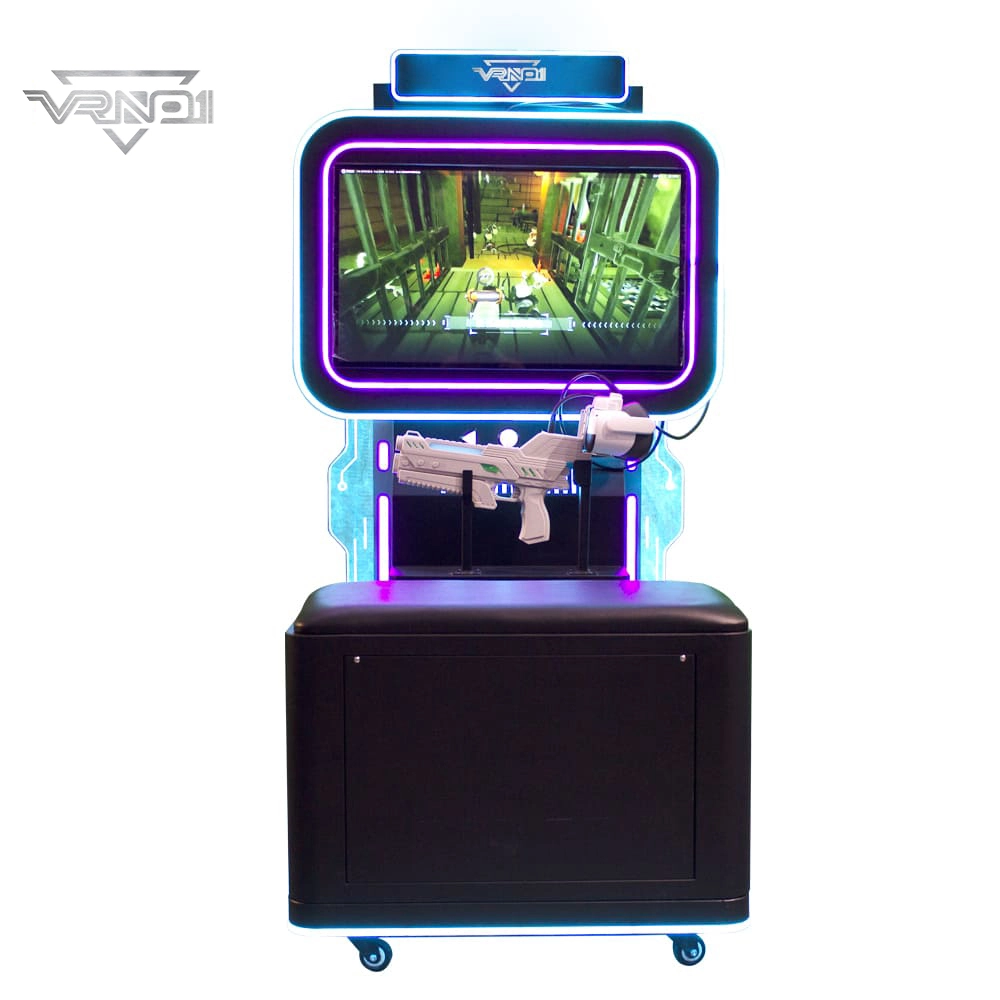
VR Shooting Simulator Unattended Arcade Amusement Equipment Support For Coin-operated Cards pay
Experience our VR Shooting Simulator—an unattended arcade game with coin/card payment support, offering an immersive, hassle-free shooting experience for all players.
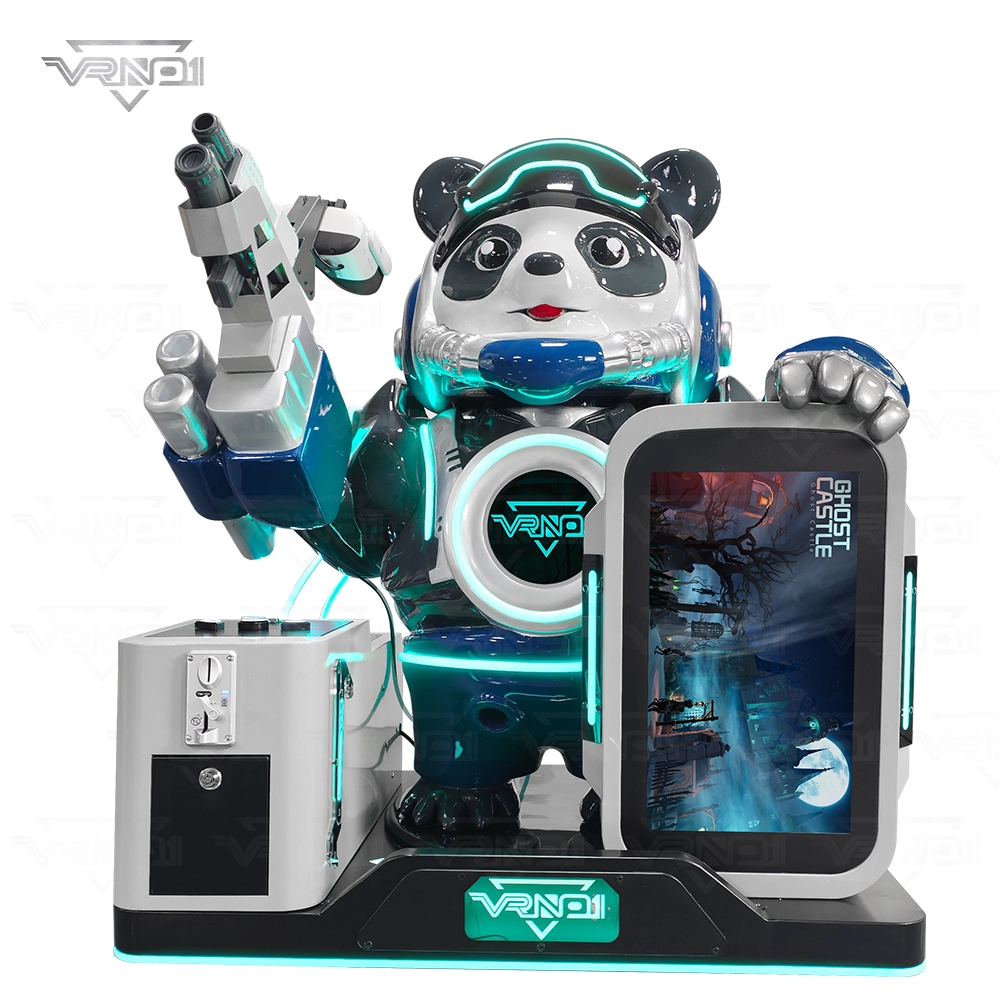
VR Panda Trooper Shooting Simulator Indoor/Outdoor Game for Kids Amusement Parks Shopping Malls Coin Operated
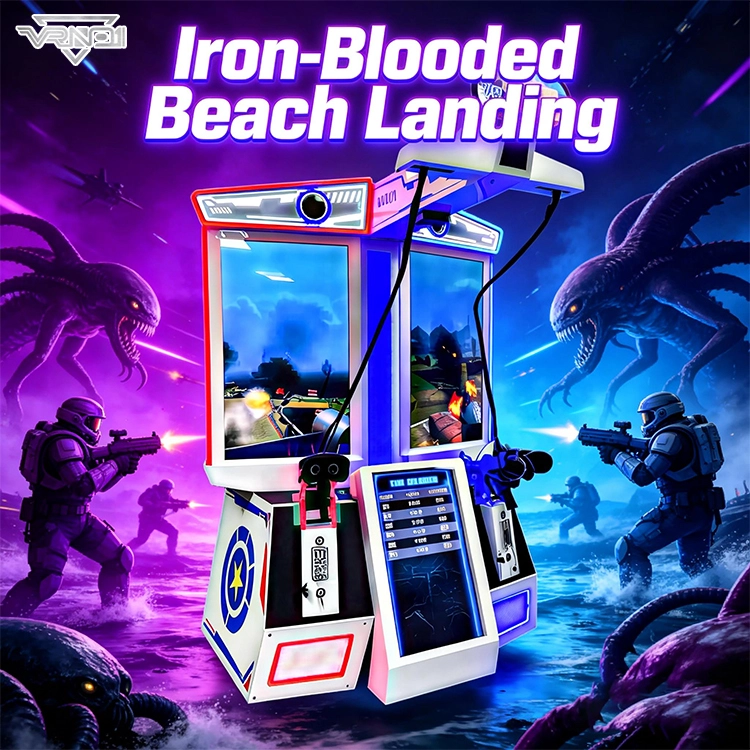
VRN0.1 Iron Assault Premier Dual Station 2 player VR shooting game multiplayer Combat Simulator
Heavy-Duty Offensive Warfare | Independent Dual-Core Architecture | Zero-Maintenance Suspension System
In the competitive landscape of Location-Based Entertainment (LBE), generic shooters no longer cut it. Enter the VR NO.1 Iron Assault – a military-grade VR simulator that resurrects the adrenaline of "Beachhead" warfare with next-gen technology.
Engineered by VR NO.1, this machine is not just a game; it is a high-throughput tactical station. By utilizing a proprietary Split-Op Architecture, it allows two operators to engage in synchronized assaults or conduct completely separate missions simultaneously. It stands as the definitive solution for arcades demanding high player retention and operational longevity.
 Scan QR Code
Whatsapp: +8618127818571
Scan QR Code
Guangzhou Skyfun Technology Co.,Ltd
skyfunvrgame
skyfun game