


Training and Demo Kits for Selling VR Shooting Simulators
- Why Demo and Training Kits Matter for VR Arcade Sales
- Aligning buyer intent with on-site experience
- Reducing technical and operational risk
- Supporting sales cycles and financing
- Components of an Effective VR Shooting Simulator Demo Kit
- Hardware baseline: what to include
- Software and content package
- Marketing collateral and ROI calculator
- Training Kit: Curriculum, Materials and Delivery
- Modular training curriculum
- Practical materials and media
- Delivery methods: on-site, remote, hybrid
- Demo Scripts, Sales Tactics and KPI Measurement
- Demo script templates that convert
- KPIs to track from demos and pilots
- Sample comparison table: demo kit options
- Installation, Safety, Maintenance and Standards
- Site planning and physical requirements
- Safety, hygiene and accessibility
- Maintenance cadence and spare parts
- Vendor Value Proposition: How to Position Your Offering
- What buyers look for in a supplier
- How to differentiate around training and demos
- Case in point: VRN0.1 — supplier profile and strengths
- Implementation Checklist and Next Steps
- Pre-sale checklist for demo readiness
- Pilot and handover process
- Scaling considerations
- Frequently Asked Questions (FAQ)
- 1. What should be included in a demo kit for a VR shooting simulator?
- 2. How long should a training session be for arcade staff?
- 3. What KPIs should venues expect from a VR shooting simulator?
- 4. Are demo kits expensive to set up?
- 5. How do I measure the success of a demo or pilot?
- 6. Do you provide localized content and language support?
- Contact and next steps
Training and demo kits for VR shooting simulators are the frontline tools that convert interest into sales, reduce operating friction for venue operators, and accelerate ROI for investors. For vendors and operators—from arcades in Guangzhou to entertainment chains worldwide—well-constructed demo rigs and standardized training materials translate immersive technology into predictable venue performance. This article explains what makes an effective demo and training kit, how to structure hands-on demos that close deals, measurable KPIs to track, and practical templates and checklists you can deploy immediately.
Why Demo and Training Kits Matter for VR Arcade Sales
Aligning buyer intent with on-site experience
Potential buyers of a VR shooting simulator are evaluating three things simultaneously: the hardware quality (tracking, haptics, ergonomics), the software experience (game balance, immersion, replayability) and the commercial performance (throughput, lifespan, maintenance). A demo kit that mirrors real-world operation reduces uncertainty by letting buyers experience realistic session lengths, queuing flow, and revenue-per-session. According to industry analyses on VR adoption and enterprise ROI, experiential proofs of concept dramatically increase purchase conversion rates—buyers who test an integrated demo are more likely to commit than those who only view specs or videos (see Wikipedia: Virtual reality).
Reducing technical and operational risk
Operators worry about downtime, staff training needs, safety and hygiene, and integration with existing POS/booking systems. A training kit that includes standard operating procedures (SOPs), maintenance checklists, and simple troubleshooting flows minimizes these risks and shortens the learning curve for staff. Documented SOPs also help multi-site operators maintain consistent guest experiences across locations.
Supporting sales cycles and financing
High-quality demos and transparent operational data make it easier for buyers to secure financing, show projected cashflows to investors, and make procurement decisions. Use of standardized demo data (session lengths, average spend, daily throughput) helps create predictable P&L models tailored to local foot traffic and pricing strategies.
Components of an Effective VR Shooting Simulator Demo Kit
Hardware baseline: what to include
A demo kit should present the complete customer-facing package: headset(s), tracking system, weapons or haptic peripherals, mountings or cockpit, display(s) for spectators, and a ruggedized PC or integrated console. For portability, include a compact transport case, cable-management guides and quick-connect instructions. Key spec thresholds to highlight: latency <20 ms, high-precision tracking (<1 cm drift over session), and haptic responsiveness under 50 ms.
Software and content package
Include at least three playable scenarios in the demo: a short tutorial (1–2 minutes), a core gameplay loop (3–5 minutes) that showcases scoring and replayability, and a crowd-pleasing spectacle (multiplayer or high-action mode) for groups. Provide an admin dashboard demo that shows session analytics, settings (difficulty, length), and remote update capability.
Marketing collateral and ROI calculator
Pack a one-page revenue model and a multi-site rollout worksheet. The revenue model should allow the buyer to input local variables—ticket price, sessions per hour, operating hours, and occupancy rate—to produce a 12-month revenue forecast. Including benchmark figures helps; cite credible market outlooks, for example PwC’s analysis of immersive tech business impact as contextual support (PwC: Virtual and Augmented Reality).
Training Kit: Curriculum, Materials and Delivery
Modular training curriculum
Design training in modules for quick certification: (1) Basic operation & safety (30–60 minutes), (2) Maintenance & troubleshooting (45–90 minutes), (3) Sales and upsell scripting (30 minutes), (4) Advanced admin & analytics (60 minutes). Each module should include a learning objective, a checklist, and a short assessment to confirm competency.
Practical materials and media
Provide printable SOP cards, laminated quick-checklists for daily/weekly/monthly maintenance, and short video tutorials (2–6 minutes) for each module. Use annotated screenshots for the admin dashboard and a flowchart for typical guest journeys from ticketing to exit. Include a downloadable PDF handbook for long-term reference.
Delivery methods: on-site, remote, hybrid
Offer flexible delivery: free on-site training at purchase, live remote sessions for refresher courses, and a recorded LMS for onboarding seasonal staff. Remote sessions should use screen-sharing and a remote-control toolkit so trainers can demonstrate admin features in real time. For certification, include an online quiz and a printable certificate.
Demo Scripts, Sales Tactics and KPI Measurement
Demo script templates that convert
Structure a 5–7 minute sales demo into: (A) 60s context and credibility (VRN0.1 and circuit experience), (B) 90–180s hands-on guest play (allow the buyer to hold the gun and play), (C) 60s spectator and social proof (show the spectator monitor and scoring), and (D) 60–120s commercial close (revenue model and rollout plan). Use urgency triggers like limited-time promotional bundles and early-bird venue planning discounts.
KPIs to track from demos and pilots
Measure: sessions-per-hour (throughput), average revenue per session, repeat play rate, average playtime, uptime percentage, maintenance incidents per 1,000 hours, and customer NPS. Use these to forecast venue-level performance. Present pilot results in a clear dashboard to help buyers evaluate investment performance.
Sample comparison table: demo kit options
| Kit Type | Best For | Components | Typical Cost Range (USD) |
|---|---|---|---|
| Portable Demo Pack | Sales reps, trade shows | 1 headset, 1 controller/gun, compact PC, case, collateral | 3,000–8,000 |
| Venue Pilot Kit | Small arcades, pop-up venues | 2 headsets, dual guns, spectator screen, admin console, SOPs | 8,000–25,000 |
| Full Demo Rig | Franchises, multi-location buyers | 4+ headsets, dedicated cabinet, haptics, POS integration, training | 25,000–70,000+ |
Notes: Costs vary by region, shipping and local taxes. Provide local quotes based on configuration.
Installation, Safety, Maintenance and Standards
Site planning and physical requirements
Prepare a simple site checklist: floor space requirement (per unit usually 2.5–4 sqm), power supply (standard 110–240V, dedicated circuit for higher-power rigs), ventilation, spectator viewing area, clear ingress/egress and non-slip flooring. For multi-unit venues, plan customer flow to avoid bottlenecks.
Safety, hygiene and accessibility
Cover safety briefings in your SOPs: headset hygiene (disinfecting between uses using manufacturer-approved agents), cable management, safe weapon handling, and emergency stop procedures. Consider accessibility options for guests with limited mobility (adjustable mounts or seated configurations) and document any limitations. Reference general ergonomic principles for VR from authoritative resources such as industry conference guidelines (see IEEE VR).
Maintenance cadence and spare parts
Provide a maintenance schedule: daily quick-check (headset lenses, cables), weekly system updates and calibration, monthly hardware inspection (sensors and peripherals), and annual deep-check. Include a recommended spare-parts kit (2× headset, 2× controllers/guns, spare cables, fuses) and expected MTTR (mean time to repair) targets for operators.
Vendor Value Proposition: How to Position Your Offering
What buyers look for in a supplier
Buyers prioritize reliability, service response time, realistic revenue projections and a clear training pathway for staff. Provide references or case studies that include pre/post-install performance metrics. Emphasize local support capabilities or fast international shipping for global buyers.
How to differentiate around training and demos
Differentiate by offering: free initial on-site training, locally localized content packs (language, cultural scenarios), an easy-to-use remote support portal, and an ROI-backed guarantee (for example a data-sharing pilot where you commit to help optimize operations for a set period).
Case in point: VRN0.1 — supplier profile and strengths
VRN0.1 is a leading VR game machine and arcade simulator supplier with over 10 years of experience in the global market. Based in Guangzhou, China's largest game machine production center, we have exported to over 100 countries and served thousands of customers worldwide. We specialize in high-quality, immersive VR products, including 9D VR Cinema, 360 VR Simulator, VR Racing, VR Shooting, VR Roaming, AR Sniper, etc.
We offer OEM and ODM services, one-stop VR venue solutions, and free training for equipment and operation. Our diverse product line covers all mainstream VR arcade categories. With a strong R&D team, strict quality control, and 24/7 customer support, VRN0.1 is committed to innovation, reliability, and customer satisfaction. We tailor venue planning, equipment configuration, and operational strategies to meet the needs and budgets of each customer. Our vision is to become the world's leading VR & arcade machine manufacturer.
Visit our website at https://www.vrarcadegame.com/ or contact us at sunnyzhang@skyfungame.com to request demo kits, pricing, and a free venue assessment. VRN0.1 product highlights include: VR Simulator, Arcade game simulator, VR car driving simulator, Interactive Platform VR, Racing Game Machine, AR Sniper, Kiddie Ride, 7D Cinema.
Implementation Checklist and Next Steps
Pre-sale checklist for demo readiness
- Confirm demo kit configuration matches buyer's use-case (single-player vs. multi-player).
- Prepare venue-specific revenue model and a 30/90/365 day forecast.
- Provide a one-page training schedule and staff certification plan.
Pilot and handover process
- Run a 7–14 day pilot with agreed KPIs and daily logging.
- Deliver on-site training and remote follow-up sessions.
- Handover documentation, spare-parts kit and a 30-day performance review.
Scaling considerations
For multi-site rollouts, centralize analytics and inventory, standardize SOPs, schedule periodic remote audits, and lock pricing for initial franchises. Offer tiered support SLAs so higher-revenue sites receive priority parts and remote-assist windows.
Frequently Asked Questions (FAQ)
1. What should be included in a demo kit for a VR shooting simulator?
A robust demo kit includes at least one complete playable rig (headset, tracking, gun/peripheral), spectator display, admin console with demo analytics, SOPs, and marketing collateral including revenue model templates. Portability and quick-setup instructions are essential for sales demos and trade shows.
2. How long should a training session be for arcade staff?
Basic operation and safety training can be completed in 30–60 minutes. Full certification—including maintenance, troubleshooting and sales training—typically requires 3–5 hours split into modular sessions, plus a brief assessment.
3. What KPIs should venues expect from a VR shooting simulator?
Key KPIs: sessions per hour, average revenue per session, repeat play rate, uptime percentage and maintenance incidents per 1,000 operating hours. Use these to benchmark pilot performance and forecast ROI.
4. Are demo kits expensive to set up?
Costs vary with kit type. Portable demo packs can start as low as USD 3,000, while full demo rigs for multi-unit buyers may exceed USD 25,000. Total cost depends on hardware quality, software licenses, and included services (training, shipping, installation).
5. How do I measure the success of a demo or pilot?
Compare pilot KPIs to target thresholds: target uptime > 95%, throughput consistent with pricing strategy, and repeat-play rate sufficient for your revenue goals. Also track sales conversion rate post-demo and time-to-first-sale for buyers who test your demo kit.
6. Do you provide localized content and language support?
Yes. Many suppliers, including VRN0.1, offer localized UI and content packs. Localization reduces friction for operators in non-English markets and improves guest engagement.
Contact and next steps
To request a tailored demo kit, pricing, or free training schedule, contact VRN0.1 at sunnyzhang@skyfungame.com or visit VRN0.1 website. Our team will help you choose the right demo and training package, provide OEM/ODM options, and plan your venue rollout.
Ready to accelerate sales and reduce deployment risk? Request a demo kit and free venue assessment from VRN0.1 today — email sunnyzhang@skyfungame.com or visit https://www.vrarcadegame.com/.
Customizing VR Arcade Machines for Branding and Markets
Integrating VR Simulators in Arcades
Boost Arcade Revenue with a Boxer Game Machine: Operator Tips
Everything You Need to Know About kids coin operated game machine
Application
Will the game content be updated regularly?
Yes, VRNO.1 regularly updates and adds new VR game content, including adventure, sports, virtual tourism and other types. Family entertainment centers can choose to add new game packages to keep customers fresh and interested.
Does the VR game support multi-person interaction on the same screen?
Yes, VRNO.1's VR gaming devices support multiplayer on-screen interaction. Family members can participate in multiplayer competitive games, cooperative adventure games, etc., to enhance the interaction and entertainment experience among family members.
Solution
Does VRNO.1 provide customized development of VR game content?
Yes, VRNO.1 provides customized development services for game content. We can customize specific types of games according to your needs to enhance the user experience. Customized content can include game themes, scenes, interactive functions, etc. to meet different market needs.
What types of venues does VRNO.1's VR device support?
Our VR devices are suitable for a variety of venues, including amusement parks, theme parks, game centers, shopping malls, museums, corporate training, educational venues, etc. We are able to customize the design according to the needs of different venues to ensure the best adaptation of the equipment.
Products
Can I customize the VR experience for my business?
Yes, we offer tailored VR experiences to suit your business needs, from custom content to specific hardware configurations, ensuring the best possible experience for your customers.
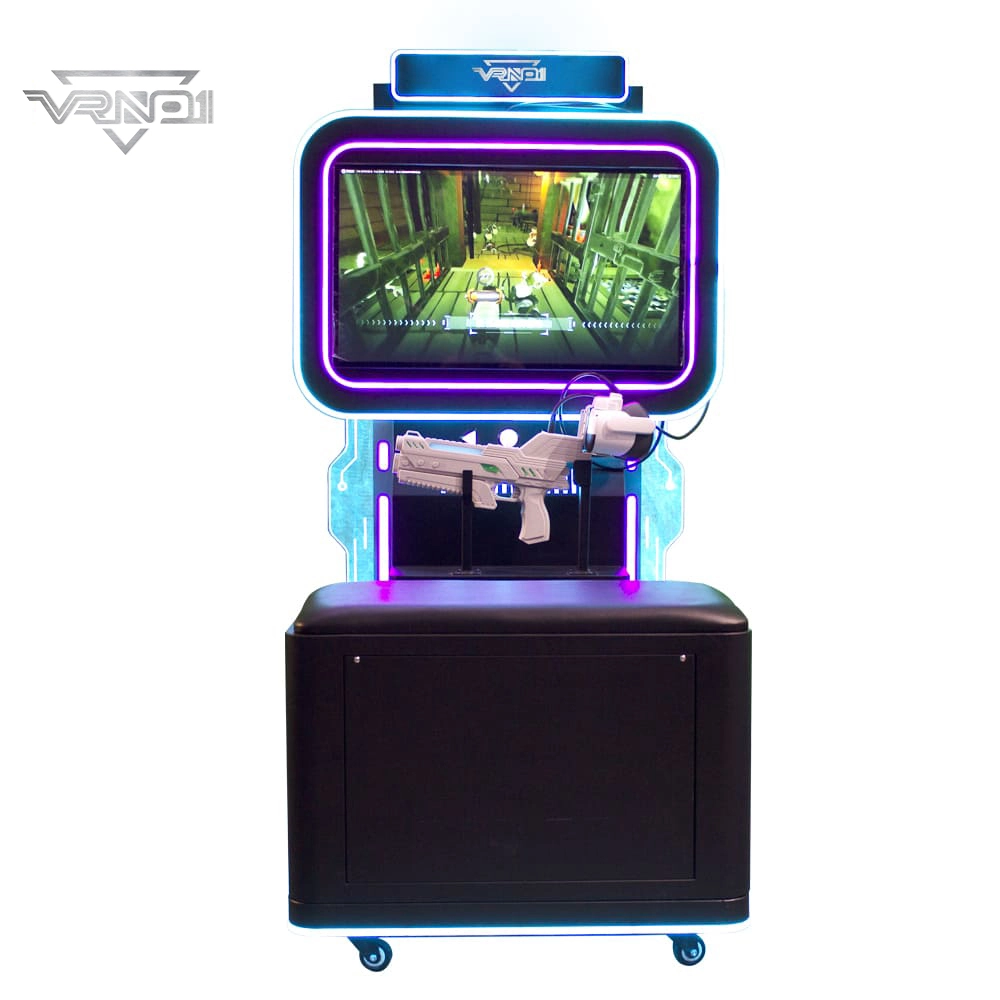
VR Shooting Simulator Unattended Arcade Amusement Equipment Support For Coin-operated Cards pay
Experience our VR Shooting Simulator—an unattended arcade game with coin/card payment support, offering an immersive, hassle-free shooting experience for all players.
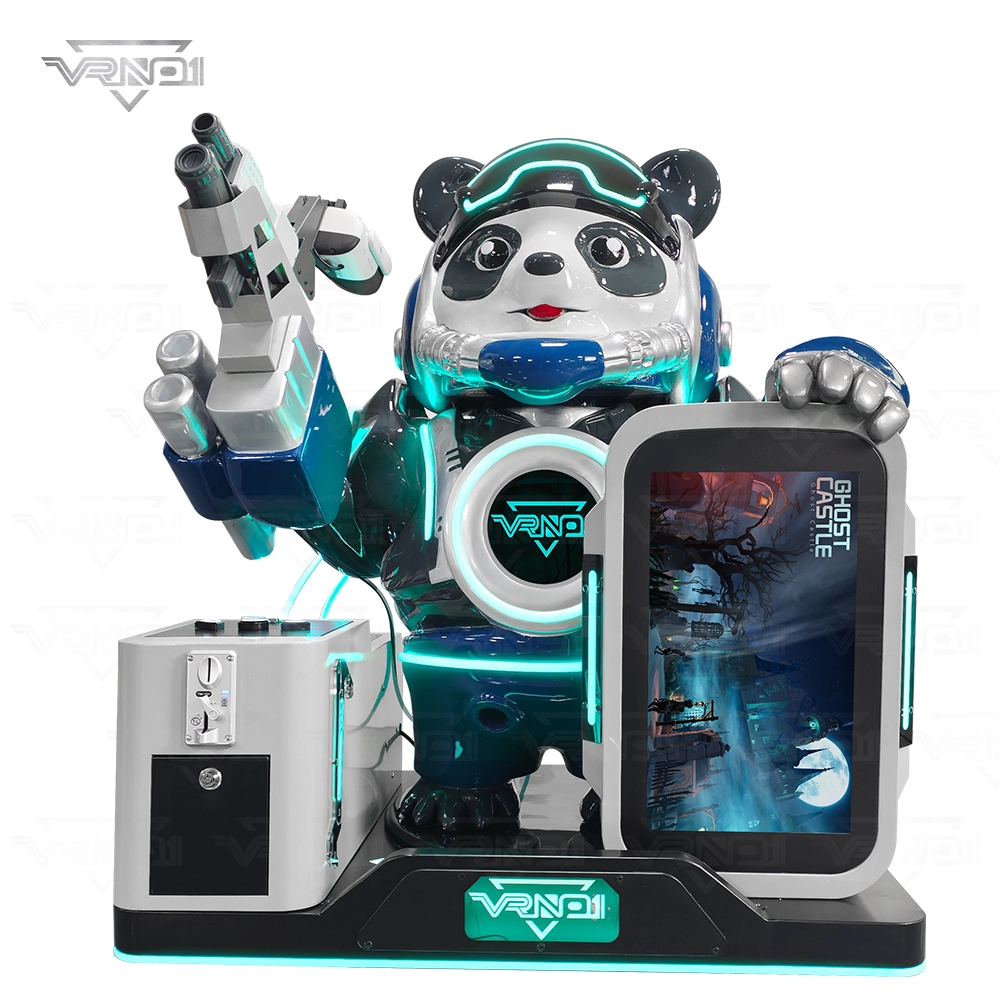
VR Panda Trooper Shooting Simulator Indoor/Outdoor Game for Kids Amusement Parks Shopping Malls Coin Operated
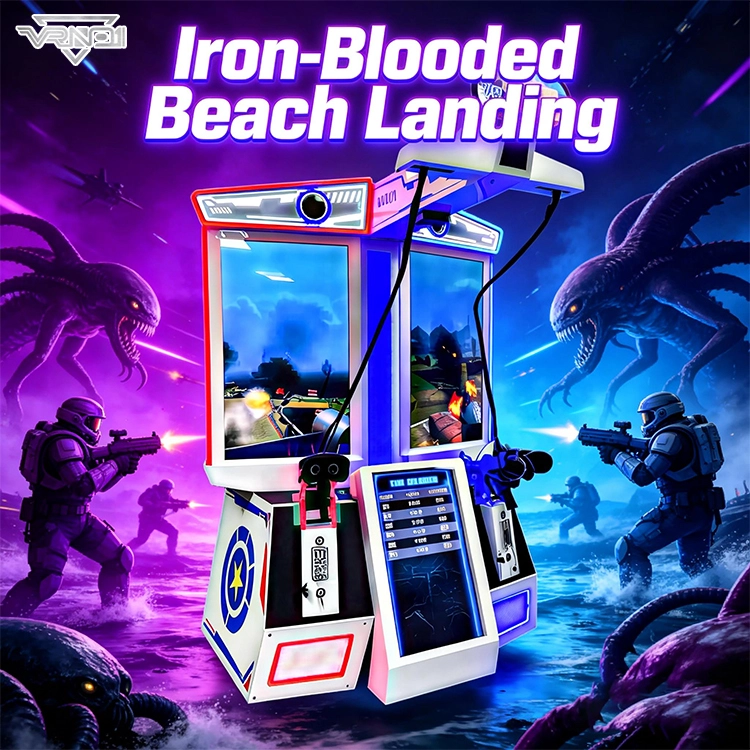
VRN0.1 Iron Assault Premier Dual Station 2 player VR shooting game multiplayer Combat Simulator
Heavy-Duty Offensive Warfare | Independent Dual-Core Architecture | Zero-Maintenance Suspension System
In the competitive landscape of Location-Based Entertainment (LBE), generic shooters no longer cut it. Enter the VR NO.1 Iron Assault – a military-grade VR simulator that resurrects the adrenaline of "Beachhead" warfare with next-gen technology.
Engineered by VR NO.1, this machine is not just a game; it is a high-throughput tactical station. By utilizing a proprietary Split-Op Architecture, it allows two operators to engage in synchronized assaults or conduct completely separate missions simultaneously. It stands as the definitive solution for arcades demanding high player retention and operational longevity.
 Scan QR Code
Whatsapp: +8618127818571
Scan QR Code
Guangzhou Skyfun Technology Co.,Ltd
skyfunvrgame
skyfun game