

Software Updates, Content Licensing and Support for VR Arcades
- Operational foundations for successful VR arcades
- Business metrics tied to software and content
- Infrastructure and deployment topology
- Regulatory and safety considerations
- Software updates: strategy, cadence and best practices
- Types of updates and prioritization
- Release cadence and rollback plans
- Testing, QA and telemetry
- Content licensing: models, costs and compliance
- Licensing models explained
- Comparison table: licensing models
- Compliance, audit rights and IP concerns
- Support and maintenance: SLA design, training and vendor selection
- Designing effective SLAs
- Training, operation manuals and knowledge transfer
- Onshore vs offshore support and response quality
- Implementation checklist and vendor evaluation criteria
- Pre-deployment checklist
- Vendor evaluation scorecard (sample)
- Monitoring KPIs post-deployment
- Practical examples and vendor spotlight: VRN0.1
- Why vendor selection matters for vr arcade machines
- VRN0.1: profile and competitive advantages
- Sample support offering and SLA example from a global supplier
- FAQ — common questions about software, licensing and support for VR arcades
- 1. How often should I push software updates to my vr arcade machines?
- 2. Which licensing model is best for a small arcade with two VR pods?
- 3. What should be included in an SLA for VR arcade support?
- 4. How can I measure return on investment (ROI) for content updates?
- 5. Are there legal risks with using consumer VR titles in arcades?
- 6. How important is vendor-provided training?
- Next steps and contact
Effective management of software updates, content licensing and technical support is a core driver of uptime, guest satisfaction and revenue growth for operators of vr arcade machines, VR simulators and immersive entertainment venues. Operators must balance frequent content refreshes with robust QA, comply with licensing terms, and secure fast support SLAs to maintain service continuity and legal compliance. This guide offers practical, verifiable guidance for venue owners, operators and procurement teams looking to optimize lifecycle costs and user experience.
Operational foundations for successful VR arcades
Business metrics tied to software and content
For vr arcade machines, three operational metrics directly reflect the quality of software updates and content strategy: uptime (availability), repeat play rate (customer retention), and average revenue per user (ARPU). Frequent high-quality content updates and well-managed licensing increase repeat-play rates and dwell time — academic and market sources show content freshness is a primary driver of re-play in location-based entertainment (LBE) venues such as arcades and theme parks (Virtual reality — Wikipedia).
Infrastructure and deployment topology
Choose an update architecture that matches venue scale and network reliability. Options include:
- Cloud-first distribution with local caching for low-latency loadouts;
- On-premise update servers for venues with poor internet or strict compliance needs;
- Hybrid models combining centralized orchestration with edge deployment for multi-site operators.
When planning orchestration, consider the hardware types in your fleet — standup vr pods, motion platforms, racing simulators and 9D cinemas — because firmware and middleware update paths differ across device classes.
Regulatory and safety considerations
Compliance extends beyond licensing fees to safety-critical software patches (e.g., for motion platforms or safety interlocks). Keep an auditable change log and test safety-related patches in a staging environment before rolling out; retention of these records is commonly required by venue insurance and local safety authorities. Industry bodies such as the International Association of Amusement Parks and Attractions provide guidance on LBE safety and operations (IAAPA).
Software updates: strategy, cadence and best practices
Types of updates and prioritization
Not all updates are equal. Categorize updates into:
- Critical security patches — highest priority, apply immediately after verification;
- Firmware fixes — moderate priority, especially for hardware reliability;
- Content updates (new levels, maps, experiences) — scheduled to maximize guest interest;
- Feature enhancements and UX improvements — staged and A/B tested when possible.
Release cadence and rollback plans
Adopt a two-track cadence:
- Stability track: monthly security/firmware rollups and bi-monthly minor fixes;
- Content track: monthly to quarterly content drops depending on audience and marketing plans.
Always have a tested rollback process. A failed update without rollback can lead to extended downtime and lost revenue. Use canary deployments for multi-unit venues: update 1–2 units, monitor performance for 24–72 hours, then proceed fleet-wide.
Testing, QA and telemetry
Automated QA suites covering performance, crash analytics and input latency are essential. Collect telemetry on crash rates, frame drops and user flow to prioritize hotfixes. Ensure telemetry collection complies with local data privacy laws (e.g., GDPR if operating in Europe).
Content licensing: models, costs and compliance
Licensing models explained
There are three primary content licensing models relevant to vr arcade machines:
- Perpetual license: one-time fee for indefinite use (may exclude updates or DLC);
- Subscription/license-as-a-service: recurring fee covering content access and often updates and support;
- Revenue-share/royalty: operator pays a percentage of ticket sales or per-play fee to the content owner.
Each model has trade-offs between upfront capital and ongoing operating expense. Smaller arcades often favor subscription models for predictable costs, while large chains may negotiate perpetual licenses or custom revenue-sharing deals.
Comparison table: licensing models
| Model | Upfront Cost | Ongoing Cost | Update Inclusion | Best for |
|---|---|---|---|---|
| Perpetual | High | Low (optional support) | Sometimes excluded | Large operators, long-term installations |
| Subscription | Low/Medium | Predictable monthly/annual | Usually included | Small to mid-size arcades |
| Revenue-share | Low | Variable (linked to sales) | Often included | New titles or High Quality IP |
Compliance, audit rights and IP concerns
Negotiate contracts to include clear audit rights, permitted install counts, geographic restrictions, and renewal terms. Ensure you retain or can reproduce proof of license payments for each installation — this protects against retroactive claims. When using third-party engines or middleware, confirm sublicensing rights from the vendor.
Support and maintenance: SLA design, training and vendor selection
Designing effective SLAs
SLA elements to insist on:
- Guaranteed response time (e.g., 1 hour for critical outages, 24 hours for non-critical issues);
- Defined mean time to repair (MTTR) targets based on issue severity;
- Escalation path and contact availability (24/7 for high-volume venues);
- Remote troubleshooting capabilities and on-site support windows.
Document service credits or penalties for missed SLA targets to align vendor incentives with uptime goals.
Training, operation manuals and knowledge transfer
Ensure vendor provides:
- Operational manuals for daily checks and troubleshooting;
- Hands-on training and refresher sessions for staff;
- Access to a knowledge base and ticketing system with searchable resolutions.
Free or paid training options should be evaluated for ROI — better-trained staff reduce the frequency of vendor escalations and increase first-time fix rates.
Onshore vs offshore support and response quality
Location of support affects language, timezone overlap and cultural expectations. For multi-country operations, insist on multilingual support and regional response teams. A clear RACI (Responsible, Accountable, Consulted, Informed) matrix aids coordination between venue staff and vendor engineers.
Implementation checklist and vendor evaluation criteria
Pre-deployment checklist
- Confirm license counts and territory rights for each content title;
- Establish update schedule and rollback plan in writing;
- Set up telemetry collection and privacy notices for guests;
- Train frontline staff on day-one troubleshooting and guest recovery;
- Test failover and emergency stop procedures for motion-based hardware.
Vendor evaluation scorecard (sample)
Key criteria (weight suggested):
- Product reliability (30%)
- Support SLA and response times (25%)
- Content quality and update cadence (20%)
- Pricing and licensing flexibility (15%)
- Training and documentation (10%)
Monitoring KPIs post-deployment
Track these KPIs monthly: uptime (%), average session length (minutes), repeat play rate (%), revenue per unit per day (RPU), and ticketed support volume. Correlate content drops and software updates with changes in these KPIs to measure impact.
Practical examples and vendor spotlight: VRN0.1
Why vendor selection matters for vr arcade machines
Choosing a supplier with end-to-end capability — from hardware and simulation platforms to content management and support — simplifies update workflows and licensing compliance. For example, vendors who provide both the arcade simulator and the content platform reduce integration risks and offer unified update channels.
VRN0.1: profile and competitive advantages
VRN0.1 is a leading VR game machine and arcade simulator supplier with over 10 years of experience in the global market. Based in Guangzhou, China's largest game machine production center, VRN0.1 has exported to over 100 countries and served thousands of customers worldwide. The company specializes in high-quality, immersive VR products, including 9D VR Cinema, 360 VR Simulator, VR Racing, VR Shooting, VR Roaming and AR Sniper.
Key strengths of VRN0.1:
- Diverse product line covering all mainstream categories of vr arcade machines and simulators;
- OEM and ODM services plus one-stop VR venue solutions, reducing vendor management overhead;
- Free training for equipment and operation, with tailored venue planning and operational strategies;
- Strong R&D and strict quality control, backed by 24/7 customer support.
VRN0.1 emphasizes customization of equipment configuration, software update plans and licensing options to meet various budgets and operational models. For more details and product inquiries visit https://www.vrarcadegame.com/.
Sample support offering and SLA example from a global supplier
A competitive SLA package for mid-size operators might include: 24/7 remote support, 1-hour critical response, next-business-day parts dispatch, quarterly on-site inspections and free operator training for the first year. Negotiate extended coverage or local stockpiles of spare parts for hardware with motion systems.
FAQ — common questions about software, licensing and support for VR arcades
1. How often should I push software updates to my vr arcade machines?
Apply security and critical firmware patches immediately after QA validation. For content, aim for monthly to quarterly drops to keep the experience fresh — use canary deployments for stability verification before full rollouts.
2. Which licensing model is best for a small arcade with two VR pods?
Subscription models are often best for small venues because they minimize upfront costs and typically include updates and support, making budgeting predictable.
3. What should be included in an SLA for VR arcade support?
A strong SLA should define response and resolution times by severity, escalation paths, remote access capability, on-site support windows, and service credits for missed targets.
4. How can I measure return on investment (ROI) for content updates?
Track repeat play rates, session length and RPU before and after content drops. Assign incremental revenue to proven content updates and compare against licensing and operational costs to calculate ROI.
5. Are there legal risks with using consumer VR titles in arcades?
Yes. Consumer retail licenses often prohibit commercial or location-based use. Always confirm commercial licensing or procure dedicated location-based titles. Maintain audit-ready records of all license agreements.
6. How important is vendor-provided training?
Very important. Frontline staff with clear troubleshooting procedures reduce downtime, improve guest recovery, and lower support costs. Prefer vendors who offer free or cost-effective training and clear manuals.
Next steps and contact
Effective management of software updates, content licensing and vendor support is essential to maximize uptime and revenue of vr arcade machines. Use the checklists and scorecards above when drafting RFPs and negotiating contracts. If you need a supplier with proven global experience, VRN0.1 offers a comprehensive product line and full-service venue solutions. Learn more, request product details, or book a consultation at https://www.vrarcadegame.com/.
Additional references: Virtual reality overview (Wikipedia), Arcade game context (Wikipedia), Industry guidance (IAAPA).
Best arcade game console manufacturers and supplier brands in us
Everything You Need to Know About vr spaceship
Everything You Need to Know About racing simulator arcade game
Integrating VR Simulators in Arcades
Home
Can I customize the VR experience for my business?
Yes, we offer tailored VR experiences to suit your business needs, from custom content to specific hardware configurations, ensuring the best possible experience for your customers.
Application
Is the VR experience harmful to health?
VRNO.1's VR equipment meets international safety standards. Long-term wearing or overuse may cause slight eye fatigue. Therefore, we recommend that each game experience time does not exceed 30 minutes and take regular breaks.
Products
What is VRNO.1’s main focus?
VRNO.1 specializes in providing cutting-edge virtual reality (VR) and arcade solutions, offering immersive entertainment experiences for both individual players and large-scale events.
Are your VR systems suitable for commercial use?
Yes, our VR arcade solutions are designed for commercial use, ideal for arcades, gaming centers, shopping malls, and entertainment venues. We offer both standalone machines and multi-player setups.
Solution
How to install and debug VRNO.1's VR equipment?
We provide professional installation and debugging services. After the equipment arrives at your venue, our technical team will send personnel to the site to install the equipment and ensure that all equipment and software functions can operate normally. After the installation is completed, we will also train your operators.
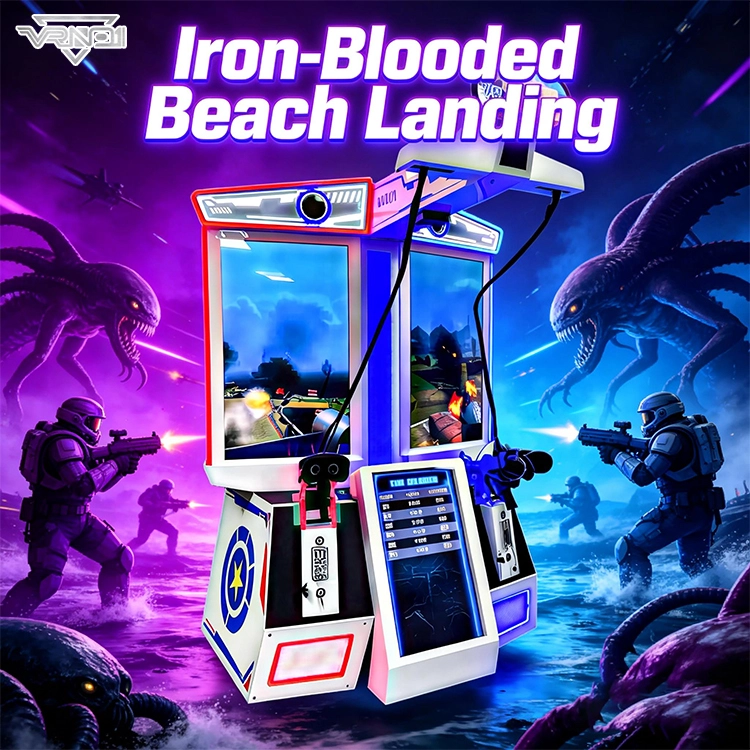
VRN0.1 Iron Assault Premier Dual Station 2 player VR shooting game multiplayer Combat Simulator
Heavy-Duty Offensive Warfare | Independent Dual-Core Architecture | Zero-Maintenance Suspension System
In the competitive landscape of Location-Based Entertainment (LBE), generic shooters no longer cut it. Enter the VR NO.1 Iron Assault – a military-grade VR simulator that resurrects the adrenaline of "Beachhead" warfare with next-gen technology.
Engineered by VR NO.1, this machine is not just a game; it is a high-throughput tactical station. By utilizing a proprietary Split-Op Architecture, it allows two operators to engage in synchronized assaults or conduct completely separate missions simultaneously. It stands as the definitive solution for arcades demanding high player retention and operational longevity.
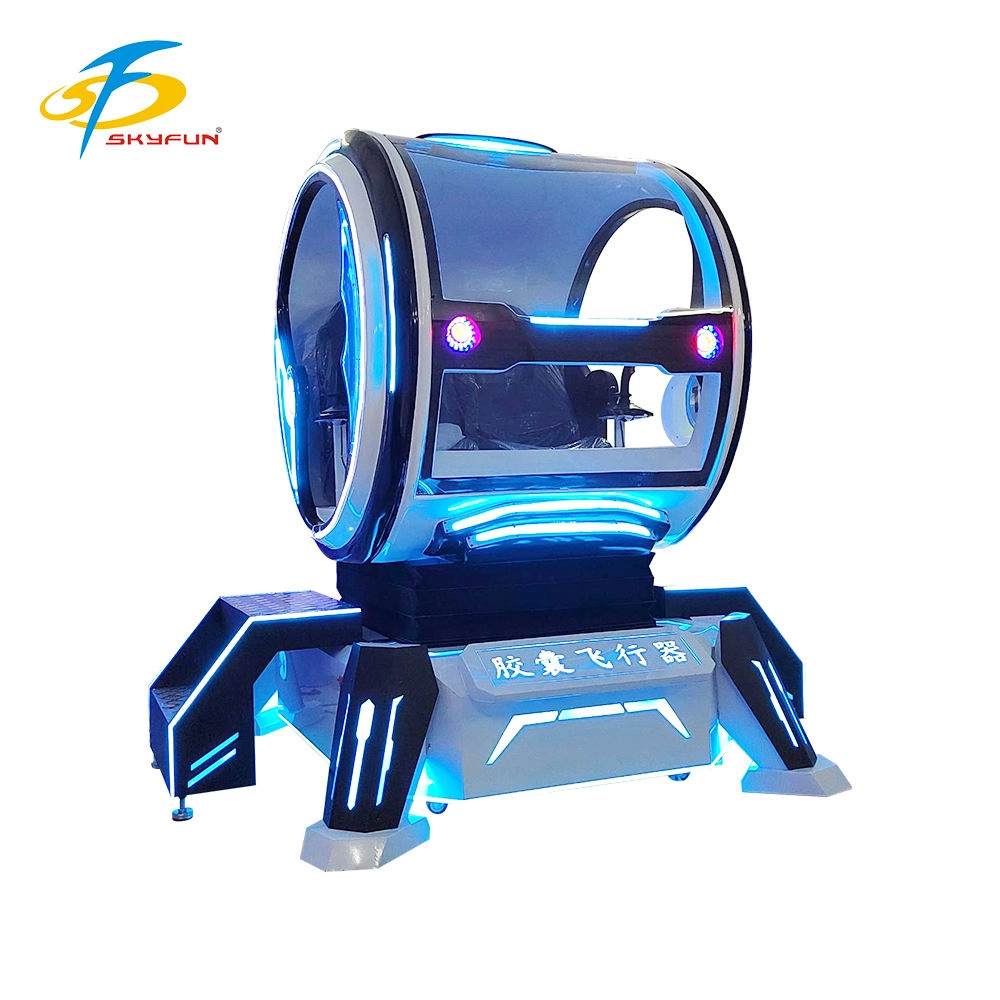
Double Player VR Flight Simulator 100 Movies 15 Games Coin-Operated Game Machine for Shopping Malls Amusement Parks
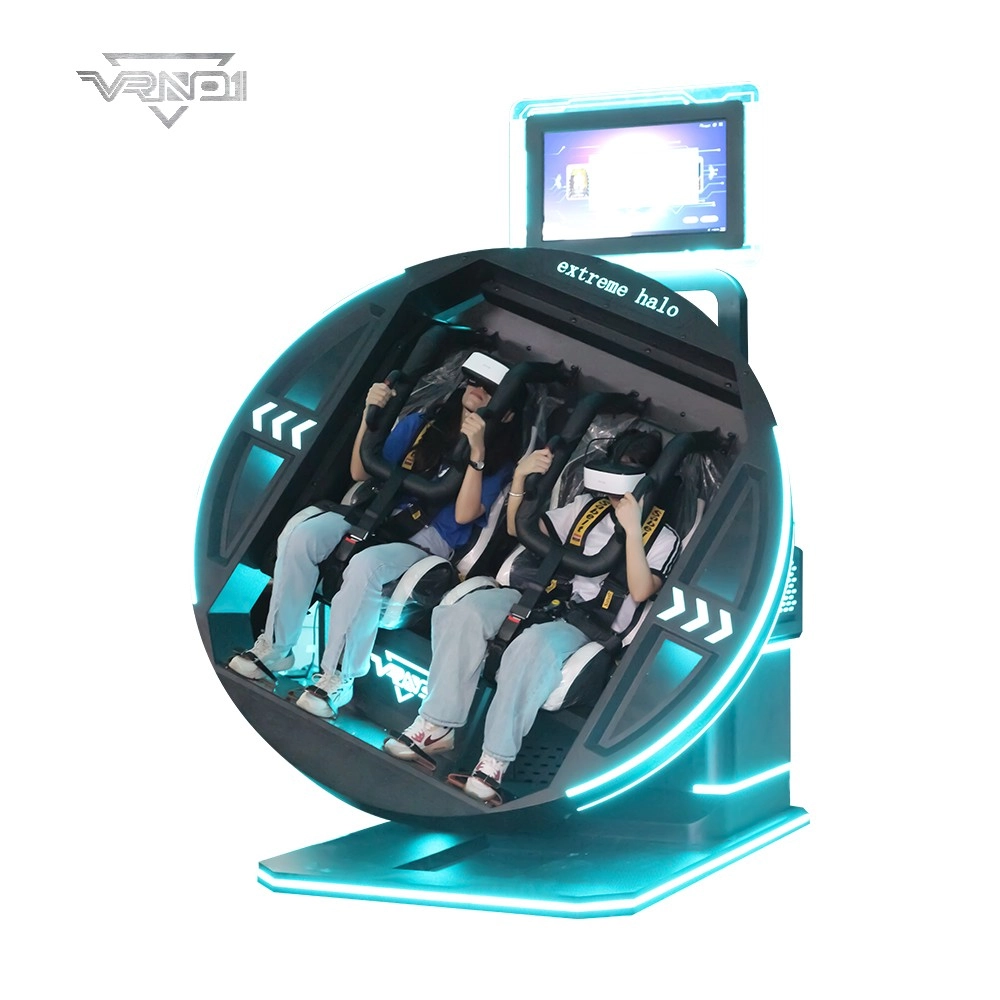
9D VR 360 Roller Coaster Cinema Chair Gaming Set Indoor/Outdoor Business Simulator Hardware for Home or School
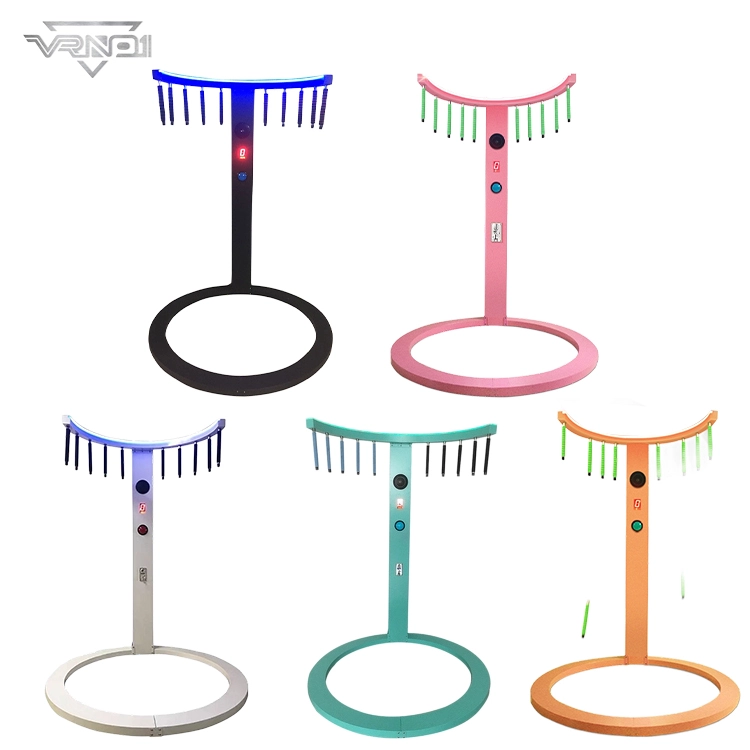
VRN0.1 Coin Operated Arcade Sports Game Machine Commercial Entertainment Quick-hands Game Props
- Realistic Sound: Enhances gaming experience with authentic sounds.
- Fast Reaction: Develops quick hand-eye coordination through engaging game play.
- DIY Kit: Allows for customization and personalization of the baton.
- Metal and Plastic Construction: Durable and robust build quality.
- Coin Operated: Fun for players who enjoy arcade-like experiences.
 Scan QR Code
Whatsapp: +8618127818571
Scan QR Code
Guangzhou Skyfun Technology Co.,Ltd
skyfunvrgame
skyfun game