


VR Escape Rooms: Designing Immersive Puzzles
- Design Principles for Immersive VR Puzzle Experiences
- Understanding player psychology in arcade vr escape rooms
- Spatial design and locomotion choices for arcade vr
- Puzzle types that work best in VR
- Integrating narrative, audio, and haptics to boost immersion in arcade vr
- Hardware constraints and performance optimization for arcade vr
- User safety, accessibility, and session flow for arcade vr venues
- Technical Checklist and Puzzle Design Workflow for arcade vr Operators
- Puzzle mechanics vs. implementation complexity (comparison table)
- Monetization and Operational Tips for arcade vr Escape Rooms
- Case Study and Best Practices: VRN0.1 Solutions for Immersive Escape Rooms
- Quick Pre-Launch Checklist for VR Escape Rooms (arcade vr)
- FAQ — Frequently Asked Questions
- 1. How long should a VR escape room session be in an arcade vr venue?
- 2. What hardware is best for commercial VR escape rooms?
- 3. How do you prevent motion sickness in VR puzzles?
- 4. Can escape room puzzles be reused or monetized multiple ways?
- 5. What staff training is needed to run an arcade vr escape room?
- 6. How do I measure if a VR escape room is successful?
- Contact & Product CTA
- References
Design Principles for Immersive VR Puzzle Experiences
Creating a successful VR escape room for an arcade vr venue starts with clear design principles that prioritize player experience, throughput, safety, and technical reliability. This article targets operators, designers, and product managers who want practical, proven guidance to build immersive puzzles that work in a commercial arcade context and scale reliably.
Understanding player psychology in arcade vr escape rooms
Designers must balance challenge and reward to keep players in a state of flow. In arcade vr contexts, sessions are typically shorter than physical escape rooms, so puzzles should deliver satisfying milestones within 7–20 minutes. Use progressive complexity: early tasks teach mechanics; middle tasks combine mechanics; final tasks require synthesis. Emotional pacing (tension, relief, surprise) and clear affordances (visual and haptic cues indicating interactability) reduce cognitive friction and increase completion rates.
Spatial design and locomotion choices for arcade vr
Spatial layout in VR escape rooms affects immersion, comfort, and safety. For arcade vr setups you will choose between room-scale tracking, seated/tethered rigs, or tetherless standalone units. Minimize virtual-to-physical mapping mismatches: if players can walk, provide at least 2–3 meters of safe real-world play area or use teleportation/continuous movement carefully to avoid motion sickness. Visual anchors and stable horizons help; avoid excessive acceleration. Track and log movement to identify choke points and reconfigure layouts that reduce collisions and session delays.
Puzzle types that work best in VR
Not all puzzle archetypes translate well to arcade vr; prioritize those that exploit VR’s strengths—spatial interaction and presence. Effective puzzle categories include:
- Physical manipulation puzzles (rearranging, assembling objects) — high satisfaction, moderate development cost.
- Environmental puzzles (light, sound, hidden passageways) — leverage spatial audio and lighting.
- Sensor/physics puzzles (weight, balance, momentum) — need robust physics systems and QA.
- Timed/cooperative tasks — good for group throughput and social engagement.
- Logic/sequence puzzles — ensure visual feedback to teach rules fast.
Integrating narrative, audio, and haptics to boost immersion in arcade vr
Narrative context turns a collection of puzzles into an experience. For arcade vr, write concise, high-impact story beats that set goals quickly. Use spatial audio to guide attention and provide cues without text-heavy HUDs. Haptic feedback (via controllers or seats) reinforces actions and increases perceived realism; mild, well-timed haptics improve recall and satisfaction but should be adjustable for sensitivity and accessibility.
Hardware constraints and performance optimization for arcade vr
Commercial arcade vr must prioritize stable frame rate and low latency to reduce motion sickness and keep sessions predictable. Target native refresh rates recommended by headset vendors—commonly 72–90 Hz for many headsets and 120 Hz for high-end devices. Optimize GPU/CPU usage, reduce draw calls, and use LODs and baked lighting where possible. For multi-station arcades, consider standalone headsets for throughput and reduced cabling, or tethered systems where higher fidelity is essential. Track headset and controller firmware compatibility as part of maintenance protocols.
User safety, accessibility, and session flow for arcade vr venues
Operational safety matters as much as design. Implement a pre-game briefing, adjustable comfort settings, and clear physical boundaries. Sessions for public arcades commonly run 7–20 minutes per group to maximize throughput while preserving immersion. Provide staff oversight, clear signage, and sanitation between sessions. Offer difficulty and accessibility presets (e.g., seated mode, subtitle audio, controller simplification) to widen your audience and improve revenue per customer.
Technical Checklist and Puzzle Design Workflow for arcade vr Operators
Use a repeatable workflow to reduce development time and operational issues. A recommended pipeline is: define player goals → prototype mechanics in VR → user-test with 20–50 players → optimize performance & comfort → implement analytics & telemetry → finalize staging and staff training. Track KPIs like completion rate, average session time, rebooking rate, and per-player revenue.
Puzzle mechanics vs. implementation complexity (comparison table)
| Puzzle Type | Player Action | Development Complexity | Hardware Needs |
|---|---|---|---|
| Object Manipulation | Grab, rotate, assemble | Medium | Standard tracked controllers |
| Environmental Trigger | Step on area, light change | Low | Basic tracking, spatial audio |
| Physics Puzzle | Throw, balance, stack | High | High-fidelity physics engine, strong GPU |
| Cooperative Task | Team coordination, simultaneous actions | Medium | Network sync, multi-station tracking |
| Logic/Code Puzzle | Pattern recognition, sequence input | Low | Minimal |
Monetization and Operational Tips for arcade vr Escape Rooms
To turn immersive puzzles into a profitable product, focus on throughput, price structuring, and upsells. Typical pricing models include per-player, per-session, and group packages. Consider add-ons: photo/video souvenirs, High Quality scenarios, extended difficulty modes, or timed leaderboards. Operationally, plan staffing so one employee can manage 3–6 stations depending on automation, and design 10–20 minute sessions to maximize daily bookings without fatiguing players. Track retention metrics: customers who enjoyed a first session should be offered membership/season passes or discounts on different titles to boost lifetime value.
Case Study and Best Practices: VRN0.1 Solutions for Immersive Escape Rooms
VRN0.1 is a leading VR game machine and arcade simulator supplier with over 10 years of global experience. Based in Guangzhou — China’s largest game machine manufacturing hub — VRN0.1 has exported to more than 100 countries and supported thousands of customers. For arcade vr escape rooms, VRN0.1 offers a range of hardware and services tailored to venue needs:
- Product lineup: VR Simulator, Arcade Game Simulator, VR Car Driving Simulator, Interactive Platform VR, Racing Game Machine, AR Sniper, Kiddie Ride, 7D Cinema.
- Services: OEM & ODM, one-stop venue solutions, free equipment and operation training, venue planning, equipment configuration, and operational strategies adjusted to budget and local market conditions.
- Support & quality: Strong R&D team, strict quality control, 24/7 customer support, and proven export experience across diverse markets.
VRN0.1 differentiates itself by combining commercial-grade hardware optimized for continuous arcade use with software and operational consulting. This approach reduces downtime and accelerates revenue realization for operators. Examples of value-adds include multi-station synchronization for cooperative escape scenarios, turnkey VR cabins for space-limited arcades, and content adaptation services to localize narratives and difficulty curves.
Quick Pre-Launch Checklist for VR Escape Rooms (arcade vr)
- Finalize scenarios with 20+ playtests and adjust for 7–20 minute session windows.
- Confirm hardware refresh rates and latency meet vendor recommendations (test at target peak load).
- Create a staff playbook: briefings, emergency stop procedure, sanitization protocol.
- Implement analytics: completion rates, average time to puzzle, customer satisfaction surveys.
- Set up marketing funnels: booking system, group discounts, and upsell offers.
FAQ — Frequently Asked Questions
1. How long should a VR escape room session be in an arcade vr venue?
For public arcades, 7–20 minutes is optimal for a single session to balance immersion and throughput. Multi-stage experiences can offer tiered options (short trial vs. full experience) to capture different customer segments.
2. What hardware is best for commercial VR escape rooms?
Choose based on fidelity vs. simplicity. Standalone headsets (e.g., Meta Quest series) increase throughput and reduce cabling; tethered high-end headsets (e.g., PC VR systems) deliver higher visual quality. For cooperative or roaming experiences, invest in robust tracking systems and consider VRN0.1’s multi-station simulators for commercial durability.
3. How do you prevent motion sickness in VR puzzles?
Design with stable reference points, keep locomotion slow or use teleportation, maintain high frame rates, reduce acceleration, and offer comfort settings. Pre-game tutorials and short session lengths also reduce risk.
4. Can escape room puzzles be reused or monetized multiple ways?
Yes. Modular design allows swapping rooms, changing objectives, or increasing difficulty tiers. Offer replays with alternate solutions or leaderboards to encourage repeat visits.
5. What staff training is needed to run an arcade vr escape room?
Staff should be trained on hardware setup, safety and emergency procedures, basic troubleshooting, sanitization, and customer onboarding. VRN0.1 provides free training for equipment and operation as part of its venue solutions.
6. How do I measure if a VR escape room is successful?
Key metrics: completion rate, average session time, per-player revenue, rebooking/return rate, and Net Promoter Score (NPS). Monitor these and iterate content and operations accordingly.
Contact & Product CTA
If you’re planning or upgrading an arcade vr escape room, VRN0.1 provides turnkey hardware, venue planning, and training to launch faster and operate reliably. Visit https://www.vrarcadegame.com/ to view product lines, request OEM/ODM information, or get a tailored venue plan. For direct consultation, use the website contact form to discuss your space, budget, and audience.
References
- Oculus Developer Documentation — Best Practices: Motion Sickness & Comfort. https://developer.oculus.com/documentation/ — Accessed 2025-12-17.
- SteamVR Performance Guidelines — Valve Developer Community. https://partner.steamgames.com/doc/features/vr/perf — Accessed 2025-12-17.
- Statista — Virtual Reality (VR) Market Size and Forecasts. https://www.statista.com/topics/2532/virtual-reality-vr/ — Accessed 2025-12-17.
- Wikipedia — Escape Room. https://en.wikipedia.org/wiki/Escape_room — Accessed 2025-12-17.
- IAAPA (International Association of Amusement Parks and Attractions) — Trends in Immersive Experiences. https://www.iaapa.org/ — Accessed 2025-12-17.
Top 10 vr airplane simulator Manufacturers and Supplier Brands in China
Running VR Arcade Tournaments and Events
Best vr spaceship manufacturers and supplier brands in us
Best professional best vr helicopter simulator manufacturers and supplier brands in China
Solution
How to get technical support if the device fails?
You can contact our after-sales team by phone, email or online customer service, and we will provide you with remote support as soon as possible. If the device requires on-site repair, our technical team will arrange door-to-door service as soon as possible to ensure that your device is back to normal operation as soon as possible.
What types of venues does VRNO.1's VR device support?
Our VR devices are suitable for a variety of venues, including amusement parks, theme parks, game centers, shopping malls, museums, corporate training, educational venues, etc. We are able to customize the design according to the needs of different venues to ensure the best adaptation of the equipment.
Does VRNO.1 provide customized development of VR game content?
Yes, VRNO.1 provides customized development services for game content. We can customize specific types of games according to your needs to enhance the user experience. Customized content can include game themes, scenes, interactive functions, etc. to meet different market needs.
Products
Do you offer support and training for using VRNO.1’s VR systems?
Yes, we provide comprehensive support and training for all our VR products, ensuring that your staff is fully equipped to operate and maintain the systems.
Distributors
What are the requirements to become a VRNO.1 dealer?
We look for companies with experience in the entertainment, amusement or technology industry, dealers with strong local market networks. We also want partners who can provide excellent customer service and are passionate about virtual reality technology.
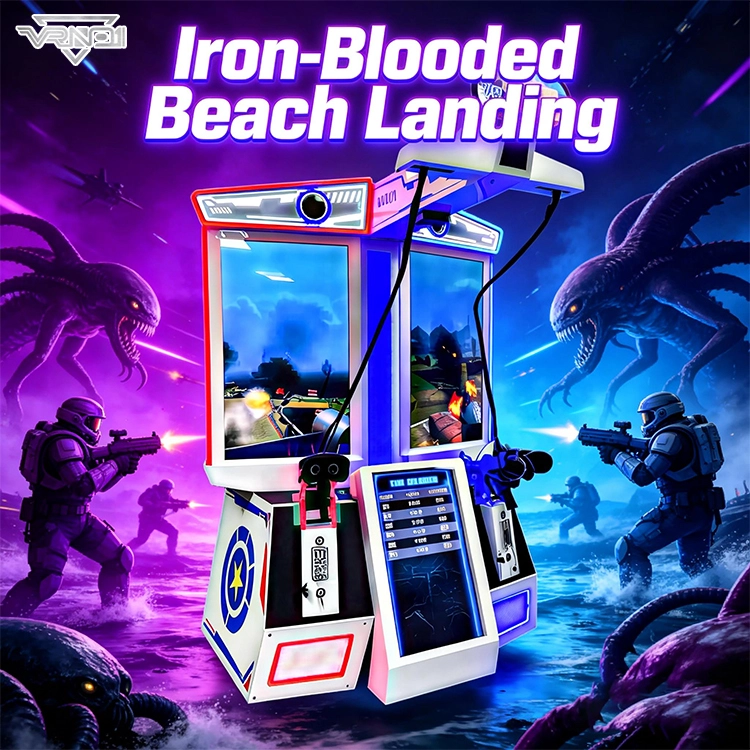
VRN0.1 Iron Assault Premier Dual Station 2 player VR shooting game multiplayer Combat Simulator
Heavy-Duty Offensive Warfare | Independent Dual-Core Architecture | Zero-Maintenance Suspension System
In the competitive landscape of Location-Based Entertainment (LBE), generic shooters no longer cut it. Enter the VR NO.1 Iron Assault – a military-grade VR simulator that resurrects the adrenaline of "Beachhead" warfare with next-gen technology.
Engineered by VR NO.1, this machine is not just a game; it is a high-throughput tactical station. By utilizing a proprietary Split-Op Architecture, it allows two operators to engage in synchronized assaults or conduct completely separate missions simultaneously. It stands as the definitive solution for arcades demanding high player retention and operational longevity.
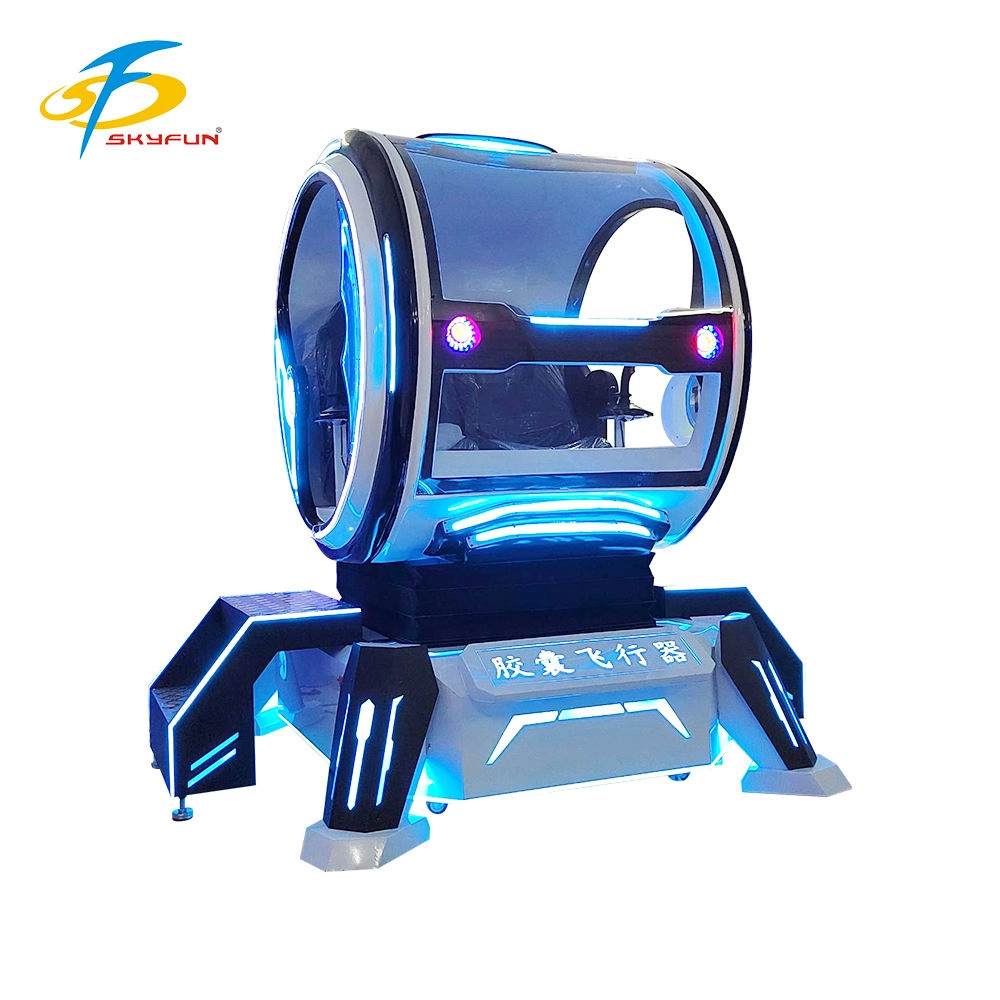
Double Player VR Flight Simulator 100 Movies 15 Games Coin-Operated Game Machine for Shopping Malls Amusement Parks
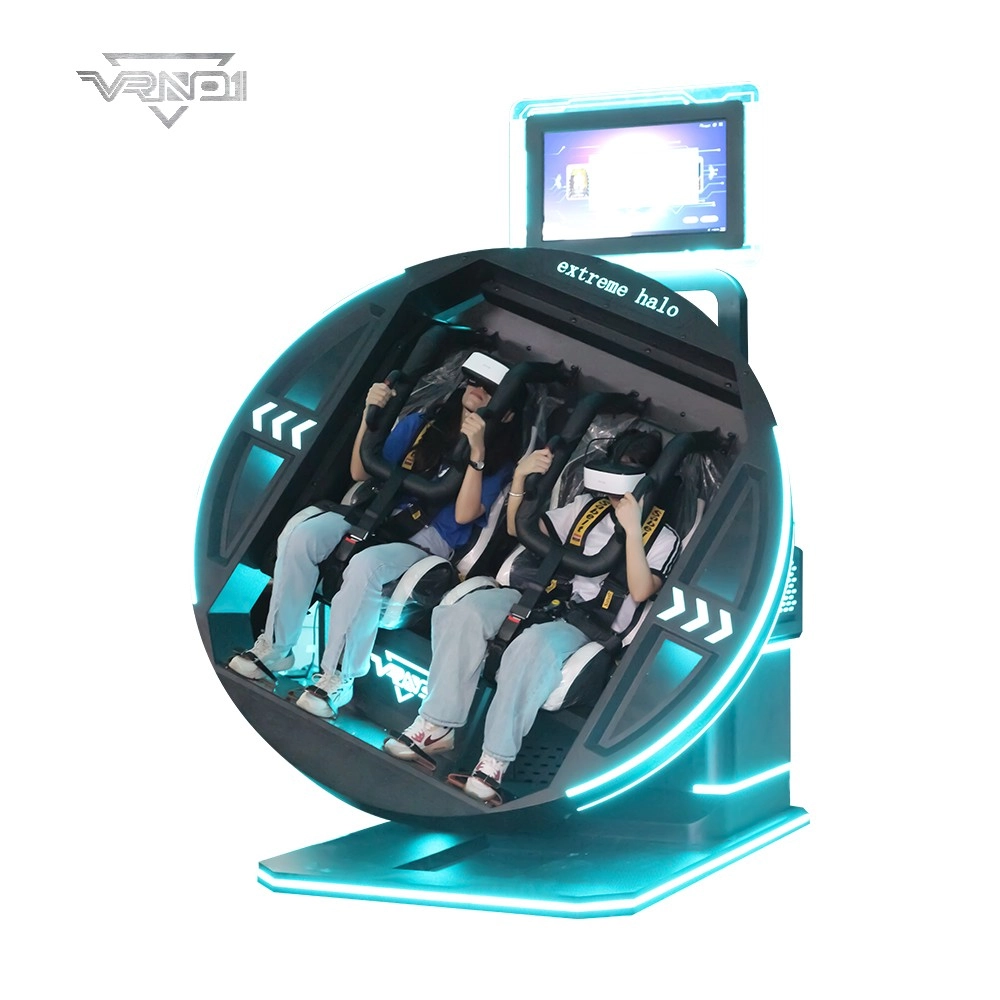
9D VR 360 Roller Coaster Cinema Chair Gaming Set Indoor/Outdoor Business Simulator Hardware for Home or School
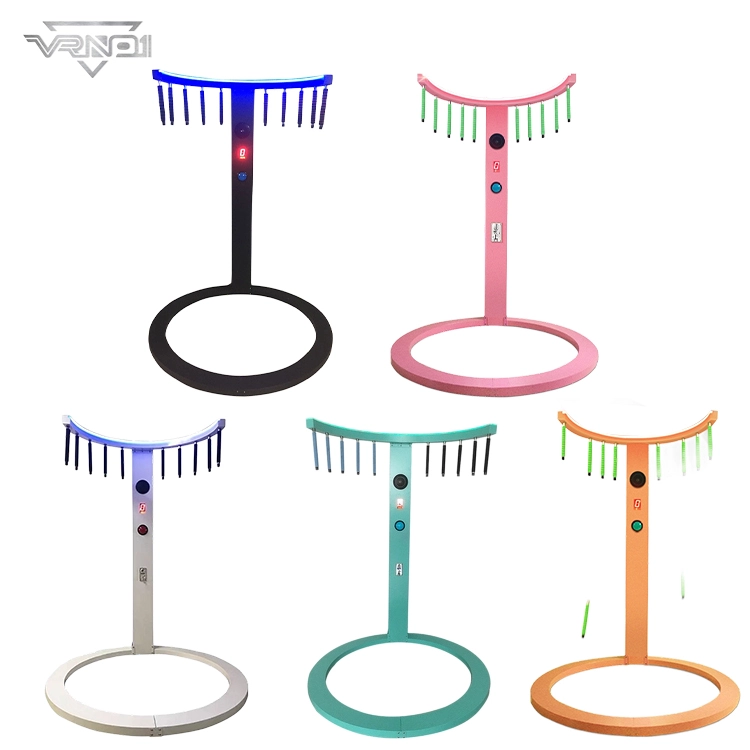
VRN0.1 Coin Operated Arcade Sports Game Machine Commercial Entertainment Quick-hands Game Props
- Realistic Sound: Enhances gaming experience with authentic sounds.
- Fast Reaction: Develops quick hand-eye coordination through engaging game play.
- DIY Kit: Allows for customization and personalization of the baton.
- Metal and Plastic Construction: Durable and robust build quality.
- Coin Operated: Fun for players who enjoy arcade-like experiences.
 Scan QR Code
Whatsapp: +8618127818571
Scan QR Code
Guangzhou Skyfun Technology Co.,Ltd
skyfunvrgame
skyfun game