


Safety Standards and Compliance for VR Arcades
- Understanding Risks in Immersive Arcade Experiences
- Physical hazards: collisions, falls, and entanglement
- Health and sensory risks: motion sickness, photosensitivity, and fatigue
- Operational risks: crowding, behavior, and liability
- Regulatory Frameworks and Standards
- International standards and guidance
- Regional regulations: CE, UL, and national safety agencies
- Industry best practices and voluntary codes
- Design, Installation, and Operational Compliance for VR Arcades
- Hardware safety: headsets, platforms, and simulated weapons
- Software and content safety: motion profiles and warnings
- Facility layout, signage, and emergency procedures
- Specific Considerations for VR Shooting Simulator Systems
- Realistic weapon interfaces and safety interlocks
- Props, projectiles, and environmental effects
- User briefings, age verification, and consent
- Compliance Checklist and Standards Comparison
- Vendor Selection, Maintenance, and Documentation
- Choosing compliant suppliers
- Scheduled maintenance and verification
- Record keeping and incident reporting
- VRN0.1 — Supplier Profile and Capabilities
- Practical Implementation Roadmap
- Phase 1 — Planning and procurement
- Phase 2 — Installation and commissioning
- Phase 3 — Operation and continuous improvement
- FAQ — Safety Standards and Compliance for VR Arcades
- Q1: What permits or certifications do I need to operate a VR arcade?
- Q2: How can I reduce cybersickness for players in my VR shooting simulator?
- Q3: Are replica firearms allowed in public arcades?
- Q4: What should be included in staff training for VR arcades?
- Q5: How often should I perform maintenance and safety checks?
- Q6: Can my insurance High Qualitys be reduced by following specific safety standards?
- Contact and Next Steps
In an era where immersive entertainment blends physical and virtual realities, VR arcades must balance thrill with safety. This article provides a practical, compliance-focused roadmap for operators, planners, and vendors—especially those deploying VR shooting simulator systems—covering hazard assessment, applicable international and regional standards, equipment design and maintenance, user screening and signage, and operational best practices to minimize risk and liability.
Understanding Risks in Immersive Arcade Experiences
Physical hazards: collisions, falls, and entanglement
VR users are visually immersed and frequently unaware of real-world obstacles. Physical hazards include trips over cables, collisions with hard structures, falls from platforms, and entanglement with tethered equipment. For VR shooting simulator setups where users may aim and turn quickly, clear exclusion zones, soft barriers, and cable management systems are essential. Risk assessments should map out movement envelopes for different game types and user sizes.
Health and sensory risks: motion sickness, photosensitivity, and fatigue
Cybersickness—nausea, dizziness, disorientation—is well documented in virtual reality literature; see the overview on Wikipedia: Cybersickness. Bright flashes and strobing effects can trigger photosensitive seizures in a small population; designers and operators must follow content guidelines for luminance and flash rates and provide clear warnings. Screening questions, recommended session durations, and rest areas reduce adverse events.
Operational risks: crowding, behavior, and liability
Crowd control, intoxicated patrons, and misuse of props (e.g., replica firearms) increase operational risk, especially in high-traffic venues. Written operational procedures, staff training, age and health disclaimers, and incident reporting protocols are practical mitigations. Liability insurers expect documented safety management systems and regular staff competency checks.
Regulatory Frameworks and Standards
International standards and guidance
There is no single global standard that covers every aspect of VR arcades, but several international standards and guidelines apply to equipment safety, ergonomics, and electrical safety. Examples include ISO standards for ergonomics and human-system interaction (e.g., ISO 9241) and IEC/ISO standards for electrical and mechanical safety. Operators should review relevant ISO and IEC documents during equipment selection and venue design.
Regional regulations: CE, UL, and national safety agencies
In the European Union, CE marking and the Machinery Directive (2006/42/EC) may apply to components or integrated systems in arcades; see the EU guidance on CE marking. For the United States, Underwriters Laboratories (UL) standards and Occupational Safety and Health Administration (OSHA) workplace safety rules are relevant for staff safety and facility operation (UL, OSHA).
Industry best practices and voluntary codes
Industry associations and leading manufacturers often publish best-practice guidance that covers user screening, signage, emergency stop strategies, and staff training. Where statutory guidance is limited, adopting supplier and association protocols demonstrates due diligence to insurers and regulatory bodies.
Design, Installation, and Operational Compliance for VR Arcades
Hardware safety: headsets, platforms, and simulated weapons
Hardware must be physically robust, easy to sanitize, and designed to limit injury. Headsets should have secure straps, padding, and quick-release features. Play platforms should use non-slip surfaces, edge protection, and load ratings suitable for dynamic motion. For VR shooting simulator environments, any simulated firearm or prop must include safety interlocks (e.g., disable triggers when headset is off), use inert materials, and avoid sharp edges.
Software and content safety: motion profiles and warnings
Game software should offer configurable comfort settings: reduced acceleration, teleportation locomotion, and vignette options to lower motion intensity. Content must provide clear pre-play warnings about potential motion and health effects, and comply with age-rating systems where applicable. Logging software events (crashes, user-triggered safety overrides) aids investigations after incidents.
Facility layout, signage, and emergency procedures
Design the venue for predictable flows: dedicated queuing areas, visible supervision points, and unobstructed egress routes. Post clear, multilingual signage for age limits, health warnings, and instructions for emergency stop. Staff should be trained in basic first aid, seizure response, and evacuation procedures; keep incident logs and perform regular drills.
Specific Considerations for VR Shooting Simulator Systems
Realistic weapon interfaces and safety interlocks
VR shooting simulator equipment must balance realism with safety. Weapons should be electronically indexed to the game system so that when a headset loses tracking, the weapon disables firing (hard interlock). Additional mechanical safety covers, trigger locks, and clear markings that identify replicas as non-lethal reduce potential confusion with real firearms.
Props, projectiles, and environmental effects
Avoid any live projectiles or deployable physical effects (e.g., gas, pyrotechnics) unless the venue is certified and the system is engineered to specific standards. Haptic feedback should be limited to safe force thresholds and be fitted with adjustable intensity for different age groups.
User briefings, age verification, and consent
Before play, staff must provide concise, standardized briefings detailing safe handling, game mechanics, emergency stop functions, and behavior rules. For VR shooting simulator games, implement stricter age verification and parental consent processes. Maintain signed waivers when required by local law or insurer conditions.
Compliance Checklist and Standards Comparison
The table below compares common standards and requirements operators should consider when certifying equipment or preparing a venue. Use this as a starting point for vendor assessment and compliance planning.
| Area | Relevant Standard/Regulation | Typical Requirement | Source |
|---|---|---|---|
| Electrical safety | IEC/EN standards, national wiring codes | Proper grounding, insulation, EMI limits | ISO/IEC |
| Machinery/Equipment | EU Machinery Directive / CE marking | Risk assessment, guarded moving parts, documentation | EU Directive |
| Product safety | UL standards (US), EN standards (EU) | Component testing, flammability, labeling | UL |
| Ergonomics & HCI | ISO 9241 series | Usability, visual comfort, interface design | ISO |
| Health warnings | Industry guidance (manufacturer + venue) | Pre-play warnings, session limits, signage | VR literature |
Note: Always consult local authorities and notified bodies for binding certification requirements in your jurisdiction.
Vendor Selection, Maintenance, and Documentation
Choosing compliant suppliers
Buyers should request conformity documentation (CE declarations, test reports, UL listings), firmware/software change logs, and lifecycle support commitments. For VR shooting simulator systems, insist on vendor documentation for safety interlocks, maintenance schedules, and sanitization procedures.
Scheduled maintenance and verification
Implement preventive maintenance schedules covering mechanical parts, tracking systems, tethering, and headsets. Maintain calibration logs for tracking systems and periodic verification of software safety features. Keep a failure-reporting loop with the manufacturer to manage firmware updates and safety patches.
Record keeping and incident reporting
Retain purchase documents, risk assessments, staff training records, and incident logs. In many jurisdictions, documented due diligence reduces liability exposure and is required by insurers. Establish a standardized incident form and reporting timeline to escalate critical safety events to relevant authorities when necessary.
VRN0.1 — Supplier Profile and Capabilities
VRN0.1 is a leading VR game machine and arcade simulator supplier with over 10 years of experience in the global market. Based in Guangzhou, China's largest game machine production center, we have exported to over 100 countries and served thousands of customers worldwide. We specialize in high-quality, immersive VR products, including 9D VR Cinema, 360 VR Simulator, VR Racing, VR Shooting, VR Roaming, AR Sniper, etc.
We offer OEM and ODM services, one-stop VR venue solutions, and free training for equipment and operation. Our diverse product line covers all mainstream VR arcade categories. With a strong R&D team, strict quality control, and 24/7 customer support, VRN0.1 is committed to innovation, reliability, and customer satisfaction. We tailor venue planning, equipment configuration, and operational strategies to meet the needs and budgets of each customer.
VRN0.1 differentiates itself by combining manufacturing scale in Guangzhou with export experience and localized after-sales service. Our technical team designs hardware with built-in safety interlocks, modular spare parts for quick replacement, and software with configurable comfort modes suited for VR shooting simulator and other high-intensity attractions. We provide documented compliance support to help customers meet local regulatory requirements and insurer expectations.
Primary products & strengths: VR Simulator, Arcade game simulator, VR car driving simulator, Interactive Platform VR, Racing Game Machine, AR Sniper, Kiddie Ride, 7D Cinema. Visit https://www.vrarcadegame.com/ or contact our sales team at sunnyzhang@skyfungame.com for product specs, compliance documents, and venue planning assistance.
Practical Implementation Roadmap
Phase 1 — Planning and procurement
Conduct a hazard analysis for proposed attractions, define safety requirements for hardware and software, and require conformity documentation from vendors. Prioritize vendors who provide training, spare parts, and clear maintenance schedules.
Phase 2 — Installation and commissioning
Install systems per manufacturer instructions, verify electrical and mechanical safety, perform user acceptance testing under supervised conditions, and document commissioning results. Ensure emergency stop mechanisms function across all integrated systems.
Phase 3 — Operation and continuous improvement
Implement staff training, pre-play briefings, routine maintenance, and incident reporting. Regularly review operational metrics (incident rates, downtime) and update policies. Engage with vendors for firmware/security updates and safety patches.
FAQ — Safety Standards and Compliance for VR Arcades
Q1: What permits or certifications do I need to operate a VR arcade?
A1: Requirements vary by jurisdiction. Common needs include business licenses, fire safety inspection, electrical compliance certificates, and in some regions CE/UL conformity for equipment. Consult local authorities and your insurer early in planning.
Q2: How can I reduce cybersickness for players in my VR shooting simulator?
A2: Use comfort settings (reduced acceleration, snap turns), limit session durations, provide pre-play warnings, and allow users to opt for less intense modes. Monitor and log complaints to refine content and settings.
Q3: Are replica firearms allowed in public arcades?
A3: Replica policies differ by country and locale. Many operators use clearly marked non-lethal props with electronic interlocks and require staff supervision. Check local laws concerning imitation firearms and implement strict storage and transport controls.
Q4: What should be included in staff training for VR arcades?
A4: Training should cover equipment operation, emergency stop procedures, first aid (including seizure response), sanitization, incident reporting, and customer handling protocols for distressed players.
Q5: How often should I perform maintenance and safety checks?
A5: Basic checks (visual inspection, cable routing, sanitation) daily; system calibration and functional testing weekly or monthly depending on usage; full preventive maintenance per manufacturer schedule (quarterly/annual). Keep logs for audits and insurers.
Q6: Can my insurance High Qualitys be reduced by following specific safety standards?
A6: Yes. Insurers typically offer better terms when operators can demonstrate a documented safety management system, staff training records, equipment conformity certificates, and incident reduction measures.
Contact and Next Steps
If you are planning or operating a VR arcade—especially with VR shooting simulator attractions—and need compliant equipment, venue planning, or training, VRN0.1 can provide turnkey solutions, OEM/ODM services, and compliance documentation. Visit https://www.vrarcadegame.com/ or email sunnyzhang@skyfungame.com to request specifications, quotes, or free training arrangements. Start with a site risk assessment and vendor conformity review to protect customers, staff, and your business reputation.
How to Choose VR Arcade Hardware and Headsets
How to Choose a Commercial VR Flight Simulator for Your Arcade
How to Choose the kid game machine manufacturer and supplier ?
Everything You Need to Know About custom vr simulations
Application
Will the game content be updated regularly?
Yes, VRNO.1 regularly updates and adds new VR game content, including adventure, sports, virtual tourism and other types. Family entertainment centers can choose to add new game packages to keep customers fresh and interested.
Does the device support wireless use?
Some VRNO.1 VR devices support wireless connection, which makes it easier to move freely in different spaces without worrying about cable restrictions, enhancing the immersion and freedom of the game.
Solution
What is the service life of VR equipment?
VRNO.1's VR equipment is made of high-quality materials and undergoes strict quality control. The service life of the equipment is usually more than 5 years, depending on the frequency of use and maintenance of the equipment. Regular care and maintenance can extend the service life of the equipment.
Products
What is VRNO.1’s main focus?
VRNO.1 specializes in providing cutting-edge virtual reality (VR) and arcade solutions, offering immersive entertainment experiences for both individual players and large-scale events.
Are your VR systems suitable for commercial use?
Yes, our VR arcade solutions are designed for commercial use, ideal for arcades, gaming centers, shopping malls, and entertainment venues. We offer both standalone machines and multi-player setups.
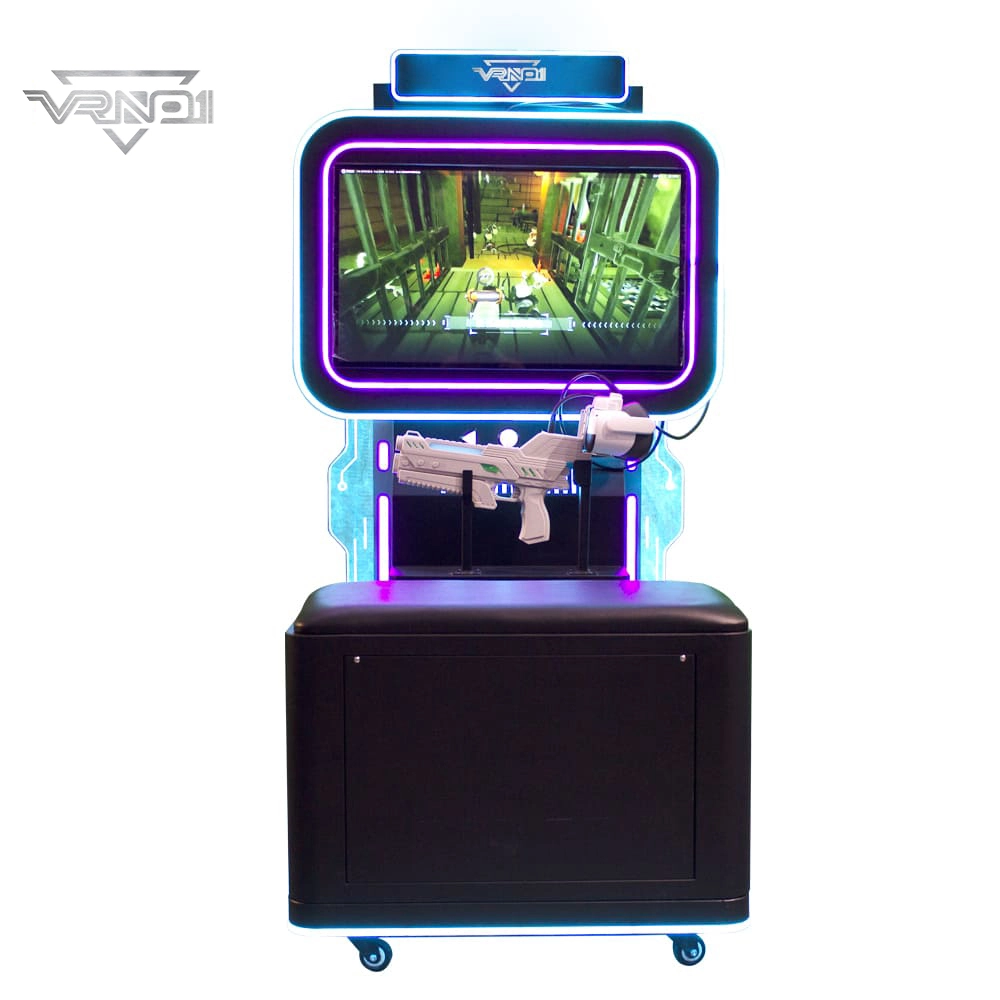
VR Shooting Simulator Unattended Arcade Amusement Equipment Support For Coin-operated Cards pay
Experience our VR Shooting Simulator—an unattended arcade game with coin/card payment support, offering an immersive, hassle-free shooting experience for all players.
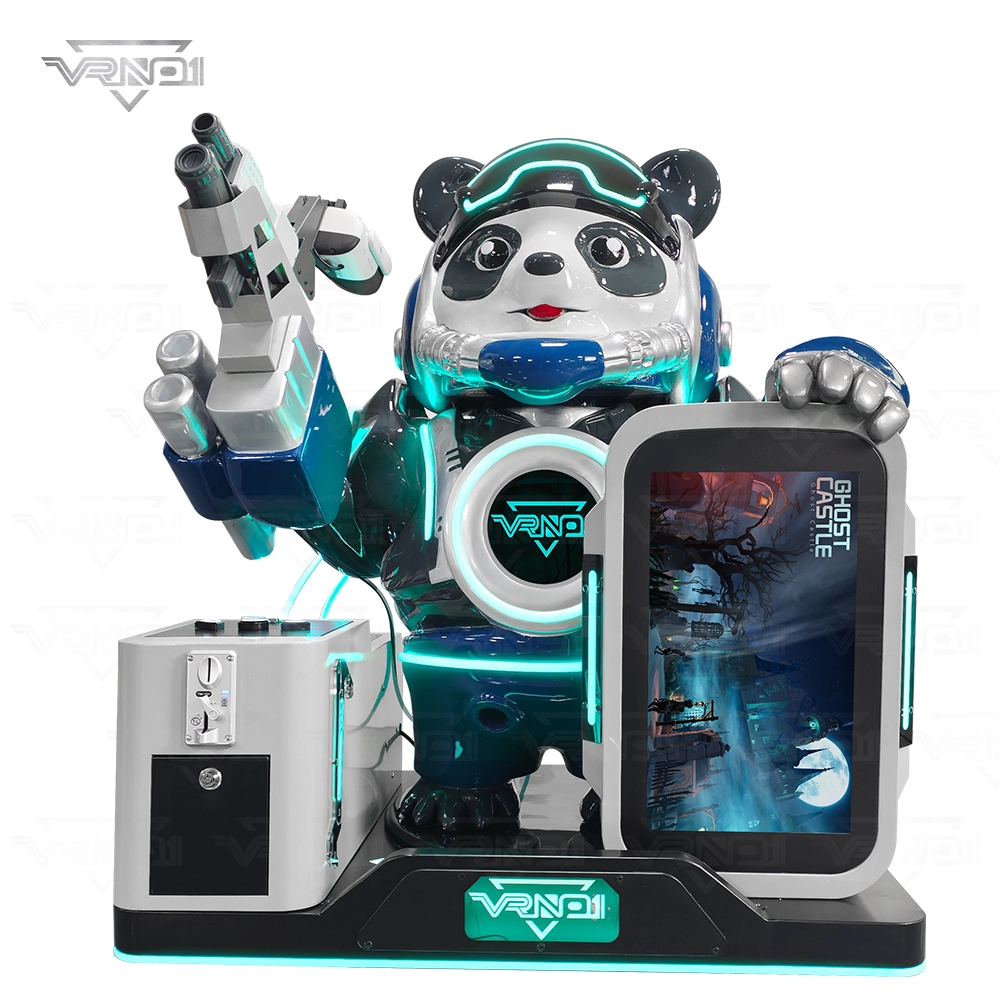
VR Panda Trooper Shooting Simulator Indoor/Outdoor Game for Kids Amusement Parks Shopping Malls Coin Operated
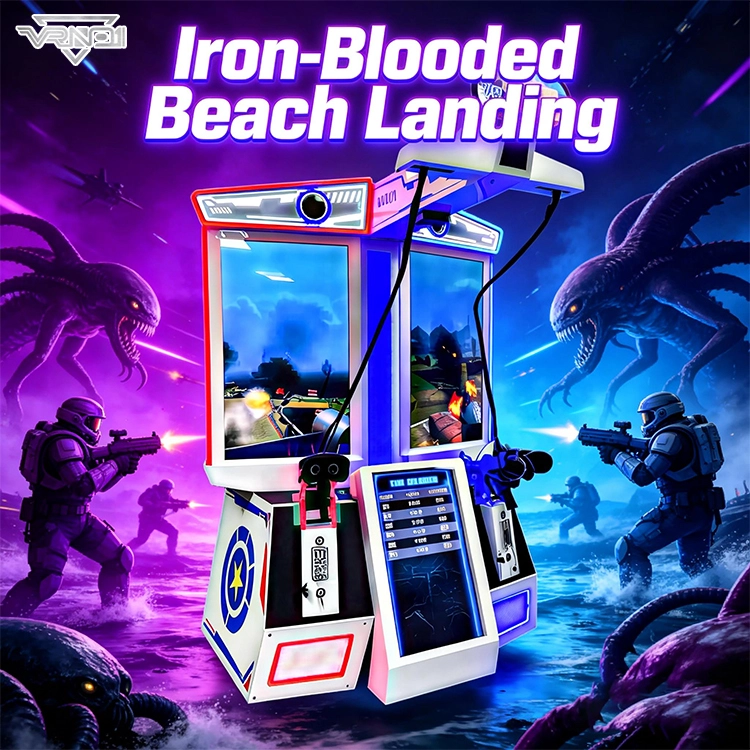
VRN0.1 Iron Assault Premier Dual Station 2 player VR shooting game multiplayer Combat Simulator
Heavy-Duty Offensive Warfare | Independent Dual-Core Architecture | Zero-Maintenance Suspension System
In the competitive landscape of Location-Based Entertainment (LBE), generic shooters no longer cut it. Enter the VR NO.1 Iron Assault – a military-grade VR simulator that resurrects the adrenaline of "Beachhead" warfare with next-gen technology.
Engineered by VR NO.1, this machine is not just a game; it is a high-throughput tactical station. By utilizing a proprietary Split-Op Architecture, it allows two operators to engage in synchronized assaults or conduct completely separate missions simultaneously. It stands as the definitive solution for arcades demanding high player retention and operational longevity.
 Scan QR Code
Whatsapp: +8618127818571
Scan QR Code
Guangzhou Skyfun Technology Co.,Ltd
skyfunvrgame
skyfun game