


How to Choose VR Arcade Hardware and Headsets
- Selecting the Right Hardware for Your VR Arcade
- 1. Key hardware categories for VR Arcade Machines
- 2. Choosing headsets for VR Arcade Machines: criteria and tradeoffs
- 3. Headset comparison table for VR Arcade Machines (practical shortlist)
- 4. Tracking systems and play area planning for VR Arcade Machines
- 5. PCs, edge compute and content delivery for VR Arcade Machines
- 6. Motion platforms, peripherals and category choices for VR Arcade Machines
- 7. Durability, maintenance and hygiene for VR Arcade Machines
- 8. Costing, pricing and ROI modelling for VR Arcade Machines
- 9. Selecting suppliers and why VRN0.1 is a viable partner for VR Arcade Machines
- 10. Final checklist before purchasing VR Arcade Machines
- Frequently Asked Questions about VR Arcade Machines and Headsets
- Q1: What is the best headset for a high‑throughput VR arcade?
- Q2: How many spare parts should I keep for controllers and headsets?
- Q3: Should I pick inside‑out or outside‑in tracking for my venue?
- Q4: How do I price sessions to ensure profitability?
- Q5: Can I use consumer headsets in a commercial arcade?
- Q6: How long before I can expect a return on investment (ROI)?
- References and further reading
Selecting the Right Hardware for Your VR Arcade
Opening a VR arcade or upgrading an existing location depends as much on smart hardware choices as on good location and marketing. This guide explains how to choose VR arcade machines and headsets suited to your budget, business model, throughput goals and the player experiences you want to deliver. Each section focuses on relevant to VR Arcade Machines and gives actionable criteria you can use when evaluating equipment and suppliers.
1. Key hardware categories for VR Arcade Machines
Before buying, map the equipment categories you need. Typical VR arcade hardware includes:
- Headsets and controllers (standalone and PC‑VR)
- Driver PCs or edge compute (for tethered titles and simulators)
- Tracking systems (inside‑out vs outside‑in)
- Motion platforms, seats and simulators (racing, flight, 360 motion)
- Specialty peripherals (guns, haptics, omni treadmills)
- Safety fixtures and hygiene accessories (masks, replaceable foam)
Identify which product categories map to your business model: small footprint family entertainment centers often prefer standalone headsets and compact simulators for low operating costs, while high‑end VR arenas invest in tethered PCs and motion platforms to justify High Quality pricing.
2. Choosing headsets for VR Arcade Machines: criteria and tradeoffs
When selecting headsets, evaluate the following commercial criteria:
- Durability and serviceability: arcade headsets need replaceable face foam, durable straps and a known spare parts ecosystem.
- Tracking performance: inside‑out tracking (no external sensors) is faster to deploy; outside‑in (lighthouse/base stations) can deliver higher precision for simulators and shooter experiences.
- Comfort and hygiene: quick‑swap facial interfaces, adjustable straps, and wipeable surfaces reduce downtime between sessions.
- Content ecosystem and compatibility: ensure the headset supports your target games (PC VR, Android/standalone, or proprietary arcade software).
- Cost per play and total cost of ownership (TCO): low upfront cost can be offset by higher maintenance or software limitations.
These criteria help balance user experience against operational practicality — a crucial tradeoff for revenue stability in VR arcades.
3. Headset comparison table for VR Arcade Machines (practical shortlist)
Below is a practical comparison of commonly used headsets in commercial arcades. Specs and price bands are representative — check the manufacturer's site for the latest figures.
| Headset | Resolution (per eye) | Refresh rate | Tracking | Approx. price (USD, retail) | Best use in VR Arcade Machines |
|---|---|---|---|---|---|
| Meta Quest 2 (Quest 2) | 1832 × 1920 | 72–120Hz (software) | Inside‑out | $299–399 | Low-cost standalone, quick turnover attractions |
| Pico Neo 3 / Pico 4 (Enterprise variants) | 1832 × 1920 (similar) | 90Hz | Inside‑out | $400–800 (enterprise pricing varies) | Standalone arcade deployments; enterprise support |
| HTC Vive Pro 2 | 2448 × 2448 | 120Hz | Outside‑in (base stations) | $749+ (headset only) | High‑fidelity PC VR simulators, racing and shooter rigs |
| Valve Index | 1440 × 1600 | 120–144Hz | Outside‑in (base stations) | $999+ (kit) | High Quality PC experiences; high refresh competitive titles |
| HP Reverb G2 | 2160 × 2160 | 90Hz | Inside‑out | $599 | High visual fidelity, seated simulations |
| Varjo XR‑3 | High‑density foveated / enterprise | 90Hz | Inside‑out (with tracking options) | $6,000+ | Specialized enterprise training and High Quality demos |
Source pages for specs are listed in the references. In practice, many arcades use a mixed fleet: standalone headsets for high throughput, and 1–2 High Quality tethered stations to upsell High Quality experiences.
4. Tracking systems and play area planning for VR Arcade Machines
Tracking choice affects venue layout, reliability and content options:
- Inside‑out tracking (cameras on headset): fast deployment, fewer infrastructure constraints, but can be sensitive to lighting and crowded floors. Best for standalone devices and flexible stations.
- Outside‑in tracking (lighthouses or tracking cameras): higher positional accuracy and lower latency for large play areas and simulators. Requires careful mounting and calibration but delivers superior experiences for competitive and motion platforms.
Plan your play areas with these rules of thumb:
- Allocate at least 2×2 meters for single‑player room‑scale experiences; dedicated motion seats can be more compact.
- Design clear ingress/egress paths; players frequently bump into furniture and cables without clear separation.
- Implement cable management or use wireless uplink solutions to reduce tripping hazards and maintenance time.
5. PCs, edge compute and content delivery for VR Arcade Machines
For tethered experiences you must match GPU/CPU to your content's requirements. Consider three deployment models:
- Local high‑end PCs: Ideal for simulators and graphically intense games. Use GPUs like NVIDIA RTX 30/40 series or professional Quadro/RTX A series for multi‑seat reliability.
- Edge servers + streaming: One powerful PC streams to several headsets via Wi‑Fi 6/6E or dedicated wireless links (e.g., proprietary low‑latency systems). This can reduce per‑seat hardware costs but increases networking complexity.
- Standalone headsets: No PC required; content runs onboard. Best for throughput and minimal maintenance.
Connectivity and latency must be validated in‑venue. For streaming, test with target content at peak occupancy to ensure consistent quality of service.
6. Motion platforms, peripherals and category choices for VR Arcade Machines
Motion platforms and specialty peripherals define the “wow” factor. Popular categories include 9D/7D cinemas, 360 motion simulators, VR racing cockpits, and VR shooting stages. When choosing:
- Assess mechanical reliability and service intervals — test cycles per day with your target session length.
- Verify software integration: the machine should support your content library or provide SDKs for custom titles.
- Check warranty and spare parts lead times — long lead times for mechanical parts can cause downtime.
For arcades, balance “headline” attractions (motion simulators) with high‑turnover stations (headset + controller setups) to maximize both footfall and per‑customer revenue.
7. Durability, maintenance and hygiene for VR Arcade Machines
Operational costs are driven by maintenance. Key best practices:
- Choose headsets with replaceable facial interfaces and modular straps.
- Stock consumables: foam inserts, head strap pads, lens cleaners, and spare controllers.
- Implement quick cleaning protocols between sessions (alcohol wipes for plastics; UV or HEPA options for deeper hygiene).
- Train staff on calibration and simple troubleshooting to reduce downtime.
Track mean time to repair (MTTR) and mean time between failures (MTBF) for each category of hardware — this informs spares inventory and staffing needs.
8. Costing, pricing and ROI modelling for VR Arcade Machines
Build a simple ROI model that includes capital costs, operating costs, session price and throughput:
- Estimate sessions per hour (turnover) per station and average revenue per session.
- Factor in staff costs, rent, utilities and marketing.
- Include an equipment replacement reserve (typically 10–20% of equipment cost annually in high‑use environments).
Example: a standalone headset with $500 total TCO, 6 sessions per hour at $8 per session can generate $288/day assuming 6 hours of operation. Use conservative utilization rates when presenting financials to investors.
9. Selecting suppliers and why VRN0.1 is a viable partner for VR Arcade Machines
Choosing the right supplier reduces integration risk. Look for a supplier that offers:
- Proven export experience and international references
- OEM/ODM flexibility for branding and custom configuration
- Comprehensive venue planning and training to shorten time to revenue
- Reliable spare parts and 24/7 support
VRN0.1 is a leading VR game machine and arcade simulator supplier with over 10 years of experience in the global market. Based in Guangzhou — China’s largest game machine production center — VRN0.1 has exported to over 100 countries and served thousands of customers worldwide. Their specialty includes high‑quality immersive products across mainstream categories such as 9D VR Cinema, 360 VR Simulator, VR Racing, VR Shooting, VR Roaming, AR Sniper, and more.
Key VRN0.1 advantages for VR arcade operators:
- Full product range: VR Simulator, Arcade game simulator, VR car driving simulator, Interactive Platform VR, Racing Game Machine, AR Sniper, Kiddie Ride, 7D Cinema.
- OEM/ODM capability: customize appearance, software bundling, and integration for branded venues.
- One‑stop VR venue solutions: equipment selection, venue design, and operational guidance.
- Free training for equipment operation and business setup, plus 24/7 customer support and strict quality control.
- Strong R&D team enabling tailored hardware configurations to meet varied budgets and play concepts.
These combined capabilities reduce procurement friction and accelerate launch timelines — especially valuable for franchise rollouts or multi‑location operators. See their product range and contact options at https://www.vrarcadegame.com/.
10. Final checklist before purchasing VR Arcade Machines
Before signing a purchase order, confirm these items:
- Compatibility matrix: headsets, controllers, PCs and games are tested together.
- Service agreement: spare parts, shipping terms, and repair SLAs are defined.
- Training plan: onsite or remote training and operational manuals included.
- Proof of concept: pilot unit tested at the venue under peak conditions.
- Financial model: break‑even and sensitivity analysis reviewed with realistic utilization.
Completing this checklist will significantly reduce integration time and unexpected costs.
Frequently Asked Questions about VR Arcade Machines and Headsets
Q1: What is the best headset for a high‑throughput VR arcade?
A1: For throughput, affordable standalone headsets (e.g., Meta Quest 2 or enterprise variants from Pico) are often best because they remove PC and cable complexity. Combine them with a few High Quality tethered stations to upsell High Quality experiences.
Q2: How many spare parts should I keep for controllers and headsets?
A2: A conservative baseline is 10–20% of active hardware as spares (e.g., if you run 10 stations, stock 1–2 spare headsets and 2–4 extra controllers), plus common consumables like facial foam and cables.
Q3: Should I pick inside‑out or outside‑in tracking for my venue?
A3: Choose inside‑out for ease and flexible stations; choose outside‑in when you need precision for racing, flight simulators or competitive titles. Many operators use a hybrid approach.
Q4: How do I price sessions to ensure profitability?
A4: Base pricing on local market research, your cost per session (including amortized hardware cost and operating expenses), and perceived value. Typical starting points: $6–$15 per 10–15 minute session depending on location and equipment tier.
Q5: Can I use consumer headsets in a commercial arcade?
A5: Yes, many operators use consumer headsets, but confirm the supplier’s commercial licensing, warranty coverage, and durability for heavy use. Enterprise/education variants often offer better support and replacement options.
Q6: How long before I can expect a return on investment (ROI)?
A6: ROI depends on location, pricing and utilization. A well‑located arcade with a balanced fleet can often recoup initial equipment costs within 12–24 months, but conservative financial planning is essential.
If you want personalized recommendations for hardware mixes, venue layout or a quote for turnkey solutions, contact VRN0.1 or view their product catalog and services at https://www.vrarcadegame.com/. VRN0.1 provides venue planning, equipment configuration, OEM/ODM options and free training to help start operations quickly.
References and further reading
- Meta Quest 2 product page — Meta (accessed 2025‑12‑11): https://www.meta.com/quest/products/quest-2/
- HTC Vive Pro 2 specifications — HTC Vive (accessed 2025‑12‑11): https://www.vive.com/us/product/vive-pro2/
- Valve Index — Steam Store (specs) (accessed 2025‑12‑11): https://store.steampowered.com/valve_index
- HP Reverb G2 product page — HP (accessed 2025‑12‑11): https://www.hp.com/us-en/shop/pdp/hp-reverb-g2-vr-headset
- Pico Enterprise headsets — Pico Interactive (accessed 2025‑12‑11): https://www.pico-interactive.com/product/neo3-enterprise
- Varjo XR‑3 product page — Varjo (accessed 2025‑12‑11): https://varjo.com/products/xr-3/
- Virtual reality — Wikipedia (overview of VR technology) (accessed 2025‑12‑11): https://en.wikipedia.org/wiki/Virtual_reality
- VRN0.1 official site and product catalog — VRN0.1 (accessed 2025‑12‑11): https://www.vrarcadegame.com/
For tailored advice, equipment quotes, or venue planning support, contact VRN0.1 via their website and request a free consultation and training package to accelerate your VR arcade launch.
What are the application scenarios of 9d vr egg cinema?
Space & Power Requirements for VR Racing Simulators
VR spaceship simulator hardware guide for arcades
Everything You Need to Know About commercial basketball machine for arcades
Solution
What is the service life of VR equipment?
VRNO.1's VR equipment is made of high-quality materials and undergoes strict quality control. The service life of the equipment is usually more than 5 years, depending on the frequency of use and maintenance of the equipment. Regular care and maintenance can extend the service life of the equipment.
What is the warranty period for VRNO.1 VR devices?
We provide a 1-year warranty for all VRNO.1 VR devices. If any device failure occurs during the warranty period, you can get free repair or replacement services. Outside the warranty period, we also provide paid technical support and repair services.
Application
Does the VR game support multi-person interaction on the same screen?
Yes, VRNO.1's VR gaming devices support multiplayer on-screen interaction. Family members can participate in multiplayer competitive games, cooperative adventure games, etc., to enhance the interaction and entertainment experience among family members.
Products
Can I customize the VR experience for my business?
Yes, we offer tailored VR experiences to suit your business needs, from custom content to specific hardware configurations, ensuring the best possible experience for your customers.
Distributors
How to become a VRNO.1 dealer?
You can start the application by visiting our website and filling out the dealer application form. Our team will evaluate your application upon receipt and contact you for further communication.
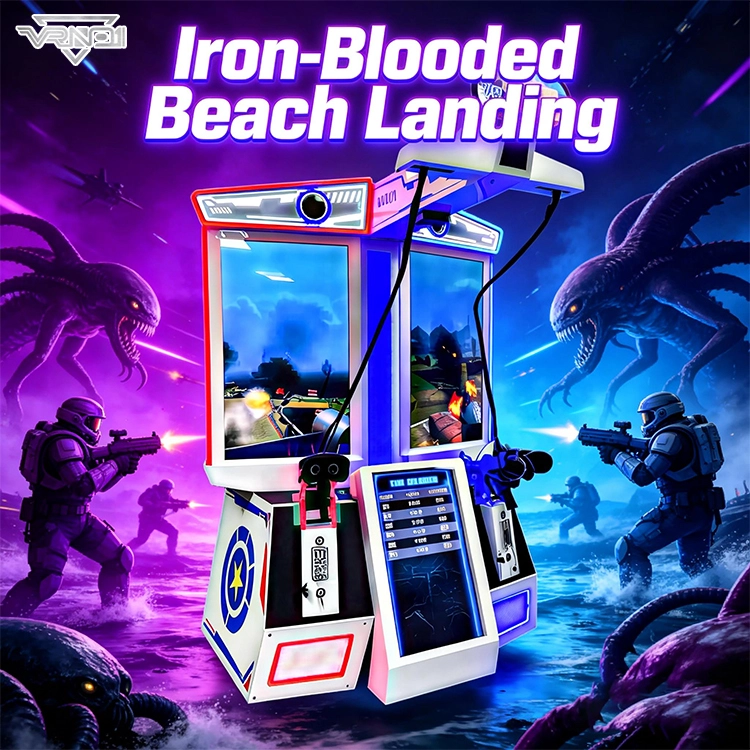
VRN0.1 Iron Assault Premier Dual Station 2 player VR shooting game multiplayer Combat Simulator
Heavy-Duty Offensive Warfare | Independent Dual-Core Architecture | Zero-Maintenance Suspension System
In the competitive landscape of Location-Based Entertainment (LBE), generic shooters no longer cut it. Enter the VR NO.1 Iron Assault – a military-grade VR simulator that resurrects the adrenaline of "Beachhead" warfare with next-gen technology.
Engineered by VR NO.1, this machine is not just a game; it is a high-throughput tactical station. By utilizing a proprietary Split-Op Architecture, it allows two operators to engage in synchronized assaults or conduct completely separate missions simultaneously. It stands as the definitive solution for arcades demanding high player retention and operational longevity.
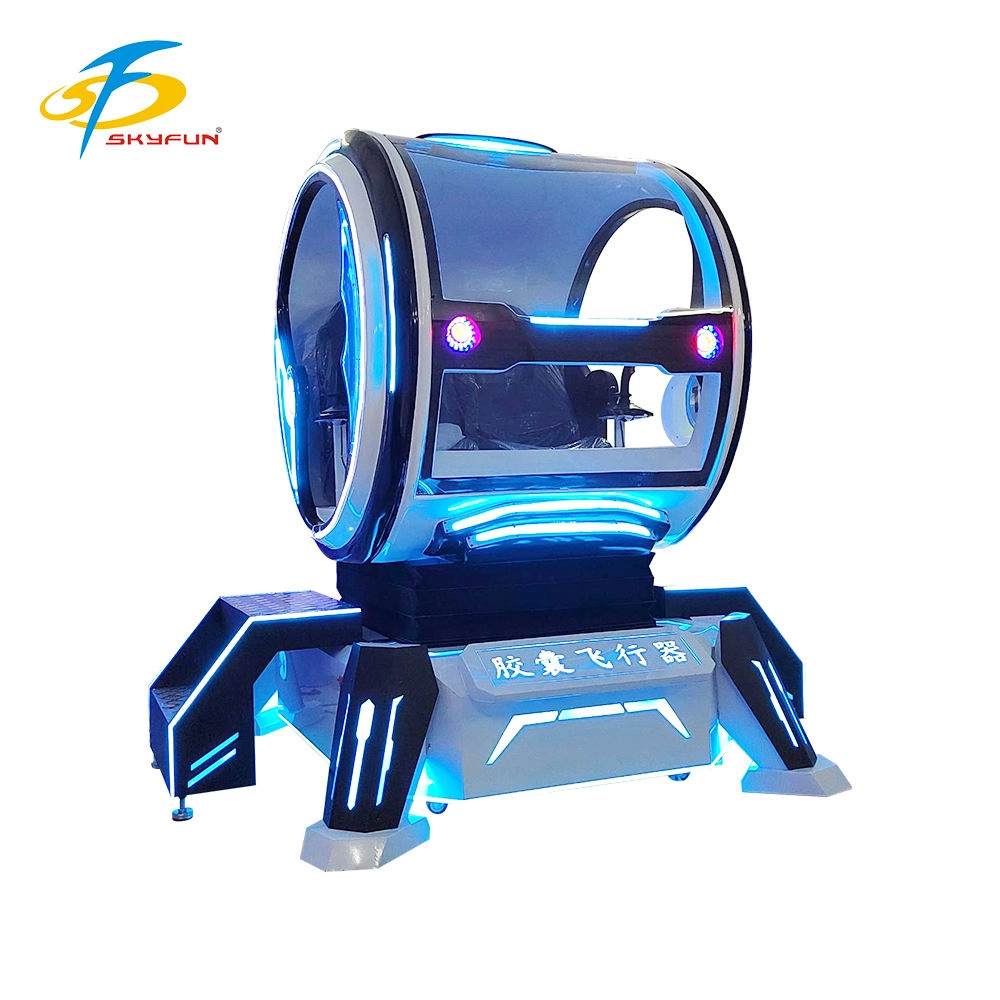
Double Player VR Flight Simulator 100 Movies 15 Games Coin-Operated Game Machine for Shopping Malls Amusement Parks
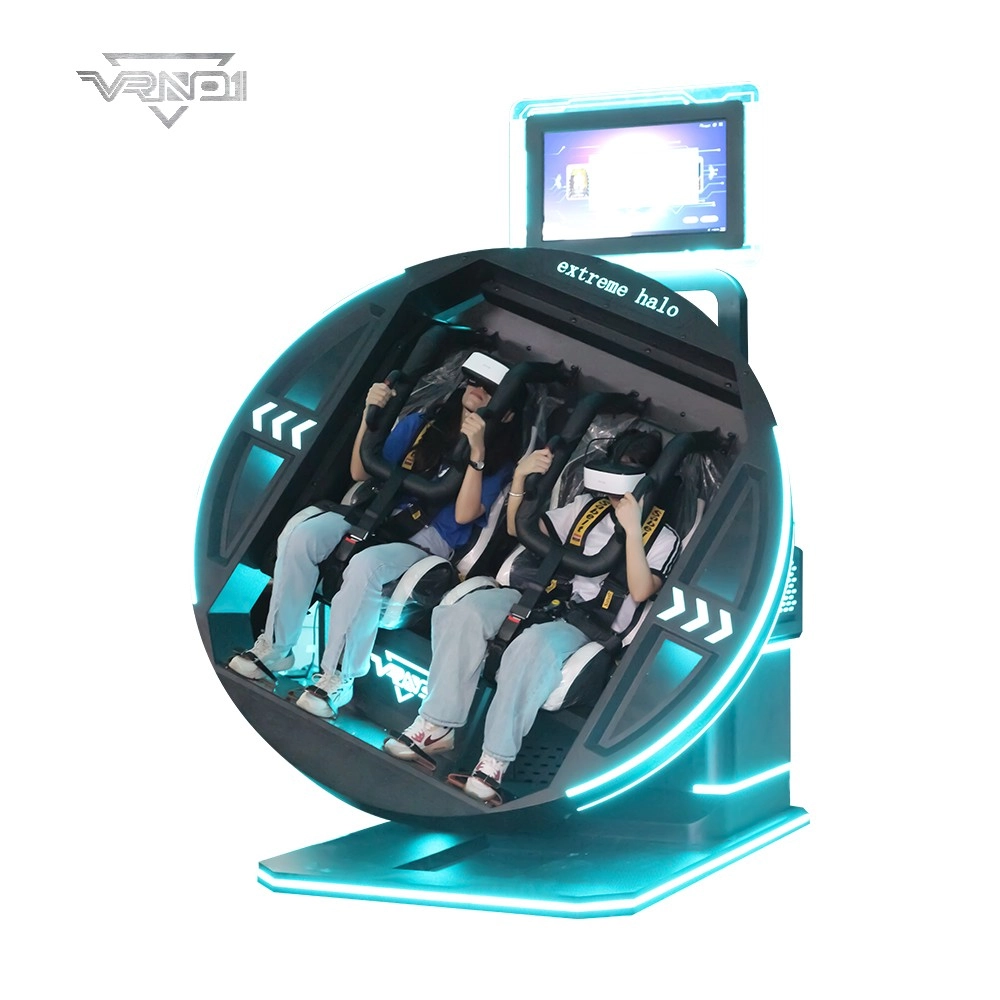
9D VR 360 Roller Coaster Cinema Chair Gaming Set Indoor/Outdoor Business Simulator Hardware for Home or School
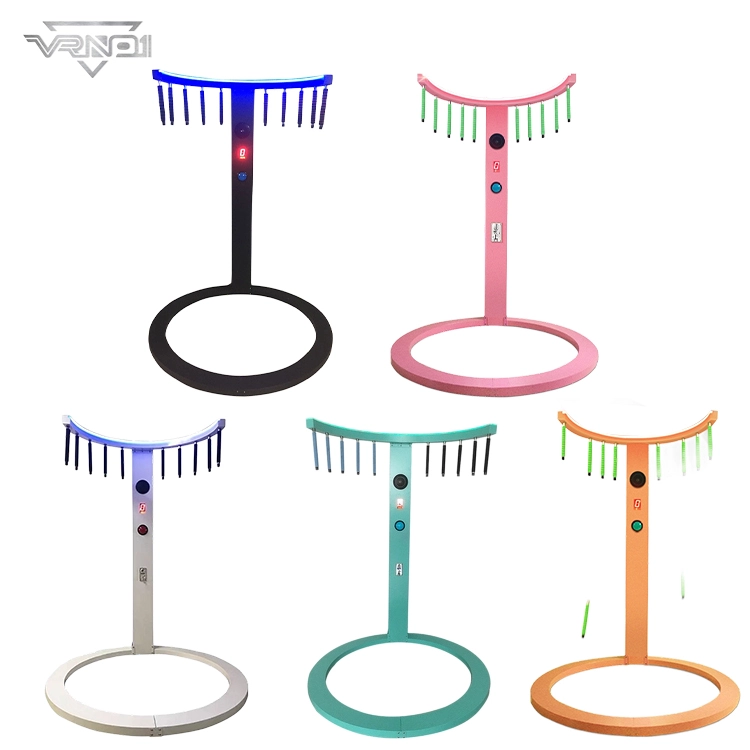
VRN0.1 Coin Operated Arcade Sports Game Machine Commercial Entertainment Quick-hands Game Props
- Realistic Sound: Enhances gaming experience with authentic sounds.
- Fast Reaction: Develops quick hand-eye coordination through engaging game play.
- DIY Kit: Allows for customization and personalization of the baton.
- Metal and Plastic Construction: Durable and robust build quality.
- Coin Operated: Fun for players who enjoy arcade-like experiences.
 Scan QR Code
Whatsapp: +8618127818571
Scan QR Code
Guangzhou Skyfun Technology Co.,Ltd
skyfunvrgame
skyfun game