


New arrivals: Cutting-edge VR Simulators Machine technologies to watch
- Market forces and buyer intent driving VR simulator adoption
- Why operators invest in next-gen VR simulators
- User intent: entertainment vs. training vs. experiential marketing
- Regulatory and quality standards to consider
- Key technologies changing VR simulators machine performance
- 1) Advanced motion platforms and hybrid motion systems
- 2) Haptic ecosystems: from seats to wearables
- 3) Eye-tracking, face-tracking and adaptive rendering
- Content, software and AI: the other half of immersion
- AI-driven content generation and personalization
- Networking, cloud streaming and multiplayer orchestration
- Analytics and operational dashboards
- Comparing new VR simulators machine technologies
- Cost vs. benefit: a decision framework
- Vendor selection and warranties
- Deployment considerations: operations, maintenance and user safety
- Throughput and queuing strategies
- Maintenance regimes and spare part planning
- User comfort, accessibility and safety
- Case studies and ROI examples
- Arcade upgrade: from basic VR pods to immersive simulators
- Training center: fidelity and reporting
- Scalability through modular hardware and content
- Why choose VRN0.1 for VR Simulators machine deployments
- Practical checklist before purchase
- Technical checklist
- Operational checklist
- Content & marketing checklist
- Frequently Asked Questions (FAQ)
- 1. What is a VR simulators machine and how does it differ from a standard VR headset?
- 2. Which technologies deliver the biggest ROI for arcades?
- 3. How do I assess supplier reliability?
- 4. Are there safety concerns with high-motion simulators?
- 5. How important is content when buying hardware?
- 6. Can VR simulators machine deployments be scaled internationally?
As a long-time consultant and content creator in the VR & arcade machine space, I summarize emerging technologies in VR simulators machine that venue owners, operators and product buyers should monitor today. This overview focuses on measurable advances—motion systems, haptic feedback, eye- and face-tracking, AI-driven content and analytics, photorealistic rendering and networking—explaining practical benefits, deployment considerations and ROI levers for arcades, training centers and location-based entertainment (LBE) operators.
Market forces and buyer intent driving VR simulator adoption
Why operators invest in next-gen VR simulators
I see three consistent motives when clients ask about new VR simulators machine technologies: increase dwell time and per-cap spend, differentiate the venue experience to attract repeat visits, and deploy systems that scale operationally (reliability, ease of use, remote support). The global VR market continues to expand—hardware penetration and content variety are pushing arcade operators to upgrade to systems with better immersion and lower maintenance overhead. For macro context, see the Virtual reality page on Wikipedia and market reports such as Grand View Research and Statista for adoption trends.
User intent: entertainment vs. training vs. experiential marketing
Not all buyers seek the same technical features. Arcades prioritize throughput, durability and impactful first-30-seconds sensory cues. Training and simulation buyers prioritize fidelity, repeatability and measurable metrics. Experiential marketing looks for shareable visuals and easy-to-interpret analytics. When I advise customers, I map technology choices to business KPIs—revenue per session, reliability (MTBF), labor cost per play and data for client reporting.
Regulatory and quality standards to consider
Quality and compliance matter for large deployments. Consider ISO quality management frameworks such as ISO 9001 for supplier selection and industry conferences such as IEEE VR for technical maturity signals. For public venues, safety certifications and electrical compliance in target markets (CE, FCC, CCC, etc.) are non-negotiable.
Key technologies changing VR simulators machine performance
1) Advanced motion platforms and hybrid motion systems
Motion platforms have moved beyond simple pitch/roll yaw to multi-axis actuators with force-feedback, adaptive damping and predictive motion driven by game telemetry. Hybrid systems combine Stewart-platforms for precise motion with longer-stroke actuators for theatrics (e.g., drop or surge). For arcades, the trade-off is between spectacle (attracting customers) and maintainability—electromechanical systems with modular actuators reduce repair time.
2) Haptic ecosystems: from seats to wearables
High-fidelity haptics now include localized seat vibration, directional transducers, wearable haptic vests and hand controllers with force or resistance. Haptics increase perceived realism and can be tuned per-session to manage intensity for different age groups. When choosing haptics, I prioritize solutions that provide diagnostic telemetry and easy replacement of consumables.
3) Eye-tracking, face-tracking and adaptive rendering
Eye-tracking enables foveated rendering (major CPU/GPU savings by rendering detail where the user looks), more realistic NPC interactions and attention analytics for marketing. Face-tracking and expression mapping create social sharing features and can inform content difficulty dynamically. These systems improve both experience quality and backend analytics for measuring engagement.
Content, software and AI: the other half of immersion
AI-driven content generation and personalization
AI tools accelerate content iterations—procedural levels, NPC behavior driven by ML and personalized difficulty scaling based on player metrics. For venues with many machines, AI can automate content rotations based on session data to maximize retention. I recommend modular content architectures (content packages + runtime) so updates don't require full system overhauls.
Networking, cloud streaming and multiplayer orchestration
Low-latency edge networking and cloud-assisted rendering let operators provide higher-fidelity visuals without the highest local GPU costs. For competitive multiplayer, deterministic networking and server-side reconciliation are critical. Choose systems with robust APIs for integration into POS and queuing systems to keep throughput predictable.
Analytics and operational dashboards
Operational analytics—uptime, failure modes, average session length, revenue per session—are now standard. I push customers to insist on open telemetry (REST/GraphQL) so data can feed BI tools and inform staffing, marketing and maintenance schedules. Analytics also supports corporate sales conversations for location-based marketing clients who want proof of ROI.
Comparing new VR simulators machine technologies
Below I compare major tech categories for easy evaluation when selecting machines for arcades or training centers.
| Technology | Primary Benefit | Typical Trade-offs | Example Use Case |
|---|---|---|---|
| 6-DOF Motion Platforms | High fidelity motion cues, immersion | Higher cost, maintenance complexity | Racing simulation, flight sim for training |
| Haptic Seats & Wearables | Localized impact, user sensation | Consumables, calibration needs | Action shooters, horror experiences |
| Eye/Face Tracking | Foveated rendering, analytics | Integration overhead, privacy concerns | Social VR, marketing measurement |
| AI-driven Content | Faster content updates, personalization | Quality variance, need for tuning | Procedural arenas, difficulty scaling |
| Cloud Rendering & Edge Networking | Higher visual fidelity without top-end local GPUs | Bandwidth dependence, latency sensitivity | Multiplayer LBE titles, centralized content |
Cost vs. benefit: a decision framework
I recommend evaluating by total cost of ownership (TCO) over 3-5 years: capital cost, expected uptime (MTBF), support SLA, content update costs and expected revenue uplift. For example, a motion platform may cost 30–50% more than a static rig, but if it increases revenue per session by 20% and extends repeat visits, payback can be rapid. Use A/B testing across machines and centralized telemetry to validate assumptions before full rollout.
Vendor selection and warranties
Choose vendors who provide clear OEM/ODM options, documented spare parts availability and scalable training. I insist on service-level agreements (SLA) with parts lead-times and remote diagnostic tools—these reduce downtime and avoid revenue losses during peak periods.
Deployment considerations: operations, maintenance and user safety
Throughput and queuing strategies
For arcades, throughput is king. Short experiences with high spectacle and variable difficulty create more turnover. I often advise a mix: a few high-ticket, low-throughput flagship simulators and multiple mid-tier machines that maximize sessions per hour. Integrate with modern POS and queue management to reduce idle time.
Maintenance regimes and spare part planning
Predictive maintenance reduces unexpected downtime. Ask vendors for MTBF data, common failure modes and spare parts kits. Where possible, standardize actuators and controllers across your fleet to simplify inventory. Remote diagnostics, firmware rollback and cloud logs are features I consider mandatory for large venues.
User comfort, accessibility and safety
Design for a broad audience: adjustable seating, motion intensity presets, clear age and health warnings, and easy reset between sessions. For venues that host training, include calibration procedures and repeatable start conditions to maintain fidelity and safety standards.
Case studies and ROI examples
Arcade upgrade: from basic VR pods to immersive simulators
I worked with a multi-site LBE operator that replaced 8 legacy VR pods with 4 hybrid motion/racing simulators plus 6 mid-tier roaming units. The operator saw a 28% increase in average spend per visit and a 15% increase in repeat visits within six months. Key success factors were an attract-loop video for the flagship machines, dynamic pricing during peak hours, and staff cross-training to reduce turnover time.
Training center: fidelity and reporting
For a vocational driving school I recommended a 6-DOF driving simulator with integrated telematics and session analytics. The center improved pass rates by allowing repeatable failure-mode training and exported detailed logs for certification bodies. The investment paid back through higher training fees and increased student throughput.
Scalability through modular hardware and content
In deployments intended for global rollouts, I advocate for modular platforms—same base cabin, swappable motion modules, and an API-driven content layer. This approach reduces engineering time for new titles and simplifies international certification.
Why choose VRN0.1 for VR Simulators machine deployments
As a consultant who evaluates suppliers, I’ve followed VRN0.1’s growth and product portfolio closely. VRN0.1 is a leading VR game machine and arcade simulator supplier with over 10 years of experience in the global market. Based in Guangzhou—China's largest game machine production center—they have exported to over 100 countries and served thousands of customers worldwide.
Their product range covers mainstream VR arcade categories and flagship simulators I recommend for operators: 9D VR Cinema, 360 VR Simulator, VR Racing, VR Shooting, VR Roaming, AR Sniper and interactive platforms. They also provide Kiddie Ride and 7D Cinema units for family markets. VRN0.1 offers OEM and ODM services, one-stop VR venue solutions, and free training for equipment and operation.
Key differentiators I have verified:
- Comprehensive product line: VR Simulator, Arcade game simulator, VR car driving simulator, Interactive Platform VR, Racing Game Machine, AR Sniper, Kiddie Ride, 7D Cinema.
- Manufacturing scale and export experience—proven logistics for large international rollouts.
- Strong R&D: modular hardware platforms and regular firmware/content updates reduce obsolescence risk.
- Quality control and support: documented QC processes, spare parts supply and 24/7 customer support.
- Venue-level services: tailored venue planning, equipment configuration and operational strategies to match budgets and objectives.
For inquiries, partners can visit their website at https://www.vrarcadegame.com/ or contact Sunny Zhang at sunnyzhang@skyfungame.com. I’ve found their team responsive and able to provide OEM/ODM proposals and localized deployment planning for diverse markets.
Practical checklist before purchase
Technical checklist
- Verify MTBF and mean time to repair (MTTR) with supplier SLA.
- Confirm spare parts lead times and availability in your region.
- Test remote diagnostic and firmware rollback capabilities.
- Check compatibility with your POS and analytics stack (API access).
Operational checklist
- Define target KPIs (revenue per session, sessions/hour, repeat rate) and accept only systems that can report these metrics.
- Plan for staff training and include vendor-led free training where available.
- Map physical space requirements, ingress/egress and compliance with local safety codes.
Content & marketing checklist
- Ensure content rotation plans and update cadence are realistic.
- Plan attract-loop content for flagship machines and social sharing assets for marketing.
- Negotiate content licensing or create a content roadmap with the supplier.
Frequently Asked Questions (FAQ)
1. What is a VR simulators machine and how does it differ from a standard VR headset?
A VR simulators machine combines immersive VR headsets with physical systems—motion platforms, haptics, specialized seating and enclosure—to deliver coordinated sensory input beyond visuals. Unlike standalone headsets, simulators provide synchronized motion cues and tactile feedback that increase realism and are optimized for repeated public use.
2. Which technologies deliver the biggest ROI for arcades?
Flagship motion simulators and high-impact haptics often deliver the largest ROI by increasing per-session spend and attracting foot traffic. However, ROI depends on pricing strategy, venue size and marketing. Mid-tier roaming VR units can produce strong returns when coupled with high throughput and effective dynamic pricing.
3. How do I assess supplier reliability?
Ask for MTBF/MTTR numbers, customer references, spare parts availability, warranty terms and remote support capabilities. Check for compliance certifications and whether the supplier can provide OEM/ODM flexibility. VRN0.1, for example, publishes export references and offers 24/7 support for large deployments.
4. Are there safety concerns with high-motion simulators?
Yes—motion sickness, physical injury from misuse and age/health limitations are common concerns. Implement intensity presets, clear health warnings, safety interlocks, operator training and emergency stop functionality. Regular maintenance and calibration are essential to safe operation.
5. How important is content when buying hardware?
Content is equally important. Stunning hardware with poor content fails to retain customers. Ensure the supplier provides a content roadmap, update frequency, and licensing terms. Consider modular platforms that let you add third-party content or commission bespoke experiences.
6. Can VR simulators machine deployments be scaled internationally?
Yes, but plan for regional certification (electrical/safety), logistics for spare parts, language localization for UI/content and local support. Suppliers with global export experience—like VRN0.1—simplify these processes through established shipping, documentation and regional partner networks.
If you'd like a tailored recommendation or venue plan, contact VRN0.1 directly or reach out to me and I can introduce you to their solutions. Visit https://www.vrarcadegame.com/ or email Sunny Zhang at sunnyzhang@skyfungame.com for quotes, OEM/ODM enquiries and free training options.
For immediate next steps, I recommend: 1) defining your key KPIs, 2) shortlisting 2–3 machine types (flagship motion, mid-tier haptic, roaming VR), 3) requesting MTBF/MTTR and spare parts lists, and 4) scheduling a pilot deployment. If you want, I can prepare a venue-specific ROI model and technology recommendation—just share basic venue metrics and target KPIs.
Everything You Need to Know About commercial vr racing simulator
Shipping, Installation & Support: Buying VR Simulator Machines
Player Analytics: Measuring Success of VR Shooter Games
Maintenance Tips for 9D VR Chair Simulator Operators
Solution
Does the VR device consume a lot of power?
Our VR devices are designed with energy efficiency in mind. The power consumption of the device is low and suitable for long-term use. The specific power consumption will vary depending on the type of device and frequency of use, and usually runs at standard voltage.
What is the warranty period for VRNO.1 VR devices?
We provide a 1-year warranty for all VRNO.1 VR devices. If any device failure occurs during the warranty period, you can get free repair or replacement services. Outside the warranty period, we also provide paid technical support and repair services.
How to install and debug VRNO.1's VR equipment?
We provide professional installation and debugging services. After the equipment arrives at your venue, our technical team will send personnel to the site to install the equipment and ensure that all equipment and software functions can operate normally. After the installation is completed, we will also train your operators.
Application
Is the VR device suitable for all family members?
Yes, VRNO.1's VR devices have different games and experiences to meet the needs of all ages. Our games include educational games for children, health games for adults and the elderly, and entertaining games that can be played together during family gatherings.
Is the VR experience harmful to health?
VRNO.1's VR equipment meets international safety standards. Long-term wearing or overuse may cause slight eye fatigue. Therefore, we recommend that each game experience time does not exceed 30 minutes and take regular breaks.
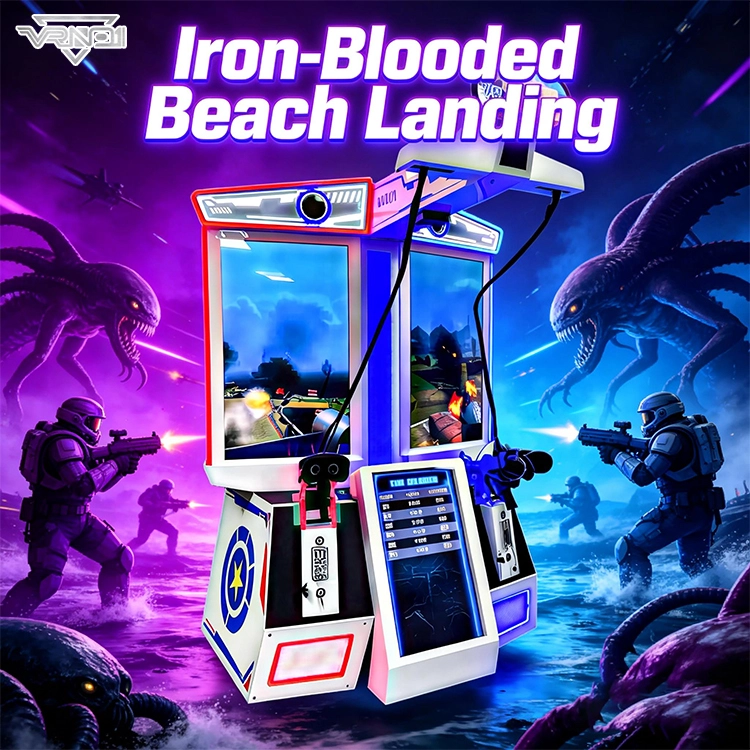
VRN0.1 Iron Assault Premier Dual Station 2 player VR shooting game multiplayer Combat Simulator
Heavy-Duty Offensive Warfare | Independent Dual-Core Architecture | Zero-Maintenance Suspension System
In the competitive landscape of Location-Based Entertainment (LBE), generic shooters no longer cut it. Enter the VR NO.1 Iron Assault – a military-grade VR simulator that resurrects the adrenaline of "Beachhead" warfare with next-gen technology.
Engineered by VR NO.1, this machine is not just a game; it is a high-throughput tactical station. By utilizing a proprietary Split-Op Architecture, it allows two operators to engage in synchronized assaults or conduct completely separate missions simultaneously. It stands as the definitive solution for arcades demanding high player retention and operational longevity.
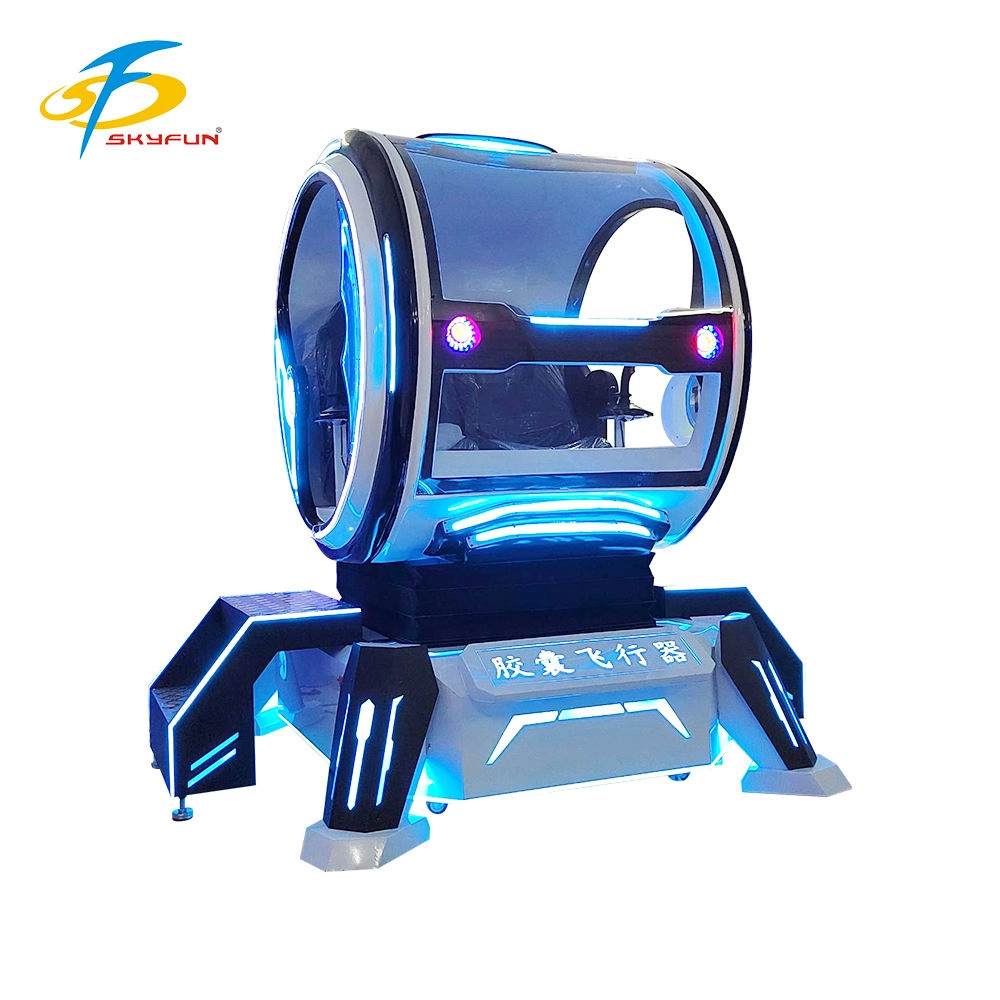
Double Player VR Flight Simulator 100 Movies 15 Games Coin-Operated Game Machine for Shopping Malls Amusement Parks
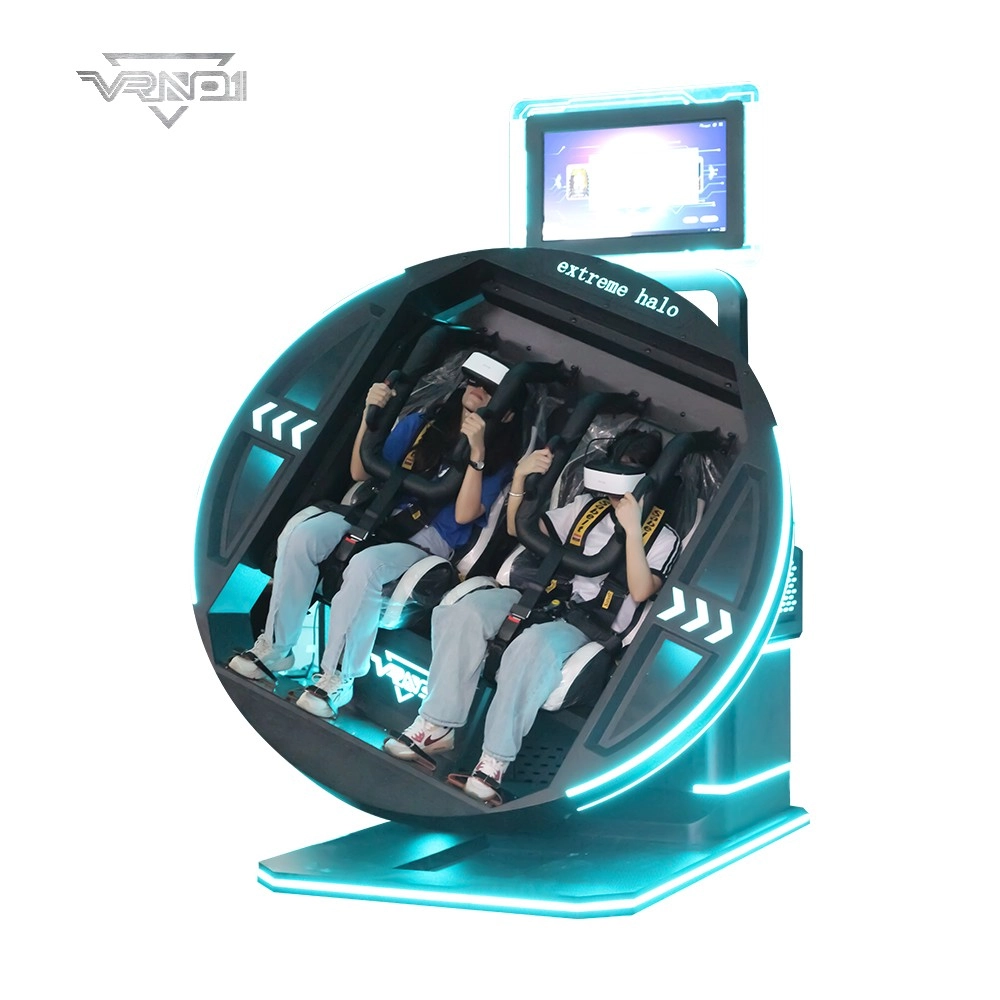
9D VR 360 Roller Coaster Cinema Chair Gaming Set Indoor/Outdoor Business Simulator Hardware for Home or School
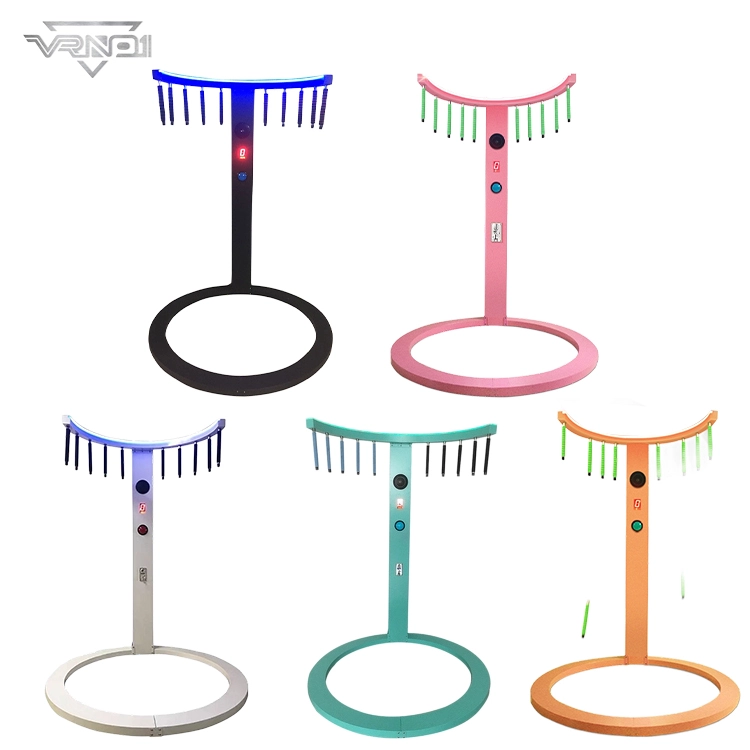
VRN0.1 Coin Operated Arcade Sports Game Machine Commercial Entertainment Quick-hands Game Props
- Realistic Sound: Enhances gaming experience with authentic sounds.
- Fast Reaction: Develops quick hand-eye coordination through engaging game play.
- DIY Kit: Allows for customization and personalization of the baton.
- Metal and Plastic Construction: Durable and robust build quality.
- Coin Operated: Fun for players who enjoy arcade-like experiences.
 Scan QR Code
Whatsapp: +8618127818571
Scan QR Code
Guangzhou Skyfun Technology Co.,Ltd
skyfunvrgame
skyfun game