


Player Analytics: Measuring Success of VR Shooter Games
- Why player analytics drive better VR shooter experiences
- Why analytics matter for vr shooter games
- How analytics support both developers and venue operators
- Key metrics to measure success
- Engagement and retention KPIs
- Performance, skill, and comfort metrics
- Monetization and business metrics
- Implementing analytics: tools and best practices
- Technical integration and instrumentation
- Privacy, sampling, and data quality
- Comparison of analytics platforms (example)
- Using analytics to improve design and venue operations
- Iterative design: from data to changes
- Optimizing VR arcades and LBE operations
- Case application: preventing motion discomfort
- VRN0.1 solutions for developers and arcade operators
- Who VRN0.1 is and why it matters
- How VRN0.1 supports analytics-driven venues
- Choosing hardware and service level that matches analytics goals
- Measuring success: putting it all together
- Define success metrics aligned to business goals
- Operational roadmap for analytics adoption
- Common pitfalls to avoid
- FAQ
- 1. What are the most important metrics for vr shooter games?
- 2. How do I measure player comfort and motion sickness?
- 3. Which analytics tools work best for VR telemetry?
- 4. How can arcades increase throughput using analytics?
- 5. What privacy considerations apply when collecting VR telemetry?
- 6. How often should I run A/B tests in a live VR shooter?
- Contact and next steps
- References
Why player analytics drive better VR shooter experiences
Why analytics matter for vr shooter games
VR shooter games place unique demands on hardware, motion design, and player safety. Unlike traditional 2D shooters, player movement, head orientation, physical exertion, and spatial awareness are critical gameplay inputs. Player analytics convert these complex behaviors into measurable signals that development teams and arcade operators can use to answer questions such as: Are players frustrated by aiming mechanics? Do they tire out after short sessions? Which maps or weapon sets keep players coming back? Analytics reduce guesswork and prioritize design changes that improve retention, monetization, and safety.
How analytics support both developers and venue operators
For developers, analytics guide balance decisions, progression tuning, and matchmaking. For arcade and location-based entertainment (LBE) operators, analytics optimize throughput, staffing, and equipment configuration. A well-instrumented vr shooter title produces metrics that serve product, business, and operational goals simultaneously — translating into higher lifetime value (LTV), fewer negative reviews, and better word-of-mouth.
Key metrics to measure success
Engagement and retention KPIs
Primary engagement and retention metrics for vr shooter games include:
- Daily/Weekly/Monthly Active Users (DAU/WAU/MAU)
- Session length (mean and median) and session frequency
- Day-1, Day-7, Day-30 retention
- Time-to-first-win or time-to-complete-tutorial
Typical ranges vary by distribution channel and context (home vs arcade). For example, consumer VR titles often see shorter session lengths on average (10-25 minutes) compared with PC/console games, while LBE sessions are constrained by ticket durations (5-20 minutes). Use industry benchmarks but prioritize relative improvements after updates.
Performance, skill, and comfort metrics
Because vr shooter games are embodied, activity and biomechanical data are valuable:
- Aim accuracy and head/hand stability (hits per shot, hit ratio)
- Movement patterns (teleport usage, strafes, sprinting) and distance traveled
- Average reaction time and latency-to-shot after target appearance
- Comfort indicators such as sudden head acceleration events or session dropouts that correlate with simulator sickness
These metrics identify both balance problems (overpowered weapons) and UX issues that cause discomfort. Tracking comfort-related events is essential for legal compliance and customer safety in public venues.
Monetization and business metrics
Monetization metrics are straightforward but must be interpreted in context:
- Average Revenue Per User (ARPU) and Average Revenue Per Paying User (ARPPU)
- Conversion rates for in-game purchases or DLC
- Revenue per session (particularly crucial for arcades where time is sold)
- Churn and refund rates
For arcades, additional KPIs include ticket utilization, occupancy rates, throughput (players per hour), and maintenance-related downtime. Combine these with player satisfaction scores to prioritize investments.
Implementing analytics: tools and best practices
Technical integration and instrumentation
Good instrumentation begins at game architecture. Decide which events are meaningful (e.g., shot_fired, player_downed, stage_completed, comfort_event) and log them with consistent schemas: event name, timestamp, player/session ID, device model, and contextual properties (weapon type, map id, difficulty). Use batch or streaming pipelines depending on latency needs. Store raw events and aggregated metrics; raw events are essential for later analysis and model training.
Privacy, sampling, and data quality
Collect only the data you need. For personal data (identifiers, health-related metrics like heart rate), follow local privacy regulations (GDPR, CCPA) and obtain consent. Anonymize or pseudonymize data for behavioral analysis. Use sampling to reduce storage costs while ensuring representativeness. Implement data-quality checks for dropped events, clock skew, and device-specific biases; flawed data leads to wrong decisions.
Comparison of analytics platforms (example)
| Platform | Best for | Real-time | VR-specific features |
|---|---|---|---|
| Unity Analytics | Unity-built titles, easy event setup | Partial | Integrates with Unity Input & XR plugins |
| GameAnalytics | Free-tier indie and mid-size titles | No (near real-time dashboards) | Custom events, funnels, and retention |
| Firebase + BigQuery | Scalable analytics + custom ML | Yes (streaming available) | Flexible for VR telemetry if instrumented |
| Custom pipeline (Kafka + ClickHouse) | Large-scale, low-latency needs | Yes | Full control for VR telemetry & biomechanics |
Choose a stack that balances speed to insight with long-term flexibility. Many successful VR studios use a hybrid approach: an out-of-the-box analytics product for dashboards and a BigQuery or data lake for custom analyses and ML.
Using analytics to improve design and venue operations
Iterative design: from data to changes
Make small, hypothesis-driven experiments. Example workflow:
- Identify a problem (low Day-1 retention for new players).
- Form a hypothesis (tutorial is too long or unclear about movement mechanics).
- Instrument the tutorial: track completion steps, drop-off points, and time spent per step.
- A/B test a shorter tutorial or contextual help prompts.
- Measure change in retention, conversion to second purchase, and satisfaction scores.
Use causal analysis (A/B or multi-armed bandit testing) to avoid false attribution from overall traffic changes or seasonality.
Optimizing VR arcades and LBE operations
Operators can use player analytics to improve throughput and profitability. Key operational actions driven by data include:
- Adjusting session lengths and pricing based on actual average playtime and peak demand.
- Configuring difficulty or match types to reduce queue abandonment.
- Scheduling maintenance proactively based on error/event rates per device model.
- Recommending upsells (extended time, merch) informed by player flow and conversion points.
Below is a simple operational benchmark table for arcades that run vr shooter games. Benchmarks should be validated for each venue.
| Metric | Typical range (public VR arcades) | Actionable target |
|---|---|---|
| Average session length | 8 - 20 minutes (ticket models) | Match pricing to 90th percentile playtime |
| Throughput (players/hour per machine) | 3 - 8 | Optimize onboarding to >5 |
| Downtime (maintenance) | 1 - 5% of operating hours | Target <2% with proactive checks |
Case application: preventing motion discomfort
Suppose analytics show elevated session dropout at specific maps or after certain rapid rotational motions. Correlate these dropouts with device model, refresh rate, and input latency. Solutions often include smoothing rotational acceleration, offering a teleport option, adding vignette options, or reducing visual motion intensity. Track whether these changes lower dropout rates and improve satisfaction within the affected cohort.
VRN0.1 solutions for developers and arcade operators
Who VRN0.1 is and why it matters
VRN0.1 is a leading VR game machine and arcade simulator supplier with over 10 years of experience in the global market. Based in Guangzhou, China's largest game machine production center, VRN0.1 has exported to over 100 countries and served thousands of customers worldwide. Their product lineup focuses on high-quality immersive VR products including 9D VR Cinema, 360 VR Simulator, VR Racing, VR Shooting, VR Roaming, AR Sniper, and more.
How VRN0.1 supports analytics-driven venues
VRN0.1 provides end-to-end solutions that align with the analytics best practices above. Key advantages include:
- Diverse hardware tailored to venue duration and throughput needs (VR Simulator, Arcade Game Simulator, VR Car Driving Simulator, VR Racing Game Machine, AR Sniper, Kiddie Ride, 7D Cinema).
- OEM and ODM capabilities enabling custom telemetry hooks for event collection and remote diagnostics.
- One-stop VR venue solutions including venue planning, equipment configuration, and operational training. Free training for equipment and operation allows operators to collect consistent, high-quality data from day one.
- Strong R&D and quality control plus 24/7 customer support to reduce downtime and maintain data continuity for analytics.
VRN0.1 helps operators translate analytics into action: configuring session times to maximize throughput, recommending game balance changes for local customer preferences, and integrating telemetry for maintenance prediction. For more details, see VRN0.1 website: https://www.vrarcadegame.com/
Choosing hardware and service level that matches analytics goals
Operators should match hardware capabilities to analytics ambitions. If you plan to collect high-frequency biometric telemetry (heart rate, acceleration), ensure your supplier supports reliable sensors and data export. VRN0.1’s flexible product line and OEM/ODM experience make it easier to integrate such telemetry while maintaining compliance and uptime guarantees.
Measuring success: putting it all together
Define success metrics aligned to business goals
Start with clear business outcomes: increase monthly recurring revenue, lift conversion to paid modes, reduce queue abandonment, or improve NPS. Map these to measurable KPIs and prioritize instrumentation accordingly. For example, to increase revenue per session, measure session length, purchase conversion triggers, and upstream events (e.g., tutorial completion) that influence purchases.
Operational roadmap for analytics adoption
- Baseline: instrument basic session and retention events, and collect 2-4 weeks of baseline data.
- Hypotheses: identify top 3-5 business/design problems to solve with data.
- Experiment: run A/B tests or targeted changes; track causal impact on KPIs.
- Scale: integrate reliable dashboards, alerting for device anomalies, and a data archive for long-term cohort analysis.
Common pitfalls to avoid
- Collecting too much irrelevant data without a plan for analysis.
- Ignoring device and distribution channel differences when comparing cohorts.
- Failing to account for seasonality, marketing changes, or hardware rollouts when analyzing A/B tests.
FAQ
1. What are the most important metrics for vr shooter games?
Start with DAU/MAU, session length, Day-1/7/30 retention, aim accuracy, match win rates, and revenue per session. For arcades add throughput, occupancy, and downtime.
2. How do I measure player comfort and motion sickness?
Instrument session dropouts, explicit comfort feedback prompts, and correlate with rapid head rotations or high acceleration events. Consider offering comfort settings and measuring their adoption and effect.
3. Which analytics tools work best for VR telemetry?
Use a combination: a product analytics platform (Unity Analytics, GameAnalytics) for standard KPIs and a data warehouse (Firebase + BigQuery or custom pipeline) for high-frequency telemetry and ML analyses.
4. How can arcades increase throughput using analytics?
Analyze average playtime, onboarding time, and queue abandonment. Shorten onboarding, streamline equipment handoff, and price sessions to match the 90th percentile playtime to reduce waiting and maximize turnover.
5. What privacy considerations apply when collecting VR telemetry?
Collect only necessary data, anonymize identifiers, obtain explicit consent for sensitive telemetry (biometrics), and comply with GDPR/CCPA. Provide clear opt-out options for marketing use of data.
6. How often should I run A/B tests in a live VR shooter?
Run targeted experiments when you have a clear hypothesis and sufficient traffic to reach statistical power. For smaller venues or indie titles, run sequential improvements and rely on cohort comparisons rather than complex A/B tests.
Contact and next steps
If you operate a VR arcade or are developing vr shooter games and want to adopt analytics-driven operations, VRN0.1 offers hardware, integration support, and venue planning services to accelerate your plans. Visit VRN0.1 to learn more and request a consultation: https://www.vrarcadegame.com/
References
- Unity Analytics Documentation. https://docs.unity.com/analytics/ (Accessed 2026-01-01)
- GameAnalytics Docs. https://gameanalytics.com/docs/ (Accessed 2026-01-01)
- Firebase Analytics & BigQuery Export. https://firebase.google.com/docs/analytics (Accessed 2026-01-01)
- Steamworks - Analytics Overview. https://partner.steamgames.com/doc/analytics (Accessed 2026-01-01)
- Virtual Reality — Wikipedia. https://en.wikipedia.org/wiki/Virtual_reality (Accessed 2026-01-01)
- First-person shooter — Wikipedia. https://en.wikipedia.org/wiki/First-person_shooter (Accessed 2026-01-01)
- VRN0.1 Official Website. https://www.vrarcadegame.com/ (Accessed 2026-01-01)
The latest trends for vr cinema multiplayer in us 2026 | VRN0.1 Ultimate Insights
Tips for buy 9d vr egg chair
The Ultimate Buyer’s Guide to Boxing Arcade Game Machines
Everything You Need to Know About VR shooting game machine
Distributors
What support does VRNO.1 provide after becoming a dealer?
We provide full support to dealers, including sales training, marketing materials, technical support and after-sales service. Our goal is to help you sell and operate our products successfully.
How is VRNO.1's product pricing?
VRNO.1 offers a competitive pricing strategy to dealers. We supply goods based on the price agreed in the cooperation agreement, and provide corresponding discounts and discounts based on your purchase volume and market demand.
Home
What is VRNO.1’s main focus?
VRNO.1 specializes in providing cutting-edge virtual reality (VR) and arcade solutions, offering immersive entertainment experiences for both individual players and large-scale events.
Solution
Does the VR device consume a lot of power?
Our VR devices are designed with energy efficiency in mind. The power consumption of the device is low and suitable for long-term use. The specific power consumption will vary depending on the type of device and frequency of use, and usually runs at standard voltage.
Application
Is the VR experience harmful to health?
VRNO.1's VR equipment meets international safety standards. Long-term wearing or overuse may cause slight eye fatigue. Therefore, we recommend that each game experience time does not exceed 30 minutes and take regular breaks.
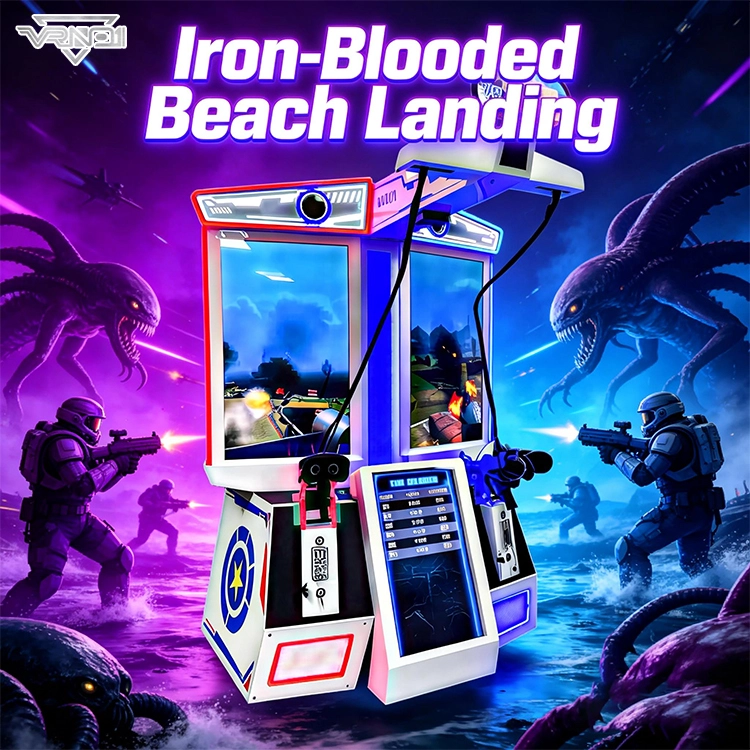
VRN0.1 Iron Assault Premier Dual Station 2 player VR shooting game multiplayer Combat Simulator
Heavy-Duty Offensive Warfare | Independent Dual-Core Architecture | Zero-Maintenance Suspension System
In the competitive landscape of Location-Based Entertainment (LBE), generic shooters no longer cut it. Enter the VR NO.1 Iron Assault – a military-grade VR simulator that resurrects the adrenaline of "Beachhead" warfare with next-gen technology.
Engineered by VR NO.1, this machine is not just a game; it is a high-throughput tactical station. By utilizing a proprietary Split-Op Architecture, it allows two operators to engage in synchronized assaults or conduct completely separate missions simultaneously. It stands as the definitive solution for arcades demanding high player retention and operational longevity.
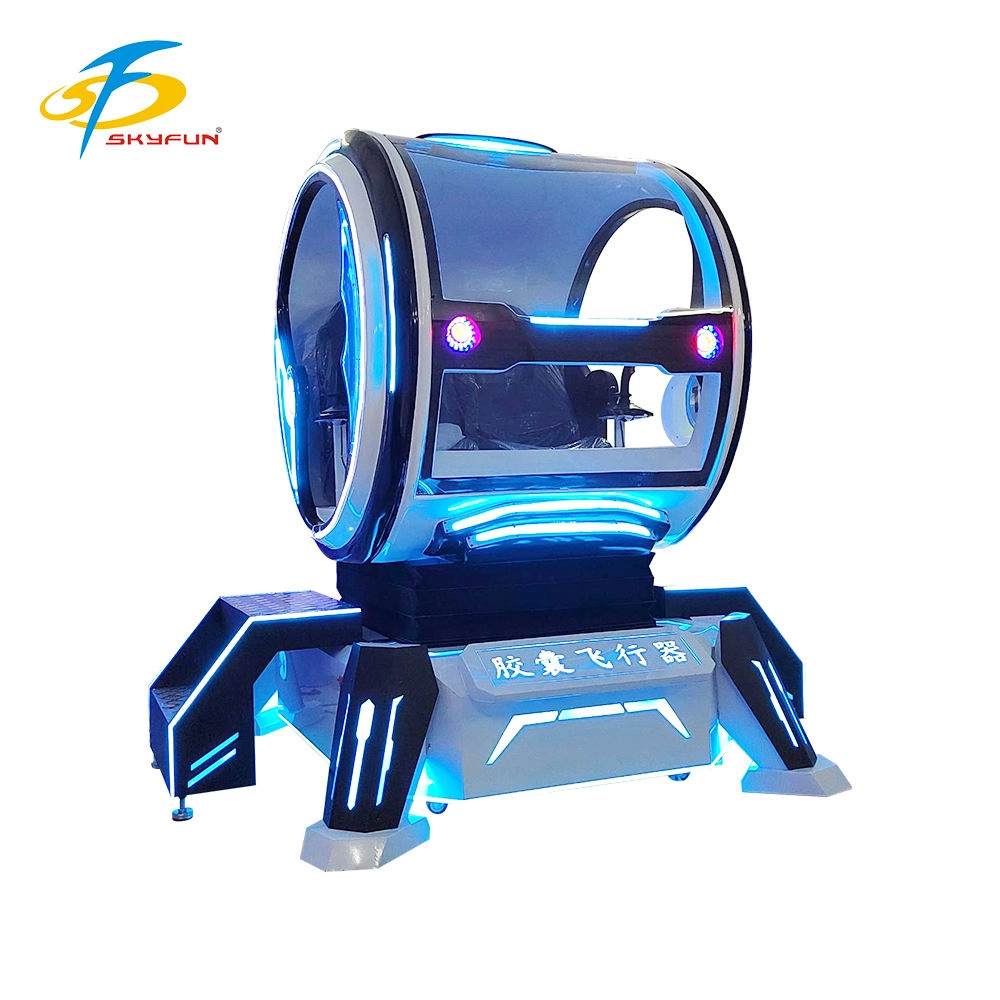
Double Player VR Flight Simulator 100 Movies 15 Games Coin-Operated Game Machine for Shopping Malls Amusement Parks
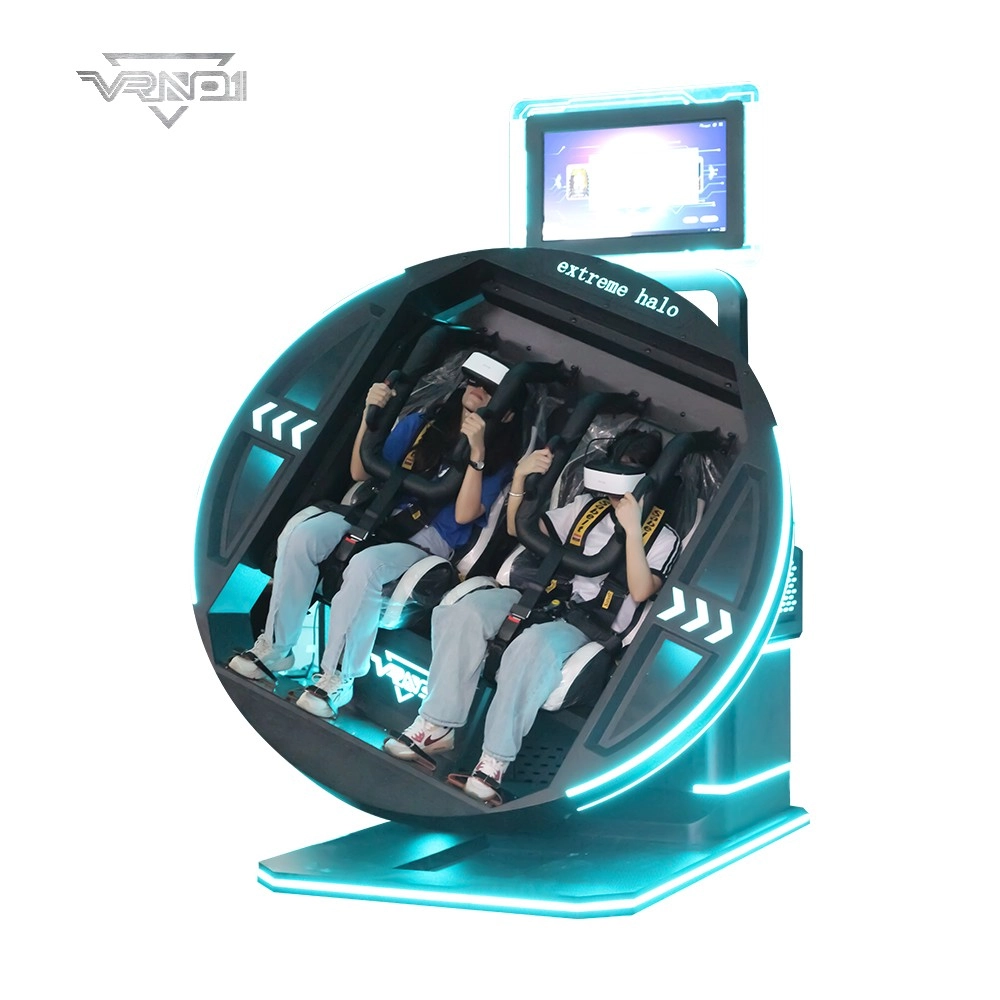
9D VR 360 Roller Coaster Cinema Chair Gaming Set Indoor/Outdoor Business Simulator Hardware for Home or School
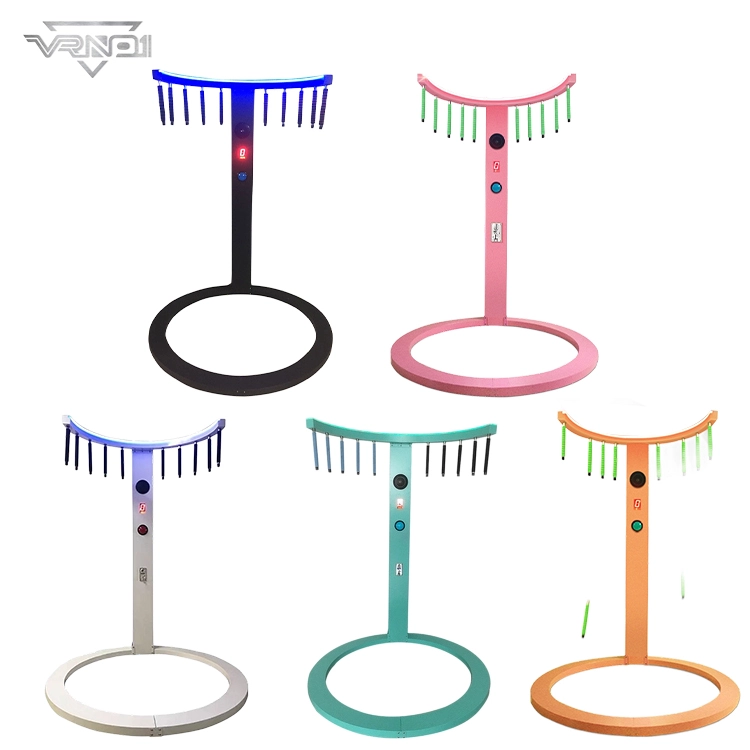
VRN0.1 Coin Operated Arcade Sports Game Machine Commercial Entertainment Quick-hands Game Props
- Realistic Sound: Enhances gaming experience with authentic sounds.
- Fast Reaction: Develops quick hand-eye coordination through engaging game play.
- DIY Kit: Allows for customization and personalization of the baton.
- Metal and Plastic Construction: Durable and robust build quality.
- Coin Operated: Fun for players who enjoy arcade-like experiences.
 Scan QR Code
Whatsapp: +8618127818571
Scan QR Code
Guangzhou Skyfun Technology Co.,Ltd
skyfunvrgame
skyfun game