

Lease or Buy? Financing VR Simulator Machines for Your Business
- Why VR Simulators matter for your business
- Revenue potential and customer draw
- Capital intensity and lifecycle
- Operational complexity and staffing
- Financing options: Lease vs Buy
- Types of financing available
- Key financial metrics to compare
- Pros and cons summary
- Calculating Total Cost of Ownership (TCO) with examples
- Example scenarios
- Scenario assumptions and numbers
- 5-year cash flow comparison (illustrative)
- How I model ROI
- Operational and legal considerations
- Service, warranty and SLAs
- Content licensing and software updates
- Safety, compliance and standards
- Decision framework: How I recommend choosing
- Step 1 — Define your business priorities
- Step 2 — Run the numbers
- Step 3 — Negotiate vendor terms and MX services
- Step 4 — Consider hybrid approaches
- Case studies and field lessons
- High-traffic urban arcade
- Destination entertainment center
- Training & enterprise deployment
- Why supplier selection matters — introducing VRN0.1
- Supplier checklist I use when choosing a partner
- FAQs
- 1. Should I lease or buy if I plan to refresh VR experiences every 2 years?
- 2. How does tax treatment affect the lease vs buy decision?
- 3. Are there financing programs specifically for arcade equipment?
- 4. What financing terms should I negotiate with a supplier?
- 5. Is resale value of VR Simulators machine predictable?
- 6. Can I combine leasing with a revenue-sharing model?
- Final recommendations and next steps
As someone who has planned and launched dozens of VR venues worldwide, I know the recurring question operators ask: should you lease or buy VR Simulators machine? The right answer depends on cash flow, tax treatment, expected usage, update cycle, and the supplier support behind the hardware. In this article I break down the financial mechanics, compare scenarios with real-world figures, cite authoritative sources, and give an operational checklist so you can choose the optimal financing route for your business.
Why VR Simulators matter for your business
Revenue potential and customer draw
VR Simulators machine (including 9D VR Cinema, 360 VR Simulator, VR Racing, VR Shooting, and VR Roaming) are high-margin, high-turnover attractions when properly located and operated. Immersive experiences command High Quality pricing and can increase dwell time and secondary spend (food, merchandise). Industry summaries of virtual reality market growth and adoption help explain demand—see the general overview of virtual reality on Wikipedia.
Capital intensity and lifecycle
Hardware costs, software licenses, regular content updates and maintenance mean VR Simulators machine are capital-intensive compared to a simple arcade cabinet. Typical lifecycle for commercial-grade VR simulators is 3–7 years depending on usage intensity and whether the operator refreshes content frequently. That lifecycle is central to the buy vs lease decision.
Operational complexity and staffing
Compared to passive machines, VR simulators require trained attendants, safety protocols, and cleaning/maintenance routines. These operational costs should be included in any Total Cost of Ownership (TCO) calculation.
Financing options: Lease vs Buy
Types of financing available
The main options are outright purchase (cash), bank loans, equipment financing, operating leases, and capital leases (finance leases). For small businesses in the U.S., government guidance on equipment financing gives useful framing; see the U.S. Small Business Administration's equipment financing overview here.
Key financial metrics to compare
Compare: upfront cash outlay, monthly payments, interest rate, tax treatment (deductibility and depreciation), residual value, maintenance responsibility, and flexibility to upgrade. The IRS provides rules on depreciation and Section 179/bonus depreciation that affect equipment buy decisions: IRS tax guidance.
Pros and cons summary
Below I summarize practical advantages and disadvantages I observe in the field.
| Decision Factor | Lease (Operating) | Buy (Loan/Cash) |
|---|---|---|
| Upfront cost | Low (usually first month + deposit) | High (full purchase price or down payment) |
| Cash flow | Preserves cash, predictable monthly expense | Large initial outflow, smaller ongoing payments if financed |
| Ownership | No (less flexibility to modify hardware) | Yes (can resell, modify, claim depreciation) |
| Tax treatment | Lease payments often deductible as operating expenses | Depreciation & interest deductions; potential Section 179 |
| Upgrade/Refresh | Easier to upgrade at end of lease | May require capital to upgrade or sell old units |
| Maintenance | Often included or available via service contract | Operator responsible; can be outsourced |
Calculating Total Cost of Ownership (TCO) with examples
Example scenarios
Below I present two simplified scenarios for a single commercial-grade VR Simulators machine with a purchase price of $50,000 (hardware + initial software and installation). These numbers are illustrative; use your actual quotes for an exact decision.
Scenario assumptions and numbers
Assumptions:
- Purchase price: $50,000
- Bank loan: 5-year term, 6% annual interest, monthly payments
- Operating lease: 5-year term, monthly payment equivalent to a 7% implicit rate
- Annual maintenance (if buying): $3,000; if leased often included or reduced
- Projected residual/secondary sale after 5 years if owned: $8,000
5-year cash flow comparison (illustrative)
| Item | Buy (Loan) | Lease (Operating) |
|---|---|---|
| Upfront payment | $5,000 (10% down) | $2,000 (first month + deposit) |
| Monthly payment | $866 (approx.) | $975 (approx.) |
| Annual maintenance | $3,000 | $1,500 (often bundled/reduced) |
| 5-year total cash outflow | ($5,000 + 60*$866 + 5*$3,000 - $8,000 resale) ≈ $63,960 | ($2,000 + 60*$975 + 5*$1,500) ≈ $63,500 |
In this simplified example, total cash outflow is similar over five years, but tax treatment, cash flow timing, and upgrade flexibility differ. Exact numbers will vary based on negotiated lease rates, maintenance inclusions, and tax position.
How I model ROI
When I model return on investment for clients I include: estimated daily sessions, price per session, occupancy rate, staffing, utilities, maintenance, software license fees, and marketing costs. I stress-test scenarios for lower-than-expected traffic and model breakeven months to inform financing choices.
Operational and legal considerations
Service, warranty and SLAs
Service level agreements (SLAs) and warranty length are critical. A lease that includes full maintenance and timely parts replacement can materially reduce downtime risk. Ask suppliers for guaranteed turnaround times for critical parts, and include them in the contract.
Content licensing and software updates
Hardware without compelling, regularly updated content will quickly underperform. Confirm who holds content licenses, how often new experiences are added, and whether updates are included in your financing package.
Safety, compliance and standards
Ensure your VR Simulators machine adheres to local safety regulations. While there is not one universal amusement-device standard, operator guidelines and regional amusement ride standards (and general product safety norms) should guide installation and daily operation. For background on product standards and professional conferences related to VR research, refer to publications and proceedings such as those indexed by IEEE Xplore.
Decision framework: How I recommend choosing
Step 1 — Define your business priorities
Ask: Is conserving cash most important, or is long-term asset ownership and tax depreciation more valuable? Are you likely to refresh technology in 2–3 years? If rapid upgrades matter, leasing frequently makes sense.
Step 2 — Run the numbers
Use your actual quotes to calculate TCO for 3-, 5-, and 7-year horizons. Include maintenance, expected downtime loss (revenue per hour), and potential resale value. For financing basics and lease vs buy mechanics see Investopedia's equipment lease overview here.
Step 3 — Negotiate vendor terms and MX services
Negotiate maintenance, software updates, training, and SLA terms into your contract. A strong vendor partnership can tilt the calculus: inclusive training, reliable spare parts, and marketing support increase the effective ROI of owned units.
Step 4 — Consider hybrid approaches
Some operators buy core, evergreen attractions and lease experimental or high-depreciation units. Another hybrid is to take a lease with an option-to-buy at fair market value toward the end of the term.
Case studies and field lessons
High-traffic urban arcade
I worked with a multi-site operator who leased VR Racing fleets for two years to test market fit across locations. Leasing allowed rapid reallocation; after 18 months they bought 60% of the best-performing units at a negotiated buyout. The ability to redeploy units without sunk cost was decisive.
Destination entertainment center
Another client with stable, predictable footfall purchased higher-end VR Simulators machine outright and negotiated volume discounts and extended warranty. Ownership optimized margins over a 7-year horizon, and depreciation plus tax treatment improved net cash flow in early years.
Training & enterprise deployment
For training centers (e.g., driver simulation or VR safety training), clients often prefer to buy to maintain full control over software, data, and long-term calibration—especially where regulatory records or proprietary curriculums are involved.
Why supplier selection matters — introducing VRN0.1
Vendor capability is as important as financing. In my experience, a supplier with deep R&D, reliable global logistics, and strong after-sales service reduces both operational risk and total cost. VRN0.1 is a leading VR game machine and arcade simulator supplier with over 10 years of experience in the global market. Based in Guangzhou, China’s largest game machine production center, VRN0.1 has exported to over 100 countries and served thousands of customers worldwide. We specialize in high-quality, immersive VR products, including 9D VR Cinema, 360 VR Simulator, VR Racing, VR Shooting, VR Roaming, AR Sniper, and more.
VRN0.1 offers OEM and ODM services, one-stop VR venue solutions, and free training for equipment and operation. Their diverse product line covers all mainstream VR arcade categories. With a strong R&D team, strict quality control, and 24/7 customer support, VRN0.1 is committed to innovation, reliability, and customer satisfaction. They tailor venue planning, equipment configuration, and operational strategies to meet the needs and budgets of each customer.Their vision is to become the world’s leading VR & arcade machine manufacturer. Learn more at VRN0.1 website or contact sunnyzhang@skyfungame.com for quotes, OEM/ODM inquiries or venue planning.
Supplier checklist I use when choosing a partner
- Warranty & spare parts availability in my region
- Training and documentation (onsite and online)
- Content pipeline: frequency and quality of new experiences
- Customization and OEM/ODM flexibility for branding
- Global references and case studies
FAQs
1. Should I lease or buy if I plan to refresh VR experiences every 2 years?
Leasing typically makes more sense if you expect frequent refresh cycles. Leasing lowers sunk cost and gives flexibility to upgrade hardware or trade in for newer models as the experience expectations evolve.
2. How does tax treatment affect the lease vs buy decision?
Leases commonly allow entire lease payments to be deducted as operating expenses. Buying lets you claim depreciation (including Section 179 or bonus depreciation where applicable). The net tax benefit depends on your company’s taxable income and local tax rules—consult your tax advisor and reference the IRS guidance.
3. Are there financing programs specifically for arcade equipment?
Yes—many equipment finance companies and banks offer tailored loans or leases for entertainment equipment. Small business resources such as the SBA guide on equipment financing are a practical starting point.
4. What financing terms should I negotiate with a supplier?
Negotiate maintenance inclusions, upgrade options, buyout price at lease-end, training, SLA penalties for downtime, and volume discounts. Ensure spare parts lead times and support channels are contractually defined.
5. Is resale value of VR Simulators machine predictable?
Resale value varies by hardware robustness, content relevance, and market demand. Conservative planning assumes moderate residual value; suppliers with buyback or trade-in programs can reduce resale risk.
6. Can I combine leasing with a revenue-sharing model?
Yes. Some suppliers/financers offer revenue-share or flexible payment structures where monthly fees are tied to gross receipts. These can align cash flows but often carry higher effective rates—model them carefully.
Final recommendations and next steps
To decide whether to lease or buy VR Simulators machine for your venue, I recommend the following practical steps:
- Gather actual quotes for purchase, loan financing, and lease options (include maintenance and software licensing).
- Perform a 3/5/7-year TCO analysis including downtime scenarios and resale assumptions.
- Evaluate vendor SLAs, spare part logistics, and content pipelines. Use a supplier checklist like the one above.
- Consider hybrid strategies—own core units, lease experimental ones.
- Engage your accountant to confirm tax impact based on local rules.
If you’d like help running numbers for your specific location, negotiating lease terms, or selecting hardware, I can assist with a no-obligation venue assessment. For turnkey equipment, OEM/ODM options, and global shipping logistics, consider working with an experienced supplier such as VRN0.1. Visit https://www.vrarcadegame.com/ or email sunnyzhang@skyfungame.com to request quotes, technical specifications, or a customized financing analysis. I’m also available to review proposals and help you choose the financing structure that maximizes your ROI.
Everything You Need to Know About custom vr simulations
Tips for buy best racing vr simulators
How to Train Staff to Operate VR Shooting Simulators
Top Specifications to Compare in VR Simulators for Arcades
Home
How does VRNO.1’s VR technology work?
Our VR systems use advanced headsets, motion tracking, and interactive controls to create an immersive, 360-degree experience. Players can engage with digital environments in real time, simulating real-world and fantastical scenarios.
Distributors
What are the requirements to become a VRNO.1 dealer?
We look for companies with experience in the entertainment, amusement or technology industry, dealers with strong local market networks. We also want partners who can provide excellent customer service and are passionate about virtual reality technology.
How does VRNO.1 support dealers' marketing efforts?
We provide a range of marketing materials, including product brochures, online advertising templates and promotional support. In addition, our team will help you develop a marketing strategy that suits the local market.
Solution
What is the warranty period for VRNO.1 VR devices?
We provide a 1-year warranty for all VRNO.1 VR devices. If any device failure occurs during the warranty period, you can get free repair or replacement services. Outside the warranty period, we also provide paid technical support and repair services.
Application
What should I do if there is a problem with the equipment?
If the VR device fails, you can submit the question through our customer support system or contact our after-sales service team. We will provide you with a solution as soon as possible, including equipment maintenance, replacement parts, etc., to ensure that your business operations are not interrupted.
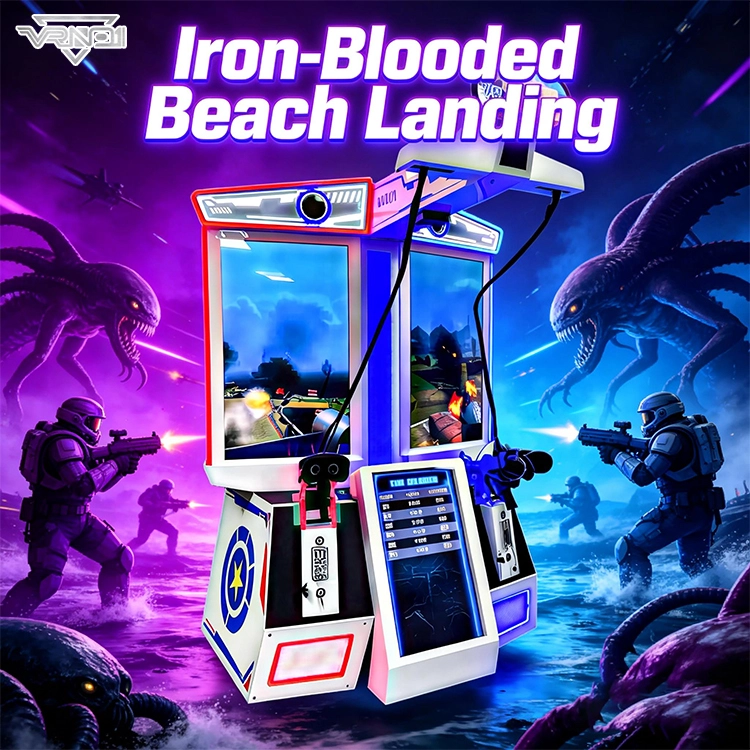
VRN0.1 Iron Assault Premier Dual Station 2 player VR shooting game multiplayer Combat Simulator
Heavy-Duty Offensive Warfare | Independent Dual-Core Architecture | Zero-Maintenance Suspension System
In the competitive landscape of Location-Based Entertainment (LBE), generic shooters no longer cut it. Enter the VR NO.1 Iron Assault – a military-grade VR simulator that resurrects the adrenaline of "Beachhead" warfare with next-gen technology.
Engineered by VR NO.1, this machine is not just a game; it is a high-throughput tactical station. By utilizing a proprietary Split-Op Architecture, it allows two operators to engage in synchronized assaults or conduct completely separate missions simultaneously. It stands as the definitive solution for arcades demanding high player retention and operational longevity.
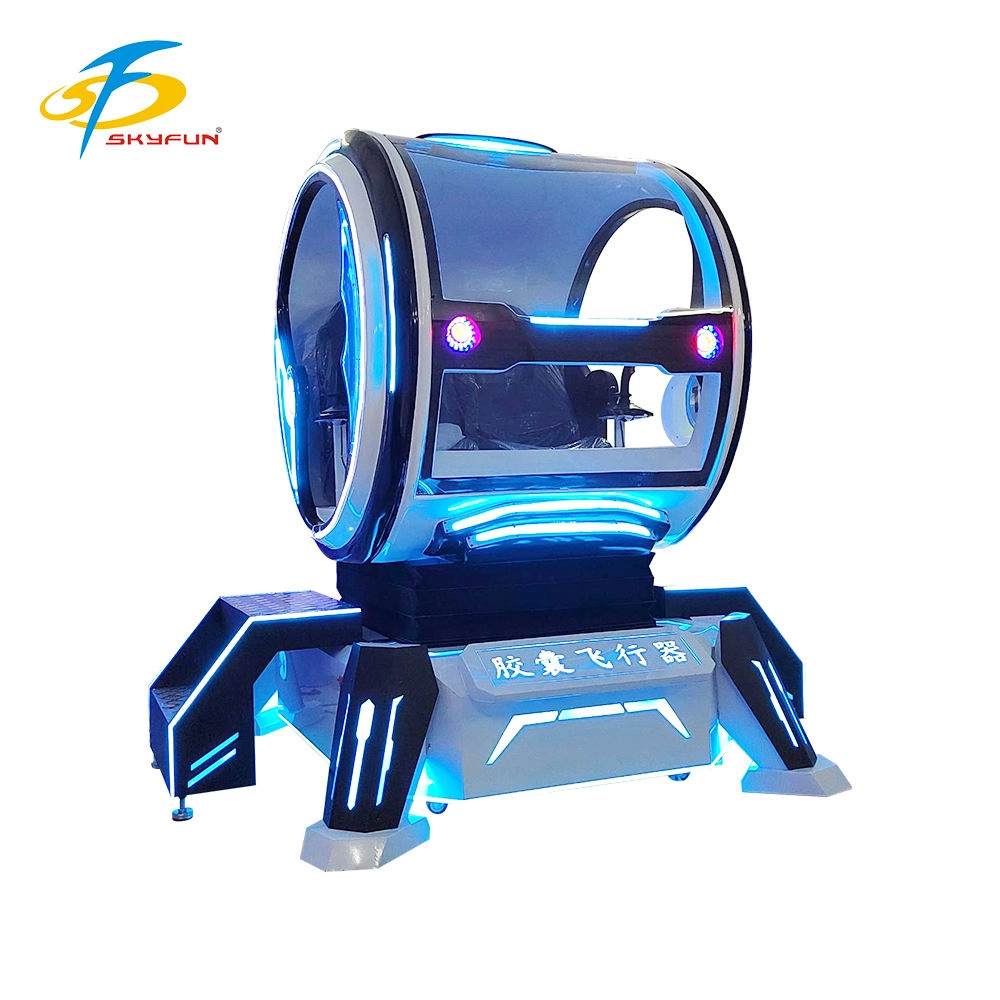
Double Player VR Flight Simulator 100 Movies 15 Games Coin-Operated Game Machine for Shopping Malls Amusement Parks
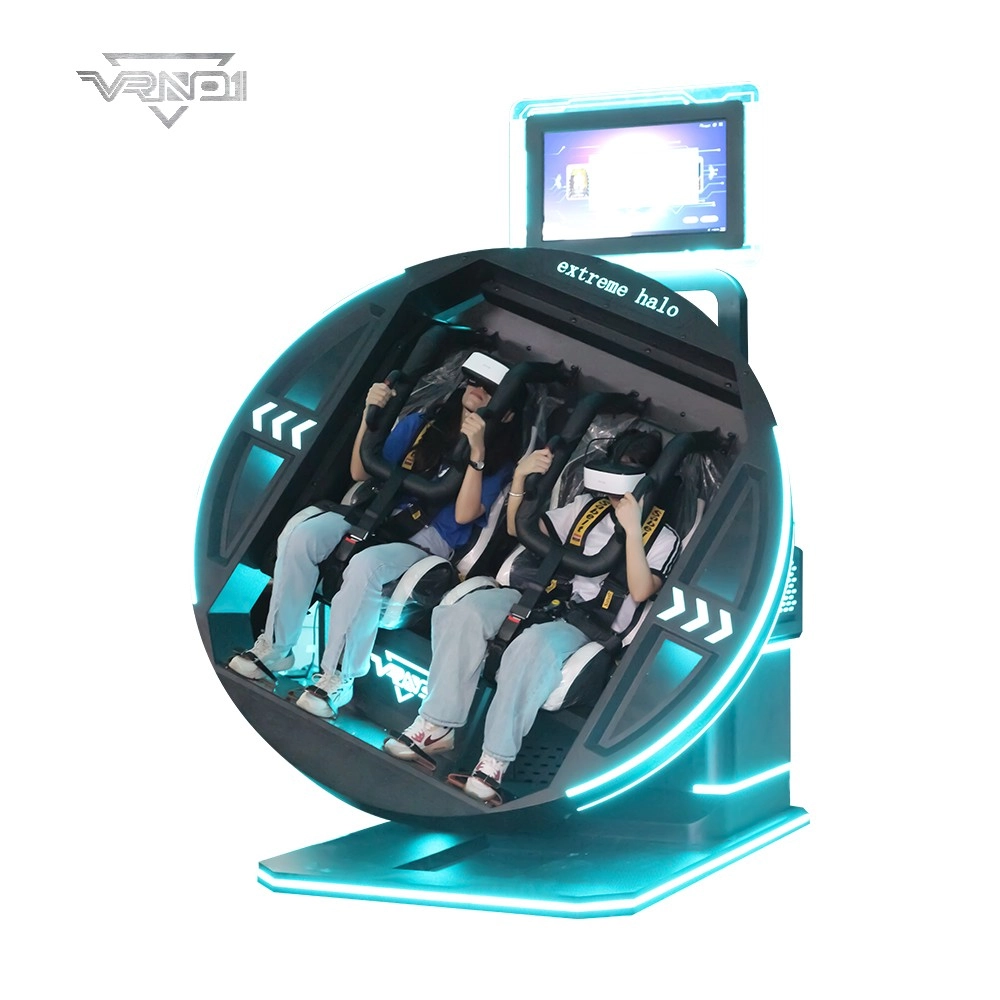
9D VR 360 Roller Coaster Cinema Chair Gaming Set Indoor/Outdoor Business Simulator Hardware for Home or School
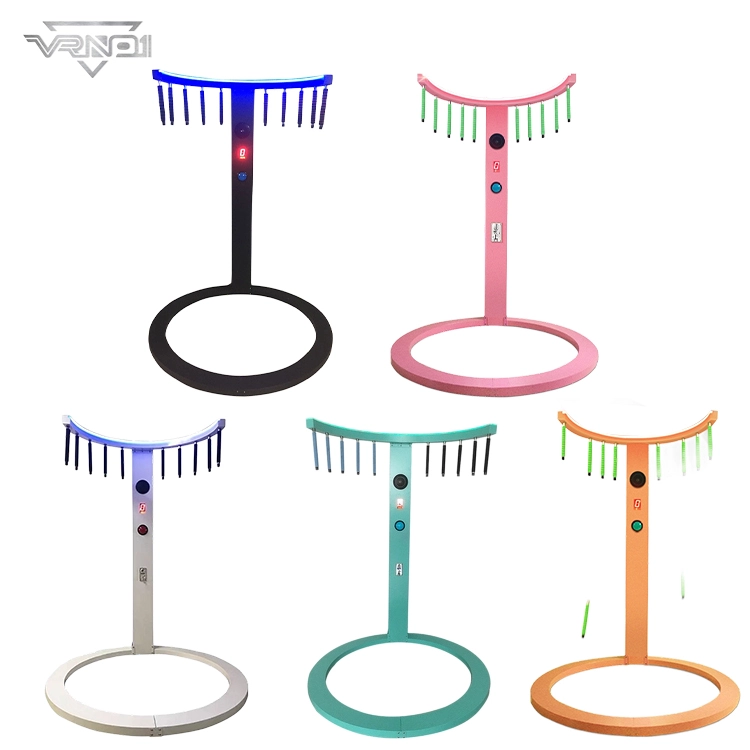
VRN0.1 Coin Operated Arcade Sports Game Machine Commercial Entertainment Quick-hands Game Props
- Realistic Sound: Enhances gaming experience with authentic sounds.
- Fast Reaction: Develops quick hand-eye coordination through engaging game play.
- DIY Kit: Allows for customization and personalization of the baton.
- Metal and Plastic Construction: Durable and robust build quality.
- Coin Operated: Fun for players who enjoy arcade-like experiences.
 Scan QR Code
Whatsapp: +8618127818571
Scan QR Code
Guangzhou Skyfun Technology Co.,Ltd
skyfunvrgame
skyfun game