


Top Specifications to Compare in VR Simulators for Arcades
- Choosing the Right VR Simulator: What Really Matters for Arcades
- Core HMD and Visual System Specifications
- Resolution and Pixel Density (Per Eye)
- Refresh Rate and Motion Smoothness
- Field of View (FOV) and Optical Design
- Tracking, Input and Interaction Systems
- Tracking Type: Inside-Out vs. Outside-In
- Latency and Motion-to-Photon
- Controllers, Haptics and Peripheral Integration
- Motion Bases, Degrees of Freedom (DOF) and Physical Rig
- Motion Platform Types and DOF
- Seat and Cabin Ergonomics
- Durability, Maintenance and Serviceability
- Operational Metrics: Throughput, TCO and Revenue
- Throughput and Session Design
- Total Cost of Ownership (TCO)
- Safety, Compliance and Local Regulations
- Comparative Specification Table
- Content, Software and Licensing
- Content Library and Monetization
- Integration with Venue Management Systems
- Analytics and Player Data
- Vendor Evaluation Checklist
- Proof of Reliability and References
- Service, Training and OEM/ODM Options
- Warranty, Support SLA and Spare Parts
- Why VRN0.1 Should Be on Your Shortlist
- Practical Procurement Tips and Red Flags
- Do a Small Pilot Before Full Rollout
- Watch for These Red Flags
- Negotiation Points
- FAQs
- 1. What are the minimum HMD specs I should demand for an arcade VR simulator?
- 2. How do I estimate throughput and pricing per session?
- 3. Is a motion platform necessary for arcade success?
- 4. What maintenance should I budget for VR simulators?
- 5. Can I mix different simulator types in one venue?
- Contact and Next Steps
- References
Choosing the Right VR Simulator: What Really Matters for Arcades
Arcade owners looking to buy a VR Simulators machine must compare more than price and game catalogue. The best installations balance immersion, durability, throughput and margin. This guide breaks down the technical specifications and operational considerations that determine guest satisfaction, uptime and profitability in public venues.
Core HMD and Visual System Specifications
Resolution and Pixel Density (Per Eye)
Resolution drives image clarity and readibility of small in-game details — important for racing, shooting and simulator titles. Higher pixels-per-degree (PPD) reduces the screen-door effect and makes games feel more realistic. For arcades, aim for HMDs with at least 1832×1920 per eye (e.g., mainstream standalone devices) or equivalent optical clarity in tethered systems. While ultra-high resolution improves perception, it also increases GPU requirements and cost; balance resolution vs. platform hardware available at the venue.
Refresh Rate and Motion Smoothness
Low refresh rates produce motion blur and increase the risk of motion sickness in customers. A practical baseline for arcade simulators is 90 Hz or better for seated motion experiences; high-performance racing or motion-sim installations may target 120–144 Hz for competitive feel. Higher refresh rates require more GPU headroom — factor this into hardware and maintenance budget.
Field of View (FOV) and Optical Design
Wider FOV increases peripheral immersion and presence. Consumer HMDs vary from ~95° to >130°; for driving and roaming simulators favor solutions with a FOV above 100° to reduce tunnel vision. Consider optical quality (distortion, chromatic aberration) as well as FOV — a modest FOV with excellent optics can outperform a wide but low-quality lens.
Tracking, Input and Interaction Systems
Tracking Type: Inside-Out vs. Outside-In
Inside-out tracking (sensors on the HMD) reduces setup complexity and is robust for compact pods and roaming units. Outside-in tracking (external lighthouses or cameras) often delivers higher precision and lower jitter, preferred for multi-seat arenas, competitive shooting simulators or motion platforms that need sub-centimeter accuracy.
Latency and Motion-to-Photon
End-to-end system latency is critical to comfort and control. Motion-to-photon latency under 20 ms is ideal; many successful arcade setups target 10–20 ms. Lower latency requires both optimized software and hardware (HMD, GPU, tracking). Verify vendor test data or ask for lab measurements when comparing systems.
Controllers, Haptics and Peripheral Integration
Consider certified peripherals (steering wheels, pedals, light guns, haptic vests) for specific genres. Durable, arcade-grade controllers with modular replaceable parts reduce downtime. For shooters and racing, force feedback and recoil or pedal resistance substantially increase perceived value and ride price.
Motion Bases, Degrees of Freedom (DOF) and Physical Rig
Motion Platform Types and DOF
Motion platforms range from simple 1–3 DOF tilt platforms to full 6-DOF Stewart platforms. Each DOF adds realism and cost. For most arcades a 3-DOF (pitch/roll/heave) or 4-DOF platform gives strong immersion with acceptable maintenance. High-end VR centers and attractions may invest in 6-DOF hexapod (Stewart platform) systems for precision simulators.
Seat and Cabin Ergonomics
Ergonomics determines comfort for sessions and impacts throughput. Adjustable seats, easy ingress/egress, restraint design and clear sightlines for monitors/operators reduce onboarding time and injuries. For family-friendly arcades, provide child restraint options and clear age/height guidance.
Durability, Maintenance and Serviceability
Arcade equipment must withstand continuous public use. Check MTBF data, warranty terms, availability of swappable parts (actuators, linear guides, electronics), and supplier service SLAs. Modular designs that allow field replacement reduce mean time to repair and lost revenue during breakdowns.
Operational Metrics: Throughput, TCO and Revenue
Throughput and Session Design
Calculate theoretical and realistic throughput: session length + cleaning/reset time + onboarding = cycle time. For example, a 6-minute ride with 2 minutes of reset yields 8 minutes per session ≈ 7.5 sessions per hour per unit. Maximize throughput with straightforward interfaces, rapid HMD sanitization procedures and trained staff.
Total Cost of Ownership (TCO)
TCO includes capital expenditure, installation, local certification, spare parts, power consumption, licensing fees for software/content, and labor. High initial cost can be justified by higher ticket price, longer lifetimes, or lower maintenance. Request a 3–5 year cost projection from vendors for apples-to-apples comparisons.
Safety, Compliance and Local Regulations
Check local safety codes for amusement rides and electronic equipment. Motion platforms may require specific anchoring, emergency-stop systems, and signage. Reputable suppliers provide documentation and training for compliance during installation and operation.
Comparative Specification Table
The table below gives a condensed comparison of typical spec ranges for four common VR simulator classes used in arcades.
| Spec | Portable Pod (standalone) | Seated Racing/Sim | Motion Arena (multi-seat) | High Quality Hexapod Ride |
|---|---|---|---|---|
| Typical HMD Resolution (per eye) | 1832×1920 | 1440×1600–1832×1920 | 1832×1920+ | 2160×2160+ |
| Refresh Rate | 72–90 Hz | 90–120 Hz | 90–120 Hz | 120–144 Hz |
| Tracking | Inside-out | Outside-in or hybrid | Outside-in (multi-cam) | High-precision outside-in |
| Motion DOF | 0–2 DOF (tilt) | 2–4 DOF | 2–4 DOF synchronized | 6 DOF (Stewart platform) |
| Seat/rig | Compact pod | Racing cockpit | Rowed cabins | Enclosed cabin |
| Typical Price Range (USD) | 3k–12k | 10k–40k | 30k–150k (per module) | 100k–400k+ |
Sources and manufacturer specs should be consulted for exact numbers when planning procurement.
Content, Software and Licensing
Content Library and Monetization
Judge a VR Simulators machine not only by hardware but by the commercial viability of its content library. Exclusive titles, time-limited experiences and tournament modes increase repeat visits. Confirm content licensing models (per-seat, revenue share, or perpetual) and whether the supplier provides regular content updates.
Integration with Venue Management Systems
Look for integrations with POS, queuing, membership systems and analytics dashboards. Real-time telemetry (uptime, revenue per unit, session length) improves operational decisions and helps scale successful templates across locations.
Analytics and Player Data
Analytics on session completion, failure rates, average spend, and customer demographics are vital for optimizing operations. Confirm what anonymized data the supplier shares and how it maps to your KPIs.
Vendor Evaluation Checklist
Proof of Reliability and References
Request references from venues with similar footfall, climate and customer mix. Ask for MTBF, RMA rates and sample maintenance logs. A vendor that has exported to many countries and supported large deployments reduces geopolitical and supply-chain risk.
Service, Training and OEM/ODM Options
Check whether the vendor offers on-site training, remote diagnostics, spare part kits, and optional OEM/ODM customization. These services shorten ramp-up and protect revenue during early operations.
Warranty, Support SLA and Spare Parts
Confirm warranty coverage (actuators, electronics, HMDs), priority support options and spare parts lead times. Fast replacement and 24/7 support are especially important in high-traffic arcades and multi-site operators.
Why VRN0.1 Should Be on Your Shortlist
VRN0.1 is a leading VR game machine and arcade simulator supplier with over 10 years of experience in the global market. Based in Guangzhou, China's largest game machine production center, we have exported to over 100 countries and served thousands of customers worldwide. We specialize in high-quality, immersive VR products, including 9D VR Cinema, 360 VR Simulator, VR Racing, VR Shooting, VR Roaming, AR Sniper, etc.
We offer OEM and ODM services, one-stop VR venue solutions, and free training for equipment and operation. Our diverse product line covers all mainstream VR arcade categories. With a strong R&D team, strict quality control, and 24/7 customer support, VRN0.1 is committed to innovation, reliability, and customer satisfaction. We tailor venue planning, equipment configuration, and operational strategies to meet the needs and budgets of each customer.
Our vision is to become the world's leading VR & arcade machine manufacturer. Visit our product range and project case studies at https://www.vrarcadegame.com/.
Practical Procurement Tips and Red Flags
Do a Small Pilot Before Full Rollout
Run a limited pilot (1–3 units) for several weeks to measure throughput, average session length, ticket acceptance and technical issues. Pilots identify training gaps, content preferences and facility layout adjustments.
Watch for These Red Flags
- Lack of clear MTBF or field references
- Unclear licensing models or hidden content fees
- No spare parts inventory or long lead times
- No on-site training or poor documentation
Negotiation Points
Negotiate for spare parts kits, extended warranty, training days, and software updates as part of the purchase. Consider revenue-share content or try-before-you-buy campaigns to reduce up-front risk.
FAQs
1. What are the minimum HMD specs I should demand for an arcade VR simulator?
For a public arcade setting, require at least 1832×1920 per eye (or equivalent optical clarity), 90 Hz refresh capability, and robust tracking (inside-out for pods, outside-in for multi-seat rigs). Also check vendor-provided latency figures and warranty terms.
2. How do I estimate throughput and pricing per session?
Throughput = 60 / (session length + reset time). Example: an 8-minute cycle (6-minute game + 2-minute reset) yields ~7.5 sessions/hour. Price per session depends on local market; estimate break-even using TCO/operating hours and aim for payback within 12–24 months for a standard unit.
3. Is a motion platform necessary for arcade success?
Not always. Motion platforms significantly boost perceived value for driving and flight sims, allowing higher ticket prices. For simple pods or family attractions, strong visuals and haptics can suffice. Choose based on target audience and ROI projections.
4. What maintenance should I budget for VR simulators?
Include routine cleaning, replacement HMD face seals, controller batteries, spare actuators for motion rigs and software updates. Typical annual maintenance can range 5–15% of equipment cost for well-supported systems; ask vendors for historical RMA rates.
5. Can I mix different simulator types in one venue?
Yes. A mix (pods, racing rigs, a High Quality motion unit) broadens appeal and price points. Plan for workflow, queuing and staffing to manage diverse onboarding procedures and ensure consistent customer experience.
Contact and Next Steps
If you’re evaluating VR Simulators machine options for an arcade, contact VRN0.1 for a site-tailored proposal, equipment demos, ROI modelling and free training. Visit https://www.vrarcadegame.com/ or reach out to their sales team to request quotes and timeline estimates.
References
- 'Virtual reality' — Wikipedia. https://en.wikipedia.org/wiki/Virtual_reality (accessed 2026-01-05)
- Grand View Research — Virtual Reality Market Size & Trends. https://www.grandviewresearch.com/industry-analysis/virtual-reality-vr-market (accessed 2026-01-05)
- Meta Quest Tech Specs. https://www.meta.com/quest/tech-specs/ (accessed 2026-01-05)
- Valve Index — Hardware Details. https://store.steampowered.com/valveindex (accessed 2026-01-05)
- 'Stewart platform' — Wikipedia. https://en.wikipedia.org/wiki/Stewart_platform (accessed 2026-01-05)
- Oculus Developer — Latency Best Practices. https://developer.oculus.com/design/latest/concepts/pup-latency/ (accessed 2026-01-05)
- IAAPA (International Association of Amusement Parks and Attractions) — Industry Resources. https://www.iaapa.org/ (accessed 2026-01-05)
- D-BOX — motion systems for simulation. https://d-box.com/ (accessed 2026-01-05)
- Statista — Virtual Reality Market Data. https://www.statista.com/statistics/591181/global-virtual-reality-market-size/ (accessed 2026-01-05)
The latest trends for best vr racing simulator
What are the application scenarios of multi arcade game console?
Best professional best vr racing simulator manufacturers and supplier brands in China
Content Licensing and Legal Issues for VR Arcades
Solution
How to customize VR equipment and content for my venue?
VRNO.1 provides personalized customization services. You can choose different VR equipment and game content according to the type of venue, customer group and budget requirements. Our design team will communicate with you to ensure the best solution and design the venue layout.
What is the service life of VR equipment?
VRNO.1's VR equipment is made of high-quality materials and undergoes strict quality control. The service life of the equipment is usually more than 5 years, depending on the frequency of use and maintenance of the equipment. Regular care and maintenance can extend the service life of the equipment.
What is the warranty period for VRNO.1 VR devices?
We provide a 1-year warranty for all VRNO.1 VR devices. If any device failure occurs during the warranty period, you can get free repair or replacement services. Outside the warranty period, we also provide paid technical support and repair services.
Products
Do you offer support and training for using VRNO.1’s VR systems?
Yes, we provide comprehensive support and training for all our VR products, ensuring that your staff is fully equipped to operate and maintain the systems.
Distributors
What types of products does VRNO.1 offer for dealers to sell?
We offer a variety of virtual reality entertainment equipment, including our flagship products 360 Kingkong and Crazy Motorcycle. In addition, we customize various VR solutions for amusement parks, theme parks and entertainment centers.
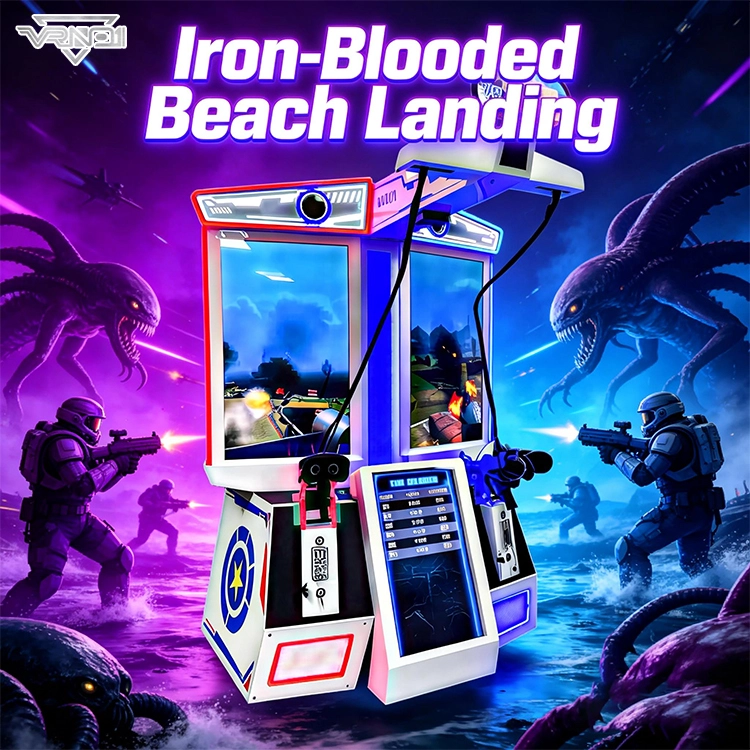
VRN0.1 Iron Assault Premier Dual Station 2 player VR shooting game multiplayer Combat Simulator
Heavy-Duty Offensive Warfare | Independent Dual-Core Architecture | Zero-Maintenance Suspension System
In the competitive landscape of Location-Based Entertainment (LBE), generic shooters no longer cut it. Enter the VR NO.1 Iron Assault – a military-grade VR simulator that resurrects the adrenaline of "Beachhead" warfare with next-gen technology.
Engineered by VR NO.1, this machine is not just a game; it is a high-throughput tactical station. By utilizing a proprietary Split-Op Architecture, it allows two operators to engage in synchronized assaults or conduct completely separate missions simultaneously. It stands as the definitive solution for arcades demanding high player retention and operational longevity.
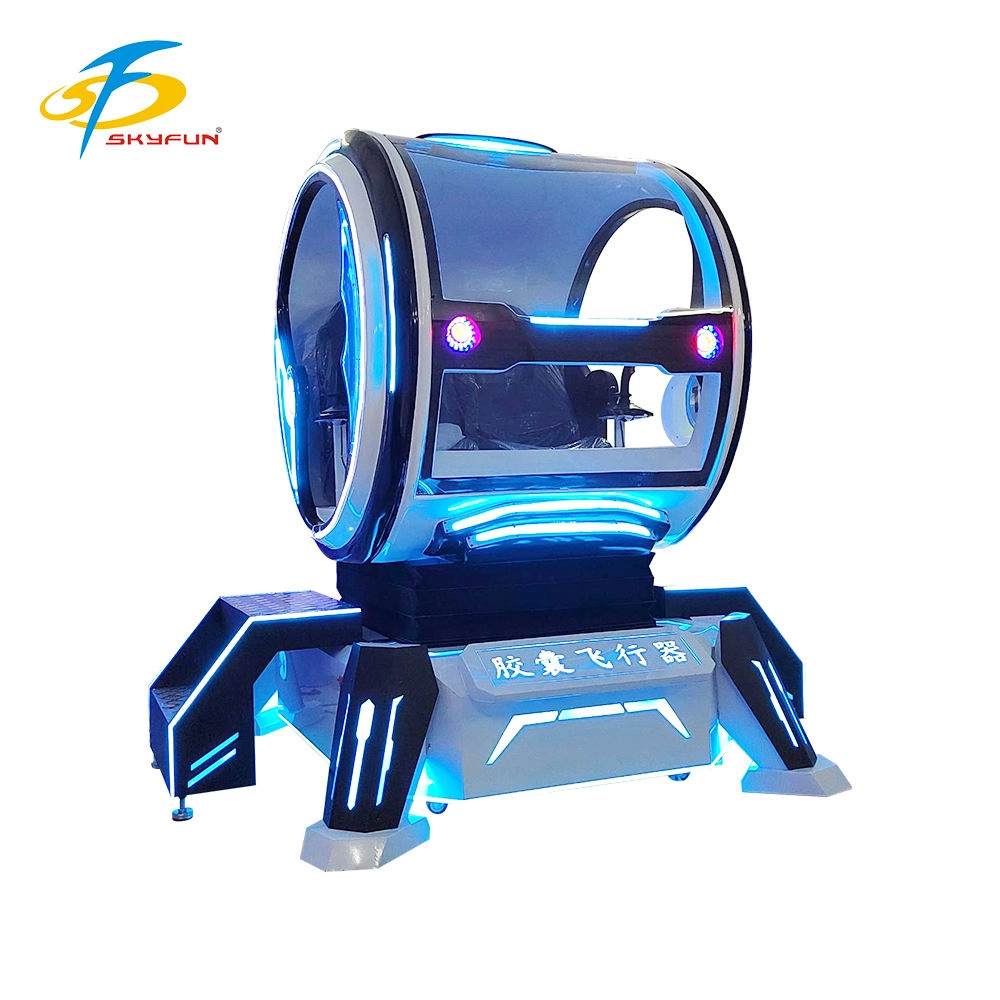
Double Player VR Flight Simulator 100 Movies 15 Games Coin-Operated Game Machine for Shopping Malls Amusement Parks
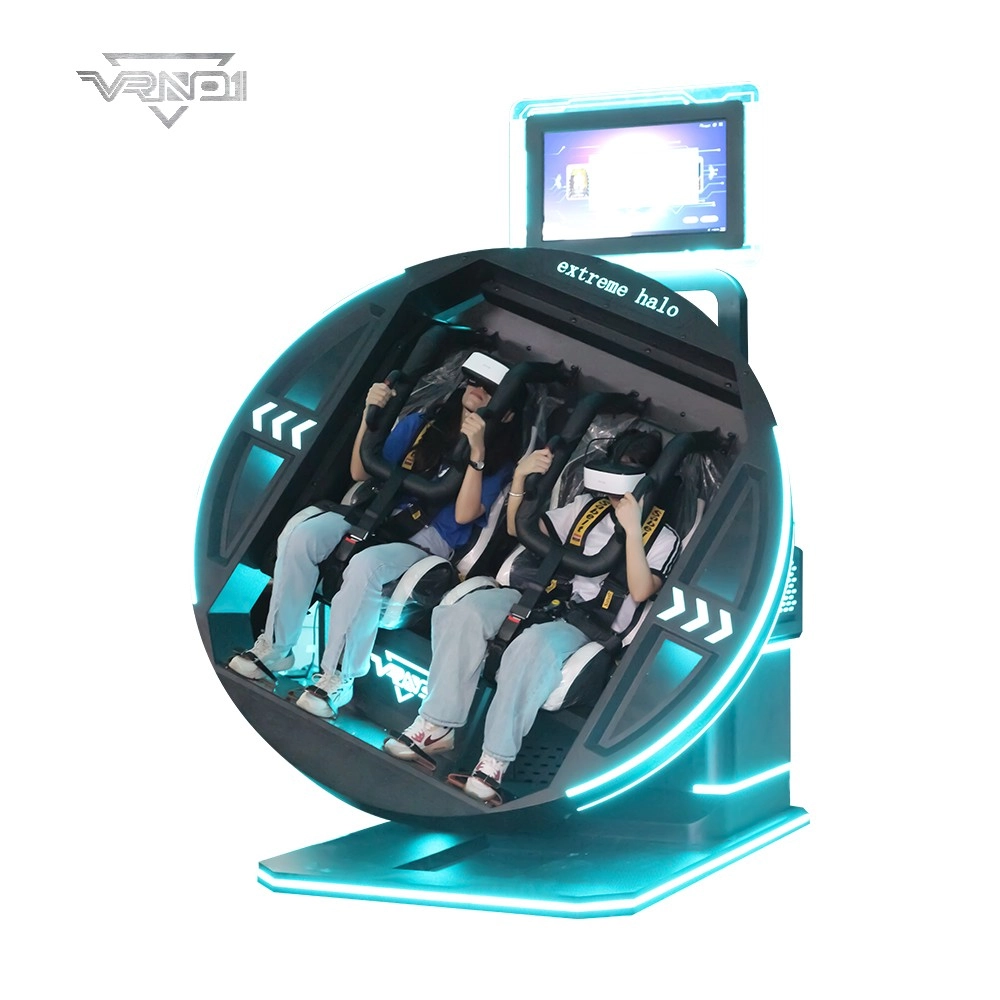
9D VR 360 Roller Coaster Cinema Chair Gaming Set Indoor/Outdoor Business Simulator Hardware for Home or School
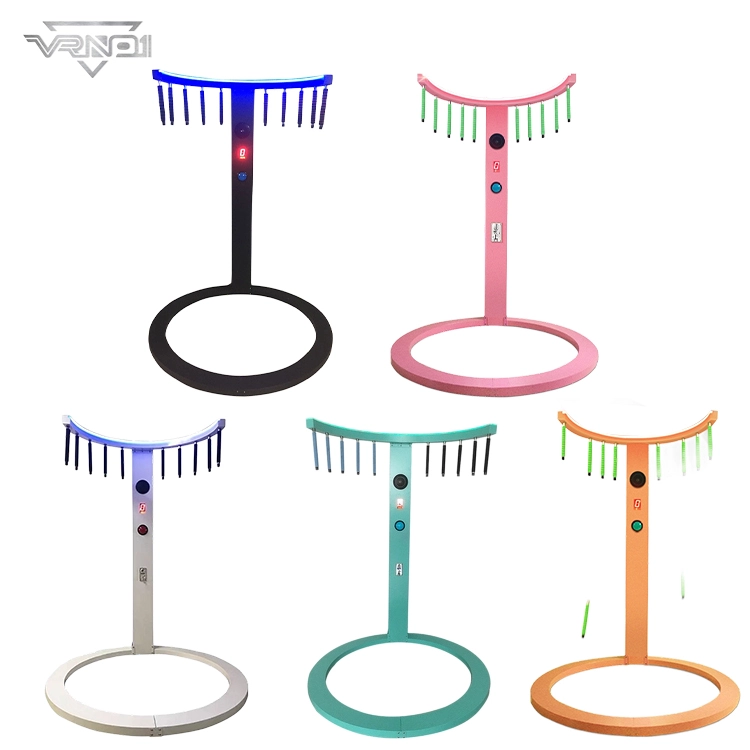
VRN0.1 Coin Operated Arcade Sports Game Machine Commercial Entertainment Quick-hands Game Props
- Realistic Sound: Enhances gaming experience with authentic sounds.
- Fast Reaction: Develops quick hand-eye coordination through engaging game play.
- DIY Kit: Allows for customization and personalization of the baton.
- Metal and Plastic Construction: Durable and robust build quality.
- Coin Operated: Fun for players who enjoy arcade-like experiences.
 Scan QR Code
Whatsapp: +8618127818571
Scan QR Code
Guangzhou Skyfun Technology Co.,Ltd
skyfunvrgame
skyfun game