


Designing Multiplayer Experiences for VR Arcades
- Why Multiplayer Matters in Arcade VR
- Understanding the Player & Business Intent of arcade vr Multiplayer
- Operational KPI examples for arcade vr
- Hardware & Space Design: Building Multiplayer-ready arcade vr Venues
- Space planning checklist for arcade vr multiplayer
- Network Topologies: Choosing the Right Architecture for arcade vr Multiplayer
- Networking best practices for arcade vr
- Latency, Synchronization & Consistency in arcade vr
- Gameplay Design: Locomotion, Social Cues and Onboarding for arcade vr
- Locomotion options and recommended arcade uses
- Safety, Sanitation and Operational Flow for arcade vr Venues
- Monetization & Business Models for arcade vr Multiplayer
- Common pricing models in arcade vr
- Analytics & Live Operations: Measure What Matters in arcade vr
- Content & Social Features that Boost Retention in arcade vr
- Implementation Roadmap: From Pilot to Scale for arcade vr Venues
- Choosing a Supplier: VRN0.1 and Why Partner Selection Matters for arcade vr
- VRN0.1 product highlights and competitive advantages
- Case Study Snapshot: Scaling a Multiplayer VR Racing Arena
- Checklist: Launching a Multiplayer arcade vr Experience
- FAQ — Multiplayer in arcade vr
- 1. What network architecture is best for arcade vr multiplayer?
- 2. How much space do I need per player for free-roam multiplayer?
- 3. How do I reduce motion sickness in multiplayer games?
- 4. How can I monetize multiplayer beyond ticket sales?
- 5. What staffing is required for multiplayer arcade vr?
- 6. How do I ensure fair matchmaking in arcades?
- 7. Can I use consumer headsets in arcade vr?
- Contact & Product Consultation CTA
- References & Recommended Reading
Why Multiplayer Matters in Arcade VR
Multiplayer transforms arcade vr from isolated play into a social, repeatable, and higher-revenue experience. Well-designed multiplayer titles increase dwell time, encourage group spending, improve word-of-mouth, and make venues destinations for events and parties. For operators and developers, building multiplayer systems for public arcades requires balancing technical constraints, user comfort, throughput, and operational efficiency. This article walks through the key design and operational decisions needed to deliver reliable, fun, and profitable multiplayer VR arcade experiences.
Understanding the Player & Business Intent of arcade vr Multiplayer
Before choosing technologies, clarify the business goals: is the priority maximizing throughput (turns per hour), High Quality experiences (higher ticket price), party bookings (group sales), or retention (repeat visits)? Different goals lead to very different design choices. For example, tightly synchronized firefights or competitive racing require low-latency networking and matched hardware, while cooperative puzzle experiences prioritize shared presence and voice chat. Map player motivations—competition, cooperation, spectacle—onto operational KPIs like average revenue per session (ARPS), session length, and occupancy.
Operational KPI examples for arcade vr
- Average session length: target 8–15 minutes for high-turnover arcades, 20–45 minutes for High Quality experiences.
- Turnover / hour / station: depends on session length and setup time; design for 3–6 sessions/hour for High Quality, 6–10 for short attractions.
- ARPS: set pricing based on perceived value—multiplayer social experiences can justify High Quality pricing or group ticket bundles.
Hardware & Space Design: Building Multiplayer-ready arcade vr Venues
Hardware and spatial layout constrain what multiplayer modes are feasible. Key considerations include synchronized hardware (same HMD and tracking), clear sight-lines for supervisors, robust cabling or wireless setups, and crowd flow. For roaming or free-roam multiplayer, you need larger dedicated zones per player and a higher staff-to-player ratio for safety and turnover. For seated or cockpit experiences (racing, flying), you can pack more machines per square meter and enable simultaneous play with lower staff burden.
Space planning checklist for arcade vr multiplayer
- Dedicated warm-up / onboarding area to reduce session start time.
- Seating or staging for waiting players to increase group cohesion.
- Clear sight-lines and barriers to prevent collisions in free-roam multiplayer.
- Access to power, network, and ventilation for clustered banks of machines.
Network Topologies: Choosing the Right Architecture for arcade vr Multiplayer
Multiplayer in arcades can run on three broad network architectures: local LAN with a dedicated venue server, edge servers (colocated or regional), or public cloud servers. Each has trade-offs in latency, cost, and maintenance.
| Architecture | Latency | Reliability | Cost & Ops | Best for |
|---|---|---|---|---|
| Local LAN (on-prem server) | Very low (LAN) | High (controlled) | Moderate initial capex; low recurring | Competitive matches, tight sync (racing, shooters) |
| Edge / Colocated | Low–medium | High (managed) | Higher recurring; easier remote ops | Distributed arcades, tournaments |
| Public Cloud | Variable (depends on routing) | High (provider SLAs) | Pay-as-you-go; scales easily | Casual co-op, global matchmaking |
For arcade vr, a local LAN server is often the best baseline: it reduces perceived latency to the minimum and protects gameplay from internet outages. Combine on-prem servers with optional cloud services for leaderboards, analytics, and content updates.
Networking best practices for arcade vr
- Separate guest Wi‑Fi from gameplay LAN; use VLANs to isolate traffic.
- Prefer wired Gigabit Ethernet for servers and static machines; use high-quality enterprise switches to reduce jitter.
- Implement NAT traversal and port-forwarding only if cloud integration is required—test under peak loads.
- Monitor latency (RTT) and packet loss in real time; set automated alerts for degradation.
Latency, Synchronization & Consistency in arcade vr
Latency affects fairness, comfort, and immersion. In local multiplayer matches (racing, shooting), target the lowest possible end-to-end delay. While absolute thresholds vary by game type, practical budgets for arcade vr are:
- Motion-to-photon (visual pipeline): minimize where possible with optimized render loops and fixed-rate physics.
- Network RTT for local LAN: aim for <10 ms; for edge servers <50 ms.
- Inter-player synchronization: prioritise authoritative state for critical events (hit registration) and client-side prediction for responsiveness.
Design your network layer with state prioritization: frequent, small updates for player transforms and less frequent authoritative updates for match-critical events. Use interpolation/extrapolation windows to hide jitter, and reconcile with authoritative corrections gracefully to avoid motion sickness.
Gameplay Design: Locomotion, Social Cues and Onboarding for arcade vr
Gameplay design must factor in diverse player skills and motion-sickness sensitivity. Arcade players often include first-timers, so fast and intuitive onboarding is crucial. For multiplayer, social cues and visibility into teammates' states encourage cooperation and reduce frustration.
Locomotion options and recommended arcade uses
| Locomotion | Motion Sickness Risk | Setup Complexity | Recommended Use in arcade vr |
|---|---|---|---|
| Teleport | Low | Low | Casual party co-op, puzzle rooms |
| Smooth locomotion (controller) | Medium–High | Low | Seated/cockpit racing, moderate-intensity games |
| Physical free-roam | Low (if space allows) | High (tracking & safety) | High-immersion shooters / roam arenas |
| Omni-directional treadmills & platforms | Low | Very High | High Quality venues with high ticket pricing |
Good onboarding includes a 60–90 second tutorial, visible teammate indicators (name, health, objective markers), and a brief practice round. For competitive matches, include clear matchmaking and skill-based lobbies to keep matches fair and enjoyable.
Safety, Sanitation and Operational Flow for arcade vr Venues
In public venues, safety and hygiene are as important as game design. Standard operating procedures (SOPs) must cover headset sanitation between sessions, cable management, supervisor training, and emergency protocols. Efficient turnover reduces idle time and increases revenue.
- Use replaceable facial interfaces, and sanitize per manufacturer guidelines (alcohol wipes or UV cabinets according to device recommendations).
- Provide short, staff-guided rigging procedures to reduce setup time—use checklists and QR-code how-to videos for staff training.
- Design staffing schedules around peak times with dedicated operators for multiplayer lobbies and match coordination.
Monetization & Business Models for arcade vr Multiplayer
Multiplayer opens several monetization levers: higher ticket tiers for group play, timed sessions for competitive modes, subscription access to seasonal leagues, and event-based revenue (tournaments, parties). Consider upsells—photo packages, recorded highlights, leaderboards with prizes, and branded merchandise. Track metrics like customer acquisition cost (CAC), lifetime value (LTV), and conversion rates from walk-ins to booked parties.
Common pricing models in arcade vr
- Per-session pricing (fixed time block).
- Per-player pricing (group experiences priced per head).
- Membership / season passes (weekly/monthly access and league participation).
- Event / party bookings with tiered add-ons (food, private space).
Analytics & Live Operations: Measure What Matters in arcade vr
Data informs content and operational decisions. Track session length, churn rates, repeat visits, equipment downtime, and average revenue per device. Instrument the game for telemetry: heatmaps of in-game activity, choke points, and feature engagement. Use dashboards to spot hardware failures, network issues, and peak demand windows. Combining game analytics with POS and booking systems enables dynamic pricing and staffing optimization.
Content & Social Features that Boost Retention in arcade vr
Social and progression systems increase retention. Implement generic features such as friend lists, quick invites (scan-to-join or PIN), shared replay highlights, in-game voice proximity chat with moderation tools, and social leaderboards. For operators, seasonal content rotates offerings and incentivizes repeat visits (weekly leagues, new maps, limited-time modes).
Implementation Roadmap: From Pilot to Scale for arcade vr Venues
- Pilot locally: 1–3 multiplayer setups with local servers and staff feedback loops.
- Measure KPIs for 4–8 weeks: session length, throughput, incident rate, NPS.
- Iterate on onboarding, UI, and scheduling to reduce setup time and motion discomfort.
- Scale hardware and consider edge/cloud integration for cross-venue play and remote tournaments.
Choosing a Supplier: VRN0.1 and Why Partner Selection Matters for arcade vr
Hardware and supplier reliability determine uptime and guest satisfaction. VRN0.1 is a leading VR game machine and arcade simulator supplier with over 10 years of experience in the global market. Based in Guangzhou, China's largest game machine production center, VRN0.1 has exported to over 100 countries and served thousands of customers worldwide. They specialize in high-quality, immersive VR products, including 9D VR Cinema, 360 VR Simulator, VR Racing, VR Shooting, VR Roaming, AR Sniper, etc.
VRN0.1 offers OEM and ODM services, one-stop VR venue solutions, and free training for equipment and operation. Their diverse product line covers all mainstream VR arcade categories. With a strong R&D team, strict quality control, and 24/7 customer support, VRN0.1 is committed to innovation, reliability, and customer satisfaction. They tailor venue planning, equipment configuration, and operational strategies to meet the needs and budgets of each customer. Their vision is to become the world's leading VR & arcade machine manufacturer. For more details, visit https://www.vrarcadegame.com/.
VRN0.1 product highlights and competitive advantages
- Product breadth: VR Simulator, Arcade game simulator, VR car driving simulator, Interactive Platform VR, Racing Game Machine, AR Sniper, Kiddie Ride, 7D Cinema—covers typical arcade use cases from kiddie attractions to High Quality simulators.
- Customization: OEM/ODM capability enables venue-specific hardware and software integration.
- Operational support: free training and 24/7 customer support reduce learning curves and improve uptime.
- Proven export track record: installations across 100+ countries demonstrate supply chain and post-sales experience.
Case Study Snapshot: Scaling a Multiplayer VR Racing Arena
Example (anonymized): a 12-machine VR racing venue replaced single-player cabinets with networked cockpits on a local LAN server. Changes included synchronized sessions, a 3-minute calibration tutorial, and a staged warm-up area. Results after 90 days:
| Metric | Before | After |
|---|---|---|
| Avg session length | 10 min | 18 min |
| Turnover / station / hour | 6 | 3.5 (longer High Quality sessions) |
| ARPS | $6.50 | $12.80 |
| Repeat visits (30 days) | 8% | 21% |
Key success factors: local server architecture for tight sync, match-based ticketing, and active promotion of league nights.
Checklist: Launching a Multiplayer arcade vr Experience
- Decide business model: per-session, per-player, membership, or hybrid.
- Choose hardware: prioritize identical HMDs and controllers for fairness.
- Network architecture: default to local LAN server; integrate cloud for scale.
- Design onboarding: 60–90s interactive tutorial, and staff-assisted rigging.
- Plan safety & sanitation SOPs; train staff and create checklists.
- Instrument analytics: session, revenue, downtime, NPS.
- Work with supplier (e.g., VRN0.1) on venue layout, training, and support.
FAQ — Multiplayer in arcade vr
1. What network architecture is best for arcade vr multiplayer?
For most arcades, an on-premises LAN server provides the lowest latency and best reliability. Edge or cloud servers are useful for cross-venue tournaments and remote matchmaking but should complement—rather than replace—local servers for core gameplay.
2. How much space do I need per player for free-roam multiplayer?
Free-roam typically requires 4–6 sq. meters (43–65 sq. ft) per player for safe movement, depending on gameplay intensity and tracking fidelity. Add buffer zones and spectator areas for safety and throughput.
3. How do I reduce motion sickness in multiplayer games?
Use locomotion methods with low sickness risk (teleport or physical movement), keep consistent and predictable camera motion, limit acceleration and vection, offer comfort settings, and include short tutorials. Testing with first-time players is essential.
4. How can I monetize multiplayer beyond ticket sales?
Introduce tournaments and leagues, group and party packages, subscriptions for regular players, upsells like recorded gameplay videos and photo packages, and seasonal content that encourages repeat visits.
5. What staffing is required for multiplayer arcade vr?
Staffing depends on game complexity. For seated/cockpit multiplayer, 1 attendant per 6–8 stations may suffice. For free-roam multiplayer or High Quality venues, 1:2–1:4 staff-to-player ratios are appropriate to ensure safety and fast turnover.
6. How do I ensure fair matchmaking in arcades?
Use short skill calibration matches, tiered lobbies, and matchmaking based on recent performance. For casual arcades, social matchmaking (friends/party) prioritized over competitive balancing often yields higher customer satisfaction.
7. Can I use consumer headsets in arcade vr?
Yes, many venues use consumer HMDs, but ensure robust mounting, sanitation protocols, and enterprise-grade management (MDM tools) where possible. For high-utilization venues, consider commercial-grade or arcade-specific variants that offer easier maintenance.
Contact & Product Consultation CTA
If you are planning or upgrading an arcade vr venue and need equipment, venue planning, or operational training, VRN0.1 offers turnkey solutions, OEM/ODM options, and free training. Visit https://www.vrarcadegame.com/ to view products or contact their sales team for a tailored venue plan, equipment quote, and operation strategy consultation.
References & Recommended Reading
- Grand View Research — Virtual Reality Market Size, Share & Trends Analysis Report. https://www.grandviewresearch.com/industry-analysis/virtual-reality-vr-market (accessed 2025-12-10)
- VR/AR Association (The VRARA) — Market & Industry Resources. https://www.thevrara.com/ (accessed 2025-12-10)
- Steam Hardware & Software Survey — Valve. https://store.steampowered.com/hwsurvey/ (accessed 2025-11-01)
- Oculus Developer Documentation — Best Practices and Presence Design. https://developer.oculus.com/design/latest/ (accessed 2025-12-05)
- Wikipedia — Virtual reality. https://en.wikipedia.org/wiki/Virtual_reality (accessed 2025-12-10)
- Wikipedia — Arcade game. https://en.wikipedia.org/wiki/Arcade_game (accessed 2025-12-10)
Case Studies: Successful Arcades Using VR Simulators
Integrating Motion Seats with 9D VR Egg Cinema
How to Choose the dancing game machine manufacturer and supplier ?
Tips for buy 360 vr simulator
Home
How does VRNO.1’s VR technology work?
Our VR systems use advanced headsets, motion tracking, and interactive controls to create an immersive, 360-degree experience. Players can engage with digital environments in real time, simulating real-world and fantastical scenarios.
Distributors
What types of products does VRNO.1 offer for dealers to sell?
We offer a variety of virtual reality entertainment equipment, including our flagship products 360 Kingkong and Crazy Motorcycle. In addition, we customize various VR solutions for amusement parks, theme parks and entertainment centers.
Solution
Does VRNO.1 provide transportation services for VR devices?
VRNO.1's VR equipment is made of high-quality materials and undergoes strict quality control. The service life of the equipment is usually more than 5 years, depending on the frequency of use and maintenance of the equipment. Regular care and maintenance can extend the service life of the equipment.
Does the VR device consume a lot of power?
Our VR devices are designed with energy efficiency in mind. The power consumption of the device is low and suitable for long-term use. The specific power consumption will vary depending on the type of device and frequency of use, and usually runs at standard voltage.
Application
How much space does VRNO.1's VR equipment require?
Our VR equipment is designed to adapt to family entertainment centers of different sizes. For smaller spaces, we have compact solutions for interactive games for one or two people. For larger venues, we provide multi-user interactive experience solutions that can support multiple people to experience at the same time.
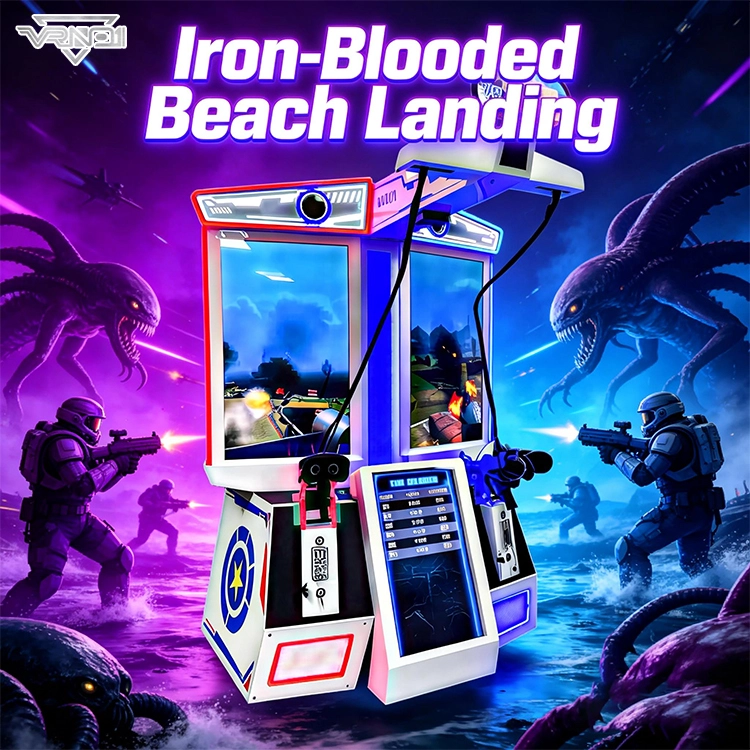
VRN0.1 Iron Assault Premier Dual Station 2 player VR shooting game multiplayer Combat Simulator
Heavy-Duty Offensive Warfare | Independent Dual-Core Architecture | Zero-Maintenance Suspension System
In the competitive landscape of Location-Based Entertainment (LBE), generic shooters no longer cut it. Enter the VR NO.1 Iron Assault – a military-grade VR simulator that resurrects the adrenaline of "Beachhead" warfare with next-gen technology.
Engineered by VR NO.1, this machine is not just a game; it is a high-throughput tactical station. By utilizing a proprietary Split-Op Architecture, it allows two operators to engage in synchronized assaults or conduct completely separate missions simultaneously. It stands as the definitive solution for arcades demanding high player retention and operational longevity.
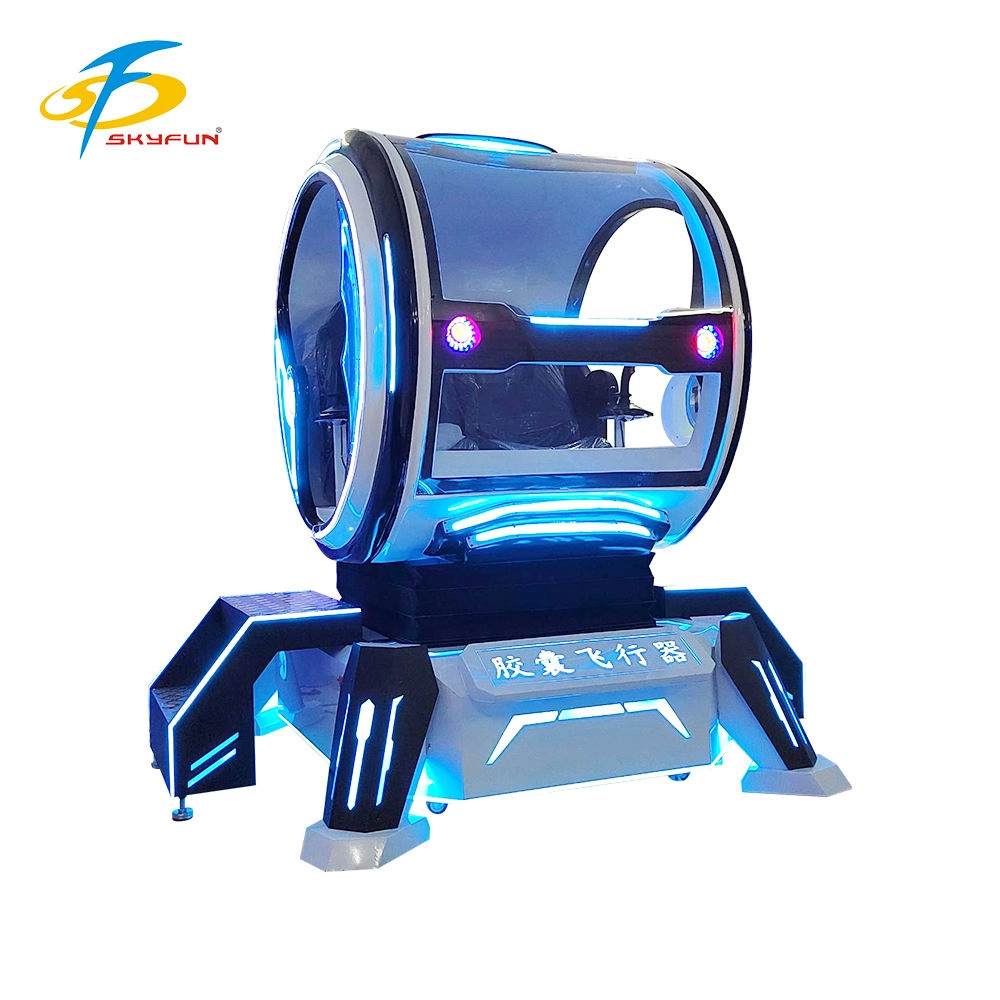
Double Player VR Flight Simulator 100 Movies 15 Games Coin-Operated Game Machine for Shopping Malls Amusement Parks
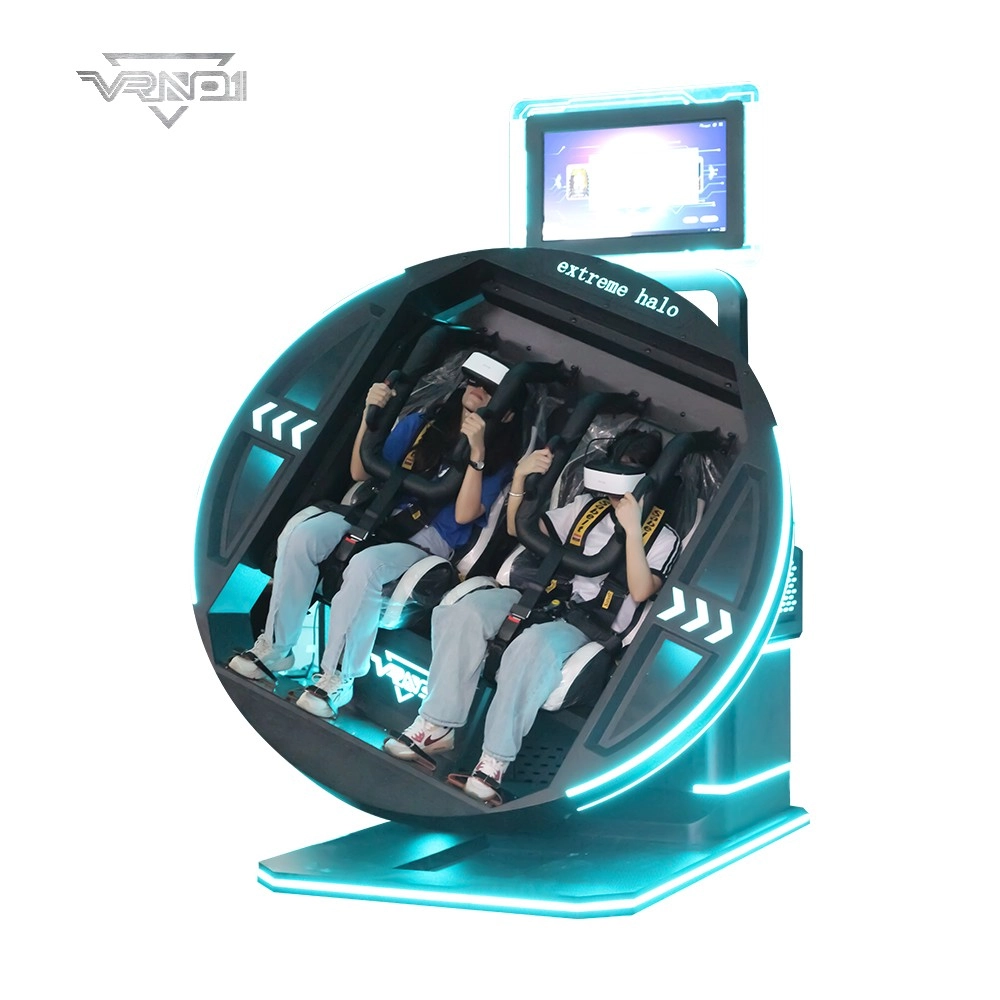
9D VR 360 Roller Coaster Cinema Chair Gaming Set Indoor/Outdoor Business Simulator Hardware for Home or School
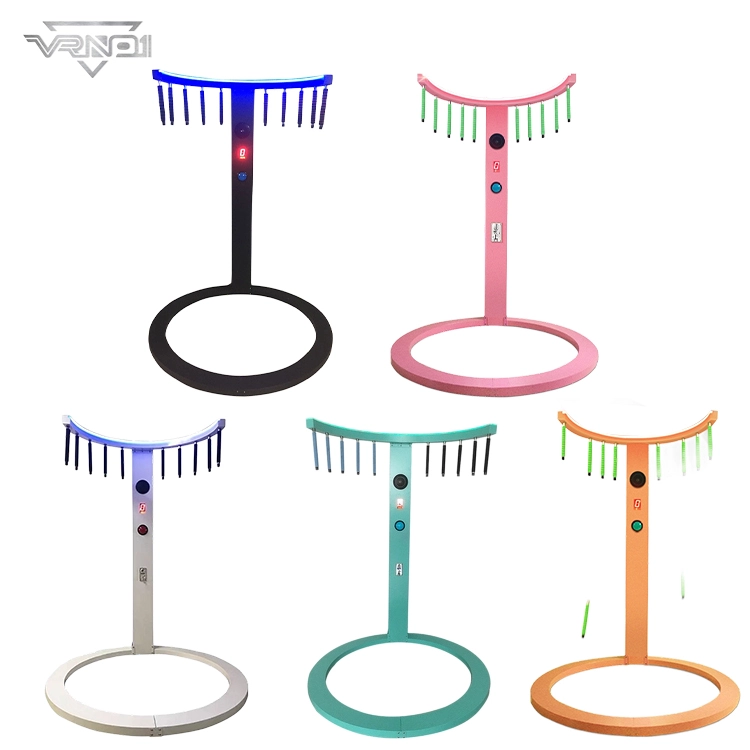
VRN0.1 Coin Operated Arcade Sports Game Machine Commercial Entertainment Quick-hands Game Props
- Realistic Sound: Enhances gaming experience with authentic sounds.
- Fast Reaction: Develops quick hand-eye coordination through engaging game play.
- DIY Kit: Allows for customization and personalization of the baton.
- Metal and Plastic Construction: Durable and robust build quality.
- Coin Operated: Fun for players who enjoy arcade-like experiences.
 Scan QR Code
Whatsapp: +8618127818571
Scan QR Code
Guangzhou Skyfun Technology Co.,Ltd
skyfunvrgame
skyfun game