


How safe are VR rides compared to traditional amusement park rides? | Insights by VRN0.1
- Comparing the Safety of VR Rides and Traditional Amusement Park Rides
- 1. What Are the Safety Records of Traditional Amusement Park Rides?
- 2. How Do VR Rides Compare in Terms of Safety?
- 3. What Are the Common Causes of Injuries on VR Rides?
- 4. Are There Specific Safety Standards for VR Rides?
- 5. How Can Amusement Parks Mitigate Risks Associated with VR Rides?
- 6. What Are the Benefits of Integrating VR into Amusement Park Rides?
- 7. How Do VR Rides Impact the Amusement Park Industry?
- 8. What Are the Future Trends in VR Ride Safety?
- Conclusion: The Advantages of VRN0.1 in Enhancing Ride Safety
Comparing the Safety of VR Rides and Traditional Amusement Park Rides
As the virtual reality (VR) industry continues to evolve, VR rides have emerged as a popular alternative to traditional amusement park attractions. This article delves into the safety considerations of VR rides compared to their traditional counterparts, addressing common concerns and providing insights for industry professionals in the VR and arcade machine sectors.
1. What Are the Safety Records of Traditional Amusement Park Rides?
Traditional amusement park rides, such as roller coasters, have a commendable safety record. The International Association of Amusement Parks and Attractions (IAAPA) reports that riders have a one in 15.5 million chance of being injured on a ride. In a typical year, over 385 million guests enjoy more than 1.7 billion rides at approximately 400 North American fixed-site facilities.
2. How Do VR Rides Compare in Terms of Safety?
VR rides are designed with safety in mind, often incorporating features like adjustable restraints and real-time monitoring systems. However, they introduce unique considerations:
Motion Sickness and Disorientation: Some users may experience motion sickness, headaches, or dizziness due to the immersive nature of VR.
Physical Hazards: While VR headsets provide a virtual experience, users may be unaware of their physical surroundings, leading to potential collisions or trips.
3. What Are the Common Causes of Injuries on VR Rides?
Injuries on VR rides can result from several factors:
User Misuse: Failure to follow safety instructions or improper use of restraints can lead to accidents.
Health Conditions: Pre-existing health issues may be exacerbated by the physical and psychological effects of VR.
Environmental Factors: Inadequate space or obstacles in the physical environment can pose risks during the VR experience.
4. Are There Specific Safety Standards for VR Rides?
Currently, there are no universally accepted safety standards specifically for VR rides. However, industry best practices include:
Regular Maintenance: Ensuring that VR equipment and physical ride components are regularly inspected and maintained.
User Education: Providing clear instructions and guidelines to users before the ride.
Health Assessments: Screening for health conditions that may be contraindicated for VR experiences.
5. How Can Amusement Parks Mitigate Risks Associated with VR Rides?
To enhance safety, amusement parks can implement the following measures:
Comprehensive Training: Staff should be trained to monitor and assist users effectively.
User Monitoring: Observing users during the ride to identify and address any issues promptly.
Post-Ride Evaluation: Gathering user feedback to identify and rectify potential safety concerns.
6. What Are the Benefits of Integrating VR into Amusement Park Rides?
Integrating VR into traditional rides offers several advantages:
Enhanced Immersion: VR can create more immersive and varied experiences, attracting a broader audience.
Operational Efficiency: VR can simulate different environments, reducing the need for multiple physical ride installations.
Innovation Appeal: Offering VR experiences can position parks as innovative and forward-thinking.
7. How Do VR Rides Impact the Amusement Park Industry?
The introduction of VR rides has led to:
Increased Investment: Parks are investing in VR technology to stay competitive.
New Revenue Streams: VR attractions can command premium pricing and attract new visitors.
Operational Challenges: Managing the technical aspects of VR rides requires specialized staff and maintenance protocols.
8. What Are the Future Trends in VR Ride Safety?
Future developments may include:
Standardized Safety Protocols: The establishment of industry-wide safety standards for VR rides.
Advanced Monitoring Systems: Implementation of real-time health and safety monitoring technologies.
User-Centric Design: Designing VR experiences with user safety and comfort as primary considerations.
Conclusion: The Advantages of VRN0.1 in Enhancing Ride Safety
VRN0.1 stands out in the VR and arcade machine industry by prioritizing safety and user experience. Our commitment to rigorous safety standards, user-friendly designs, and continuous innovation ensures that our VR rides offer both excitement and peace of mind. By choosing VRN0.1, amusement parks can provide cutting-edge attractions that are as safe as they are thrilling.
For more information on VRN0.1's offerings and safety protocols, visit our website or contact our sales team.

Solution
Does VRNO.1 provide customized development of VR game content?
Yes, VRNO.1 provides customized development services for game content. We can customize specific types of games according to your needs to enhance the user experience. Customized content can include game themes, scenes, interactive functions, etc. to meet different market needs.
Application
Is the VR device suitable for all family members?
Yes, VRNO.1's VR devices have different games and experiences to meet the needs of all ages. Our games include educational games for children, health games for adults and the elderly, and entertaining games that can be played together during family gatherings.
Distributors
What support does VRNO.1 provide after becoming a dealer?
We provide full support to dealers, including sales training, marketing materials, technical support and after-sales service. Our goal is to help you sell and operate our products successfully.
How does VRNO.1 support dealers' marketing efforts?
We provide a range of marketing materials, including product brochures, online advertising templates and promotional support. In addition, our team will help you develop a marketing strategy that suits the local market.
Products
How does VRNO.1’s VR technology work?
Our VR systems use advanced headsets, motion tracking, and interactive controls to create an immersive, 360-degree experience. Players can engage with digital environments in real time, simulating real-world and fantastical scenarios.
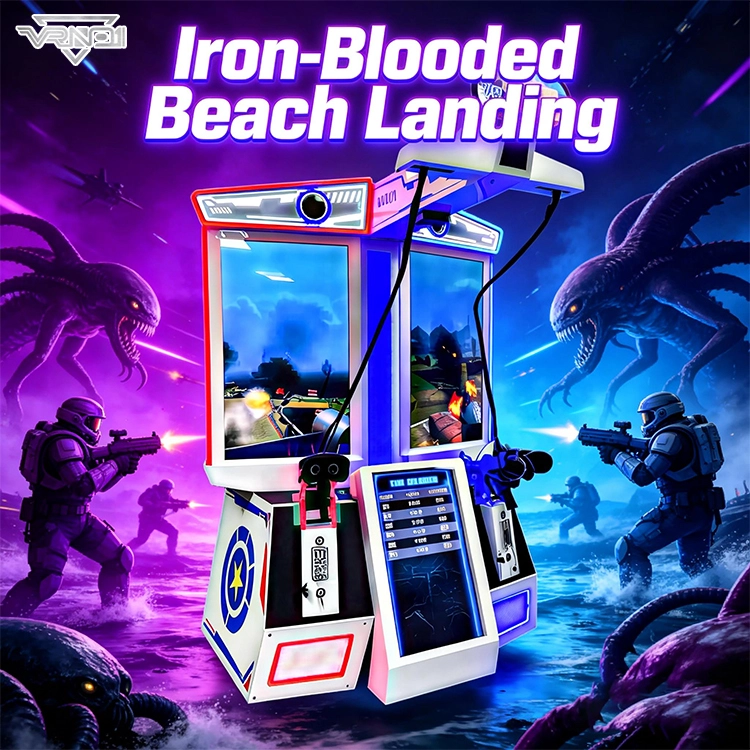
Heavy-Duty Offensive Warfare | Independent Dual-Core Architecture | Zero-Maintenance Suspension System
In the competitive landscape of Location-Based Entertainment (LBE), generic shooters no longer cut it. Enter the VR NO.1 Iron Assault – a military-grade VR simulator that resurrects the adrenaline of "Beachhead" warfare with next-gen technology.
Engineered by VR NO.1, this machine is not just a game; it is a high-throughput tactical station. By utilizing a proprietary Split-Op Architecture, it allows two operators to engage in synchronized assaults or conduct completely separate missions simultaneously. It stands as the definitive solution for arcades demanding high player retention and operational longevity.
- Realistic Sound: Enhances gaming experience with authentic sounds.
- Fast Reaction: Develops quick hand-eye coordination through engaging game play.
- DIY Kit: Allows for customization and personalization of the baton.
- Metal and Plastic Construction: Durable and robust build quality.
- Coin Operated: Fun for players who enjoy arcade-like experiences.
Want to know more updates?
If you have any technical questions or after-sales needs, please feel free to contact our service team.
We will wholeheartedly provide you with quick response and professional support to ensure the smooth operation of your VR & Arcade project.
 Scan QR Code
Whatsapp: +8618127818571
Scan QR Code
Guangzhou Skyfun Technology Co.,Ltd
skyfunvrgame
skyfun game