


How realistic is VR racing compared to real-world driving? | Insights by VRN0.1
- Understanding the Realism of VR Racing Compared to Real-World Driving
- 1. How Accurate Are the Physics and Vehicle Dynamics in VR Racing Simulators?
- 2. Do VR Racing Simulators Accurately Replicate Real-World Tracks?
- 3. How Does VR Racing Compare to Real-World Racing in Terms of Sensory Feedback?
- 4. Are VR Racing Simulators Effective Training Tools for Real-World Racing?
- 5. What Are the Limitations of VR Racing Simulators Compared to Real-World Driving?
- Conclusion: Why Choose VRN0.1 for Your VR Racing Needs?
Understanding the Realism of VR Racing Compared to Real-World Driving
Virtual Reality (VR) racing simulators have made significant strides in replicating the experience of real-world driving. However, several factors influence how closely these simulations mirror actual racing. Below, we address five common questions to provide a comprehensive understanding for VR and arcade machine industry users considering new purchases.
1. How Accurate Are the Physics and Vehicle Dynamics in VR Racing Simulators?
Modern VR racing simulators employ sophisticated physics engines that meticulously simulate various aspects of a car’s behavior. Tire models, for instance, now include complex variables like tire wear, temperature, and pressure, affecting performance over time. Suspension systems are simulated with detailed dynamics, influencing how the car handles on different track surfaces and conditions. Aerodynamics also play a crucial role, considering factors like downforce and drag, which vary with car design and speed. These elements work together to create a nuanced and highly realistic driving experience that challenges even seasoned racers.
2. Do VR Racing Simulators Accurately Replicate Real-World Tracks?
Yes, many VR racing simulators utilize laser scanning technology to create virtual tracks that are near-identical to their real-life counterparts. This technology faithfully reproduces every detail of the circuit, from replicating track curves with millimeter-perfect precision to replicating cracks and pockmarks within the road’s surface. Such precision allows drivers to master circuit intricacies remotely, refining skills needed to achieve top lap times on the same circuits in the real world.
3. How Does VR Racing Compare to Real-World Racing in Terms of Sensory Feedback?
While VR racing simulators provide visual and auditory immersion, they lack the tactile feedback present in real-world racing. Drivers in real life rely on their entire body to feel the car’s nuances—such as forces during cornering or vibrations from the road. Without these cues, a driver in a simulator might struggle to know when they’re on the limit of grip. This absence of sensory feedback can make sim racing feel more challenging compared to real-life racing.
4. Are VR Racing Simulators Effective Training Tools for Real-World Racing?
Yes, VR racing simulators are increasingly used as training tools for real-world racing. They allow drivers to experiment with race strategies and car setups in a risk-free environment, which is invaluable. For instance, Formula 1 driver Max Verstappen has praised the accuracy of modern simulators, mentioning that the sensation of speed and the replication of track layouts are incredibly close to reality.
5. What Are the Limitations of VR Racing Simulators Compared to Real-World Driving?
Despite advancements, VR racing simulators have limitations in fully replicating the real-world racing experience. Key aspects like G-forces, the physical exertion of driving a real car, and the adrenaline rush associated with actual risk-taking are inherently absent in virtual environments. The tactile feedback from a real car, such as the feeling of the car’s body rolling or the tires losing grip, is difficult to simulate perfectly.
Conclusion: Why Choose VRN0.1 for Your VR Racing Needs?
When considering a new VR racing simulator, VRN0.1 stands out for its commitment to realism and user experience. By integrating advanced physics engines, laser-scanned tracks, and immersive displays, VRN0.1 offers a racing experience that closely mirrors real-world driving. Additionally, VRN0.1's focus on user comfort and accessibility ensures that both casual gamers and professional drivers can enjoy a seamless and engaging racing experience. Whether you're looking to enhance your training regimen or simply enjoy the thrill of racing from the comfort of your home, VRN0.1 provides a comprehensive solution that meets the needs of the VR and arcade machine industry.



Distributors
How does VRNO.1 support dealers' marketing efforts?
We provide a range of marketing materials, including product brochures, online advertising templates and promotional support. In addition, our team will help you develop a marketing strategy that suits the local market.
Products
How does VRNO.1’s VR technology work?
Our VR systems use advanced headsets, motion tracking, and interactive controls to create an immersive, 360-degree experience. Players can engage with digital environments in real time, simulating real-world and fantastical scenarios.
Application
Does the VR game support multi-person interaction on the same screen?
Yes, VRNO.1's VR gaming devices support multiplayer on-screen interaction. Family members can participate in multiplayer competitive games, cooperative adventure games, etc., to enhance the interaction and entertainment experience among family members.
What age groups are suitable for VR games in family entertainment centers?
VRNO.1's VR equipment supports a wide range of age groups, from children, teenagers to adults. We provide a variety of game types, including parent-child interactive games, adventure games, sports competitions, etc., to ensure that they are suitable for the needs of different family members.
Solution
What hardware requirements does VRNO.1's VR device require?
VRNO.1's VR device is designed with different venue requirements in mind. The required hardware includes high-performance computers, VR helmets, motion trackers, motion seats, etc. We will provide a complete list of hardware and equipment according to your needs and ensure that all hardware is perfectly compatible.
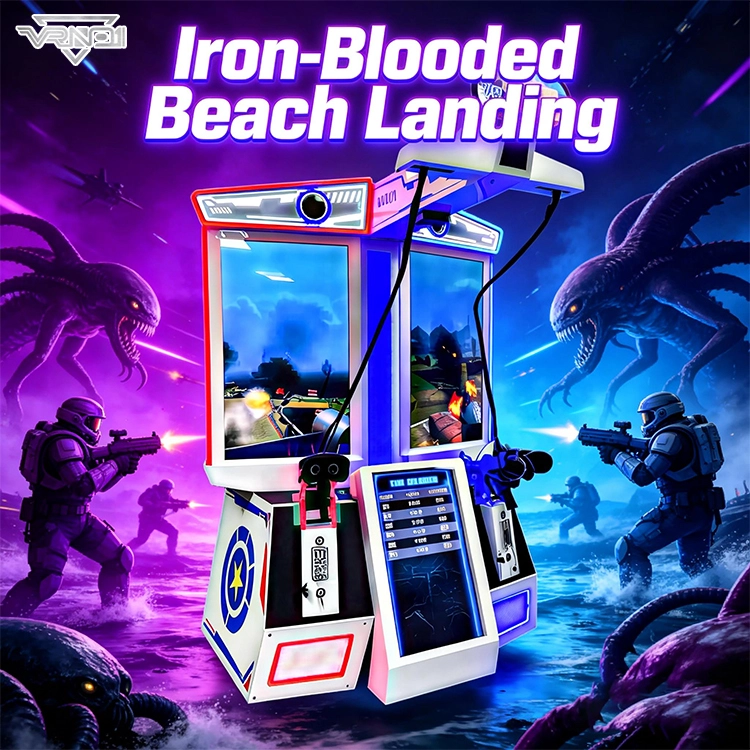
Heavy-Duty Offensive Warfare | Independent Dual-Core Architecture | Zero-Maintenance Suspension System
In the competitive landscape of Location-Based Entertainment (LBE), generic shooters no longer cut it. Enter the VR NO.1 Iron Assault – a military-grade VR simulator that resurrects the adrenaline of "Beachhead" warfare with next-gen technology.
Engineered by VR NO.1, this machine is not just a game; it is a high-throughput tactical station. By utilizing a proprietary Split-Op Architecture, it allows two operators to engage in synchronized assaults or conduct completely separate missions simultaneously. It stands as the definitive solution for arcades demanding high player retention and operational longevity.
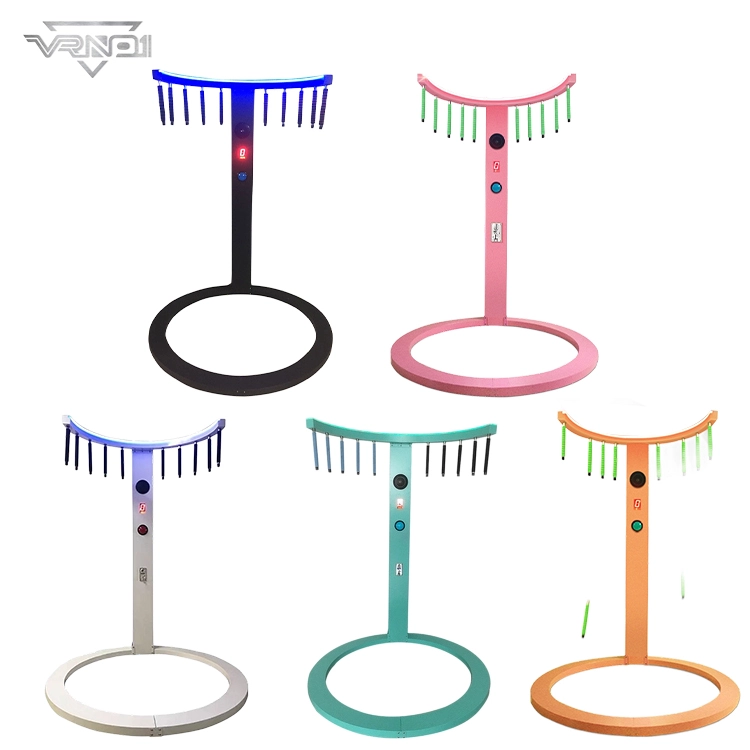
- Realistic Sound: Enhances gaming experience with authentic sounds.
- Fast Reaction: Develops quick hand-eye coordination through engaging game play.
- DIY Kit: Allows for customization and personalization of the baton.
- Metal and Plastic Construction: Durable and robust build quality.
- Coin Operated: Fun for players who enjoy arcade-like experiences.
Want to know more updates?
If you have any technical questions or after-sales needs, please feel free to contact our service team.
We will wholeheartedly provide you with quick response and professional support to ensure the smooth operation of your VR & Arcade project.
 Scan QR Code
Whatsapp: +8618127818571
Scan QR Code
Guangzhou Skyfun Technology Co.,Ltd
skyfunvrgame
skyfun game