


Building the Ultimate VR Flight Simulator: 2026 Hardware & Setup Guide
- What Hardware is Required for a Virtual Reality Flight Simulator?
- Top Headsets for a Virtual Reality Flight Simulator in 2026
- High-Fidelity Choices: The Pinnacle of Immersion
- Mid-Range Warriors: High Value and Accessibility
- The Rise of Mixed Reality (MR) and Cockpit Integration
- Control Systems: VR HOTAS, Yokes, and Rudders
- Force Feedback Technology
- PC Specs for Flight Simulator VR: The Engine Room
- Beyond the Visor: Haptics and VR Flight Simulator Motion Platforms
- Our Industry Experience: Built for Durability
- Expert Tips for Optimizing VR Settings
- Future Trends: What to Expect in 2026 and Beyond
- Conclusion
- FAQ
Building a virtual cockpit that truly rivals reality requires a precise combination of visual fidelity, tactile control, and raw computing power. In this comprehensive 2026 hardware guide, we break down the exact components needed to build the ultimate VR flight simulator. Whether you are an aviation enthusiast fine-tuning a VR HOTAS setup for DCS World, or a commercial entertainment operator investing in a professional virtual reality flight simulator, this article covers everything. From the latest "Crystal-class" headsets to the powerhouse PC specs required for a seamless flight simulator VR experience, discover how to achieve unparalleled immersion.

What Hardware is Required for a Virtual Reality Flight Simulator?
Building a high-end flight simulator VR setup consists of a stereoscopic Head-Mounted Display (HMD), a computer capable of rendering dual 4K+ images, and physical VR flight controls that map 1:1 with virtual cockpits. Unlike standard gaming, flight simulation demands significantly higher processing power to calculate complex aerodynamics and render photorealistic scenery simultaneously.
A virtual reality headset uses stereoscopic displays and positional tracking to place the user inside a virtual environment. In aviation training and simulation, 6 Degrees of Freedom (6DOF) tracking is non-negotiable. This technology allows you to lean forward to inspect instruments or look over your shoulder during a tight turn, creating the physical sensation of sitting inside a real aircraft.
Top Headsets for a Virtual Reality Flight Simulator in 2026
The best VR headset for a VR flight simulator must balance ultra-high resolution with a wide Field of View (FOV) and ergonomic comfort for long-haul flights. In 2026, the market has definitively shifted towards "Crystal-class" visual fidelity. The dreaded "screen door effect" (seeing the gaps between pixels) has been virtually eliminated, replaced by advanced micro-OLED panels and custom aspheric lenses that deliver lifelike depth and contrast.
High-Fidelity Choices: The Pinnacle of Immersion
For hardcore enthusiasts and commercial aviation training centers, reading small text on GPS units, altimeters, and Multi-Function Displays (MFDs) without leaning in is a strict requirement. Headsets like the Pimax Crystal Super and Varjo XR-4 lead the pack in this premium tier.
-
Unmatched Resolution: These devices offer high PPD (Pixels Per Degree) counts—often pushing past 40 PPD—that closely rival the human eye's natural resolution.
-
Dynamic Foveated Rendering (DFR): High-end headsets now feature integrated, low-latency eye tracking. DFR dramatically reduces the load on your PC by rendering only the exact spot you are looking at in ultra-high resolution, while slightly blurring the peripheral vision. This is the secret to running a virtual reality flight simulator smoothly on max settings.
-
Commercial Durability: For a VR game machine supplier like VRN0.1, these headsets offer enterprise-grade materials and tracking stability designed to withstand thousands of hours of continuous use in commercial facilities.
Mid-Range Warriors: High Value and Accessibility
The Meta Quest 3 and its 2026 successors remain the most accessible and popular entry points into flight simulation. While they sit at a lower price point, their optical technology punches well above its weight class.
-
Pancake Optics: The transition to pancake lenses means these headsets offer a massive "sweet spot." Pilots can simply move their eyes to scan the cockpit instruments instead of having to turn their entire head, drastically reducing neck fatigue.
-
Connection Stability: While their wireless capabilities offer great freedom for room-scale gaming, a dedicated wired connection (like a fiber-optic Link Cable) is strictly preferred for flight sims. A wired connection bypasses Wi-Fi latency, minimizes compression artifacts in complex weather rendering, and keeps the headset charged during long commercial flights.
The Rise of Mixed Reality (MR) and Cockpit Integration
Perhaps the most revolutionary advancement for modern VR flight controls is the perfection of Mixed Reality (MR). Modern headsets now feature high-resolution, full-color passthrough cameras with depth sensors that accurately map your physical room.
-
The Best of Both Worlds: This technology enables a hybrid flight cockpit. You can digitally "mask out" your physical desk or simulator chassis, allowing you to clearly see your actual physical hands, VR HOTAS setup, yoke, and physical button boxes, while the outside window and the rest of the cockpit remain completely virtual.
-
Eliminating the "Blind" Problem: This solves the age-old simulator problem of fumbling blindly for a landing gear switch or a keyboard while wearing a headset.
-
Commercial Operator Benefits: For B2B arcade operators and commercial simulation centers, MR makes it much easier to onboard new users. Staff can interact with the user and guide their hands to the physical controls without forcing the player to take the headset off, ensuring a safer and more seamless premium experience.
Control Systems: VR HOTAS, Yokes, and Rudders
A HOTAS system combines the flight stick and throttle into a single ergonomic unit, allowing pilots to access vital functions without removing their hands from the controls. Originating in military aviation, this concept is perfect for improving situational awareness during virtual combat or complex maneuvers.
-
VR HOTAS Setup: Essential for fighter jets (DCS World) and space sims. Top brands like Virpil and VKB offer metal internals for ultimate durability in any flight sim rig.
-
Yoke Systems: Best for general aviation (Cessna, Boeing) in Microsoft Flight Simulator. Honeycomb and Thrustmaster offer excellent force feedback yokes.
-
Rudder Pedals: Critical for coordinating turns and taxiing. For a true-to-life VR flight simulator setup, do not rely on "twist-stick" rudders.
Force Feedback Technology
2026 has seen a major resurgence in Force Feedback (FFB) peripherals. Unlike simple spring-loaded joysticks, FFB sticks physically fight back against your hand during stalls or high-G maneuvers, providing crucial tactile cues that visual-only setups completely lack.
PC Specs for Flight Simulator VR: The Engine Room
PC specs for a flight simulator VR build must prioritize single-core CPU speed and massive GPU video memory (VRAM). Unlike standard 4K gaming, VR requires rendering two high-resolution images simultaneously at 90 frames per second.
-
CPU (The Bottleneck Breaker): Flight simulators are notoriously CPU-bound. The physics of flight, weather systems, and AI traffic rely heavily on single-core performance. Intel's latest Core i9 and AMD's Ryzen 7 X3D series are the gold standards.
-
GPU (VRAM is King): For high-resolution VR textures, 16GB of VRAM is the absolute minimum, with 24GB being ideal. High-end cards like the NVIDIA RTX 4090 are required to push "Ultra" settings in VR without stuttering.
-
RAM & Storage: 64GB DDR5 RAM is recommended to handle heavy scenery mods. NVMe Gen 5 SSDs ensure that ground textures stream in instantly as you fly low at 500 knots.
Beyond the Visor: Haptics and VR Flight Simulator Motion Platforms
A 6DOF VR flight simulator motion platform physically moves your seat to match the pitch, roll, and yaw of the aircraft, tricking your inner ear into believing the movement is real. While once strictly the domain of professional pilot training, these systems are now highly sought after by enthusiasts and commercial arcade operators alike.
-
Bass Shakers: Devices like Buttkickers attach to your chair and vibrate when landing gear locks or engines roar.
-
Motion Rigs: Ranging from simple seat movers (2DOF) to full heave-and-surge platforms (6DOF).
-
Wind Simulation: Fans that dynamically increase speed as your virtual airspeed increases, adding incredible immersion for open-cockpit biplanes.
Our Industry Experience: Built for Durability
At VRN0.1, we understand the rigorous engineering required for these complex systems. With over 10 years of experience as a premier VR game machine supplier, we have deployed thousands of interactive VR platforms worldwide.
Whether we are installing a commercial 9D VR Cinema, outfitting commercial arcade machines, or engineering a custom racing simulator for high-volume entertainment centers, the principles of reliable motion actuation remain the same. Our expertise in creating durable, high-traffic VR simulator products ensures that the hardware we recommend—and the custom virtual reality flight simulator rigs we build—are designed to withstand the stress of intense, 24/7 simulation sessions.
Expert Tips for Optimizing VR Settings
Optimizing your simulator often involves balancing visual clarity against smooth performance.
-
OpenXR Toolkit: Use this software to upscale images and sharpen visuals without heavily taxing your GPU.
-
Dynamic Foveated Rendering (DFR): Utilize eye-tracking to boost frame rates by rendering only the exact center of your vision in full detail.
-
Cable Management: Use ceiling pulley systems to keep heavy headset cables off your shoulders.
-
Reprojection: If you cannot hit a native 90 FPS, lock your frame rate to 45 FPS and let the software interpolate the frames (ASW/Motion Smoothing) to maintain a smooth visual experience.
Future Trends: What to Expect in 2026 and Beyond
The future of flight simulation hardware is moving toward deeper integration of mixed reality environments and biometric feedback. We are seeing a shift where eye-tracking not only helps with rendering but also allows pilots to interact with cockpit switches simply by looking at them and tapping a button on their VR HOTAS setup.
-
Cloud Streaming: While promising, latency issues still make local, high-end PC hardware vastly superior for fast-paced flying.
-
AI Integration: Software radios that use AI to generate highly realistic, unscripted Air Traffic Control voice interactions.
-
Form Factor: Lighter micro-OLED glasses that drastically reduce neck strain during multi-hour trans-Atlantic flights.
Conclusion
Building the ultimate VR flight simulator in 2026 requires a balanced approach to visuals, control systems, and computing power. By investing in a high-PPD headset, a robust VR HOTAS setup, and a PC capable of handling the heavy lifting, you can achieve a level of immersion that was impossible just a few years ago. Remember that true immersion is a sum of its parts—audio, tactile feedback, and visuals must all work in perfect harmony.
Contact VRN0.1 today to discuss your commercial flight simulator VR needs, or browse our recommended hardware bundles to start building your dream cockpit.
FAQ
What is the difference between standard gaming and a virtual reality flight simulator?
While standard gaming relies on flat monitors, a virtual reality flight simulator provides true 1:1 scale and 6 Degrees of Freedom (6DOF). This means you can look around the cockpit intuitively, offering an unmatched level of spatial awareness essential for real-world aviation training and high-fidelity flight simulator VR experiences.
What is the best VR headset for Microsoft Flight Simulator 2024?
The best VR headset for MSFS 2024 focuses on high resolution (PPD) and clarity, such as the Pimax Crystal or Varjo Aero. Comfort is essential for long flights, and these high-fidelity headsets require a powerful GPU pairing to run effectively.
Do I need a HOTAS for VR flight simulation?
Yes, a HOTAS is highly recommended over standard VR controllers because it provides necessary tactile feedback. Developing muscle memory requires physical sticks and throttles, which offer precision that virtual interaction lacks.
How much RAM do I need for VR flight sims?
32GB is the minimum standard for modern simulators. However, 64GB is highly recommended if you plan to use heavy scenery mods or fly in multiplayer environments. Faster DDR5 RAM also helps improve 1% low FPS drops.
Can I use a gaming laptop for a VR flight simulator?
You can, but only high-end enthusiast laptops with RTX 4080/4090 mobile GPUs are sufficient. Be aware that thermal throttling often limits performance compared to desktops, representing a significant trade-off between portability and raw power.
What is the difference between VR and Mixed Reality for flight sims?
VR is fully immersive, meaning you see only the virtual world around you. Mixed Reality (MR) blends virtual elements with your physical environment using passthrough cameras, making it superior for users who need to see physical button boxes, yokes, or flight plans while flying.
Is eye tracking important for flight simulator VR?
Yes, specifically for Dynamic Foveated Rendering (DFR). DFR improves performance by rendering only the specific area where you are looking in high detail, which is essential for squeezing maximum performance out of demanding 8K headsets.
What GPU is best for DCS World in VR?
NVIDIA cards generally perform better for DCS World due to driver maturity and VR optimization. The RTX 4090 is the gold standard for high settings, and VRAM is critical, so avoid cards with less than 16GB of video memory for high-end headsets.



Solution
What types of venues does VRNO.1's VR device support?
Our VR devices are suitable for a variety of venues, including amusement parks, theme parks, game centers, shopping malls, museums, corporate training, educational venues, etc. We are able to customize the design according to the needs of different venues to ensure the best adaptation of the equipment.
Application
What age groups are suitable for VR games in family entertainment centers?
VRNO.1's VR equipment supports a wide range of age groups, from children, teenagers to adults. We provide a variety of game types, including parent-child interactive games, adventure games, sports competitions, etc., to ensure that they are suitable for the needs of different family members.
Does the VR game support multi-person interaction on the same screen?
Yes, VRNO.1's VR gaming devices support multiplayer on-screen interaction. Family members can participate in multiplayer competitive games, cooperative adventure games, etc., to enhance the interaction and entertainment experience among family members.
Products
What types of virtual reality solutions do you offer?
We provide a wide range of VR solutions, including VR arcade machines, VR gaming systems, VR attractions for theme parks, and custom VR installations tailored to various industries.
What is VRNO.1’s main focus?
VRNO.1 specializes in providing cutting-edge virtual reality (VR) and arcade solutions, offering immersive entertainment experiences for both individual players and large-scale events.
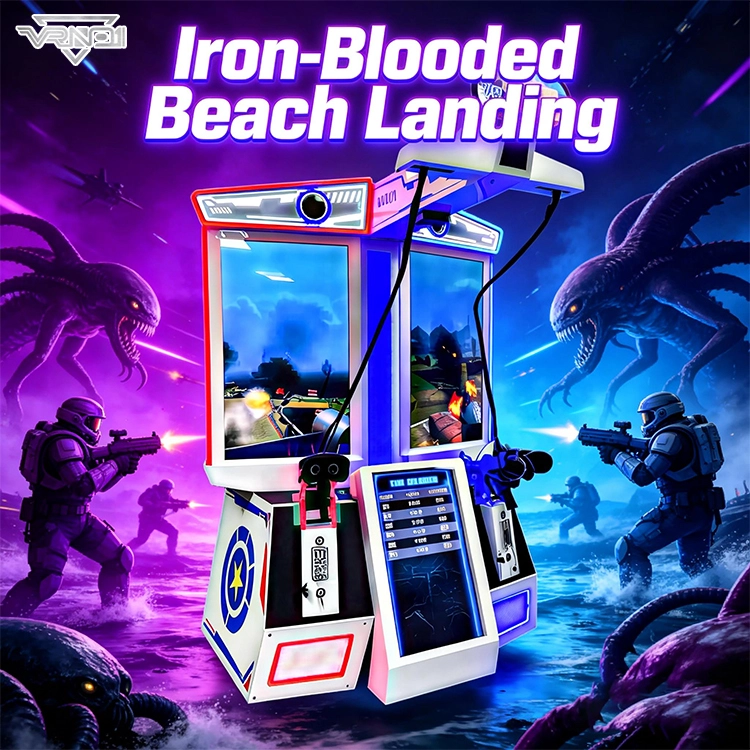
Heavy-Duty Offensive Warfare | Independent Dual-Core Architecture | Zero-Maintenance Suspension System
In the competitive landscape of Location-Based Entertainment (LBE), generic shooters no longer cut it. Enter the VR NO.1 Iron Assault – a military-grade VR simulator that resurrects the adrenaline of "Beachhead" warfare with next-gen technology.
Engineered by VR NO.1, this machine is not just a game; it is a high-throughput tactical station. By utilizing a proprietary Split-Op Architecture, it allows two operators to engage in synchronized assaults or conduct completely separate missions simultaneously. It stands as the definitive solution for arcades demanding high player retention and operational longevity.
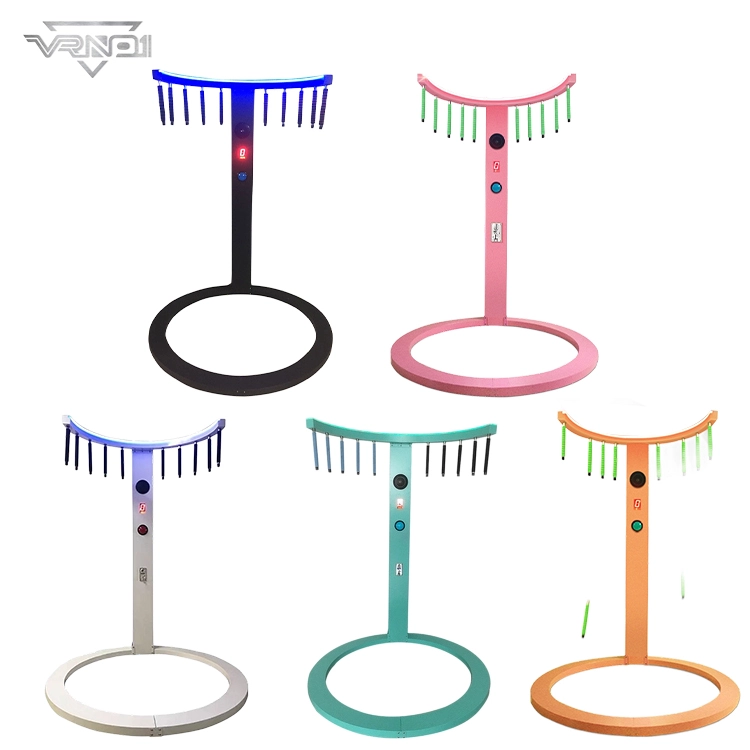
- Realistic Sound: Enhances gaming experience with authentic sounds.
- Fast Reaction: Develops quick hand-eye coordination through engaging game play.
- DIY Kit: Allows for customization and personalization of the baton.
- Metal and Plastic Construction: Durable and robust build quality.
- Coin Operated: Fun for players who enjoy arcade-like experiences.
Want to know more updates?
If you have any technical questions or after-sales needs, please feel free to contact our service team.
We will wholeheartedly provide you with quick response and professional support to ensure the smooth operation of your VR & Arcade project.
 Scan QR Code
Whatsapp: +8618127818571
Scan QR Code
Guangzhou Skyfun Technology Co.,Ltd
skyfunvrgame
skyfun game