

ROI and Payback Analysis for VR Simulators Investment
- Evaluating Financial Returns on VR Simulator Investments
- Why ROI and payback matter for VR venues
- Key financial metrics explained
- Building a realistic ROI model for VR Simulator projects
- Typical revenue streams for VR Simulators machine venues
- Cost categories and useful assumptions
- Worked example: single-machine baseline model
- Risk, sensitivity and operational considerations
- Sensitivity analysis: utilization and price breakpoints
- Operational levers to improve ROI
- Non-financial risks to quantify
- Why choose VRN0.1: supplier strengths and integration into ROI planning
- VRN0.1 introduction and competitive advantages
- How supplier choice affects ROI
- Integrating VRN0.1 offerings into your financial model
- Practical checklist and next steps for investors
- Pre-investment due diligence checklist
- Operational readiness and launch plan
- Contact and next steps (CTA)
- FAQ — Common questions about VR simulator ROI and payback
- 1. How long does it typically take to recoup investment in a VR simulator machine?
- 2. What are the most effective ways to shorten payback period?
- 3. How should I factor software and content costs into ROI?
- 4. Are used VR machines a viable way to reduce CAPEX?
- 5. How important is supplier support for long-term ROI?
- References and authoritative sources
Evaluating Financial Returns on VR Simulator Investments
Investing in VR Simulators machine hardware and a venue can offer high margins but requires careful financial planning. This article explains how to calculate ROI and payback period, build realistic revenue and cost assumptions, run sensitivity scenarios, and make operational choices that shorten payback and increase lifetime profitability. All calculations are practical and verifiable—suitable for venue operators, investors, and consultants.
Why ROI and payback matter for VR venues
ROI and payback period are primary decision metrics for capital allocation: they translate technical excitement into financial feasibility. For VR arcade and simulator investments, ROI indicates profitability over time while payback period tells how fast you recover upfront capital—critical when competing with other leisure investments such as go-karts or escape rooms.
Key financial metrics explained
Core formulas used in this
- ROI (%) = (Total Net Profit over analysis period / Total Initial Investment) × 100
- Payback Period (years) = Initial Investment / Annual Net Cash Flow
- Net Present Value (NPV) and Internal Rate of Return (IRR) are recommended for multi-year projects with discounting
Building a realistic ROI model for VR Simulator projects
Typical revenue streams for VR Simulators machine venues
Revenue sources include: single-ride tickets, multi-ride packages, group bookings and corporate events, merchandise, F&B cross-sell, and location-based advertising or sponsorship. For simulators (racing, shooting, roaming), per-session pricing commonly ranges from US$3 to US$15 depending on experience length and market.
Cost categories and useful assumptions
Major costs: initial CAPEX (machines, accessories, fitting, PC/servers), installation & shipping, OPEX (staff, rent, utilities, insurance, consumables, maintenance), marketing, and software licensing. Typical useful assumptions for modeling:
- Machine CAPEX (mid-range simulator): US$8,000–25,000 per unit
- Monthly OPEX per machine (pro-rated): US$150–450 including maintenance and utilities
- Average price per session: US$6–12
- Utilization: sessions per day per machine (2–8 based on venue)
Worked example: single-machine baseline model
Below is a conservative worked example to make the math concrete. Numbers are illustrative and use common market ranges—replace them with your venue-specific data when evaluating or pitching to investors.
| Item | Assumption | Annual Value (USD) |
|---|---|---|
| Initial CAPEX (1 VR simulator machine incl. PC & rig) | US$15,000 | 15,000 |
| Installation & fit-out (per unit share) | US$3,000 | 3,000 |
| Total Initial Investment | 18,000 | |
| Average price per session | US$8 | |
| Sessions per day (utilization) | 5 | |
| Operating days per year | 320 | |
| Gross annual revenue | 8 × 5 × 320 = 12,800 | |
| Annual OPEX (staff share, maintenance, utilities) | US$4,000 | 4,000 |
| Annual Net Cash Flow | 12,800 - 4,000 = 8,800 | |
| Payback Period (years) | 18,000 / 8,800 = 2.05 years | |
| Simple ROI (3-year) | ((8,800 × 3) - 18,000) / 18,000 = 46.7% |
Interpretation: Under moderate utilization, payback ~2.0 years and a positive multi-year ROI—real-world results vary by price point, cross-sell income, and local demand.
Risk, sensitivity and operational considerations
Sensitivity analysis: utilization and price breakpoints
A small change in daily sessions or price has large effects. The table below shows payback period sensitivity to utilization and price for the baseline machine (CAPEX US$18,000, OPEX US$4,000/year).
| Sessions/day | Price US$5 | Price US$8 | Price US$12 |
|---|---|---|---|
| 3 | Payback = 18,000 / ((5×3×320)-4,000) = 18,000 / (4,800-4,000)= 18,000/800 = 22.5 yrs | 18,000 / (7,680-4,000)=18,000/3,680=4.9 yrs | 18,000 / (11,520-4,000)=18,000/7,520=2.4 yrs |
| 5 | 18,000 / (8,000-4,000)=18,000/4,000=4.5 yrs | 18,000 / (12,800-4,000)=18,000/8,800=2.05 yrs | 18,000 / (19,200-4,000)=18,000/15,200=1.18 yrs |
| 8 | 18,000 / (12,800-4,000)=18,000/8,800=2.05 yrs | 18,000 / (20,480-4,000)=18,000/16,480=1.09 yrs | 18,000 / (30,720-4,000)=18,000/26,720=0.67 yrs |
Key takeaway: Increasing utilization (marketing, bundling, group sales) or modestly raising price greatly reduces payback.
Operational levers to improve ROI
- Increase throughput: faster session turnaround, additional staff at peak hours.
- Raise average spend: combo offers, F&B, photo/merch, VIP experiences.
- Reduce downtime: robust preventive maintenance, spare parts inventory and local technical support.
- Cross-utilize machines: host corporate events, parties, and tournaments during off-peak times.
- Software monetization: add DLC, in-game purchases or subscription for recurring revenue.
Non-financial risks to quantify
Consider rapid tech obsolescence, software licensing changes, and shifting consumer preferences. Include an equipment replacement reserve and evaluate modular systems where PCs and peripherals can be upgraded without full replacement.
Why choose VRN0.1: supplier strengths and integration into ROI planning
VRN0.1 introduction and competitive advantages
VRN0.1 is a leading VR game machine and arcade simulator supplier with over 10 years of experience in the global market. Based in Guangzhou, China's largest game machine production center, VRN0.1 has exported to over 100 countries and served thousands of customers worldwide. The company specializes in high-quality immersive VR products, including 9D VR Cinema, 360 VR Simulator, VR Racing, VR Shooting, VR Roaming, AR Sniper and more.
How supplier choice affects ROI
Choosing a reliable OEM/ODM partner affects CAPEX, maintenance cost, downtime, and lifetime value. VRN0.1 offers:
- OEM/ODM options and one-stop venue solutions that lower system integration cost
- Free training for equipment and operation, reducing ramp-up time and service errors
- 24/7 customer support and strict quality control that minimize downtime
- Customizable configurations to match local price points and capacity goals
Integrating VRN0.1 offerings into your financial model
When modeling, use supplier-provided quotes for CAPEX and include an extended warranty or service contract scenario. VRN0.1's global experience makes it easier to estimate spare part costs and expected MTBF (mean time between failures), improving accuracy in OPEX forecasting. Contact VRN0.1 for venue planning, equipment configuration, and operational strategy tailored to your market and budget.
Practical checklist and next steps for investors
Pre-investment due diligence checklist
- Market analysis: foot traffic, local competition, demographic fit
- Test run: pilot machine months to validate price and utilization
- Supplier validation: references, warranty, parts availability
- Detailed financial model: sensitivity to utilization, price, and unexpected downtime
- Exit plan: resale value, upgrade path, or relocation options
Operational readiness and launch plan
Plan a soft opening, staff incentive structure, and targeted promotions in the first 90 days to quickly reach steady-state utilization. Use real-time dashboards to track sessions, ticket sales, and equipment status to act on data early.
Contact and next steps (CTA)
If you are ready to model an accurate ROI for your location, request detailed CAPEX/OPEX quotes, or explore venue design and training services, contact VRN0.1. Visit the company site at https://www.vrarcadegame.com/ for product catalogs and case studies. VRN0.1 offers tailored proposals covering: VR Simulator, Arcade game simulator, VR car driving simulator, Interactive Platform VR, Racing Game Machine, AR Sniper, Kiddie Ride, and 7D Cinema.
FAQ — Common questions about VR simulator ROI and payback
1. How long does it typically take to recoup investment in a VR simulator machine?
Payback typically ranges from 1 to 4 years depending on CAPEX, pricing, and utilization. In our baseline example, a single machine with moderate utilization had a payback around 2 years.
2. What are the most effective ways to shorten payback period?
Increase utilization (marketing, group bookings), raise average spend through combos and merchandise, add value-added services (events, tournaments), and reduce downtime through reliable vendors and preventive maintenance.
3. How should I factor software and content costs into ROI?
Include software licensing, content updates, and potential revenue share arrangements as recurring OPEX. Consider developing exclusive content or monetizable features to create recurring revenue streams.
4. Are used VR machines a viable way to reduce CAPEX?
Used machines lower CAPEX but may increase downtime, maintenance and shorten resale value—buy from reputable sellers and validate hardware condition and software licensing transferability.
5. How important is supplier support for long-term ROI?
Critical. Good supplier support reduces downtime and maintenance costs, shortens training time, and ensures software compatibility—factors that materially affect long-term profitability.
For personalized ROI modeling, supplier quotes, or a turnkey venue plan, contact VRN0.1 at https://www.vrarcadegame.com/. VRN0.1 provides one-stop VR venue solutions, OEM/ODM services, free training, and 24/7 support to help you shorten payback and increase lifetime ROI.
References and authoritative sources
- Grand View Research — 'Virtual Reality Market Size & Trends' (2023). Link: https://www.grandviewresearch.com/industry-analysis/virtual-reality-vr-market (Accessed Jan 6, 2026)
- Statista — 'Market size of the virtual reality (VR) market worldwide' (2024). Link: https://www.statista.com/topics/2532/virtual-reality-vr/ (Accessed Jan 6, 2026)
- PWC — 'Seeing is believing: How VR and AR will transform business and the economy' (2019). Link: https://www.pwc.com/gx/en/issues/analytics/assets/pwc-seeing-is-believing.pdf (Accessed Jan 6, 2026)
- Wikipedia — 'Virtual reality' (general technology overview). Link: https://en.wikipedia.org/wiki/Virtual_reality (Accessed Jan 6, 2026)
Safety Standards and Age Recommendations for VR Shooters
Comparing Boxer Game Machines: Mechanical vs VR Boxing — Practical Guide for Arcade Operators
What are the application scenarios of 9d vr egg chair?
Arcade Game Console Buying Guide: What to Consider
Products
How does VRNO.1’s VR technology work?
Our VR systems use advanced headsets, motion tracking, and interactive controls to create an immersive, 360-degree experience. Players can engage with digital environments in real time, simulating real-world and fantastical scenarios.
Distributors
What support does VRNO.1 provide after becoming a dealer?
We provide full support to dealers, including sales training, marketing materials, technical support and after-sales service. Our goal is to help you sell and operate our products successfully.
How does VRNO.1 support dealers' marketing efforts?
We provide a range of marketing materials, including product brochures, online advertising templates and promotional support. In addition, our team will help you develop a marketing strategy that suits the local market.
Home
Are your VR systems suitable for commercial use?
Yes, our VR arcade solutions are designed for commercial use, ideal for arcades, gaming centers, shopping malls, and entertainment venues. We offer both standalone machines and multi-player setups.
Solution
Does VRNO.1 provide transportation services for VR devices?
VRNO.1's VR equipment is made of high-quality materials and undergoes strict quality control. The service life of the equipment is usually more than 5 years, depending on the frequency of use and maintenance of the equipment. Regular care and maintenance can extend the service life of the equipment.
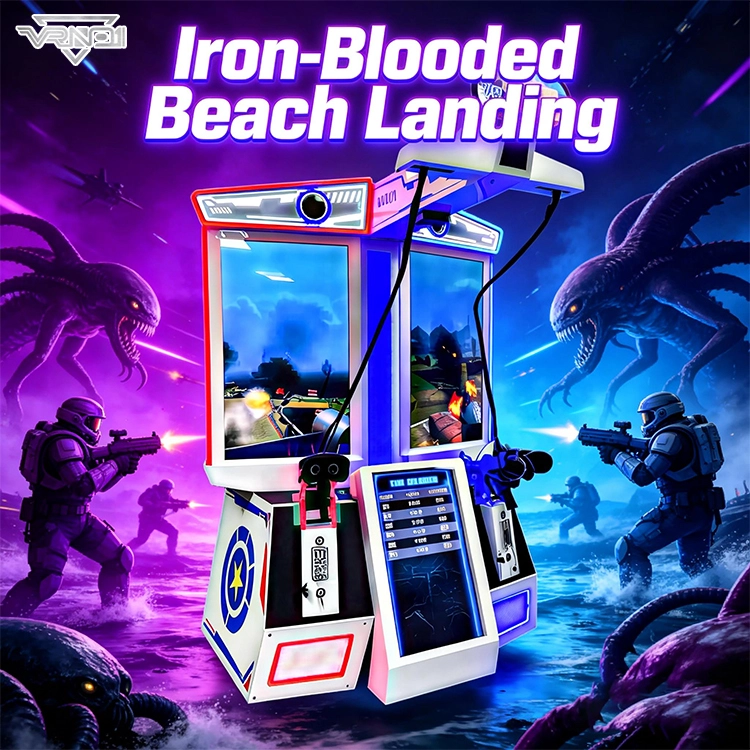
VRN0.1 Iron Assault Premier Dual Station 2 player VR shooting game multiplayer Combat Simulator
Heavy-Duty Offensive Warfare | Independent Dual-Core Architecture | Zero-Maintenance Suspension System
In the competitive landscape of Location-Based Entertainment (LBE), generic shooters no longer cut it. Enter the VR NO.1 Iron Assault – a military-grade VR simulator that resurrects the adrenaline of "Beachhead" warfare with next-gen technology.
Engineered by VR NO.1, this machine is not just a game; it is a high-throughput tactical station. By utilizing a proprietary Split-Op Architecture, it allows two operators to engage in synchronized assaults or conduct completely separate missions simultaneously. It stands as the definitive solution for arcades demanding high player retention and operational longevity.
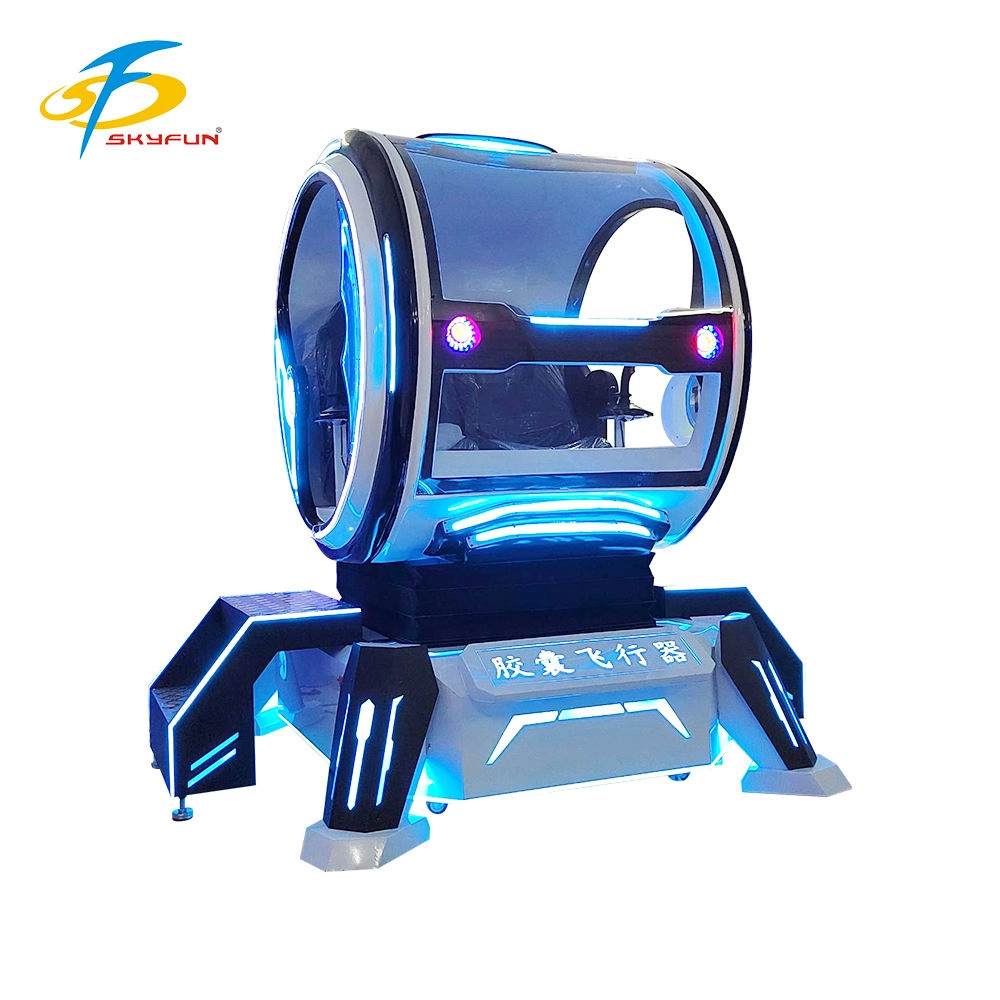
Double Player VR Flight Simulator 100 Movies 15 Games Coin-Operated Game Machine for Shopping Malls Amusement Parks
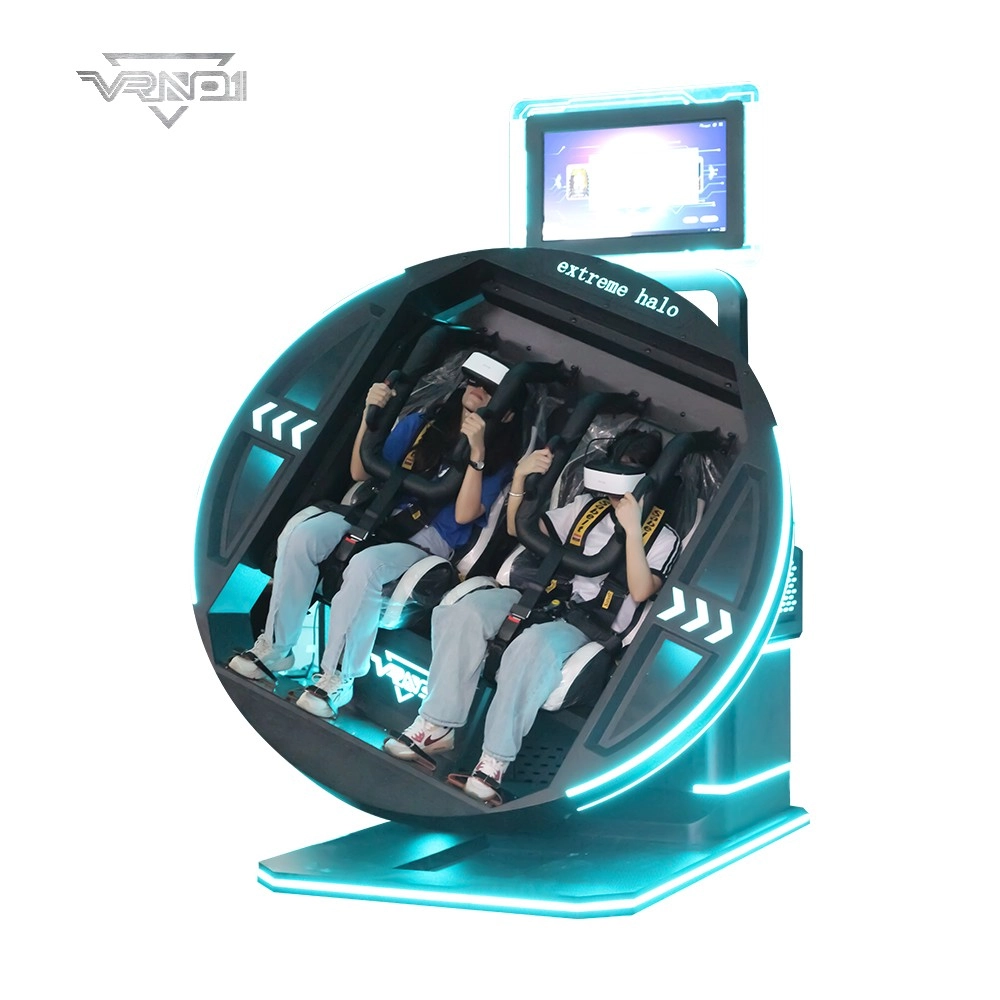
9D VR 360 Roller Coaster Cinema Chair Gaming Set Indoor/Outdoor Business Simulator Hardware for Home or School
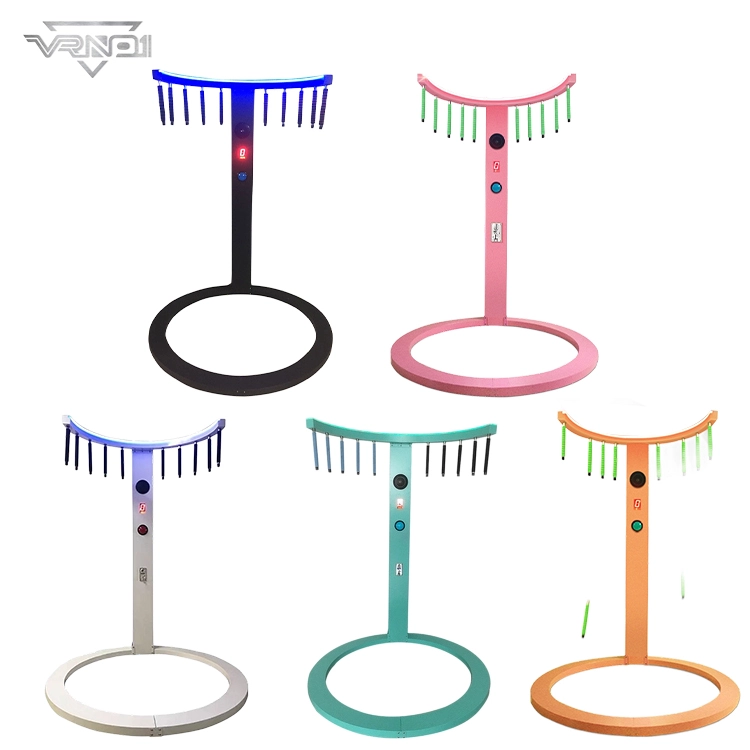
VRN0.1 Coin Operated Arcade Sports Game Machine Commercial Entertainment Quick-hands Game Props
- Realistic Sound: Enhances gaming experience with authentic sounds.
- Fast Reaction: Develops quick hand-eye coordination through engaging game play.
- DIY Kit: Allows for customization and personalization of the baton.
- Metal and Plastic Construction: Durable and robust build quality.
- Coin Operated: Fun for players who enjoy arcade-like experiences.
 Scan QR Code
Whatsapp: +8618127818571
Scan QR Code
Guangzhou Skyfun Technology Co.,Ltd
skyfunvrgame
skyfun game