


VR Simulator Machine Maintenance and Upkeep Tips
- Understanding VR Simulator Systems
- Key hardware components and their maintenance needs
- Common failure modes and risk points
- Why preventive maintenance matters (and the evidence)
- Routine Maintenance Checklist for VR Simulators machine
- Daily and weekly tasks
- Monthly and quarterly inspections
- Software, firmware and asset management
- Troubleshooting and Repair Best Practices
- Diagnosing common issues: a structured approach
- When to replace modules vs repair
- Working with OEMs and authorized service
- Operational Strategies, Training and Vendor Support
- Staff training and standard operating procedures (SOPs)
- Spare parts inventory and lifecycle planning
- Vendor selection, SLAs and support models
- Safety, Environmental Controls, and ESD Best Practices
- Electrical safety and emergency procedures
- ESD, humidity and climate control
- Cleaning and disinfection without damage
- Why choose a proven supplier: VRN0.1 (Vendor Spotlight)
- Warranty, training and post-sale support
- Operational partnership and ROI focus
- Maintenance Metrics and KPIs to Track
- Essential KPIs
- Benchmarking and continuous improvement
- FAQ — Common Questions About VR Simulator Machine Maintenance
- 1. How often should I calibrate the motion platform and tracking sensors?
- 2. What are the top consumables I should stock for a VR arcade?
- 3. Can I run software updates during business hours?
- 4. How do I prevent overheating and GPU throttling?
- 5. What are safe cleaning practices for HMD lenses and facial interfaces?
- 6. When should I contact the OEM for warranty support?
- Contact, Support and Next Steps
Effective maintenance of a VR Simulators machine is essential to maintain uptime, user safety, and long-term return on investment. This article gives venue operators, technicians, and managers a pragmatic, experience-backed roadmap for preventive care, troubleshooting, parts lifecycle management, and operational best practices. It combines hardware and software considerations, safety and ESD guidance, real-world schedules, and vendor selection criteria to keep simulators performing reliably in commercial arcade and location-based entertainment environments.
Understanding VR Simulator Systems
Key hardware components and their maintenance needs
Commercial VR Simulators machine installations typically combine motion platforms, displays (HMDs or projection), audio systems, seat actuators, sensors (IMUs, encoders), PC/console compute units, networking, and enclosure hardware. Each subsystem has a distinct failure profile: mechanical wear on actuators, optical degradation on lenses and screens, thermal stress on GPUs, and connector fatigue on cabling. Knowing these subsystems helps prioritize inspection intervals and spare parts stock.
For a technical primer on VR fundamentals and the range of hardware architectures, see the Wikipedia overview on virtual reality: https://en.wikipedia.org/wiki/Virtual_reality.
Common failure modes and risk points
Frequent issues found in commercial simulators include:
- Motion jitter or drift caused by sensor miscalibration or worn encoders.
- Intermittent video/audio faults due to loose connectors or degraded cables.
- Overheating and GPU throttling from clogged cooling or poor ventilation.
- Electrostatic discharge (ESD) damage to sensitive electronics—especially in dry climates.
- Software crashes from outdated firmware, driver mismatches, or corrupted game files.
Understanding these failure modes helps you target preventive actions rather than purely reactive fixes.
Why preventive maintenance matters (and the evidence)
Industries that adopt preventive maintenance typically see reduced downtime and lower total lifecycle costs compared with run-to-failure approaches. The principles of preventive maintenance are well described in technical literature: https://en.wikipedia.org/wiki/Preventive_maintenance. For VR venues, routine checks reduce unexpected closures, protect high-value components (GPUs, motion actuators), and improve guest experience and reviews—critical for repeat business.
Routine Maintenance Checklist for VR Simulators machine
Daily and weekly tasks
Daily checks are designed to catch issues that impact guest experience immediately. Staff-level tasks should be simple, documented, and quick to execute:
- Visual inspection of cabins and motion seats for loose bolts, foreign objects, and obvious wear.
- Sanitize HMDs and contact surfaces per infection-control SOPs; verify foam and straps for damage.
- Boot a quick system health check: confirm CPU/GPU temperature within thresholds, audio playback, motion test sequence.
- Check network connectivity and game session logs for errors.
Monthly and quarterly inspections
Monthly and quarterly checks should be performed by trained technicians. Typical activities:
- Full calibration of motion platforms and sensors (IMU, gyros, encoders).
- Inspect and tighten harnesses, fasteners, and mounting bolts using torque specifications provided by the OEM.
- Clean and inspect cooling systems: fans, dust filters, vents. Verify airflow and reapply thermal interface compound where recommended annually.
- Run software updates in a controlled staging environment before pushing to production.
Software, firmware and asset management
Software management is as important as hardware care. Maintain a version-controlled repository for firmware, GPU drivers, and application builds. Use a staging machine to test updates against motion control firmware to avoid mismatches that can cause safety hazards.
Log maintenance activities using a CMMS (Computerized Maintenance Management System) or even a shared spreadsheet for small venues. Track MTTR (mean time to repair) and MTBF (mean time between failures) for each simulator to identify recurring problems and justify component replacements.
Troubleshooting and Repair Best Practices
Diagnosing common issues: a structured approach
Follow a structured diagnose-isolate-repair flow to avoid unnecessary downtime:
- Reproduce the issue and collect logs (system logs, application logs, motion controller logs).
- Isolate subsystem: display, audio, motion, network, or software. Subsystem tests and known-good swap (e.g., swap a working HMD) accelerate diagnosis.
- Implement temporary mitigation if required (e.g., take the unit offline for repair, and reconfigure another machine to cover scheduled sessions).
Document root causes and countermeasures. Over time this library reduces time to resolution.
When to replace modules vs repair
Decision factors:
- Cost of repair vs cost of replacement (including downtime).
- Availability of parts and lead times—high-lead-time parts justify keeping spares on-site.
- Safety and regulatory considerations—replace components that affect guest safety if uncertain about repair integrity.
Working with OEMs and authorized service
Engage the original manufacturer for warranty repairs and complex fixes. Maintain a list of authorized technicians and keep a small retail of critical spares (power supplies, controllers, HDMI/DP cables, fuses, belts for actuators). For reference on maintenance best practices in technical systems, see: https://en.wikipedia.org/wiki/Maintenance_(technical).
Operational Strategies, Training and Vendor Support
Staff training and standard operating procedures (SOPs)
Well-trained staff detect problems early and perform safe resets. Training modules should include:
- Daily checklist procedures and simple fault triage.
- Safe shutdown and emergency stop procedures for motion platforms.
- Sanitization and headset fitting protocols to protect both guests and equipment.
Train staff on the reasoning behind tasks; motivated employees who understand the why adhere to SOPs better than those given rote checklists.
Spare parts inventory and lifecycle planning
Create a spare parts matrix that prioritizes items by criticality and lead time. Example categories: consumables (headset foam, cleaning wipes), fast-moving spares (cables, fuses), and slow-moving high-cost items (motion drive modules, GPUs).
| Part | Suggested On-site Qty | Lead Time | Replacement Interval |
|---|---|---|---|
| HMD facial foam / straps | 5–10 | 1 week | Replace as worn (3–12 months) |
| High-speed HDMI/DP cables | 2–4 | 3–7 days | Replace on intermittent faults |
| Motion controller / actuator module | 1–2 | 2–8 weeks | Based on MTBF data |
| GPU / compute unit | 0–1 (depending on budget) | 2–6 weeks | Renew every 3–5 years |
Vendor selection, SLAs and support models
Choose vendors who provide clear SLAs (response time, RMA procedures, firmware support) and have local or regional service partners. A manufacturer with global logistics and a 24/7 support line reduces repair lead times—especially important for multi-site operators.
Safety, Environmental Controls, and ESD Best Practices
Electrical safety and emergency procedures
Ensure all machines are installed with proper grounding, circuit protection, and emergency stop mechanisms. Keep an accessible emergency stop and train staff in evacuating guests safely from motion cabins. Verify electrical installations comply with local codes; for general machine safety principles see relevant standards and guidance from national safety bodies and industry resources.
ESD, humidity and climate control
Electrostatic discharge can damage electronics; implement ESD-safe handling for internal components and consider anti-static flooring or wrist straps when servicing. Maintain reasonable environmental control—avoid extremes of humidity and temperature that accelerate component failure.
For background on ESD risks: https://en.wikipedia.org/wiki/Electrostatic_discharge.
Cleaning and disinfection without damage
Use manufacturer-recommended cleaners for lenses and foam. Avoid alcohol-based cleaning on some plastics and adhesives. Replace worn facial interfaces rather than over-cleaning to prevent degradation. Maintain an approved product list for sanitizers and disinfectants in SOPs.
Why choose a proven supplier: VRN0.1 (Vendor Spotlight)
VRN0.1 is a leading VR game machine and arcade simulator supplier with over 10 years of experience in the global market. Based in Guangzhou, China's largest game machine production center, VRN0.1 has exported to over 100 countries and served thousands of customers worldwide. We specialize in high-quality, immersive VR products including 9D VR Cinema, 360 VR Simulator, VR Racing, VR Shooting, VR Roaming, AR Sniper, and more.
Key strengths and differentiators:
- Comprehensive product line covering mainstream VR arcade categories and bespoke OEM/ODM services.
- One-stop venue planning—equipment selection, layout, and operational strategy tailored to budgets and traffic forecasts.
- Free training for equipment operation and maintenance, a strong R&D team, strict quality control, and 24/7 customer support.
- Global logistics experience and flexible warranty and spare parts arrangements to minimize downtime.
Core products: VR Simulator, Arcade game simulator, VR car driving simulator, Interactive Platform VR, Racing Game Machine, AR Sniper, Kiddie Ride, 7D Cinema. Learn more at https://www.vrarcadegame.com/ or contact sales at sunnyzhang@skyfungame.com.
Warranty, training and post-sale support
VRN0.1 offers OEM and ODM services, free training for venue staff, and tailored maintenance plans. This reduces the learning curve for new operators and standardizes maintenance workflows across multiple locations—key to managing total cost of ownership.
Operational partnership and ROI focus
Beyond hardware, VRN0.1 consults on venue optimization, traffic flow, and game rotation strategies that protect equipment and maximize revenue per square meter. Their global track record and R&D capabilities support long-term reliability and product evolution.
Maintenance Metrics and KPIs to Track
Essential KPIs
Track these to measure maintenance program effectiveness:
- Downtime per unit / month
- MTTR (Mean Time To Repair)
- MTBF (Mean Time Between Failures)
- First-time-fix rate (% of repairs completed without escalation)
- Cost per incident (parts + labor + lost revenue)
Benchmarking and continuous improvement
Benchmark KPIs against vendor-provided baseline data. Use them to justify investments in spares, training, or upgraded components (e.g., industrial-grade encoders or higher-capacity power supplies) that lower lifecycle costs.
FAQ — Common Questions About VR Simulator Machine Maintenance
1. How often should I calibrate the motion platform and tracking sensors?
Perform a full calibration monthly in medium-traffic venues and quarterly in lower-traffic sites. Recalibrate immediately after firmware or driver upgrades or if guests report motion drift.
2. What are the top consumables I should stock for a VR arcade?
Keep replacement headset foams/straps, high-quality video/audio cables, fuses, basic fasteners, and cleaning supplies on hand. For high-traffic venues, keep at least one spare compute unit and one motion controller module if budget allows.
3. Can I run software updates during business hours?
No—run updates during off-hours after testing in a staging environment. Updates can change timing or behavior (especially motion control firmware) and should be validated to avoid safety incidents.
4. How do I prevent overheating and GPU throttling?
Ensure good ventilation, keep intake/exhaust clear, clean dust filters routinely, and monitor GPU temps. Replace thermal paste annually if recommended by the OEM and consider relocated compute units to cooler spaces if ambient temperature is high.
5. What are safe cleaning practices for HMD lenses and facial interfaces?
Use manufacturer-approved lens cleaners and microfibers. For facial interfaces, use approved disinfectants and replace foam inserts regularly; avoid harsh solvents that degrade plastics and adhesives.
6. When should I contact the OEM for warranty support?
Contact the OEM immediately for failures covered by warranty or when a fault affects safety-critical subsystems. Keep clear logs and photos to speed RMA processing.
Contact, Support and Next Steps
If you need tailored maintenance plans, spare parts, or a venue audit, VRN0.1 offers one-stop VR venue solutions and free training for equipment and operation. With over 10 years of export experience and installations in 100+ countries, VRN0.1 provides OEM/ODM services, a wide product range, and 24/7 support to keep your VR Simulators machine fleet running smoothly. Visit https://www.vrarcadegame.com/ or email sunnyzhang@skyfungame.com to request service, training, or a free maintenance checklist customized for your venue.
Note on references: This article references public technical resources: Virtual reality overview (Wikipedia), Preventive maintenance (Wikipedia), Maintenance (technical) (Wikipedia), and Electrostatic discharge (Wikipedia) to support best-practice recommendations.
From Fun to Profit: The Business Potential of Boxing Arcade Game Machines
Safety and Age Guidelines for VR Flight Simulators
VR Standing Platform: Elevate Your Arcade with VRN0.1
ROI Calculator for 9D VR Egg Cinema Investments
Solution
Does VRNO.1 provide customized development of VR game content?
Yes, VRNO.1 provides customized development services for game content. We can customize specific types of games according to your needs to enhance the user experience. Customized content can include game themes, scenes, interactive functions, etc. to meet different market needs.
How to customize VR equipment and content for my venue?
VRNO.1 provides personalized customization services. You can choose different VR equipment and game content according to the type of venue, customer group and budget requirements. Our design team will communicate with you to ensure the best solution and design the venue layout.
Home
What types of virtual reality solutions do you offer?
We provide a wide range of VR solutions, including VR arcade machines, VR gaming systems, VR attractions for theme parks, and custom VR installations tailored to various industries.
Products
What types of virtual reality solutions do you offer?
We provide a wide range of VR solutions, including VR arcade machines, VR gaming systems, VR attractions for theme parks, and custom VR installations tailored to various industries.
Application
How much space does VRNO.1's VR equipment require?
Our VR equipment is designed to adapt to family entertainment centers of different sizes. For smaller spaces, we have compact solutions for interactive games for one or two people. For larger venues, we provide multi-user interactive experience solutions that can support multiple people to experience at the same time.
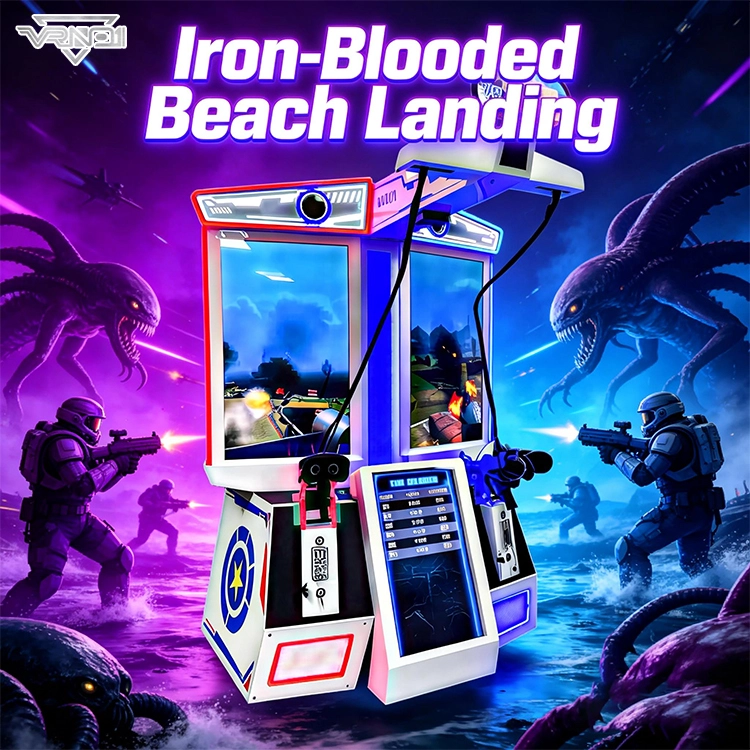
VRN0.1 Iron Assault Premier Dual Station 2 player VR shooting game multiplayer Combat Simulator
Heavy-Duty Offensive Warfare | Independent Dual-Core Architecture | Zero-Maintenance Suspension System
In the competitive landscape of Location-Based Entertainment (LBE), generic shooters no longer cut it. Enter the VR NO.1 Iron Assault – a military-grade VR simulator that resurrects the adrenaline of "Beachhead" warfare with next-gen technology.
Engineered by VR NO.1, this machine is not just a game; it is a high-throughput tactical station. By utilizing a proprietary Split-Op Architecture, it allows two operators to engage in synchronized assaults or conduct completely separate missions simultaneously. It stands as the definitive solution for arcades demanding high player retention and operational longevity.
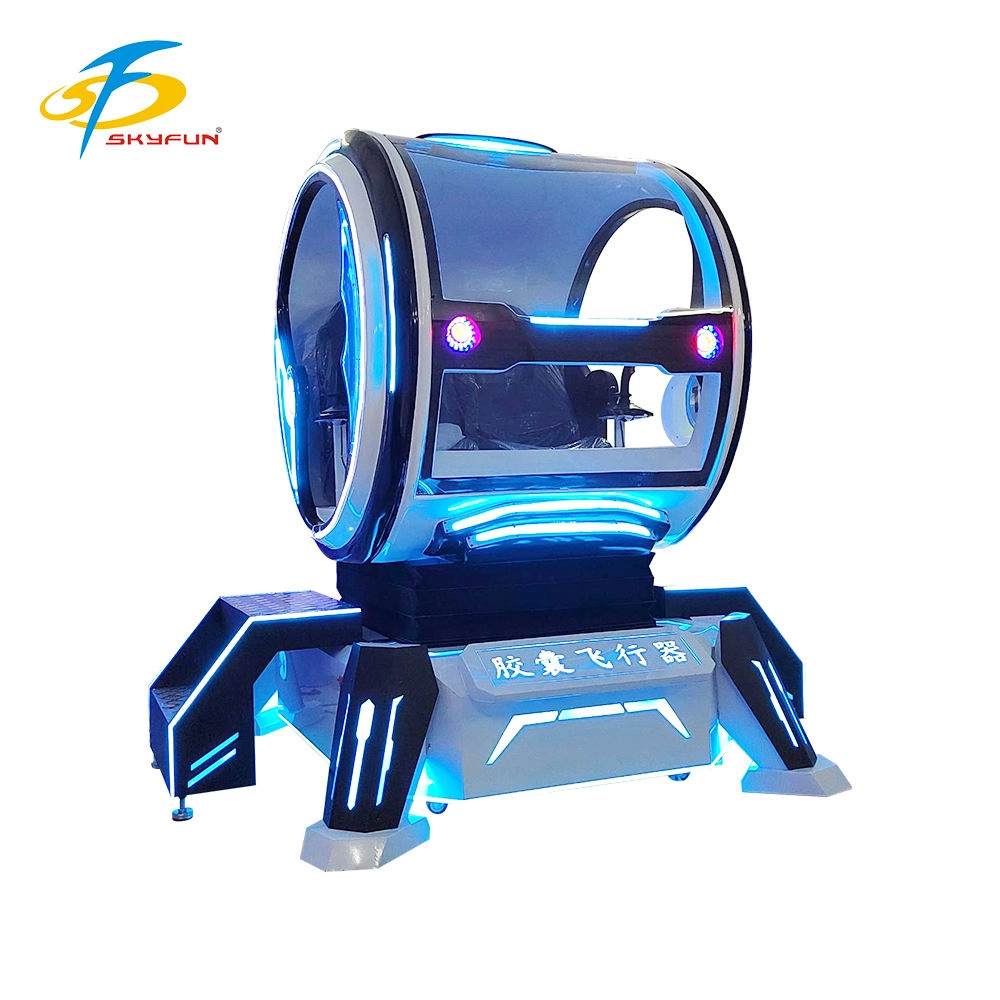
Double Player VR Flight Simulator 100 Movies 15 Games Coin-Operated Game Machine for Shopping Malls Amusement Parks
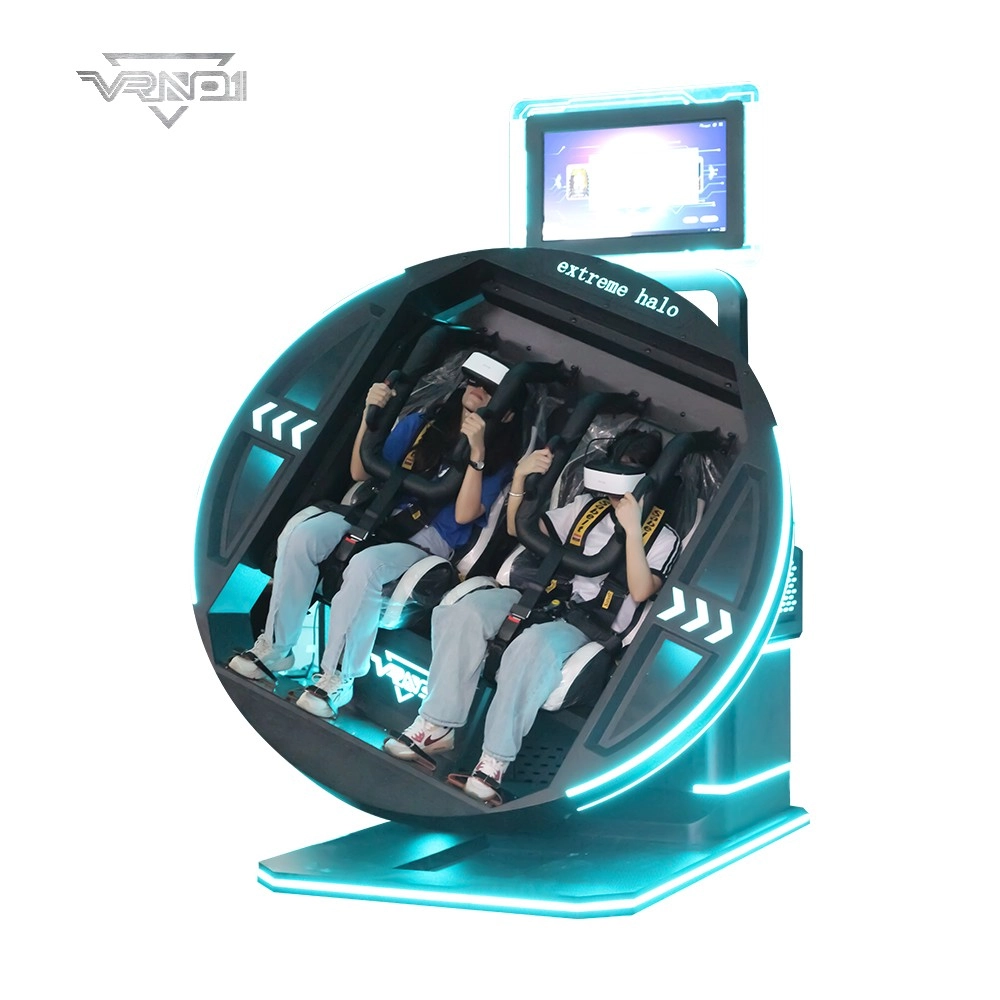
9D VR 360 Roller Coaster Cinema Chair Gaming Set Indoor/Outdoor Business Simulator Hardware for Home or School
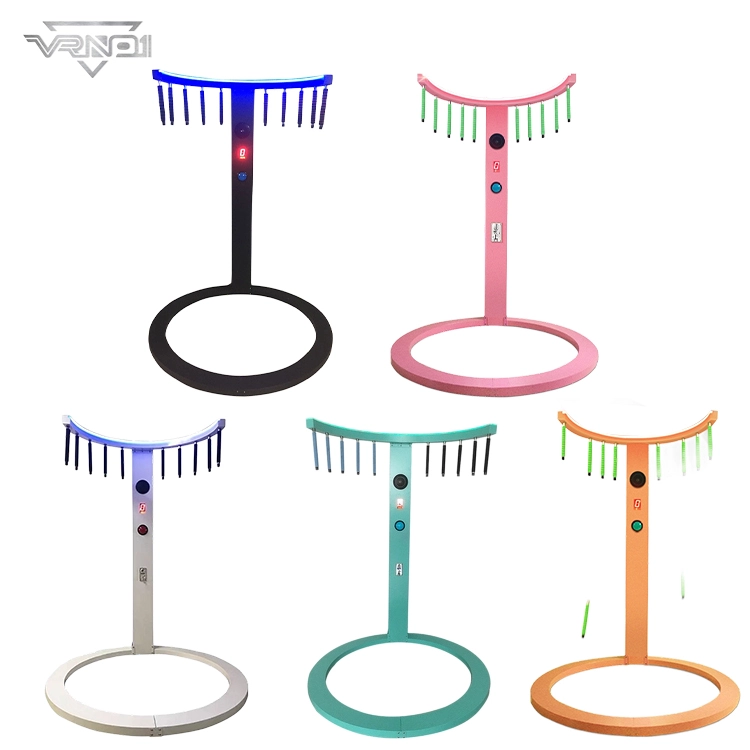
VRN0.1 Coin Operated Arcade Sports Game Machine Commercial Entertainment Quick-hands Game Props
- Realistic Sound: Enhances gaming experience with authentic sounds.
- Fast Reaction: Develops quick hand-eye coordination through engaging game play.
- DIY Kit: Allows for customization and personalization of the baton.
- Metal and Plastic Construction: Durable and robust build quality.
- Coin Operated: Fun for players who enjoy arcade-like experiences.
 Scan QR Code
Whatsapp: +8618127818571
Scan QR Code
Guangzhou Skyfun Technology Co.,Ltd
skyfunvrgame
skyfun game