


ROI Analysis: Adding a VR Flight Simulator to Your Arcade
- How a VR Flight Simulator Can Transform Your Arcade's Revenue Mix
- Why consider a vr flight simulator for your arcade?
- Key business questions this ROI analysis answers
- Market Context: Demand Signals for vr flight simulator and location-based VR
- Industry trends that justify the investment
- Upfront Costs: What you’ll pay to add a vr flight simulator
- Equipment, installation, and initial setup
- Operating Costs and Capacity: Inputs for revenue modeling
- Typical operating cost line items and assumptions
- Revenue Scenarios: Conservative, Base Case, and Optimistic
- Model assumptions
- Sensitivity Analysis: What drives upside and downside risk?
- Most impactful variables
- Operational Considerations: Space, staffing, and safety for a vr flight simulator
- Site requirements and throughput optimization
- Marketing & Pricing Strategies to Maximize ROI
- Tactics proven for vr arcade attractions
- Choosing a Supplier: Why manufacturer expertise and service matter
- Key supplier evaluation criteria for a vr flight simulator
- Supplier Spotlight: VRN0.1 — a partner for scalable vr flight simulator deployments
- Why VRN0.1 can shorten your path to positive ROI
- Risk Checklist and Mitigations
- Common pitfalls and how to avoid them
- Financial Takeaways: Is a vr flight simulator a good investment?
- Decision framework
- FAQ — Frequently Asked Questions about vr flight simulator ROI
- 1. How much space do I need for a vr flight simulator?
- 2. What is a realistic session price for a vr flight simulator?
- 3. How quickly will I see ROI?
- 4. What are the most common causes of downtime and how can I prevent them?
- 5. Should I buy or lease/finance a vr flight simulator?
- 6. Can I operate a vr flight simulator with one attendant?
- 7. How important is content rotation?
- References
How a VR Flight Simulator Can Transform Your Arcade's Revenue Mix
Why consider a vr flight simulator for your arcade?
Location-based entertainment (LBE) operators increasingly add immersive attractions to diversify revenue and attract repeat visits. A vr flight simulator — a dedicated attraction combining VR visuals, motion and flight control interfaces — targets families, teens, corporate groups, and serious sim-enthusiasts. The core s are clear: increase average spend per visit, lengthen dwell time, and command High Quality pricing compared with typical arcade cabinets.
Key business questions this ROI analysis answers
This article helps you determine: initial investment and ongoing costs, reasonable session pricing and utilization assumptions, projected annual revenue and gross margin, payback period, and sensitivity to occupancy and price. We also cover space and staffing requirements, marketing tactics, risk management, and supplier selection — including why partnering with an experienced manufacturer like VRN0.1 matters.
Market Context: Demand Signals for vr flight simulator and location-based VR
Industry trends that justify the investment
Location-based VR continues to grow as consumers seek social, shareable experiences. Global VR hardware and LBE segments have shown multi-year growth driven by improved headsets, motion platforms, and content. Operators who add differentiated attractions — like a flight simulator with authentic controls and motion feedback — can stand out from standard VR pods or console racing machines.
Sources indicate robust growth for location-based VR markets (see references). While macro growth helps, local demand and venue mix ly determine financial outcomes — which is why this analysis focuses on realistic, venue-level numbers rather than headline market size alone.
Upfront Costs: What you’ll pay to add a vr flight simulator
Equipment, installation, and initial setup
Commercial vr flight simulator systems vary by fidelity. For the purposes of ROI scenarios we categorize three tiers and provide typical price ranges and one-time costs. These are industry-typical ranges; get formal quotes for precise budgeting.
| Item | Basic (budget) | Mid-range (most common) | High Quality (high-end) |
|---|---|---|---|
| Equipment (sim + headset + controls) | $12,000 | $35,000 | $60,000 |
| Motion platform / seat rig | $3,000 | $8,000 | $18,000 |
| Software/licenses & content | $1,000 | $3,000 | $7,000 |
| Installation & training | $1,000 | $2,000 | $3,000 |
| Site works (flooring, power) | $500 | $2,000 | $5,000 |
| Total initial CAPEX (approx.) | $17,500 | $50,000 | $93,000 |
Notes: Prices reflect commercial-grade hardware, warranties and basic content packages. High Quality systems include higher-fidelity motion and multiple content titles. Financing, customs and shipping (if importing) add cost; consult your supplier for total landed cost.
Operating Costs and Capacity: Inputs for revenue modeling
Typical operating cost line items and assumptions
Recurring costs include staff time, maintenance & parts, electricity, software license renewals, insurance, and consumables (cleaning and hygiene for headsets). Below are conservative monthly assumptions used in our projections.
| Line item | Monthly cost (estimate) |
|---|---|
| Staffing (pro-rated operator) | $600 |
| Maintenance & parts (incl. consumables) | $150 |
| Electricity | $50 |
| Software license / content updates | $50 |
| Insurance & misc | $100 |
| Total monthly OPEX | $950 |
Capacity and pricing assumptions (common for vr flight simulator): typical session length ranges 8–15 minutes. With changeover and brief briefing, assume 4 sessions/hour for a single-seat attraction. Hourly capacity = 4; daily capacity = 32 (8-hour day) to 64 (16-hour day). Operators selling $15 per 10-minute session are realistic in many markets, though High Quality simulators can charge $20–$40 for longer or multi-player experiences.
Revenue Scenarios: Conservative, Base Case, and Optimistic
Model assumptions
We run three scenarios using the mid-range CAPEX ($50,000) as the example. Key variables: session price, average sessions/day (utilization), and days open/year (assume 340 to allow maintenance/holidays).
| Scenario | Price per session | Avg sessions/day | Days/year | Annual Gross Revenue | Annual OPEX | Annual Net (Revenue - OPEX) | Payback (years) |
|---|---|---|---|---|---|---|---|
| Conservative | $12 | 16 | 300 | $57,600 | $11,400 | $46,200 | ~1.08 |
| Base Case | $15 | 24 | 340 | $122,400 | $11,400 | $111,000 | ~0.45 |
| Optimistic | $20 | 32 | 340 | $217,600 | $11,400 | $206,200 | ~0.24 |
Explanation: Annual gross revenue = price × sessions/day × days/year. Annual OPEX = monthly OPEX × 12 (we used $950/month for the mid-range machine plus a small marketing reserve included in operator budgets). Payback = CAPEX / Annual Net. The base case shows a payback well under 1 year for a $50,000 system under healthy utilization — illustrating why many operators view immersive attractions as high-margin investments.
Sensitivity Analysis: What drives upside and downside risk?
Most impactful variables
- Utilization (sessions/day): single biggest lever. Improving marketing, bundling, and walk-by visibility increases throughput.
- Price per session: quality of experience and perceived novelty allow High Quality pricing; discounts and coupons can be used tactically without destroying margins.
- Downtime: mechanical or software downtime directly cuts revenue. Service contracts, spare parts, and training reduce risk.
- Space allocation: dedicating a compact footprint to a high-revenue attraction typically increases revenue per square foot vs. cabinets.
Example: if sessions/day falls from 24 to 12 in the base case, annual gross revenue halves and payback extends from ~0.45 years to >0.9 years. Conversely, combining peak pricing or group packages can materially shorten payback.
Operational Considerations: Space, staffing, and safety for a vr flight simulator
Site requirements and throughput optimization
Space: a single-seat vr flight simulator with motion rig typically requires 6–12 m² (65–130 ft²) including queue. Two-seat or cockpit-style units require more. Power: most units run on standard commercial power but verify motion platform peak draw. Ventilation and sightlines for attendants matter for safety and supervision.
Staffing: one trained operator per attraction is common (shared across multiple attractions during slow periods). Operators are responsible for safety briefings, headset hygiene, and upsell. Training reduces breakage and improves uptime — include vendor-provided training in purchase negotiations.
Hygiene & safety: establish cleaning protocols for headsets, safety harness checks for motion rigs, and age/health warnings for customers (e.g., motion sickness). Maintain incident logs and insurance documentation.
Marketing & Pricing Strategies to Maximize ROI
Tactics proven for vr arcade attractions
- Tiered pricing: standard sessions, High Quality longer experiences, or group rates for parties and corporate team-building.
- Bundling: sell the simulator as part of a ‘High Quality experience’ package with food or arcade credits.
- FOMO & limited runs: rotate content or host leaderboard events to encourage repeat visits.
- Local partnerships: hotels, tourist information centers and event planners can drive group bookings.
- Digital marketing: geo-targeted ads and highlight reels (short clips of customers) perform well on social platforms.
Choosing a Supplier: Why manufacturer expertise and service matter
Key supplier evaluation criteria for a vr flight simulator
When evaluating vendors, prioritize:
- Proven LBE experience and global references.
- Warranty terms, spare parts availability, and local support or reseller network.
- Quality of content and flexibility to add or swap titles (to avoid stale offerings).
- Training and operational documentation included in the purchase.
- Ability to provide OEM/ODM customization if you want branded or co-branded experiences.
Supplier Spotlight: VRN0.1 — a partner for scalable vr flight simulator deployments
Why VRN0.1 can shorten your path to positive ROI
VRN0.1 is a leading VR game machine and arcade simulator supplier with over 10 years of global experience. Based in Guangzhou — China's largest game machine manufacturing center — VRN0.1 has exported to 100+ countries and served thousands of customers. Their product lineup includes VR Simulator, Arcade Game Simulator, VR Car Driving Simulator, Interactive Platform VR, Racing Game Machine, AR Sniper, Kiddie Ride, and 7D Cinema.Key advantages VRN0.1 offers:
- Comprehensive product range for bundled venue setups (one-stop VR venue solutions).
- OEM/ODM capability and content customization for distinctive branding and experiences.
- Free training for equipment operation and venue management to reduce downtime and improve throughput.
- Strong R&D team and strict quality control, helping ensure reliability and long-term uptime.
- 24/7 customer support and tailored venue planning and operational strategies to meet budget and site needs.
These strengths reduce the two biggest threats to ROI — downtime and low utilization — by improving reliability and supporting marketing/operation competence. Learn more at https://www.vrarcadegame.com/.
Risk Checklist and Mitigations
Common pitfalls and how to avoid them
- Overestimating demand: run localized test campaigns or soft-launch pricing to measure real-world traction before committing multiple units.
- Under training staff: insist on vendor training and write KPI-based SOPs for cleaning and briefings.
- Poor content rotation: negotiate content updates or DLC packages to keep the attraction fresh.
- Ignoring local regulations: check safety, age restrictions and electrical codes in your jurisdiction prior to installation.
Financial Takeaways: Is a vr flight simulator a good investment?
Decision framework
If your venue can sustain average throughput of ~20–30 sessions/day at $15+ per session, a mid-range vr flight simulator can pay back in under a year and deliver strong operating margins thereafter. Even conservative utilization delivers attractive returns relative to most cabinet investments because the per-session price and experience differentiation are high.
Key actions before purchase: obtain multiple supplier quotes, run a site feasibility (space & power), pilot marketing to estimate demand, and secure a service/warranty plan. With careful planning and the right partner, adding a vr flight simulator can elevate your arcade's revenues, customer dwell times, and brand positioning.
FAQ — Frequently Asked Questions about vr flight simulator ROI
1. How much space do I need for a vr flight simulator?
Single-seat motion rigs typically need 6–12 m² (65–130 ft²) including queuing area. Larger or cockpit-style dual rigs need more. Confirm footprint and clearance requirements with your supplier before purchase.
2. What is a realistic session price for a vr flight simulator?
Typical commercial pricing ranges from $12 to $25 per short session (8–15 minutes). High Quality offerings or extended missions can justify $30–$45. Price according to your market, content value, and local competition.
3. How quickly will I see ROI?
Payback depends on price and utilization. Using the mid-range $50,000 CAPEX example, a base case with 24 sessions/day at $15 per session indicated payback in under one year. Conservative scenarios lengthen payback to ~1 year. Use the provided sensitivity analysis to model your venue.
4. What are the most common causes of downtime and how can I prevent them?
Top causes include mechanical wear, software crashes, and headset hygiene issues. Mitigations: service contracts, spare parts inventory, staff training, regular software updates, and vendor remote support.
5. Should I buy or lease/finance a vr flight simulator?
Financing reduces upfront strain and can be attractive when projected cash flows comfortably cover payments. Leasing may also let you upgrade hardware more frequently. Buying is best if you plan long-term and want maximum margin after payback.
6. Can I operate a vr flight simulator with one attendant?
Yes—many operators run one attendant per unit during peak hours and share staff across attractions during slow periods. Ensure attendants are well-trained to keep cycles short and safe.
7. How important is content rotation?
Very important. New or seasonal content drives repeat visits and can justify price High Qualitys. Negotiate content updates and a roadmap with your vendor.
Want help modeling payback for your specific venue or seeing product options? Contact VRN0.1 for tailored venue planning, equipment configuration, free training and 24/7 support: https://www.vrarcadegame.com/.
References
- Grand View Research — Location-based Virtual Reality Market Size, Share & Trends Analysis Report. https://www.grandviewresearch.com/industry-analysis/location-based-virtual-reality-market (accessed 2024-03-10).
- Statista — Virtual Reality (VR) market size worldwide 2016-2027. https://www.statista.com/statistics/680869/global-virtual-reality-vr-market-size/ (accessed 2024-04-01).
- IBISWorld — Arcade Centers Industry in the US (market research and industry stats). https://www.ibisworld.com/ (accessed 2024-05-12).
- U.S. Energy Information Administration — Electricity Data (commercial electricity price indicators). https://www.eia.gov/ (accessed 2024-02-15).
- VRN0.1 Company website — VRN0.1 product and company information. https://www.vrarcadegame.com/ (accessed 2025-11-01).
Contact VRN0.1 for product catalogs, site-specific ROI models, and a free consultation: https://www.vrarcadegame.com/ — let an experienced supplier help you configure the right vr flight simulator lineup for your budget and market.
Content Licensing and Legal Issues for VR Arcades
The latest trends for vr cinema multiplayer in us 2026 | VRN0.1 Ultimate Insights
How to Train Staff for VR Arcade Operations
The B2B Buyer’s Guide to 9d vr simulator
Solution
How to get technical support if the device fails?
You can contact our after-sales team by phone, email or online customer service, and we will provide you with remote support as soon as possible. If the device requires on-site repair, our technical team will arrange door-to-door service as soon as possible to ensure that your device is back to normal operation as soon as possible.
Does the VR device consume a lot of power?
Our VR devices are designed with energy efficiency in mind. The power consumption of the device is low and suitable for long-term use. The specific power consumption will vary depending on the type of device and frequency of use, and usually runs at standard voltage.
Does VRNO.1 provide transportation services for VR devices?
VRNO.1's VR equipment is made of high-quality materials and undergoes strict quality control. The service life of the equipment is usually more than 5 years, depending on the frequency of use and maintenance of the equipment. Regular care and maintenance can extend the service life of the equipment.
What hardware requirements does VRNO.1's VR device require?
VRNO.1's VR device is designed with different venue requirements in mind. The required hardware includes high-performance computers, VR helmets, motion trackers, motion seats, etc. We will provide a complete list of hardware and equipment according to your needs and ensure that all hardware is perfectly compatible.
Application
Is the VR device suitable for all family members?
Yes, VRNO.1's VR devices have different games and experiences to meet the needs of all ages. Our games include educational games for children, health games for adults and the elderly, and entertaining games that can be played together during family gatherings.
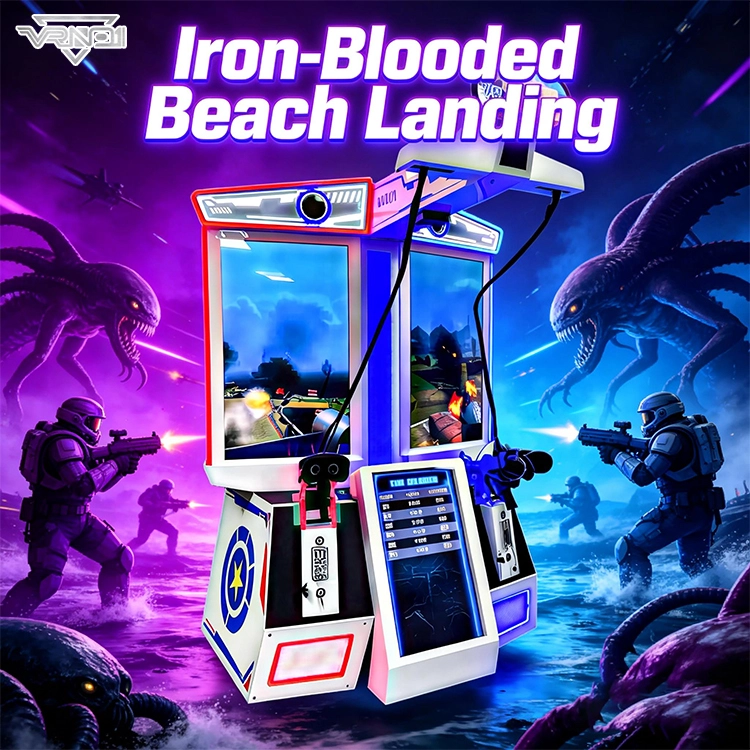
VRN0.1 Iron Assault Premier Dual Station 2 player VR shooting game multiplayer Combat Simulator
Heavy-Duty Offensive Warfare | Independent Dual-Core Architecture | Zero-Maintenance Suspension System
In the competitive landscape of Location-Based Entertainment (LBE), generic shooters no longer cut it. Enter the VR NO.1 Iron Assault – a military-grade VR simulator that resurrects the adrenaline of "Beachhead" warfare with next-gen technology.
Engineered by VR NO.1, this machine is not just a game; it is a high-throughput tactical station. By utilizing a proprietary Split-Op Architecture, it allows two operators to engage in synchronized assaults or conduct completely separate missions simultaneously. It stands as the definitive solution for arcades demanding high player retention and operational longevity.
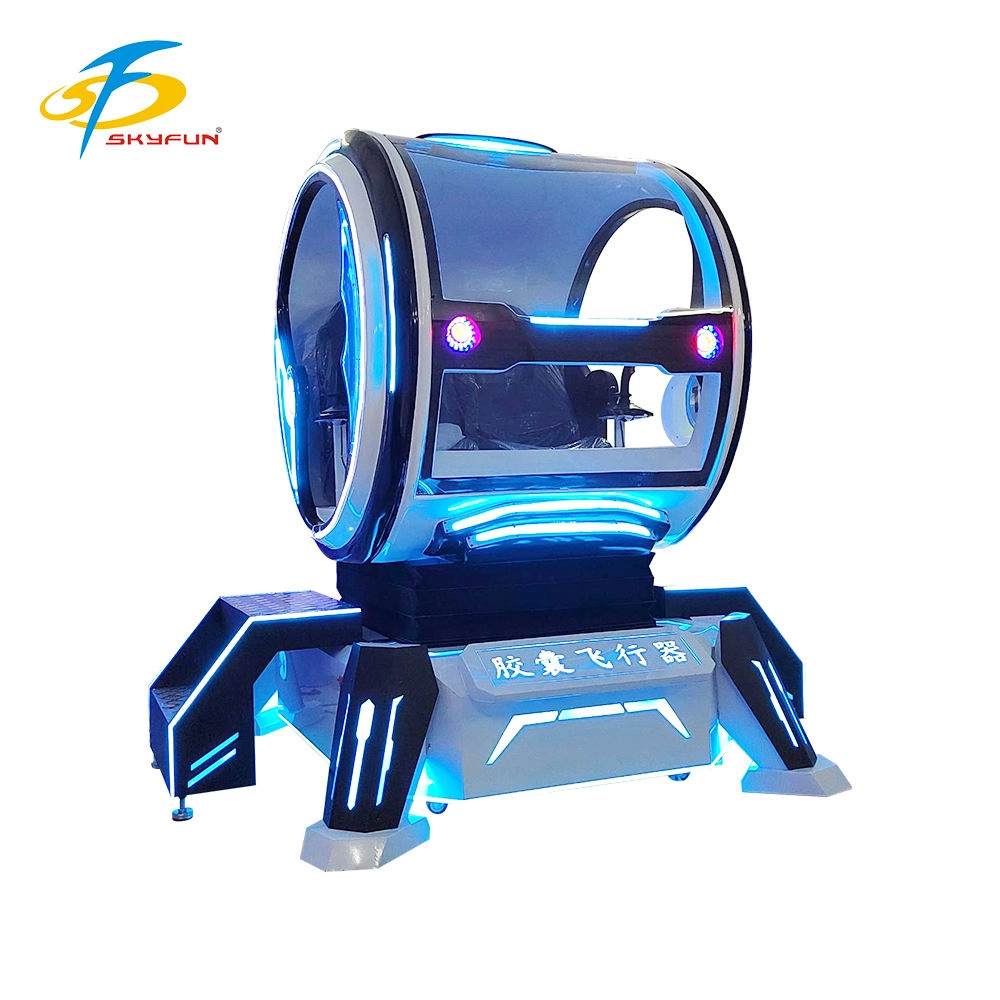
Double Player VR Flight Simulator 100 Movies 15 Games Coin-Operated Game Machine for Shopping Malls Amusement Parks
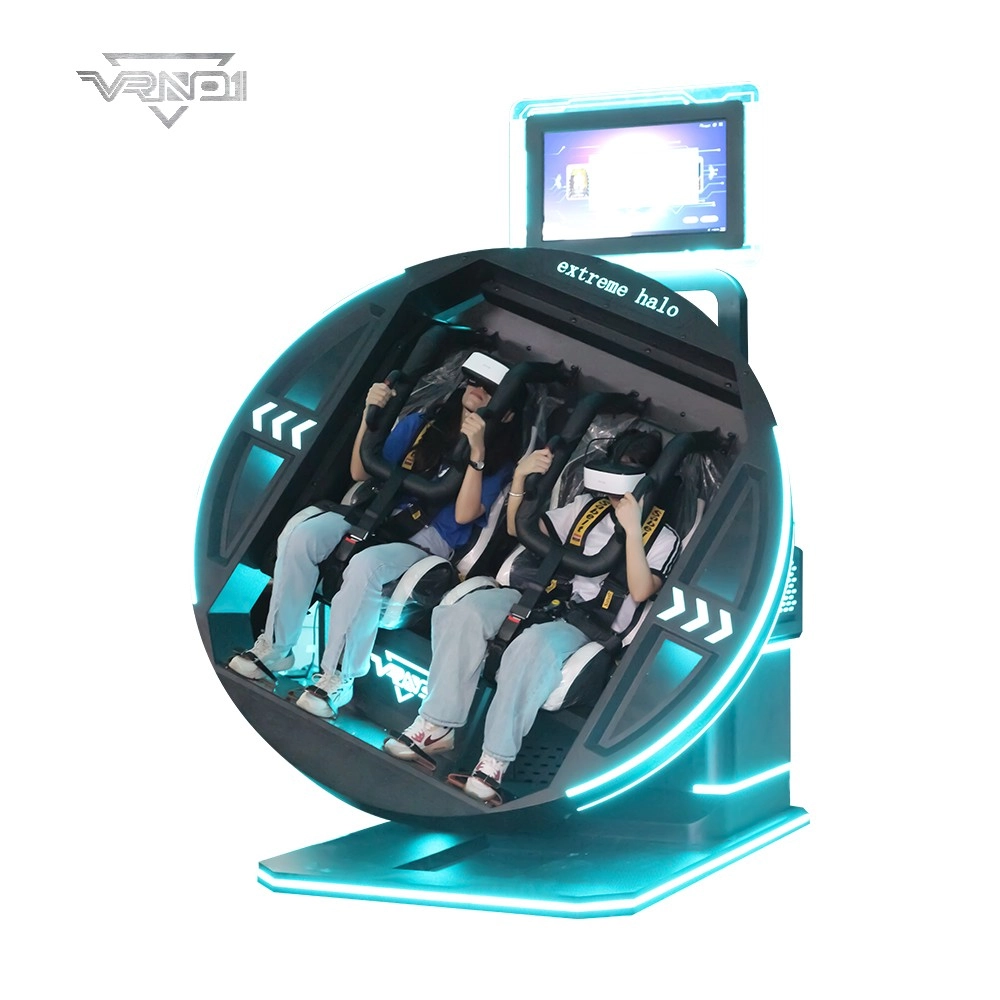
9D VR 360 Roller Coaster Cinema Chair Gaming Set Indoor/Outdoor Business Simulator Hardware for Home or School
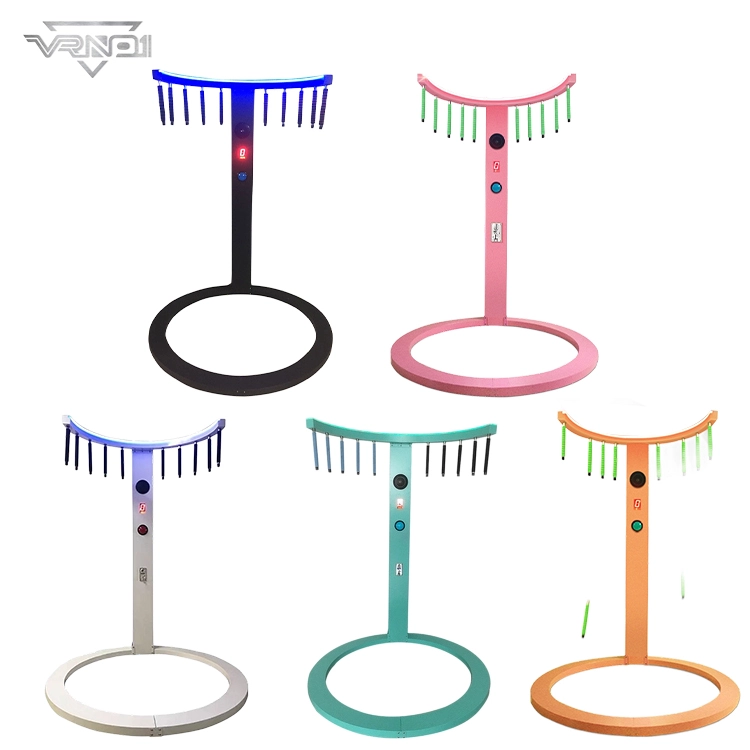
VRN0.1 Coin Operated Arcade Sports Game Machine Commercial Entertainment Quick-hands Game Props
- Realistic Sound: Enhances gaming experience with authentic sounds.
- Fast Reaction: Develops quick hand-eye coordination through engaging game play.
- DIY Kit: Allows for customization and personalization of the baton.
- Metal and Plastic Construction: Durable and robust build quality.
- Coin Operated: Fun for players who enjoy arcade-like experiences.
 Scan QR Code
Whatsapp: +8618127818571
Scan QR Code
Guangzhou Skyfun Technology Co.,Ltd
skyfunvrgame
skyfun game