


ROI and Revenue Models for VR Flight Simulator Operators
- Market context and business objectives
- Why vr flight simulator fits into modern entertainment venues
- Demand signals and credible industry references
- Revenue models and pricing strategies
- Pay-per-play / Per-session pricing
- Time-based, memberships, and bundles
- B2B training, events, and corporate bookings
- Cost structure and ROI calculation
- Typical capex and opex items
- Sample ROI model — conservative scenario
- Revenue comparison: models and margins
- Scaling, operations and supplier selection
- Operational levers to increase utilization
- Reliability, maintenance and warranties
- Supplier selection and case: VRN0.1
- Practical tips and growth tactics
- Cross-promotion and bundling
- Data-driven marketing
- Compliance, certification and training use-cases
- FAQ
- 1. What is a realistic payback period for a vr flight simulator?
- 2. How should I price sessions for a vr flight simulator?
- 3. Can vr flight simulators be used for commercial training?
- 4. What are the main operational risks?
- 5. How many units should a new venue start with?
- 6. What KPIs should I track?
- Closing and contact
I’ve consulted with VR arcades and simulator venues for years, and when operators ask me about the financial viability of a vr flight simulator, they want two things: a repeatable revenue model and a realistic path to ROI. In this article I explain the principal revenue streams for VR flight simulation operations, outline typical cost structures, provide sample ROI calculations you can adapt to your market, and explain operational levers—pricing, scheduling, bundling, and B2B services—that drive profit. I also discuss supplier selection and why working with an experienced OEM/ODM matters for long-term margin and uptime.
Market context and business objectives
Why vr flight simulator fits into modern entertainment venues
Flight simulation in VR combines the immersive attraction of virtual reality with the perceived realism of a cockpit, motion base, and professional-grade visuals. Customers pay for a convincing, memorable experience rather than commodity gameplay. This positions vr flight simulator offerings between high-end arcade attractions (e.g., VR racing, 9D cinema) and specialized training simulators used in industry.
For operators, that hybrid positioning translates into higher price points and diverse monetization paths: single-ticket sales, time-based sessions, memberships, corporate training, parties, and events. My recommendations are driven by the recognition that customer willingness-to-pay and repeat visit potential determine sustainable ARPU (average revenue per user).
Demand signals and credible industry references
Virtual reality and immersive entertainment have grown steadily as consumer experiences and enterprise tools. The general VR domain is summarized by Wikipedia (Virtual reality) which notes rapid technology improvements and expanded consumer adoption (Wikipedia: Virtual reality). Flight simulators historically have been both entertainment and training devices; their dual nature supports both B2C and B2B monetization (Wikipedia: Flight simulator). Industry analyses such as PwC’s VR/AR reports provide macro evidence that immersive tech can create new service and training revenue streams (PwC VR/AR report).
Revenue models and pricing strategies
Pay-per-play / Per-session pricing
This is the simplest model: customers purchase a single flight session, typically priced by time (e.g., 10–30 minutes). It works well in high-footfall locations and tourist areas. Key levers: session length, peak/off-peak pricing, and conversion funnels (walk-in vs reservation).
Time-based, memberships, and bundles
Time-based passes (hour packs), monthly memberships, or bundle discounts (e.g., flight + VR shooting) increase lifetime value and smooth revenue. Memberships are particularly effective where repeat visitation exists—local arcades, entertainment centers, universities. I often advise a tiered membership (e.g., Standard 2 hrs/month, Pro 8 hrs/month) to capture both casual and frequent users.
B2B training, events, and corporate bookings
Offering certified or customized flight training packages, team-building events, or simulation sessions for film/VFX/education diversifies income and typically commands higher margins. Corporate rates, workshops, and school field trips can fill mid-week hours. Structuring a day rate or hourly hire for the entire simulator is straightforward and lucrative when marketed correctly.
Cost structure and ROI calculation
Typical capex and opex items
Operators must budget both upfront capital (hardware, installation, motion platform, cockpit, PC and screens, software licenses) and ongoing operating expenses (rent, staff, maintenance, utilities, insurance, marketing). Quality control and supplier reliability reduce lifecycle costs and downtime.
Sample ROI model — conservative scenario
Below I present a conservative, illustrative ROI model for a single high-quality vr flight simulator unit. These are example figures; replace with your local costs and occupancy assumptions.
| Item | Assumption | Value (USD) |
|---|---|---|
| Initial equipment cost (cockpit + motion base + PC + software) | One-time | $28,000 |
| Installation & training | One-time | $2,000 |
| Monthly rent & utilities (allocated) | Monthly | $1,200 |
| Staffing & maintenance | Monthly | $1,000 |
| Price per 20-minute session | Consumer ticket | $18 |
| Operating hours per day | Average | 10 |
| Sessions per hour | Fixed, 20-min session | 3 |
| Average utilization | Conservative | 35% |
Revenue calculation (monthly):
- Potential sessions/day = 10 hours * 3 = 30
- Actual sessions/day = 30 * 35% = 10.5 ≈ 10 sessions
- Daily revenue = 10 * $18 = $180
- Monthly revenue (30 days) = $5,400
- Monthly operating costs (rent+staff+maintenance) = $2,200
- Gross monthly profit = $5,400 - $2,200 = $3,200
- Payback period (capex $30,000) = $30,000 / $3,200 ≈ 9.4 months
This conservative example shows sub-12-month payback under modest utilization. Real results vary: higher prices, better marketing, peak pricing, memberships, or B2B bookings shorten payback substantially.
Revenue comparison: models and margins
Below is a concise comparison of common revenue streams, their relative complexity, and margin potential.
| Revenue Stream | Complexity | Typical Margin | Best Use |
|---|---|---|---|
| Pay-per-play | Low | High (after staff/rent) | High-footfall locations, tourists |
| Time passes / memberships | Medium | Very high (recurring) | Local customer base |
| B2B training/events | Medium-High | Very high | Weekday utilization, corporate |
| Bundles / cross-sales | Low | High | Multi-attraction venues |
Scaling, operations and supplier selection
Operational levers to increase utilization
To improve utilization and ARPU I focus on three operational levers: targeted marketing to local communities and schools, packaged offers for families and groups, and yield management (peak pricing and reservations). Integrating online booking and dynamic pricing increases conversion and reduces empty slots. Tracking KPIs—utilization rate, ARPU, cost per session—is essential to iterate on pricing and promotions.
Reliability, maintenance and warranties
Downtime kills revenue. Investing in quality hardware, remote monitoring, spare parts inventory, and staff training reduces mean time to repair (MTTR). I recommend service-level agreements (SLAs) with suppliers for critical components and priority support. Standards such as ISO 9001 for quality management demonstrate supplier commitment to consistent processes (ISO 9001).
Supplier selection and case: VRN0.1
When you select a supplier, you’re not just buying hardware—you’re buying uptime, software update cadence, and long-term partnership. VRN0.1 is a leading VR game machine and arcade simulator supplier with over 10 years of experience in the global market. Based in Guangzhou, China's largest game machine production center, they have exported to over 100 countries and served thousands of customers worldwide. Their product portfolio—VR Simulator, Arcade game simulator, VR car driving simulator, Interactive Platform VR, Racing Game Machine, AR Sniper, Kiddie Ride, and 7D Cinema—covers the full spectrum of mainstream VR arcade categories.
Key advantages I’ve observed with experienced suppliers like VRN0.1:
- OEM/ODM flexibility: tailored cabling, branding, and content integration for venues.
- One-stop venue planning: equipment configuration and operational strategy tailored to budget and target audience.
- Free training: on-equipment and operational training reduces ramp-up time and operating errors.
- Strong R&D and quality control: lowers failure rates, supports software updates and new content.
- 24/7 customer support and spare parts network: reduces downtime.
If you’re evaluating manufacturers, request references, uptime statistics, update policies, and examples of venue ROI. For inquiries, VRN0.1’s website is https://www.vrarcadegame.com/. Contact via email at sunnyzhang@skyfungame.com.
Practical tips and growth tactics
Cross-promotion and bundling
Pair flight simulator sessions with complementary attractions—VR racing, arcade bundles, or family packages—to increase basket size. Sell add-ons such as recorded flight videos, photos, or advanced ‘mission’ packs for repeat customers.
Data-driven marketing
Collect email addresses, segment customers (tourist vs local vs corporate), and use targeted offers. Track conversion rates from online bookings and A/B test session lengths and price points. Use occupancy heatmaps to create off-peak promotions.
Compliance, certification and training use-cases
For B2B training, ensure your simulator configurations, software fidelity, and instructor qualifications meet client expectations. Where relevant, reference industry standards or recognized curricula when marketing training packages. This increases perceived value and supports higher price points.
FAQ
1. What is a realistic payback period for a vr flight simulator?
Payback periods vary widely by location, pricing, and utilization. In my conservative sample model payback was under 12 months. In tourist-heavy locations or with strong B2B bookings, payback can be 6–9 months. Always model multiple scenarios with your local rent and footfall.
2. How should I price sessions for a vr flight simulator?
Consider session length, local market benchmarks, and perceived value. Common approaches: 10–20 minute demo sessions at lower price points for walk-ins, and 20–40 minute High Quality sessions for immersive experiences. Offer off-peak discounts and memberships for repeat customers.
3. Can vr flight simulators be used for commercial training?
Yes. High-fidelity simulators can be configured for pilot familiarization, procedural training, or educational programs. Charging hourly or course-based rates for corporate and educational clients is a strong revenue stream, but ensure your hardware and software meet the client’s fidelity needs.
4. What are the main operational risks?
Key risks include hardware downtime, low utilization, poor pricing, and inadequate marketing. Mitigation strategies: choose reliable manufacturers, maintain spare parts, implement online booking, and diversify revenue streams (memberships, B2B, events).
5. How many units should a new venue start with?
Start with a single flagship unit if budget-constrained and validate demand; if you’re in a high-footfall mall or family entertainment center, consider 2–4 units to handle group bookings and reduce queues. Use data from initial months to justify expansion.
6. What KPIs should I track?
Track utilization rate, sessions per day, ARPU, customer acquisition cost (CAC), retention rate (memberships), average session length, and downtime percentage. These KPIs will guide pricing and marketing decisions.
Closing and contact
Designing profitable revenue models for vr flight simulator operations requires combining accurate cost modeling, dynamic pricing, diversified revenue streams, and a reliable supplier partnership. With careful planning and disciplined operation, simulators can deliver attractive ROI while providing memorable customer experiences.
If you’d like help building a tailored financial model or choosing equipment, VRN0.1 is an experienced partner in this space. VRN0.1 is a leading VR game machine and arcade simulator supplier with over 10 years of global experience, headquartered in Guangzhou. They offer OEM/ODM services, one-stop venue solutions, free training, and 24/7 support. Learn more at https://www.vrarcadegame.com/ or contact sunnyzhang@skyfungame.com for a consultation.
References: Virtual reality (Wikipedia) https://en.wikipedia.org/wiki/Virtual_reality; Flight simulator (Wikipedia) https://en.wikipedia.org/wiki/Flight_simulator; PwC VR/AR report https://www.pwc.com/gx/en/issues/analytics/assets/pwc-seeing-is-believing-vr-ar.pdf; ISO 9001 (ISO) https://www.iso.org/iso-9001-quality-management..
Everything You Need to Know About commercial basketball machine for arcades
Cost-Benefit Analysis of VR Arcade Machines for Arcades
The B2B Buyer’s Guide to professional vr racing simulators
The B2B Buyer’s Guide to best spaceship vr
Home
Can I customize the VR experience for my business?
Yes, we offer tailored VR experiences to suit your business needs, from custom content to specific hardware configurations, ensuring the best possible experience for your customers.
Solution
What is the warranty period for VRNO.1 VR devices?
We provide a 1-year warranty for all VRNO.1 VR devices. If any device failure occurs during the warranty period, you can get free repair or replacement services. Outside the warranty period, we also provide paid technical support and repair services.
Does VRNO.1 provide customized development of VR game content?
Yes, VRNO.1 provides customized development services for game content. We can customize specific types of games according to your needs to enhance the user experience. Customized content can include game themes, scenes, interactive functions, etc. to meet different market needs.
Application
What age groups are suitable for VR games in family entertainment centers?
VRNO.1's VR equipment supports a wide range of age groups, from children, teenagers to adults. We provide a variety of game types, including parent-child interactive games, adventure games, sports competitions, etc., to ensure that they are suitable for the needs of different family members.
Distributors
What does VRNO.1's after-sales service include?
We provide comprehensive after-sales services, including installation support, technical troubleshooting and regular maintenance services. We also provide dealers with dedicated training and customer support to ensure the smooth operation of the equipment.
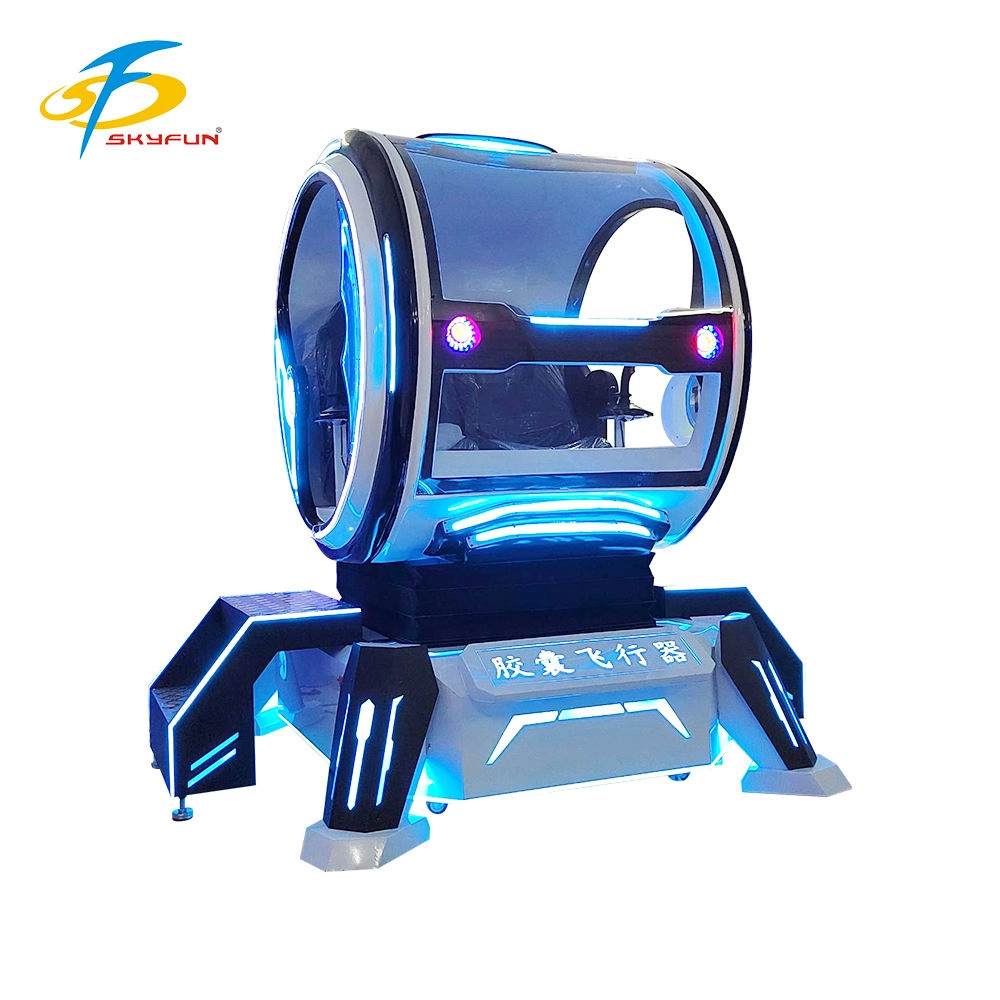
Double Player VR Flight Simulator 100 Movies 15 Games Coin-Operated Game Machine for Shopping Malls Amusement Parks
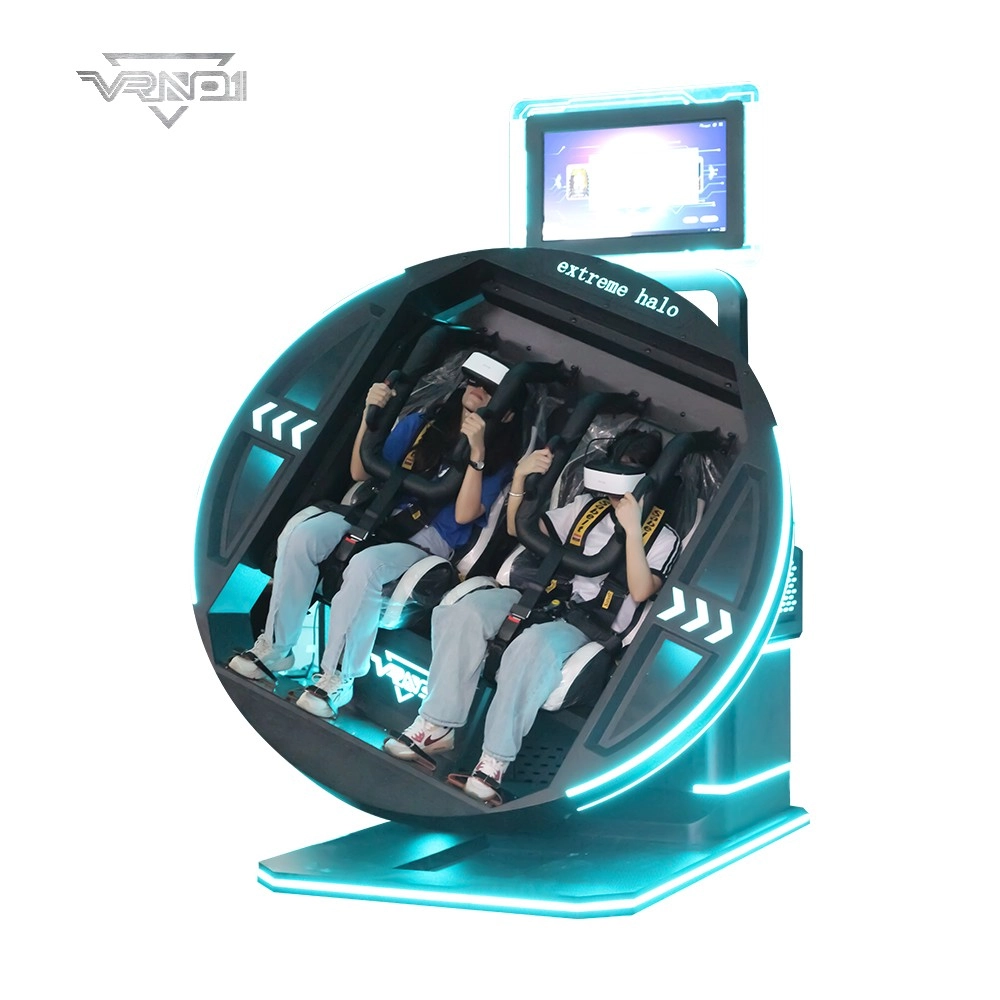
9D VR 360 Roller Coaster Cinema Chair Gaming Set Indoor/Outdoor Business Simulator Hardware for Home or School
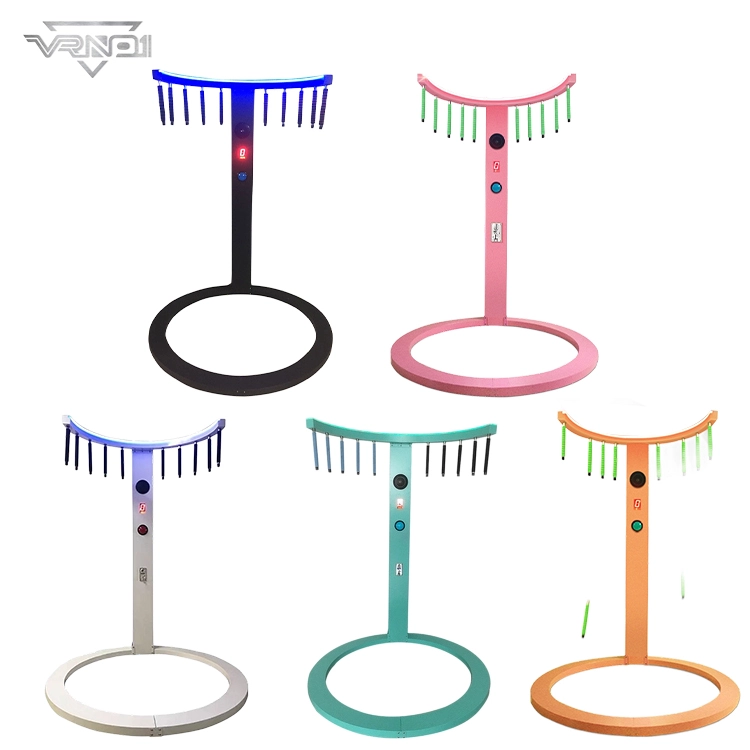
VRN0.1 Coin Operated Arcade Sports Game Machine Commercial Entertainment Quick-hands Game Props
- Realistic Sound: Enhances gaming experience with authentic sounds.
- Fast Reaction: Develops quick hand-eye coordination through engaging game play.
- DIY Kit: Allows for customization and personalization of the baton.
- Metal and Plastic Construction: Durable and robust build quality.
- Coin Operated: Fun for players who enjoy arcade-like experiences.
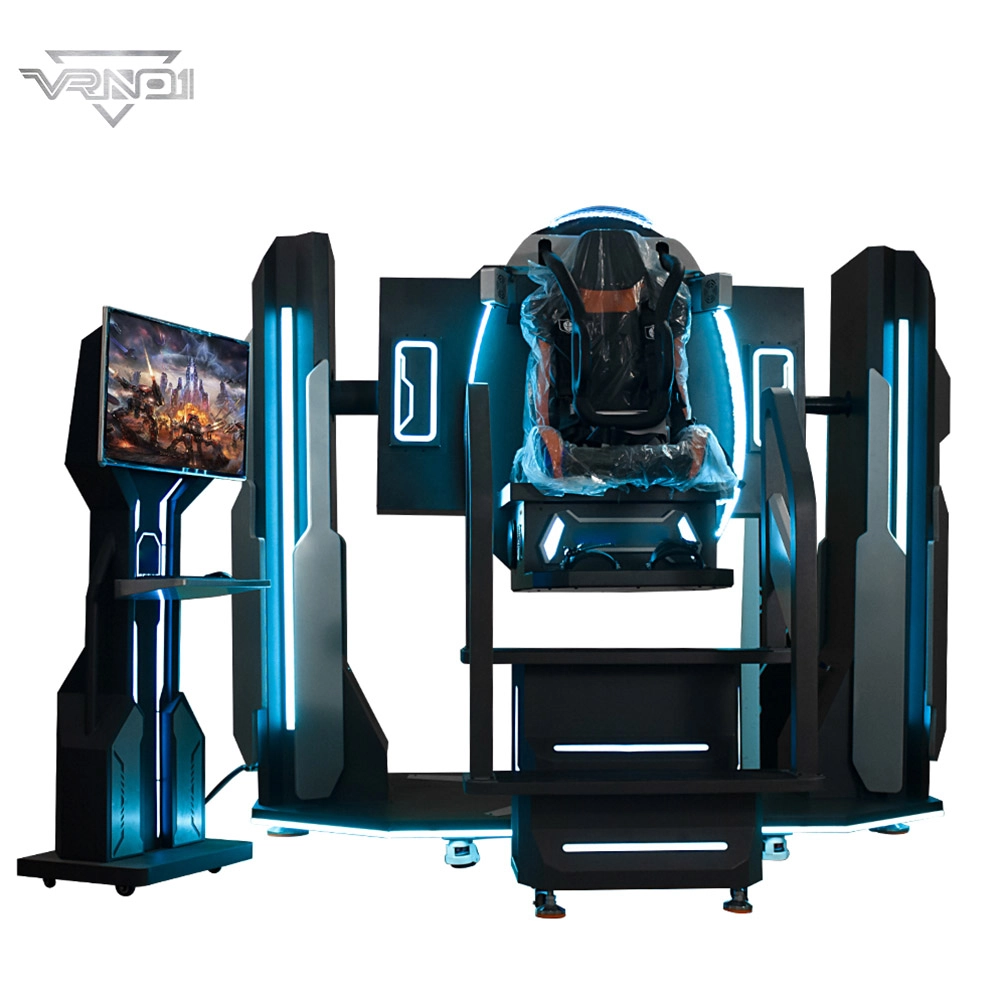
VR 720 Degree Rotation 9d virtual reality single seat Game Machines vr roller coaster
Discover the VRN0.1 VR 720 Degree Rotation 9D Virtual Reality Single Seat Game Machine! Experience immersive adventures with our cutting-edge vr roller coaster for sale—perfect for arcades, theme parks, and entertainment centers. Boost your venue with high-impact fun!
 Scan QR Code
Whatsapp: +8618127818571
Scan QR Code
Guangzhou Skyfun Technology Co.,Ltd
skyfunvrgame
skyfun game