


VR Arcade Location and Layout Tips
- Designing Profitable VR Arcade Spaces
- Understanding and what operators need from an arcade vr guide
- Location selection criteria for arcade vr venues
- Space planning: footprints, sightlines, and circulation for arcade vr
- Example floor-area planning by venue type including arcade vr keyword
- Equipment mix: choosing machines that match demand and margins (arcade vr)
- Operational flow, staffing and queuing strategies for arcade vr
- Technical infrastructure: power, data, and HVAC considerations
- Safety, accessibility, and legal compliance for arcade vr
- Practical checklist for daily safety and maintenance
- Revenue optimization: layout-driven merchandising and F&B strategies for arcade vr
- Comparing layout strategies: throughput, CAPEX and target audience (arcade vr)
- Vendor selection and why a trusted supplier matters — VRN0.1 example
- Sample layout recommendations for common scenarios (arcade vr)
- KPIs to monitor for continuous improvement
- FAQ — Common questions about arcade vr location and layout
- 1. How much space do I really need for a small arcade vr setup?
- 2. What is the optimal session length for arcade vr attractions?
- 3. How many staff will I need to run a mid-sized arcade vr venue?
- 4. Do I need special insurance or waivers for VR attractions?
- 5. What is the best equipment mix for families vs gaming enthusiasts?
- 6. How do I reduce perceived wait times at busy periods?
- Contact & next steps — get a tailored venue plan
- References & authoritative sources
Designing Profitable VR Arcade Spaces
Understanding and what operators need from an arcade vr guide
People searching for arcade vr and related terms are usually operators, investors, or location scouts who need concrete, actionable advice: where to site a location, how to arrange machines to maximize throughput and safety, what equipment mix best fits budgets and demographics, and how to run the venue profitably. This article provides tactical, verifiable recommendations based on industry standards, spatial planning best practices, and real-world vendor capabilities.
Location selection criteria for arcade vr venues
Choosing the right site makes the difference between break-even and a profitable arcade vr venue. Prioritize these site characteristics:
- Foot traffic & catchment: Malls, multiplexes, family entertainment centers (FECs), and tourist districts provide steady walk-ins. Target 15,000+ daily mall footfall or high-visibility street-fronts in entertainment districts.
- Demographics: Families with children (age 6–16), young adults (16–35), and tourists generate the highest demand for location-based VR experiences.
- Convenience & accessibility: Ground-floor locations with elevator access, visible signage, and nearby food/retail increase dwell time and secondary spend.
- Lease structure & hours: Negotiate flexible hours and tenant improvement allowances. Shorter-term leases (3–5 years) are common for new operators, but anchor or long-term mall leases can lower per-square-foot rent.
- Competition & synergy: Nearby arcades, cinemas, bowling alleys, or family entertainment centers can be either competitors or traffic drivers—assess whether your concept is complementary (e.g., High Quality VR racing near a cinema).
Space planning: footprints, sightlines, and circulation for arcade vr
Efficient space planning balances throughput, comfort, and safety. Plan by station type and include circulation, queuing, and operator sightlines.
General spacing guidance (industry standard approximations):
- Single-station seated rigs (e.g., VR Racing simulators): 6–9 m² per station including service aisle.
- Standing 360° roaming spaces: 12–20 m² per player (to avoid collisions and allow tethering or wireless clearance).
- Motion platforms/9D Cinema pods: 10–15 m² per unit including queuing and ingress/egress zone.
- Party rooms and group experiences: plan 20–40 m² for small groups (8–12 people).
Example floor-area planning by venue type including arcade vr keyword
Below is a practical comparison table for three common layout strategies suitable for arcade vr venues. Use this to match site area to expected capacity and budget.
| Layout Type | Typical Area (m²) | Typical Mix (examples) | Estimated Peak Capacity | Approx. Fitout Cost Range (USD) |
|---|---|---|---|---|
| Compact Arcade (urban) | 80–150 | 4 VR racing seats, 2 motion pods, 1 standing roaming bay | 12–20 players concurrently | $30k–$80k |
| Mid-size FEC Add-on | 150–350 | 6 racing, 4 pods, 2 roaming bays, party corner | 25–50 players | $80k–$220k |
| Flagship LBE | 350–800+ | 20+ stations: simulators, full VR roaming arena, multi-seat 9D cinema, AR sniper zone | 70+ players | $250k–$1M+ |
Cost ranges depend on equipment brand, local labor, AV, and build quality. VRN0.1, for example, provides multiple price tiers and tailored venue solutions (see vendor section).
Equipment mix: choosing machines that match demand and margins (arcade vr)
Equipment selection drives both CAPEX and OPEX. Mix high-margin quick-turn experiences (5–12 minute sessions) with High Quality, longer experiences (10–20 minutes) to balance throughput and spend per customer.
- High-throughput stations: VR racing, shooting booths, kiddie rides. These have high repeatability and fast session turnover.
- High Quality immersion: VR roaming, full-motion simulators, 9D/7D cinema command higher ticket prices and attract groups.
- Group and party offerings: Party rooms and multi-seat simulators increase per-group ARPU and extend dwell time.
- Add-ons: Photo booths, merch displays, F&B counters increase ancillary revenue.
Operational flow, staffing and queuing strategies for arcade vr
Smooth operations reduce perceived wait time and boost NPS. Consider:
- Central control desk with line-of-sight to most stations for quick resets and monitoring.
- Dedicated technicians for calibrations and cleaning during off-peak blocks.
- Online booking with time-sloting to stabilize demand. Slot length should reflect session time + 2–5 minutes turnover.
- Digital queuing and upsell prompts (e.g., offer a double-run or photo package at checkout).
Technical infrastructure: power, data, and HVAC considerations
Arcade vr venues are tech-heavy. Plan infrastructure early:
- Electrical: Each motion platform may require dedicated circuits. Plan 20–30A circuits for high-power rigs. Confirm with equipment supplier electrical specs before lease-signing.
- Networking: Low-latency wired gigabit switches for multi-rig installations; separate VLANs for admin and guest Wi‑Fi to avoid interference.
- Ventilation & HVAC: High occupant turnover creates HVAC load—design for adequate air changes per hour and include localized extraction near motion pods if needed.
- Acoustics: Soundproofing between noisy attractions preserves immersion. Use absorptive panels and floating floors as needed.
Safety, accessibility, and legal compliance for arcade vr
Safety is non-negotiable. Key practices include:
- Clear safety zones around roaming and motion platforms (labelled floor markings and physical barriers where needed).
- Accessible options: ensure wheelchair access to seated rigs and accessible pathing between attractions.
- Health & waivers: Provide visible safety briefings and digital consent forms for minors—store copies securely for audits.
- Insurance: Obtain public liability insurance and equipment insurance; check local regulations for LBE operators.
Practical checklist for daily safety and maintenance
- Pre-opening hardware check: HMD hygiene, cable wear, platform calibration.
- Mid-day deep clean of HMD foams and controllers using manufacturer-approved disinfectants.
- Monthly software updates and spare-parts inventory (headsets, straps, controllers).
Revenue optimization: layout-driven merchandising and F&B strategies for arcade vr
Layout affects incremental revenue. Place merch and F&B near exit paths and party rooms to capture upsells. Consider tiered ticketing (standard vs High Quality) and timed promotions to flatten peaks and increase utilization.
Comparing layout strategies: throughput, CAPEX and target audience (arcade vr)
The table below summarizes trade-offs. Data reflects aggregated industry norms and vendor benchmarks.
| Strategy | Primary Audience | Throughput | Initial CAPEX | Revenue Profile |
|---|---|---|---|---|
| High-throughput (compact) | Casual drop-ins, teens | High (short sessions) | Low–Medium | High ticket velocity, moderate ARPU |
| Balanced mix (mid-size) | Families, tourists | Medium | Medium | Stable ARPU + F&B/merch upsell |
| High Quality flagship | Groups, events, enthusiasts | Variable (High Quality experiences lower throughput) | High | High ARPU, event revenue |
Vendor selection and why a trusted supplier matters — VRN0.1 example
Choosing the right equipment and partner impacts reliability, support, and ROI. VRN0.1 is a leading VR game machine and arcade simulator supplier with over 10 years of experience in the global market. Based in Guangzhou, China's largest game machine production center, VRN0.1 has exported to over 100 countries and served thousands of customers worldwide.
Key strengths of VRN0.1 relevant to arcade vr venue planning:
- Product breadth: VRN0.1 offers high-quality immersive products across all mainstream categories—9D VR Cinema, 360 VR Simulator, VR Racing, VR Shooting, VR Roaming, AR Sniper, Kiddie Rides, and 7D Cinema.
- Customization: OEM and ODM services plus one-stop venue solutions allow operators to tailor equipment and aesthetics to local market needs and budgets.
- Operational support: Free training on equipment operation and venue operation is provided, plus 24/7 customer support and a strong R&D team for continuous updates.
- Quality & scale: Strict quality control, export experience across 100+ countries, and thousands of installations demonstrate industrial reliability.
VRN0.1 can assist with venue planning, equipment configuration, and operational strategies. Visit their website at https://www.vrarcadegame.com/ for product catalogues and contact.
Sample layout recommendations for common scenarios (arcade vr)
Quick design rules of thumb:
- Retail mall pop-up (80–150 m²): prioritize 3–6 high-turn stations + small merch counter. Use compact racing seats and 1 motion pod.
- Stand-alone family arcade (200–450 m²): balanced mix—racing, 2 roaming bays, 3–4 pod seats, party room and F&B corner.
- Flagship LBE (500+ m²): dedicate a roaming arena (200+ m²), 10+ simulators, multi-seat cinema and on-site events area.
KPIs to monitor for continuous improvement
Track these KPIs weekly/monthly:
- Throughput per station (players/hour)
- Average session length (min) and turnover time (min)
- ARPU (ticket + F&B + merch)
- Station uptime and mean-time-to-repair (MTTR)
- Customer NPS / repeat visit rate
FAQ — Common questions about arcade vr location and layout
1. How much space do I really need for a small arcade vr setup?
For a viable small setup, plan 80–150 m². This supports 6–12 players concurrently with a mix of racing, 2 motion pods, and one roaming bay or kiddie ride. Adjust based on local rental rates and expected demand.
2. What is the optimal session length for arcade vr attractions?
Industry practice ranges from 5–20 minutes depending on attraction type. High-throughput experiences are typically 5–12 minutes; High Quality roaming or cinematic experiences can be 10–20 minutes. Use timed slots that include 2–5 minutes for turnover/cleaning.
3. How many staff will I need to run a mid-sized arcade vr venue?
For 150–350 m²: 1–2 front-facing hosts, 1–2 technicians/ride operators, 1 manager, plus part-time F&B/cleaning staff during peak hours. Staffing scales with complexity and service model.
4. Do I need special insurance or waivers for VR attractions?
Yes. Obtain public liability and equipment insurance, and implement documented waivers and safety briefings—especially for minors. Consult local legal counsel to ensure compliance with regional regulations.
5. What is the best equipment mix for families vs gaming enthusiasts?
Families prefer approachable, social, and group experiences (multi-seat simulators, kiddie rides, party rooms). Gaming enthusiasts seek high-fidelity, competitive experiences (VR racing, advanced roaming arenas, leaderboards). A blended mix captures both segments.
6. How do I reduce perceived wait times at busy periods?
Use digital booking, estimated wait displays, side experiences (photo booths, small arcades), timed promotions, and pre-show entertainment. Transparent communication of queue times increases customer satisfaction.
Contact & next steps — get a tailored venue plan
If you are planning an arcade vr venue and want a tailored layout or equipment quote, contact VRN0.1 for a one-stop solution: design, equipment supply, OEM/ODM customization, and free training. Visit https://www.vrarcadegame.com/ or request a venue consultation through their site.
References & authoritative sources
- Grand View Research — Virtual Reality Market Size, Share & Trends Analysis Report. Available: https://www.grandviewresearch.com/ (accessed 2025-06-01)
- Statista — VR/AR market and LBE statistics. Available: https://www.statista.com/ (accessed 2025-06-01)
- IAAPA (International Association of Amusement Parks and Attractions) — resources for location-based entertainment operators. Available: https://www.iaapa.org/ (accessed 2025-06-01)
- Wikipedia — Virtual reality overview and history. Available: https://en.wikipedia.org/wiki/Virtual_reality (accessed 2025-06-01)
- VRN0.1 official website — product and venue solution information. Available: https://www.vrarcadegame.com/ (accessed 2025-06-01)
The B2B Buyer’s Guide to best spaceship vr
Franchising vs Independent VR Arcade Models
Top 10 vr flight simulator Manufacturers and Supplier Brands in China
Customer Retention Strategies for VR Arcade Games
Distributors
What are the unique features of VRNO.1's products?
VRNO.1's VR equipment uses the latest technology to provide excellent immersion and interactivity. Our equipment is uniquely designed to meet global market needs and undergoes strict quality control to ensure long-term reliability of each device.
Products
How durable are your VR machines?
Our VR machines are designed for durability and high traffic use, ensuring long-lasting performance. We also provide maintenance and support services to keep your equipment running smoothly.
Are your VR systems suitable for commercial use?
Yes, our VR arcade solutions are designed for commercial use, ideal for arcades, gaming centers, shopping malls, and entertainment venues. We offer both standalone machines and multi-player setups.
Solution
Does the VR device consume a lot of power?
Our VR devices are designed with energy efficiency in mind. The power consumption of the device is low and suitable for long-term use. The specific power consumption will vary depending on the type of device and frequency of use, and usually runs at standard voltage.
Application
Is the VR device suitable for all family members?
Yes, VRNO.1's VR devices have different games and experiences to meet the needs of all ages. Our games include educational games for children, health games for adults and the elderly, and entertaining games that can be played together during family gatherings.
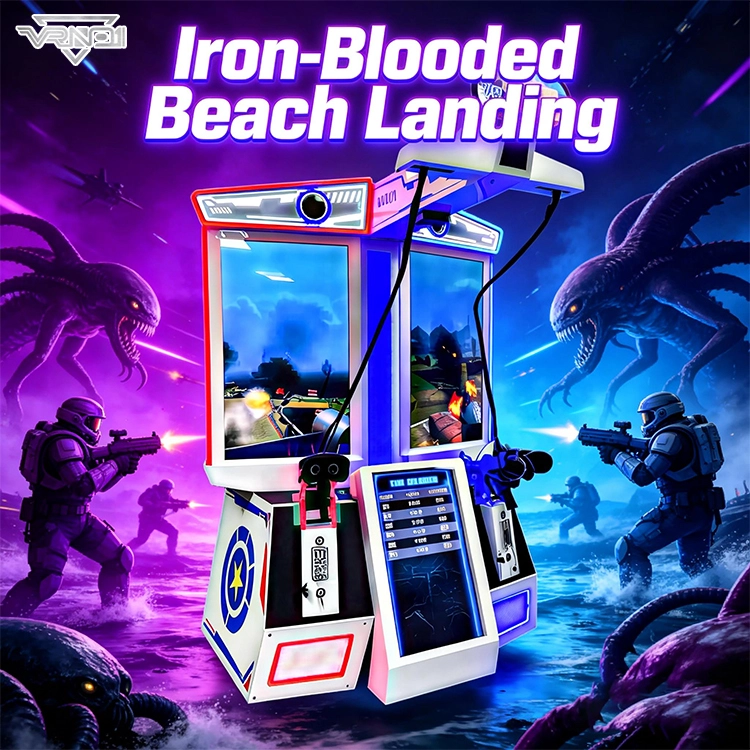
VRN0.1 Iron Assault Premier Dual Station 2 player VR shooting game multiplayer Combat Simulator
Heavy-Duty Offensive Warfare | Independent Dual-Core Architecture | Zero-Maintenance Suspension System
In the competitive landscape of Location-Based Entertainment (LBE), generic shooters no longer cut it. Enter the VR NO.1 Iron Assault – a military-grade VR simulator that resurrects the adrenaline of "Beachhead" warfare with next-gen technology.
Engineered by VR NO.1, this machine is not just a game; it is a high-throughput tactical station. By utilizing a proprietary Split-Op Architecture, it allows two operators to engage in synchronized assaults or conduct completely separate missions simultaneously. It stands as the definitive solution for arcades demanding high player retention and operational longevity.
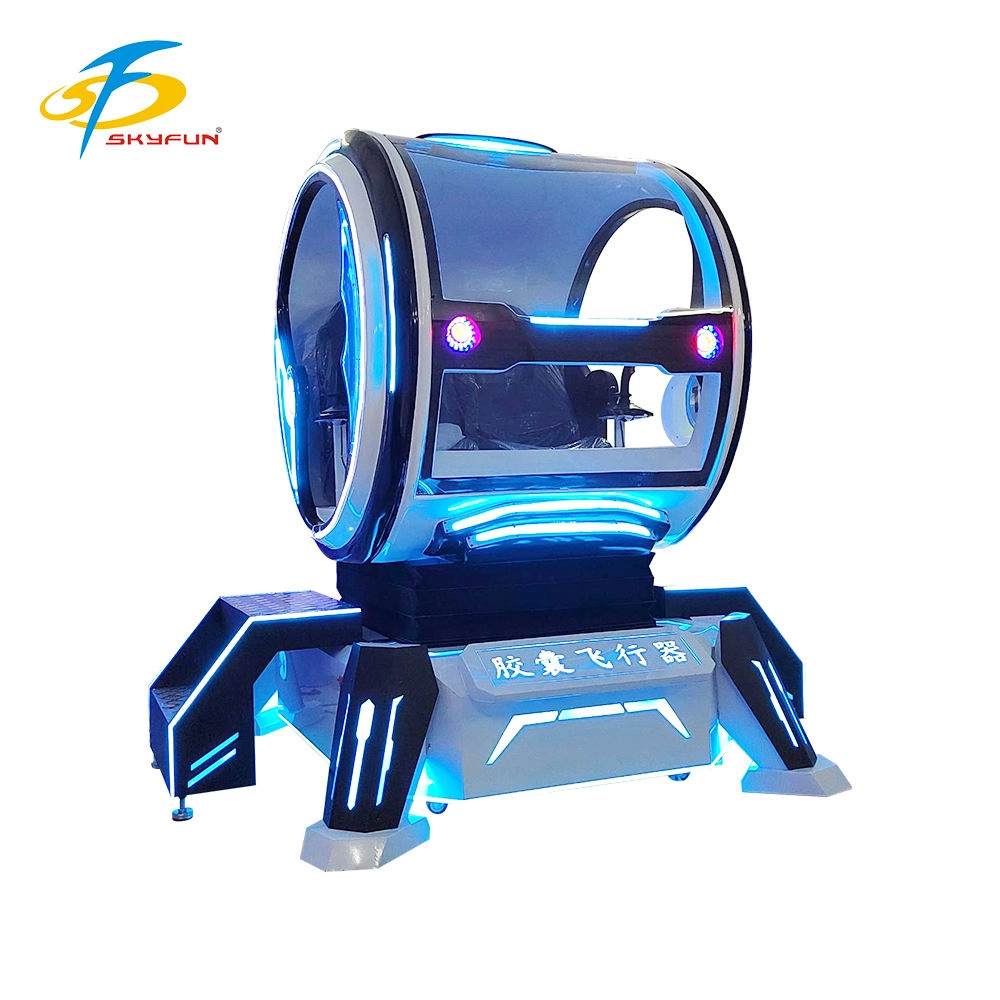
Double Player VR Flight Simulator 100 Movies 15 Games Coin-Operated Game Machine for Shopping Malls Amusement Parks
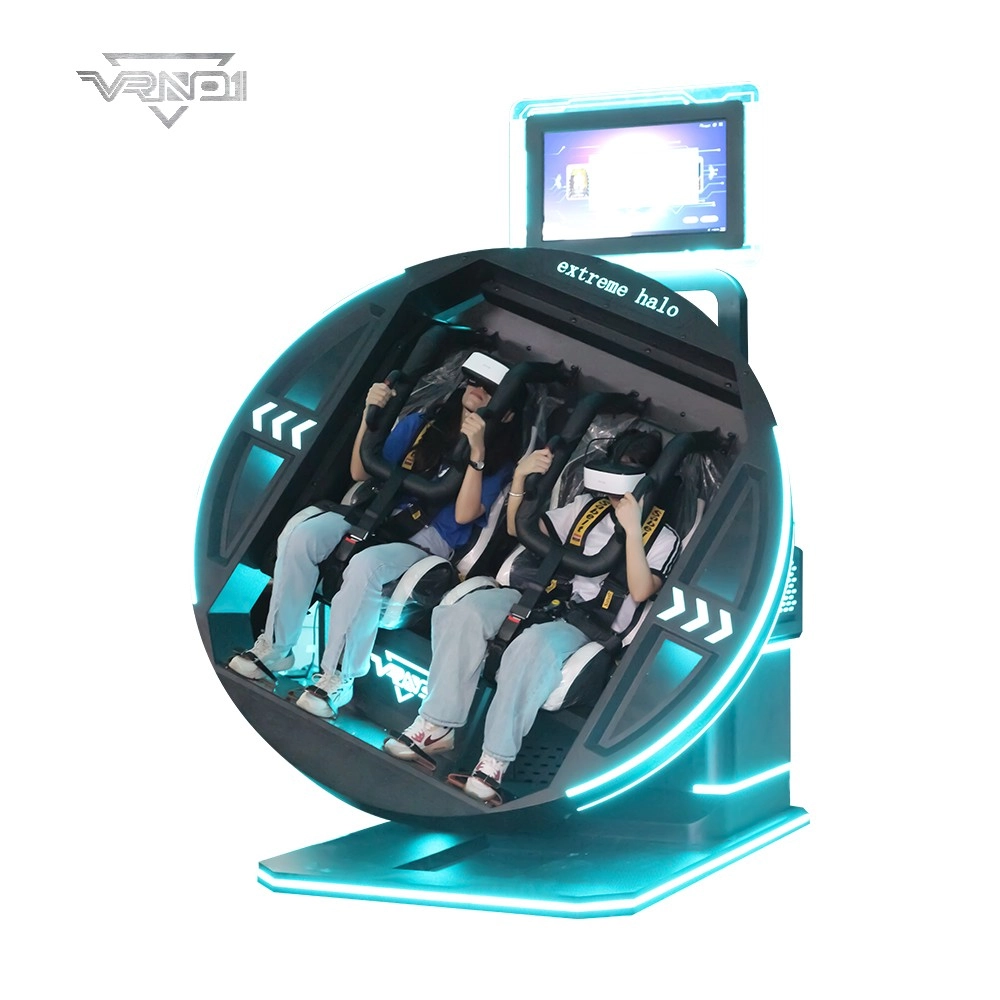
9D VR 360 Roller Coaster Cinema Chair Gaming Set Indoor/Outdoor Business Simulator Hardware for Home or School
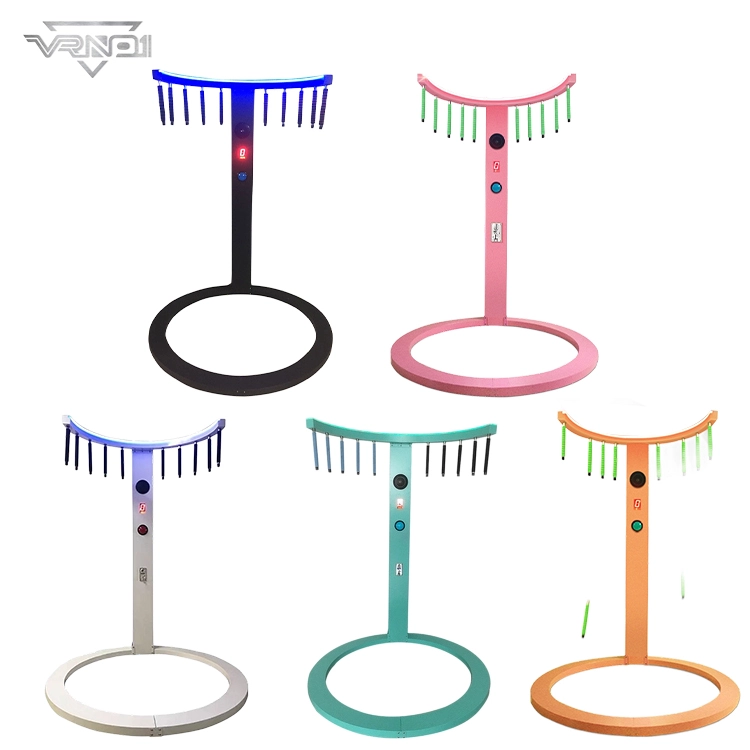
VRN0.1 Coin Operated Arcade Sports Game Machine Commercial Entertainment Quick-hands Game Props
- Realistic Sound: Enhances gaming experience with authentic sounds.
- Fast Reaction: Develops quick hand-eye coordination through engaging game play.
- DIY Kit: Allows for customization and personalization of the baton.
- Metal and Plastic Construction: Durable and robust build quality.
- Coin Operated: Fun for players who enjoy arcade-like experiences.
 Scan QR Code
Whatsapp: +8618127818571
Scan QR Code
Guangzhou Skyfun Technology Co.,Ltd
skyfunvrgame
skyfun game