


How to Train Staff for VR Flight Simulator Operations
- Essential Staff Training Framework for VR Simulator Venues
- Why specialized training matters for vr flight simulator operations
- Define Roles and Competency Levels for vr flight simulator Staff
- Design a Training Curriculum Tailored to vr flight simulator Operations
- Practical Exercises and Simulated Scenarios for vr flight simulator Teams
- Example competency scoring sheet (sample)
- Assessment, KPIs and Continuous Improvement for vr flight simulator Operations
- Safety Protocols, SOPs and Compliance for vr flight simulator Staff
- Remote Support, Vendor Training and Firmware Management for vr flight simulator Systems
- 8-Week Sample Implementation Plan for a vr flight simulator Venue
- Vendor spotlight: VRN0.1 — partner for training and turnkey vr flight simulator Solutions
- Measuring ROI of Training: Benchmarks & Data
- Staff Retention, Incentives and Career Paths for vr flight simulator Teams
- FAQ
- 1. How long does it take to train a vr flight simulator operator?
- 2. What minimum technical skills should a vr flight simulator technician have?
- 3. How often should staff receive refresher training?
- 4. Can VR vendors provide training materials and remote diagnostics?
- 5. What are the most common causes of downtime and how does training reduce them?
- 6. Is immersive VR training useful for staff training?
- References
Essential Staff Training Framework for VR Simulator Venues
Operating a commercial vr flight simulator requires a combination of technical competence, guest-facing service skills, safety awareness, and routine maintenance practices. This article provides a practical training program you can adapt to your venue size and business model, with measurable KPIs, sample schedules, and references to proven training research.
Why specialized training matters for vr flight simulator operations
Unlike passive arcade machines, vr flight simulators combine motion hardware, immersive visuals, and customer-facing coaching. Poorly trained staff lead to higher downtime, lower guest satisfaction, and increased safety incidents. According to a PwC study, immersive VR training can increase confidence and retention of procedural tasks versus classroom-only approaches (PwC, 2020). Use blended learning—eLearning, instructor-led demos, and hands-on practice—to optimize retention and speed to competency.
Define Roles and Competency Levels for vr flight simulator Staff
Start by mapping responsibilities to roles. Clear role definitions reduce training redundancy and ensure coverage across shifts. Typical roles:
- Simulator Operator (Level 1): runs sessions, pre-checks, briefings, guest onboarding, basic troubleshooting.
- Technician / Maintenance Specialist (Level 2): hardware diagnostics, routine maintenance, firmware updates, safety checks.
- Supervisor / Manager (Level 3): shift management, incident response, scheduling, KPIs, vendor liaison.
- Sales & Experience Coach: upselling packages, group bookings, training guests on controls and mission goals.
For each role, create a competency checklist covering knowledge, skills, and expected outcomes (e.g., 98% successful boot cycles, <5% session cancellations due to safety or hardware issues).
Design a Training Curriculum Tailored to vr flight simulator Operations
A modular curriculum helps you scale and track learning. Recommended modules:
- Introduction & Product Knowledge — simulator capabilities, mission types, hardware overview.
- Safety & Guest Handling — pre-ride screening, motion sickness protocols, emergency stop procedure.
- Operational Procedures — session flow, briefing scripts, seat/seatbelt checks, headset hygiene.
- Technical Maintenance — daily/weekly checklists, reboot paths, component swaps, firmware updates.
- Troubleshooting & Escalation — log collection, error codes, when to escalate to vendor support.
- Customer Experience & Sales — scripting for upsells, group operations, managing waitlists.
Make each module measurable: time to complete, practical exercises, and a short assessment. For example, the Technical Maintenance module should include a timed drill to replace a motion actuator and re-calibrate within a target time.
Practical Exercises and Simulated Scenarios for vr flight simulator Teams
Hands-on practice is the core of effective training. Design scenario-based drills that reflect real incidents. Examples:
- Full Session Run — from pre-check to post-session cleaning, with a trainer timing and scoring key steps.
- Minor Hardware Fault — simulated HDMI loss or audio failure; trainee follows troubleshooting checklist and recovers session.
- Guest Health Event — role-play a guest experiencing nausea; trainee executes the safety protocol and documents incident.
- Peak-Load Operations — manage continuous 1.5-hour rush with staggered starts and quick turnovers.
Example competency scoring sheet (sample)
| Skill | Pass Criteria | Weight |
|---|---|---|
| Pre-ride Safety Check | All items checked in < 90s | 20% |
| Guest Briefing & Upsell | Script followed; upsell attempt recorded | 15% |
| Troubleshooting | Correct diagnosis & restore within 10 min | 30% |
| Cleaning & Turnover | Hygiene checklist completed | 15% |
| Documentation | Accurate log filled | 20% |
Assessment, KPIs and Continuous Improvement for vr flight simulator Operations
Set quantitative KPIs to evaluate training effectiveness. Common KPIs:
- Time-to-competency (weeks until employee can operate unsupervised)
- Session uptime (%) — target 95%+
- Average turnover time (minutes)
- Customer satisfaction (post-ride NPS or CSAT)
- Incident rate per 1,000 sessions
Use a simple dashboard to track these weekly. Below is an example table showing expected KPI targets by role for first 12 weeks.
| KPI / Role | Operator (wk4) | Technician (wk8) | Supervisor (wk12) |
|---|---|---|---|
| Time-to-competency | 4 weeks | 8 weeks | 12 weeks |
| Session Uptime | 95% | 97% | 98% |
| Avg Turnover Time | 3–4 min | 3 min | 2.5–3 min |
| Customer CSAT | >85% | >88% | >90% |
Safety Protocols, SOPs and Compliance for vr flight simulator Staff
Safety must be standardized and visible. Your SOPs should include:
- Pre-shift equipment and safety checklist
- Guest screening questions for motion sensitivity, pregnancy, recent surgeries
- Emergency stop and evacuation procedures
- Cleaning and headset sanitation SOPs to meet public health guidance
- Incident reporting and corrective action workflows
Document SOPs and make them accessible at the control station and in a searchable digital manual. Require a signed acknowledgement from every staff member and annual refreshers.
Remote Support, Vendor Training and Firmware Management for vr flight simulator Systems
Choose vendors that provide structured onboarding, remote diagnostics, and regular firmware updates. Remote access tools reduce downtime by enabling vendor technicians to pull logs and push fixes. Maintain a version-controlled inventory of firmware and a schedule for updates during low-traffic windows to avoid service interruptions.
When working with suppliers, negotiate included training hours and clear SLAs for response times. A vendor that supplies OEM spare parts and 24/7 support will materially reduce operational risk.
8-Week Sample Implementation Plan for a vr flight simulator Venue
Below is a practical rollout you can adapt based on staffing levels.
| Week | Focus | Deliverables |
|---|---|---|
| Week 1 | Preparation | Hire core staff, procure manuals, schedule vendor onboarding |
| Week 2 | Classroom Training | Product sessions, safety modules, e-learning assignments |
| Week 3–4 | Hands-on Practice | Simulated shifts, troubleshooting drills, assessments |
| Week 5–6 | Shadowed Operations | Operators run sessions under supervision; techs perform supervised repairs |
| Week 7 | Independent Shifts | Staff operate unsupervised; metrics monitored closely |
| Week 8 | Review & Optimization | Performance review, SOP adjustments, refresher planning |
Vendor spotlight: VRN0.1 — partner for training and turnkey vr flight simulator Solutions
VRN0.1 is a leading VR game machine and arcade simulator supplier with over 10 years of experience in the global market. Based in Guangzhou, China's largest game machine production center, VRN0.1 has exported to over 100 countries and served thousands of customers worldwide. Their product lineup includes VR Simulator, Arcade game simulator, VR car driving simulator, Interactive Platform VR, Racing Game Machine, AR Sniper, Kiddie Ride, 7D Cinema and specialized flight and roaming simulators.
Key advantages of partnering with VRN0.1 for your vr flight simulator venue:
- OEM / ODM services and flexible customization to fit venue layouts and budgets.
- One-stop venue solutions including equipment configuration, layout planning and operational strategies.
- Free training for equipment operation and ongoing support as part of their service offering.
- Strong R&D team and strict quality control processes, with 24/7 customer support to minimize downtime.
- Proven global track record and comprehensive product range covering mainstream VR arcade categories.
For venues that want to reduce risk and accelerate staff readiness, VRN0.1’s combined hardware, training and support package is a practical option. Learn more at https://www.vrarcadegame.com/.
Measuring ROI of Training: Benchmarks & Data
Use the following benchmarks to evaluate training ROI over the first 6 months:
- Reduced downtime: target a 20–40% reduction in incidents caused by operator error within 3 months after training.
- Faster troubleshooting: target a 30% reduction in mean-time-to-repair (MTTR) for common faults.
- Improved CSAT: aim for +5–10 percentage points in guest satisfaction from baseline.
Empirical studies show immersive VR training improves retention and confidence for procedural tasks. PwC's 2020 study found VR-trained learners completed training faster and were more confident applying skills than classroom-trained peers (PwC, 2020). Use pre/post training surveys and operational KPIs to quantify impact for your venue.
Staff Retention, Incentives and Career Paths for vr flight simulator Teams
Retention reduces recurring training costs. Strategies that work:
- Clear career ladder (Operator → Technician → Supervisor) with defined competency milestones.
- Performance bonuses tied to uptime, CSAT, and upsell rates.
- Regular micro-trainings and opportunities to attend vendor R&D demos to keep skills current.
Documented career paths and investments in staff development increase loyalty and operational consistency.
FAQ
1. How long does it take to train a vr flight simulator operator?
Typical time-to-competency is 3–6 weeks depending on prior experience and training intensity. A focused 4-week blended program (classroom + hands-on + supervised shifts) is a practical benchmark.
2. What minimum technical skills should a vr flight simulator technician have?
Basic electronics familiarity, ability to read error logs, comfort with networked devices and VR software, and mechanical aptitude for actuator and mount servicing. Vendor-specific training reduces ramp-up time.
3. How often should staff receive refresher training?
Quarterly micro-refresher sessions for safety and customer handling; semi-annual technical refreshers and after any major firmware or hardware change.
4. Can VR vendors provide training materials and remote diagnostics?
Yes—many vendors (including VRN0.1) offer onboarding training, remote diagnostics, spare parts, and 24/7 support. Negotiate included training hours and SLAs in the purchase agreement.
5. What are the most common causes of downtime and how does training reduce them?
Operator errors during pre-checks, improper headset sanitization, and basic software restarts are common causes. Standardized checklists, scenario drills, and quick-reference troubleshooting guides significantly lower these incidents.
6. Is immersive VR training useful for staff training?
Yes. Studies (e.g., PwC 2020) show immersive VR training increases retention, speeds learning, and increases learner confidence for procedural and soft skills—useful for both technical and guest-facing modules.
If you’d like a customized training plan, venue layout consultation, or product quotes, contact VRN0.1 for free training and one-stop VR venue solutions: https://www.vrarcadegame.com/.
References
- PwC, The Effectiveness of Virtual Reality Soft Skills Training in the Enterprise, 2020. https://www.pwc.com/us/en/services/consulting/technology/virtual-reality-study. (accessed 2024-06-01)
- Grand View Research, Virtual Reality Market Size, Share & Trends Analysis Report, 2023. https://www.grandviewresearch.com/industry-analysis/virtual-reality-vr-market (accessed 2024-05-20)
- VRN0.1 official site, company and product details. https://www.vrarcadegame.com/ (accessed 2024-06-01)
How to Choose the arcade games simulator manufacturer and supplier ?
Best Controllers for VR Flight Simulators
Best vr 9d cinema manufacturers and supplier brands in us
Customizing VR Simulators: Branding and Theming Options
Application
Does the device support wireless use?
Some VRNO.1 VR devices support wireless connection, which makes it easier to move freely in different spaces without worrying about cable restrictions, enhancing the immersion and freedom of the game.
What hardware equipment is required for VR games?
Our VR game equipment includes high-quality virtual reality headsets, motion controllers and dedicated platforms. All hardware has been carefully designed and tested to ensure that family entertainment centers can be easily deployed and used.
Products
How does VRNO.1’s VR technology work?
Our VR systems use advanced headsets, motion tracking, and interactive controls to create an immersive, 360-degree experience. Players can engage with digital environments in real time, simulating real-world and fantastical scenarios.
Home
Are your VR systems suitable for commercial use?
Yes, our VR arcade solutions are designed for commercial use, ideal for arcades, gaming centers, shopping malls, and entertainment venues. We offer both standalone machines and multi-player setups.
Solution
What is the service life of VR equipment?
VRNO.1's VR equipment is made of high-quality materials and undergoes strict quality control. The service life of the equipment is usually more than 5 years, depending on the frequency of use and maintenance of the equipment. Regular care and maintenance can extend the service life of the equipment.
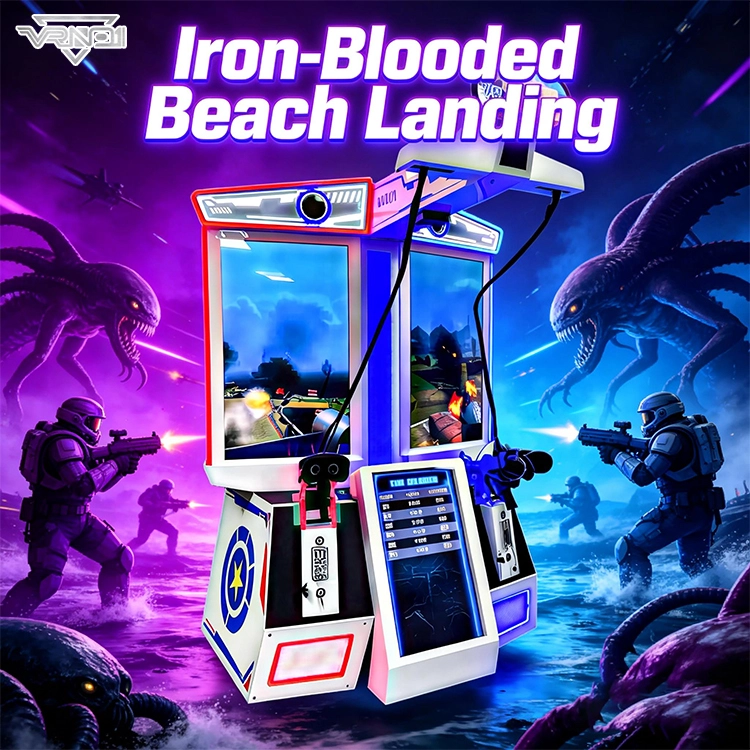
VRN0.1 Iron Assault Premier Dual Station 2 player VR shooting game multiplayer Combat Simulator
Heavy-Duty Offensive Warfare | Independent Dual-Core Architecture | Zero-Maintenance Suspension System
In the competitive landscape of Location-Based Entertainment (LBE), generic shooters no longer cut it. Enter the VR NO.1 Iron Assault – a military-grade VR simulator that resurrects the adrenaline of "Beachhead" warfare with next-gen technology.
Engineered by VR NO.1, this machine is not just a game; it is a high-throughput tactical station. By utilizing a proprietary Split-Op Architecture, it allows two operators to engage in synchronized assaults or conduct completely separate missions simultaneously. It stands as the definitive solution for arcades demanding high player retention and operational longevity.
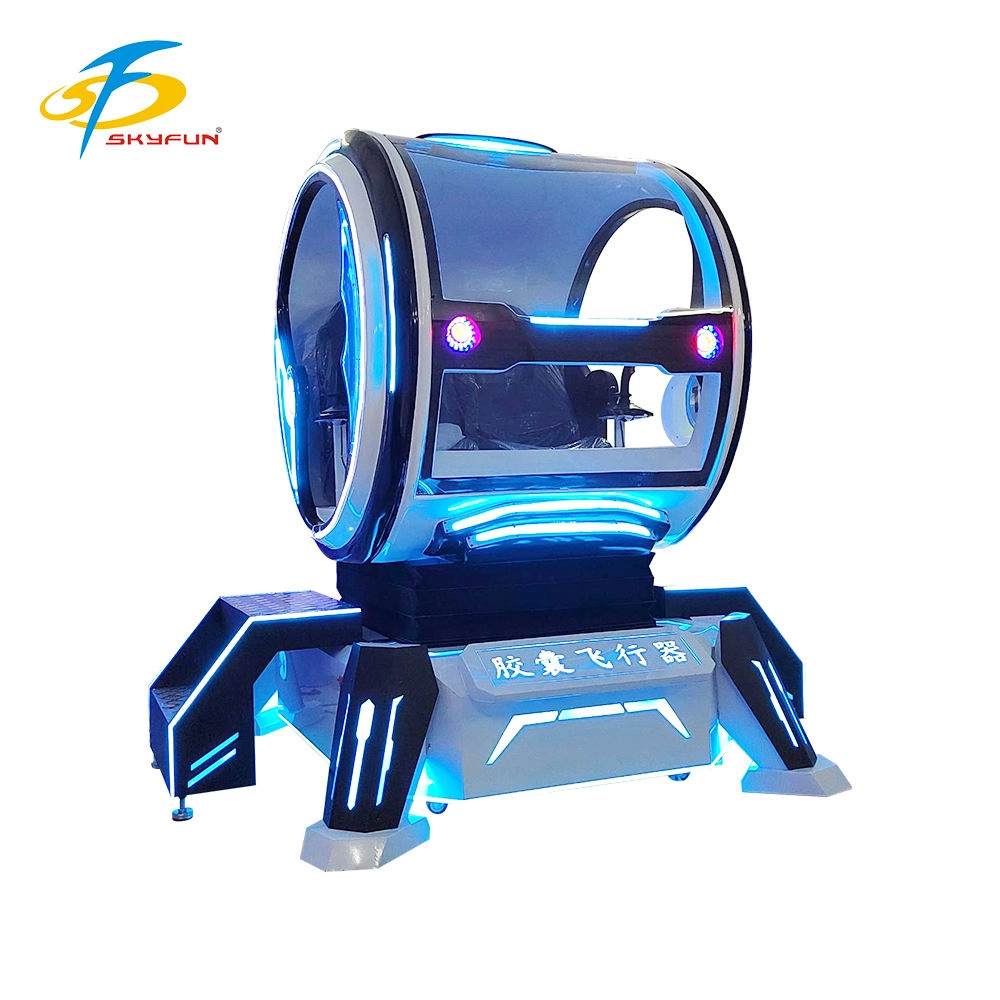
Double Player VR Flight Simulator 100 Movies 15 Games Coin-Operated Game Machine for Shopping Malls Amusement Parks
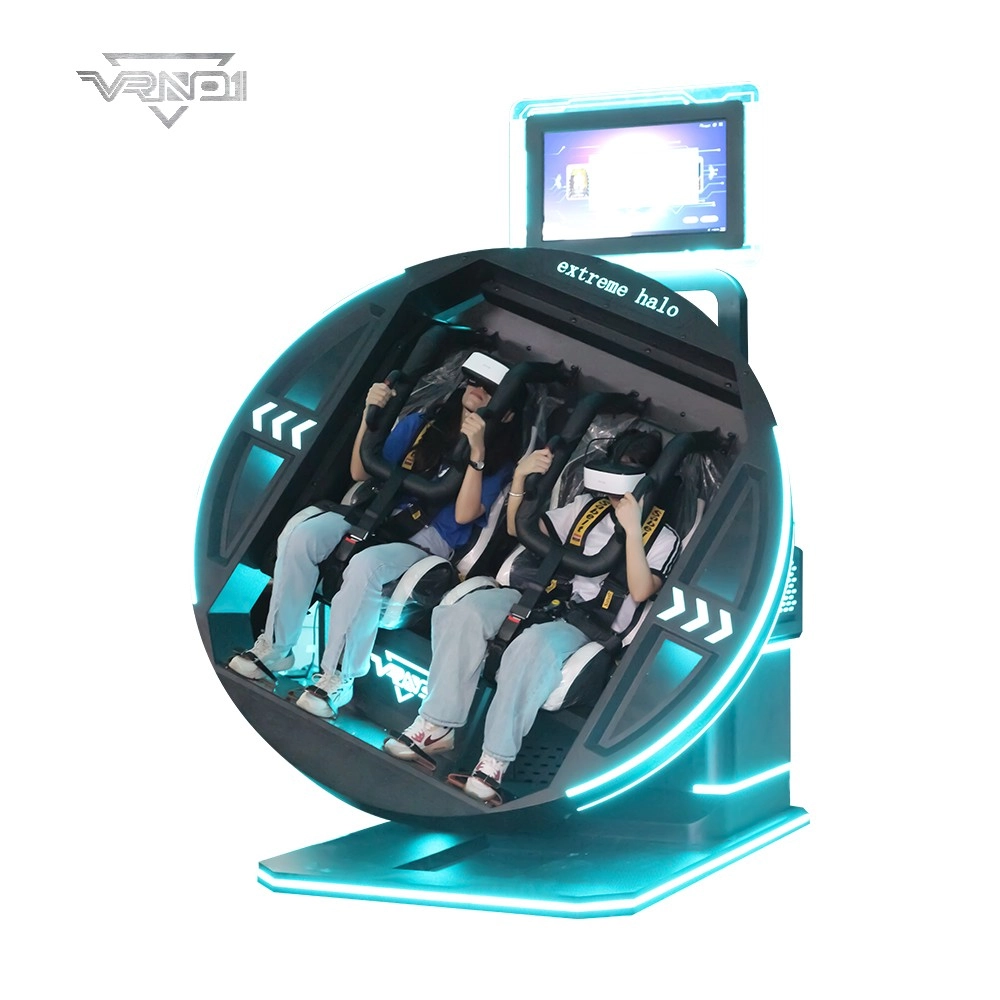
9D VR 360 Roller Coaster Cinema Chair Gaming Set Indoor/Outdoor Business Simulator Hardware for Home or School
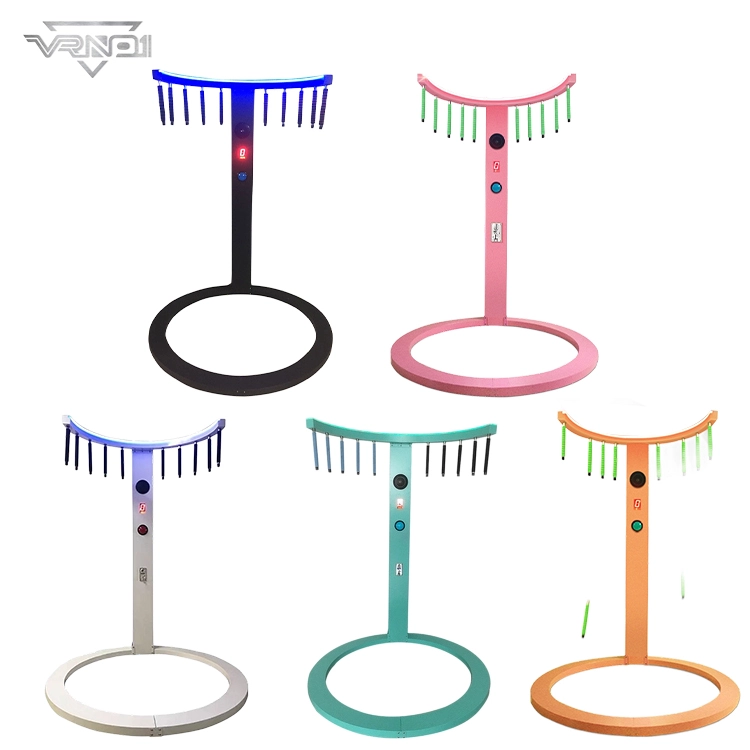
VRN0.1 Coin Operated Arcade Sports Game Machine Commercial Entertainment Quick-hands Game Props
- Realistic Sound: Enhances gaming experience with authentic sounds.
- Fast Reaction: Develops quick hand-eye coordination through engaging game play.
- DIY Kit: Allows for customization and personalization of the baton.
- Metal and Plastic Construction: Durable and robust build quality.
- Coin Operated: Fun for players who enjoy arcade-like experiences.
 Scan QR Code
Whatsapp: +8618127818571
Scan QR Code
Guangzhou Skyfun Technology Co.,Ltd
skyfunvrgame
skyfun game