

Trade Show Checklist: Demo a VR Racing Simulator Effectively
- How trade shows shape VR venue and machine adoption
- Why live demos matter for vr racing simulator sales
- Buyer intent and local discovery ( relevance)
- Key trade show metrics I track
- Pre-show planning: hardware, software and compliance
- Choose the right vr racing simulator setup
- Software selection and content readiness
- Regulatory, accessibility and safety checks
- Booth layout, demo flow and staffing
- Designing a demo flow that converts
- Booth layout and traffic management
- Training your demo operators
- Technical reliability, lighting and AV best practices
- Hardware redundancy and diagnostics
- Optimal audio-visual configuration
- Network and latency considerations
- Measuring impact: data capture and ROI
- Lead capture methods and compliance
- Quantitative KPIs and benchmarks
- Qualitative feedback and use in product development
- VRN0.1: supplier advantages and how we support your trade show success
- Who we are and why it matters
- Products and technical strengths
- Why clients choose VRN0.1
- Post-show follow-up and long-term conversion
- Immediate follow-up actions (first 7 days)
- Nurturing leads and moving to sale
- Using show data to iterate
- Frequently Asked Questions (FAQ)
- 1. How long should a trade show demo of a vr racing simulator last?
- 2. What safety protocols should I have for participants?
- 3. How many demos per hour can I realistically expect?
- 4. What common technical issues occur and how do I prevent them?
- 5. How should I price show offers or incentives?
- 6. Can a vr racing simulator be used for driver training?
- Contact and next steps
I have demoed and consulted on VR racing simulator installations across global trade shows and arcades, and in this article I summarize a practical, evidence-based checklist that helps you turn booth traffic into leads and sales. The guidance below balances attendee experience, operational reliability, safety and measurable outcomes — all optimized for discovery and local intent when promoting your vr racing simulator at events.
How trade shows shape VR venue and machine adoption
Why live demos matter for vr racing simulator sales
In my experience, nothing sells a vr racing simulator like a live ride. Trade shows let prospects experience motion platforms, force feedback steering, haptic cues and immersive visuals in context — an experience that static photos or video cannot replicate. According to the Center for Exhibition Industry Research (CEIR), face-to-face events consistently outperform digital channels for complex, high-consideration purchases because they reduce perceived risk and accelerate trust.
Buyer intent and local discovery ( relevance)
Attendees often search on-site for vr car driving simulator demo or VR racing near me. That's why demo copy, localized landing pages and signage must include geo signals (city, hall, booth number) and schema-rich content. I always prepare a short URL and QR code that maps to a localized landing page optimized for the trade show's city and dates — improving both immediate conversions and long-term organic visibility for geocentric queries.
Key trade show metrics I track
At every show I measure booth footfall, demo starts, demo completions, email captures, qualified leads, follow-up conversion rate, and revenue per square meter. These KPIs let you quantify ROI and improve your next event. For benchmarking, CEIR’s reports and industry whitepapers are good references (CEIR).
Pre-show planning: hardware, software and compliance
Choose the right vr racing simulator setup
Decide between single-seat vs. dual-seat demos, motion platform degrees-of-freedom (DoF), and whether to run an arcade configuration or a demonstration-grade racing rig. For trade shows I typically recommend a high-visibility 2-seat demo: one unit for the live rider and one for a queue/companion view. This balances throughput and engagement without compromising perceived realism.
Software selection and content readiness
Pick race content that showcases what matters: visuals, steering feel, and multiplayer or leaderboard features. I prepare a short demo route (1–2 minutes) that highlights peak moments — straights, corners, collisions — and a simplified input mode for first-time riders. Always use the latest stable build, and keep a rollback image ready.
Regulatory, accessibility and safety checks
Confirm venue rules for motion platforms and power, and comply with local accessibility requirements. I provide attendees with a clear pre-ride safety brief and a visible notice if simulator sickness or physical limitations may disqualify participation. For guidance on simulator sickness and precautions, refer to the literature on virtual reality effects (Simulator sickness — Wikipedia).
Booth layout, demo flow and staffing
Designing a demo flow that converts
A smooth demo flow reduces perceived wait times and increases conversions. My recommended flow: Welcome → Waiver & Short Safety Brief (30s) → Seat & Fit (30s) → Demo (90–120s) → Debrief & Offer (60s). Keep the entire experience under 5 minutes for casual trade show traffic; slightly longer for targeted buyer appointments.
Booth layout and traffic management
Position the simulator so spectators can see a mirrored screen or livestream of the rider's POV — social proof drives interest. Use stanchions or floor markings to organize a single-file queue and a VIP fast-track lane for booked demos. Signage should include the main keyword vr racing simulator and local identifiers for searches.
Training your demo operators
Staff are the product ambassadors. I train operators to control the demo tempo, troubleshoot hardware, and deliver a concise sales pitch. Role-play three scenarios: curious passerby, technical buyer, and facility owner. Prepare script prompts for each to maintain consistency. Operators should also collect consented contact data and permission to send follow-ups.
Technical reliability, lighting and AV best practices
Hardware redundancy and diagnostics
Bring spare peripherals: steering wheels, pedals, harnesses, power adapters, network cables and a spare PC image. I run a nightly diagnostic and maintain a checklist for pre-show boot, mid-show maintenance, and post-show teardown. For complex rigs (motion platforms), include a power quality monitor and surge protection to avoid failures.
Optimal audio-visual configuration
Set displays to high-brightness and calibrate color/contrast for the venue lighting. Use directional speakers or wireless headsets to keep ambient noise under control. I recommend streaming a spectator camera feed to a 55 monitor so bystanders can see the action — this increases dwell time and participation rates.
Network and latency considerations
If you demo multiplayer or cloud features, isolate the demo network from venue Wi-Fi and provide a local router with quality-of-service (QoS) rules. Latency kills perceived realism in a vr racing simulator; keep round-trip latency below 50 ms for responsive steering and force feedback.
Measuring impact: data capture and ROI
Lead capture methods and compliance
Use a mix of QR-coded forms, badge scans, and short iPad forms to capture leads. Ensure GDPR and local data protection compliance for contact collection. I always provide an immediate incentive (discount code, whitepaper, free trial) to increase capture rates.
Quantitative KPIs and benchmarks
Below is a sample comparison table I use to forecast expected outcomes based on demo configuration. The numbers are conservative averages from my trade show experience and industry reports like CEIR.
| Configuration | Avg Demos/Hour | Lead Conversion Rate | Estimated Revenue/Show |
|---|---|---|---|
| Single-seat basic rig | 12–18 | 5–8% | $5k–$15k |
| Dual-seat with motion platform | 20–30 | 10–18% | $20k–$60k |
| Multi-rig (2+ units) + bookings | 40–80 | 15–25% | $50k–$200k+ |
Note: Actual revenue depends on pricing, follow-up cadence and conversion effectiveness.
Qualitative feedback and use in product development
Collect qualitative notes: perceived realism, comfort, control responsiveness, and suggestions. I review these after each show and pass prioritized feedback to R&D to improve haptics, motion tuning and UX flows. Academic and industry research, including papers presented at conferences like IEEE VR, often inform adjustments to reduce simulator sickness and improve immersion.
VRN0.1: supplier advantages and how we support your trade show success
Who we are and why it matters
VRN0.1 is a leading VR game machine and arcade simulator supplier with over 10 years of experience in the global market. Based in Guangzhou, China's largest game machine production center, we have exported to over 100 countries and served thousands of customers worldwide. Our product portfolio includes high-quality, immersive VR experiences such as 9D VR Cinema, 360 VR Simulator, VR Racing, VR Shooting, VR Roaming, AR Sniper, and others.
Products and technical strengths
We specialize in VR Simulator rigs and arcade simulators built for high uptime and easy maintenance. Our VR car driving simulator and Racing Game Machine offerings include reliable motion platforms, force-feedback steering, 4K displays, and robust software that supports multiplayer and leaderboard integration. We provide OEM/ODM services and one-stop venue solutions, including free training for equipment operation and business workflows.
Why clients choose VRN0.1
Our competitive edge lies in tailored venue planning, strong R&D, strict quality control, and 24/7 customer support. We help customers configure equipment and operational strategies to meet specific budgets and audience profiles. For more details, visit our website: VRN0.1 — VR Arcade Game.
Post-show follow-up and long-term conversion
Immediate follow-up actions (first 7 days)
Within 24–72 hours I send personalized follow-up emails summarizing the demo, attaching a short videos or screenshots, and including a clear CTA (book a site visit, request a quote, or schedule a virtual demo). Use tracked links and UTM parameters to measure engagement.
Nurturing leads and moving to sale
Segment leads by intent (buyer, operator, investor) and design a 3–6 touch cadence: educational content, client case studies, ROI calculator, and a final commercial proposal. In my projects, tailored content that shows venue-level ROI and sample floor plans accelerates decision-making.
Using show data to iterate
Analyze KPIs and feedback to refine demo length, staff scripts, and hardware choices. Over multiple shows, iteratively improve your demo script and layout to increase conversion and reduce operational issues.
Frequently Asked Questions (FAQ)
1. How long should a trade show demo of a vr racing simulator last?
Keep casual demos between 90 and 120 seconds to balance impact and throughput. For buyer appointments, 4–8 minutes allows time to demonstrate features like motion tuning and multiplayer.
2. What safety protocols should I have for participants?
Provide a brief pre-ride safety briefing, a visible list of contraindications (pregnancy, epilepsy, severe motion sickness), and ask participants to sign a waiver if required. Keep first aid and staff trained to assist with post-ride dizziness.
3. How many demos per hour can I realistically expect?
Expect 12–30 demos per hour per unit depending on configuration. Single-seat rigs do fewer demos; dual-seat or multi-rig setups increase throughput. See the configuration table above for estimates.
4. What common technical issues occur and how do I prevent them?
Common issues include power instability, USB/peripheral failures, software crashes, and network latency. Prevent them with redundancy (spares), surge protection, nightly diagnostics, and isolated demo networks.
5. How should I price show offers or incentives?
Offer clear, time-limited incentives: show-only discounts, bundled service contracts, or free training. Present ROI examples for venue operators (e.g., revenue per seat per day) to justify price and shorten buying cycles.
6. Can a vr racing simulator be used for driver training?
Yes — while arcade-grade rigs differ from certified training simulators, advanced vr car driving simulator setups with realistic physics and force feedback can complement driver training programs for basic skills and hazard awareness. Consult regulatory standards and ensure the training scope aligns with the simulator’s fidelity.
Contact and next steps
If you want help planning a trade show demo, configuring a vr racing simulator for your venue, or sourcing turnkey arcade solutions, I invite you to contact VRN0.1. We offer tailored venue planning, OEM/ODM support, and free training for equipment and operations. Visit https://www.vrarcadegame.com/ or email us at sunnyzhang@skyfungame.com to request a quote or book a consultation. Our product range includes VR Simulator, Arcade game simulator, VR car driving simulator, Interactive Platform VR, Racing Game Machine, AR Sniper, Kiddie Ride and 7D Cinema — all backed by 10+ years of manufacturing and global export experience.
I stand by these checklist items because they reflect the operational realities and buyer behavior I've observed across hundreds of demos. Implement them and iterate: trade shows are a powerful channel when demos are reliable, memorable, and measurable.
ROI Guide for Investing in VR Arcade Machines
The latest trends for best vr flight simulator
ROI Analysis: Adding a VR Flight Simulator to Your Arcade
Top 10 best vr game machine Manufacturers and Supplier Brands
Solution
What is the warranty period for VRNO.1 VR devices?
We provide a 1-year warranty for all VRNO.1 VR devices. If any device failure occurs during the warranty period, you can get free repair or replacement services. Outside the warranty period, we also provide paid technical support and repair services.
Application
Is the VR device suitable for all family members?
Yes, VRNO.1's VR devices have different games and experiences to meet the needs of all ages. Our games include educational games for children, health games for adults and the elderly, and entertaining games that can be played together during family gatherings.
Distributors
What is the warranty policy for VRNO.1 products?
All VRNO.1 equipment enjoys a certain period of warranty service, which depends on the product type and cooperation agreement. During the warranty period, if the equipment fails, we will provide free repair or replacement service.
Home
What is VRNO.1’s main focus?
VRNO.1 specializes in providing cutting-edge virtual reality (VR) and arcade solutions, offering immersive entertainment experiences for both individual players and large-scale events.
Products
What is VRNO.1’s main focus?
VRNO.1 specializes in providing cutting-edge virtual reality (VR) and arcade solutions, offering immersive entertainment experiences for both individual players and large-scale events.
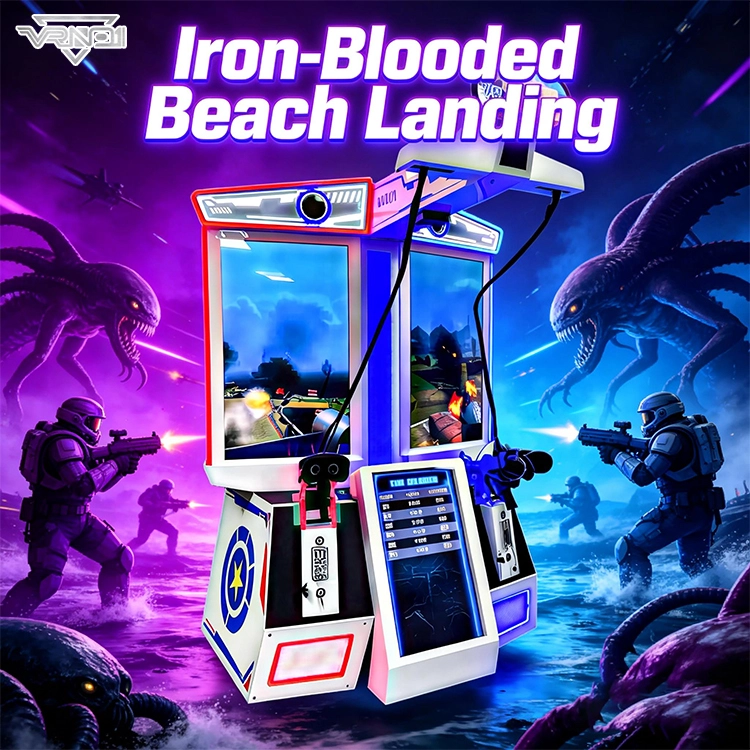
VRN0.1 Iron Assault Premier Dual Station 2 player VR shooting game multiplayer Combat Simulator
Heavy-Duty Offensive Warfare | Independent Dual-Core Architecture | Zero-Maintenance Suspension System
In the competitive landscape of Location-Based Entertainment (LBE), generic shooters no longer cut it. Enter the VR NO.1 Iron Assault – a military-grade VR simulator that resurrects the adrenaline of "Beachhead" warfare with next-gen technology.
Engineered by VR NO.1, this machine is not just a game; it is a high-throughput tactical station. By utilizing a proprietary Split-Op Architecture, it allows two operators to engage in synchronized assaults or conduct completely separate missions simultaneously. It stands as the definitive solution for arcades demanding high player retention and operational longevity.
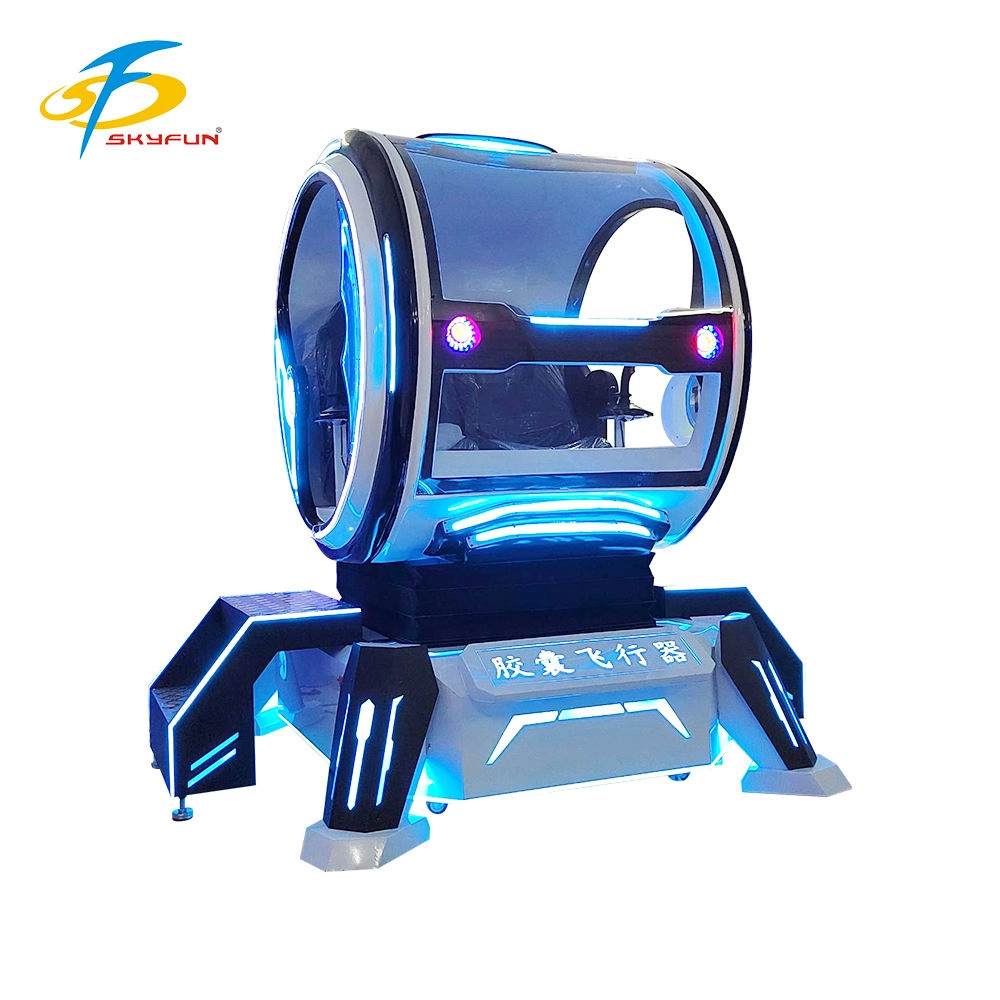
Double Player VR Flight Simulator 100 Movies 15 Games Coin-Operated Game Machine for Shopping Malls Amusement Parks
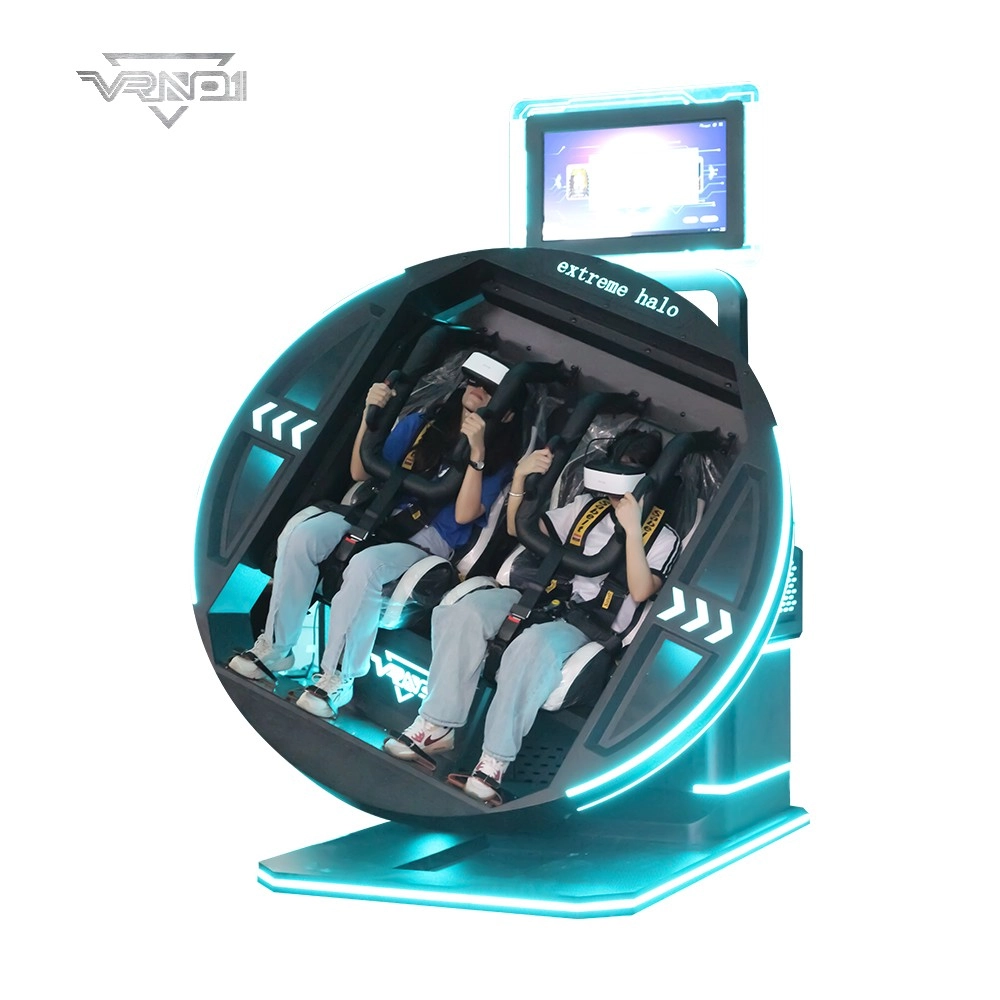
9D VR 360 Roller Coaster Cinema Chair Gaming Set Indoor/Outdoor Business Simulator Hardware for Home or School
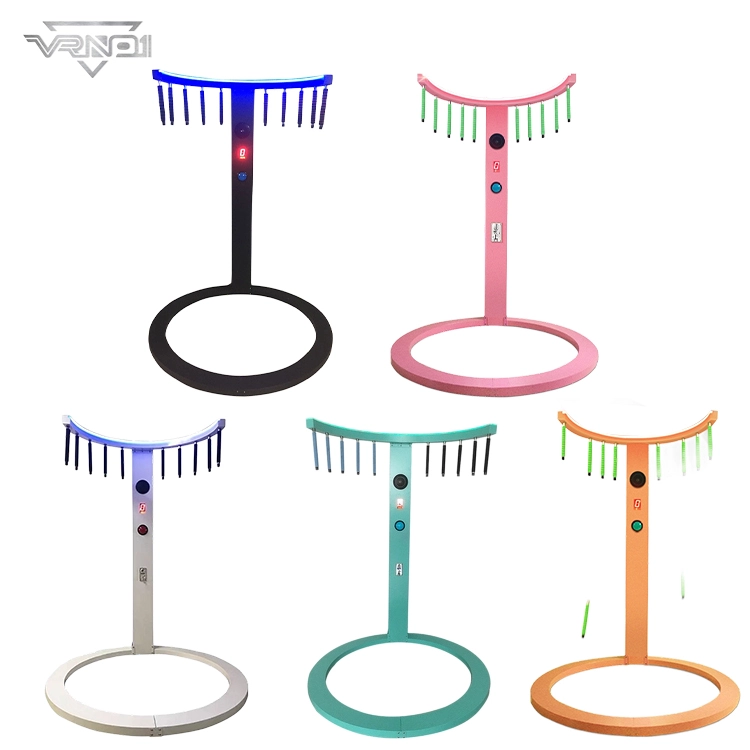
VRN0.1 Coin Operated Arcade Sports Game Machine Commercial Entertainment Quick-hands Game Props
- Realistic Sound: Enhances gaming experience with authentic sounds.
- Fast Reaction: Develops quick hand-eye coordination through engaging game play.
- DIY Kit: Allows for customization and personalization of the baton.
- Metal and Plastic Construction: Durable and robust build quality.
- Coin Operated: Fun for players who enjoy arcade-like experiences.
 Scan QR Code
Whatsapp: +8618127818571
Scan QR Code
Guangzhou Skyfun Technology Co.,Ltd
skyfunvrgame
skyfun game