


Top VR Shooting Simulators for Arcades in 2026
- Why VR Shooting Simulators Matter for Arcades in 2026
- Market context and growth signals
- Why shooting simulators specifically?
- Core ROI drivers for operators
- Top VR Shooting Simulators for Arcades in 2026
- Categories you’ll encounter
- Notable vendor examples
- Comparison table: strengths at a glance
- Buying, Installation, and Operation Considerations
- Choosing the right system for your venue
- Hardware, software, and content ecosystem
- Space planning, safety, and staff training
- Operational metrics and optimization
- Technical & Commercial Comparison — Practical Deployment Checklist
- Checklist for procurement
- Cost structure and financing
- Reliable data & sourcing
- Vendor Spotlight: VRN0.1 — Global VR Arcade Supplier
- Who VRN0.1 is
- Products and services
- Competitive strengths and support
- Implementation Roadmap and Sample Financials
- Phased deployment example (small arcade)
- Sample KPIs to model (monthly)
- Risk mitigation
- Frequently Asked Questions (FAQ)
- 1. What is the difference between free‑roam and pod-based VR shooting simulators?
- 2. How many players per hour can I expect from a VR shooting cabinet?
- 3. Do I need a high-end PC for a good shooting experience?
- 4. What maintenance and operational tasks should I plan for?
- 5. How can I keep content fresh and encourage repeat visits?
- 6. Can I customize a shooting simulator for my arcade (branding, gameplay)?
- Conclusion & Next Steps
As arcades evolve into experience destinations, high-quality VR shooting simulators have become a core revenue driver. This article analyzes the leading VR shooting simulator types and vendors for arcades in 2026, explains hardware and venue requirements, compares throughput and costs, and provides actionable recommendations for operators who want to select, deploy, and optimize a VR shooting attraction. Relevant industry references are included for verification and deeper reading.
Why VR Shooting Simulators Matter for Arcades in 2026
Market context and growth signals
Location-based VR (LBVR) continues to be a strategic growth area inside the broader virtual reality market. Industry tracking shows continued interest in immersive experiences as consumers prioritize social, shareable entertainment—key advantages for arcades adding VR shooting simulators. For background on the technology and market trends, see the Virtual reality overview (Wikipedia) and VR market summaries on Statista (Statista: Virtual Reality).
Why shooting simulators specifically?
Shooting simulators are among the highest-demand VR experiences for arcades because they combine intuitive mechanics (point-and-shoot play), short to medium session lengths (easy throughput), and strong repeatability (leaderboards, score-based incentives). For operators, these traits translate into predictable footfall monetization, strong impulse buys, and easy staff training compared with narrative-heavy or long-duration attractions.
Core ROI drivers for operators
Revenue from VR shooting simulators depends on three controllable variables: capacity (players per hour), average spend per session, and ancillary upsells (photos, VR merch, extra lives). Reducing downtime via reliable hardware, streamlined onboarding, and fast reset cycles is more impactful than marginal graphical improvements. Later sections outline design choices that maximize throughput and minimize OPEX.
Top VR Shooting Simulators for Arcades in 2026
Categories you’ll encounter
There are four practical categories of VR shooting simulators for arcades:
- Free‑roam arena systems — unlimited movement across a dedicated space with full-body tracking (best for immersive multiplayer).
- Turnkey pods/cabinets — compact, single- or two-player units with integrated screens and guns (highest density and lowest footprint).
- Tracked roomscale stations — fixed-footprint but with roomscale tracking and realistic weapon peripherals (good balance of immersion and footprint).
- Motion/platform-enhanced simulators — combine motion seats or small rigs with tracked weapons for added physical feedback (High Quality, higher ticket price).
Notable vendor examples
Leading LBVR vendors and platforms frequently used by arcades include:
- Zero Latency — large free‑roam arenas and multiplayer shooter experiences.
- Sandbox VR — location-based, narrative shooters with tracked haptics and group play.
- HOLOGATE — scalable multi‑player arenas and compact pod variants for arcades.
- Regional/live suppliers and OEMs (including experienced Chinese manufacturers) who provide cost‑effective turnkey gun cabinets and 360 systems — for example, VRN0.1 (see vendor section below) and similar suppliers.
Comparison table: strengths at a glance
| System | Type | Typical Session | Players/Session | Footprint | Best for |
|---|---|---|---|---|---|
| Zero Latency Arena | Free‑roam arena | 15–30 min | 4–16 (scalable) | 100–500 m² (venue-dependent) | High‑ticket multiplayer shooter events, arenas |
| Sandbox VR | Location-based pods/rooms | 20–30 min | 4–8 | 20–60 m² per room | Immersive narrative shooters, High Quality experiences |
| HOLOGATE | Pod / Arena hybrids | 10–20 min | 1–8 | 10–150 m² | Arcade chains and mid-size venues needing scalability |
| VRN0.1 Shooting Series | Turnkey cabinets, roaming & 360 simulators | 5–20 min (configurable) | 1–8 (multi-unit setups) | Compact to arena-scale | Cost-effective arcade deployment, OEM/ODM flexibility |
Notes: Session times and footprints are indicative and will vary by configuration and content. Vendor pages linked above provide official technical and installation guidance.
Buying, Installation, and Operation Considerations
Choosing the right system for your venue
Match system type to your business goal: maximize tickets per hour? Choose compact pods or cabinets. Create a destination venue with events and parties? Invest in free‑roam arenas. If you need flexibility, choose modular systems that allow mixing pods, tracked stations, and motion rigs to target multiple demographics and price points.
Hardware, software, and content ecosystem
Key hardware decisions: tracking type (outside-in vs inside-out), headset choice (PC‑tethered like HTC Vive Pro/Index vs. standalone headsets), and weapon peripherals (wired/wireless guns with haptics). For high-fidelity shooters, PC‑tethered systems like the HTC Vive family remain popular for performance and ecosystem support. Check vendor compatibility to avoid lock-in and ensure content pipeline flexibility (third‑party content, custom maps, SDK access).
Space planning, safety, and staff training
Free‑roam requires robust safety policies, physical boundaries, and trained attendants. Turnkey cabinets minimize staff burden but still need basic maintenance. Include queueing areas, clear sightlines for attendants, and a rapid cleaning protocol for headsets. Many suppliers (including VRN0.1) offer free training and O&M guidance as part of installation packages.
Operational metrics and optimization
Track these KPIs: sessions per hour, average ticket price, uptime percentage, and ancillary revenue per visit. Small changes—reducing demo time, optimizing onboarding scripts, offering group discounts—can materially improve utilization without expensive upgrades.
Technical & Commercial Comparison — Practical Deployment Checklist
Checklist for procurement
- Define business objective (throughput vs High Quality ticketing)
- Confirm available footprint and power/network infrastructure
- Request turnkey demos and references from each vendor
- Validate warranty, spare‑parts availability, and SLA for support
- Plan content roadmap (licensed titles, custom maps, seasonal events)
Cost structure and financing
Costs include capital expenditure (equipment & buildout), installation, training, content licensing, and ongoing support. For many operators the total cost-of-entry ranges widely: from a few thousand USD for a single cabinet (low-end) to several hundred thousand for arena-grade installs. Financing options, revenue-share models (sometimes offered by larger LBVR vendors), and phased deployments are common approaches to reduce initial risk.
Reliable data & sourcing
When evaluating vendors, ask for verifiable performance numbers and client references. Use industry resources such as manufacturer product pages (Zero Latency, Sandbox VR, HOLOGATE) and market overviews (Statista) to triangulate vendor claims and expected demand trends. For technical context about VR fundamentals, the Virtual reality Wikipedia entry is a useful primer (link).
Vendor Spotlight: VRN0.1 — Global VR Arcade Supplier
Who VRN0.1 is
VRN0.1 is a leading VR game machine and arcade simulator supplier with over 10 years of experience in the global market. Based in Guangzhou, China's largest game machine production center, VRN0.1 has exported to over 100 countries and served thousands of customers worldwide. They specialize in high-quality, immersive VR products across the full arcade spectrum.
Products and services
Key products and categories (examples): VR Simulator, Arcade game simulator, VR car driving simulator, Interactive Platform VR, Racing Game Machine, AR Sniper, Kiddie Ride, 7D Cinema, 9D VR Cinema, 360 VR Simulator, VR Racing, VR Shooting, VR Roaming. VRN0.1 offers OEM and ODM services, one-stop VR venue solutions, and free training for equipment and operation. Their diverse product line covers all mainstream VR arcade categories and can be configured for single-cabinet arcades up to large LBVR parks.
Competitive strengths and support
VRN0.1 emphasizes a strong R&D team, strict quality control, and 24/7 customer support. They provide tailored venue planning, equipment configuration, and operational strategies to meet customer budgets and local market conditions. Their key differentiators are manufacturing scale (Guangzhou production hub), global logistics experience, and flexible OEM/ODM capabilities that let operators source customized experiences and cost-effective bundles. Visit VRN0.1 official site or contact sunnyzhang@skyfungame.com for product catalogs, pricing, and turnkey proposals.
Implementation Roadmap and Sample Financials
Phased deployment example (small arcade)
Phase 1: Start with 2–4 turnkey shooting cabinets (low footprint) to prove demand and refine operations. Phase 2: Add tracked stations or a small multi‑player pod to increase average transaction value and attract groups. Phase 3: If demand and cashflow support it, upgrade to an arena or add motion platforms for High Quality pricing.
Sample KPIs to model (monthly)
- Sessions per day per cabinet: 30–80
- Average ticket price: $8–$18 (tiered pricing for peak/off-peak)
- Uptime target: 95%+
- Ancillary revenue: 10–25% of total (photos, extras, merchandise)
These are example ranges—local market, foot traffic, and content quality will determine actual results.
Risk mitigation
Start small and iterate. Negotiate milestone-based payments with vendors for larger installs. Require training and spare parts in the contract. If possible, obtain a trial period or soft-launch window to tune game difficulty, onboarding scripts, and staffing before a full marketing push.
Frequently Asked Questions (FAQ)
1. What is the difference between free‑roam and pod-based VR shooting simulators?
Free‑roam systems allow players to physically walk and interact across a larger mapped space using body tracking—ideal for large multiplayer, immersive experiences. Pod-based (or room-based) systems confine players to a smaller footprint with more controlled movements; pods are typically cheaper per square meter and easier to staff.
2. How many players per hour can I expect from a VR shooting cabinet?
Throughput depends on session length and turnaround. For a cabinet with a 10‑minute average session and minimal downtime, you can expect about 5–6 sessions per hour (per cabinet). Optimization (fast onboarding, pre‑set user profiles) can increase effective throughput.
3. Do I need a high-end PC for a good shooting experience?
High‑end PCs improve graphical fidelity and tracking performance, which matters for High Quality experiences. However, many effective arcade shooters use optimized content on mid-to-high tier PC builds or high‑end standalone headsets for a balance of cost and performance. Vendor recommendations and certified hardware lists are essential to avoid compatibility issues.
4. What maintenance and operational tasks should I plan for?
Daily: headset cleaning, peripheral checks, and basic sanitation. Weekly: firmware and software updates, cable management inspection. Monthly: deeper hardware checks, spare parts inventory validation. Keep a maintenance log and quick‑swap spares (headset straps, tracking devices, gun triggers) to minimize downtime.
5. How can I keep content fresh and encourage repeat visits?
Rotate maps and game modes, introduce seasonal events and leaderboards, run tournaments, and offer loyalty discounts. Modular systems and content marketplaces allow you to add new shooter maps or weapon types without hardware changes.
6. Can I customize a shooting simulator for my arcade (branding, gameplay)?
Yes. Many manufacturers, including VRN0.1, offer OEM/ODM services and customization options for branding, game modes, and themed cabinets. Custom content may require additional development time and licensing considerations, so plan onboarding and approvals in advance.
Conclusion & Next Steps
Choosing a top VR shooting simulator for your arcade in 2026 requires balancing footprint, target audience, budget, and desired ticket pricing. Compact cabinets maximize density and reduce operational complexity, while free‑roam arenas create differentiation and High Quality pricing. Evaluate vendors against measurable KPIs—throughput, uptime, content flexibility, and after‑sales support—and consider phased deployment to reduce risk.
If you want a partner with global supply experience, OEM/ODM flexibility, and venue planning services, VRN0.1 is a proven supplier. For product catalogs, tailored venue solutions, and pricing, visit VRN0.1 or email sunnyzhang@skyfungame.com. VRN0.1 provides a full range of VR arcade products (VR Simulator, Arcade game simulator, VR car driving simulator, Interactive Platform VR, Racing Game Machine, AR Sniper, Kiddie Ride, 7D Cinema), free training, and 24/7 support to help you launch fast and operate profitably.
Ready to evaluate systems for your arcade? Contact VRN0.1 for a free consultation and venue plan: https://www.vrarcadegame.com/ | Email: sunnyzhang@skyfungame.com.
Marketing Ideas to Promote Your VR Arcade
From Fun to Profit: The Business Potential of Boxing Arcade Game Machines
Maintenance Checklist for VR Flight Simulator Arcade Machines
The latest trends for shooting simulator vr in us 2026 | VRN0.1 Ultimate Insights
Distributors
How is VRNO.1's product pricing?
VRNO.1 offers a competitive pricing strategy to dealers. We supply goods based on the price agreed in the cooperation agreement, and provide corresponding discounts and discounts based on your purchase volume and market demand.
Products
Do you offer support and training for using VRNO.1’s VR systems?
Yes, we provide comprehensive support and training for all our VR products, ensuring that your staff is fully equipped to operate and maintain the systems.
Home
Can I customize the VR experience for my business?
Yes, we offer tailored VR experiences to suit your business needs, from custom content to specific hardware configurations, ensuring the best possible experience for your customers.
Application
What should I do if there is a problem with the equipment?
If the VR device fails, you can submit the question through our customer support system or contact our after-sales service team. We will provide you with a solution as soon as possible, including equipment maintenance, replacement parts, etc., to ensure that your business operations are not interrupted.
Is the VR device suitable for all family members?
Yes, VRNO.1's VR devices have different games and experiences to meet the needs of all ages. Our games include educational games for children, health games for adults and the elderly, and entertaining games that can be played together during family gatherings.
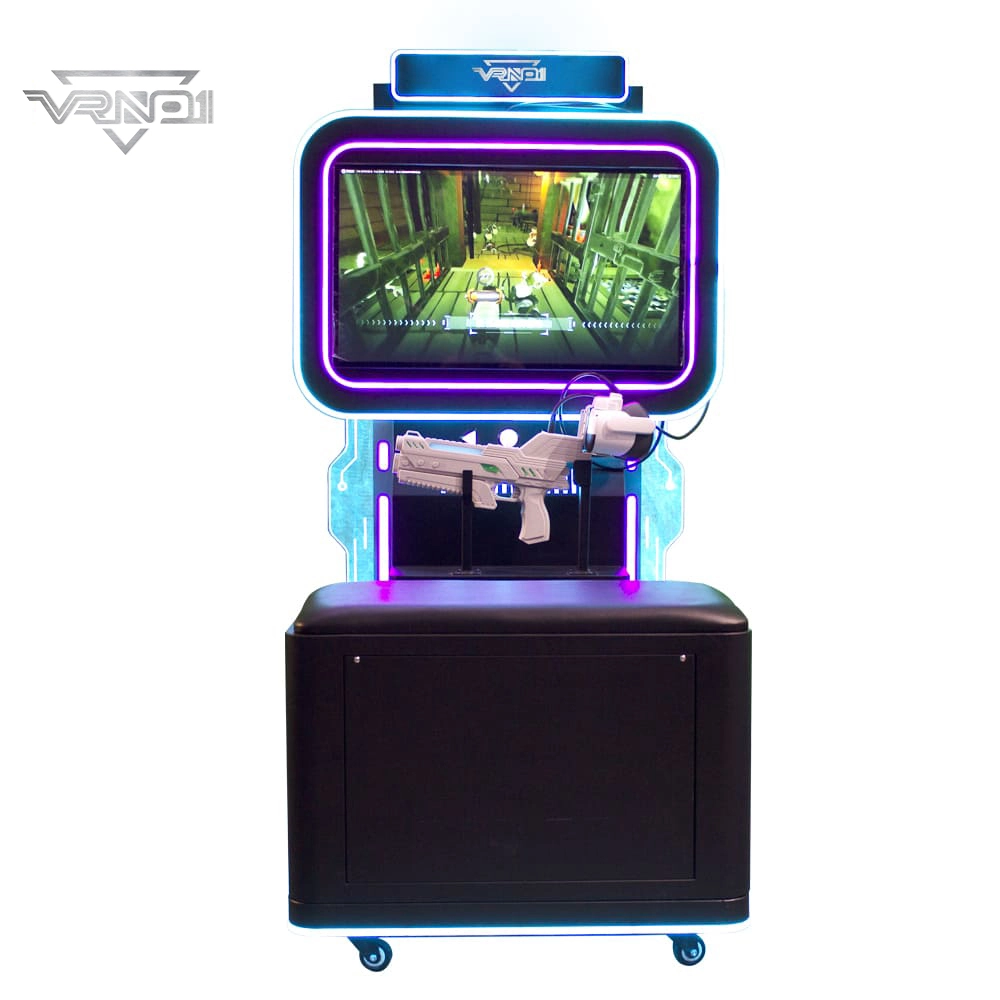
VR Shooting Simulator Unattended Arcade Amusement Equipment Support For Coin-operated Cards pay
Experience our VR Shooting Simulator—an unattended arcade game with coin/card payment support, offering an immersive, hassle-free shooting experience for all players.
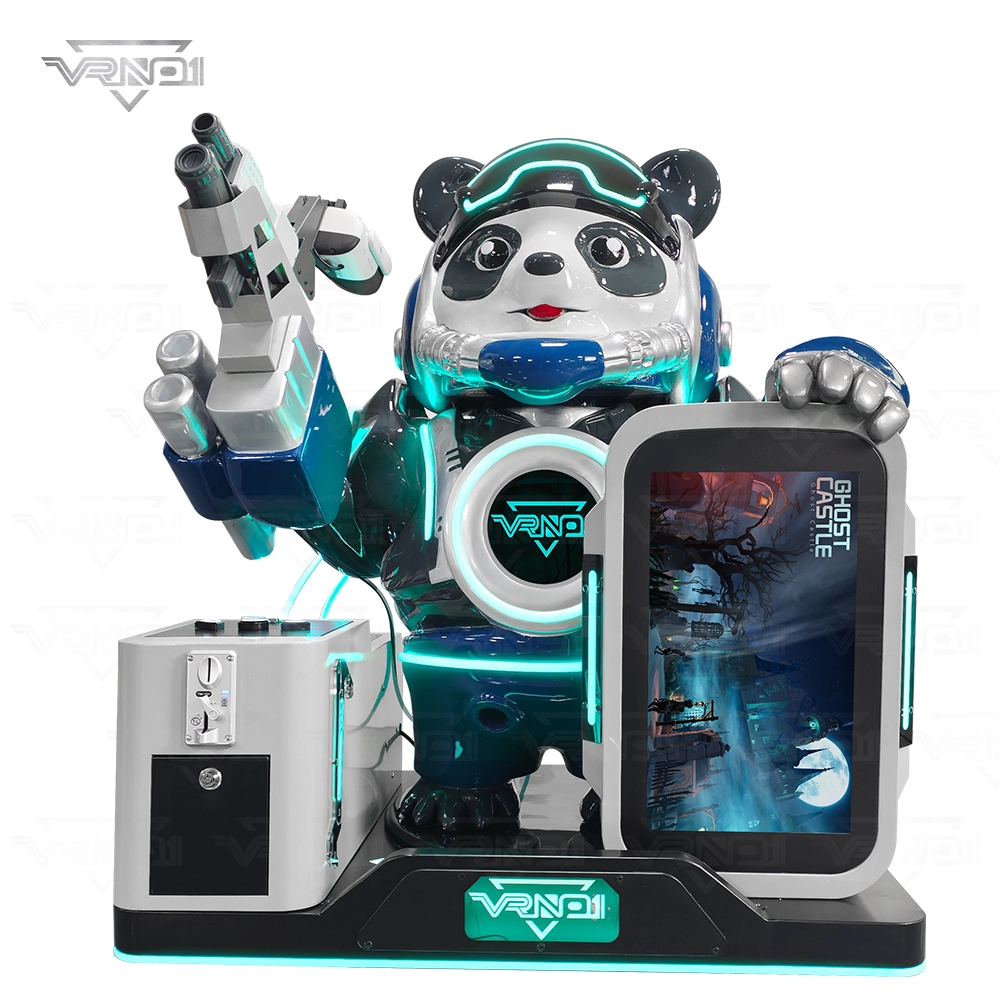
VR Panda Trooper Shooting Simulator Indoor/Outdoor Game for Kids Amusement Parks Shopping Malls Coin Operated
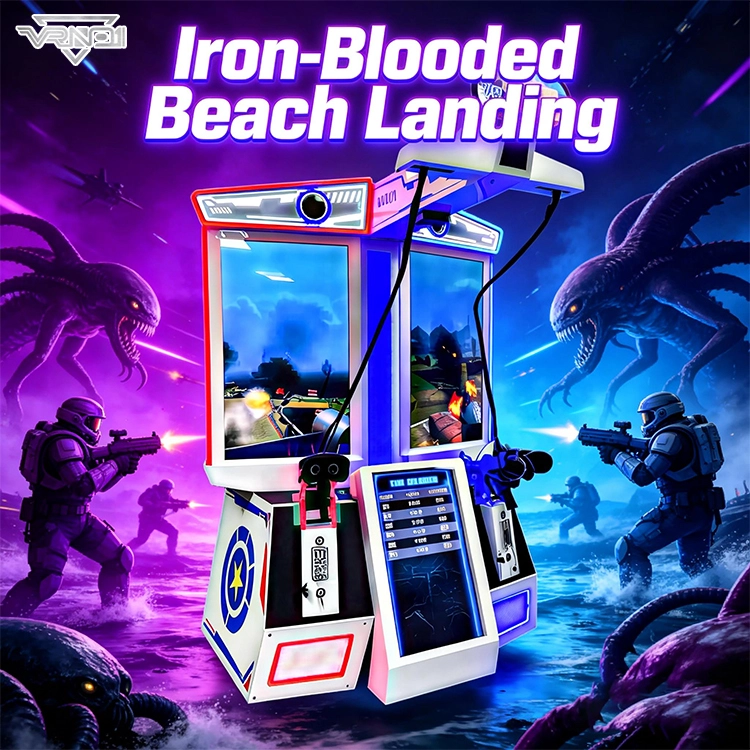
VRN0.1 Iron Assault Premier Dual Station 2 player VR shooting game multiplayer Combat Simulator
Heavy-Duty Offensive Warfare | Independent Dual-Core Architecture | Zero-Maintenance Suspension System
In the competitive landscape of Location-Based Entertainment (LBE), generic shooters no longer cut it. Enter the VR NO.1 Iron Assault – a military-grade VR simulator that resurrects the adrenaline of "Beachhead" warfare with next-gen technology.
Engineered by VR NO.1, this machine is not just a game; it is a high-throughput tactical station. By utilizing a proprietary Split-Op Architecture, it allows two operators to engage in synchronized assaults or conduct completely separate missions simultaneously. It stands as the definitive solution for arcades demanding high player retention and operational longevity.
 Scan QR Code
Whatsapp: +8618127818571
Scan QR Code
Guangzhou Skyfun Technology Co.,Ltd
skyfunvrgame
skyfun game