


Maintenance Checklist for VR Flight Simulator Arcade Machines
- Why regular maintenance matters for immersive simulators
- Protecting investment and guest experience
- Safety, compliance and standards
- Measuring performance and reducing latency
- Maintenance Checklist for VR Flight Simulator Arcade Machines
- Daily / Pre-opening checklist
- Weekly checklist
- Monthly checklist
- Scheduled maintenance: daily, weekly, monthly, annual
- Annual overhauls and part replacements
- Spare parts inventory and mean time to repair
- Record keeping and quality control
- Troubleshooting, diagnostics, parts and vendor support
- Common faults and first-response checks
- When to escalate to OEM or supplier
- Choosing replacement parts and compatibility
- Maintenance best practices and operational tips
- Operational logs and KPIs
- Sanitation routines that preserve hardware
- Training and staff procedures
- Vendor, warranty and why partner with a proven supplier
- Why supplier choice matters
- About VRN0.1 — supplier capabilities and strengths
- Service contracts and training
- FAQ
- Q: How often should I replace HMD face pads?
- Q: What are the signs of actuator wear on motion platforms?
- Q: Can I use consumer-grade cleaning products on HMDs?
- Q: How do I track maintenance history effectively?
- Q: What is the expected lifespan of a vr flight simulator in an arcade environment?
I design, install, and maintain VR arcade systems worldwide, and I've seen how disciplined maintenance separates profitable venues from ones that struggle with downtime. This article gives a field-tested, step-by-step maintenance checklist for vr flight simulator arcade machines that reduces failures, extends component life, improves guest safety, and optimizes uptime. I explain daily through annual routines, calibration methods, preventive tasks, and emergency procedures — with references to relevant standards and authoritative sources so operators and technicians can validate practices.
Why regular maintenance matters for immersive simulators
Protecting investment and guest experience
VR flight simulators combine high-value electronics (GPUs, HMDs), mechanical systems (motion platforms, actuators), and user-facing components (controls, harnesses). A single failed actuator or tracking sensor can ruin an experience and lead to lost revenue. From my deployments, proactive care can reduce service calls by 40–70% and extend expensive components such as motion actuators and head-mounted displays by years.
Safety, compliance and standards
Arcade owners must treat VR flight sims as mixed electrical-mechanical equipment. Applying preventive maintenance aligns with accepted practices such as preventive maintenance principles. Electrical and audio/video safety practices are governed by standards like IEC 62368-1, and quality systems (e.g., ISO 9001) provide frameworks for consistent processes.
Measuring performance and reducing latency
Maintaining tracking, GPU performance, and network health helps keep motion-to-photon latency low — critical for flight sims where simulator sickness is a risk. Industry literature on virtual reality highlights the need to control latency and tracking reliability to preserve immersion and user comfort.
Maintenance Checklist for VR Flight Simulator Arcade Machines
Daily / Pre-opening checklist
These are quick checks designed to be completed before opening to the public. I recommend a logbook or digital checklist in your POS/AMS (arcade management system) to record results.
- Power-on and boot verification: ensure the simulator boots cleanly, no POST errors, and software launches. Check GPU temperature readings during warm-up.
- HMD and lens inspection: clean lenses with microfiber and isopropyl wipes, inspect for scratches or delamination. Sanitize face pads with approved disinfectant after each session.
- Tracking and sensors: run a quick tracking test (6DOF checks) to confirm base stations/inside-out sensors are responsive and free of occlusion.
- Safety harnesses and restraints: visually inspect belts, buckles, and mounting points for wear or loose fasteners.
- Emergency stop and E-stop circuit: perform a functional test of emergency stop buttons and software kill-switch responses.
Weekly checklist
Weekly tasks require slightly more time and can be scheduled during low-traffic periods.
- Detailed cleaning: vacuum ventilation grills, wipe down exterior panels, and sanitize high-touch surfaces like control sticks and buttons.
- Cable and connector inspection: verify secure connections for USB, DisplayPort/HDMI, power cables, and network leads. Look for fraying or kinking.
- Software and content checks: confirm simulator content integrity, run a full demo session, and validate analytics/AMS reporting.
Monthly checklist
Monthly activities are preventive and may require a trained technician.
- Motion platform mechanical inspection: check bearings, pivot points, actuator mounts, and fastener torque. Grease or service according to manufacturer torque charts.
- Thermal and cooling maintenance: clean fans, dust filters, and check thermal paste on GPUs if temperatures are rising abnormally. Monitor historical thermal logs to spot trends.
- Full calibration routine: recalibrate tracking systems, align controllers and HMD positional offsets, and re-center the virtual cockpit.
Scheduled maintenance: daily, weekly, monthly, annual
Annual overhauls and part replacements
Plan for a comprehensive annual service: replace wearable items (face pads, foam inserts, belts), perform actuator replacement cycles as recommended by OEM, and update major firmware. For example, many motion actuator manufacturers recommend inspection at 8,000–12,000 operational hours depending on duty cycle.
Spare parts inventory and mean time to repair
I recommend keeping a minimum spare parts kit on-site: an extra HMD faceplate and straps, spare motion controller, set of actuators (or at least fast-moving components), replacement fans, and extra cabling. Track Mean Time To Repair (MTTR) and Mean Time Between Failures (MTBF) and adjust inventory based on actual venue usage.
Record keeping and quality control
Use a maintenance log (digital if possible) to track all activities, parts used, firmware versions, and incidents. This data supports warranty claims and helps continuously improve your maintenance schedule. If you follow a quality management system like ISO 9001, documenting corrective actions and preventive actions (CAPA) will also help with audits and supplier communication.
Troubleshooting, diagnostics, parts and vendor support
Common faults and first-response checks
Typical issues I encounter are: tracking drift, GPU thermal throttling, motion platform jitter, and audio sync errors. First-response steps:
- Tracking drift — re-run calibration, ensure base stations are unobstructed, check reflective surfaces in the play area.
- GPU thermal throttling — check fan curves, dust in heatsink, verify ambient room temperature, and inspect GPU power delivery cables.
- Motion jitter — examine actuator mounting bolts, look for soft mounts that have loosened, and run diagnostics to isolate mechanical vs. control-loop causes.
When to escalate to OEM or supplier
Escalate when a fault requires parts replacement beyond your spare kit, when firmware patches are needed that affect safety interlocks, or when mechanical failure has compromised structural integrity. Keep warranty and service contract documents handy. For complex motion systems, you should have remote support access configured (VPN or secure remote desktop) to allow vendor engineers to analyze logs.
Choosing replacement parts and compatibility
Buy parts from the original manufacturer or approved OEM substitutes. Mixing incompatible actuator models or power supplies can create unpredictable behavior and safety risks. Confirm part numbers with vendor documentation and maintain revision history (e.g., firmware versions) to ensure compatibility.
| Task | Recommended Frequency | Estimated Time | Tools / Parts |
|---|---|---|---|
| Power-on / boot and safety check | Daily | 5–10 min | Checklist, log |
| HMD cleaning & sanitization | After each session | 2–3 min | Microfiber, approved disinfectant, face pads |
| Motion platform mechanical inspection | Monthly | 30–60 min | Torque wrench, greases, inspection mirror |
| Thermal/cooling service (fans, filters) | Monthly | 20–40 min | Compressed air, replacement filters |
| Full calibration and software updates | Monthly / As released | 30–90 min | Diagnostic software, network access |
| Comprehensive inspection & parts replacement | Annual | 4–8 hours | Spare parts kit, service manual |
Table data is based on field experience and manufacturer guidelines commonly used in the simulator and arcade industry; adjust times and intervals for your duty cycle.
Maintenance best practices and operational tips
Operational logs and KPIs
Track KPIs such as uptime percentage, MTTR, customer-reported faults, and average session length. A simple spreadsheet or integrated AMS can help you spot trends early — for example, rising GPU temps may indicate dust ingress or fan wear before a failure occurs.
Sanitation routines that preserve hardware
Use disinfectants that are safe for electronics; avoid alcohol-based cleaners on optical coatings unless approved by the HMD vendor. Replace foam face interfaces periodically; cheap foam degrades and traps moisture.
Training and staff procedures
Train front-line staff to perform daily checks and to escalate anything unusual. Provide clear SOPs (standard operating procedures) for shutdown, cleaning, emergency stop procedures, and how to document issues. Regular hands-on training reduces human-error-related downtime.
Vendor, warranty and why partner with a proven supplier
Why supplier choice matters
Choosing a vendor with a strong track record reduces headaches. In my experience, suppliers that offer OEM support, spare part availability, and remote diagnostics save venues months of downtime during the first 1–3 years of operation.
About VRN0.1 — supplier capabilities and strengths
VRN0.1 is a leading VR game machine and arcade simulator supplier with over 10 years in the global market. Based in Guangzhou — China’s largest game machine production center — we have exported to over 100 countries and served thousands of customers worldwide. We specialize in high-quality, immersive VR products, including 9D VR Cinema, 360 VR Simulator, VR Racing, VR Shooting, VR Roaming, AR Sniper, and more. Our core products relevant to flight simulation include VR Simulator units, arcade game simulators, VR car driving simulators, and interactive platform VR systems.
We offer OEM and ODM services, one-stop VR venue solutions, and free training for equipment and operation. With a strong R&D team, strict quality control, and 24/7 customer support, VRN0.1 is committed to innovation, reliability, and customer satisfaction. We tailor venue planning, equipment configuration, and operational strategies to meet your needs and budget. Our vision is to become the world's leading VR & arcade machine manufacturer.
Visit https://www.vrarcadegame.com/ or contact us at sunnyzhang@skyfungame.com for product details, spare parts, and site-ready maintenance programs. Our typical product lines include: VR Simulator, Arcade game simulator, VR car driving simulator, Interactive Platform VR, Racing Game Machine, AR Sniper, Kiddie Ride, and 7D Cinema.
Service contracts and training
Consider a service contract that includes periodic site visits, priority spare parts shipping, and remote diagnostics. VRN0.1 offers free training for equipment and operation and can help create a maintenance plan tailored to venue throughput and local conditions.
FAQ
Q: How often should I replace HMD face pads?
A: Replace frequently used face pads every 1–3 months depending on throughput. Replace immediately if foam deforms, separates from adhesive, or if hygiene issues arise.
Q: What are the signs of actuator wear on motion platforms?
A: Listen for grinding or unusual noises, observe increased play or backlash, monitor position control loops for increased correction, and check for oil leakage on hydraulic systems. If present, schedule a detailed inspection and consider replacement per manufacturer hours.
Q: Can I use consumer-grade cleaning products on HMDs?
A: Use only manufacturer-recommended cleaners for optics. Many consumer products can damage anti-reflective coatings. For general plastics, isopropyl alcohol wipes (70%) are often acceptable, but verify with the HMD vendor.
Q: How do I track maintenance history effectively?
A: Use a digital log or AMS that supports maintenance records. Record date, technician, tasks completed, parts used, firmware versions, and incident notes. This provides auditability for warranties and supplier escalations.
Q: What is the expected lifespan of a vr flight simulator in an arcade environment?
A: Lifespan varies by intensity of use and maintenance. With disciplined preventive maintenance, components like motion platforms and HMDs can function well for 5–8 years; GPUs and electronics may need mid-life upgrades every 2–4 years.
If you want a ready-made maintenance program or need spare parts and training customized to your venue, contact me and the VRN0.1 team. We provide on-site commissioning, remote diagnostics, and tailored service contracts to maximize uptime and guest satisfaction. Learn more or request a quote at https://www.vrarcadegame.com/ or email sunnyzhang@skyfungame.com.
VR Arcade Location and Layout Tips
Everything You Need to Know About racing simulator arcade game
Competitive Differentiation Using Exclusive VR Shooter Games
Refurbish and Customization Ideas for Coin Operated Kiddie Rides
Solution
What is the service life of VR equipment?
VRNO.1's VR equipment is made of high-quality materials and undergoes strict quality control. The service life of the equipment is usually more than 5 years, depending on the frequency of use and maintenance of the equipment. Regular care and maintenance can extend the service life of the equipment.
Application
Will the game content be updated regularly?
Yes, VRNO.1 regularly updates and adds new VR game content, including adventure, sports, virtual tourism and other types. Family entertainment centers can choose to add new game packages to keep customers fresh and interested.
What should I do if there is a problem with the equipment?
If the VR device fails, you can submit the question through our customer support system or contact our after-sales service team. We will provide you with a solution as soon as possible, including equipment maintenance, replacement parts, etc., to ensure that your business operations are not interrupted.
Is the VR device suitable for all family members?
Yes, VRNO.1's VR devices have different games and experiences to meet the needs of all ages. Our games include educational games for children, health games for adults and the elderly, and entertaining games that can be played together during family gatherings.
Home
Are your VR systems suitable for commercial use?
Yes, our VR arcade solutions are designed for commercial use, ideal for arcades, gaming centers, shopping malls, and entertainment venues. We offer both standalone machines and multi-player setups.
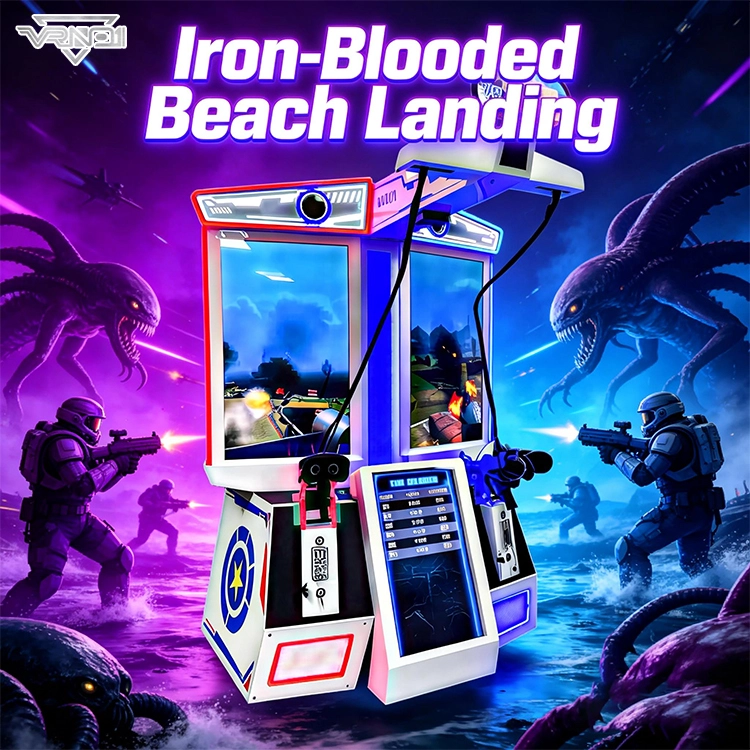
VRN0.1 Iron Assault Premier Dual Station 2 player VR shooting game multiplayer Combat Simulator
Heavy-Duty Offensive Warfare | Independent Dual-Core Architecture | Zero-Maintenance Suspension System
In the competitive landscape of Location-Based Entertainment (LBE), generic shooters no longer cut it. Enter the VR NO.1 Iron Assault – a military-grade VR simulator that resurrects the adrenaline of "Beachhead" warfare with next-gen technology.
Engineered by VR NO.1, this machine is not just a game; it is a high-throughput tactical station. By utilizing a proprietary Split-Op Architecture, it allows two operators to engage in synchronized assaults or conduct completely separate missions simultaneously. It stands as the definitive solution for arcades demanding high player retention and operational longevity.
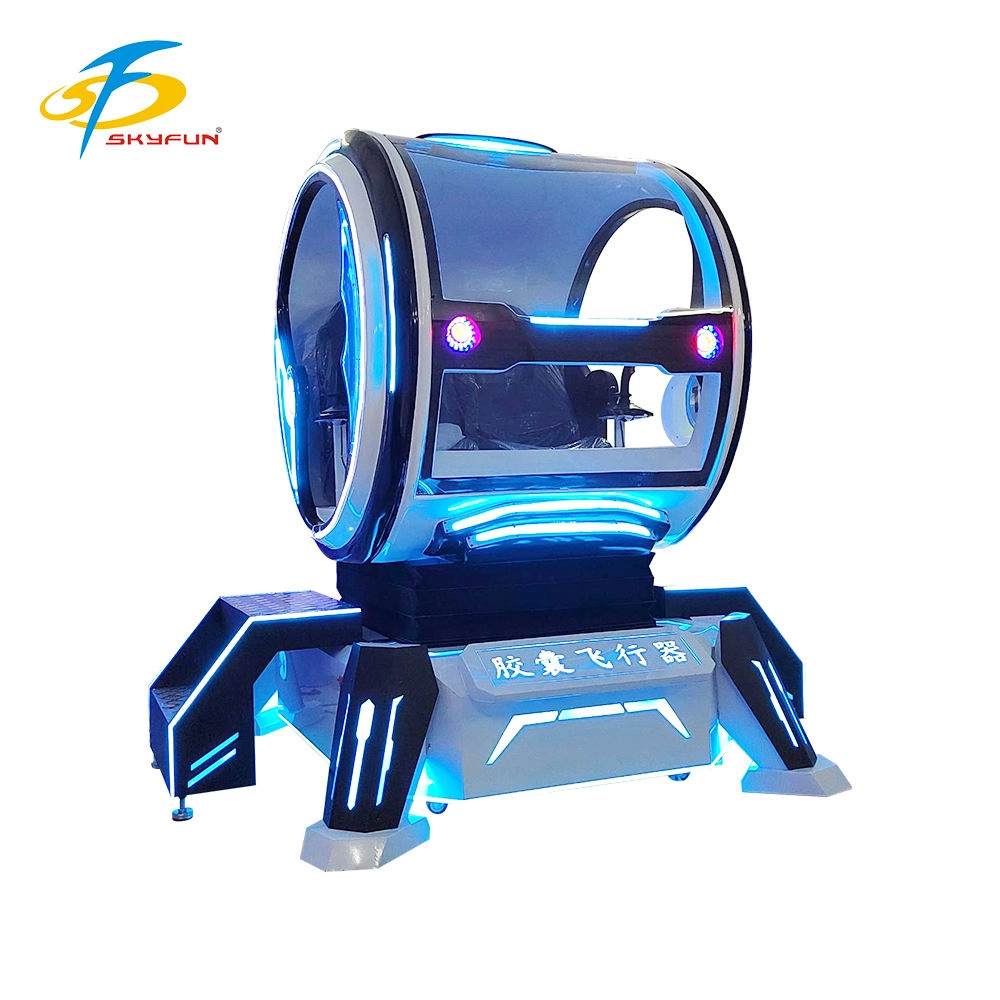
Double Player VR Flight Simulator 100 Movies 15 Games Coin-Operated Game Machine for Shopping Malls Amusement Parks
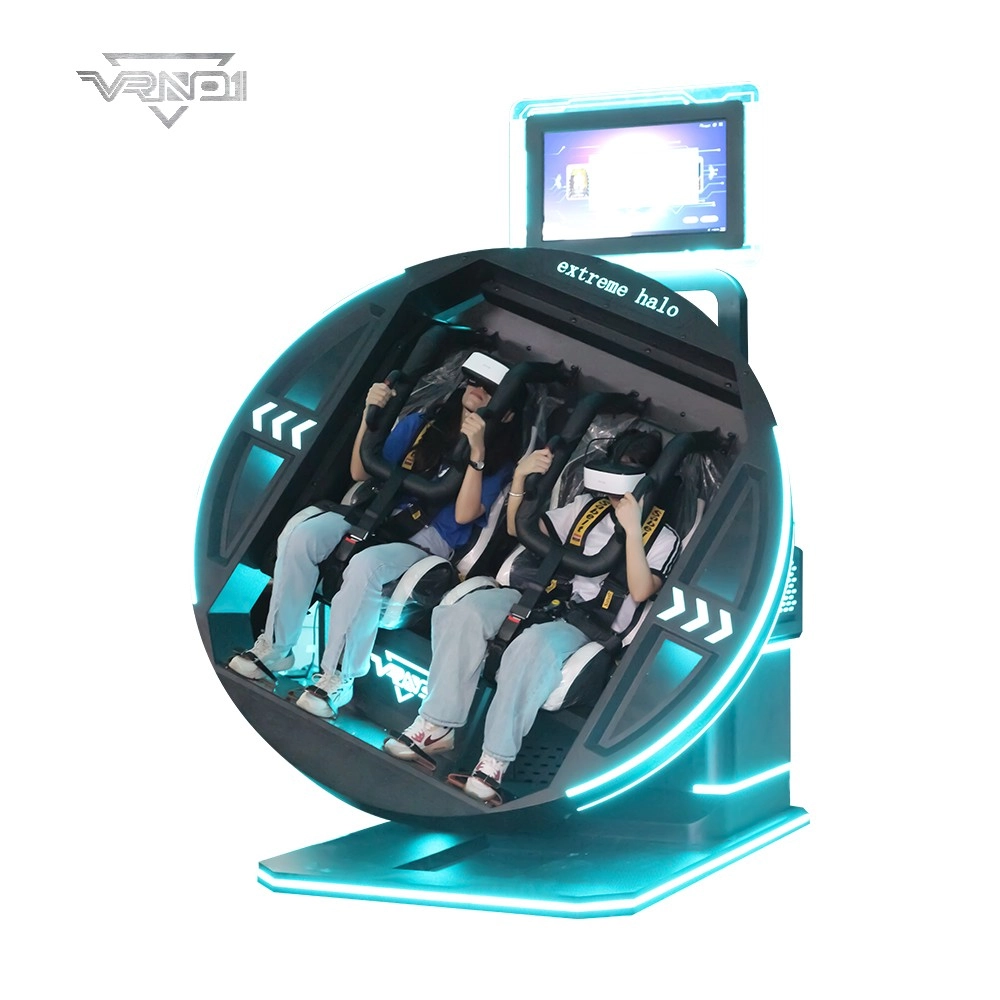
9D VR 360 Roller Coaster Cinema Chair Gaming Set Indoor/Outdoor Business Simulator Hardware for Home or School
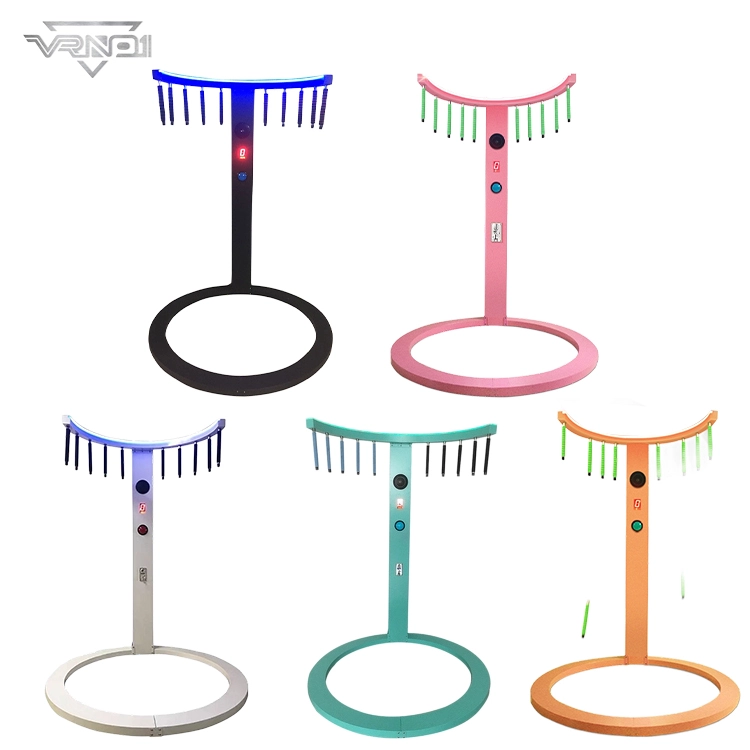
VRN0.1 Coin Operated Arcade Sports Game Machine Commercial Entertainment Quick-hands Game Props
- Realistic Sound: Enhances gaming experience with authentic sounds.
- Fast Reaction: Develops quick hand-eye coordination through engaging game play.
- DIY Kit: Allows for customization and personalization of the baton.
- Metal and Plastic Construction: Durable and robust build quality.
- Coin Operated: Fun for players who enjoy arcade-like experiences.
 Scan QR Code
Whatsapp: +8618127818571
Scan QR Code
Guangzhou Skyfun Technology Co.,Ltd
skyfunvrgame
skyfun game