


Monetizing Your Arcade VR: Pricing Strategies
- Effective Revenue Models for Arcade VR Venues
- Understand Customer and Commercial Keywords: arcade vr pricing and value
- Primary Pricing Models for Arcade VR (commercial keyword: vr arcade business)
- How to choose between per-play and time-based pricing for arcade vr
- Operational example (commercial keyword: vr simulator)
- Pricing Benchmarks and Local Market Positioning (keyword: vr arcade pricing)
- Revenue and ROI Modeling: Example Scenarios (keyword: vr arcade business analysis)
- Ancillary Revenue: F&B, Merch, and Cross-Selling (keyword: arcade vr revenue)
- Dynamic Pricing and Promotions (keyword: vr arcade pricing strategy)
- Price Testing and Measurement (keyword: arcade vr price testing)
- Cost Considerations and Margin Management (keyword: vr arcade costs)
- How VRN0.1 Supports Pricing and Venue Profitability (keyword: VRN0.1 vr arcade simulator)
- Case Study: Mix-and-Match Pricing with VRN0.1 Equipment (keyword: vr arcade product mix)
- Common Pricing Pitfalls and How to Avoid Them (keyword: vr arcade mistakes)
- Implementation Checklist and Next Steps (keyword: arcade vr launch)
- Frequently Asked Questions (FAQ)
- References and Further Reading
Effective Revenue Models for Arcade VR Venues
Running a profitable arcade vr business requires more than great hardware and immersive content. The right pricing strategy turns footfall into sustainable revenue, improves customer lifetime value (CLV), and shortens payback periods on equipment. This article breaks down tested pricing models, unit economics, A/B testing practices, and examples tailored for VR arcades, VR simulators, and mixed-entertainment venues.
Understand Customer and Commercial Keywords: arcade vr pricing and value
Customers searching for 'arcade vr' often have three intents: (1) players looking for cost and session options; (2) venue operators researching pricing benchmarks and ROI; (3) partners seeking equipment suppliers (OEM/ODM). Your pricing must satisfy each. For players, simplicity and perceived fairness matters — clear session prices, package deals, and High Quality options. For operators, transparent revenue models, per-machine profitability, and payback projections are necessary to justify capex. For equipment buyers, bundled pricing including installation, training, and service influences purchase decisions.
Primary Pricing Models for Arcade VR (commercial keyword: vr arcade business)
Pick one or mix multiple models depending on customer flow and experience length. Below are core models used successfully across global arcades.
- Per-play pricing: Fixed price per game/attraction. Best for short, single-level experiences (2–6 minutes).
- Time-based pricing: Pay-by-minute or pay-by-session blocks (e.g., 15, 30, 60 minutes). Ideal for roaming VR and multi-level sims.
- Memberships & passes: Unlimited or discounted sessions for a monthly fee to raise CLV.
- Bundled packages: Family packs, group discounts, and combine VR with F&B or kiddie rides.
- High Quality add-ons: Fast-track, private bookings, themed content, or extended play for a surcharge.
- Event & B2B rentals: Corporate team-building, private parties, or pop-up rentals priced higher than walk-in rates.
How to choose between per-play and time-based pricing for arcade vr
Decision factors: average session length, throughput capacity, and customer expectation. Short-ticket experiences (under 5 minutes) favor per-play pricing to maximize transaction count. Longer experiences (10–30 minutes), such as VR roaming or simulators, often fit time-based models, which allow customers to feel they get value for money and enables you to schedule sessions predictably.
Operational example (commercial keyword: vr simulator)
If a vr simulator session averages 12 minutes with 3 minutes transition, time-based 15-minute blocks are simplest and reduce queue friction. For immersive 20–30 minute roaming VR experiences, sell 30-minute blocks or tiered 30/60-minute options.
Pricing Benchmarks and Local Market Positioning (keyword: vr arcade pricing)
Benchmarks vary by city and venue type. Use these guidelines as starting points, then iterate with A/B tests. Typical global retail price ranges (2024 industry observation):
| Experience Type | Typical Price (USD) | Duration |
|---|---|---|
| Short VR arcade game | $3–$8 | 2–6 minutes |
| VR simulator / racing / shooting booth | $8–$20 | 10–20 minutes |
| Time-based roaming VR | $15–$40 | 30–60 minutes |
| Private group / party booking | $100–$400 | 30–90 minutes |
Sources for market-level pricing behavior include industry reports and public venue menus; adjust to local purchasing power and competitor positioning.
Revenue and ROI Modeling: Example Scenarios (keyword: vr arcade business analysis)
Below are two conservative scenarios modeling daily throughput and revenue for one VR machine. These are example calculations — replace assumptions with your venue data.
| Assumption | Scenario A (High-turnover) | Scenario B (High Quality) |
|---|---|---|
| Price per session | $6 (4 min play + 1 min change) | $18 (15 min block) |
| Sessions per hour | 12 | 3.5 |
| Operating hours/day | 10 | 10 |
| Daily revenue | $720 | $630 |
| Monthly revenue (25 days) | $18,000 | $15,750 |
| Gross margin estimate (after staff & royalties) | 55% | 65% |
| Monthly gross profit | $9,900 | $10,238 |
| Machine cost (capex) estimate | $12,000–$30,000 (varies by model) | |
| Payback months (approx) | 12–36 | 12–30 |
Interpretation: high-turnover machines make money via volume; High Quality experiences generate similar profits with fewer turnovers and higher margins. Location, ancillary sales, and operating discipline determine actual payback.
Ancillary Revenue: F&B, Merch, and Cross-Selling (keyword: arcade vr revenue)
Ancillary sales typically add 10–40% to venue revenue and improve per-visitor spend. Strategies that consistently work:
- Offer combo tickets (play + drink/snack) at a perceived discount.
- Upsell photo/clip packages for VR experiences — many players want a shareable memory.
- Sell branded merchandise or novice-friendly add-ons (headset hygiene kits, rental socks for kiddie rides).
- Cross-promote party bookings during off-peak hours to increase utilization.
Dynamic Pricing and Promotions (keyword: vr arcade pricing strategy)
Dynamic pricing tools and promotions increase yield if executed carefully. Examples:
- Peak/off-peak pricing: reduce price 20–40% on weekdays to drive traffic.
- Happy hour bundles: 2-for-1 short sessions during low-demand windows.
- Membership tiers with limited High Quality slots: create a VIP feel and revenue predictability.
- Pay-per-minute counters with a cap (e.g., pay-by-minute up to 60 minutes) to avoid bill shock.
Price Testing and Measurement (keyword: arcade vr price testing)
Use small experiments and track metrics: conversion rate (walk-ins to paid), ARPU (average revenue per user), retention, and utilization per machine. A/B test price points on sample days rather than changing prices site-wide. Track ancillary attach rate and repeat customer rate as early indicators of optimal pricing.
Cost Considerations and Margin Management (keyword: vr arcade costs)
Costs to consider when setting price:
- Equipment capex and depreciation.
- Software/content licenses and revenue shares (some game titles require per-play royalties).
- Staffing and training — efficient operation reduces per-session labor cost.
- Maintenance, parts, and warranty service.
- Rent and utilities (high-rent locations must increase ARPU or focus on High Quality seating).
Target gross margins of 50–70% per machine after direct operating costs for sustainable operation; margins will vary by experience type and local cost structure.
How VRN0.1 Supports Pricing and Venue Profitability (keyword: VRN0.1 vr arcade simulator)
VRN0.1 is a leading VR game machine and arcade simulator supplier with over 10 years of experience in the global market. Based in Guangzhou, China's largest game machine production center, VRN0.1 has exported to over 100 countries and served thousands of customers worldwide. Specializations include 9D VR Cinema, 360 VR Simulator, VR Racing, VR Shooting, VR Roaming, AR Sniper, and more.
Why this matters for pricing and monetization:
- Tailored equipment sizing: VRN0.1 offers a range of machines (economic to High Quality), enabling operators to align capex with target price points and expected throughput.
- One-stop venue solutions: Venue planning and equipment configuration reduce wasted space and improve machine utilization.
- Free training & operational guidance: Properly trained staff reduces downtime and increases per-session throughput, directly affecting revenue.
- OEM/ODM flexibility: Custom-branded experiences and hardware options allow High Quality pricing and differentiated offerings.
- 24/7 support and strict quality control: Lower maintenance-related downtime improves availability and predictable revenue.
Core products and advantages: VR Simulator, Arcade Game Simulator, VR Car Driving Simulator, Interactive Platform VR, Racing Game Machine, AR Sniper, Kiddie Ride, 7D Cinema. VRN0.1’s R&D capability and decade-long export experience position it to support venues from small family arcades to large entertainment centers.
Case Study: Mix-and-Match Pricing with VRN0.1 Equipment (keyword: vr arcade product mix)
Example venue with 6 machines: 2 short-play booths, 2 VR simulators (racing/shooting), 1 360 VR simulator, 1 kiddie ride. Recommended pricing mix:
| Machine | Price | Strategy |
|---|---|---|
| Short-play VR booths (2) | $4 per play | High turnover, impulse purchases |
| VR Racing / Shooting (2) | $15 per 15-min session | High Quality pricing, group play |
| 360 VR Simulator (1) | $25 per 30-min session | Immersive High Quality experience, bookings |
| Kiddie Ride (1) | $3 per ride | Family footfall driver |
Bundling recommendations: Family pack (2 short-play + kiddie ride) for $9; birthday party package including 2 VR sessions per child + cake & F&B priced per head. This combination increases average spend and visit time.
Common Pricing Pitfalls and How to Avoid Them (keyword: vr arcade mistakes)
Avoid these frequent mistakes:
- Overcomplicated price menus — confuse customers and increase abandonment.
- Underpricing flagship experiences — High Quality sims create perceived value; underpricing reduces margin and positioning.
- Ignoring ancillary revenue — missed revenue and lower CLV.
- Not tracking utilization metrics — poor data leads to wrong pricing decisions.
Implementation Checklist and Next Steps (keyword: arcade vr launch)
To implement a robust pricing strategy, follow this checklist:
- Collect baseline metrics: average session length, walk-in conversion, peak hours.
- Choose initial price points based on local benchmarks and capex recovery targets.
- Design simple bundles and a clear menu for walk-ins and online bookings.
- Set up A/B tests for price points during different days/times.
- Monitor KPI dashboard weekly: ARPU, utilization, ancillary revenue, repeat rate.
- Refine pricing monthly and align with promotional calendar.
Frequently Asked Questions (FAQ)
- 1. What is the best pricing model for a small arcade vr with limited space?
- For limited-space venues, prioritize high-turnover, short-play booths with per-play pricing and strong ancillary offers (merch/micro-F&B). Time-based 15–20 minute slots can work for one or two High Quality machines to balance throughput and margins.
- 2. How much should I charge for a 360 VR simulator?
- Typical range is $20–$40 for a 30–45 minute High Quality 360 VR experience. Set your price based on local competition, content quality, and included services (e.g., photos/video, private seating).
- 3. How long will it take to pay back a VR machine?
- Payback varies by price, utilization, and margins. With realistic assumptions, payback often ranges from 12 to 36 months. Use the ROI model above and replace assumptions with your venue data for a precise estimate.
- 4. Should I offer memberships for arcade vr?
- Memberships can increase recurring revenue and visit frequency. Offer limited membership tiers (e.g., 4 sessions/month, 8 sessions/month) and reserve High Quality time slots to avoid overcrowding. Ensure membership pricing aligns with break-even utilization.
- 5. How do I price group events and private bookings?
- Price group events at a High Quality relative to walk-in rates, factoring in exclusive use, staff time, and any added F&B or party services. Typical party packages start at $100–$400 depending on duration and inclusions.
- 6. How important is location when setting prices?
- Location is critical. High-traffic, tourist, or mall locations support higher per-ticket prices but also carry higher rent. Suburban family markets may need lower ticket prices but can rely on repeat visits and family packages.
If you’d like hands-on help building a pricing plan, modeling ROI, or configuring machines for the right price tiers, contact VRN0.1. We offer tailored venue planning, equipment configuration, OEM/ODM services, and free operational training to help maximize your arcade vr profitability. Visit https://www.vrarcadegame.com/ to request a quote or schedule a consultation.
References and Further Reading
- Grand View Research. 'Virtual Reality Market Size, Share & Trends Analysis Report'. https://www.grandviewresearch.com/industry-analysis/virtual-reality-vr-market (accessed Jun 2024).
- Statista. 'Virtual Reality (VR) - worldwide'. https://www.statista.com/topics/2530/virtual-reality-vr/ (accessed Jun 2024).
- PWC. 'Seeing is believing' – report on VR/AR business impact. https://www.pwc.com/gx/en/issues/analytics/assets/pwc-seeing-is-believing.pdf (accessed Jun 2024).
- IAAPA – International Association of Amusement Parks and Attractions. Industry resources and trends. https://www.iaapa.org/ (accessed Jun 2024).
- Wikipedia. 'Virtual reality'. https://en.wikipedia.org/wiki/Virtual_reality (accessed Jun 2024).
- VRN0.1 Official Site. Product and service information. https://www.vrarcadegame.com/ (accessed Jun 2024).
Everything You Need to Know About best vr simulation games
Top 10 Immersive VR Simulators for Amusement Centers
The latest trends for best vr flying simulator
How to Choose the Best Boxer Game Machine for Your Arcade
Home
Can I customize the VR experience for my business?
Yes, we offer tailored VR experiences to suit your business needs, from custom content to specific hardware configurations, ensuring the best possible experience for your customers.
What is VRNO.1’s main focus?
VRNO.1 specializes in providing cutting-edge virtual reality (VR) and arcade solutions, offering immersive entertainment experiences for both individual players and large-scale events.
Are your VR systems suitable for commercial use?
Yes, our VR arcade solutions are designed for commercial use, ideal for arcades, gaming centers, shopping malls, and entertainment venues. We offer both standalone machines and multi-player setups.
Distributors
What support does VRNO.1 provide after becoming a dealer?
We provide full support to dealers, including sales training, marketing materials, technical support and after-sales service. Our goal is to help you sell and operate our products successfully.
Products
Do you offer support and training for using VRNO.1’s VR systems?
Yes, we provide comprehensive support and training for all our VR products, ensuring that your staff is fully equipped to operate and maintain the systems.
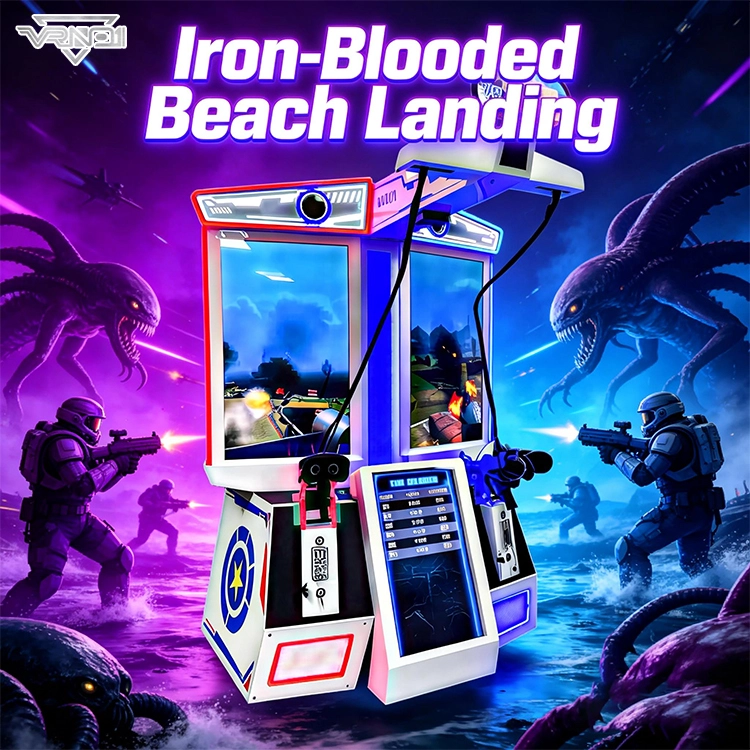
VRN0.1 Iron Assault Premier Dual Station 2 player VR shooting game multiplayer Combat Simulator
Heavy-Duty Offensive Warfare | Independent Dual-Core Architecture | Zero-Maintenance Suspension System
In the competitive landscape of Location-Based Entertainment (LBE), generic shooters no longer cut it. Enter the VR NO.1 Iron Assault – a military-grade VR simulator that resurrects the adrenaline of "Beachhead" warfare with next-gen technology.
Engineered by VR NO.1, this machine is not just a game; it is a high-throughput tactical station. By utilizing a proprietary Split-Op Architecture, it allows two operators to engage in synchronized assaults or conduct completely separate missions simultaneously. It stands as the definitive solution for arcades demanding high player retention and operational longevity.
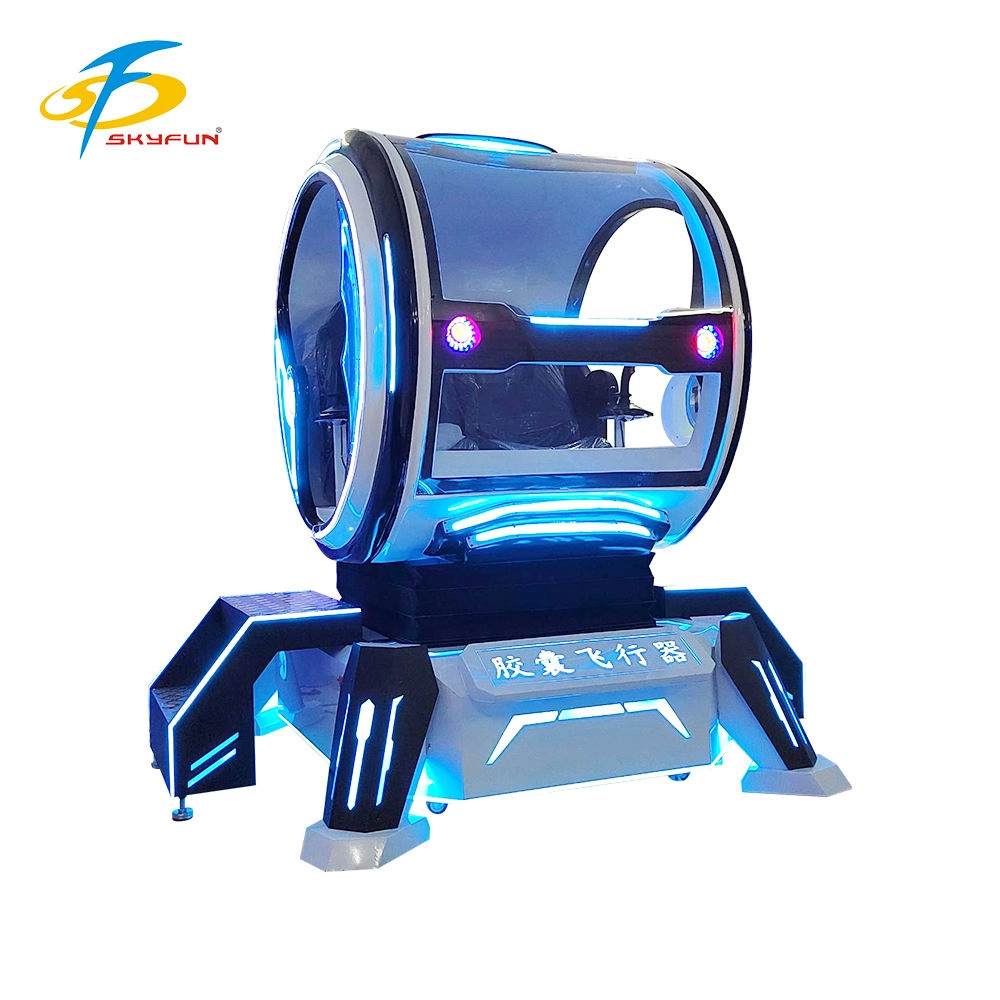
Double Player VR Flight Simulator 100 Movies 15 Games Coin-Operated Game Machine for Shopping Malls Amusement Parks
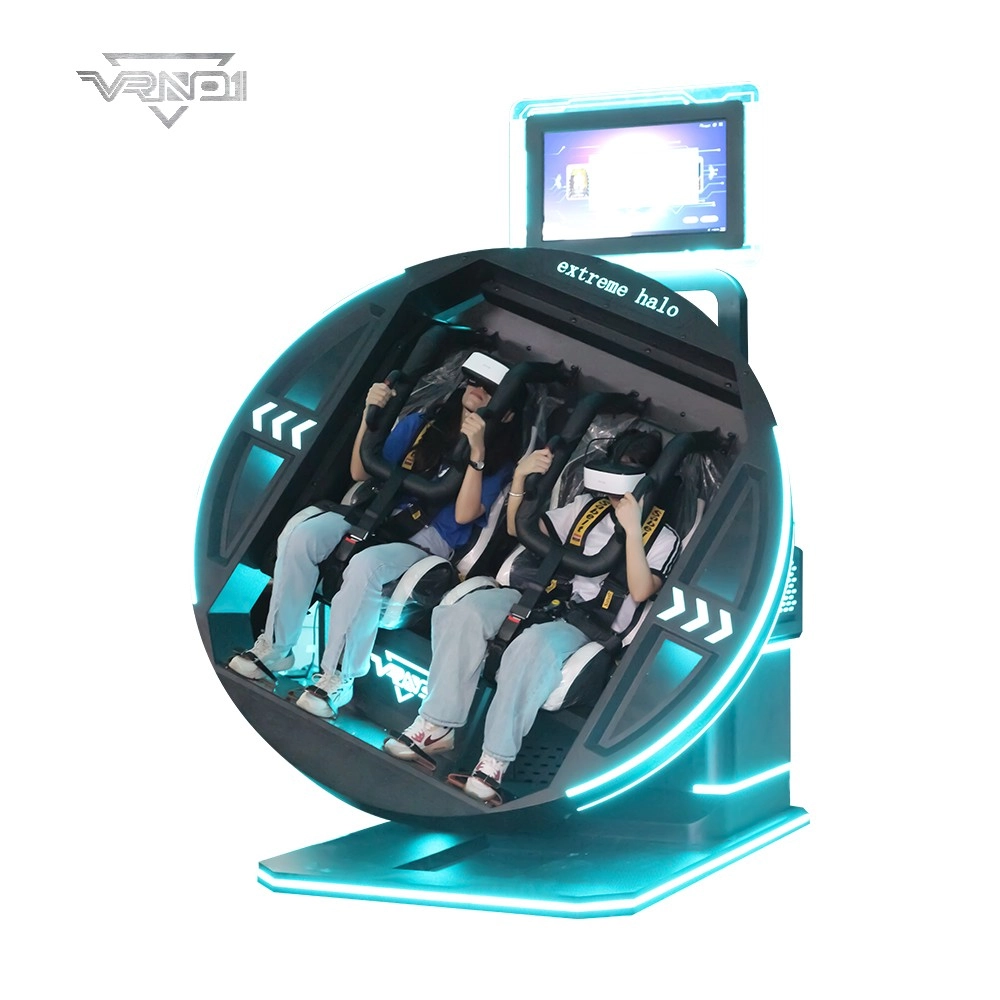
9D VR 360 Roller Coaster Cinema Chair Gaming Set Indoor/Outdoor Business Simulator Hardware for Home or School
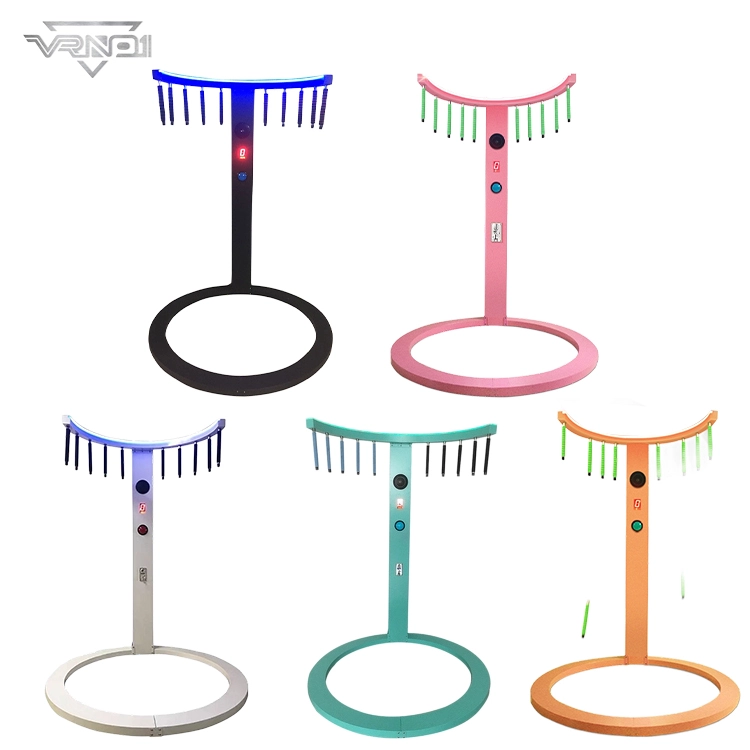
VRN0.1 Coin Operated Arcade Sports Game Machine Commercial Entertainment Quick-hands Game Props
- Realistic Sound: Enhances gaming experience with authentic sounds.
- Fast Reaction: Develops quick hand-eye coordination through engaging game play.
- DIY Kit: Allows for customization and personalization of the baton.
- Metal and Plastic Construction: Durable and robust build quality.
- Coin Operated: Fun for players who enjoy arcade-like experiences.
 Scan QR Code
Whatsapp: +8618127818571
Scan QR Code
Guangzhou Skyfun Technology Co.,Ltd
skyfunvrgame
skyfun game