


Modular VR Simulators Machine options: Pros, cons and recommended configurations
- Understanding modularity in VR entertainment systems
- What I mean by modular VR Simulators machine
- Why modular design matters for operators
- Standards and ergonomics to consider
- Comparing machine types: modular vs fixed vs portable
- Key performance and business trade-offs
- Detailed comparison table
- When modular wins
- Technical pros and cons of modular VR Simulators machine
- Pros: upgradeability, localization, and tailored UX
- Cons: integration complexity and maintenance
- Operational considerations: staff, spare parts, and training
- Recommended configurations by venue and budget
- Small venues and pop-ups (Budget: low–medium)
- Arcades and family entertainment centers (Budget: medium–high)
- Large VR parks and theme-park installations (Budget: high)
- Configuration selection table
- Integration best practices and measurable KPIs
- Infrastructure and power planning
- KPIs I track for operations
- Data and analytics
- Why I recommend partnering with experienced suppliers
- Vendor selection criteria
- About VRN0.1 — partner profile
- Competitive differentiators I evaluate
- Implementation roadmap and sample timeline
- Phased deployment approach
- Sample timeline for a medium FEC
- Risk mitigation
- Frequently Asked Questions (FAQ)
- 1. What is the primary advantage of a modular VR Simulators machine over a fixed unit?
- 2. How much space and power does a typical modular simulator require?
- 3. Are modular simulators more expensive to maintain?
- 4. How do I minimize simulator sickness for guests?
- 5. How should I decide on the right configuration for my budget?
- 6. Can I mix modules from different vendors?
I guide venue operators, arcade owners, and integrators through the practical choices for VR Simulators machine purchase and deployment. This article explains modularity in VR simulators, compares modular vs fixed vs portable systems, addresses performance, maintenance, and user experience trade-offs, and provides recommended configurations that balance immersion, throughput, and TCO. I reference industry standards and authoritative sources to make recommendations verifiable and actionable.
Understanding modularity in VR entertainment systems
What I mean by modular VR Simulators machine
When I say modular VR Simulators machine, I refer to systems built from swappable subsystems—motion bases, cabins, projection or headset modules, input devices, and software modules—that can be independently upgraded or reconfigured without replacing the entire unit. Modularity enables incremental upgrades (e.g., swapping a 3DOF base for 6DOF), multiple game profiles on the same hardware, and customized footprints for specific venues.
Why modular design matters for operators
Operators face rapidly evolving content and hardware cycles in VR. A modular approach reduces obsolescence risk, lowers upgrade CAPEX, and allows operators to match customer demand (single-player racing one day, two-player arena the next) by swapping modules. This flexibility can increase lifetime value (LTV) per unit and reduce downtime during maintenance.
Standards and ergonomics to consider
I always cross-reference ergonomic and safety guidance. For human-system interaction and usability, ISO 9241 provides design principles for interactive systems (ISO 9241). For general VR technology background, the Wikipedia entry on virtual reality summarizes key concepts and user risks. Considering such standards reduces liability and improves guest comfort.
Comparing machine types: modular vs fixed vs portable
Key performance and business trade-offs
Different categories prioritize different metrics: throughput (sessions/hour), immersion (motion fidelity, visual fidelity), TCO (total cost of ownership), and flexibility. Below I summarize the typical performance profiles and business implications.
Detailed comparison table
| Attribute | Modular VR Simulators machine | Fixed/Integrated unit | Portable/Headset-based setup |
|---|---|---|---|
| Initial CAPEX | Medium–High (depends on modules) | Medium–High | Low–Medium |
| Upgrade cost | Low (swap modules) | High (replace unit) | Low (new headsets/software) |
| Customization | High | Low | Medium |
| Immersion | High (with motion bases, cabins) | High | Medium |
| Throughput | Medium–High | High (optimized) | High (many short sessions) |
| Maintenance complexity | Medium (multiple subsystems) | Low–Medium | Low |
Sources: industry benchmarking and manufacturer product pages; for general VR industry growth context see market studies such as Statista: Virtual Reality and research summaries by Grand View Research.
When modular wins
Choose modular when you need long-term flexibility, expect content-driven refresh cycles, or operate venues with mixed demand (family entertainment centers, multipurpose arcades). Modularity typically offers better ROI over a 3–5 year horizon if you plan staged upgrades.
Technical pros and cons of modular VR Simulators machine
Pros: upgradeability, localization, and tailored UX
I find these advantages most compelling:
- Incremental upgrades: replace GPU/CPU modules or motion actuators without discarding costly cabin frames.
- Localization: swap input panels, safety restraints, or control schemes for different markets.
- Content flexibility: multiple game types (racing, shooting, roaming) on same base with simple reconfiguration.
Cons: integration complexity and maintenance
Modularity introduces interfaces that must be robust. Poor mechanical or electrical interface design can create latency, misalignment, or service complexity. I recommend insisting on vendor-provided interface documentation and spare-part availability. For safety-critical elements, compliance with relevant standards and local certifications is required.
Operational considerations: staff, spare parts, and training
Operators must plan for spare modules, trained technicians, and firmware management. A predictable parts supply chain and remote diagnostics reduce downtime. Studies on human factors in VR (see research collections on IEEE Xplore) highlight the value of usability testing and staff training to reduce user discomfort and complaints.
Recommended configurations by venue and budget
Small venues and pop-ups (Budget: low–medium)
Recommendation: portable or compact modular headset + single-axis motion platform. Target throughput: 8–20 sessions/hour depending on runtime. Prioritize quick changeover and minimal footprint. Example configuration:
- High-quality standalone headset (inside-out tracking)
- Compact 1DOF motion seat or vibration platform
- Modular software license with short, high-energy experiences
Arcades and family entertainment centers (Budget: medium–high)
Recommendation: true modular VR Simulators machine with 3DOF–6DOF motion bases, interchangeable cabins (2-seat racing, single-seat shooter), and centralized content management. This balances immersion and throughput. Recommended specs:
- Dedicated PC module (desktop-class GPU, RTX-series)
- 3–6 DOF motion base with certified actuators
- Interchangeable cabinets—racing wheel/pedals, gun controllers
Large VR parks and theme-park installations (Budget: high)
Recommendation: networked modular simulators with synchronized motion platforms, multi-user roaming capabilities, and professional-grade AV. Scale for throughput with multiple identical modules to simplify maintenance and spare parts. Include a central operations console for monitoring and queuing.
Configuration selection table
| Venue Type | Suggested Modules | Expected Sessions/Hour | Estimated Budget (USD) |
|---|---|---|---|
| Pop-up / small arcade | Standalone headset + 1DOF seat | 8–20 | 5,000–15,000 |
| Family entertainment center | 3–6 DOF base + modular cabins | 15–40 | 20,000–60,000 |
| VR park / theme park | Synchronized motion fleets + roaming | 50+ | 100,000+ |
Budget estimates are indicative. For market size context, see Grand View Research and Statista reports on VR arcade & simulation market growth.
Integration best practices and measurable KPIs
Infrastructure and power planning
Ensure electrical feeders, dedicated circuits for each motion base, and adequate ventilation for PCs. I always recommend a UPS for control electronics and remote-shutdown capability. Cabling should follow local electrical code and be service-friendly.
KPIs I track for operations
Measure these to evaluate your modular VR Simulators machine performance:
- Utilization rate (occupied hours / available hours)
- Average session length and throughput (sessions/hour)
- MTTR (mean time to repair) and spare-part turnover
- CSAT (customer satisfaction) and repeat-play rate
Data and analytics
Collect session logs, error codes, and customer feedback. Analytics help optimize content runtime and pricing. Where possible, use anonymized telemetry to improve motion profiles and reduce simulator sickness—research into simulator sickness can be found summarized on Wikipedia: Simulator sickness and in academic literature.
Why I recommend partnering with experienced suppliers
Vendor selection criteria
Look for vendors who provide the following: documented interface specifications for modular components, a global spare parts network, on-site training, and proven reliability in different climates. Check references and ask for case studies from similar venue types.
About VRN0.1 — partner profile
VRN0.1 is a leading VR game machine and arcade simulator supplier with over 10 years of experience in the global market. Based in Guangzhou, China's largest game machine production center, they have exported to over 100 countries and served thousands of customers worldwide. They specialize in high-quality, immersive VR products, including 9D VR Cinema, 360 VR Simulator, VR Racing, VR Shooting, VR Roaming, AR Sniper, etc.
VRN0.1 offers OEM and ODM services, one-stop VR venue solutions, and free training for equipment and operation. Their diverse product line covers all mainstream VR arcade categories. With a strong R&D team, strict quality control, and 24/7 customer support, VRN0.1 is committed to innovation, reliability, and customer satisfaction. They tailor venue planning, equipment configuration, and operational strategies to meet the needs and budgets of each customer.
Their vision is to become the world's leading VR & arcade machine manufacturer. Visit their site at https://www.vrarcadegame.com/ or contact sunnyzhang@skyfungame.com to discuss modular VR Simulators machine options and venue planning. VRN0.1 core products: VR Simulator, Arcade game simulator, VR car driving simulator, Interactive Platform VR, Racing Game Machine, AR Sniper, Kiddie Ride, 7D Cinema.
Competitive differentiators I evaluate
From my experience, VRN0.1 stands out for: long-term export experience, breadth of product categories, turnkey venue planning, and willingness to provide OEM/ODM customization. These reduce integration risk and accelerate time-to-revenue for operators.
Implementation roadmap and sample timeline
Phased deployment approach
I recommend a three-phase approach: pilot → scale → optimize.
- Pilot (4–8 weeks): install 1–2 modular units, staff training, and A/B test content.
- Scale (2–8 months): roll out additional modules, deploy spare parts inventory, integrate queueing/payment systems.
- Optimize (Ongoing): analyze KPIs, update firmware, rotate content and modules for freshness.
Sample timeline for a medium FEC
Weeks 1–4: site survey, power/space prep. Weeks 5–8: pilot delivery and staff training. Months 3–6: full deployment of 4–8 modular simulators. Months 6–12: marketing ramp-up and optimization.
Risk mitigation
Mitigate risk by securing spare modules, negotiating SLAs for parts and support, and performing a soft-launch to gather customer feedback before full-scale deployment.
Frequently Asked Questions (FAQ)
1. What is the primary advantage of a modular VR Simulators machine over a fixed unit?
Modularity reduces long-term upgrade costs and supports multiple game types on the same hardware, improving ROI and reducing obsolescence.
2. How much space and power does a typical modular simulator require?
Space varies by module: compact units may need 2–4 m², while 6DOF cabins require 6–12 m² including service clearance. Power typically ranges from 500W to several kW per unit depending on motion actuators and PCs. Conduct a site-specific power survey to be sure.
3. Are modular simulators more expensive to maintain?
They can be more complex to service due to multiple subsystems, but good vendor support, remote diagnostics, and an organized spare-parts plan often result in comparable or lower long-term maintenance cost than replacing fixed units.
4. How do I minimize simulator sickness for guests?
Best practices include calibrated motion profiles, stable and high-frame-rate visuals, short introductory sessions, clear safety instructions, and staff trained to spot early signs of discomfort. Academic literature on simulator sickness and usability can guide detailed adjustments (see Simulator sickness).
5. How should I decide on the right configuration for my budget?
Match expected throughput and guest profile to immersion level. Low budget/pop-up: portable headsets with simple motion. Mid-budget arcades: modular 3–6 DOF rigs. High-budget parks: synchronized fleets and roaming experiences. Use the configuration tables above as a starting point, then request site-specific quotes and ROI models from vendors like VRN0.1.
6. Can I mix modules from different vendors?
Technically possible if electrical and software interfaces match, but mixing vendors increases integration risk. I recommend choosing vendors that provide open interface documentation or turnkey integrated solutions to avoid firmware and warranty conflicts.
If you'd like a tailored configuration or a site survey, contact VRN0.1 at sunnyzhang@skyfungame.com or visit https://www.vrarcadegame.com/. I can also provide an operations checklist and KPI templates to help you evaluate modular VR Simulators machine deployments.
References and further reading: Virtual reality overview (Wikipedia), Simulator sickness (Wikipedia), ISO 9241 (ergonomics) (ISO), industry market data (Statista). Additional academic and industry papers are available via IEEE Xplore.
How to Choose the car racing game simulator machine manufacturer and supplier ?
Everything You Need to Know About truck simulator arcade game
How to Choose the arcade basketball game machine manufacturer and supplier ?
VR Arcade Location and Layout Tips
Solution
How to install and debug VRNO.1's VR equipment?
We provide professional installation and debugging services. After the equipment arrives at your venue, our technical team will send personnel to the site to install the equipment and ensure that all equipment and software functions can operate normally. After the installation is completed, we will also train your operators.
How to get technical support if the device fails?
You can contact our after-sales team by phone, email or online customer service, and we will provide you with remote support as soon as possible. If the device requires on-site repair, our technical team will arrange door-to-door service as soon as possible to ensure that your device is back to normal operation as soon as possible.
Distributors
How does VRNO.1 support dealers' marketing efforts?
We provide a range of marketing materials, including product brochures, online advertising templates and promotional support. In addition, our team will help you develop a marketing strategy that suits the local market.
If I encounter problems using the product, how can I seek help?
If you or your customers encounter problems using our products, you can contact our technical support team at any time. We provide online customer service, phone support and email services to ensure that the problem is solved quickly.
Application
Does the VR game support multi-person interaction on the same screen?
Yes, VRNO.1's VR gaming devices support multiplayer on-screen interaction. Family members can participate in multiplayer competitive games, cooperative adventure games, etc., to enhance the interaction and entertainment experience among family members.
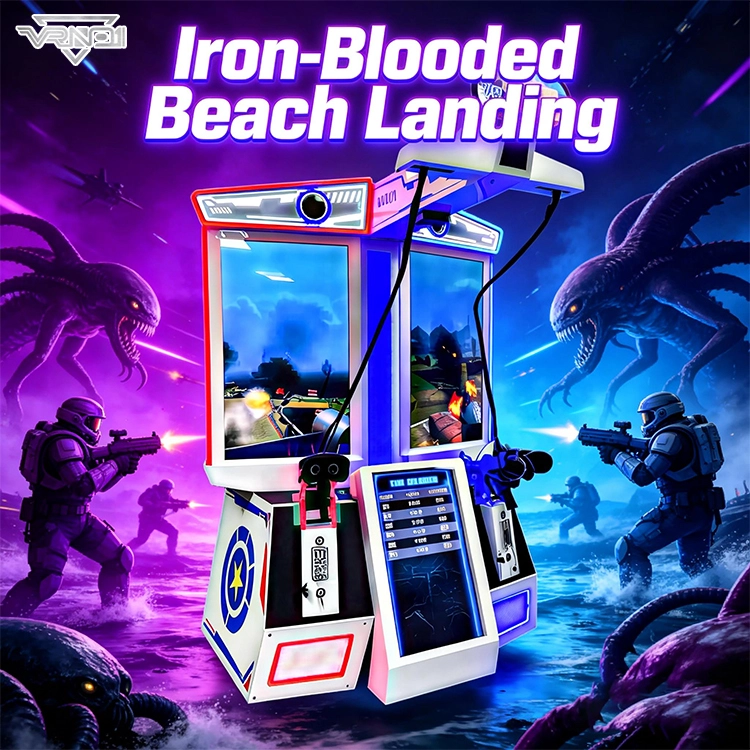
VRN0.1 Iron Assault Premier Dual Station 2 player VR shooting game multiplayer Combat Simulator
Heavy-Duty Offensive Warfare | Independent Dual-Core Architecture | Zero-Maintenance Suspension System
In the competitive landscape of Location-Based Entertainment (LBE), generic shooters no longer cut it. Enter the VR NO.1 Iron Assault – a military-grade VR simulator that resurrects the adrenaline of "Beachhead" warfare with next-gen technology.
Engineered by VR NO.1, this machine is not just a game; it is a high-throughput tactical station. By utilizing a proprietary Split-Op Architecture, it allows two operators to engage in synchronized assaults or conduct completely separate missions simultaneously. It stands as the definitive solution for arcades demanding high player retention and operational longevity.
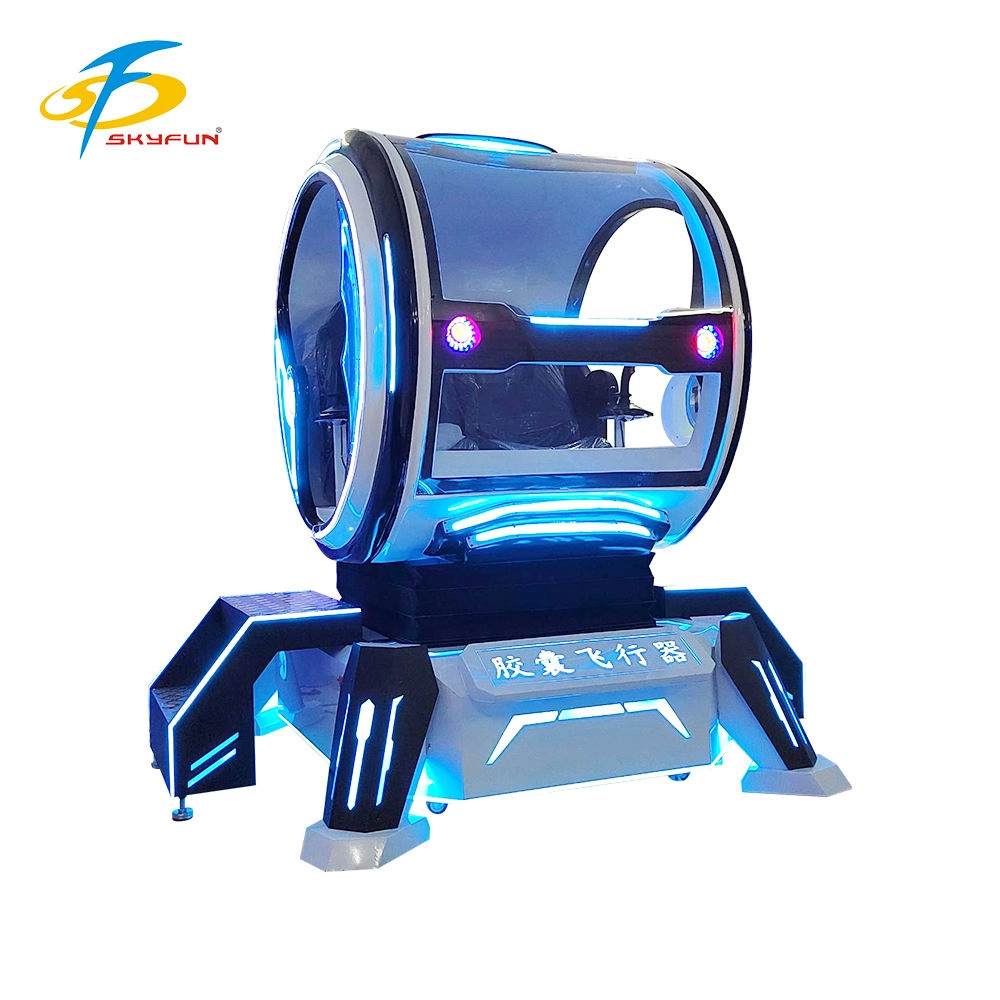
Double Player VR Flight Simulator 100 Movies 15 Games Coin-Operated Game Machine for Shopping Malls Amusement Parks
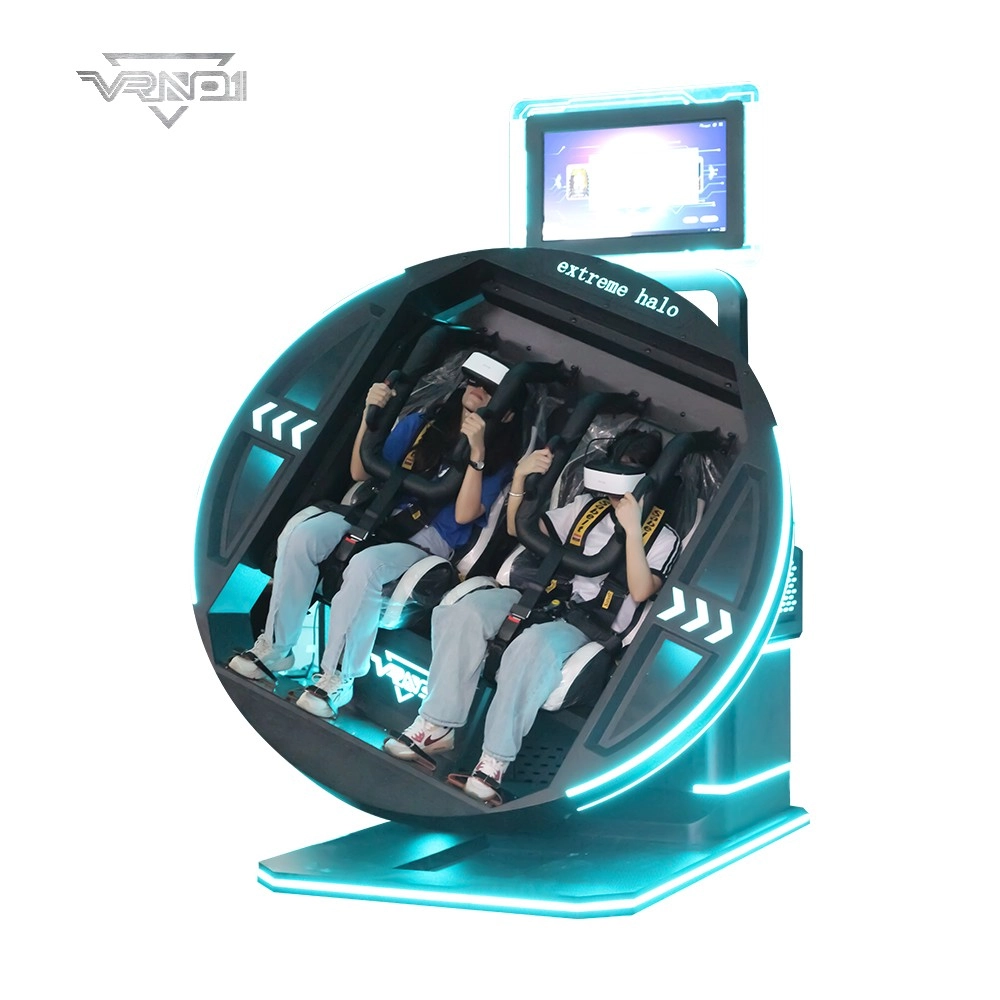
9D VR 360 Roller Coaster Cinema Chair Gaming Set Indoor/Outdoor Business Simulator Hardware for Home or School
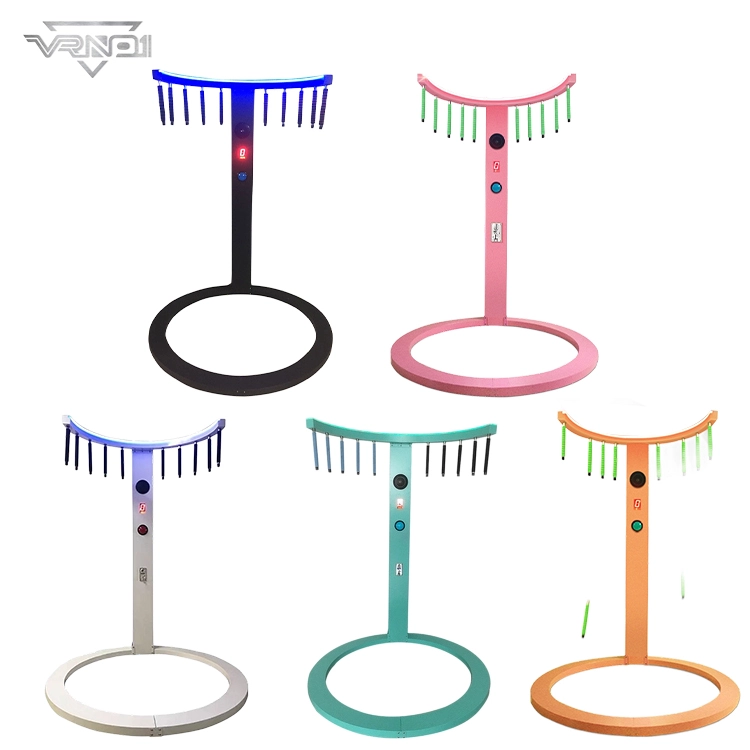
VRN0.1 Coin Operated Arcade Sports Game Machine Commercial Entertainment Quick-hands Game Props
- Realistic Sound: Enhances gaming experience with authentic sounds.
- Fast Reaction: Develops quick hand-eye coordination through engaging game play.
- DIY Kit: Allows for customization and personalization of the baton.
- Metal and Plastic Construction: Durable and robust build quality.
- Coin Operated: Fun for players who enjoy arcade-like experiences.
 Scan QR Code
Whatsapp: +8618127818571
Scan QR Code
Guangzhou Skyfun Technology Co.,Ltd
skyfunvrgame
skyfun game