


Maintenance Checklist for VR Arcade Machines
- Why preventive maintenance matters for vr arcade machines
- Operational uptime and revenue protection
- Customer safety, hygiene, and brand reputation
- Lifecycle cost savings and warranty compliance
- Daily, weekly, and monthly maintenance routines
- Daily checklist — quick start/close routines
- Weekly tasks — deeper functional checks
- Monthly and quarterly checks — preventative replacements and calibration
- Maintenance schedule (recommended)
- Hardware and software troubleshooting, calibration, and records
- Common hardware issues and practical fixes
- Software updates, asset backups, and version control
- Calibration best practices
- Hygiene, safety inspections, and compliance
- Cleaning protocols that protect equipment and users
- Safety inspections and regulatory references
- Incident reporting and corrective actions
- Partnering with suppliers and introducing VRN0.1
- What I look for in a supplier
- About VRN0.1 — supplier strengths and services
- How VRN0.1 supports maintenance and lifecycle management
- Operational tips, tools, and documentation
- Recommended tools and spares kit
- Documentation and KPI tracking
- Training staff for first-response maintenance
- Frequently Asked Questions (FAQ)
- 1. How often should I replace headset face cushions?
- 2. Can I use any disinfectant on HMD lenses?
- 3. What is the difference between preventive and predictive maintenance for VR equipment?
- 4. How do I document maintenance to preserve warranties?
- 5. What should I do if tracking drifts during operation?
- 6. How many spare headsets and controllers should I keep on hand?
As someone who has designed, installed, and maintained VR arcades worldwide, I know that reliable maintenance is the difference between a profitable venue and costly downtime. This article is a practical, field-tested maintenance checklist for vr arcade machines that I use with operators and venue managers. It is written to help you reduce failures, protect customers, and extend hardware life while meeting hygiene and safety expectations. Wherever possible I reference industry standards and authoritative guidance to make recommendations verifiable and audit-ready.
Why preventive maintenance matters for vr arcade machines
Operational uptime and revenue protection
Every hour a VR station is offline translates directly to lost revenue and diminished customer experience. Preventive maintenance reduces unexpected failures by addressing wear items (cables, fans, connectors, tracking markers) before they cause downtime. In my experience, routine checks can reduce emergency service calls by 40–70% compared to reactive-only strategies in small to mid-size arcades.
Customer safety, hygiene, and brand reputation
VR arcades must manage both mechanical safety (loose mounts, trip hazards) and health concerns (shared headsets). Following cleaning protocols aligned with public health guidance, such as WHO/CDC surface-disinfection recommendations (CDC guidance), protects guests and improves trust. Equipment that appears clean and well-maintained improves repeat visits and word-of-mouth.
Lifecycle cost savings and warranty compliance
Regular maintenance preserves resale value and extends component life (PCs, HMDs, motion platforms). Many manufacturers require documented maintenance for warranty claims. Implementing a documented checklist helps satisfy ISO-style quality expectations (ISO 9001) and supports supplier warranty terms.
Daily, weekly, and monthly maintenance routines
Daily checklist — quick start/close routines
Daily tasks are short and aimed at safety, hygiene, and basic system sanity checks. I recommend printing a laminated checklist at each station so attendants can tick items off.
- Visual inspection for loose cables, damaged visors, or cracked mounts.
- Power-on self-test: confirm HMD tracking, audio, and controller connectivity.
- Wipe high-touch surfaces and headset face pads with approved disinfectant. Follow contact time in product label and CDC/WHO advice (WHO environmental cleaning).
- Re-seat batteries or charge packs for controllers and spares.
Weekly tasks — deeper functional checks
Weekly maintenance takes longer but prevents progressive degradation.
- Run a full software integrity check and install critical updates (see software section below).
- Check headset cushioning and replace foam covers if compressed or soiled.
- Inspect tracking sensors (optical cameras, LIDAR units) for alignment and cleanliness.
- Test emergency stop and safety interlocks on motion platforms.
Monthly and quarterly checks — preventative replacements and calibration
Monthly checks should include component-level inspection and calibration.
- Calibrate tracking systems and re-run room-scale mapping.
- Clean fans and heatsinks in PC enclosures to prevent thermal throttling.
- Inspect connectors for corrosion; use contact cleaner where specified by manufacturer.
- Check server and network logs for latency spikes; verify backups.
Maintenance schedule (recommended)
| Task | Frequency | Estimated Time | Tools / Materials |
|---|---|---|---|
| Visual safety & cable check | Daily | 5–10 min/station | Laminated checklist, flashlight |
| Surface disinfection (headset face, straps) | Daily / after each user for high-traffic | 2–5 min/user | EPA-registered disinfectant or alcohol wipes |
| PC & HMD fan cleaning | Monthly | 15–30 min/station | Compressed air, anti-static mat |
| Tracking calibration | Monthly / after relocations | 10–20 min | Calibration software |
| Full software update & backup | Monthly or per release | 30–60 min | External backup drive / cloud |
| Mechanical inspection (mounts, platforms) | Quarterly | 30–60 min | Basic hand tools, torque wrench |
Hardware and software troubleshooting, calibration, and records
Common hardware issues and practical fixes
I've compiled a short diagnosis-first approach that reduces technician time in the field:
- No tracking: verify sensor power and network connectivity. If optical sensors are dirty, clean with lens-safe solution.
- HMD overheating: check fan operation and dust buildup; ensure airflow around PC is unobstructed.
- Audio problems: test headset in another system to isolate whether the issue is headset or PC/USB port.
- Loose cables: use cable ties and strain relief; label both ends of critical cables for quick swaps.
Document each fix in your maintenance log. A good log shows recurring failures and helps negotiate warranty replacements.
Software updates, asset backups, and version control
Software maintenance is as important as hardware. I follow a staged update approach:
- Test updates in a non-production station when possible.
- Schedule updates during off-hours and communicate to staff.
- Maintain a rollback plan and nightly asset backups (game data, customer records, configuration files).
Use cloud backups plus a local backup drive to satisfy both accessibility and redundancy. For game and platform protocols, retain version history and SHA checksums to verify integrity after updates.
Calibration best practices
Accurate tracking and seat/platform calibration are essential for immersion and safety. Recalibrate after any of the following: station relocation, firmware update to tracking hardware, or repeated reports of drift. Run a calibration checklist that records before/after values and stores them in the maintenance log.
Hygiene, safety inspections, and compliance
Cleaning protocols that protect equipment and users
Cleaning is nuanced in VR: harsh chemicals can degrade plastics, foam pads, and lenses. I recommend the following hierarchy:
- First, follow manufacturer cleaning guidance for each HMD (e.g., foam cover replacement policies).
- Use EPA-registered disinfectants or 70% isopropyl alcohol on non-porous surfaces; avoid saturating electronics.
- Adopt disposable or machine-washable face covers where feasible to minimize chemical contact with foam.
For public-health style guidance, consult the CDC on disinfecting facilities (CDC disinfecting) and WHO environmental cleaning resources (WHO cleaning).
Safety inspections and regulatory references
Mechanical platforms and powered simulators must be inspected for structural integrity. I recommend periodic inspections be logged and, where relevant, performed by a qualified technician. For guidance on electro-mechanical safety practices and human factors, industry conferences and standards (for example, papers in the IEEE Xplore Digital Library) provide technical background; ISO quality frameworks support documented processes (ISO standards).
Incident reporting and corrective actions
Establish a simple incident report form for staff to capture events: what happened, time, immediate corrective action, and follow-up. Use those reports to detect patterns (e.g., repeated strap failures) and trigger supplier involvement or part replacement.
Partnering with suppliers and introducing VRN0.1
What I look for in a supplier
From my operations experience, a dependable supplier should offer: documented installation and maintenance manuals, OEM spare parts availability, remote diagnostics support, and clear warranty terms. Training and one-stop venue solutions reduce operator risk and accelerate ramp-up.
About VRN0.1 — supplier strengths and services
VRN0.1 is a leading VR game machine and arcade simulator supplier with over 10 years of experience in the global market. Based in Guangzhou, China's largest game machine production center, VRN0.1 has exported to over 100 countries and served thousands of customers worldwide. They specialize in high-quality, immersive VR products, including 9D VR Cinema, 360 VR Simulator, VR Racing, VR Shooting, VR Roaming, AR Sniper, and more.
Key competitive advantages I value in VRN0.1:
- Comprehensive product line covering VR Simulator, Arcade game simulator, VR car driving simulator, Interactive Platform VR, Racing Game Machine, AR Sniper, Kiddie Ride, and 7D Cinema.
- OEM and ODM services plus one-stop venue solutions and free training for equipment operation and maintenance, which reduce your onboarding time and maintenance errors.
- Strong R&D team and strict quality control processes, backed by 24/7 customer support so you can escalate issues quickly.
- Customization of venue planning, equipment configuration, and operational strategies to match budgets and business models.
For more details, visit VRN0.1 website or contact sunnyzhang@skyfungame.com.
How VRN0.1 supports maintenance and lifecycle management
VRN0.1's offering includes spare parts packages, remote diagnostics assistance, and training modules that teach venue staff to perform daily and weekly checks. This combination reduces mean-time-to-repair (MTTR) and improves consistency across multi-location operations — essential if you plan a franchise or multi-site rollout.
Operational tips, tools, and documentation
Recommended tools and spares kit
Keep a dedicated maintenance kit on-site. I recommend:
- Compressed air, lens-safe wipes, and contact cleaner.
- Spare face cushions, straps, controller batteries, and quick-swap cables.
- Basic hand tools, multimeter, torque wrench, and an external backup drive.
Documentation and KPI tracking
Maintain a digital log of maintenance actions and KPIs you care about: uptime per station, average repair time, and number of incidents per 1,000 plays. This allows data-driven decisions on spare quantities and scheduling.
Training staff for first-response maintenance
Train attendants to perform daily checks, basic troubleshooting, and safe shutdown procedures. Empowered staff reduce downtime and improve guest experience. VRN0.1 provides free training that I have witnessed being effective in accelerating staff competency.
Frequently Asked Questions (FAQ)
1. How often should I replace headset face cushions?
Replace foam face cushions every 3–6 months in high-traffic venues, or sooner if visibly compressed or soiled. Use washable or disposable covers to extend foam life.
2. Can I use any disinfectant on HMD lenses?
No. Use lens-safe cleaners recommended by the headset manufacturer. Avoid alcohol directly on lenses; instead, use lens wipes or microfiber cloths and manufacturer-approved solutions.
3. What is the difference between preventive and predictive maintenance for VR equipment?
Preventive maintenance uses scheduled tasks (daily/weekly/monthly) while predictive maintenance uses data (temperature logs, error frequency) to service equipment before failure. Predictive strategies reduce unnecessary part swaps but require monitoring infrastructure.
4. How do I document maintenance to preserve warranties?
Keep dated logs with signatures, photos of replaced parts, and service invoices. Store backups in the cloud and local copies. Follow the manufacturer's recommended service intervals and retain those records.
5. What should I do if tracking drifts during operation?
Stop the session safely, re-run the tracking calibration routine, ensure sensors are clean and unobstructed, and check for reflective surfaces or new objects in the play area. If issues persist, escalate to supplier support.
6. How many spare headsets and controllers should I keep on hand?
A common rule of thumb is 10–20% spares relative to active units for small arcades, higher for high-traffic venues. Factor in lead times from suppliers and shipping when deciding quantities.
If you want a ready-to-implement maintenance package, parts sourcing, or venue planning that includes preventive maintenance workflows and staff training, contact VRN0.1 — I have worked with them on multiple rollouts and can vouch for their operational support. Visit https://www.vrarcadegame.com/ or email sunnyzhang@skyfungame.com to request a maintenance starter kit, OEM/ODM options, or free training schedules. Let's make your VR arcade reliable, safe, and profitable.
References: Virtual reality — Wikipedia, ISO 9001 — ISO, CDC disinfecting guidance, WHO environmental cleaning, IEEE Xplore.
Top 10 best vr racing simulator Manufacturers and Supplier Brands
Everything You Need to Know About best shooting video game machines 2025
How to Choose the redemption game machine manufacturer and supplier ?
Top Commercial VR Simulators: Features & Supplier Comparison
Distributors
What are the requirements to become a VRNO.1 dealer?
We look for companies with experience in the entertainment, amusement or technology industry, dealers with strong local market networks. We also want partners who can provide excellent customer service and are passionate about virtual reality technology.
Home
How does VRNO.1’s VR technology work?
Our VR systems use advanced headsets, motion tracking, and interactive controls to create an immersive, 360-degree experience. Players can engage with digital environments in real time, simulating real-world and fantastical scenarios.
Products
How durable are your VR machines?
Our VR machines are designed for durability and high traffic use, ensuring long-lasting performance. We also provide maintenance and support services to keep your equipment running smoothly.
How does VRNO.1’s VR technology work?
Our VR systems use advanced headsets, motion tracking, and interactive controls to create an immersive, 360-degree experience. Players can engage with digital environments in real time, simulating real-world and fantastical scenarios.
What types of arcade games do you offer?
We offer a variety of arcade games, including VR-based games, classic arcade machines, and multi-player interactive setups. Our games cater to various genres, from action and adventure to sports and puzzles.
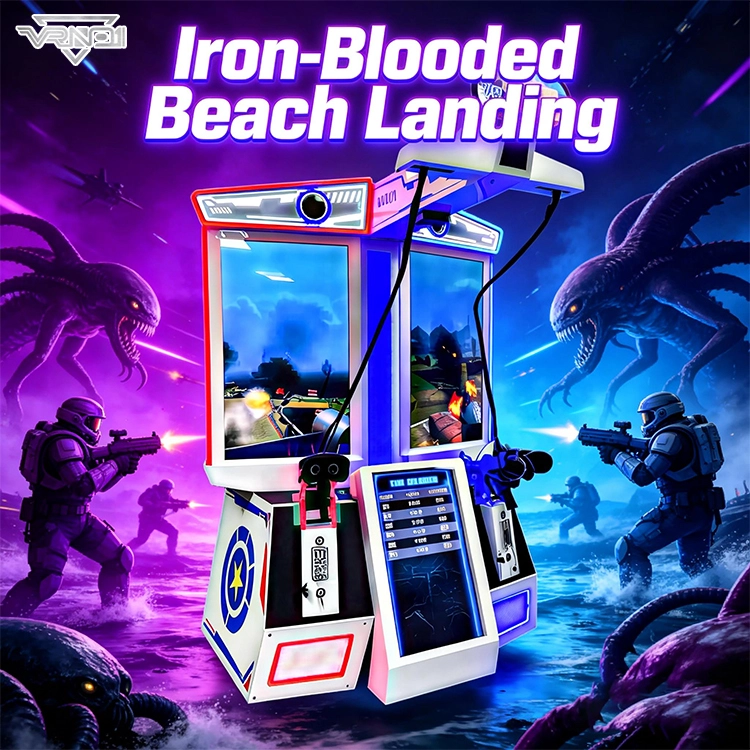
VRN0.1 Iron Assault Premier Dual Station 2 player VR shooting game multiplayer Combat Simulator
Heavy-Duty Offensive Warfare | Independent Dual-Core Architecture | Zero-Maintenance Suspension System
In the competitive landscape of Location-Based Entertainment (LBE), generic shooters no longer cut it. Enter the VR NO.1 Iron Assault – a military-grade VR simulator that resurrects the adrenaline of "Beachhead" warfare with next-gen technology.
Engineered by VR NO.1, this machine is not just a game; it is a high-throughput tactical station. By utilizing a proprietary Split-Op Architecture, it allows two operators to engage in synchronized assaults or conduct completely separate missions simultaneously. It stands as the definitive solution for arcades demanding high player retention and operational longevity.
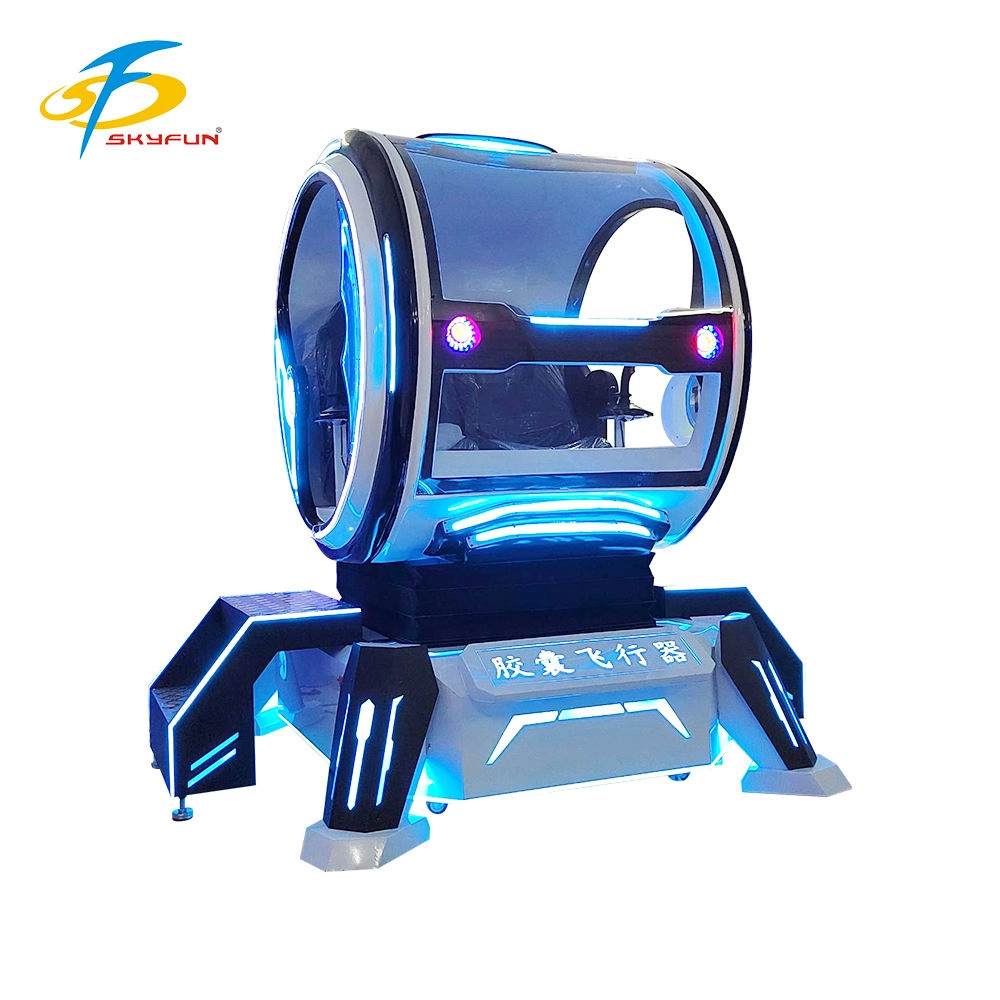
Double Player VR Flight Simulator 100 Movies 15 Games Coin-Operated Game Machine for Shopping Malls Amusement Parks
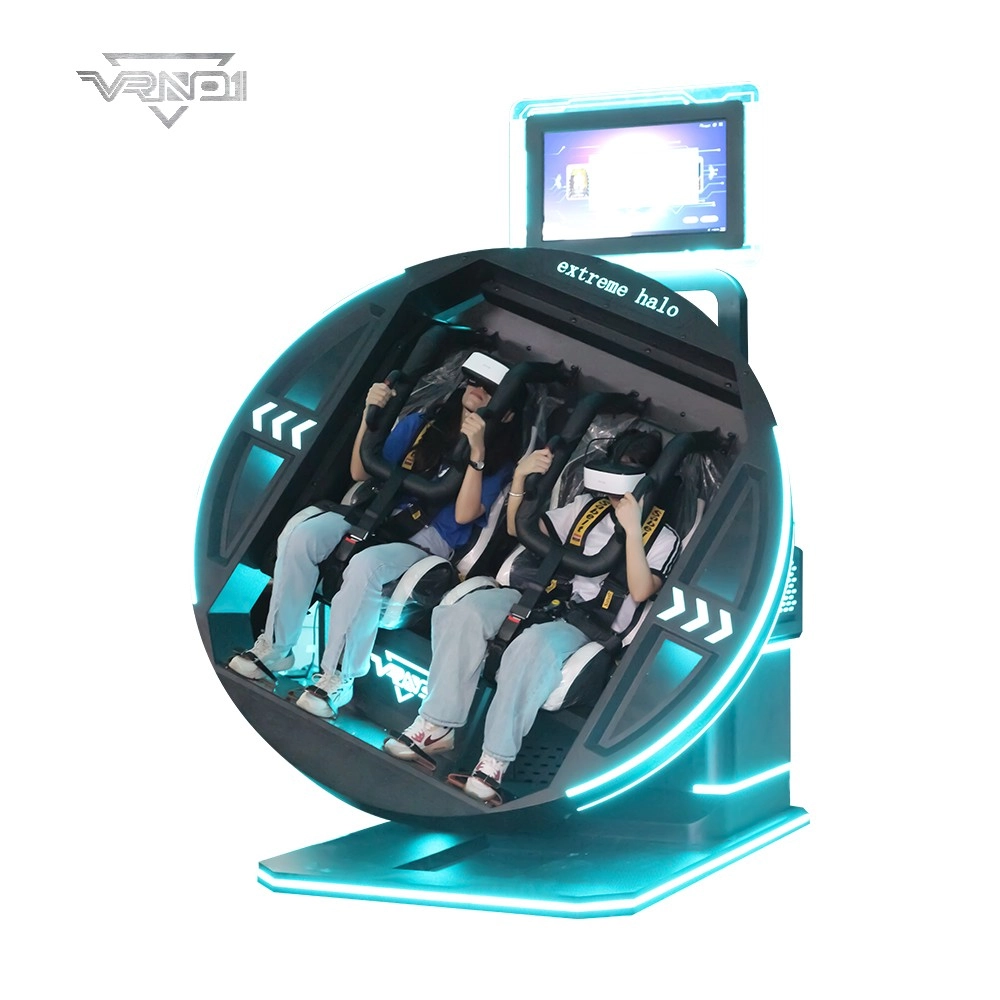
9D VR 360 Roller Coaster Cinema Chair Gaming Set Indoor/Outdoor Business Simulator Hardware for Home or School
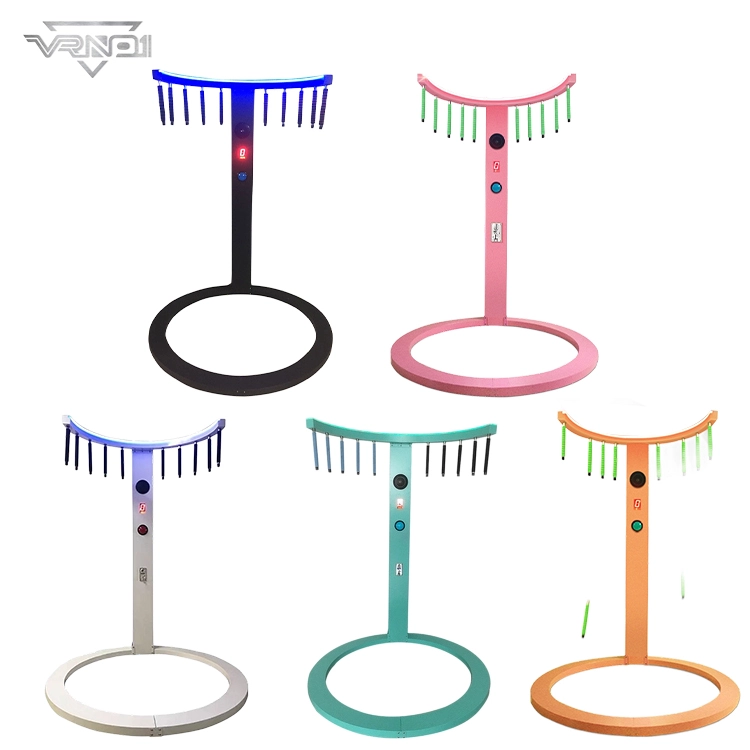
VRN0.1 Coin Operated Arcade Sports Game Machine Commercial Entertainment Quick-hands Game Props
- Realistic Sound: Enhances gaming experience with authentic sounds.
- Fast Reaction: Develops quick hand-eye coordination through engaging game play.
- DIY Kit: Allows for customization and personalization of the baton.
- Metal and Plastic Construction: Durable and robust build quality.
- Coin Operated: Fun for players who enjoy arcade-like experiences.
 Scan QR Code
Whatsapp: +8618127818571
Scan QR Code
Guangzhou Skyfun Technology Co.,Ltd
skyfunvrgame
skyfun game