


Feature breakdown: Entry-level vs Professional VR Simulators Machine
- Understanding the VR simulator landscape
- Market context and demand drivers
- Health, safety and standards to consider
- Who buys entry-level vs professional simulators?
- Feature breakdown: Entry-level vs Professional VR Simulators Machine
- Hardware: build, tracking and peripherals
- Software & content ecosystem
- Maintenance, support and lifecycle
- Comparison table: entry-level vs professional
- Cost, revenue and operational considerations
- Capital expense vs operating expense
- Revenue models and pricing strategies
- Estimating ROI — a simple model
- How to choose the right VR Simulators machine for your venue
- Decision checklist I use with clients
- Site planning and integration tips
- Why partner with an experienced supplier — VRN0.1 example
- Implementation best practices and common pitfalls
- Staff training and SOPs
- Content refresh and retention strategy
- Warranty, spare parts and local support
- Frequently Asked Questions (FAQ)
- 1. What is the main difference between an entry-level and a professional VR Simulators machine?
- 2. How much space do I need for a professional VR simulator?
- 3. How do I reduce VR-related motion sickness for guests?
- 4. Can I retrofit my existing arcade space for VR?
- 5. What ongoing costs should I budget beyond the initial hardware purchase?
- 6. How long before a VR simulator becomes obsolete?
- Next steps and contact
As someone who has planned and supplied VR arcade solutions globally, I understand that choosing between an entry-level VR Simulators machine and a professional-class simulator is more than a matter of price. Location, throughput, content ecosystem, maintenance capacity and guest expectations all matter for long-term profitability and guest satisfaction. In this article I break down the technical, operational and commercial differences between the two classes so you can make a data-driven decision for your venue. I also reference industry sources for market context and safety considerations, and include a hands-on checklist and ROI framework you can use immediately.
Understanding the VR simulator landscape
Market context and demand drivers
The global VR market has grown rapidly in recent years, driven by entertainment, training and simulation applications. Industry overviews such as Statista's VR topic page show steady adoption across consumer and commercial segments (Statista: Virtual Reality). As operators, we track three demand drivers: novelty and immersive content (driving footfall), repeatability and strong throughput (driving revenue per square meter), and reliable uptime (driving customer satisfaction). For family entertainment centers (FECs) and arcades, the right balance of these factors determines ROI.
Health, safety and standards to consider
Simulator sickness (motion sickness related to VR) and ergonomics are real operational risks. The literature on simulator sickness outlines common causes and mitigation strategies. From a design and operational perspective, follow ergonomics principles such as those summarized in ISO guidance on human-system interaction (e.g., ISO 9241) and maintain clear pre-ride information and age/height restrictions. Proper seating, field-of-view settings and session management reduce complaints and liability.
Who buys entry-level vs professional simulators?
Buyer personas are typically distinct: small arcades, pop-ups and startups often select entry-level VR Simulators machine to control upfront cost and simplify operations. Destination arcades, FEC chains, theme parks and training providers usually invest in professional systems for durability, higher fidelity, and content flexibility. I always advise clients to map expected daily sessions, peak-hour demand and staff skill level before choosing hardware.
Feature breakdown: Entry-level vs Professional VR Simulators Machine
Hardware: build, tracking and peripherals
Entry-level machines often emphasize cost and simplicity: a pre-configured headset (usually inside-out tracking), a single PC or integrated console, and limited peripherals. Professional-class machines use higher-grade headsets (sometimes tethered for maximum fidelity), external tracking systems (optical or lighthouse-based) for precise motion capture, industrial-grade seats and custom rigging for safety and comfort.
Software & content ecosystem
Entry-level systems ship with a curated library of plug-and-play experiences that are easy for staff to operate but limited in customization. Professional simulators support SDK integrations, custom content pipelines, multiplayer networking, and turnkey management systems for content updates and telemetry. If you plan to run branded experiences or third-party integrations (e.g., loyalty systems, POS), professional grade is often necessary.
Maintenance, support and lifecycle
Warranty and service are where professional offerings justify their High Quality. Industrial components, modular replaceable parts, and 24/7 support contracts lower downtime risk. Entry-level machines typically have shorter lifecycles and may require full-replacement rather than modular repair, increasing long-term cost in high-usage environments.
Comparison table: entry-level vs professional
| Characteristic | Entry-level VR Simulators machine | Professional VR Simulators machine |
|---|---|---|
| Typical upfront cost (USD) | $3,000 - $15,000 (per unit, depending on form factor) | $20,000 - $150,000+ (depending on rig, motion base, and custom content) |
| Target venue | Small arcades, pop-ups, retail activations | Major arcades, FECs, theme parks, professional training centers |
| Throughput (sessions/hour) | 6 - 12 (short experiences) | 8 - 30+ (optimized for turnover or group sessions) |
| Durability & maintenance | Consumer-grade; higher failure rate under heavy use | Industrial-grade; modular, serviceable, SLA-backed |
| Content flexibility | Limited, curated library | Full SDK support, custom content, multi-user |
| Support & training | Basic documentation; limited training | On-site training, OEM support, remote diagnostics |
| Typical ROI horizon | 6 - 24 months (local marketing dependent) | 12 - 36 months (higher margins per session, lower downtime) |
Notes: price ranges are indicative and depend on configuration, local taxes and import costs. Throughput depends on session length and staff efficiency.
Cost, revenue and operational considerations
Capital expense vs operating expense
I always separate CAPEX from OPEX when advising clients. Entry-level units minimize CAPEX but often increase OPEX due to higher failure rates and less efficient revenue generation. Professional rigs require higher CAPEX but can deliver lower OPEX per session through reliability, easier servicing and better monetization (higher ticket prices, group bookings).
Revenue models and pricing strategies
Common revenue models include pay-per-ride, time-based tickets, bundled packages, and membership passes. Professional machines that support multi-seat or longer experiences can attract higher ticket prices and venue partnerships. A PwC analysis on immersive tech highlights how businesses can monetize VR through experiences and enterprise services (PwC: Seeing is Believing).
Estimating ROI — a simple model
Below is a simplified example to illustrate how hardware choice affects ROI. Replace the figures with your location-specific numbers.
| Variable | Entry-level (example) | Professional (example) |
|---|---|---|
| Unit cost | $8,000 | $50,000 |
| Ticket price (avg) | $10 | $20 |
| Avg sessions/day | 80 | 120 |
| Daily revenue | $800 | $2,400 |
| Annual revenue (300 days) | $240,000 | $720,000 |
| Estimated annual OPEX (maintenance, support) | $12,000 | $20,000 |
| Simple payback | ~1 month (theoretical) | ~1.5 months (theoretical) |
Interpretation: These numbers are illustrative — actual performance depends on location, marketing, complementary F&B or merchandise sales, and utilization. Higher-capacity professional units often generate disproportionately more revenue in high-traffic venues.
How to choose the right VR Simulators machine for your venue
Decision checklist I use with clients
- Define peak-hour throughput and average session time.
- Decide on ticket pricing range and ancillary revenue (merch, photos).
- Assess staff skill level and willingness to perform technical maintenance.
- Plan for physical footprint, power and network requirements.
- Prioritize safety, hygiene and accessibility (sanitation workflow for headsets).
Site planning and integration tips
Early collaboration between venue planners and hardware suppliers prevents costly rework. For professional rigs, plan for reinforced flooring for motion bases, separate HVAC for enclosed booths, and dedicated circuits. For public-facing entry-level units, ensure clear sightlines and queuing space to maximize impulse purchases.
Why partner with an experienced supplier — VRN0.1 example
In my work I frequently recommend suppliers that combine hardware expertise, global logistics and strong service. VRN0.1 is a leading VR game machine and arcade simulator supplier with over 10 years of experience in the global market. Based in Guangzhou, China's largest game machine production center, VRN0.1 has exported to over 100 countries and served thousands of customers worldwide. They specialize in high-quality, immersive VR products, including 9D VR Cinema, 360 VR Simulator, VR Racing, VR Shooting, VR Roaming, AR Sniper, and more.
VRN0.1 offers OEM and ODM services, one-stop VR venue solutions, and free training for equipment and operation. Their product line covers all mainstream VR arcade categories, and they support venue planning, equipment configuration, and operational strategies tailored to budgets and goals. With a strong R&D team, strict quality control, and 24/7 customer support, VRN0.1 emphasizes innovation, reliability, and customer satisfaction. Learn more at VRN0.1 or contact sunnyzhang@skyfungame.com for consultations and quotes.
Implementation best practices and common pitfalls
Staff training and SOPs
Training front-line staff on safety checks, session setup, and quick troubleshooting is often overlooked. I require clients to have SOPs for pre-ride checks, headset sanitation, and emergency stop procedures. Good SOPs reduce damage and complaints significantly.
Content refresh and retention strategy
Even the best hardware underperforms with stale content. Plan a content refresh cadence (monthly to quarterly depending on your audience) and track engagement metrics. Professional platforms that provide telemetry make it easier to see which experiences drive repeat plays.
Warranty, spare parts and local support
Verify warranty coverage and spare parts availability in your region before purchase. For venues outside manufacturing hubs, predictable lead times for replacement parts can make or break uptime. Suppliers with local partners or fast shipping lanes (e.g., from Guangzhou) typically offer better real-world availability.
Frequently Asked Questions (FAQ)
1. What is the main difference between an entry-level and a professional VR Simulators machine?
The primary differences are hardware durability, tracking fidelity, content flexibility, support and intended usage intensity. Entry-level is cost-efficient for low-volume venues; professional is built for heavy use, customization and higher ticketing strategies.
2. How much space do I need for a professional VR simulator?
Space varies by model. Basic pod systems can fit in 2–3 m2 per unit, while motion bases or roaming platforms require 10 m2 or more plus safe clearance. Confirm exact footprints with the manufacturer and allow room for queuing and operations.
3. How do I reduce VR-related motion sickness for guests?
Use content with stable reference frames, maintain high frame rates, limit session length for sensitive guests, and use proper headset fit and IPD settings. Clear signage and staff guidance about susceptibility also helps. See background on simulator sickness at Wikipedia.
4. Can I retrofit my existing arcade space for VR?
Often yes. Retrofitting depends on load-bearing capacity (for motion rigs), power and network availability, and ventilation. A site survey is essential. Suppliers like VRN0.1 offer venue planning services to assess feasibility and costs.
5. What ongoing costs should I budget beyond the initial hardware purchase?
Budget for maintenance contracts, spare parts, content licensing or development, staff training, headset sanitation consumables, utilities (power/AC), and marketing. Expect these OPEX items to represent 10–30% of revenue depending on scale.
6. How long before a VR simulator becomes obsolete?
Technology obsolescence varies: consumer headset upgrades occur every 2–4 years, while industrial rigs can remain in service 5–10 years with part replacements. Choose modular systems to extend life through component upgrades.
Next steps and contact
If you’re evaluating units for a specific venue, I recommend starting with a site survey and a demand projection (peak hours, expected daily sessions). For turnkey solutions and custom planning, VRN0.1 provides comprehensive options across VR Simulator, Arcade game simulator, VR car driving simulator, Interactive Platform VR, Racing Game Machine, AR Sniper, Kiddie Ride and 7D Cinema categories. Visit https://www.vrarcadegame.com/ or email sunnyzhang@skyfungame.com to request a quote, equipment specs, or free training packages. I can also help review proposals and run an ROI model tailored to your market.
References and further reading: Virtual reality — Wikipedia; Simulator sickness — Wikipedia; Statista: Virtual Reality; PwC: Seeing is Believing (VR/AR report); ISO 9241 — Ergonomics of human-system interaction.
How to Train Staff for VR Flight Simulator Operations
Best Content Ideas for 9D VR Egg Cinema Rides
The latest trends for vr cinema multiplayer in us 2026 | VRN0.1 Ultimate Insights
VR Simulator Machine ROI: Profit Estimates for Arcades
Distributors
What types of products does VRNO.1 offer for dealers to sell?
We offer a variety of virtual reality entertainment equipment, including our flagship products 360 Kingkong and Crazy Motorcycle. In addition, we customize various VR solutions for amusement parks, theme parks and entertainment centers.
If I encounter problems using the product, how can I seek help?
If you or your customers encounter problems using our products, you can contact our technical support team at any time. We provide online customer service, phone support and email services to ensure that the problem is solved quickly.
What support does VRNO.1 provide after becoming a dealer?
We provide full support to dealers, including sales training, marketing materials, technical support and after-sales service. Our goal is to help you sell and operate our products successfully.
Home
Are your VR systems suitable for commercial use?
Yes, our VR arcade solutions are designed for commercial use, ideal for arcades, gaming centers, shopping malls, and entertainment venues. We offer both standalone machines and multi-player setups.
Solution
How to customize VR equipment and content for my venue?
VRNO.1 provides personalized customization services. You can choose different VR equipment and game content according to the type of venue, customer group and budget requirements. Our design team will communicate with you to ensure the best solution and design the venue layout.
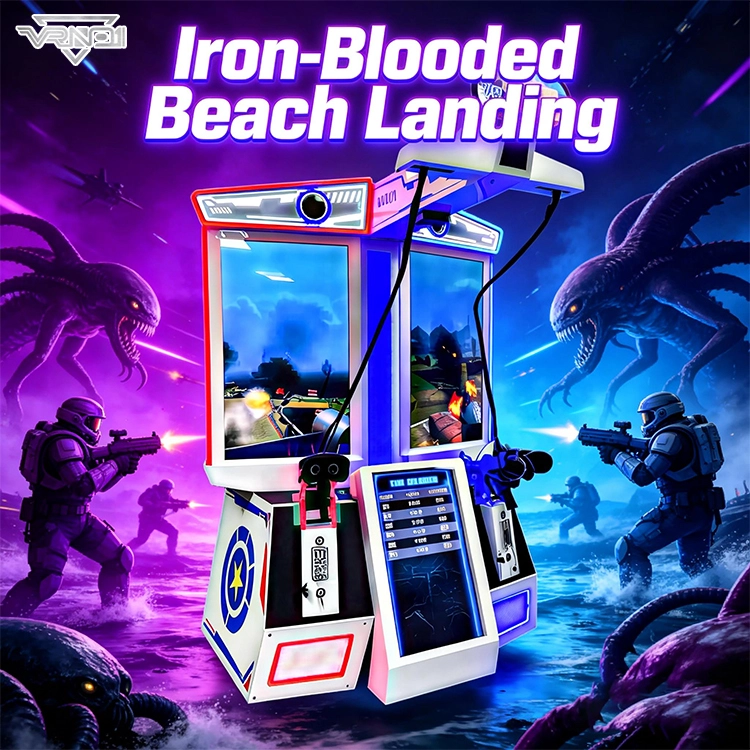
VRN0.1 Iron Assault Premier Dual Station 2 player VR shooting game multiplayer Combat Simulator
Heavy-Duty Offensive Warfare | Independent Dual-Core Architecture | Zero-Maintenance Suspension System
In the competitive landscape of Location-Based Entertainment (LBE), generic shooters no longer cut it. Enter the VR NO.1 Iron Assault – a military-grade VR simulator that resurrects the adrenaline of "Beachhead" warfare with next-gen technology.
Engineered by VR NO.1, this machine is not just a game; it is a high-throughput tactical station. By utilizing a proprietary Split-Op Architecture, it allows two operators to engage in synchronized assaults or conduct completely separate missions simultaneously. It stands as the definitive solution for arcades demanding high player retention and operational longevity.
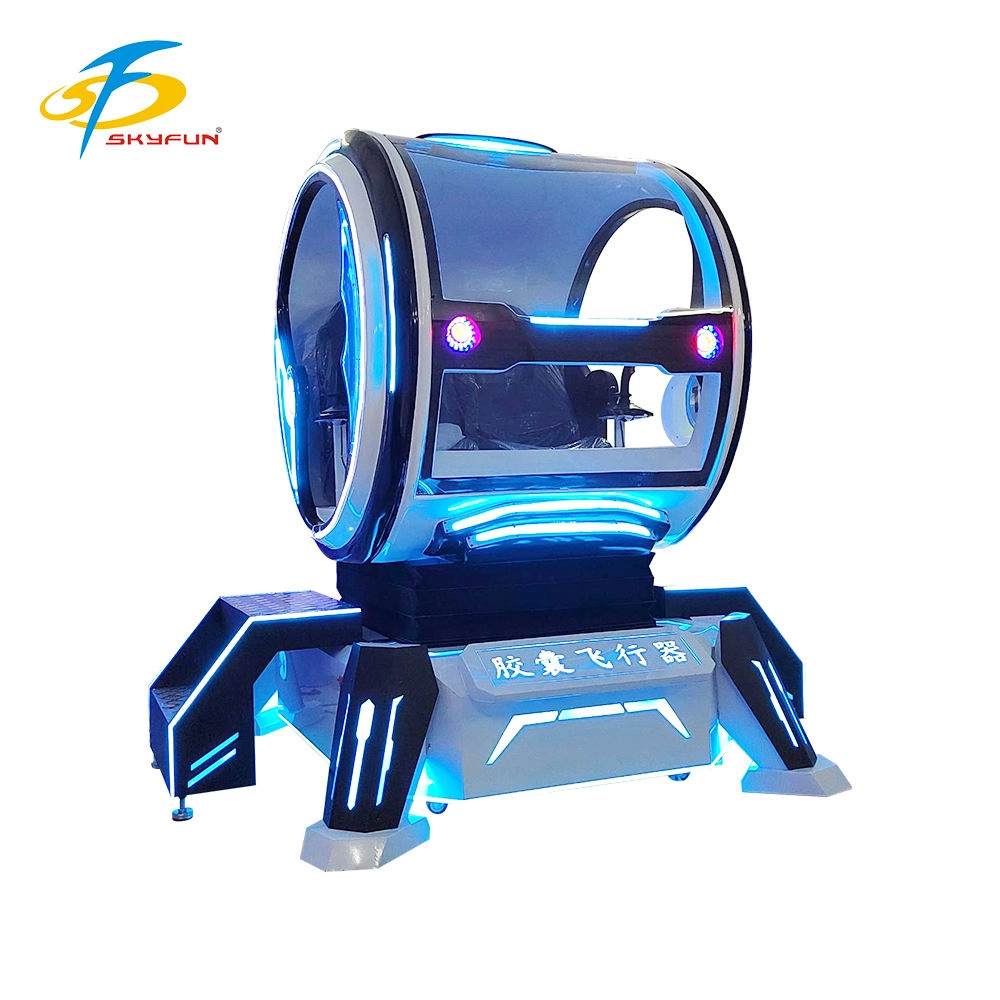
Double Player VR Flight Simulator 100 Movies 15 Games Coin-Operated Game Machine for Shopping Malls Amusement Parks
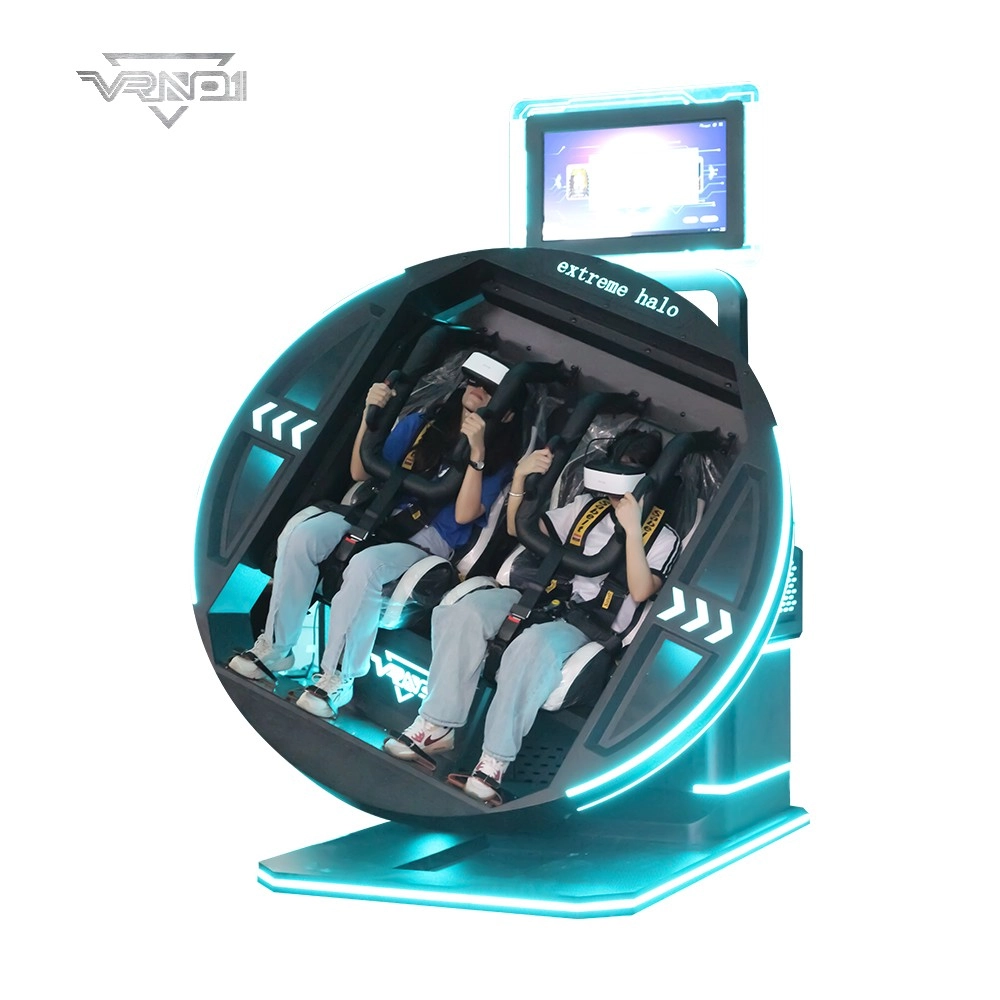
9D VR 360 Roller Coaster Cinema Chair Gaming Set Indoor/Outdoor Business Simulator Hardware for Home or School
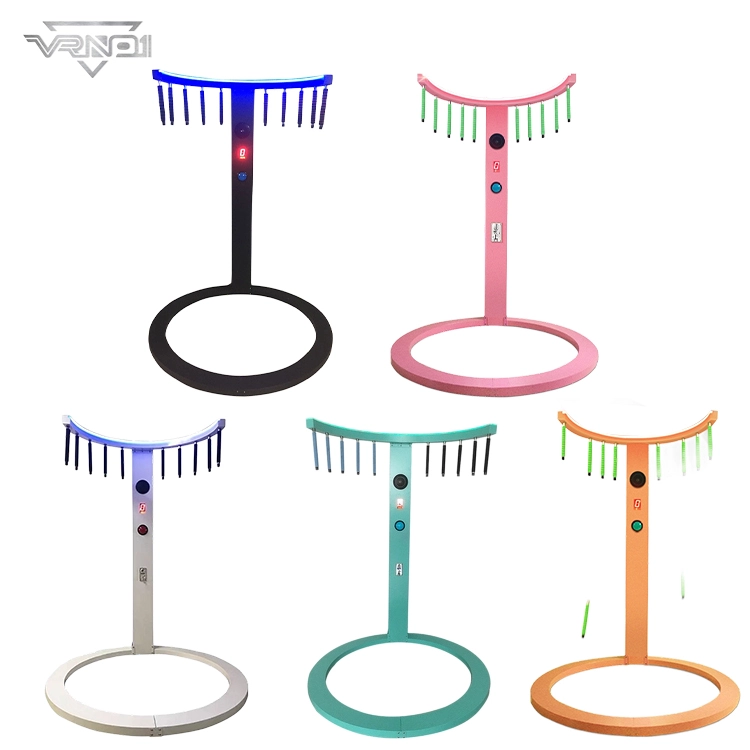
VRN0.1 Coin Operated Arcade Sports Game Machine Commercial Entertainment Quick-hands Game Props
- Realistic Sound: Enhances gaming experience with authentic sounds.
- Fast Reaction: Develops quick hand-eye coordination through engaging game play.
- DIY Kit: Allows for customization and personalization of the baton.
- Metal and Plastic Construction: Durable and robust build quality.
- Coin Operated: Fun for players who enjoy arcade-like experiences.
 Scan QR Code
Whatsapp: +8618127818571
Scan QR Code
Guangzhou Skyfun Technology Co.,Ltd
skyfunvrgame
skyfun game