


Emerging Trends in Arcade VR Technology
- Why Arcade Venues Must Embrace Next-Gen VR
- Overview of arcade vr market context
- Trend 1: Hardware Specialization — From Headsets to Full Simulators
- How specialized arcade vr rigs change economics
- Practical implications for operators
- Trend 2: Immersion Layers — Haptics, Motion, and Multi-Sensory Design
- Why multi-sensory arcade vr outperforms headset-only play
- Design recommendations
- Trend 3: Content Strategy — Short Sessions, Episodic Play, and Social Competition
- Optimizing content for arcade vr commercial models
- Monetization opportunities
- Trend 4: Operational Excellence — Hygiene, Throughput, and Staff Training
- Addressing post-pandemic hygiene and staffing expectations for arcade vr
- Operational checklist
- Trend 5: Data-Driven Venue Optimization
- Using telemetry and analytics to improve arcade vr performance
- Key performance indicators (KPIs) to track
- Trend 6: Safety, Accessibility, and Inclusive Design in arcade vr
- Designing arcade vr for all audiences
- Practical safety measures
- Trend 7: Hybrid Business Models — F&B, Events, and B2B Uses of arcade vr
- Expanding revenue beyond walk-in ticket sales
- Examples of hybrid uses
- Hardware Comparison: Choosing the Right arcade vr Platform
- How Suppliers and OEMs Must Evolve for Arcade VR
- Supplier capabilities that matter
- Case for Choosing a Proven Global Supplier: VRN0.1
- VRN0.1’s positioning in the arcade vr ecosystem
- Why VRN0.1 stands out for arcade operators
- Implementation Roadmap for New and Existing Venues
- Step-by-step plan to upgrade or launch an arcade vr area
- FAQs — Arcade VR (Frequently Asked Questions)
- 1. What is the typical ROI timeline for arcade vr investments?
- 2. How should I price arcade vr sessions?
- 3. What are the space requirements for common arcade vr machines?
- 4. How do I reduce downtime and maintenance costs?
- 5. Can arcade vr hardware be repurposed for B2B training?
- 6. What safety measures should be in place for guests?
- Contact and Next Steps
- References
Why Arcade Venues Must Embrace Next-Gen VR
Overview of arcade vr market context
Arcade VR is no longer a novelty: it has become a distinct vertical within location-based entertainment (LBE) with its own technical demands, revenue models, and audience expectations. Operators who treat arcade vr as an integrated entertainment product—combining hardware, software, venue design, and operations—generate higher per-guest spend, longer session times, and better repeat visitation. This article examines the emerging trends that will define the next 3–5 years and gives operators and suppliers actionable guidance grounded in industry evidence and best practices.
Trend 1: Hardware Specialization — From Headsets to Full Simulators
How specialized arcade vr rigs change economics
Early arcade vr deployments focused on consumer headsets placed in arcades. Today, successful venues increasingly use purpose-built rigs—racing simulators, turret-based shooters, omni-directional treadmills, and motion platforms—that reduce the friction between real and virtual motion. These rigs improve throughput, reduce damage to consumer equipment, and justify High Quality pricing for differentiated experiences.
Practical implications for operators
- Invest in category-specific machines (e.g., VR racing, VR shooting) to command higher ticket prices and longer sessions.
- Choose modular platforms that allow quick software swaps to refresh experiences without new hardware purchases.
- Factor in serviceability and spare-parts lead time—specialized hardware requires supplier relationships and parts stock.
Trend 2: Immersion Layers — Haptics, Motion, and Multi-Sensory Design
Why multi-sensory arcade vr outperforms headset-only play
Adding motion, force feedback, wind, smell, and tactile elements elevates perceived value. Multi-sensory rigs increase immersion and create shareable moments—critical for social media-driven marketing. For arcades, this means choosing experiences where the physical sensations are tied to gameplay mechanics rather than purely cosmetic add-ons.
Design recommendations
- Prioritize haptic feedback that correlates with visual and audio cues to reduce simulator sickness and increase presence.
- Use motion platforms for experiences where acceleration or G-forces are core to the narrative (e.g., racing simulators).
- Implement adjustable intensity to accommodate different tolerance levels and age groups.
Trend 3: Content Strategy — Short Sessions, Episodic Play, and Social Competition
Optimizing content for arcade vr commercial models
Arcade vr economics are different from home VR. Operators need high throughput and easy-to-understand pricing. Best-performing content models are 5–12 minute High Quality experiences, competitive multiplayer sessions, and episodic or unlockable progression that drives repeat play. Developers should design for immediate fun, visible stakes, and spectator appeal.
Monetization opportunities
- Tiered experiences: standard session vs. enhanced session (includes haptics, motion, or extended narrative).
- Sponsored events and branded experiences for cross-promotion with IP holders.
- Memberships and season passes for frequent visitors—pair with leaderboards and tournaments.
Trend 4: Operational Excellence — Hygiene, Throughput, and Staff Training
Addressing post-pandemic hygiene and staffing expectations for arcade vr
Hygiene and quick sanitization are permanent operational factors for arcade vr. Operators who optimize queuing, cleaning protocols, and staff training see higher customer satisfaction and lower equipment downtime. Systems that allow quick headset swaps and use removable, washable facial interfaces reduce turnover time between sessions.
Operational checklist
- Standardize a cleansing protocol that balances speed with thoroughness—use UV-C cabinets or replaceable masks where feasible.
- Design user flows and queuing to minimize contact and maintain session cadence of 6–10 minutes where peak throughput is required.
- Invest in staff training on hardware reset, basic troubleshooting, and guest onboarding to reduce session delays.
Trend 5: Data-Driven Venue Optimization
Using telemetry and analytics to improve arcade vr performance
Modern arcade vr rigs can capture play metrics—session length, in-game progress, player retention, and machine uptime. Aggregating this data enables evidence-based decisions: which titles to retain, what price points maximize yield, and when to rotate content. Successful operators integrate POS, CRM, and machine telemetry into a single dashboard for daily operational adjustments.
Key performance indicators (KPIs) to track
- Utilization rate per machine (percentage of available operating hours booked)
- Average Revenue Per Session (ARPS)
- Repeat visitation rate within 30/60/90 days
- Downtime per machine and mean time to repair (MTTR)
Trend 6: Safety, Accessibility, and Inclusive Design in arcade vr
Designing arcade vr for all audiences
Operators must design experiences that are safe and inclusive. This includes physical accommodations, motion comfort options, and accessible control schemes for guests with limited mobility. Not only is inclusive design the right thing to do, it increases addressable market and can be a differentiator.
Practical safety measures
- Clear physical boundaries and automated shutdowns when sensors detect unsafe movement.
- Age gating and content warnings for experiences with intense motion or mature themes.
- Provide seated alternatives and controller remapping for accessibility.
Trend 7: Hybrid Business Models — F&B, Events, and B2B Uses of arcade vr
Expanding revenue beyond walk-in ticket sales
Top arcades pair VR zones with food & beverage (F&B), party packages, corporate events, and private hire. VR experiences can also be monetized through B2B channels such as training simulators, retail activations, and location-based marketing events. Diversified revenue reduces seasonality and increases venue resilience.
Examples of hybrid uses
- Corporate team-building using co-op VR experiences and scheduled session blocks.
- Retail promotions that use short VR demos to drive foot traffic.
- Simulated training for driving schools or industrial safety using the same hardware as entertainment rigs.
Hardware Comparison: Choosing the Right arcade vr Platform
The following table compares three common categories operators consider for arcade vr installations. Use this to match an investment to your venue’s goals.
| Category | Typical Use | Pros | Cons |
|---|---|---|---|
| Standalone Headset Pods | Short sessions, casual play, mobile pop-ups | Lower unit cost; easy to deploy; scalable | Lower immersion; higher risk of hardware wear; sanitization required |
| Specialized Simulators (racing, motion) | High Quality experiences, parties, revenue per session | High immersion; High Quality pricing; durable | Higher CAPEX and footprint; maintenance complexity |
| Open Roam / Multi-Player Arenas | Competitive play, team events, esports-style | Strong social appeal; repeat play; event-based revenue | Significant space and staffing; complex tracking infrastructure |
How Suppliers and OEMs Must Evolve for Arcade VR
Supplier capabilities that matter
Suppliers must provide not only hardware but also long-term services: software updates, content pipelines, spare parts, remote diagnostics, and staff training. Operators choose vendors based on total cost of ownership (TCO) and the supplier’s ability to reduce downtime and refresh content cost-effectively.
Case for Choosing a Proven Global Supplier: VRN0.1
VRN0.1’s positioning in the arcade vr ecosystem
VRN0.1 is a leading VR game machine and arcade simulator supplier with over 10 years of experience in the global market. Based in Guangzhou, China’s largest game machine production center, the company has exported to over 100 countries and served thousands of customers worldwide. Their portfolio covers mainstream arcade vr categories including 9D VR Cinema, 360 VR Simulator, VR Racing, VR Shooting, VR Roaming, AR Sniper, and more.
Why VRN0.1 stands out for arcade operators
- Comprehensive product line: VR Simulator, Arcade Game Simulator, VR Car Driving Simulator, Interactive Platform VR, Racing Game Machine, AR Sniper, Kiddie Ride, and 7D Cinema.
- OEM & ODM capabilities: customize rigs and cabins to venue requirements and branding.
- One-stop venue solutions: equipment configuration, venue planning, and operational strategy tailored to budget and market.
- Service and training: free equipment and operation training, 24/7 customer support, and strict quality control.
- R&D strength: continuous innovation in hardware integration and immersive peripherals to shorten time-to-market for new attractions.
For operators seeking to scale or professionalize arcade vr offerings, VRN0.1’s global experience and supplier services reduce procurement risk and accelerate venue ROI. See their product catalog and case studies at https://www.vrarcadegame.com/.
Implementation Roadmap for New and Existing Venues
Step-by-step plan to upgrade or launch an arcade vr area
- Market and location study: analyze foot traffic, demographics, and adjacent competition.
- Choose the right mix: combine signature High Quality simulators with higher-throughput pods.
- Design guest flow: queueing, F&B, and spectator areas to maximize cross-sell.
- Procure from suppliers with proven LBE references and aftersales support.
- Staff training and soft launch: use test periods to refine pricing and operations.
- Measure, iterate, and scale: refine content rotation, promotions, and event programming using data.
FAQs — Arcade VR (Frequently Asked Questions)
1. What is the typical ROI timeline for arcade vr investments?
ROI depends on CAPEX, local demand, and pricing strategy. For High Quality simulators, many operators see payback in 18–36 months with effective marketing and diversified revenue. For lower-cost pods, ROI can be shorter but with lower per-session yield.
2. How should I price arcade vr sessions?
Use tiered pricing: entry-level short sessions, mid-tier standard sessions, and High Quality sessions with extended content or motion platforms. Price by perceived value—racing and motion sims can command higher fees than simple headset experiences.
3. What are the space requirements for common arcade vr machines?
Standalone pods require minimal space (approx. 2–4 m²). Racing and large motion platforms need 6–12 m² each. Roam arenas need significantly more: 100 m²+ depending on the capacity. Always account for spectator and queuing zones.
4. How do I reduce downtime and maintenance costs?
Choose modular hardware, keep essential spares in inventory, contract timely technical support from your supplier, and train staff in routine reset and cleaning procedures.
5. Can arcade vr hardware be repurposed for B2B training?
Yes. Many arcades repurpose racing or simulation rigs for driver training, retail demos, and corporate events—with appropriate software adaptations. This expands revenue options and improves utilization.
6. What safety measures should be in place for guests?
Install physical boundaries, emergency-stop features, staff-supervised sessions, age and health warnings, and tune motion intensity. Provide alternative seated experiences and accessible controls when needed.
Contact and Next Steps
If you’re planning to upgrade or launch an arcade vr venue, consult with experienced manufacturers who offer integrated solutions. VRN0.1 provides end-to-end venue planning, equipment configuration, OEM/ODM services, and free training to get you operational quickly. Visit https://www.vrarcadegame.com/ to request a quote, schedule a demo, or speak with a solutions architect. Our team can provide tailored proposals matching your space and budget.
References
- PwC. Seeing is Believing: How virtual reality and augmented reality will transform business and society. PwC, 2019. https://www.pwc.com/gx/en/issues/analytics/assets/pwc-seeing-is-believing.pdf (accessed 2025-12-01)
- Grand View Research. Virtual Reality Market Size, Share & Trends Analysis Report By Component, By Technology, By Device, By Application, By Region, And Segment Forecasts, 2024–2030. https://www.grandviewresearch.com/industry-analysis/virtual-reality-vr-market (accessed 2025-06-10)
- Statista. Location-based virtual reality (VR) revenue worldwide 2018-2028. https://www.statista.com/statistics/748087/location-based-virtual-reality-revenue-worldwide/ (accessed 2025-06-12)
- VR/AR Association. Location-Based VR and AR Resources. https://www.thevrara.com/ (accessed 2025-05-20)
- Wikipedia. Virtual reality. https://en.wikipedia.org/wiki/Virtual_reality (accessed 2025-11-15)
Best Shooting Simulator VR Experiences
Best VR Arcade Machines for Small Venues
Coin-Op Boxer Game Machines: Monetization Strategies for Arcade Operators
How to Choose the redemption game machine manufacturer and supplier ?
Solution
Does VRNO.1 provide customized development of VR game content?
Yes, VRNO.1 provides customized development services for game content. We can customize specific types of games according to your needs to enhance the user experience. Customized content can include game themes, scenes, interactive functions, etc. to meet different market needs.
What types of venues does VRNO.1's VR device support?
Our VR devices are suitable for a variety of venues, including amusement parks, theme parks, game centers, shopping malls, museums, corporate training, educational venues, etc. We are able to customize the design according to the needs of different venues to ensure the best adaptation of the equipment.
What hardware requirements does VRNO.1's VR device require?
VRNO.1's VR device is designed with different venue requirements in mind. The required hardware includes high-performance computers, VR helmets, motion trackers, motion seats, etc. We will provide a complete list of hardware and equipment according to your needs and ensure that all hardware is perfectly compatible.
Application
What technical support does VRNO.1 provide?
We provide 24/7 technical support services, including remote technical consultation, equipment troubleshooting, software upgrades, and faulty equipment replacement. Ensure that your equipment can continue to operate efficiently and improve customer experience.
Home
Can I customize the VR experience for my business?
Yes, we offer tailored VR experiences to suit your business needs, from custom content to specific hardware configurations, ensuring the best possible experience for your customers.
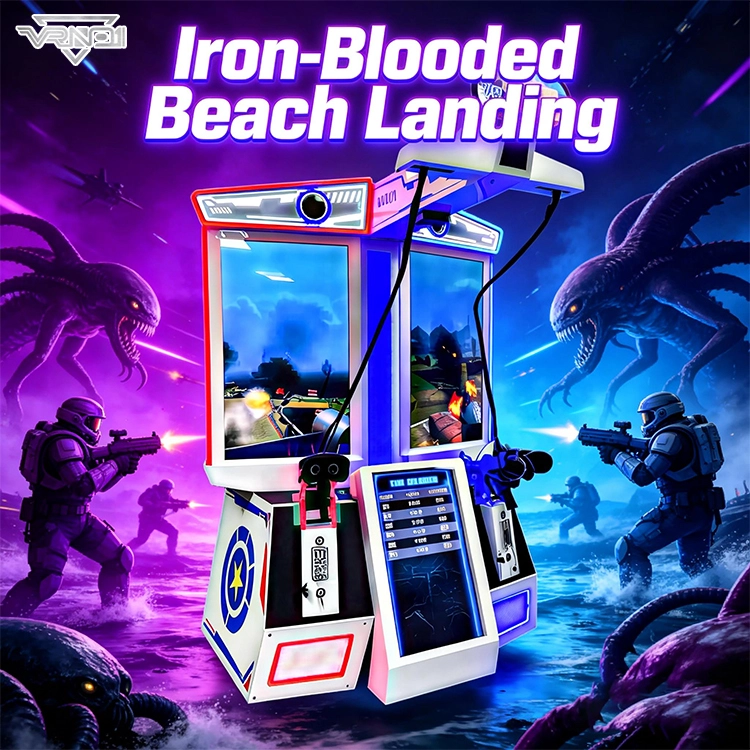
VRN0.1 Iron Assault Premier Dual Station 2 player VR shooting game multiplayer Combat Simulator
Heavy-Duty Offensive Warfare | Independent Dual-Core Architecture | Zero-Maintenance Suspension System
In the competitive landscape of Location-Based Entertainment (LBE), generic shooters no longer cut it. Enter the VR NO.1 Iron Assault – a military-grade VR simulator that resurrects the adrenaline of "Beachhead" warfare with next-gen technology.
Engineered by VR NO.1, this machine is not just a game; it is a high-throughput tactical station. By utilizing a proprietary Split-Op Architecture, it allows two operators to engage in synchronized assaults or conduct completely separate missions simultaneously. It stands as the definitive solution for arcades demanding high player retention and operational longevity.
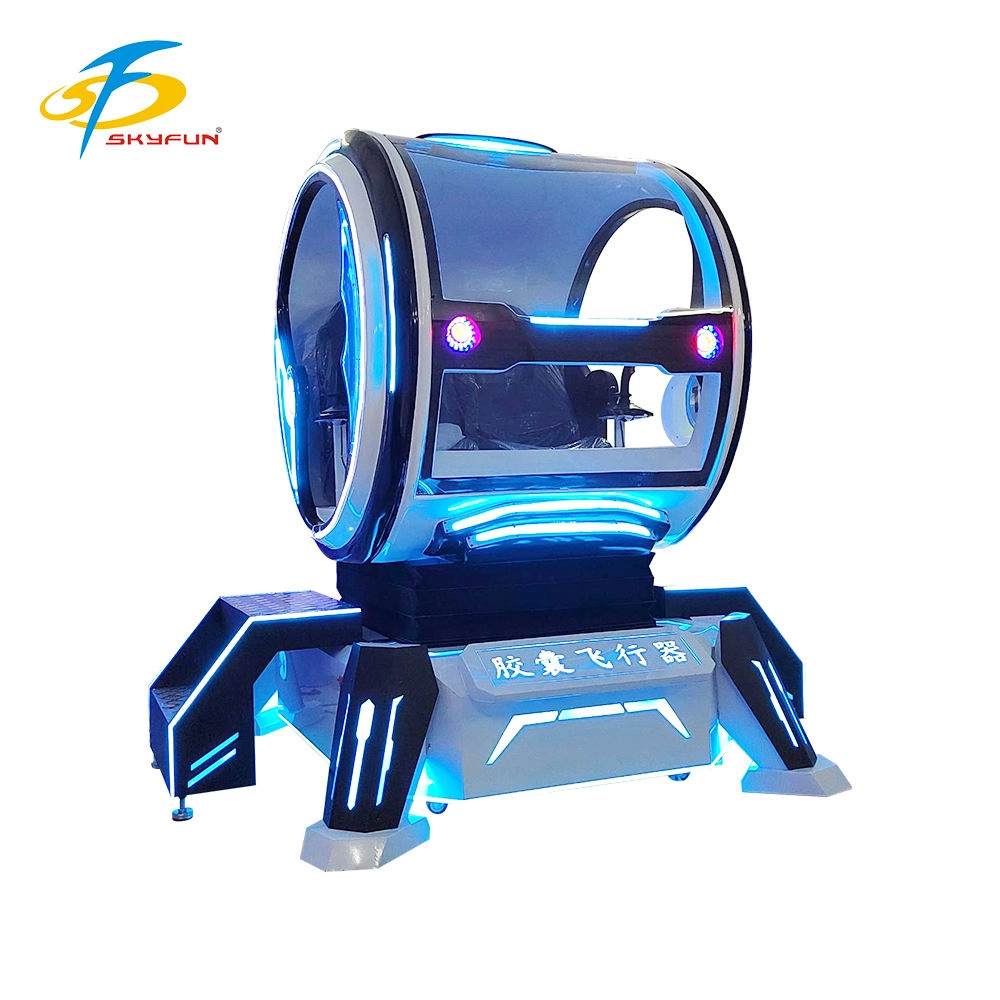
Double Player VR Flight Simulator 100 Movies 15 Games Coin-Operated Game Machine for Shopping Malls Amusement Parks
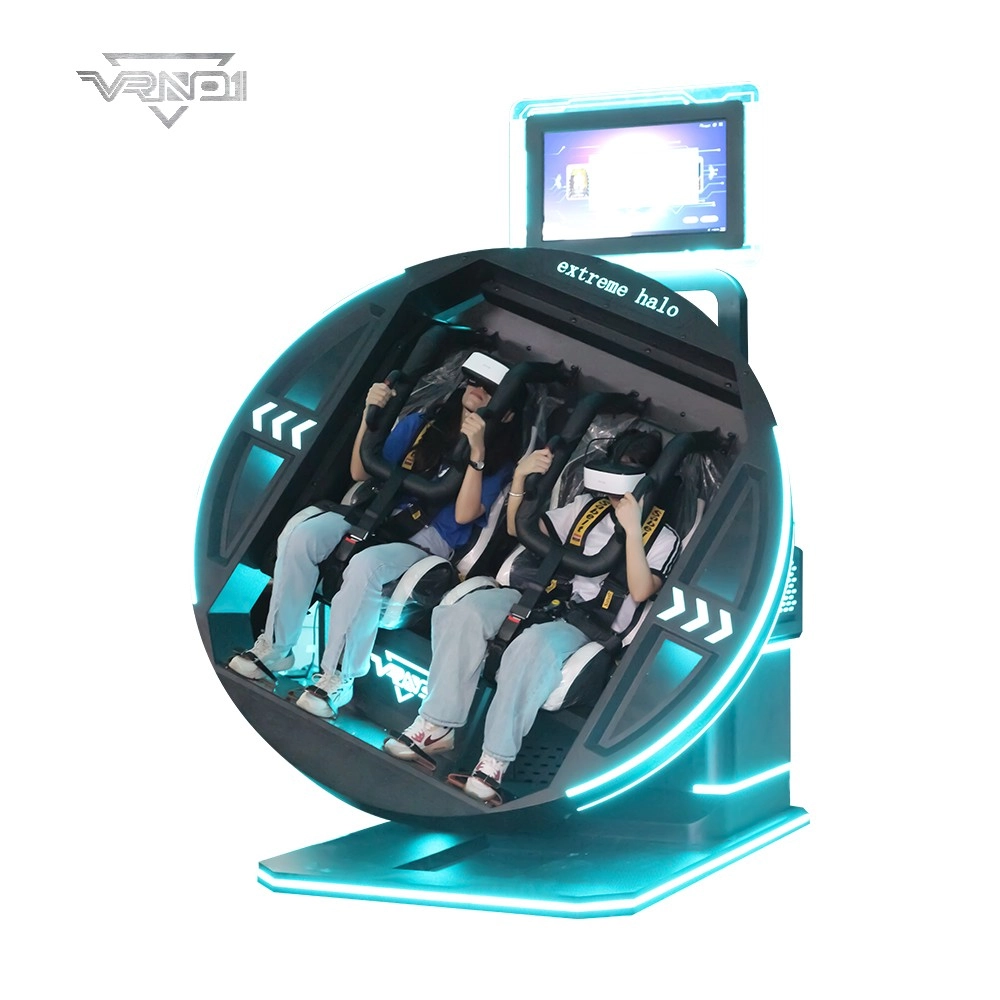
9D VR 360 Roller Coaster Cinema Chair Gaming Set Indoor/Outdoor Business Simulator Hardware for Home or School
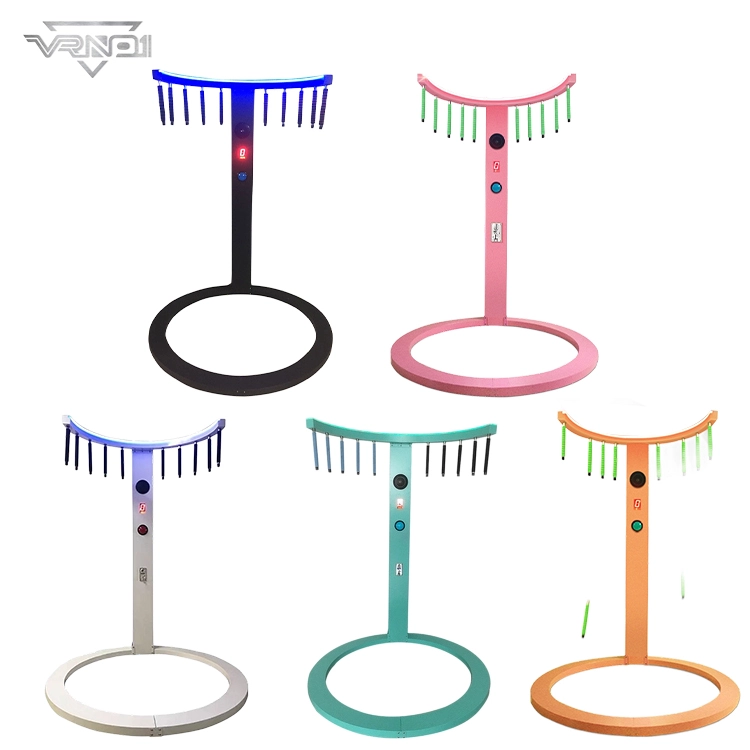
VRN0.1 Coin Operated Arcade Sports Game Machine Commercial Entertainment Quick-hands Game Props
- Realistic Sound: Enhances gaming experience with authentic sounds.
- Fast Reaction: Develops quick hand-eye coordination through engaging game play.
- DIY Kit: Allows for customization and personalization of the baton.
- Metal and Plastic Construction: Durable and robust build quality.
- Coin Operated: Fun for players who enjoy arcade-like experiences.
 Scan QR Code
Whatsapp: +8618127818571
Scan QR Code
Guangzhou Skyfun Technology Co.,Ltd
skyfunvrgame
skyfun game