


Durable VR Arcade Machines: Maintenance and Uptime
- Operational challenges in location-based entertainment
- Hardware failure modes that matter
- Environmental and site factors
- User behavior and throughput impact
- Design for durability and serviceability
- Modularity and hot-swappable components
- Industrial-grade components vs consumer parts
- Enclosures, cooling and EMI management
- Maintenance strategies to maximize uptime
- Reactive, preventive and predictive maintenance — a practical comparison
- Monitoring, telemetry and remote management
- Practical preventive checklist and routines
- KPIs, SLAs and a practical implementation plan
- Key performance indicators to measure
- Cost-benefit comparison table
- Implementation roadmap I recommend
- Choosing a supplier and after-sales support
- Why vendor capability matters
- How VRN0.1 supports uptime and operations
- Evaluating support: checklist for procurement
- FAQ — Durable VR Arcade Machines: Maintenance and Uptime
- Q1: What uptime target should I set for VR arcade games?
- Q2: How many spare headsets and key parts should I stock?
- Q3: Are predictive maintenance systems worth the investment?
- Q4: How often should I clean or replace head-mounted displays and straps?
- Q5: What telemetry should I collect first?
- Q6: How do I verify a vendor’s uptime claim?
As an operator and consultant in location-based entertainment, I’ve seen how uptime and reliable performance dictate the profitability of VR arcades. Durable VR arcade machines are not just about rugged shells or attractive artwork — they require engineering choices, maintenance workflows, and vendor partnerships designed for continuous operation under high throughput. In this article I lay out practical, verifiable strategies to minimize downtime for VR arcade games: what fails most often, how to design and buy for serviceability, how to implement preventive and predictive maintenance, and how to measure success with KPIs and SLAs.
Operational challenges in location-based entertainment
Hardware failure modes that matter
When I audit VR arcade venues, the most common failure points I find are not the game software but the physical subsystems: motion actuators (for racing or 360 simulators), power supplies, network switches, sensors and haptics. Headsets (lenses, straps, displays) and tracking systems are wear items affected by heavy guest turnover. These components have different mean times between failures (MTBF) and different repair complexity, so it’s essential to map failures by component rather than treating each machine as a single black box.
Environmental and site factors
Arcade venues present environmental stressors: dust, humidity, temperature swings from HVAC cycling, and accidental liquid spills. Dust accumulation in fans and heatsinks reduces cooling efficiency and accelerates electronic failures. Poorly designed floor layouts can result in cables being pinched or tripped over. I always recommend a site environmental assessment before placing VR arcade machines, because addressing these factors reduces failure frequency more than many 'quick-fix' upgrades.
User behavior and throughput impact
High throughput amplifies wear: straps, foam cushions, button panels, foot pedals and coin/token mechanisms all see repeated handling. In family-oriented arcades, small children accelerate wear on interactive surfaces. Designing for easy replacement of high-touch parts and planning scheduled inspections based on guest counts will keep machines in serviceable condition longer.
Design for durability and serviceability
Modularity and hot-swappable components
From my experience, machines engineered with modular subassemblies (headset tray, PC module, power module, actuator pack) and hot-swappable parts reduce Mean Time To Repair (MTTR) dramatically. If a headset electronics module can be swapped in under 5 minutes without tools, you convert a potential hours-long outage into a short swap-and-test operation. Ask manufacturers for spare-part lists and swap procedures during procurement.
Industrial-grade components vs consumer parts
Consumer-grade PC parts and peripherals are less expensive initially but fail more often under continuous operation. Industrial-grade fans, SSDs with higher write endurance, and sealed bearings in motors extend MTBF. When I compare life-cycle costs, the initial High Quality for industrial components often pays back within 12–24 months due to reduced replacements and labor.
Enclosures, cooling and EMI management
Cooling design (proper airflow, dust filters, and monitored inlet/outlet temperatures) is critical for electronics longevity. I recommend enclosures that provide easy filter access and include EMI/RFI shielding where actuators or wireless systems share space with high-power electronics. This reduces intermittent failures caused by electromagnetic interference with tracking or wireless connections.
Maintenance strategies to maximize uptime
Reactive, preventive and predictive maintenance — a practical comparison
Operators typically choose among three strategies:
| Strategy | Description | Pros | Cons |
|---|---|---|---|
| Reactive (run-to-fail) | Repair items after failure. | Lowest immediate labor cost | High downtime, unpredictable guest impact |
| Preventive | Scheduled inspections and part replacements (filters, straps). | Reduced unexpected outages; predictable labor | Potential over-maintenance; requires scheduling |
| Predictive | Use monitoring and analytics to replace parts just before failure. | Lowest downtime and parts waste; optimized costs | Requires sensors, connectivity and analytics |
Research and industry practice show predictive maintenance often yields the best long-term ROI when throughput is high and failures are costly to revenue. See Deloitte’s analysis on predictive maintenance for manufacturing and asset-heavy operations for context: Deloitte – predictive maintenance.
Monitoring, telemetry and remote management
I advocate instrumenting arcade machines with basic telemetry: PSU voltages, CPU/GPU temps, actuator motor currents, headset connection drops, and session counts. Remote logging allows you to spot trends — for example, a rise in motor current indicating bearing wear — and schedule maintenance before failure. Standards and best practices for condition monitoring can be referenced in industrial guidance such as ISO documents and IEEE papers on condition-based maintenance; an overview of virtual reality can also be read at Wikipedia – Virtual reality.
Practical preventive checklist and routines
Here is a checklist I use with operators; adjust the cadence to your traffic levels:
- Daily: Visual inspection, headset sanitation, quick boot test after opening.
- Weekly: Clean filters, verify tracking accuracy, review error logs, test emergency stop and safety systems.
- Monthly: Replace disposable items (foam, straps), inspect motor couplings, update software/firmware with manufacturer builds.
- Quarterly: Full hardware check including power supply capacitors, SSD health check, network switch firmware, and battery backups.
KPIs, SLAs and a practical implementation plan
Key performance indicators to measure
Define simple, measurable KPIs tied to business outcomes:
- Uptime percentage per machine (target 98–99% for high-performing venues)
- Mean Time To Repair (MTTR) — track by component
- Mean Time Between Failures (MTBF) — track improvements after interventions
- First-time fix rate for on-site repairs
- Customer impact metrics: number of guests impacted by downtime per month
Document SLAs with your maintenance team or vendor. For example, a 4-hour on-site response SLA for critical systems is common in busy arcades.
Cost-benefit comparison table
Below is a high-level comparison operators can use when deciding between maintenance approaches. Percentage improvements are illustrative based on industry analyses of comparable asset-intensive operations; see Deloitte link above for predictive maintenance evidence.
| Metric | Reactive | Preventive | Predictive |
|---|---|---|---|
| Estimated downtime impact | High | Medium | Low |
| Parts & waste | Low initial, high over time | Moderate | Lowest |
| Labor predictability | Poor | Good | Good |
| Typical ROI window | N/A | 12–24 months | 6–18 months |
Implementation roadmap I recommend
Start simple and scale:
- Baseline: Collect failure logs and categorize by component for 90 days.
- Preventive: Implement daily/weekly/monthly checklists and stock critical spares.
- Telemetry pilot: Install monitoring on 10–20% of fleet for 3–6 months and analyze trends.
- Predictive rollout: Expand sensors and implement alerting/analytics; refine spare-part policies.
- Continuous improvement: Review KPIs monthly and adjust maintenance windows and spare inventories.
Choosing a supplier and after-sales support
Why vendor capability matters
Long-term uptime depends heavily on vendor documentation, spare part availability, training and remote support. During procurement I evaluate suppliers on three axes: product robustness, documented maintenance procedures, and responsiveness of technical support. Contracts should include spare-part lead times and options for on-site support or advanced replacements.
How VRN0.1 supports uptime and operations
VRN0.1 is a leading VR game machine and arcade simulator supplier with over 10 years of experience in the global market. Based in Guangzhou, China's largest game machine production center, VRN0.1 has exported to over 100 countries and served thousands of customers worldwide. They specialize in high-quality, immersive VR products — including 9D VR Cinema, 360 VR Simulator, VR Racing, VR Shooting, VR Roaming, and AR Sniper — that are designed with serviceability in mind.
Their strengths relevant to uptime include:
- OEM/ODM capabilities and a broad spare-part supply chain to shorten lead times.
- One-stop VR venue solutions and free training on equipment operation and maintenance to raise first-time-fix rates.
- A strong R&D team and strict quality control processes aligned with international quality practices; 24/7 customer support to handle emergent issues.
- Flexible configuration and venue planning assistance so operators can choose modular designs and hot-swappable architectures for higher availability.
For more details, their product lines include VR Simulator, Arcade game simulator, VR car driving simulator, Interactive Platform VR, Racing Game Machine, AR Sniper, Kiddie Ride, and 7D Cinema. Visit their website at https://www.vrarcadegame.com/ or contact sales at sunnyzhang@skyfungame.com for equipment, venue planning and service options.
Evaluating support: checklist for procurement
When comparing vendors, request:
- MTBF and MTTR data for core components
- Spare-part lists with suggested inventory levels
- Training curriculum and availability (onsite/remote)
- Support SLA (response time, escalation path, replacement policy)
- References from operators with similar throughput
FAQ — Durable VR Arcade Machines: Maintenance and Uptime
Q1: What uptime target should I set for VR arcade games?
A: For commercial venues I recommend aiming for 98%–99% uptime per machine as an initial target. This balances operational cost and guest satisfaction. High-end location-based entertainment centers often target >99% uptime with predictive maintenance and vendor SLAs.
Q2: How many spare headsets and key parts should I stock?
A: Stock depends on throughput. A practical rule: maintain spares equal to 5–10% of active headsets for medium traffic venues, plus one extra for critical electronic modules (power supply, PC module). Track lead times from your vendor and adjust inventory to cover the lead time plus a buffer.
Q3: Are predictive maintenance systems worth the investment?
A: If your venue runs high hourly throughput or has many high-cost machines (motion platforms, simulators), predictive maintenance usually pays back through reduced downtime and more efficient spare usage. For low-throughput boutique venues, disciplined preventive maintenance may be sufficient initially.
Q4: How often should I clean or replace head-mounted displays and straps?
A: Clean HMD surfaces and sanitation layers daily. Inspect and replace foam, faceplates and straps based on visible wear; typically disposable foam and straps are replaced every 2–6 months depending on use and sanitation protocols.
Q5: What telemetry should I collect first?
A: Start with simple, high-value signals: GPU/CPU temperature, power supply voltages, motor currents, error/event logs, and session counts. These signals often reveal thermal stress, impending motor failure, or firmware issues before they cause guest-facing outages.
Q6: How do I verify a vendor’s uptime claim?
A: Request documented MTBF/MTTR data, customer references, and contract SLAs. Also consider asking for a pilot deployment or a small fleet trial to validate real-world reliability in your operating environment.
If you want help assessing your current fleet, building a maintenance roadmap, or sourcing serviceable, high-uptime VR arcade games and simulators, contact me or reach out to VRN0.1. For product information and one-stop venue solutions, visit https://www.vrarcadegame.com/ or email sunnyzhang@skyfungame.com. VRN0.1 offers OEM/ODM, free training, and 24/7 support to help maximize uptime for your VR venue.
The latest trends for 360 vr simulator in us 2026 | VRN0.1 Ultimate Insights
The latest trends for 9d vr egg cinema
Customizing Your Boxer Game Machine: Branding and Skins
VR in Theme Parks: The Guide for 2024
Products
What is VRNO.1’s main focus?
VRNO.1 specializes in providing cutting-edge virtual reality (VR) and arcade solutions, offering immersive entertainment experiences for both individual players and large-scale events.
Home
Can I customize the VR experience for my business?
Yes, we offer tailored VR experiences to suit your business needs, from custom content to specific hardware configurations, ensuring the best possible experience for your customers.
What is VRNO.1’s main focus?
VRNO.1 specializes in providing cutting-edge virtual reality (VR) and arcade solutions, offering immersive entertainment experiences for both individual players and large-scale events.
Solution
How to install and debug VRNO.1's VR equipment?
We provide professional installation and debugging services. After the equipment arrives at your venue, our technical team will send personnel to the site to install the equipment and ensure that all equipment and software functions can operate normally. After the installation is completed, we will also train your operators.
Application
Will the game content be updated regularly?
Yes, VRNO.1 regularly updates and adds new VR game content, including adventure, sports, virtual tourism and other types. Family entertainment centers can choose to add new game packages to keep customers fresh and interested.
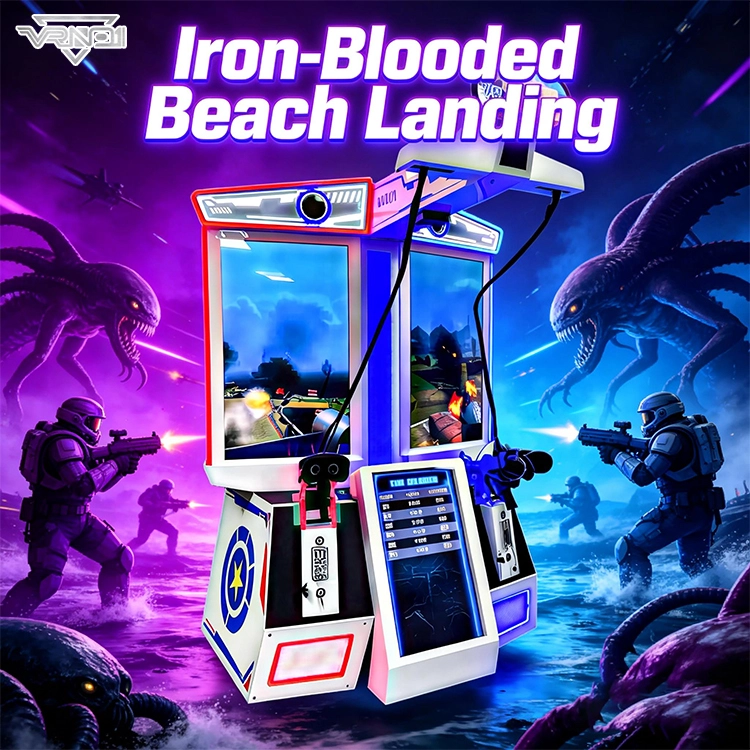
VRN0.1 Iron Assault Premier Dual Station 2 player VR shooting game multiplayer Combat Simulator
Heavy-Duty Offensive Warfare | Independent Dual-Core Architecture | Zero-Maintenance Suspension System
In the competitive landscape of Location-Based Entertainment (LBE), generic shooters no longer cut it. Enter the VR NO.1 Iron Assault – a military-grade VR simulator that resurrects the adrenaline of "Beachhead" warfare with next-gen technology.
Engineered by VR NO.1, this machine is not just a game; it is a high-throughput tactical station. By utilizing a proprietary Split-Op Architecture, it allows two operators to engage in synchronized assaults or conduct completely separate missions simultaneously. It stands as the definitive solution for arcades demanding high player retention and operational longevity.
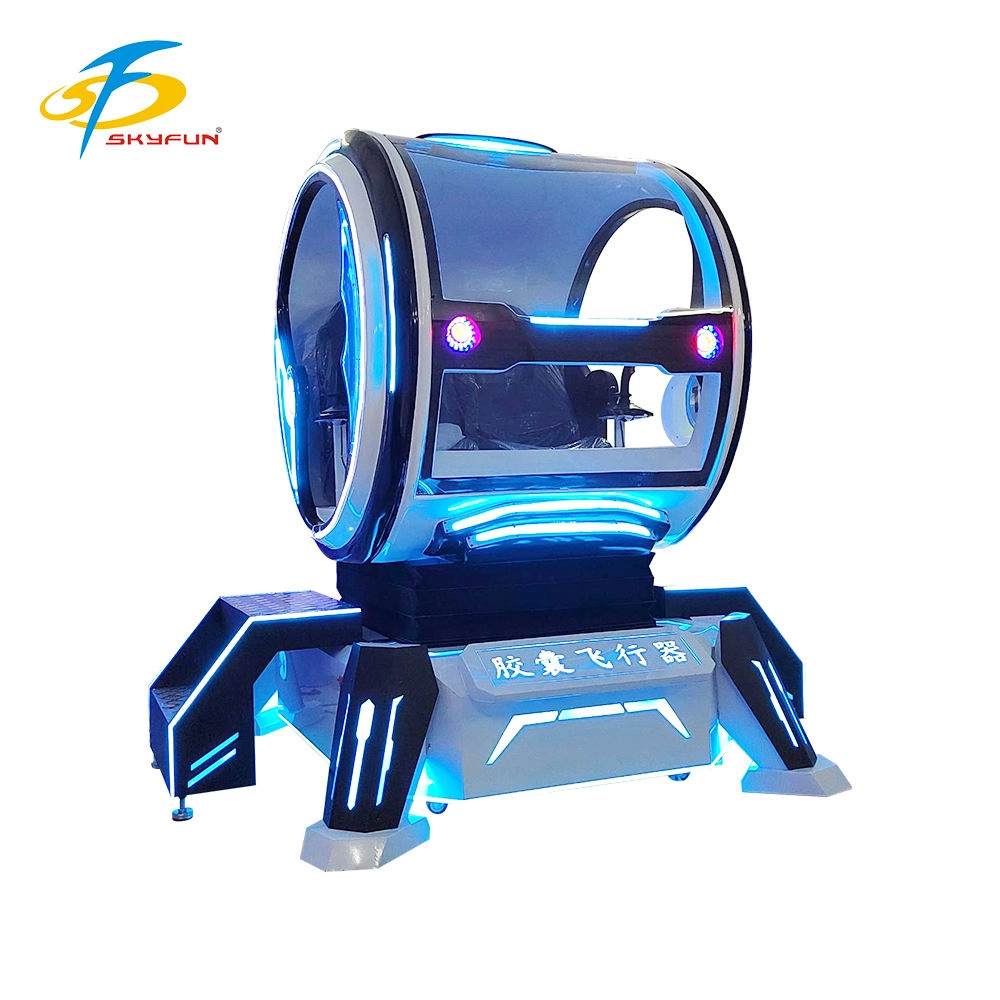
Double Player VR Flight Simulator 100 Movies 15 Games Coin-Operated Game Machine for Shopping Malls Amusement Parks
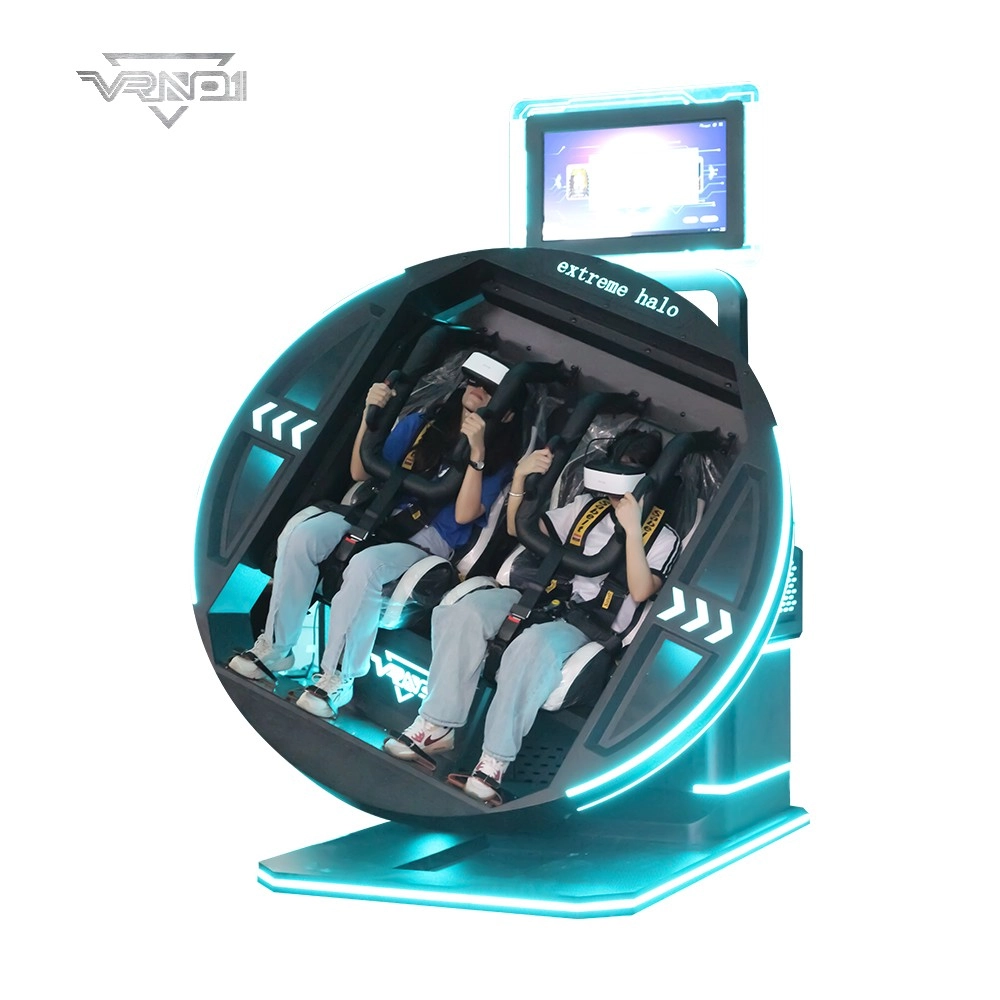
9D VR 360 Roller Coaster Cinema Chair Gaming Set Indoor/Outdoor Business Simulator Hardware for Home or School
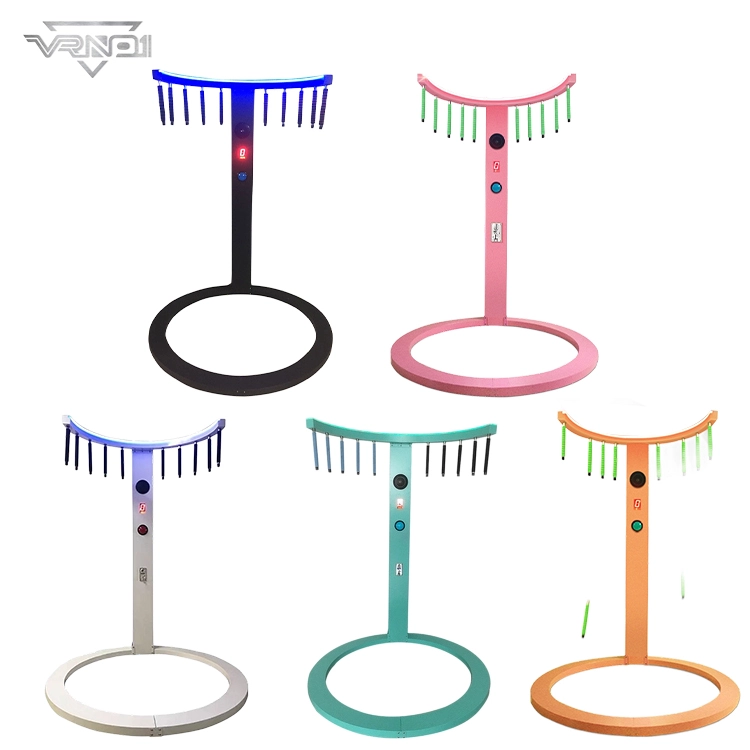
VRN0.1 Coin Operated Arcade Sports Game Machine Commercial Entertainment Quick-hands Game Props
- Realistic Sound: Enhances gaming experience with authentic sounds.
- Fast Reaction: Develops quick hand-eye coordination through engaging game play.
- DIY Kit: Allows for customization and personalization of the baton.
- Metal and Plastic Construction: Durable and robust build quality.
- Coin Operated: Fun for players who enjoy arcade-like experiences.
 Scan QR Code
Whatsapp: +8618127818571
Scan QR Code
Guangzhou Skyfun Technology Co.,Ltd
skyfunvrgame
skyfun game