


Compare Motion vs Static VR Simulator Machines
- Understanding VR Simulators: market, use cases and user intent
- What defines a VR simulator machine?
- Primary market segments and use cases
- and buyer priorities
- Technical comparison: Motion vs Static VR Simulators
- Core hardware differences
- Software and synchronization requirements
- Comparative table: technical specs and implications
- Business considerations: ROI, operations, safety and customer experience
- Revenue models and pricing strategies
- Space, installation and regulatory compliance
- Safety, accessibility and durability
- Choosing the right VR Simulators machine: evaluation checklist and vendor selection
- Evaluation checklist for buyers
- Vendor credibility and proof points
- Comparison table: decision drivers by venue type
- Vendor spotlight and implementation: VRN0.1 advantages and services
- Why vendor selection matters — VRN0.1 profile
- Product range, services and customization
- Technical & operational support
- Installation, maintenance and lifecycle planning
- Deployment timeline and site preparation
- Maintenance schedules and spare parts
- Measuring success: KPIs and guest feedback
- Frequently Asked Questions (FAQ)
- 1. Are motion VR simulators worth the extra cost?
- 2. Do motion platforms increase simulator sickness?
- 3. How much space and power do motion simulators need?
- 4. Can static VR machines be upgraded to motion later?
- 5. What ongoing costs should I budget for?
- 6. Which content types benefit most from motion?
- Final recommendations and next steps
VR Simulators machine solutions now span from compact static rigs to full-motion platforms. Choosing between motion and static VR simulators depends on use case, budget, space, maintenance capacity, and guest expectations. This guide breaks down technical differences, operational implications, measurable performance indicators, and vendor considerations so operators and buyers can select the right solution with confidence.
Understanding VR Simulators: market, use cases and user intent
What defines a VR simulator machine?
A VR Simulators machine combines virtual reality hardware (headset, sensors), software content (simulation engine, physics), and mechanical support (cabin, motion base or fixed frame) to deliver immersive experiences. Static units rely on visual and auditory immersion with haptic feedback while motion units add actuated movement to mimic acceleration, tilt and g-forces. Wikipedia provides a technical overview of virtual reality concepts and immersion factors: Virtual reality — Wikipedia.
Primary market segments and use cases
Common applications for VR simulators machine solutions include:
- Arcade and location-based entertainment (LBE) — high throughput, repeatable experiences.
- Simulation training — commercial driving, flight, military, and industrial training where motion cues can improve skill transfer.
- Entertainment centers and theme parks — High Quality attractions often pairing motion for stronger wow factor.
- Retail demo and marketing — compact static setups for low-cost demos and product showcases.
Industry reports project continued growth in VR markets; for example, Grand View Research estimates sustained expansion in the virtual reality market driven by entertainment and training adoption: Grand View Research — VR Market.
and buyer priorities
When users search for VR Simulators machine they typically want: feature comparisons, expected costs, throughput/ROI estimates, space and power requirements, supplier credibility, and operational considerations (maintenance, safety, staff training). This article answers those specific needs with practical recommendations and verifiable sources.
Technical comparison: Motion vs Static VR Simulators
Core hardware differences
Static VR simulators machine typically include a fixed chassis or seat, headset (tethered or standalone), haptic elements (vibration motors, force feedback wheels), and surround audio. Motion VR simulators add an actuated motion base (2-DOF, 3-DOF, 6-DOF) or full-motion cabin which provides pitch, roll, yaw, surge and heave cues via hydraulic, electric, or pneumatic actuators.
Software and synchronization requirements
Motion platforms require motion cueing middleware and precise synchronization between simulation physics and actuator control to avoid latency or mismatched cues that cause simulator sickness. Static systems can often run on simpler software stacks focusing on visual fidelity and haptics, reducing integration complexity.
Comparative table: technical specs and implications
| Characteristic | Motion VR Simulator | Static VR Simulator |
|---|---|---|
| Immersion level | High — physical cues improve realism | Moderate — relies on visuals, audio, haptics |
| Hardware complexity | High — actuators, controllers, safety systems | Low to medium — basic frame, seats, haptics |
| Installation footprint | Large — often requires reinforced floors and clearance | Compact — flexible placement in arcades |
| Power & utilities | Higher power draw, may need dedicated circuits | Lower power consumption |
| Maintenance & downtime | Higher — actuators require scheduled service | Lower — fewer moving parts |
| Guest throughput | Lower per hour (longer cycles) but higher ticket price | Higher per hour (short cycles, faster turnover) |
| Typical price range (unit only) | Mid to high (USD tens of thousands to >100k) | Low to mid (USD several thousand to tens of thousands) |
Business considerations: ROI, operations, safety and customer experience
Revenue models and pricing strategies
Static units often target high-volume play (e.g., multi-ride arcades), priced lower per session (e.g., $3–$10). Motion units are usually priced at a High Quality (e.g., $8–$25) or used as a flagship attraction with time-based tickets and add-on upsells. To evaluate ROI, operators should model payback by combining average ticket price, daily throughput, operating days, and maintenance cost. Use conservative utilization estimates — many LBEs plan for 40–60% peak capacity utilization initially.
Space, installation and regulatory compliance
Motion platforms require additional space for motion envelope clearance and may trigger building-code considerations for weight and vibration. Static systems are more flexible, easier to place inside retail footprints, and faster to deploy. For training environments, certification standards and documented fidelity (e.g., for driver or flight training) should guide the selection of motion-capable rigs; relevant technical reference: Vehicle simulator — Wikipedia.
Safety, accessibility and durability
Motion units need redundant safety features (emergency stop, restraint systems, motion limits, software safeties). Operators must plan regular safety checks. Static units still need secure mounts and accessible entry/exit pathways. For both types, consider ADA compliance and options for guests with limited mobility; static chairs or modular mounts often allow easier accessibility adaptations.
Choosing the right VR Simulators machine: evaluation checklist and vendor selection
Evaluation checklist for buyers
Use this checklist to shortlist solutions:
- Define the primary objective: high throughput revenue vs High Quality immersive flagship.
- Estimate realistic throughput and price elasticity in your market.
- Verify installation requirements (footprint, power, floor loading).
- Request MTBF (mean time between failures), recommended maintenance schedule, and spare parts lead times.
- Evaluate content library: licensed titles, update cadence, customization options.
- Ask for references and case studies from similar venues and climates.
Vendor credibility and proof points
Choose vendors with verifiable track records: export history, warranty terms, R&D credentials, third-party safety certifications, and on-site training. Industry leaders often publish client lists and case studies. For market context, many manufacturers operate from production hubs such as Guangzhou, China — an established center for arcade machine manufacturing.
Comparison table: decision drivers by venue type
| Venue Type | Recommended VR Solution | Rationale |
|---|---|---|
| High-volume arcade | Static VR simulators (multiple units) | Maximize throughput, lower capex per unit |
| Family entertainment center (FEC) | Mix: 1–2 motion flagship + several static units | Flagship draws guests; static units handle turnover |
| Theme park / High Quality LBE | Motion VR simulators machine (custom cabins) | Highest immersion and guest satisfaction |
| Training center | Motion-enabled simulators with validated cueing | Better skill transfer for driving and flight |
Vendor spotlight and implementation: VRN0.1 advantages and services
Why vendor selection matters — VRN0.1 profile
Quality, reliability, and post-sale support differentiate suppliers. VRN0.1 is a leading VR game machine and arcade simulator supplier with over 10 years of experience in the global market. Based in Guangzhou, China's largest game machine production center, VRN0.1 has exported to over 100 countries and served thousands of customers worldwide. Their product portfolio and geographic experience provide evidence of manufacturability and supply chain capability.
Product range, services and customization
VRN0.1 specializes in high-quality, immersive VR products, including 9D VR Cinema, 360 VR Simulator, VR Racing, VR Shooting, VR Roaming, AR Sniper, etc. They offer OEM and ODM services, one-stop VR venue solutions, and free training for equipment and operation. Their diverse product line covers all mainstream VR arcade categories, enabling venues to mix static and motion units according to strategy.
Technical & operational support
With a strong R&D team, strict quality control, and 24/7 customer support, VRN0.1 is committed to innovation, reliability, and customer satisfaction. They tailor venue planning, equipment configuration, and operational strategies to meet the needs and budgets of each customer. Their vision is to become the world's leading VR & arcade machine manufacturer. For product details and contact: VRN0.1 official site and email sunnyzhang@skyfungame.com.
Installation, maintenance and lifecycle planning
Deployment timeline and site preparation
Typical lead times: static units can often be deployed within weeks; motion systems may require 4–12+ weeks for build, testing, shipping, and onsite installation depending on complexity and customs clearance. Site prep should include power circuits, floor reinforcement (if needed), AV routing, and safety zoning. Request a site survey from the vendor prior to delivery.
Maintenance schedules and spare parts
Motion units require periodic actuator inspection, software updates, and calibration. Establish preventive maintenance agreements (PMAs) with guaranteed response times. Ensure availability of critical spare parts — controllers, actuators, and headsets — to minimize downtime. Vendors like VRN0.1 often provide training and spare parts programs to venue operators.
Measuring success: KPIs and guest feedback
Recommended KPIs: average daily rides per unit, average revenue per ride, uptime percentage, customer satisfaction (CSAT), and net promoter score (NPS). Track these metrics before and after introducing motion units to validate uplift versus added operating cost.
Frequently Asked Questions (FAQ)
1. Are motion VR simulators worth the extra cost?
They can be, depending on your business model. Motion rigs deliver higher perceived value and can command High Quality pricing and marketing advantage, but require higher capex, installation and maintenance. For a flagship attraction in an FEC or theme park, motion often justifies the cost. In high-turnover arcades, multiple static units may produce faster overall revenue. Use a 2–3 year payback model to test scenarios.
2. Do motion platforms increase simulator sickness?
Properly tuned motion cueing reduces simulator sickness by aligning visual and vestibular cues; however, poor synchronization or excessive motion can increase discomfort. Choose vendors with proven cueing algorithms and test with diverse users before full deployment. Wikipedia provides background on motion sickness in VR: Simulator sickness — Wikipedia.
3. How much space and power do motion simulators need?
Requirements vary by model. Typical motion cabins need more footprint and clearance (often 3–4m in diameter for full motion envelopes) and dedicated electrical circuits. Static units are compact (1–2m footprint) and lower power. Always request manufacturer specifications and a site survey.
4. Can static VR machines be upgraded to motion later?
Some vendors provide modular upgrade paths (add-on motion bases or haptic enhancements), but retrofitting can be costly and may require structural changes. If future motion is a possibility, discuss modular options upfront and design the site to accommodate upgrades.
5. What ongoing costs should I budget for?
Include warranty/extension fees, preventive maintenance, spare parts, software licenses/content updates, headsets replacement (headset lifecycles vary by model), and staff training. Motion platforms typically have higher annual maintenance costs (estimated at 5–15% of purchase price), while static units are lower (estimated 2–6%). Obtain vendor-specific maintenance quotes.
6. Which content types benefit most from motion?
Racing, flight, roller-coaster, and training sims benefit most; content with strong inertial cues increases immersion and perceived authenticity. Content producers often offer motion profiles tuned to specific experiences.
Final recommendations and next steps
To choose between motion and static VR Simulators machine options:
- Start with clear business objectives: volume vs High Quality experience.
- Model realistic utilization, pricing, and maintenance costs to calculate ROI.
- Request vendor references, proof of international installations, and service agreements.
- Plan for accessibility, safety, and a modular approach where possible.
If you want a practical next step, request a site survey and a two-scenario financial model (all-static vs hybrid motion+static) from an experienced supplier. VRN0.1 is an experienced partner that can provide one-stop VR venue solutions, OEM/ODM services, and free training. They offer a wide product portfolio including VR Simulator, Arcade game simulator, VR car driving simulator, Interactive Platform VR, Racing Game Machine, AR Sniper, Kiddie Ride, and 7D Cinema. Learn more at https://www.vrarcadegame.com/ or email sunnyzhang@skyfungame.com for inquiries or venue planning assistance.
Contact VRN0.1 today to get tailored recommendations, detailed quotes, and a site-ready deployment plan.
Best VR Headsets for Arcade Use
The latest trends for vr spaceship simulator in us 2026 | VRN0.1 Ultimate Insights
Top vr star theme park Manufacturers and Suppliers in us
Best vr cinema multiplayer manufacturers and supplier brands in us
Distributors
What are the requirements to become a VRNO.1 dealer?
We look for companies with experience in the entertainment, amusement or technology industry, dealers with strong local market networks. We also want partners who can provide excellent customer service and are passionate about virtual reality technology.
Solution
What is the service life of VR equipment?
VRNO.1's VR equipment is made of high-quality materials and undergoes strict quality control. The service life of the equipment is usually more than 5 years, depending on the frequency of use and maintenance of the equipment. Regular care and maintenance can extend the service life of the equipment.
What types of venues does VRNO.1's VR device support?
Our VR devices are suitable for a variety of venues, including amusement parks, theme parks, game centers, shopping malls, museums, corporate training, educational venues, etc. We are able to customize the design according to the needs of different venues to ensure the best adaptation of the equipment.
Products
Do you offer support and training for using VRNO.1’s VR systems?
Yes, we provide comprehensive support and training for all our VR products, ensuring that your staff is fully equipped to operate and maintain the systems.
Application
Is the VR device suitable for all family members?
Yes, VRNO.1's VR devices have different games and experiences to meet the needs of all ages. Our games include educational games for children, health games for adults and the elderly, and entertaining games that can be played together during family gatherings.
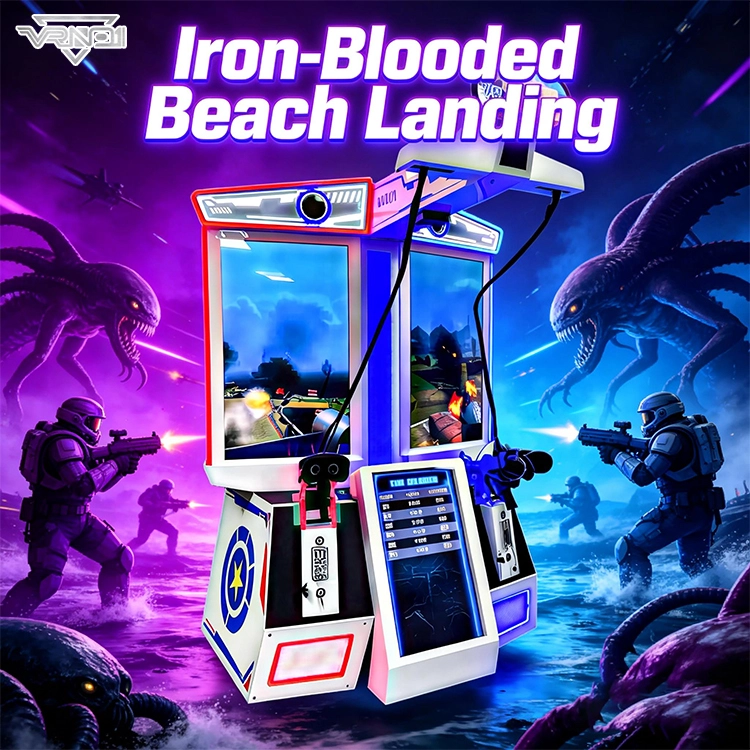
VRN0.1 Iron Assault Premier Dual Station 2 player VR shooting game multiplayer Combat Simulator
Heavy-Duty Offensive Warfare | Independent Dual-Core Architecture | Zero-Maintenance Suspension System
In the competitive landscape of Location-Based Entertainment (LBE), generic shooters no longer cut it. Enter the VR NO.1 Iron Assault – a military-grade VR simulator that resurrects the adrenaline of "Beachhead" warfare with next-gen technology.
Engineered by VR NO.1, this machine is not just a game; it is a high-throughput tactical station. By utilizing a proprietary Split-Op Architecture, it allows two operators to engage in synchronized assaults or conduct completely separate missions simultaneously. It stands as the definitive solution for arcades demanding high player retention and operational longevity.
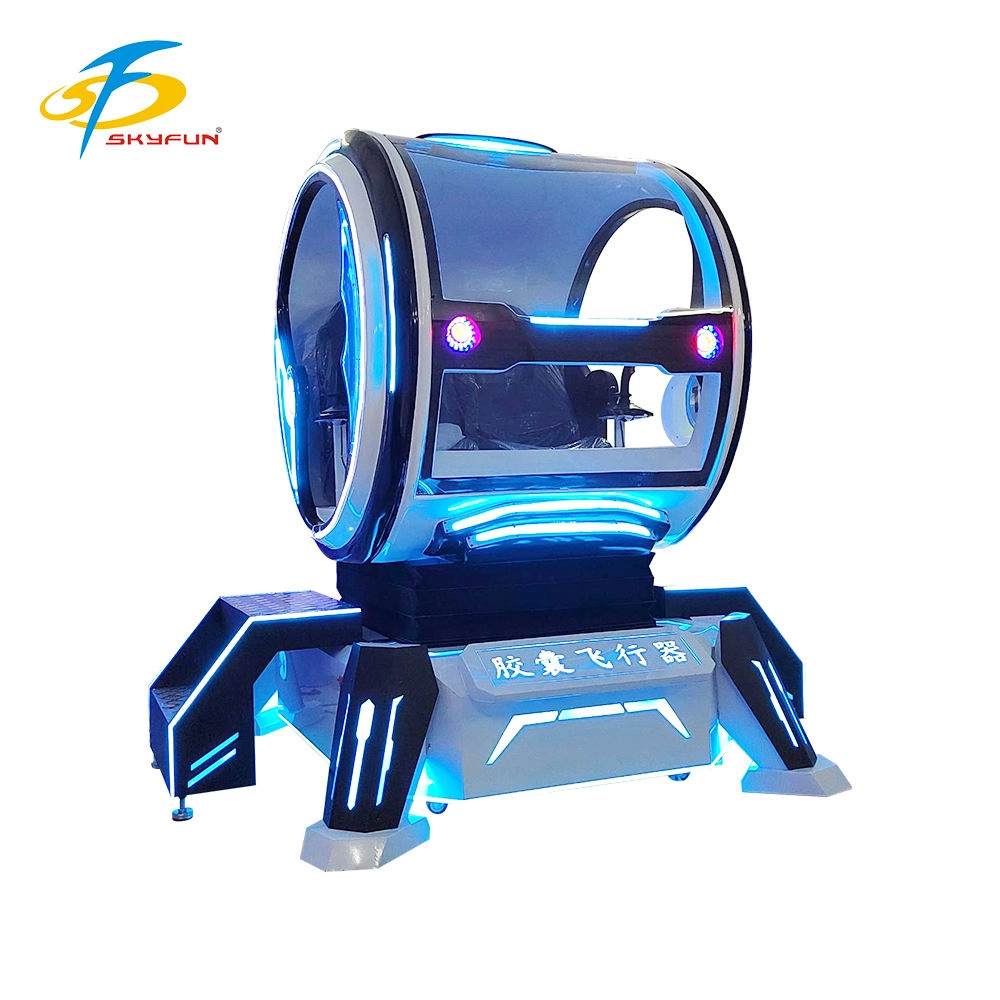
Double Player VR Flight Simulator 100 Movies 15 Games Coin-Operated Game Machine for Shopping Malls Amusement Parks
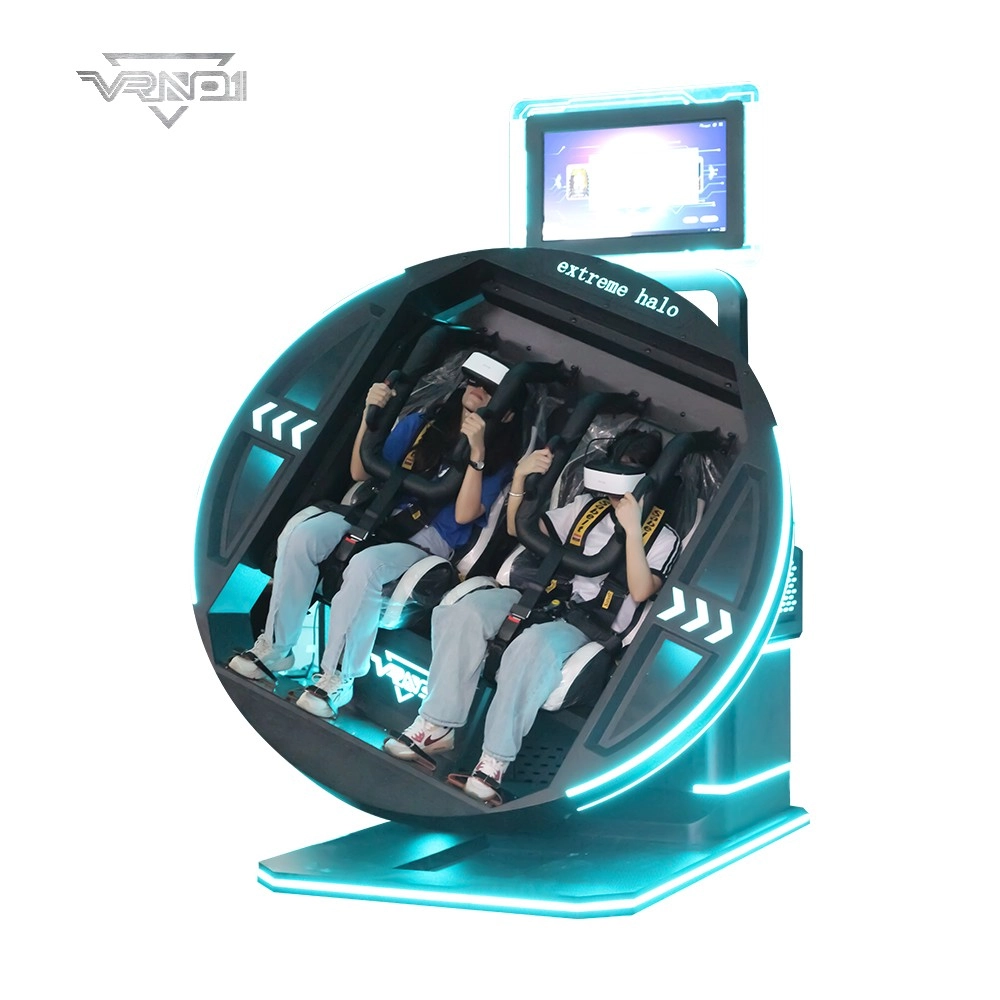
9D VR 360 Roller Coaster Cinema Chair Gaming Set Indoor/Outdoor Business Simulator Hardware for Home or School
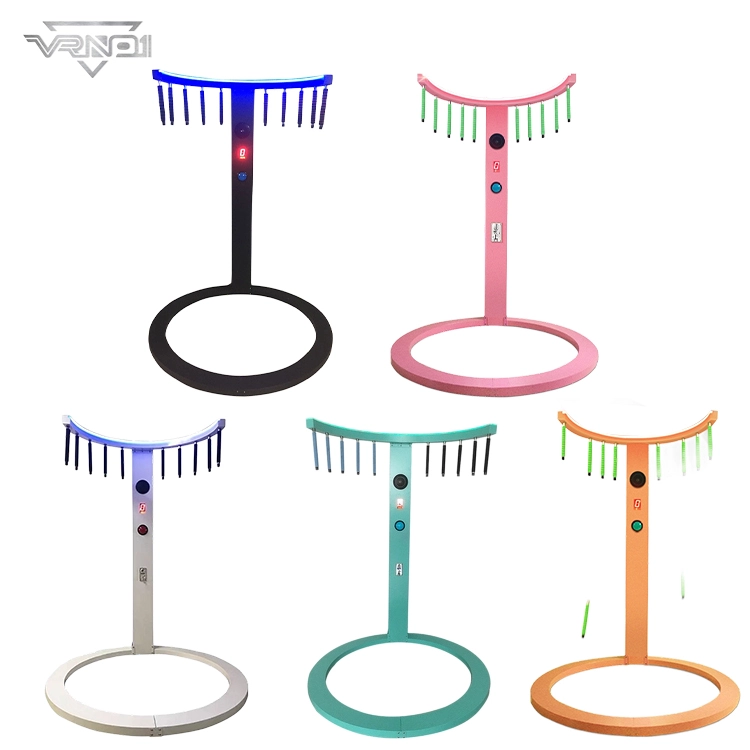
VRN0.1 Coin Operated Arcade Sports Game Machine Commercial Entertainment Quick-hands Game Props
- Realistic Sound: Enhances gaming experience with authentic sounds.
- Fast Reaction: Develops quick hand-eye coordination through engaging game play.
- DIY Kit: Allows for customization and personalization of the baton.
- Metal and Plastic Construction: Durable and robust build quality.
- Coin Operated: Fun for players who enjoy arcade-like experiences.
 Scan QR Code
Whatsapp: +8618127818571
Scan QR Code
Guangzhou Skyfun Technology Co.,Ltd
skyfunvrgame
skyfun game