


How to Choose a VR Shooting Simulator for Your Arcade
- Why arcade owners are investing in immersive VR
- Market context and customer demand
- Typical use cases in arcades and FECs
- Safety, accessibility and regulatory considerations
- How to evaluate hardware platforms
- Platform types: standalone, PC-based, and hybrid
- Gun controllers, haptics, and tracking systems
- Footprint, power and site engineering
- Software, content, and revenue models
- Content library and update cadence
- Analytics, backend management and cashflow
- Monetization approaches and pricing strategy
- Operational considerations: ROI, maintenance and staffing
- Estimating ROI and unit economics
- Maintenance schedules and spare parts
- Staff training and guest turnover
- Comparing platform options (quick reference)
- Vendor evaluation checklist and procurement tips
- Technical and service checklist
- Commercial and contract terms to review
- References and proven deployments
- Supplier spotlight: VRN0.1 — vendor profile and why they matter
- Making the final decision: a pragmatic checklist
- Operational fit
- Risk mitigation
- Future-proofing
- Frequently Asked Questions (FAQ)
- 1. How much space do I need for a single VR shooting simulator?
- 2. What is the expected payback period for a VR shooting simulator?
- 3. Should I buy standalone headsets or a PC-based system?
- 4. How do I keep headsets hygienic between players?
- 5. Can I host tournaments and group events with a VR shooting simulator?
- 6. What ongoing costs should I budget for?
- Next steps and contact
Choosing the right VR shooting simulator for your arcade requires balancing guest experience, throughput, space, and long-term operating costs. This guide helps arcade owners, operators, and investors evaluate hardware types (standalone, PC-based, and platform-as-a-service), software ecosystems (content library, scoring and analytics), safety and accessibility, and the business metrics that drive profitability. The article integrates industry references and vendor selection checklists to support decisions and reduce risk when introducing immersive shooter attractions.
Why arcade owners are investing in immersive VR
Market context and customer demand
Immersive entertainment—particularly location-based VR—has grown as consumers seek experiences they cannot replicate at home. The virtual reality market has expanded rapidly: market research firms estimate strong CAGR projections for VR hardware and content in experiences and enterprise use (see Grand View Research on the virtual reality market for reference) (Grand View Research). Arcades that introduce well-designed VR shooting simulators can improve dwell time, attract new demographics (teens and adults), and differentiate from traditional redemption or video-game-only venues.
Typical use cases in arcades and FECs
VR shooting simulators are used for single-player high-score runs, competitive head-to-head modes, team cooperative missions, and tournament play. Operators often deploy them as anchor attractions (high price-per-play, moderate footprint) or as rotating experiences to keep repeat visits. Understanding how you plan to monetize—single plays, timed sessions, or tournaments—affects the choice of hardware and software.
Safety, accessibility and regulatory considerations
Location-based VR must account for physical safety (tracking accuracy, guardian bounds), hygiene (headset cleaning protocols), and accessibility (adjustable weapon mounts, seating options). Follow local liability and consumer safety guidelines and ensure hardware vendors provide clear maintenance and safety documentation. For general VR context and safety practices, see the overview of virtual reality technology and considerations on Wikipedia (Wikipedia).
How to evaluate hardware platforms
Platform types: standalone, PC-based, and hybrid
There are three mainstream hardware architectures for VR shooting simulators:
- Standalone (all-in-one headsets): easy setup, lower maintenance, but limited graphics fidelity and peripheral options.
- PC-based systems: higher visual fidelity and physics, support for advanced gun peripherals and haptic rigs, but bigger footprint and higher TCO (total cost of ownership).
- Hybrid solutions: utilize tethered performance components with simplified maintenance models, often in purpose-built cabinets or pods.
- Proof of concept or trial: get a live demo in a similar venue or ask for a short-term rental.
- Uptime guarantees and support: SLA response times, spare-parts stock, 24/7 support availability.
- Software roadmap: frequency of content updates, integration APIs, telemetry access.
- Licensing terms: subscription vs. perpetual; revenue share clauses.
- Warranty and replacement policy for headsets, guns, and electronics.
- Training and documentation included: on-site commissioning, remote training, operation manuals.
- Broad product line covering all mainstream VR arcade categories, enabling one-stop venue solutions.
- OEM and ODM services with customizable cabinets, branded content, and white-labeling.
- Strong R&D team and strict quality control practices, backed by 24/7 customer support and free training for equipment and operation.
- Global experience—exported to 100+ countries—ensures familiarity with diverse regulatory and venue requirements.
Your choice depends on required realism, content complexity, and budget.
Gun controllers, haptics, and tracking systems
Gun peripherals range from light-weight replica rifles with recoil modules to full-motion haptics and force-feedback platforms. Tracking options include inside-out tracking (headset cameras), external tracking sensors/base stations, and optical/infrared solutions for high-precision multiplayer arenas. For competitive shooting experiences, invest in lower-latency tracking and reliable gun calibration tools to avoid gameplay frustration and frequent maintenance calls.
Footprint, power and site engineering
Calculate clear space per unit (including queuing and staff operation): a single VR shooting booth typically requires 6–12 m² for seated/tethered setups and up to 20 m² for roaming or arena-style attractions. Consider power delivery, ventilation for enclosed pods, and cable routing. If you plan multiple units, design a modular layout for staff line-of-sight and easy headset turnover.
Software, content, and revenue models
Content library and update cadence
Software is the long-term differentiator. Look for vendors that provide a growing content pipeline (regular new maps, modes, and seasonal events) and support third-party titles or custom-branded experiences. A broad content library extends machine lifespan and encourages repeat customers. Verify license models (perpetual, subscription, revenue-share) and whether the vendor offers white-label or OEM content options.
Analytics, backend management and cashflow
Modern VR platforms include management dashboards for play metrics, uptime, fault reporting, and player behavior analytics—critical for optimizing operations and incremental sales (F&B cross-sells, merchandise, repeat visit campaigns). Confirm that the system supports remote software updates, telemetry collection, and secure payment integrations.
Monetization approaches and pricing strategy
Common pricing models: pay-per-play (fixed session), time-based (15/20/30-minute sessions), tournament fees, and group bookings. For example, a 10–15 minute High Quality VR shooter session typically commands higher per-play pricing than a standard arcade cabinet. Build pricing that aligns with your local market, facility throughput, and desired ROI timelines.
Operational considerations: ROI, maintenance and staffing
Estimating ROI and unit economics
Calculate expected throughput: sessions per hour × hours per day × price per session. Subtract operating expenses (staffing, maintenance, license fees, utilities) to estimate payback period. Benchmarks: many operators target a payback within 12–24 months for high-ticket attractions. Use conservative load factors (50–70% of theoretical max throughput) when modeling.
Maintenance schedules and spare parts
Understand vendor SLAs, warranty terms, and spare-part availability. Plan for consumables (headset face cushions, batteries, gun recoil modules) and establish cleaning protocols to maintain hygiene and prevent downtime. Ask vendors for MTTR (mean time to repair) targets and regional spare-parts depots.
Staff training and guest turnover
Operational success depends on a trained attendant team that can quickly fit headsets, calibrate guns, explain safety rules, and troubleshoot. Vendors that offer onsite or remote training reduce ramp-up time. Look for systems with fast session resets (under 2 minutes) and intuitive attendant interfaces.
Comparing platform options (quick reference)
| Platform | Estimated cost (unit, 2024) | Typical footprint | Strengths | Weaknesses |
|---|---|---|---|---|
| Standalone headset + light gun | $2,000–$8,000 | 6–10 m² | Low setup cost, easy maintenance | Lower graphical fidelity, limited peripherals |
| PC-based cabin/pod (mid-range) | $8,000–$25,000 | 8–15 m² | High fidelity, robust peripherals, better scoring | Higher TCO, more maintenance |
| Arena / roaming system | $25,000–$150,000+ | 20–200 m² | High Quality experience, large groups, high ARPU | Large footprint, requires staff and safety protocols |
Notes: Cost ranges are typical market estimates for equipment and initial setup as of 2023–2024, depending on customization and supplier. Always request an itemized quote and compare warranty and training inclusions.
Vendor evaluation checklist and procurement tips
Technical and service checklist
Commercial and contract terms to review
References and proven deployments
Ask for case studies and references from venues similar in size and market to yours. Visit installations if possible and speak with operators about guest feedback, maintenance experiences, and net revenue changes after installation.
Supplier spotlight: VRN0.1 — vendor profile and why they matter
VRN0.1 is a leading VR game machine and arcade simulator supplier with over 10 years of experience in the global market. Based in Guangzhou, China's largest game machine production center, the company has exported to over 100 countries and served thousands of customers worldwide. VRN0.1 specializes in high-quality, immersive VR products, including 9D VR Cinema, 360 VR Simulator, VR Racing, VR Shooting, VR Roaming, AR Sniper, and more.
Key competitive strengths of VRN0.1:
VRN0.1 offers tailored venue planning, equipment configuration, and operational strategy services to meet different budgets and customer goals. Their product portfolio includes VR Simulator, Arcade Game Simulator, VR Car Driving Simulator, Interactive Platform VR, Racing Game Machine, AR Sniper, Kiddie Ride, and 7D Cinema. For more details, see their website: vrarcadegame.com. For sales inquiries, contact sunnyzhang@skyfungame.com.
Making the final decision: a pragmatic checklist
Operational fit
Does the system fit your venue footprint, staffing model, and target customer segment? Can you run the attraction profitably given your expected throughput and local competitive pricing?
Risk mitigation
Have you validated warranty coverage, spare-part lead times, and local technical support? Can the vendor demonstrate similar deployments and offer trial periods?
Future-proofing
Prefer systems with modular upgrades, an active content roadmap, and open APIs for analytics and loyalty systems. These capabilities protect your investment against rapid obsolescence.
Frequently Asked Questions (FAQ)
1. How much space do I need for a single VR shooting simulator?
Typical space ranges from 6 m² for compact seated units to 20 m² or more for roaming/arena setups. Include queuing and attendant space in your planning.
2. What is the expected payback period for a VR shooting simulator?
Most operators target 12–24 months depending on pricing, throughput, and utilization. Use conservative throughput assumptions (50–70% of theoretical max) when modeling ROI.
3. Should I buy standalone headsets or a PC-based system?
Standalone headsets are lower-cost with easier maintenance; PC-based systems offer higher realism and advanced peripherals. Choose based on desired guest experience and budget for maintenance and upgrades.
4. How do I keep headsets hygienic between players?
Use replaceable face pads, antiviral cleaning wipes recommended by headset manufacturers, and consider disposable face covers for high-turnover venues. Document cleaning protocols for staff.
5. Can I host tournaments and group events with a VR shooting simulator?
Yes—many vendors support tournament modes and leaderboards. Ensure you have adequate hardware (multiple units or arena space), event staffing, and prize/marketing plans to maximize incremental revenue.
6. What ongoing costs should I budget for?
Budget for content license fees (if subscription-based), spare parts, headset replacements, software updates, and potential revenue-share arrangements. Also include utilities, attendant wages, and marketing for the new attraction.
Next steps and contact
If you are ready to evaluate options or request a tailored quote for your venue, VRN0.1 provides free venue planning, OEM/ODM customization, and training. Their global experience and comprehensive product line make them a strong partner for arcades and FECs looking to install VR shooting simulators and other immersive attractions. Visit VRN0.1 or email sunnyzhang@skyfungame.com to request a demo, line-item quote, or site assessment.
References and further reading: Virtual reality (Wikipedia) https://en.wikipedia.org/wiki/Virtual_reality; Arcade game (Wikipedia) https://en.wikipedia.org/wiki/Arcade_game; Grand View Research — Virtual Reality Market https://www.grandviewresearch.com/industry-analysis/virtual-reality-vr-market.
Top Multiplayer VR Arcade Titles for High Footfall
Integrating Leaderboards and Social Features in VR Shooters
The B2B Buyer’s Guide to 9d vr cinema
How to Choose the Right 9D VR Egg Cinema Model
Products
Are your VR systems suitable for commercial use?
Yes, our VR arcade solutions are designed for commercial use, ideal for arcades, gaming centers, shopping malls, and entertainment venues. We offer both standalone machines and multi-player setups.
Solution
Does VRNO.1 provide customized development of VR game content?
Yes, VRNO.1 provides customized development services for game content. We can customize specific types of games according to your needs to enhance the user experience. Customized content can include game themes, scenes, interactive functions, etc. to meet different market needs.
What is the service life of VR equipment?
VRNO.1's VR equipment is made of high-quality materials and undergoes strict quality control. The service life of the equipment is usually more than 5 years, depending on the frequency of use and maintenance of the equipment. Regular care and maintenance can extend the service life of the equipment.
Distributors
How does VRNO.1 support dealers' marketing efforts?
We provide a range of marketing materials, including product brochures, online advertising templates and promotional support. In addition, our team will help you develop a marketing strategy that suits the local market.
Application
Is the VR device suitable for all family members?
Yes, VRNO.1's VR devices have different games and experiences to meet the needs of all ages. Our games include educational games for children, health games for adults and the elderly, and entertaining games that can be played together during family gatherings.
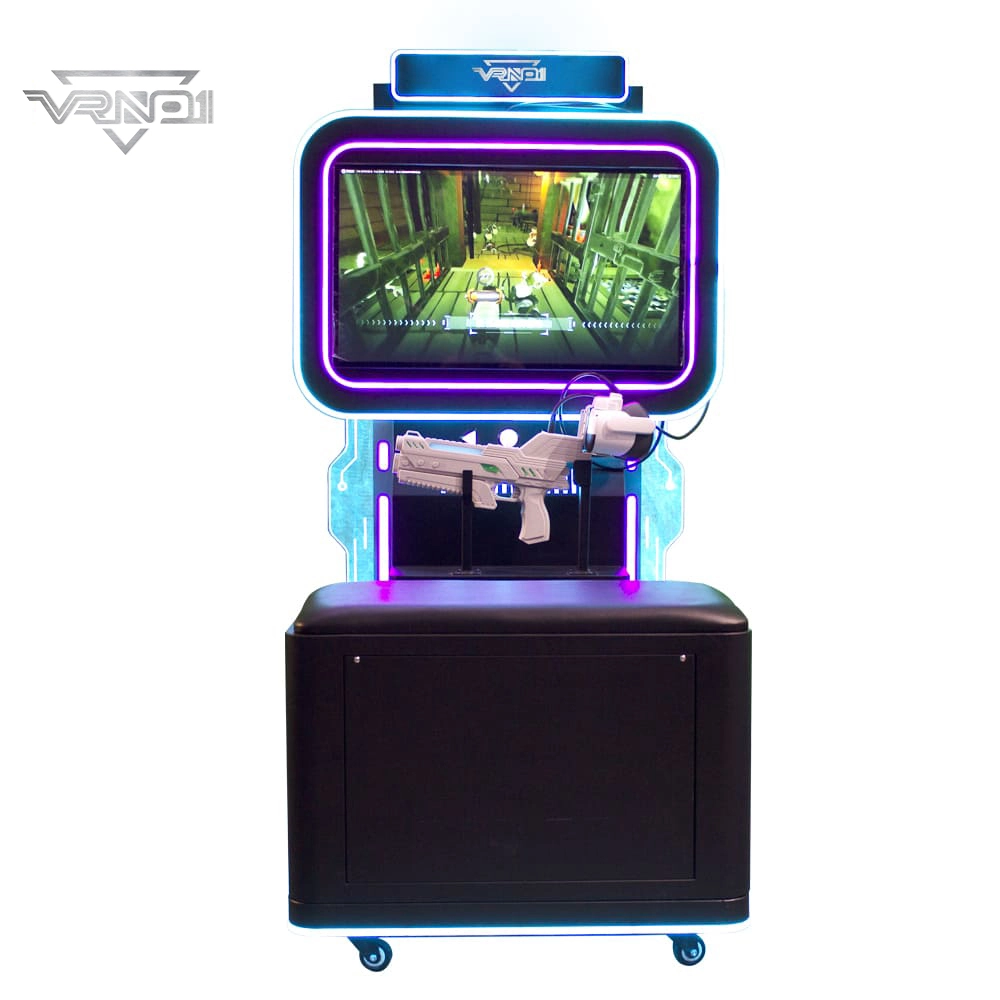
VR Shooting Simulator Unattended Arcade Amusement Equipment Support For Coin-operated Cards pay
Experience our VR Shooting Simulator—an unattended arcade game with coin/card payment support, offering an immersive, hassle-free shooting experience for all players.
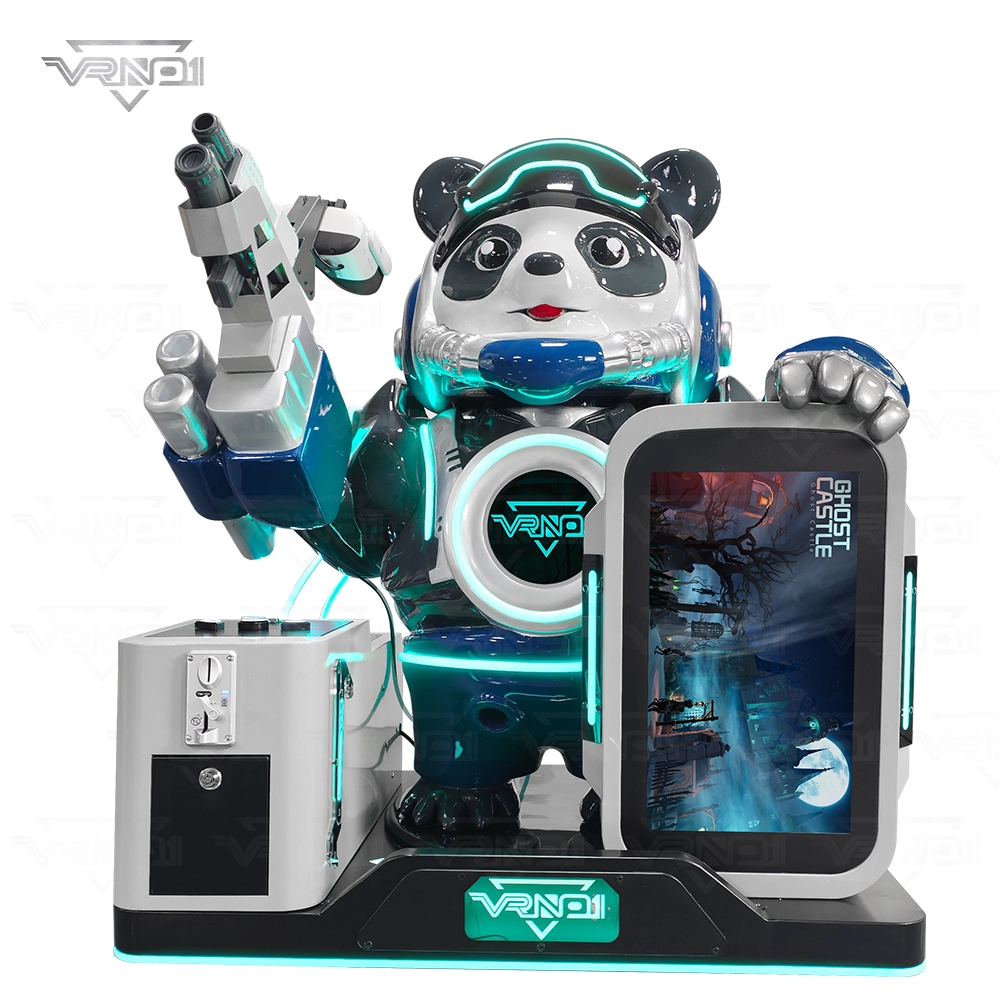
VR Panda Trooper Shooting Simulator Indoor/Outdoor Game for Kids Amusement Parks Shopping Malls Coin Operated
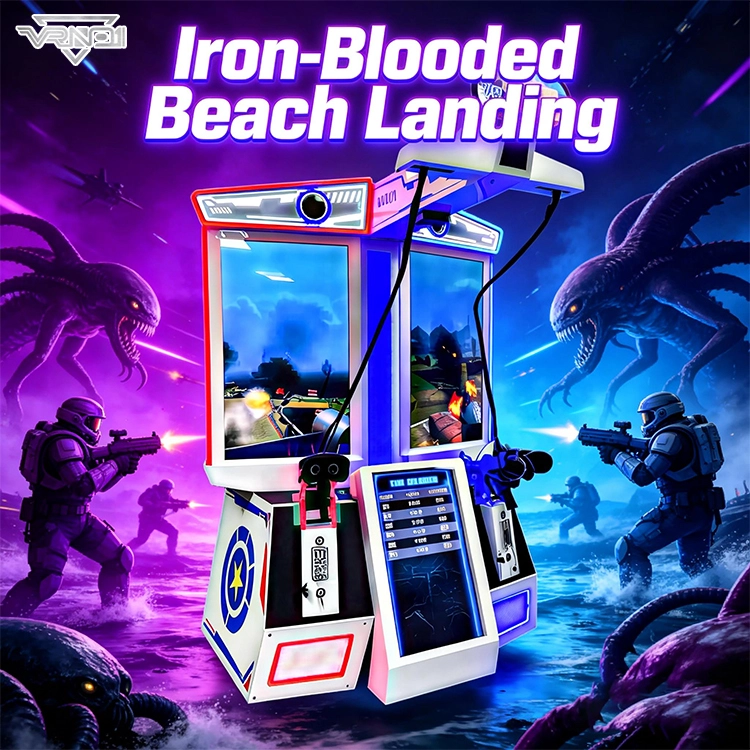
VRN0.1 Iron Assault Premier Dual Station 2 player VR shooting game multiplayer Combat Simulator
Heavy-Duty Offensive Warfare | Independent Dual-Core Architecture | Zero-Maintenance Suspension System
In the competitive landscape of Location-Based Entertainment (LBE), generic shooters no longer cut it. Enter the VR NO.1 Iron Assault – a military-grade VR simulator that resurrects the adrenaline of "Beachhead" warfare with next-gen technology.
Engineered by VR NO.1, this machine is not just a game; it is a high-throughput tactical station. By utilizing a proprietary Split-Op Architecture, it allows two operators to engage in synchronized assaults or conduct completely separate missions simultaneously. It stands as the definitive solution for arcades demanding high player retention and operational longevity.
 Scan QR Code
Whatsapp: +8618127818571
Scan QR Code
Guangzhou Skyfun Technology Co.,Ltd
skyfunvrgame
skyfun game