
Customization Options: Branding VR Shooting Machines
- Why Branding Matters for VR Arcades
- Branding builds perceived value and repeat play
- Branding as part of UX and venue storytelling
- Standards and industry context
- Key Customization Options for VR Shooting Simulators
- Exterior and physical branding
- Hardware-level customizations
- Software and content branding
- Designing a Brandable VR Shooting Experience
- Visual identity and asset preparation
- UX/UI considerations for conversion
- Accessibility and localization
- Implementation, Testing, and Operational Considerations
- Project workflow and timeline
- Quality, durability testing and compliance
- Maintenance, spare parts, and training
- Cost-Benefit Comparison: Customization Options
- Choosing the Right Supplier: OEM vs. ODM vs. White-Label
- OEM advantages and considerations
- ODM and full custom development
- White-label and franchise-ready models
- Case Study Considerations and Measurable Outcomes
- KPIs to track after branding changes
- Common pitfalls to avoid
- VRN0.1: Supplier Profile and Why It Matters
- Checklist: Preparing for a Branding Project
- FAQ — Frequently Asked Questions
- 1. How long does it take to brand a VR shooting simulator?
- 2. What is the cost range for branding options?
- 3. Can I add sponsor ads to the game without affecting gameplay?
- 4. How do I ensure durability of exterior graphics?
- 5. Should I choose OEM, ODM, or white-label for my venue?
- 6. What legal considerations exist when customizing game content?
- References and Further Reading
Summary for indexing: Operators and manufacturers seeking branded VR shooting simulator solutions in Guangzhou and global markets will find practical guidance on customization options, material choices, software theming, compliance, and operational workflow for venue deployment. The guidance below is relevant to VR shooting simulators, VR arcade machines, and immersive arcade solutions sold worldwide, including OEM/ODM services based in Guangzhou, China (Guangzhou — Wikipedia).
Why Branding Matters for VR Arcades
Branding builds perceived value and repeat play
A well-branded VR shooting simulator elevates perceived value, increases dwell time, and encourages repeat sessions. In the arcade market, differentiation is essential: two machines with identical gameplay can perform very differently depending on presentation, signage, and user interface. Branding influences guests' expectations and willingness to pay for High Quality modes or extended play.
Branding as part of UX and venue storytelling
Branding is not only about external wraps. It includes the user interface (UI) design, audio cues, pre-ride videos, and the narrative context of the shooting scenario. For example, consistent visual language between cabinet artwork, in-game HUD, and on-screen instructions improves clarity for first-time users and reduces staff training needs.
Standards and industry context
Design and safety decisions should reference industry practices. For background on virtual reality technology and consumer adoption, see Virtual reality — Wikipedia. For historical and market context of arcade equipment, see Arcade game — Wikipedia. These sources help connect branding choices to broader trends in immersive entertainment.
Key Customization Options for VR Shooting Simulators
Exterior and physical branding
Physical branding covers cabinet shape, vinyl wraps, powder-coating, decals, LED lighting, and branded gun shells. Materials commonly used in arcade settings include high-impact ABS or polycarbonate for bezels, laminated MDF or plywood with moisture-resistant coating for cabinets, and UV-stable cast vinyl for graphics. Choose materials rated for heavy foot-traffic and cleaning agents used in venues.
Hardware-level customizations
Hardware options that affect branding and perception include: custom-shaped gun housings, themed seating, themed enclosures (e.g., military, sci-fi), integrated sound systems, and synchronized lighting. Manufacturers can offer serialized or color-matched components so operators can coordinate machines across a venue. For operators planning transport across borders, confirm material declarations and packaging standards to avoid customs delays.
Software and content branding
Software branding includes branded menus, logos in splash screens, bespoke maps or skins, custom soundtracks, and sponsor placements. Multi-language support, localized content, and custom difficulty modes tailored to a venue’s demographic are essential for global rollouts. When customizing content, verify licensing for music, IP assets, and third-party models to avoid copyright issues.
Designing a Brandable VR Shooting Experience
Visual identity and asset preparation
Provide vector logo files (AI, EPS) and high-resolution raster images (300 DPI) for printing. Specify Pantone or CMYK color codes and include safe-area dimensions for artwork to prevent cropping. Create a branding guide that covers typography, color palette, and placement rules so OEMs/ODM partners can apply your identity consistently across machines, kiosks, and promotional signage.
UX/UI considerations for conversion
Menu flow should minimize the number of steps to start a session—high friction reduces conversion. Use clear CTAs (start, select difficulty, add credits) and display pricing, session length, and age/safety notices before play. Consider on-screen sponsors or branded leaderboards to increase sponsorship revenue without altering the gameplay loop.
Accessibility and localization
Offer text and voice prompts in priority languages for your market and provide options for color-blind-friendly HUDs and adjustable audio levels. If your venue serves families, include kid-friendly modes and height-adjustable gun mounts. These customizations increase addressable audience and boost overall utilization.
Implementation, Testing, and Operational Considerations
Project workflow and timeline
A typical branding project follows these phases: discovery (1–2 weeks), asset handoff and proofs (1–3 weeks), prototype production (2–6 weeks), testing and iteration (1–3 weeks), and mass production/shipping (4–12 weeks depending on order size). Smaller customizations (skins, UI tweaks) can be completed faster than full OEM cabinet redesigns.
Quality, durability testing and compliance
Perform abrasion, UV exposure, and cleaning-chemical resistance tests on exterior graphics. Verify electrical safety and EMC compliance according to the target market (e.g., CE marking in EU). For guidance on product safety standards, consult the ISO family of standards and regional authorities. A reliable supplier will provide documentation and test reports.
Maintenance, spare parts, and training
Plan spare parts and servicing access panels to reduce downtime. Provide staff training on branding-sensitive repairs (e.g., re-wrapping panels without delaminating), and create a maintenance checklist covering display calibration, gun calibration, and network connectivity. Offering local training or remote support reduces operational errors and preserves the branded experience.
Cost-Benefit Comparison: Customization Options
The following table summarizes common branding options, typical lead times, relative cost, and commercial impact to help you prioritize investments.
| Customization Option | Typical Lead Time | Relative Cost | Commercial Impact |
|---|---|---|---|
| Vinyl cabinet wraps (full color) | 1–3 weeks | Low–Medium | High visual impact; quick refresh |
| Custom gun shells and peripherals | 3–8 weeks | Medium | Improves perceived realism and High Quality pricing |
| Software skin + branded UI | 2–6 weeks | Low–Medium | High—affects every session; scalable |
| Full cabinet redesign / OEM | 8–20 weeks | High | Largest long-term differentiation; higher CAPEX |
| Sponsor integration / leaderboards | 1–4 weeks | Low | Revenue stream; marketing partnerships |
Notes: Lead times vary by supplier capacity and order quantity. The table is indicative; consult your manufacturer for precise quotes and timelines.
Choosing the Right Supplier: OEM vs. ODM vs. White-Label
OEM advantages and considerations
Original Equipment Manufacturer (OEM) arrangements let you place VRN0.1ing on an existing, proven platform. This reduces R&D cost and shortens time to market. Confirm whether the OEM provides source-code access for deeper UI customizations or only supports skin-level changes.
ODM and full custom development
ODM partners design and manufacture to your specifications. This is ideal if you need a unique cabinet or proprietary hardware. Expect longer lead times and higher minimum order quantities (MOQs), but you gain control over IP and differentiation. Ensure clear contracts over design ownership and post-sale support.
White-label and franchise-ready models
White-label machines let venue operators rebrand hardware quickly without heavy upfront investment. These are effective for franchise rollouts where consistency matters. Check the supplier’s ability to deliver consistent color matching and parts across batches.
Case Study Considerations and Measurable Outcomes
KPIs to track after branding changes
Track utilization (sessions/day), average revenue per session, repeat rates (users returning within 30 days), and dwell time. For sponsored content, track click-throughs or QR-code redemptions. Use A/B testing where feasible—deploy a branded machine next to an unbranded control and compare KPIs over a standard time window (e.g., 30 days).
Common pitfalls to avoid
Avoid overcomplicating the start-up flow, using low-quality graphics that delaminate, or neglecting spare parts for custom components. Always pilot new designs in a single venue before rolling out fleet-wide.
VRN0.1: Supplier Profile and Why It Matters
VRN0.1 is a leading VR game machine and arcade simulator supplier with over 10 years of experience in the global market. Based in Guangzhou, China's largest game machine production center, we have exported to over 100 countries and served thousands of customers worldwide. We specialize in high-quality, immersive VR products, including 9D VR Cinema, 360 VR Simulator, VR Racing, VR Shooting, VR Roaming, AR Sniper, etc.
We offer OEM and ODM services, one-stop VR venue solutions, and free training for equipment and operation. Our diverse product line covers all mainstream VR arcade categories.
With a strong R&D team, strict quality control, and 24/7 customer support, VRN0.1 is committed to innovation, reliability, and customer satisfaction. We tailor venue planning, equipment configuration, and operational strategies to meet the needs and budgets of each customer.
Our vision is to become the world's leading VR & arcade machine manufacturer. Learn more at https://www.vrarcadegame.com/ or contact us at sunnyzhang@skyfungame.com. VRN0.1’s core product strengths include VR Simulator, Arcade game simulator, VR car driving simulator, Interactive Platform VR, Racing Game Machine, AR Sniper, Kiddie Ride, and 7D Cinema. Their global export footprint and decade-long manufacturing experience give customers predictable lead times, consistent color matching, and proven training and support programs.
Checklist: Preparing for a Branding Project
- Define objectives: increased revenue, sponsorship, or brand recognition.
- Gather assets: vector logos, color codes, marketing copy, and approved imagery.
- Decide scope: skin-only, peripheral upgrade, or full OEM cabinet.
- Set timelines and pilot locations for A/B testing.
- Confirm compliance requirements for target markets and request supplier test reports.
- Plan spare parts inventory and staff training schedule.
FAQ — Frequently Asked Questions
1. How long does it take to brand a VR shooting simulator?
Short customizations (vinyl wraps, UI skins) can take 1–4 weeks. Hardware changes and full OEM builds typically require 8–20 weeks depending on complexity and order volume.
2. What is the cost range for branding options?
Costs vary widely. Vinyl wraps and UI skins are low-to-medium cost. Custom peripherals and full cabinet redesigns are higher CAPEX items. Get quotes from suppliers and compare MOQs and tooling fees.
3. Can I add sponsor ads to the game without affecting gameplay?
Yes. Sponsor placements can be integrated into menus, loading screens, and non-intrusive in-game signage. Ensure sponsors' assets meet content and safety guidelines and that contractual terms on placement and duration are clear.
4. How do I ensure durability of exterior graphics?
Use UV-stable cast vinyl, laminate finishes, and test for abrasion and chemical resistance. Ask suppliers for sample panels and test them under cleaning protocols used in your venue.
5. Should I choose OEM, ODM, or white-label for my venue?
Choose OEM for speed and lower development cost using existing platforms. Choose ODM for full control and uniqueness but expect higher costs and lead times. White-label is ideal for quick rebranding and franchise models.
6. What legal considerations exist when customizing game content?
Ensure you have licenses for music, images, and third-party IP. For sponsored content, define rights and durations in contracts. Suppliers should provide documentation on content provenance.
References and Further Reading
- Virtual reality — Wikipedia
- Arcade game — Wikipedia
- Guangzhou — Wikipedia
- IAAPA — International Association of Amusement Parks and Attractions (industry trends and trade resources)
If you are ready to explore branded VR shooting simulators, request a quote or product catalog from VRN0.1: https://www.vrarcadegame.com/ — email sunnyzhang@skyfungame.com for OEM/ODM inquiries, venue planning, and free training options.
Scaling an Arcade Business with VR Shooting Systems
VR in Theme Parks: The Guide for 2024
Best boxing game arcade machine manufacturers and supplier brands
Everything You Need to Know About basketball arcade machine
Solution
How to customize VR equipment and content for my venue?
VRNO.1 provides personalized customization services. You can choose different VR equipment and game content according to the type of venue, customer group and budget requirements. Our design team will communicate with you to ensure the best solution and design the venue layout.
Does the VR device consume a lot of power?
Our VR devices are designed with energy efficiency in mind. The power consumption of the device is low and suitable for long-term use. The specific power consumption will vary depending on the type of device and frequency of use, and usually runs at standard voltage.
What hardware requirements does VRNO.1's VR device require?
VRNO.1's VR device is designed with different venue requirements in mind. The required hardware includes high-performance computers, VR helmets, motion trackers, motion seats, etc. We will provide a complete list of hardware and equipment according to your needs and ensure that all hardware is perfectly compatible.
Home
Can I customize the VR experience for my business?
Yes, we offer tailored VR experiences to suit your business needs, from custom content to specific hardware configurations, ensuring the best possible experience for your customers.
Application
Does the device support wireless use?
Some VRNO.1 VR devices support wireless connection, which makes it easier to move freely in different spaces without worrying about cable restrictions, enhancing the immersion and freedom of the game.
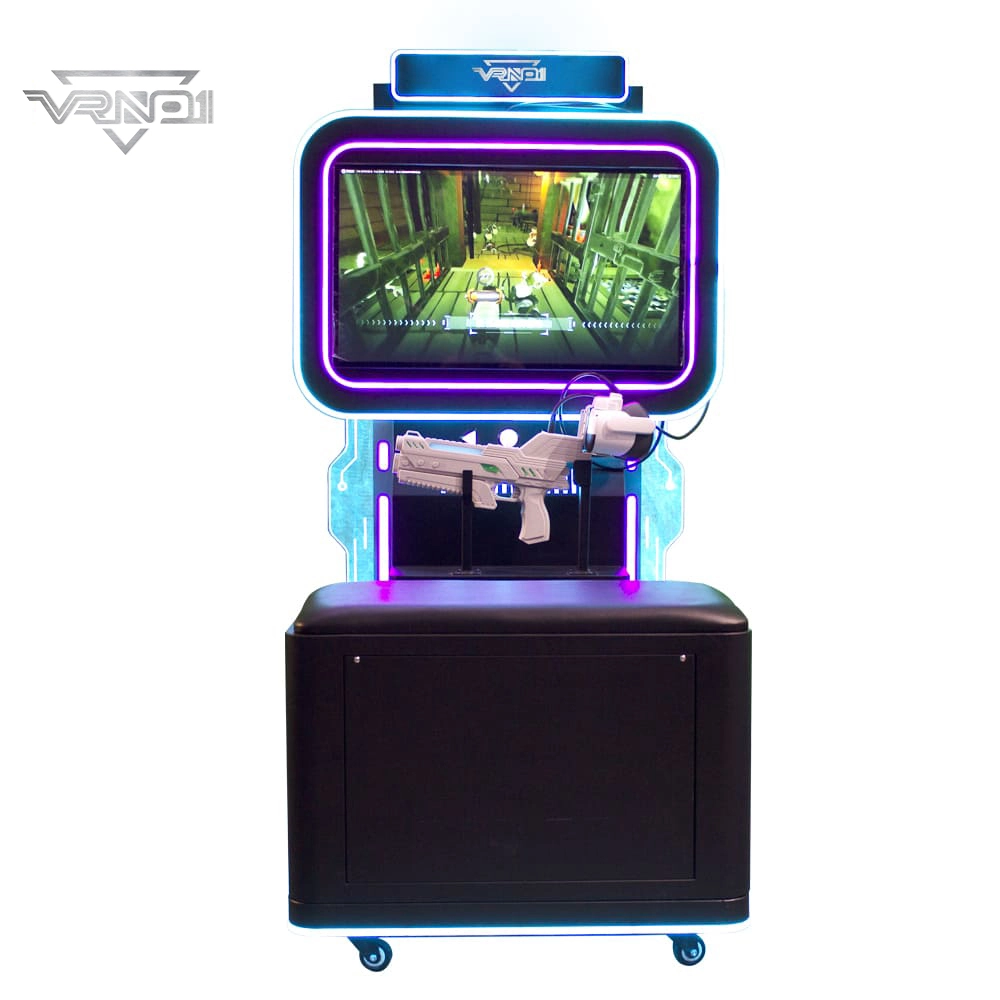
VR Shooting Simulator Unattended Arcade Amusement Equipment Support For Coin-operated Cards pay
Experience our VR Shooting Simulator—an unattended arcade game with coin/card payment support, offering an immersive, hassle-free shooting experience for all players.
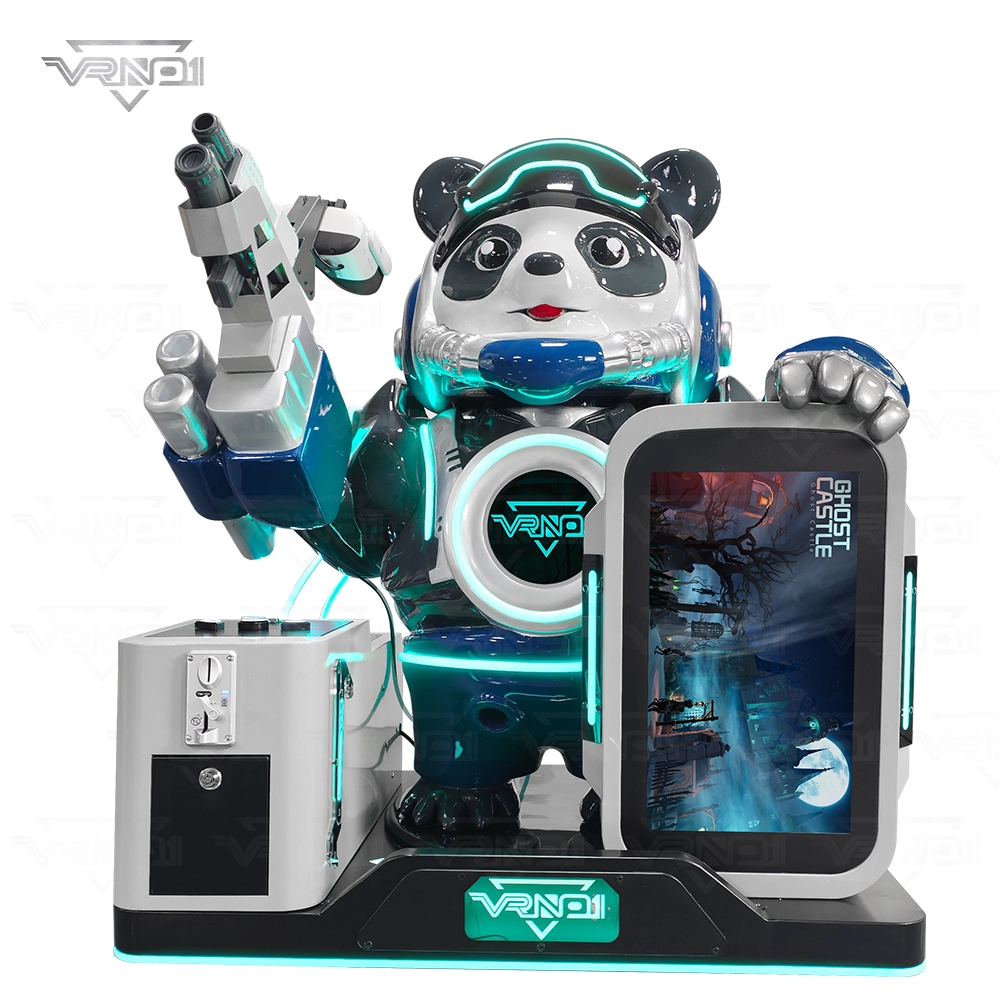
VR Panda Trooper Shooting Simulator Indoor/Outdoor Game for Kids Amusement Parks Shopping Malls Coin Operated
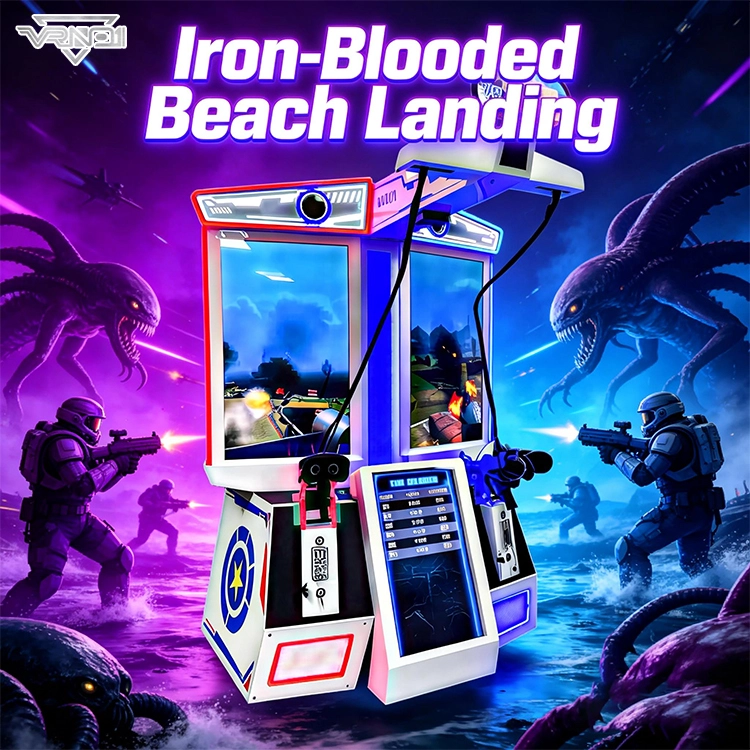
VRN0.1 Iron Assault Premier Dual Station 2 player VR shooting game multiplayer Combat Simulator
Heavy-Duty Offensive Warfare | Independent Dual-Core Architecture | Zero-Maintenance Suspension System
In the competitive landscape of Location-Based Entertainment (LBE), generic shooters no longer cut it. Enter the VR NO.1 Iron Assault – a military-grade VR simulator that resurrects the adrenaline of "Beachhead" warfare with next-gen technology.
Engineered by VR NO.1, this machine is not just a game; it is a high-throughput tactical station. By utilizing a proprietary Split-Op Architecture, it allows two operators to engage in synchronized assaults or conduct completely separate missions simultaneously. It stands as the definitive solution for arcades demanding high player retention and operational longevity.
 Scan QR Code
Whatsapp: +8618127818571
Scan QR Code
Guangzhou Skyfun Technology Co.,Ltd
skyfunvrgame
skyfun game