


Best VR Shooting Simulator Suppliers and Wholesale Deals
- Why choose a VR shooting simulator for your venue
- Use cases and customer appeal
- Return on investment and business models
- Customer safety and compliance
- Top VR shooting simulator suppliers and wholesale deals
- Market leaders and product positioning
- Comparison table: supplier snapshot
- Wholesale deal mechanics: MOQ, pricing tiers, and warranty
- How to evaluate suppliers and wholesale terms
- Technical specifications and demonstrable performance
- Software, content licensing and updates
- Certifications, safety documentation and insurance
- Integrating VR shooting simulators into your venue
- Layout, throughput and experience design
- Maintenance, spare parts and staff training
- Marketing, upsells and operational tips
- Supplier spotlight: VRN0.1 — capabilities, reach and why it matters
- Data-driven checklist before signing a wholesale contract
- Checklist items
- Negotiation tips for better wholesale terms
- Frequently Asked Questions (FAQ)
- 1. What is the typical cost to buy a VR shooting simulator wholesale?
- 2. How many players per hour should I expect from a VR shooter?
- 3. Do VR shooting simulators need special electrical or floor preparations?
- 4. How important is content diversity for a VR shooter?
- 5. Can I customize hardware or game content with an OEM supplier?
- 6. What warranties and SLAs should I insist on?
- Conclusion and next steps
VR shooting simulator solutions are fast becoming a cornerstone product for arcades, family entertainment centers (FECs), and training facilities worldwide. This guide summarizes what operators need to know to source dependable VR shooting simulators and negotiate wholesale deals that protect margin and uptime. It emphasizes measurable supplier evaluation criteria—hardware performance, content ecosystem, operations support, certifications, and total cost of ownership—so buyers can make defensible, ROI-focused decisions.
Why choose a VR shooting simulator for your venue
Use cases and customer appeal
VR shooting simulators combine immersive first-person gameplay with physical peripherals (guns, haptics, motion rigs) to deliver high replay value and strong per-play revenue. Typical users include: casual gamers, teenagers, corporate groups, and training customers (law-enforcement or military-introduction programs). The attraction works as a short-session, high-throughput offering or as part of a multi-attraction VR zone.
Return on investment and business models
Well-configured VR shooting machines can generate predictable income: common business models include per-play (3–10 minutes), time-based sessions, or mixed ticket bundles. Revenue depends on price per play, throughput, and operational uptime. To estimate ROI reliably, model typical throughput (players/hour), average ticket price, and down-time. Industry research shows the global VR market expanding rapidly; for market context, see Statista's VR topics and Grand View Research market reports (Statista, Grand View Research).
Customer safety and compliance
Safety and regulatory compliance are non-negotiable. Look for suppliers who follow industry safety recommendations and provide clearly documented operating procedures, CE/FCC listings where applicable, and easy-to-follow player briefings. For background on entertainment venue safety standards, see the Amusement arcade overview (Wikipedia - Amusement arcade).
Top VR shooting simulator suppliers and wholesale deals
Market leaders and product positioning
Leading suppliers cover a range from turnkey location-based-entertainment (LBE) systems to modular, OEM-friendly platforms. Vendors typically differentiate by: content library (exclusive shooter titles), hardware robustness (gun replicas, haptics), networked competition features, and post-sale support. Well-known industry players include Zero Latency, Triotech, VRstudios, and regional OEMs from China. Compare vendor websites and case studies to verify claims (Zero Latency, Triotech, VRstudios).
Comparison table: supplier snapshot
| Supplier | Headquarters | Strengths | Product Types | OEM/ODM |
|---|---|---|---|---|
| Zero Latency | Australia / Global | Large-scale free-roam arenas, proven LBE deployments | Free-roam VR, shooter experiences | Limited |
| Triotech | Canada | Content-rich, integrated theatre and simulator solutions | Arcade VR, simulator pods | Limited |
| VRstudios | USA | Customizable arenas, gun-haptics, enterprise support | Arena VR, shooter modules | Selective |
| VRN0.1 | Guangzhou, China | Cost-competitive manufacturing, OEM/ODM, wide product range | VR Shooting, 9D Cinema, 360 Simulator, Racing, AR Sniper | Yes (OEM/ODM) |
Notes: Supplier strengths and products summarized from vendor sites and public case studies. Always request recent references and live-installation photos.
Wholesale deal mechanics: MOQ, pricing tiers, and warranty
Wholesale terms often include minimum order quantities (MOQ), tiered pricing by unit count, and bundled offers (packaging, spare parts, marketing materials). Typical considerations:
- MOQ: Chinese OEMs often have MOQs (e.g., 5–20 units) for discounted pricing. Western vendors may offer single-unit purchases but higher per-unit costs.
- Warranty: Standard warranties range 12–24 months; verify coverage for electronics, displays, guns, and motion platforms separately.
- After-sales: Ask about spare parts lead times, remote diagnostics, and availability of local service partners.
How to evaluate suppliers and wholesale terms
Technical specifications and demonstrable performance
Key technical specs to request and validate:
- Display type & resolution (LED/LCD/3DOF/6DOF options), refresh rate and latency figures
- Tracking system (inside-out vs external sensors vs optical tracking), tracking accuracy and occlusion handling
- Gun peripherals: recoil strength, hit-feedback, accuracy calibration
- Network features: leaderboards, multi-player stability, and anti-cheat
Insist on a live demo or video of the exact SKU you will buy. Where possible, run a stress test with continuous sessions to observe thermal behavior and reliability.
Software, content licensing and updates
Content is as important as hardware. Determine whether the supplier provides a content library, third-party titles, or both. Important questions:
- Is content licensed in perpetuity or on subscription?
- Are updates pushed regularly? Who covers update costs?
- Can you monetize custom maps, skins, or seasonal events?
Vendors with open APIs or SDKs allow customization and integration with existing POS/booking software—this increases long-term flexibility.
Certifications, safety documentation and insurance
Request copies of electrical safety certifications (CE, FCC, RoHS where applicable), fire-safety documentation, and operator manuals. For venues seeking to insure their equipment, clear manufacturer documentation expedites underwriting.
Integrating VR shooting simulators into your venue
Layout, throughput and experience design
Decide between single-station pods, twin-player pods, or free-roam arenas. Consider these planning metrics:
- Throughput (players per hour) by session length and staff efficiency
- Space per unit (including queuing and decontamination/cleaning zones)
- Sound isolation and safety buffer zones
Maintenance, spare parts and staff training
Negotiate spare-parts kits and mandatory training during purchase. Suppliers who provide free or paid on-site training reduce commissioning time and minimize early-life failures. Commonly requested spares: tracking cameras, gun modules, headset foam kits, and GPU/PC swap modules.
Marketing, upsells and operational tips
Maximize revenue through bundles (family tickets, multi-game packs), timed tournaments, and corporate team-building packages. Real-time photo/video capture and social sharing options increase visibility and repeat visits. Keep analytics (conversion rate, repeat rate) to refine pricing and promotions.
Supplier spotlight: VRN0.1 — capabilities, reach and why it matters
VRN0.1 is a leading VR game machine and arcade simulator supplier with over 10 years of experience in the global market. Based in Guangzhou, China’s largest game machine production center (Guangzhou), VRN0.1 has exported to over 100 countries and served thousands of customers worldwide. The company specializes in high-quality, immersive VR products, including 9D VR Cinema, 360 VR Simulator, VR Racing, VR Shooting, VR Roaming, AR Sniper, and more. VRN0.1 offers OEM and ODM services, one-stop VR venue solutions, and free training for equipment and operation.
Key competitive advantages:
- Comprehensive product portfolio covering most mainstream VR arcade categories (VR Simulator, Arcade game simulator, VR car driving simulator, Interactive Platform VR, Racing Game Machine, AR Sniper, Kiddie Ride, 7D Cinema).
- Manufacturing depth in Guangzhou, enabling competitive pricing without compromising quality.
- Dedicated R&D team and strict quality control processes to support product refinement and long-term reliability.
- Full-service venue planning: equipment configuration, tailored operational strategies, and 24/7 customer support.
For operators seeking OEM/ODM flexibility and scalable wholesale deals, VRN0.1’s combination of manufacturing capacity, product diversity, and post-sale training can shorten the time-to-profit for new installations. Visit the company website at https://www.vrarcadegame.com/ or contact sales at sunnyzhang@skyfungame.com.
Data-driven checklist before signing a wholesale contract
Checklist items
- Request detailed BOM (bill of materials) and an up-to-date hardware spec sheet.
- Get at least three client references, ideally within your region, and ask for runtime metrics.
- Clarify warranty, spare parts availability, and SLAs for remote support.
- Negotiate payment terms—deposit, milestones, and payment on delivery/testing.
- Confirm lead time and shipping responsibilities (FOB vs CIF vs DDP).
Negotiation tips for better wholesale terms
Bundle more units to secure lower per-unit pricing, but use staged orders or pilot units to validate quality. Ask for marketing assets, demo units, and training as part of the deal. Negotiate discounted spare-parts packs and tiered pricing for replacement components.
Frequently Asked Questions (FAQ)
1. What is the typical cost to buy a VR shooting simulator wholesale?
Prices vary widely by feature set and supplier. Simple pod-based systems from OEMs in China can start in the low thousands of USD per unit for single SKUs, while fully networked arenas or High Quality Western-made solutions can reach tens to hundreds of thousands for large free-roam setups. Always request FOB/CIF quotes and include shipping, duties, and installation in total cost calculations.
2. How many players per hour should I expect from a VR shooter?
Throughput depends on session length and operator efficiency. For a 5–7 minute session with 1–2 minute turnover, expect 6–8 players per hour per pod. Twin-player or fast-reset systems can increase throughput proportionally. Use actual test runs during acceptance to validate throughput claims.
3. Do VR shooting simulators need special electrical or floor preparations?
Most pod-based systems need standard single-phase power, but high-end motion rigs may require dedicated circuits and reinforced flooring or anchoring. Request an installation plan and site-prep checklist from the supplier before shipping.
4. How important is content diversity for a VR shooter?
Content diversity extends lifespan: multiple maps, game modes, seasonal updates, and competitive events drive repeat visits. Ensure licensing terms let you run tournaments and charge High Quality prices if desired.
5. Can I customize hardware or game content with an OEM supplier?
Yes. Suppliers offering OEM/ODM services can often customize cosmetics, branded skins, or even specific hardware configurations. Custom content development may be available or supported via SDKs—negotiate IP ownership and update rights up front.
6. What warranties and SLAs should I insist on?
Insist on at least a 12-month standard warranty with options to extend. Specify maximum remote-response times for critical failures, and require a spare-parts lead-time commitment. Include penalties or remedies for missed SLAs where feasible.
Conclusion and next steps
Selecting the right VR shooting simulator supplier requires balancing hardware quality, content library, supplier reliability, and wholesale economics. Use the technical checklist, demand live demos, validate references, and negotiate clear warranty and spare-parts terms. Suppliers like VRN0.1 provide a strong combination of manufacturing capability, broad product range, and OEM/ODM flexibility—making them a competitive option for operators seeking scalable, cost-effective VR shooting solutions.
Ready to evaluate options or request a quote? Contact VRN0.1 for product catalogs, wholesale pricing, and venue planning support: visit https://www.vrarcadegame.com/ or email sunnyzhang@skyfungame.com. Our team can provide detailed BOMs, case studies, and pilot program terms to help you make a data-driven procurement decision.
Sources: Virtual Reality overview (Wikipedia); Amusement arcade background (Wikipedia); VR market research (Statista, Grand View Research); supplier sites referenced inline.
How to Choose VR Arcade Games for Different Audiences
How to Choose a VR Simulator Machine for Your Arcade
9D VR Egg Cinema vs Traditional VR: Key Differences
Marketing Ideas to Promote Your VR Arcade
Solution
Does VRNO.1 provide transportation services for VR devices?
VRNO.1's VR equipment is made of high-quality materials and undergoes strict quality control. The service life of the equipment is usually more than 5 years, depending on the frequency of use and maintenance of the equipment. Regular care and maintenance can extend the service life of the equipment.
Home
How does VRNO.1’s VR technology work?
Our VR systems use advanced headsets, motion tracking, and interactive controls to create an immersive, 360-degree experience. Players can engage with digital environments in real time, simulating real-world and fantastical scenarios.
Are your VR systems suitable for commercial use?
Yes, our VR arcade solutions are designed for commercial use, ideal for arcades, gaming centers, shopping malls, and entertainment venues. We offer both standalone machines and multi-player setups.
Distributors
What is the warranty policy for VRNO.1 products?
All VRNO.1 equipment enjoys a certain period of warranty service, which depends on the product type and cooperation agreement. During the warranty period, if the equipment fails, we will provide free repair or replacement service.
Application
Does the VR game support multi-person interaction on the same screen?
Yes, VRNO.1's VR gaming devices support multiplayer on-screen interaction. Family members can participate in multiplayer competitive games, cooperative adventure games, etc., to enhance the interaction and entertainment experience among family members.
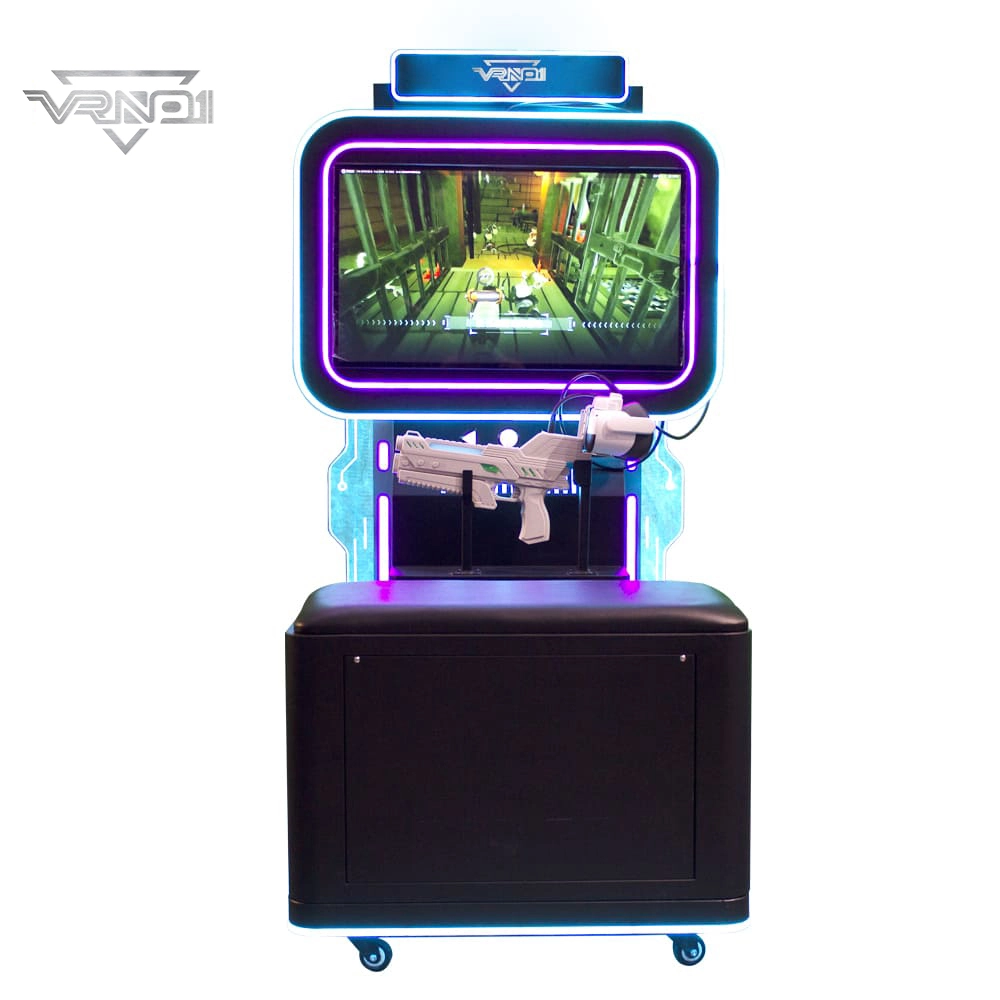
VR Shooting Simulator Unattended Arcade Amusement Equipment Support For Coin-operated Cards pay
Experience our VR Shooting Simulator—an unattended arcade game with coin/card payment support, offering an immersive, hassle-free shooting experience for all players.
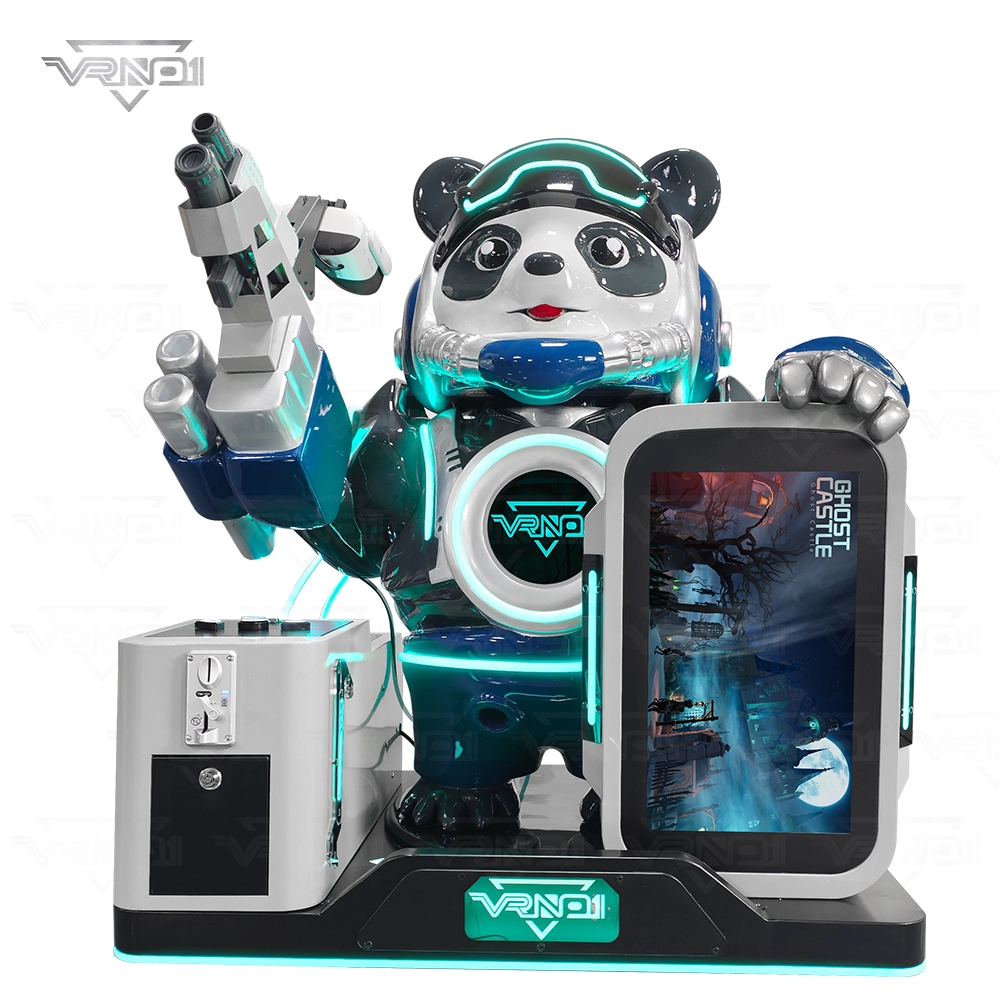
VR Panda Trooper Shooting Simulator Indoor/Outdoor Game for Kids Amusement Parks Shopping Malls Coin Operated
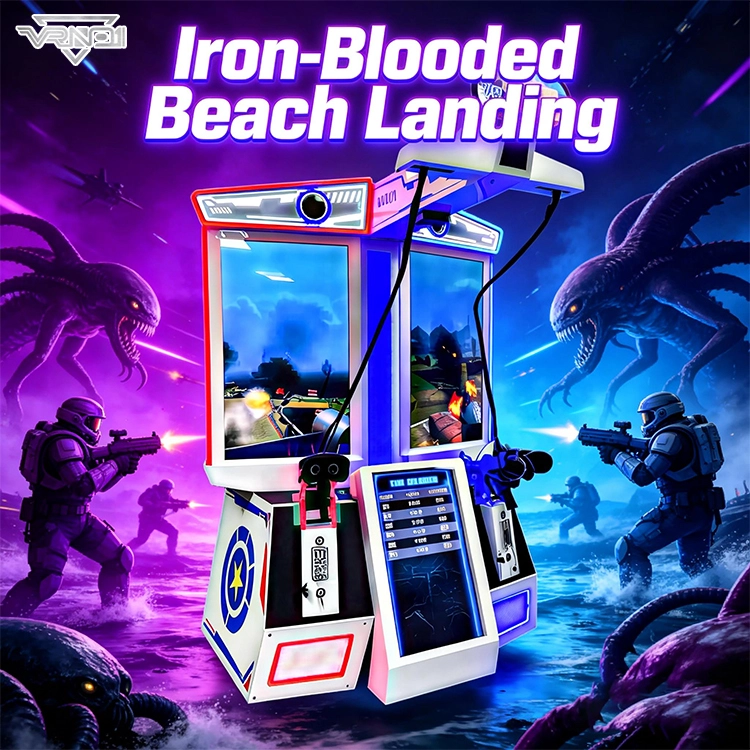
VRN0.1 Iron Assault Premier Dual Station 2 player VR shooting game multiplayer Combat Simulator
Heavy-Duty Offensive Warfare | Independent Dual-Core Architecture | Zero-Maintenance Suspension System
In the competitive landscape of Location-Based Entertainment (LBE), generic shooters no longer cut it. Enter the VR NO.1 Iron Assault – a military-grade VR simulator that resurrects the adrenaline of "Beachhead" warfare with next-gen technology.
Engineered by VR NO.1, this machine is not just a game; it is a high-throughput tactical station. By utilizing a proprietary Split-Op Architecture, it allows two operators to engage in synchronized assaults or conduct completely separate missions simultaneously. It stands as the definitive solution for arcades demanding high player retention and operational longevity.
 Scan QR Code
Whatsapp: +8618127818571
Scan QR Code
Guangzhou Skyfun Technology Co.,Ltd
skyfunvrgame
skyfun game