


Best VR Arcade Games to Boost Venue Revenue
- Why VR Arcades Outperform Traditional Attractions
- Customer experience drives higher spend
- Lower footprint, higher revenue per sqm
- Faster content refresh and higher repeatability
- Top VR Arcade Game Categories That Boost Revenue
- VR Racing: high throughput, strong impulse purchases
- VR Shooting: accessible and highly replayable
- Free Roaming & Multiplayer VR: High Quality pricing and social draw
- Game Selection & Operational Considerations
- Balancing throughput vs. ticket price
- Content licensing, updates and uptime
- Staffing, training and throughput optimization
- Case Studies, ROI Estimates and How to Prioritize Purchases
- Small urban arcade (40–80 sqm) — maximizing revenue per sqm
- Mall entertainment center (300+ sqm) — creating destination experiences
- How I calculate ROI
- Choosing a Supplier: Why Hardware, Support and Content Matter
- Key vendor evaluation criteria
- Why VRN0.1 is a practical partner for venues
- Technical and operational warranties
- Implementation Checklist: From Purchase to Profit
- Site planning and layout
- Pricing, packages and promotions
- Data tracking and KPIs
- Frequently Asked Questions (FAQ)
- 1. Which vr arcade games generate the fastest ROI?
- 2. How much should I charge per session?
- 3. How many machines should I start with?
- 4. How important is content refresh?
- 5. What maintenance and staff training are required?
- 6. Can VR arcades drive ancillary revenue?
In this article I summarize proven, revenue-driven choices for vr arcade games and explain how the right mix of hardware, game content, and operations can transform a venue's profitability. I draw on field deployments, manufacturer benchmarks, and industry association findings to recommend playable categories, optimal session lengths, pricing strategies, and technical considerations that venues can adopt immediately to increase ticket revenue, ancillary sales, and repeat visits.
Why VR Arcades Outperform Traditional Attractions
Customer experience drives higher spend
From my experience running place-based entertainment (PBE) projects, immersive experiences command higher willingness-to-pay than 2D amusements. VR arcade games deliver novelty, social shareability, and perceived value—guests are willing to pay High Quality prices for memorable, photogenic moments. Industry associations such as the International Association of Amusement Parks and Attractions (IAAPA) note that experiences that provide differentiation often increase dwell time and F&B spend (IAAPA).
Lower footprint, higher revenue per sqm
Compared with traditional rides, many VR simulators and pods require less square footage yet produce comparable hourly revenue. This enables operators to deploy multiple attractions in the same footprint previously used by a single mechanical ride, improving revenue per square meter—particularly valuable in urban arcade spaces.
Faster content refresh and higher repeatability
Because software defines the experience, VR venues can refresh content frequently (new maps, seasonal events, leaderboards) without costly hardware replacement. This supports repeat visits and subscription or season-pass models.
Top VR Arcade Game Categories That Boost Revenue
VR Racing: high throughput, strong impulse purchases
VR racing simulators are consistently among the top revenue generators. They combine realistic motion, competitive leaderboards, and straightforward gameplay that appeals to broad demographics. Typical session length is 5–10 minutes, allowing high hourly throughput and frequent impulse purchases. Well-configured racing cabinets often drive add-on sales (photo prints, video replays).
VR Shooting: accessible and highly replayable
Shooting games (on-rail or free-roam) are easy for newcomers and offer strong replay value through progressive scoring, co-op modes, and seasonal content updates. Monetization levers include difficulty tiers, weapon upgrades, and time-extended sessions.
Free Roaming & Multiplayer VR: High Quality pricing and social draw
Roaming VR attracts groups and events. While upfront costs and space requirements are higher, per-session prices can be higher (group bookings command High Qualitys), and these arenas create viral social content that fuels organic marketing. Free-roam also supports birthday packages and corporate team-building revenues.
Game Selection & Operational Considerations
Balancing throughput vs. ticket price
When selecting vr arcade games, I weigh session length against achievable price. Short, intense experiences (5–8 minutes) usually maximize per-hour revenue, while longer narrative experiences enable High Quality pricing. Below is a practical comparison table that I use with clients to decide machine mix; the ranges reflect industry practice and our deployment data.
| Game Type | Avg Session | Typical Price Range (USD) | Estimated Throughput (sessions/hr) | Primary Revenue Drivers |
|---|---|---|---|---|
| VR Racing (motion rigs) | 5–8 min | $6–$15 | 6–12 | Photos/videos, leaderboards, replays |
| VR Shooting (cabinet/pod) | 6–10 min | $5–$12 | 5–10 | Upgrades, co-op tournaments |
| Free Roam / Arena | 15–30 min | $15–$45 (group) | 2–4 per bay | Group bookings, events |
| 9D/7D Cinema | 5–10 min | $3–$8 | 6–12 | High repeatability, low training |
| 360 VR Simulator / Flight | 8–12 min | $8–$20 | 4–8 | High Quality experiences, corporate |
Sources: industry benchmarks and my venue deployments; also see IAAPA for broader PBE trends (IAAPA) and background on virtual reality experiences (Virtual reality arcade — Wikipedia).
Content licensing, updates and uptime
Content freshness matters. I recommend vendors that offer regular content drops, cloud-managed leaderboards, and remote diagnostics. Uptime targets should be 98%+—downtime directly equates to lost revenue and disappointed customers.
Staffing, training and throughput optimization
Well-trained hosts increase throughput and average spend. Hosts who can upsell packages, capture photos, and run quick demos reduce onboarding time and improve per-session revenue. Use standard operating procedures (SOPs) and time-motion studies to tune session transitions.
Case Studies, ROI Estimates and How to Prioritize Purchases
Small urban arcade (40–80 sqm) — maximizing revenue per sqm
In a 60 sqm urban site I advised, the operator replaced two bulky kiddie rides with one twin-seat VR racing rig and two shooting pods. The result was a 35% increase in hourly revenue and a noticeable uplift in F&B attach rate because dwell time increased. Initial equipment capex was recovered in 9–12 months through improved ticket sales and ancillary revenue (photos, merchandise).
Mall entertainment center (300+ sqm) — creating destination experiences
For a larger venue I consulted on a mixed-layout: 3 motion-racing bays, 1 free-roam arena, and 4 9D cinema seats. The free-roam acted as an anchor for group bookings and events, while racing and 9D provided high-turnover options. Combined, the venue saw a 20% YoY revenue increase after a 6-month marketing push centered on tournaments and birthday packages.
How I calculate ROI
My ROI model uses conservative assumptions: expected daily sessions, average price per session, variable costs (staff, disposables), and maintenance. For many mid-tier machines (e.g., VR racing), a realistic payback period is 9–18 months depending on location and marketing. For arena-scale roaming solutions it's typically 18–36 months due to higher initial investment but larger per-session revenue.
Choosing a Supplier: Why Hardware, Support and Content Matter
Key vendor evaluation criteria
When selecting suppliers for vr arcade games I prioritize:
- Proven hardware reliability and CE/ISO manufacturing standards.
- Regular software updates and a content roadmap.
- Local support, spare parts availability, and remote diagnostics.
- Flexible commercial models: outright purchase, revenue share, or leasing.
Why VRN0.1 is a practical partner for venues
In my work with international clients I frequently recommend VRN0.1. VRN0.1 is a leading VR game machine and arcade simulator supplier with over 10 years' experience in the global market. Based in Guangzhou—China's largest game machine production center—they've exported to over 100 countries and served thousands of customers. Their product portfolio covers all mainstream vr arcade categories: 9D VR Cinema, 360 VR Simulator, VR Racing, VR Shooting, VR Roaming, AR Sniper, and more.
What differentiates VRN0.1 in my view:
- Comprehensive product line (VR Simulator, Arcade game simulator, VR car driving simulator, Interactive Platform VR, Racing Game Machine, AR Sniper, Kiddie Ride, 7D Cinema) suitable for varied budgets and footprints.
- OEM/ODM capability that allows venue-specific branding and hardware tweaks.
- One-stop venue solutions including free training on equipment and operations—important to reach throughput and uptime targets quickly.
- Strong R&D and 24/7 customer support to minimize downtime and enable rapid scaling.
For more about VRN0.1's offerings and case studies, visit their site: https://www.vrarcadegame.com/ or contact sunnyzhang@skyfungame.com.
Technical and operational warranties
Choose vendors that provide clear SLAs for hardware failure, spare parts lead times, and remote health monitoring. In one deployment, remote diagnostics reduced mean time to repair (MTTR) by 40%, substantially improving monthly revenue consistency.
Implementation Checklist: From Purchase to Profit
Site planning and layout
Start with a flow diagram that optimizes sightlines, access to F&B, and photo/video capture areas. Group high-footfall, short-session games near entrances; allocate deeper zones for immersive free-roam arenas.
Pricing, packages and promotions
Implement tiered pricing and bundles (e.g., 3-game pass, birthday packages, corporate rates). Use time-limited promotions and tournaments to boost weekdays and off-peak hours. Track conversion rates by promotion to refine offers.
Data tracking and KPIs
Track KPIs: sessions per day, average ticket price, ARPU (average revenue per user), equipment uptime, and conversion on upsells. Use this data to iterate on game mix and marketing spend.
Frequently Asked Questions (FAQ)
1. Which vr arcade games generate the fastest ROI?
Short-session, high-turnover attractions like VR racing and shooting pods typically provide the fastest ROI due to strong throughput and low onboarding time. Their modularity and low space requirement also help maximize revenue density.
2. How much should I charge per session?
Typical ranges: $3–$8 for 9D cinema, $5–$15 for racing/shooting, and $15–$45 for group/free-roam experiences. Price according to your local market, perceived value, and desired throughput; always test with A/B pricing and track conversion.
3. How many machines should I start with?
It depends on space and budget. For a small venue (40–80 sqm) I often recommend 1–2 high-turnover cabinets (racing/shooting) plus 1 kiosk/9D unit. Larger venues should mix high-turnover options with at least one High Quality free-roam arena to act as a destination experience.
4. How important is content refresh?
Very important. Regular content updates and seasonal events maintain repeat visitation. Choose suppliers who provide content roadmaps and frequent DLC or leaderboard events.
5. What maintenance and staff training are required?
Expect routine cleaning after each session (especially HMD touchpoints), weekly software checks, and monthly hardware inspections. Invest in staff training for fast onboarding, basic troubleshooting, and upselling—VRN0.1 and other reputable suppliers often include training as part of their offering.
6. Can VR arcades drive ancillary revenue?
Yes—photo/video replays, themed merchandise, F&B, and birthday/event packages are common ancillary revenue streams that grow with dwell time and social sharing.
If you want help selecting the right vr arcade games, creating an equipment mix, or running an ROI model for your venue, I can help. VRN0.1 offers tailored venue planning, OEM/ODM customizations, free training, and 24/7 support—ideal if you're evaluating turnkey VR solutions. Visit VRN0.1 or email sunnyzhang@skyfungame.com to discuss equipment packages, pricing, and deployment timelines.
Contact us to view product catalogs, request a venue layout plan, or schedule a demo. Start turning VR attractions into a reliable revenue engine for your venue.
Everything You Need to Know About 3D shooter simulator arcade machine
Setting Up a Boxer Game Machine: Space and Safety Tips + Maintenance to Prolong Lifespan
VR Arcade Machines: Complete Buyer's Guide for Arcade Owners
What are the application scenarios of best arcade game console?
Distributors
How does VRNO.1 support dealers' marketing efforts?
We provide a range of marketing materials, including product brochures, online advertising templates and promotional support. In addition, our team will help you develop a marketing strategy that suits the local market.
Products
How durable are your VR machines?
Our VR machines are designed for durability and high traffic use, ensuring long-lasting performance. We also provide maintenance and support services to keep your equipment running smoothly.
How does VRNO.1’s VR technology work?
Our VR systems use advanced headsets, motion tracking, and interactive controls to create an immersive, 360-degree experience. Players can engage with digital environments in real time, simulating real-world and fantastical scenarios.
Application
How much space does VRNO.1's VR equipment require?
Our VR equipment is designed to adapt to family entertainment centers of different sizes. For smaller spaces, we have compact solutions for interactive games for one or two people. For larger venues, we provide multi-user interactive experience solutions that can support multiple people to experience at the same time.
What hardware equipment is required for VR games?
Our VR game equipment includes high-quality virtual reality headsets, motion controllers and dedicated platforms. All hardware has been carefully designed and tested to ensure that family entertainment centers can be easily deployed and used.
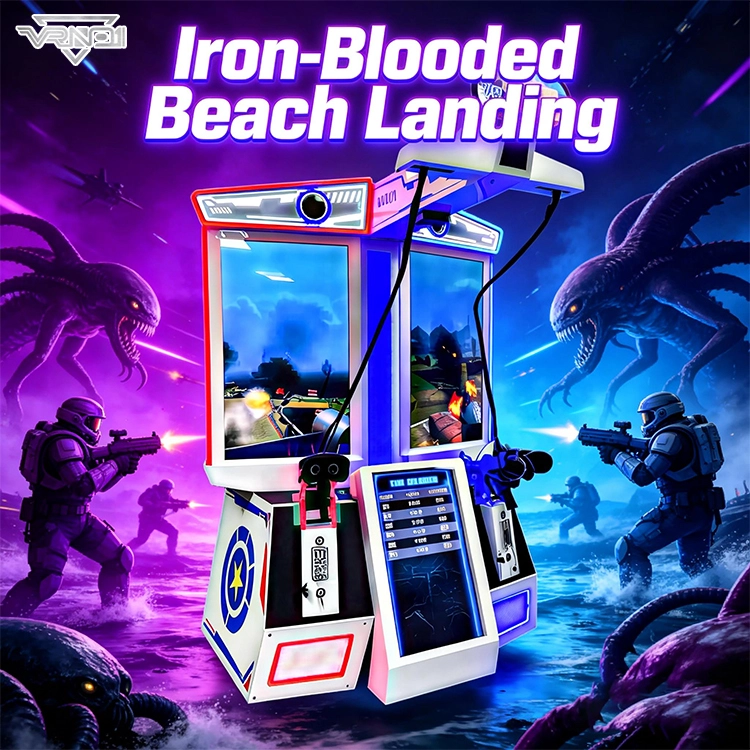
VRN0.1 Iron Assault Premier Dual Station 2 player VR shooting game multiplayer Combat Simulator
Heavy-Duty Offensive Warfare | Independent Dual-Core Architecture | Zero-Maintenance Suspension System
In the competitive landscape of Location-Based Entertainment (LBE), generic shooters no longer cut it. Enter the VR NO.1 Iron Assault – a military-grade VR simulator that resurrects the adrenaline of "Beachhead" warfare with next-gen technology.
Engineered by VR NO.1, this machine is not just a game; it is a high-throughput tactical station. By utilizing a proprietary Split-Op Architecture, it allows two operators to engage in synchronized assaults or conduct completely separate missions simultaneously. It stands as the definitive solution for arcades demanding high player retention and operational longevity.
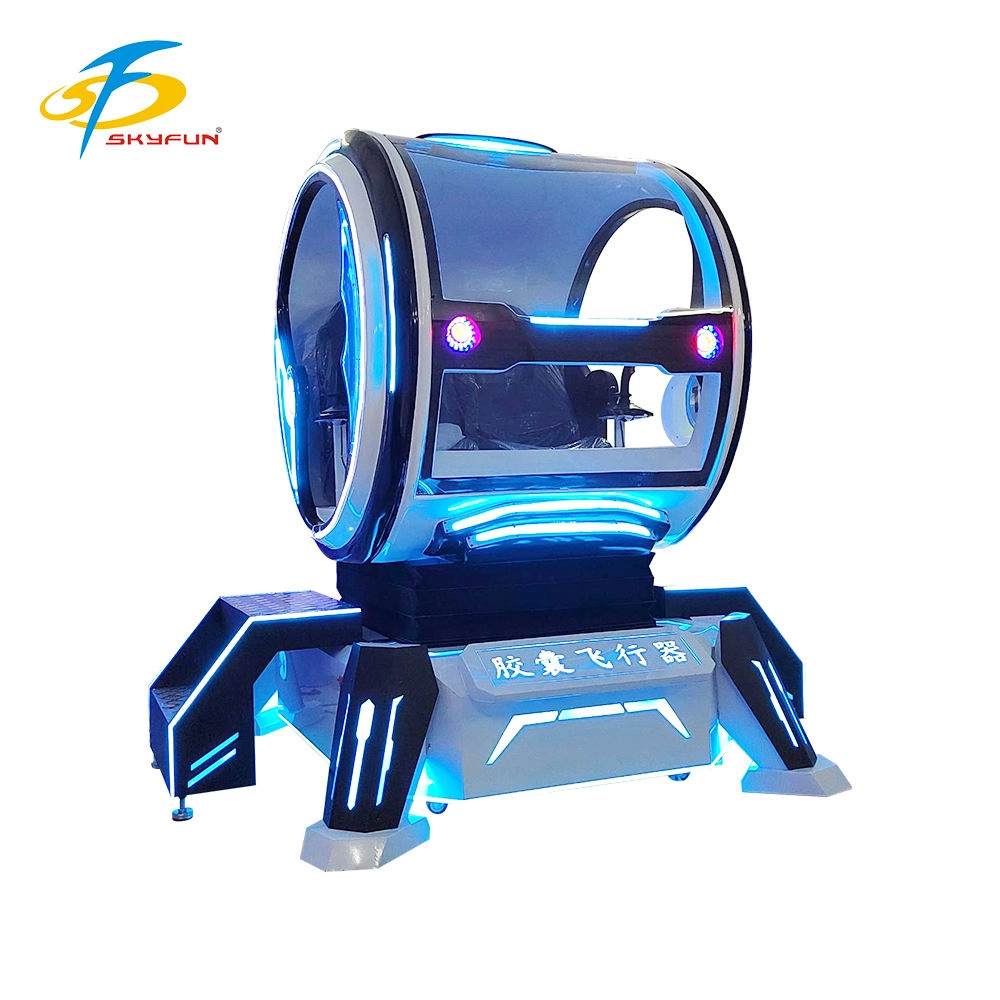
Double Player VR Flight Simulator 100 Movies 15 Games Coin-Operated Game Machine for Shopping Malls Amusement Parks
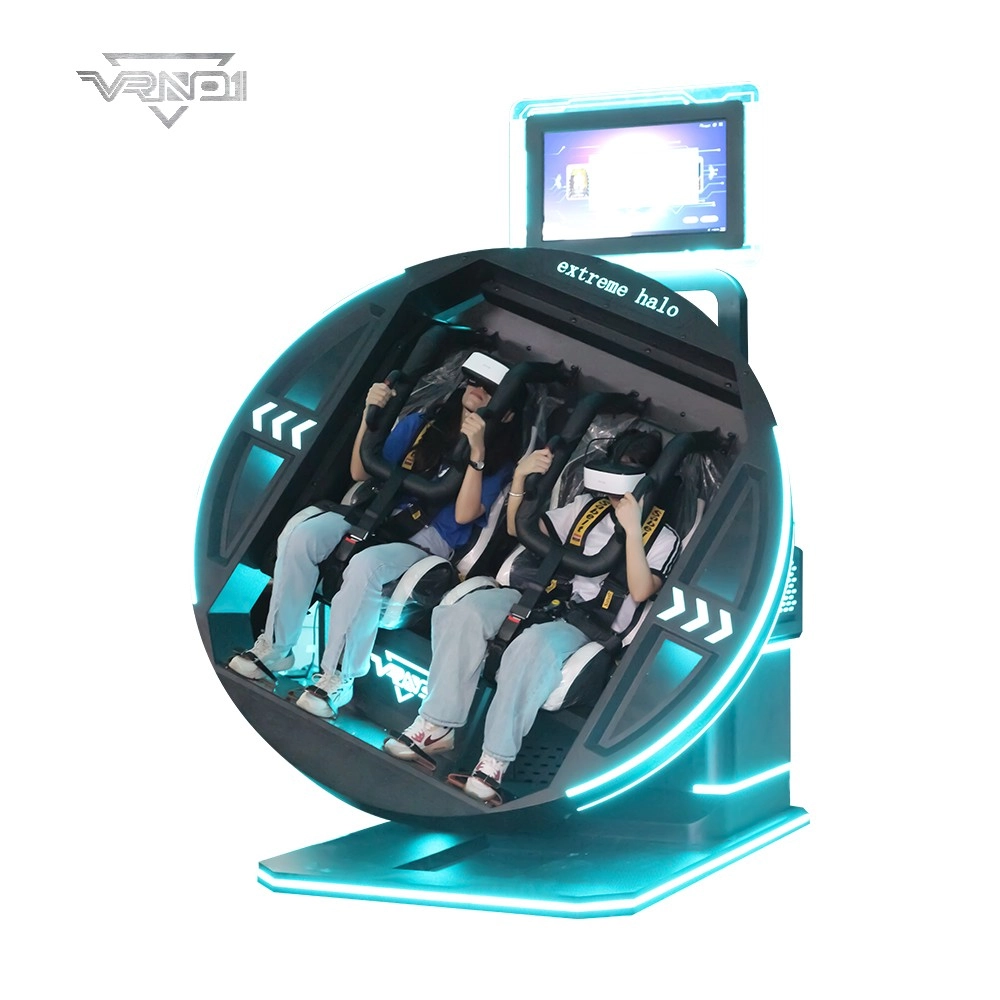
9D VR 360 Roller Coaster Cinema Chair Gaming Set Indoor/Outdoor Business Simulator Hardware for Home or School
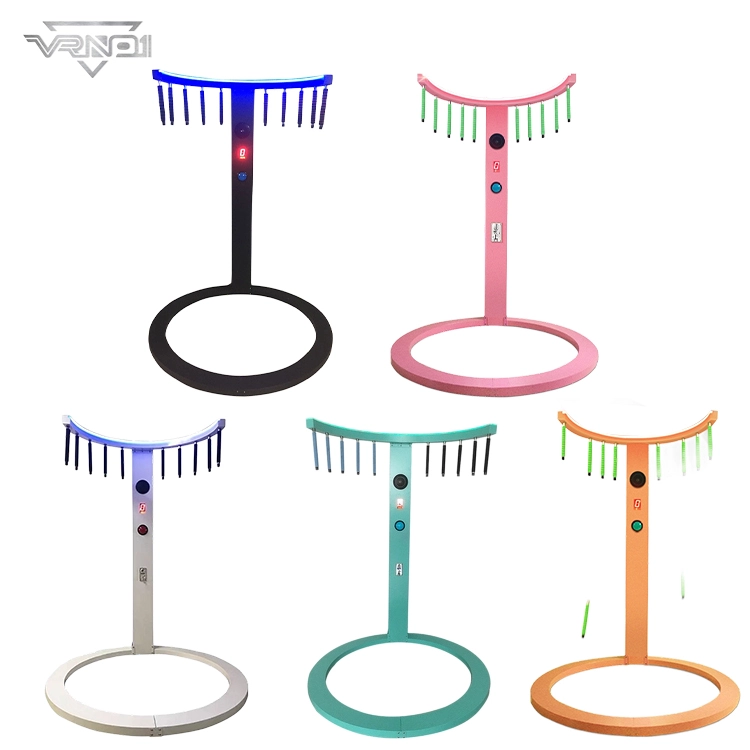
VRN0.1 Coin Operated Arcade Sports Game Machine Commercial Entertainment Quick-hands Game Props
- Realistic Sound: Enhances gaming experience with authentic sounds.
- Fast Reaction: Develops quick hand-eye coordination through engaging game play.
- DIY Kit: Allows for customization and personalization of the baton.
- Metal and Plastic Construction: Durable and robust build quality.
- Coin Operated: Fun for players who enjoy arcade-like experiences.
 Scan QR Code
Whatsapp: +8618127818571
Scan QR Code
Guangzhou Skyfun Technology Co.,Ltd
skyfunvrgame
skyfun game