


Industrial VR Simulator Machines in 2026: ROI, Safety, and Global Applications
Discover how industrial and commercial VR simulator machines are transforming training in 2026. Explore 6DOF motion platforms, haptic feedback, digital twins, and ROI-driven solutions for enterprise and LBVR centers worldwide.
- What is a VR Simulators Machine?
- Core Components of a Modern Simulator
- Key Takeaways: Why VR Simulation is Mandatory in 2026
- The Data: Safety and Savings
- The Evolution of Motion Technology: 3DOF vs. 6DOF Explained
- 3DOF (Degrees of Freedom)
- 6DOF (Degrees of Freedom)
- Industrial Use Cases: From Digital Twins to PLC Programming
- Primary Industrial Applications
- Expert Selection Tips: Avoiding Common Purchase Mistakes
- Buyer's Checklist for 2026
- FAQ: Common Questions on VR Simulators
- How much does a professional VR simulator machine cost in 2026?
- What is the difference between 3DOF and 6DOF VR machines?
- Are VR simulators compatible with all headsets?
- How do VR simulators reduce training costs?
- What maintenance is required for a VR motion platform?
- Can VR simulators be used for remote multi-player training?
- What space requirements are needed for a VR simulator?
- What is the typical ROI for a VR arcade machine?
- References
Virtual reality has graduated from novelty arcade gaming to a critical infrastructure tool for industries ranging from defense to heavy construction. Whether you are outfitting a commercial Location-Based Virtual Reality (LBVR) center or sourcing Industrial VR simulation software for crane operators, understanding the hardware ecosystem is vital. This guide analyzes the shift toward high-fidelity haptics, AI-driven Digital Twins, and the financial data backing the 2026 simulation boom.
What is a VR Simulators Machine?
A VR simulator machine is an integrated hardware ecosystem that synchronizes high-fidelity visual data with physical motion platforms (2DOF to 6DOF) to replicate real-world gravitational forces.
Unlike standard VR headsets which only trick the eyes, a full simulator rig tricks the inner ear (vestibular system). It achieves this by using motorized actuators, force-feedback peripherals, and tactile transducers. The goal is "presence"—the psychological state where the user's brain perceives the virtual environment as physical reality.
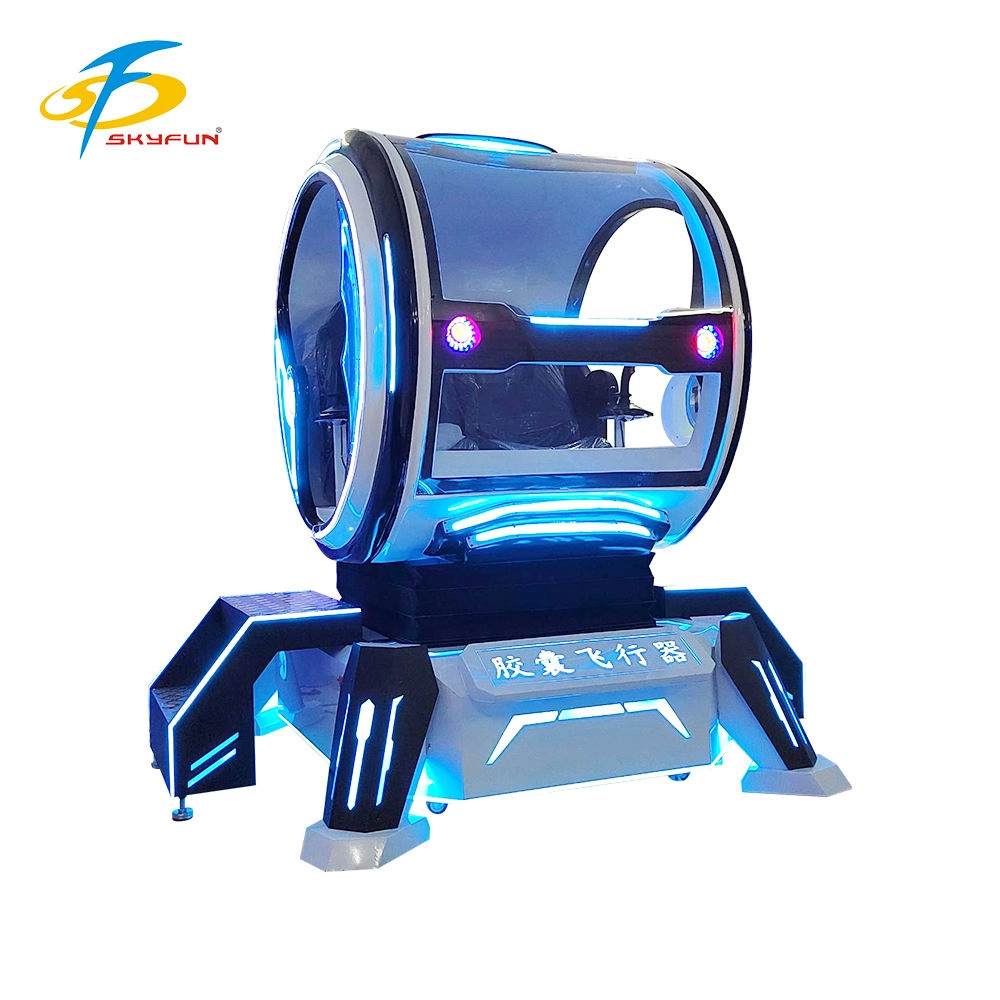
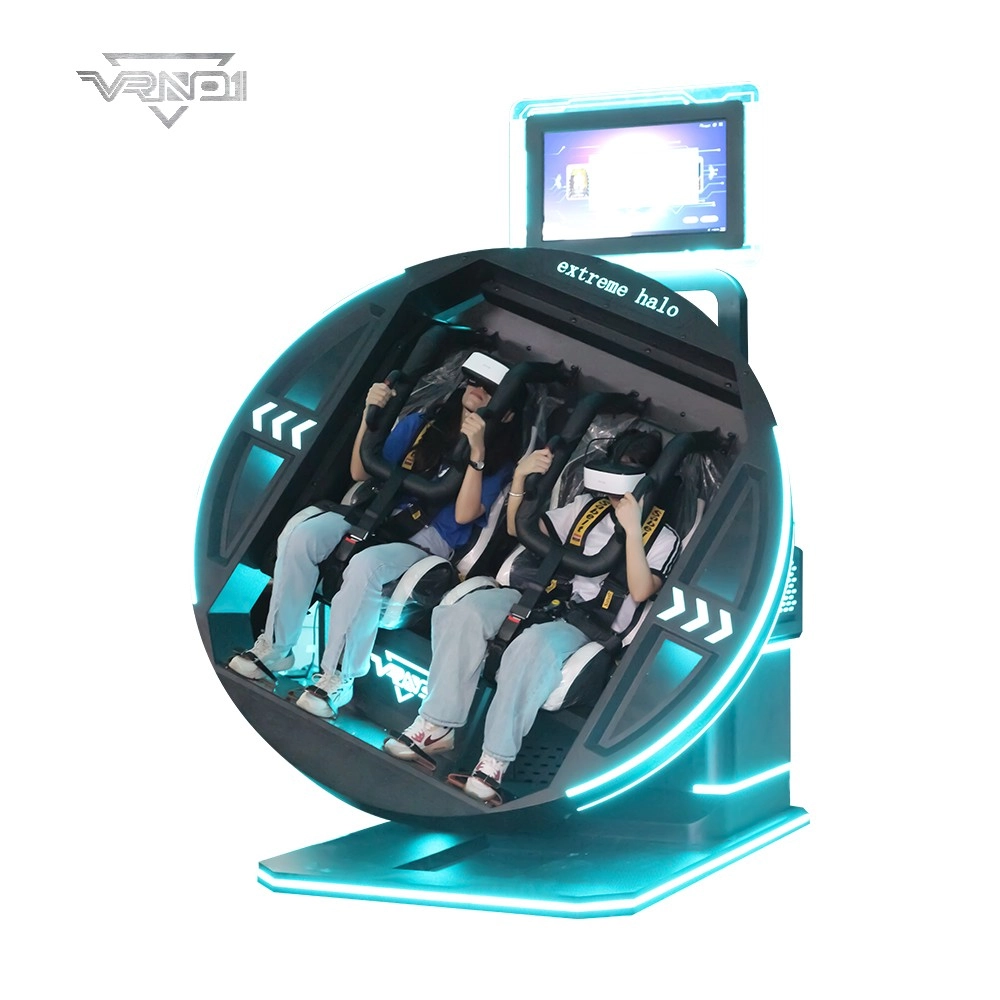
At VRN0.1, we have spent over 10 years perfecting this synchronization. Based in Guangzhou, our engineering teams design systems where the physical seat moves in exact tandem with the VR visuals. For example, our 360 VR Simulator doesn't just show a loop-the-loop; it physically rotates the user 360 degrees, engaging the entire body in the experience.
Core Components of a Modern Simulator
- Motion Platform: The base that moves the seat (Pitch, Roll, Yaw, Heave, Surge, Sway).
- Haptics: Haptic feedback systems embedded in the seat or controls to simulate engine vibration or road texture.
- Telemetry Software: The bridge that reads game/sim data (speed, G-force) and tells the motors how to move.

Key Takeaways: Why VR Simulation is Mandatory in 2026
VR simulation is no longer optional because it eliminates 100% of physical risk while reducing operational training costs by roughly 85%.
Data from 2024 and 2025 highlights a massive shift in how businesses view ROI. It isn't just about "cool tech"; it is about survival and efficiency. Companies using physical machinery for training burn fuel, wear down parts, and risk accidents. Virtual simulators remove these liabilities entirely.
The Data: Safety and Savings
- Cost Reduction: According to a 2025 report by VR Owl, heavy equipment training via VR cuts costs by up to 85% compared to live machine training by eliminating fuel consumption and equipment wear.
- Retention: Data cited by SkillsVR (2025) indicates that VR training improves knowledge retention by up to 80% one year after training, compared to significantly lower rates for traditional classroom methods.
- Speed: Corporations like Boeing have reported reducing training time by 75% for complex assembly tasks using immersive simulation tools.
- Safety: Mining companies have observed a 43% reduction in workplace injuries after implementing simulator-based safety protocols.
The Evolution of Motion Technology: 3DOF vs. 6DOF Explained
The difference between 3DOF and 6DOF is that 3DOF allows you to look around and tilt, while 6DOF allows you to move through space physically (up, down, forward, backward).
Choosing the right axis configuration is the most critical decision for a buyer. An arcade racer might function well with 3DOF, but a professional flight simulator requires 6DOF motion platforms to accurately replicate turbulence and landing forces.
3DOF (Degrees of Freedom)
- Movements: Pitch (tilt up/down), Roll (tilt left/right), Yaw (turn left/right).
- Best For: Entry-level racing sims, passive VR cinema experiences (like the 9D VR Cinema from VRN0.1), and space flight.
- Cost: Lower cost, smaller footprint.
6DOF (Degrees of Freedom)
- Movements: All 3DOF movements plus Heave (move up/down), Sway (move left/right), and Surge (move forward/backward).
- Best For: Professional pilot training, advanced racing simulation, and heavy machinery operation.
- Realism: This is the gold standard. When you hit the brakes in a 6DOF rig, the "Surge" axis throws you forward against the seatbelts, mimicking real inertia.
Industrial Use Cases: From Digital Twins to PLC Programming
Industrial VR uses "Digital Twin" technology to create a mathematically perfect virtual replica of a physical machine or factory for risk-free testing and training.
This sector is exploding. The global Digital Twin training simulators market is projected to grow from ~$20 billion in 2024 to nearly $150 billion by 2030. Manufacturers are no longer building prototypes physically first; they build them virtually.
Primary Industrial Applications
- Heavy Machinery Mastery: Training operators for excavators, forklifts, and cranes. A mistake here costs nothing, whereas a mistake on a real site could cost lives.
- PLC and Sensor Testing: Engineers can test automation logic (PLC code) inside the simulation. If the code is wrong, the virtual machine crashes, not the real $500,000 unit.
- Remote Collaboration: Using Industrial VR simulation software, teams in Germany and Japan can stand inside the same virtual engine room to diagnose issues, slashing travel costs.
- Disaster Response: Simulating fires, leaks, or failures on oil rigs to train muscle memory for emergency procedures.
Expert Selection Tips: Avoiding Common Purchase Mistakes
To avoid purchase regret, prioritize "Latency-to-Motion" speed (under 20ms) and ensure software compatibility with your specific industry telemetry standards.
At VRN0.1, we often see clients focusing solely on the visual resolution of the headset while ignoring the motion platform's response time. If the screen moves but the chair lags by half a second, the user will get motion sick immediately. This is called the "sensory conflict theory."
Buyer's Checklist for 2026
- Latency Check: Ensure the motion platform has a latency of less than 20 milliseconds.
- Software Ecosystem: Does the rig support OpenXR? Is it compatible with major engines like Unreal Engine 5 or Unity?
- Hygiene Protocols: For Location-Based Virtual Reality (LBVR) equipment, easy-to-clean materials (PU leather) and UV-C sanitization integration are mandatory for high throughput.
- Footprint: Modern 2026 actuators provide more torque in smaller packages. Measure your space carefully; a 6DOF rig needs a safety perimeter.
- Support: As a global supplier serving 100+ countries, VRN0.1 provides 24/7 support. Avoid vendors who do not offer remote troubleshooting, as downtime kills ROI.
FAQ: Common Questions on VR Simulators
How much does a professional VR simulator machine cost in 2026?
Entry-level motion platforms for home or small arcades range from $3,000 to $8,000. Mid-range 6DOF commercial racing or flight rigs typically cost between $15,000 and $45,000. Enterprise-grade industrial training simulators (cranes, medical, flight) often exceed $100,000 when custom software is included.
What is the difference between 3DOF and 6DOF VR machines?
3DOF covers rotational movements (Pitch, Roll, Yaw), suitable for basic experiences. 6DOF adds translational movements (Heave, Sway, Surge), allowing the user to move physically through space. 6DOF is required for professional training to prevent motion sickness and ensure physical accuracy.
Are VR simulators compatible with all headsets?
Most modern simulators are "HMD Agnostic" and support Meta Quest 3, HTC Vive, Pico, and Apple Vision Pro. Compatibility largely depends on the software interface, with OpenXR being the current industry standard.
How do VR simulators reduce training costs?
They eliminate fuel consumption and wear-and-tear on real machinery. Additionally, they reduce insurance premiums due to certified safety training and allow for instant scenario resets, increasing the number of training repetitions per hour.
What maintenance is required for a VR motion platform?
Routine maintenance includes monthly lubrication of actuators and pivot points, regular software/firmware updates to ensure telemetry synchronization, and daily sanitization of HMDs and high-touch peripherals.
Can VR simulators be used for remote multi-player training?
Yes, modern cloud-based simulators allow multiple operators in different cities to interact within the same virtual engine room, cockpit, or construction site.
What space requirements are needed for a VR simulator?
Compact 2DOF rigs require roughly 1.5m x 1.5m. Professional 6DOF platforms and arcade capsules usually require a minimum of 3m x 3m, including a safety perimeter.
What is the typical ROI for a VR arcade machine?
In high-traffic locations, most operators report a full return on investment within 6 to 10 months. Success depends heavily on "throughput"—the number of players served per hour.
References
VR in Enterprise Training Market Size Stats 2035
Virtual Reality in Enterprise Training Market Market Size, Share, Growth
Immersive Simulator Market Size, Share & 2030 Trends Report
The Global Industrial Metaverse Market 2025-2035: Immersive


Application
Is the VR experience harmful to health?
VRNO.1's VR equipment meets international safety standards. Long-term wearing or overuse may cause slight eye fatigue. Therefore, we recommend that each game experience time does not exceed 30 minutes and take regular breaks.
Products
How does VRNO.1’s VR technology work?
Our VR systems use advanced headsets, motion tracking, and interactive controls to create an immersive, 360-degree experience. Players can engage with digital environments in real time, simulating real-world and fantastical scenarios.
Solution
Does VRNO.1 provide transportation services for VR devices?
VRNO.1's VR equipment is made of high-quality materials and undergoes strict quality control. The service life of the equipment is usually more than 5 years, depending on the frequency of use and maintenance of the equipment. Regular care and maintenance can extend the service life of the equipment.
Does the VR device consume a lot of power?
Our VR devices are designed with energy efficiency in mind. The power consumption of the device is low and suitable for long-term use. The specific power consumption will vary depending on the type of device and frequency of use, and usually runs at standard voltage.
Home
What types of virtual reality solutions do you offer?
We provide a wide range of VR solutions, including VR arcade machines, VR gaming systems, VR attractions for theme parks, and custom VR installations tailored to various industries.
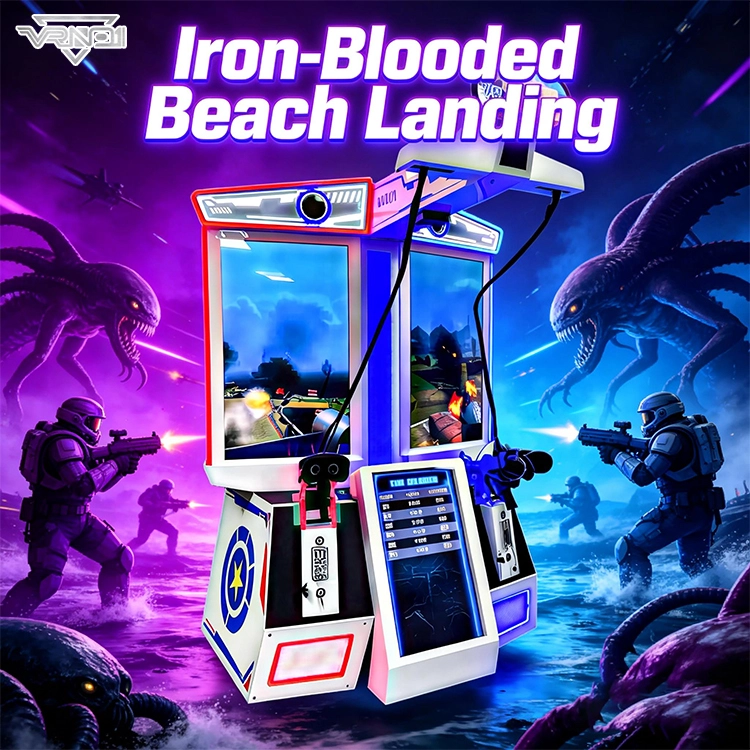
Heavy-Duty Offensive Warfare | Independent Dual-Core Architecture | Zero-Maintenance Suspension System
In the competitive landscape of Location-Based Entertainment (LBE), generic shooters no longer cut it. Enter the VR NO.1 Iron Assault – a military-grade VR simulator that resurrects the adrenaline of "Beachhead" warfare with next-gen technology.
Engineered by VR NO.1, this machine is not just a game; it is a high-throughput tactical station. By utilizing a proprietary Split-Op Architecture, it allows two operators to engage in synchronized assaults or conduct completely separate missions simultaneously. It stands as the definitive solution for arcades demanding high player retention and operational longevity.
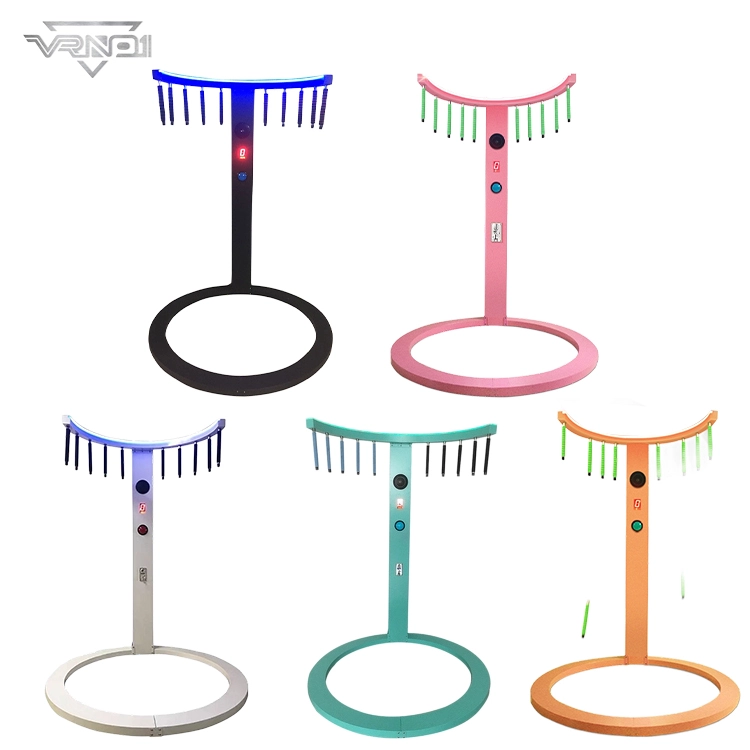
- Realistic Sound: Enhances gaming experience with authentic sounds.
- Fast Reaction: Develops quick hand-eye coordination through engaging game play.
- DIY Kit: Allows for customization and personalization of the baton.
- Metal and Plastic Construction: Durable and robust build quality.
- Coin Operated: Fun for players who enjoy arcade-like experiences.
Want to know more updates?
If you have any technical questions or after-sales needs, please feel free to contact our service team.
We will wholeheartedly provide you with quick response and professional support to ensure the smooth operation of your VR & Arcade project.
 Scan QR Code
Whatsapp: +8618127818571
Scan QR Code
Guangzhou Skyfun Technology Co.,Ltd
skyfunvrgame
skyfun game