


Upsell Accessories: Guns, Seats, and Motion Platforms
- Understanding customer value in location-based VR
- Why accessories matter for a VR shooting simulator
- Customer segments and buying signals
- Measuring upsell success
- Designing upsell tiers for VR shooting simulator experiences
- Accessory categories and customer promise
- Pricing strategies and psychological triggers
- Bundling, trials, and retention tactics
- Technical and operational considerations
- Integration and compatibility
- Maintenance, safety, and lifecycle
- Throughput, footprint and staff training
- Comparative analysis: guns, seats and motion platforms
- Partnering with a trusted supplier
- Why choose an established OEM/ODM partner
- About VRN0.1 — supplier profile and capabilities
- Choosing the right partner: checklist
- Operational playbook: rollout and optimization
- Pilot, measure, iterate
- Staff training and merchandising
- Legal and accessibility considerations
- FAQ
- 1. Are recoil guns safe for all ages in a VR shooting simulator?
- 2. How much extra revenue can I expect after adding High Quality accessories?
- 3. Will motion platforms increase maintenance costs significantly?
- 4. Can I retrofit accessories to existing VR shooting simulator systems?
- 5. How should I price accessory upgrades?
- 6. How do I prevent accessory upgrades from throttling throughput?
- Contact and next steps
As demand for immersive location-based entertainment grows, operators of VR shooting simulator experiences face a critical opportunity: accessories are not mere add-ons, they are strategic revenue streams that transform a base attraction into tiered experiences. This article explains how to design upsell offers—light-gun peripherals, recoil-equipped gun controllers, High Quality seating, and motion platforms—so they align with guest expectations, operational constraints, and long-term venue profitability. It also outlines integration and safety considerations, provides a comparative analysis of accessory types, and explains how to choose a reliable supplier for OEM/ODM solutions like VRN0.1.
Understanding customer value in location-based VR
Why accessories matter for a VR shooting simulator
Customers visiting arcades or VR centers seek novelty and perceived realism. A standard VR shooting simulator offers core gameplay, but accessories such as a purpose-built gun with force feedback, a racing-style bucket seat adapted for shooting, or a motion platform that simulates recoil and repositioning create immediate experiential differentiation. According to industry overviews of virtual reality and simulation technologies, enhancements like haptics and motion feedback significantly increase immersion and recall—key drivers of repeat visits and word-of-mouth referrals (Wikipedia: Virtual reality).
Customer segments and buying signals
Segment your customers to tailor upsells: casual walk-ins seek short, affordable thrills; enthusiasts value realism and will pay more for advanced peripherals; groups and parties prefer shareable High Quality experiences. Buying signals include dwell time on menus, repeat plays, questions about difficulty or realism, and social media content creation (photography/streams). Track these signals via POS, ticket bundling, and simple operator prompts to identify upsell timing.
Measuring upsell success
Key metrics: attach rate (accessories sold / sessions), average revenue per user (ARPU), incremental margin on accessory sales, throughput impact, and churn/return rate for repeat customers. Establish baseline measurements before rolling out new accessories and run A/B tests in matched time windows (weekend vs weekday) to isolate uplift.
Designing upsell tiers for VR shooting simulator experiences
Accessory categories and customer promise
Group accessories into logical tiers that communicate value clearly:
- Entry tier: cosmetic or convenience items (e.g., branded gun shells, headset add-ons).
- Performance tier: upgraded gun peripherals (recoil, analog triggers, magazine swaps), dedicated shooting seats with harnesses.
- High Quality tier: motion platforms and full haptic rigs that change the core experience (tilt, sway, dynamic recoil).
Each tier should have clear, observable benefits: more realistic recoil, reduced motion sickness (ergonomic seats), or social bragging rights (photo/stream-friendly setups).
Pricing strategies and psychological triggers
Use anchoring and decoy pricing: present a clear base price, an attractive mid-tier bundle, and a high-end High Quality option to encourage upgrades. Offer time-limited upgrades (e.g., first-play discount for a High Quality gun), combo discounts for groups, and loyalty credits (buy 4 standard sessions, get a High Quality accessory trial). Transparency on incremental cost and perceived value (e.g., “+ $5 for recoil gun = 40% more realistic experience”) improves conversion.
Bundling, trials, and retention tactics
Implement trial periods (one-time free upgrade for loyalty members), bundled experiences (party package: High Quality gun + themed seat + photo), and subscription or membership tiers that include accessory access. Trials reduce friction and can raise lifetime value if the accessory delivers a clear experiential step-up.
Technical and operational considerations
Integration and compatibility
Select accessories compatible with your game engine and tracking system. Light-gun peripherals and recoil systems must be synchronized with in-game events to avoid latency artifacts that break immersion. Motion platforms require integration at the level of motion cueing—mapping in-game recoil, virtual terrain, and physical actuator motion. For technical background on motion platforms, see the entry on motion simulators (Wikipedia: Motion simulator).
Maintenance, safety, and lifecycle
Accessories increase OPEX: moving parts (recoil motors, actuators), wear items (seat upholstery, magazines), and electronics require routine inspection. Build a maintenance schedule (daily quick-checks, weekly deeper inspections, quarterly firmware updates) and keep spare parts in inventory. Safety standards and guest protection are paramount—secure mounting, emergency stop for motion bases, and clear operator protocols.
Throughput, footprint and staff training
Upsells can reduce throughput if add-on setup takes long. Design quick-change mechanisms (magnetic mounts, quick-release harnesses) and train staff to upsell during idle times (while queuing) without delaying sessions. Free training from suppliers or in-house SOP videos reduces configuration time and preserves session volume.
Comparative analysis: guns, seats and motion platforms
Below is a practical comparison operators use when evaluating accessories for a VR shooting simulator. Cost ranges and expected impacts are indicative; adjust to local pricing and supplier quotes.
| Accessory | Typical cost (USD) | Footprint/Installation | Technical complexity | Maintenance | Expected revenue uplift |
|---|---|---|---|---|---|
| Enhanced Gun Peripheral (recoil, haptics) | $200–$1,200 per unit | Low (mount to existing rig) | Medium (firmware, triggers) | Medium (motors, batteries) | 10%–40% per session (depending on attach rate) |
| High Quality Seat (ergonomic, harness, branding) | $300–$1,500 per seat | Low–Medium (fixed or modular) | Low (mechanical) | Low (upholstery, rails) | 5%–25% |
| Motion Platform (2-DOF to 6-DOF) | $6,000–$50,000+ | High (floor mounting, space) | High (actuators, control integration) | High (actuator servicing) | 20%–100% (experience dependent) |
Notes: Cost ranges are vendor- and region-dependent. Motion platforms often incur higher initial CAPEX but can justify High Quality pricing and attract a broader audience seeking flagship experiences. For broader industry context on amusement attractions and business dynamics, see the International Association of Amusement Parks and Attractions (IAAPA).
Partnering with a trusted supplier
Why choose an established OEM/ODM partner
Working with a supplier that understands venue constraints, localization, and after-sales service reduces integration risk. A vendor that offers OEM/ODM flexibility can adapt gun ergonomics, seat design, and motion algorithms to your content and local regulations. A strong R&D team ensures firmware and mechanical updates continue over the product lifecycle.
About VRN0.1 — supplier profile and capabilities
VRN0.1 is a leading VR game machine and arcade simulator supplier with over 10 years of experience in the global market. Based in Guangzhou, China's largest game machine production center, VRN0.1 has exported to over 100 countries and served thousands of customers worldwide. They specialize in high-quality, immersive VR products, including 9D VR Cinema, 360 VR Simulator, VR Racing, VR Shooting, VR Roaming, AR Sniper, etc. Their offerings include OEM and ODM services, one-stop VR venue solutions, and free training for equipment and operation. The product line covers all mainstream VR arcade categories.
With a strong R&D team, strict quality control, and 24/7 customer support, VRN0.1 is committed to innovation, reliability, and customer satisfaction. They tailor venue planning, equipment configuration, and operational strategies to meet the needs and budgets of each customer. Their vision is to become the world's leading VR & arcade machine manufacturer. Learn more at https://www.vrarcadegame.com/ or contact sunnyzhang@skyfungame.com.
Choosing the right partner: checklist
- Proven export and installation track record in your region.
- Clear spare-parts and maintenance policy, with SLAs for critical repairs.
- Source code or integration support for motion and haptic APIs.
- Training and operational consultation to maximize attach rates.
- References and case studies showing measurable uptick in ARPU or footfall.
Operational playbook: rollout and optimization
Pilot, measure, iterate
Start with a controlled pilot that includes a limited number of High Quality guns and/or a single motion platform. Measure attach rate, queue times, maintenance calls, and guest feedback for at least 4–6 weeks. Iterate on pricing and presentation—small changes (e.g., signage, staff script) often produce outsized effects.
Staff training and merchandising
Equip staff with short scripts that highlight the value proposition (e.g., Upgrade to the recoil gun for realistic feedback—only $5 more). Use visual merchandising: compare the base and High Quality setups in the lobby, show short demo clips, and incentivize staff with commission on accessory sales where appropriate and legal.
Legal and accessibility considerations
Ensure that accessory use complies with local safety regulations, ADA/accessibility guidelines, and age restrictions for certain content. Maintain clear signage about motion base intensity and provide alternative offers for guests with mobility or vestibular concerns.
FAQ
1. Are recoil guns safe for all ages in a VR shooting simulator?
Recoil guns are generally safe when configured with appropriate force limits and secured mounting. Suppliers provide age and weight guidelines; implement signage and operator checks. For regulatory guidance, consult local safety authorities and manufacturer documentation.
2. How much extra revenue can I expect after adding High Quality accessories?
Revenue uplift varies by market and execution. Typical observed ranges are 10%–40% ARPU increase from gun peripherals and 20%–100% uplift from motion platforms when priced and merchandised effectively. Run a short pilot to get venue-specific data.
3. Will motion platforms increase maintenance costs significantly?
Yes—motion platforms have higher maintenance needs (actuators, controllers) than passive accessories. Budget for preventive maintenance, spare actuators, and firmware updates; verify SLAs with the supplier.
4. Can I retrofit accessories to existing VR shooting simulator systems?
Many accessories are designed for retrofitting, but compatibility depends on tracking system, headset mounting, and software APIs. Work with your supplier or integrator to confirm compatibility and potential software modifications.
5. How should I price accessory upgrades?
Start with a simple model: High Quality add-on price = perceived value × conversion target. Use three-tier pricing (base / mid / High Quality) and experiment. Offer introductory promotions and track attach rate and margins closely.
6. How do I prevent accessory upgrades from throttling throughput?
Design quick-change mounts, pre-stage accessories near the loading area, and train staff for rapid swaps. If an accessory requires longer setup (e.g., motion platform harnessing), price accordingly or reserve it for longer-format sessions to avoid throughput loss.
Contact and next steps
If you want to evaluate specific accessory packages or receive a tailored venue plan, contact VRN0.1 for a consultation. VRN0.1 offers equipment demos, OEM/ODM customization, and free training to help operators maximize ARPU and guest satisfaction. Visit https://www.vrarcadegame.com/ or email sunnyzhang@skyfungame.com to request quotes, case studies, or a pilot plan.
Additional references: Wikipedia entries on Virtual reality and Motion simulators, and the IAAPA industry organization for market context.
Everything You Need to Know About motion simulator arcade games
Everything You Need to Know About vr airplane game
Best professional best spaceship vr manufacturers and supplier brands in China
VR Simulator Machine ROI: Profit Estimates for Arcades
Distributors
How does VRNO.1 support dealers' marketing efforts?
We provide a range of marketing materials, including product brochures, online advertising templates and promotional support. In addition, our team will help you develop a marketing strategy that suits the local market.
Solution
What is the warranty period for VRNO.1 VR devices?
We provide a 1-year warranty for all VRNO.1 VR devices. If any device failure occurs during the warranty period, you can get free repair or replacement services. Outside the warranty period, we also provide paid technical support and repair services.
Does VRNO.1 provide transportation services for VR devices?
VRNO.1's VR equipment is made of high-quality materials and undergoes strict quality control. The service life of the equipment is usually more than 5 years, depending on the frequency of use and maintenance of the equipment. Regular care and maintenance can extend the service life of the equipment.
Does the VR device consume a lot of power?
Our VR devices are designed with energy efficiency in mind. The power consumption of the device is low and suitable for long-term use. The specific power consumption will vary depending on the type of device and frequency of use, and usually runs at standard voltage.
Does VRNO.1 provide customized development of VR game content?
Yes, VRNO.1 provides customized development services for game content. We can customize specific types of games according to your needs to enhance the user experience. Customized content can include game themes, scenes, interactive functions, etc. to meet different market needs.
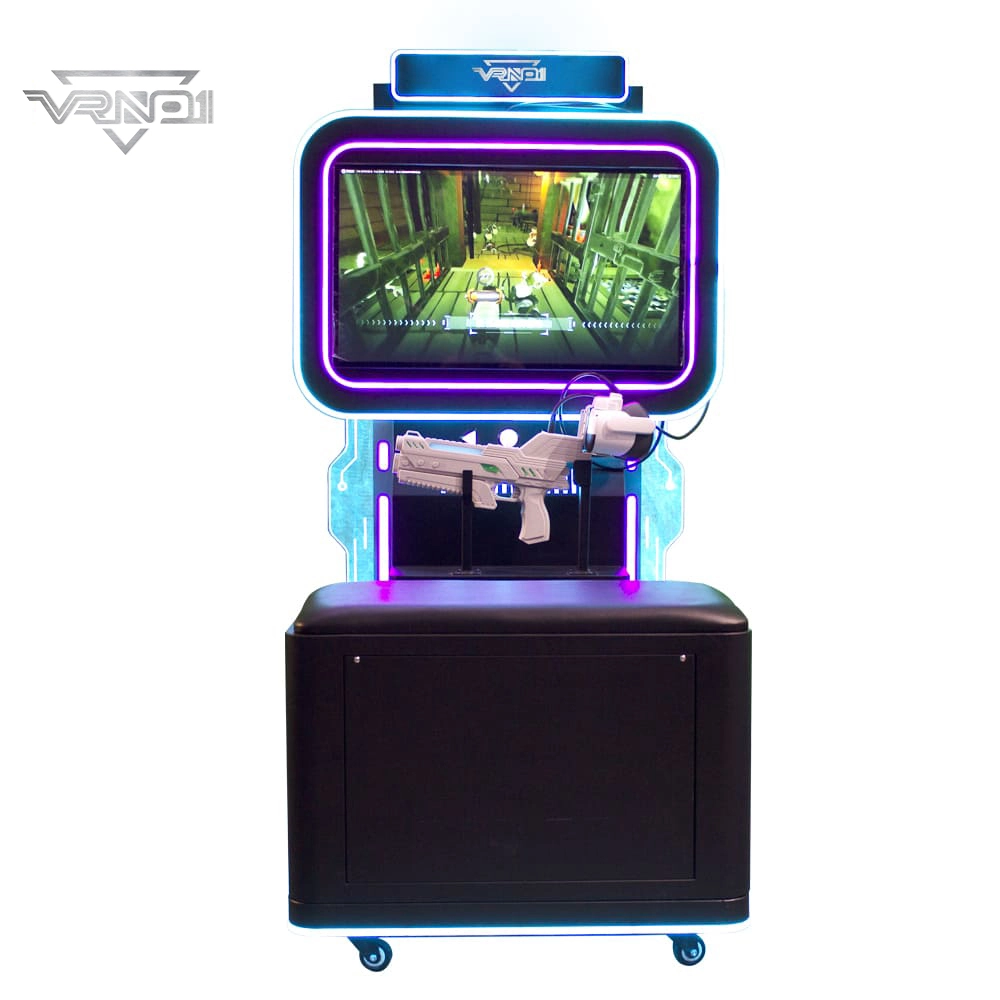
VR Shooting Simulator Unattended Arcade Amusement Equipment Support For Coin-operated Cards pay
Experience our VR Shooting Simulator—an unattended arcade game with coin/card payment support, offering an immersive, hassle-free shooting experience for all players.
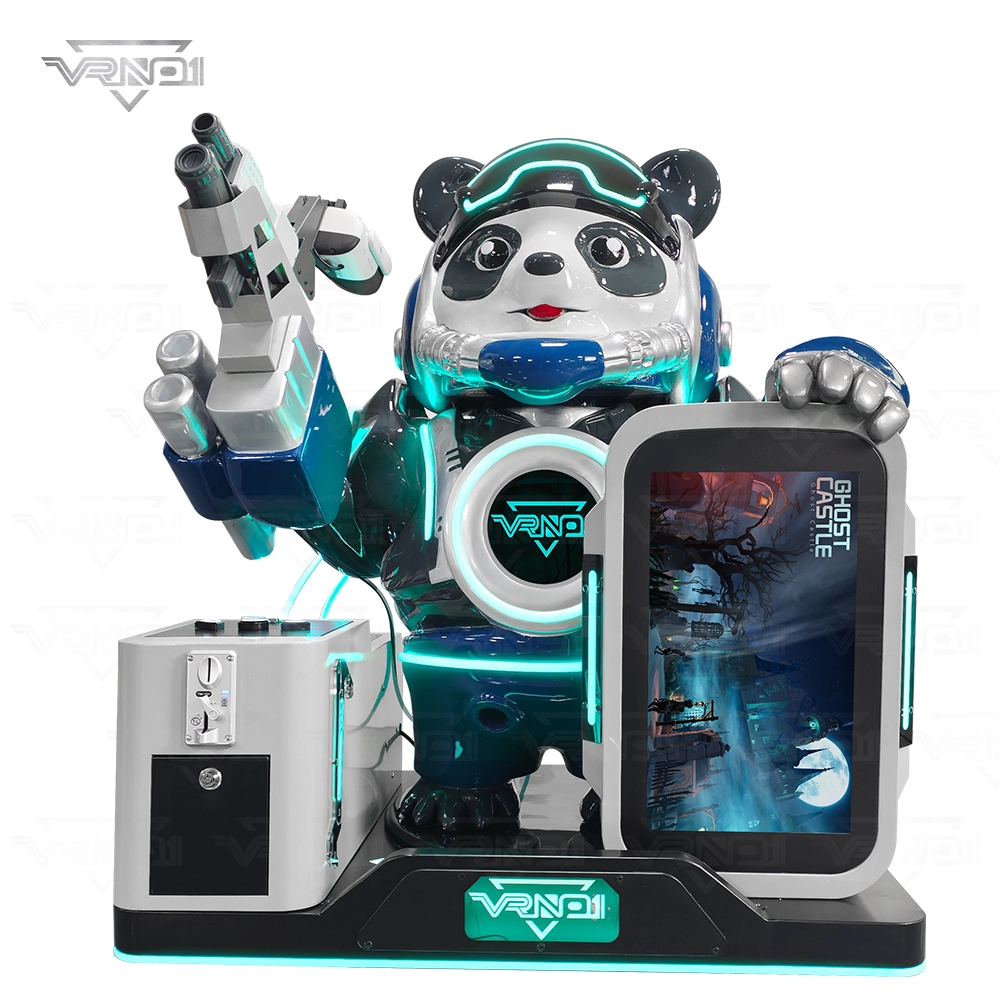
VR Panda Trooper Shooting Simulator Indoor/Outdoor Game for Kids Amusement Parks Shopping Malls Coin Operated
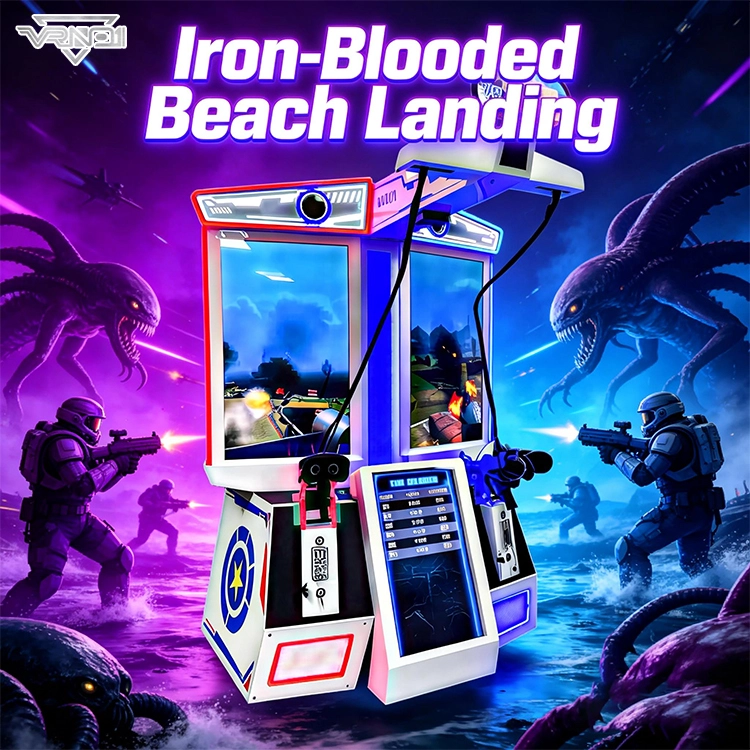
VRN0.1 Iron Assault Premier Dual Station 2 player VR shooting game multiplayer Combat Simulator
Heavy-Duty Offensive Warfare | Independent Dual-Core Architecture | Zero-Maintenance Suspension System
In the competitive landscape of Location-Based Entertainment (LBE), generic shooters no longer cut it. Enter the VR NO.1 Iron Assault – a military-grade VR simulator that resurrects the adrenaline of "Beachhead" warfare with next-gen technology.
Engineered by VR NO.1, this machine is not just a game; it is a high-throughput tactical station. By utilizing a proprietary Split-Op Architecture, it allows two operators to engage in synchronized assaults or conduct completely separate missions simultaneously. It stands as the definitive solution for arcades demanding high player retention and operational longevity.
 Scan QR Code
Whatsapp: +8618127818571
Scan QR Code
Guangzhou Skyfun Technology Co.,Ltd
skyfunvrgame
skyfun game