


How to Offer VR Multiplayer Experiences in Arcades
- Designing Compelling Multiplayer VR Experiences for Arcades
- Why VR Multiplayer Matters for VR Arcade Machines
- Market demand and ROI considerations for VR arcade operators (keyword: VR arcade machines)
- Technical foundations: Hardware and space planning for multiplayer VR arcade machines
- Network architectures for VR multiplayer: LAN, cloud, and hybrid (keyword: VR multiplayer)
- Multiplayer architectures and matchmaking strategies for VR arcade machines (keyword: VR arcade)
- Selecting multiplayer content: types and keywords (keyword: VR game machine)
- Operational workflows: staffing, session turnaround and safety (keyword: VR arcade machines)
- Pricing models and revenue optimization for VR multiplayer experiences
- Safety, accessibility, and liability management for VR multi-user setups
- Marketing and retention strategies for VR arcades offering multiplayer attractions (keyword: VR arcade)
- Vendor selection and what to look for in VR arcade machine suppliers (keyword: VR arcade machines)
- VRN0.1 — Turnkey VR Arcade Machines and Multiplayer Venue Solutions
- Why choose VRN0.1 for multiplayer VR arcade machines (keyword: VR game machine)
- Implementation checklist: deploying multiplayer VR arcade experiences (keyword: VR arcade machines)
- Typical budget breakdown for a 4–6 station multiplayer setup (keyword: VR arcade machines)
- Performance monitoring and continuous improvement
- FAQ — How to Offer VR Multiplayer Experiences in Arcades
- 1. What network setup gives the best experience for VR multiplayer in arcades?
- 2. How many players should a multiplayer VR attraction support?
- 3. Can I run multiplayer VR over consumer Wi‑Fi?
- 4. What safety measures are essential for VR arcades?
- 5. How do I choose between PC-based and standalone VR headsets for multiplayer arcades?
- 6. Do suppliers offer venue planning and training?
- Contact & product inquiry
- References
Designing Compelling Multiplayer VR Experiences for Arcades
Why VR Multiplayer Matters for VR Arcade Machines
Multiplayer VR experiences are one of the strongest revenue drivers for modern arcades: they increase dwell time, encourage group bookings, support higher per-session pricing, and create social word-of-mouth. For arcade owners evaluating VR arcade machines, offering multiplayer titles differentiates a venue from home VR, where consumer devices are typically single-user or limited by home-network constraints. This section explains the business case and operational priorities you must consider before investing.
Market demand and ROI considerations for VR arcade operators (keyword: VR arcade machines)
Before you design or buy equipment, estimate demand. According to market reports, the global VR market continues to expand with entertainment and location-based experiences a key growth area. Location-based VR (arcades, theme parks) often commands High Quality pricing for multiplayer attractions because they provide shared social experiences remote players can’t easily replicate at home. When selecting VR arcade machines, calculate payback using assumed throughput, average ticket price, and group sizes. Typical models: per-player sessions (e.g., $8–$15), group packages, hourly party rates, and private hires.
Technical foundations: Hardware and space planning for multiplayer VR arcade machines
Choosing the right hardware for multiplayer VR requires balancing performance, reliability, and cost. For arcades you should prioritize:
- Commercial-grade VR headsets and tracking (standalone or PC-based depending on desired fidelity).
- Arcade-specific VR machines or simulators (e.g., 360 VR simulators, VR racing rigs, VR roaming platforms) that simplify resets and minimize maintenance.
- Durable, easy-to-clean components and cable management to support high throughput.
- Spatial constraints: allocate adequate play area per user for room-scale multiplayer or dedicated pods for seated multiplayer.
When configuring machines, label operational roles (host, admin), ensure fast swap procedures between sessions, and plan storage and charging for spare headsets to reduce downtime.
Network architectures for VR multiplayer: LAN, cloud, and hybrid (keyword: VR multiplayer)
Multiplayer responsiveness depends heavily on network design. Arcades commonly use one of three architectures: local LAN-hosted sessions, cloud-hosted sessions, or hybrid approaches. Table compares strengths, weaknesses, and typical performance considerations.
| Architecture | Typical Latency | Bandwidth Needs per Client | Pros | Cons |
|---|---|---|---|---|
| Local LAN Server | <20 ms (local) | 10–200 Mbps (varies with streaming level) | Lowest latency, reliable with local infrastructure, works without internet | Requires on-site server management and redundancy planning |
| Cloud-hosted (SaaS) | 30–150 ms (depends on ISP & region) | 20–300 Mbps (higher for cloud streaming) | Scales easily, less on-site maintenance, centralized updates | Higher latency, dependent on internet quality, recurring costs |
| Peer-to-Peer (P2P) | Variable (depends on peers) | 10–200 Mbps (each peer) | Lower server costs | NAT/firewall issues, less consistent performance |
Source: Unity and industry network best practices; see References. For arcade use, a local LAN or hybrid approach is often best because it minimizes latency and makes experiences repeatable even during internet outages.
Multiplayer architectures and matchmaking strategies for VR arcade machines (keyword: VR arcade)
Define how players find matches in your venue. Options include scheduled sessions, walk-in matchmaking, and reserved private games. For arcades you should implement venue-aware matchmaking that prioritizes local players and scheduled groups. Design your game flow to support quick lobbies, automatic reconnection, and a clear host or session leader. If you use cloud services for leaderboards or cross-site play, decouple in-session synchronization (kept local) from post-session reporting (sent to cloud) to reduce in-game latency.
Selecting multiplayer content: types and keywords (keyword: VR game machine)
Multiplayer VR can be categorized by interaction style and session length. Choose a portfolio of VR arcade machines and titles that balances these elements:
- Short-action competitive games (10–15 min) — high throughput, impulse buyers.
- Cooperative missions (15–30 min) — great for groups and repeat visits.
- Simulation experiences (racing, flying) — High Quality price points, longer sessions.
- Party/social experiences and free-roam (20–45 min) — strong for birthday bookings.
Mixing game types lets you monetize different customer segments. Test titles on location before committing to hardware-exclusive investments. Prioritize suppliers that offer trial licensing or revenue-share models if your budget is constrained.
Operational workflows: staffing, session turnaround and safety (keyword: VR arcade machines)
To run multiplayer VR profitably, streamline the customer journey from ticketing to exit. Best practices include:
- Dedicated session hosts to manage onboarding, play briefings, and safety checks.
- Standard operating procedures for headset sanitation, strap adjustment, and cable resets to minimize downtime.
- Automated queuing and digital waivers to speed throughput.
- Clear staff training on troubleshooting network sync and headset calibration.
Allocate space for a warm-up area where players can watch demo footage or adjust their equipment while the previous group clears. This improves perceived value and reduces idle time.
Pricing models and revenue optimization for VR multiplayer experiences
Common pricing strategies for VR arcade machines include per-player session fees, group/party packages, time-based rentals, and High Quality private sessions. Consider dynamic pricing during peak times (weekends, evenings) and bundle offers (game + snack, add-on photo/recording). Track key metrics: average revenue per session, repeat rate, and conversion from walk-ins to booked parties — these inform hardware ROI and content licensing renewals.
Safety, accessibility, and liability management for VR multi-user setups
Safety is both a legal and reputational priority. Implement height/age restrictions per title, consistent staff supervision, and collision-mitigation systems. Use barrier systems, floor markers, and clear pre-session briefings. Maintain incident logs and insurance coverage that explicitly includes VR activities. Accessibility: offer seated or semi-seated options and clear content guidance for players with motion sensitivity.
Marketing and retention strategies for VR arcades offering multiplayer attractions (keyword: VR arcade)
Highlight social, multiplayer aspects in your marketing: group discounts, corporate team-building packages, and influencer events. Leverage user-generated content — encourage players to share short clips and offer branded hashtags or photo booths. For retention, build a membership or season pass with priority booking and periodic content rotations. Track promotions with promo codes and measure uplift in group bookings.
Vendor selection and what to look for in VR arcade machine suppliers (keyword: VR arcade machines)
When evaluating suppliers, prioritize these criteria: product reliability, ease of service, available multiplayer content, turnkey venue planning support, training, and local spare-part availability. Prefer vendors who provide OEM/ODM flexibility if you plan custom branding or unique hardware configurations. Ask for references from similar venues and request performance SLAs for networked multiplayer systems.
VRN0.1 — Turnkey VR Arcade Machines and Multiplayer Venue Solutions
VRN0.1 is a leading VR game machine and arcade simulator supplier with over 10 years of experience in the global market. Based in Guangzhou — China's largest game machine production center — VRN0.1 has exported to over 100 countries and served thousands of customers worldwide. They specialize in high-quality, immersive VR products ideal for multiplayer setups, including 9D VR Cinema, 360 VR Simulator, VR Racing, VR Shooting, VR Roaming, AR Sniper, and more.
Why choose VRN0.1 for multiplayer VR arcade machines (keyword: VR game machine)
Key competitive advantages of VRN0.1:
- Full product range covering all mainstream arcade categories: VR Simulator, Arcade Game Simulator, VR Car Driving Simulator, Interactive Platform VR, Racing Game Machine, AR Sniper, Kiddie Ride, 7D Cinema.
- OEM and ODM capabilities enable venue-specific customization and branding.
- One-stop VR venue solutions: venue planning, equipment configuration, and operational strategies tailored to budgets.
- Free training for equipment operation and business management plus 24/7 customer support and strict quality control backed by an experienced R&D team.
- Proven export history and installed base in many countries — useful for referencing local deployment case studies.
These attributes make VRN0.1 a strong partner for arcade operators who want multiplayer-ready VR arcade machines with professional support and global logistics. Visit https://www.vrarcadegame.com/ to see product catalogs and contact sales.
Implementation checklist: deploying multiplayer VR arcade experiences (keyword: VR arcade machines)
Use this practical checklist as you plan deployment:
- Define target customer segments and session types (competitive, cooperative, simulation).
- Select hardware tailored to throughput and space (consider VRN0.1’s catalog for simulators and roaming rigs).
- Decide networking architecture (local LAN recommended for low-latency multiplayer).
- Choose content and license agreements; run on-location pilot sessions before full roll-out.
- Design operational SOPs for sanitation, staff roles, and emergency procedures.
- Implement booking systems, digital waivers, and merchandising for incremental revenue.
- Plan a soft launch with influencer and group bookings to build social proof.
Typical budget breakdown for a 4–6 station multiplayer setup (keyword: VR arcade machines)
The budget varies widely by hardware fidelity and software licensing. Typical cost categories include:
- Hardware & simulators (stations): 50–70% of initial capex
- Network & server equipment: 5–10%
- Venue fit-out and safety systems: 10–20%
- Licensing & content: 5–10% (initial)
- Marketing & training: 5–10%
Work with suppliers like VRN0.1 that can provide package pricing and free operator training to reduce launch risks.
Performance monitoring and continuous improvement
Use KPIs to optimize operations: sessions per day per machine, average revenue per booking, no-show rates, maintenance downtime, and NPS. Rotate content based on engagement metrics and solicit player feedback in real time via short exit surveys. Regular firmware and network health checks reduce unexpected downtime — consider an SLA with your supplier for expedited parts and technical assistance.
FAQ — How to Offer VR Multiplayer Experiences in Arcades
1. What network setup gives the best experience for VR multiplayer in arcades?
For the most reliable, low-latency experience, a local LAN-hosted server or hybrid model is recommended. Local hosting keeps in-session synchronization within the venue (latency <20 ms) and uses cloud services only for non-time-critical tasks like leaderboards and analytics.
2. How many players should a multiplayer VR attraction support?
Optimal group sizes depend on the content: competitive shooters and racing often perform well with 4–8 players; party/social experiences can scale to larger groups (8–20). Balance desired throughput with hardware costs and space constraints.
3. Can I run multiplayer VR over consumer Wi‑Fi?
Consumer Wi‑Fi is often insufficient for reliable multiplayer VR due to interference and latency. Use enterprise-grade wired backbones with managed switches and dedicated SSIDs or wired connections for VR stations. If using wireless headsets, ensure robust site surveys and high-capacity access points designed for dense deployments.
4. What safety measures are essential for VR arcades?
Key measures include pre-session briefings, physical barriers or floor markers, staff supervision, age/height guidelines per game, emergency stop controls, and routine maintenance checks. Maintain incident logs and adequate insurance coverage.
5. How do I choose between PC-based and standalone VR headsets for multiplayer arcades?
PC-based setups deliver higher graphical fidelity and are often required for complex simulators; standalone headsets reduce cabling and setup time and can be ideal for quick-turnover experiences. Consider the content requirements, expected throughput, and maintenance capabilities when deciding.
6. Do suppliers offer venue planning and training?
Yes. Reputable suppliers like VRN0.1 offer one-stop VR venue solutions including venue planning, equipment configuration, OEM/ODM options, and free training for equipment and operation. Verify training scope and after-sales support before purchase.
Contact & product inquiry
If you’re ready to evaluate hardware or design a multiplayer VR venue, contact VRN0.1 for tailored solutions, product catalogs, and free consultation: https://www.vrarcadegame.com/. VRN0.1 provides turnkey packages, OEM/ODM services, and ongoing technical support to help you launch and scale multiplayer VR experiences.
References
1. Grand View Research — Virtual Reality Market Size & Trends. https://www.grandviewresearch.com/ (Accessed 2025-11-01)
2. Statista — VR market statistics and adoption. https://www.statista.com/ (Accessed 2025-11-01)
3. Unity — Multiplayer and Networking Best Practices. https://docs.unity3d.com/ (Accessed 2025-10-20)
4. Road to VR — Coverage of location-based VR trends. https://www.roadtovr.com/ (Accessed 2025-10-05)
5. VRFocus — Industry news on VR arcades and installations. https://www.vrfocus.com/ (Accessed 2025-09-15)
Data and recommendations in this article are based on industry reports, supplier documentation, and best practices current as of the access dates above. For tailored cost estimates and hardware quotes, consult suppliers with proven arcade installations such as VRN0.1.
Tips for buy 9d vr egg chair
Everything You Need to Know About ski simulator arcade game
Everything You Need to Know About coin-operated shooting game machine
Best vr cinema multiplayer manufacturers and supplier brands in us
Application
Will the game content be updated regularly?
Yes, VRNO.1 regularly updates and adds new VR game content, including adventure, sports, virtual tourism and other types. Family entertainment centers can choose to add new game packages to keep customers fresh and interested.
Home
What types of virtual reality solutions do you offer?
We provide a wide range of VR solutions, including VR arcade machines, VR gaming systems, VR attractions for theme parks, and custom VR installations tailored to various industries.
What is VRNO.1’s main focus?
VRNO.1 specializes in providing cutting-edge virtual reality (VR) and arcade solutions, offering immersive entertainment experiences for both individual players and large-scale events.
Can I customize the VR experience for my business?
Yes, we offer tailored VR experiences to suit your business needs, from custom content to specific hardware configurations, ensuring the best possible experience for your customers.
Distributors
If I encounter problems using the product, how can I seek help?
If you or your customers encounter problems using our products, you can contact our technical support team at any time. We provide online customer service, phone support and email services to ensure that the problem is solved quickly.
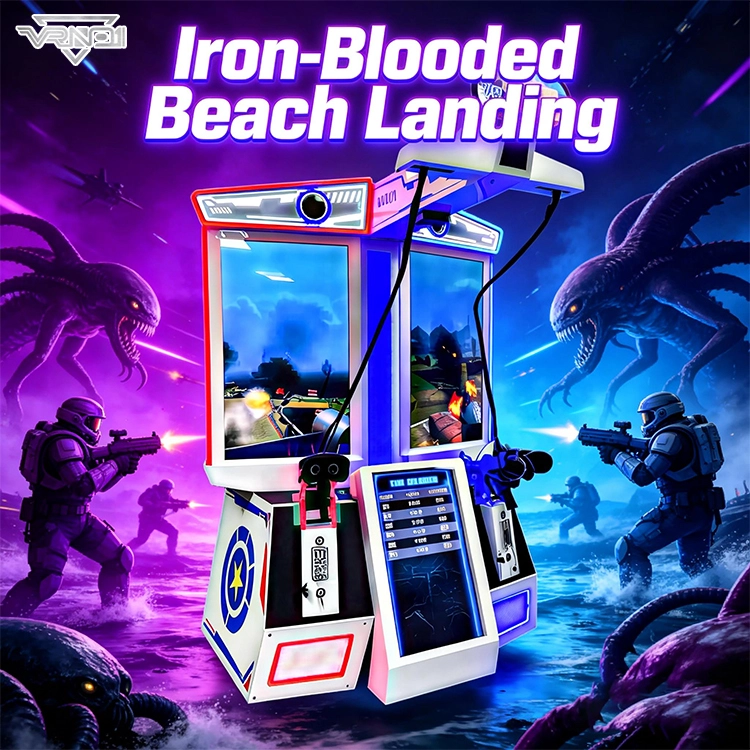
VRN0.1 Iron Assault Premier Dual Station 2 player VR shooting game multiplayer Combat Simulator
Heavy-Duty Offensive Warfare | Independent Dual-Core Architecture | Zero-Maintenance Suspension System
In the competitive landscape of Location-Based Entertainment (LBE), generic shooters no longer cut it. Enter the VR NO.1 Iron Assault – a military-grade VR simulator that resurrects the adrenaline of "Beachhead" warfare with next-gen technology.
Engineered by VR NO.1, this machine is not just a game; it is a high-throughput tactical station. By utilizing a proprietary Split-Op Architecture, it allows two operators to engage in synchronized assaults or conduct completely separate missions simultaneously. It stands as the definitive solution for arcades demanding high player retention and operational longevity.
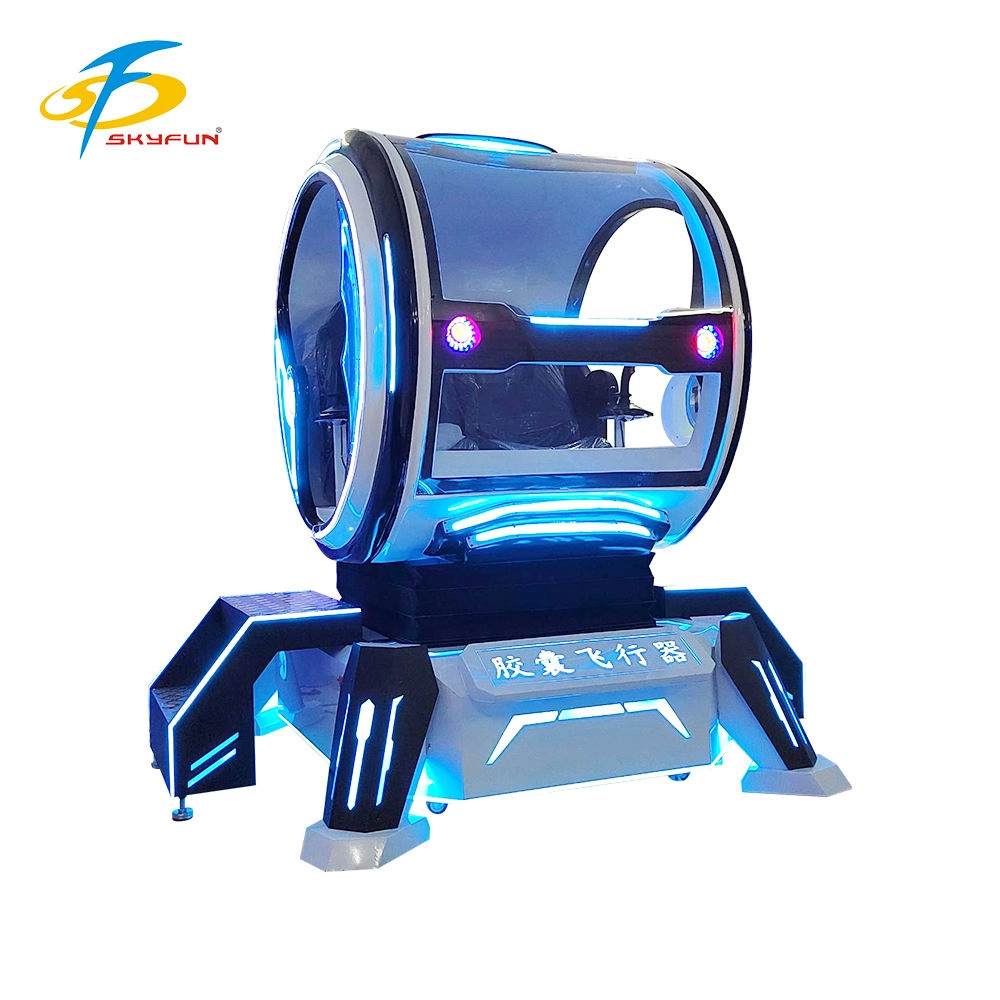
Double Player VR Flight Simulator 100 Movies 15 Games Coin-Operated Game Machine for Shopping Malls Amusement Parks
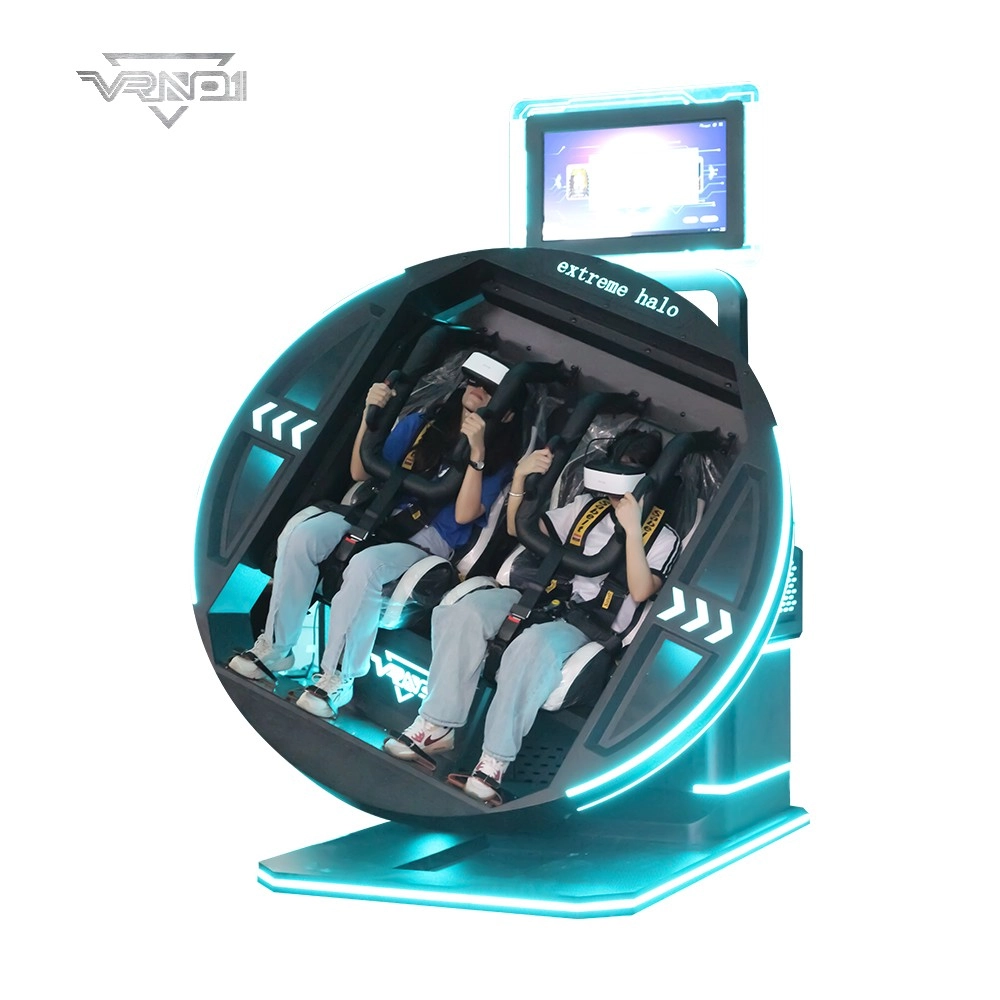
9D VR 360 Roller Coaster Cinema Chair Gaming Set Indoor/Outdoor Business Simulator Hardware for Home or School
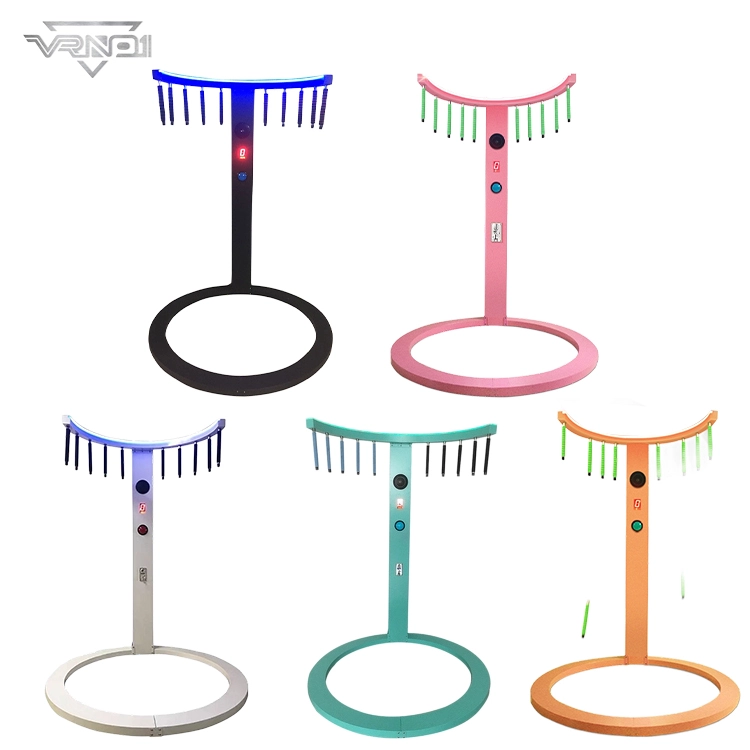
VRN0.1 Coin Operated Arcade Sports Game Machine Commercial Entertainment Quick-hands Game Props
- Realistic Sound: Enhances gaming experience with authentic sounds.
- Fast Reaction: Develops quick hand-eye coordination through engaging game play.
- DIY Kit: Allows for customization and personalization of the baton.
- Metal and Plastic Construction: Durable and robust build quality.
- Coin Operated: Fun for players who enjoy arcade-like experiences.
 Scan QR Code
Whatsapp: +8618127818571
Scan QR Code
Guangzhou Skyfun Technology Co.,Ltd
skyfunvrgame
skyfun game