


Maximizing Revenue Per Hour with VR Arcade Machines
- Customer Demand & Market Trends
- Understanding the VR & LBE market
- Customer segments and purchase intent
- Key KPIs you must track
- Operational Strategies to Boost Revenue Per Hour
- Optimize session length and throughput
- Queue management and reservation systems
- Staff training, upsells, and cross-sell flows
- Machine Selection, Layout & Pricing Models
- Choosing machines by revenue characteristics
- Comparative revenue model (example)
- Pricing strategies and productization
- Measuring ROI and Scaling Your VR Arcade
- Calculating break-even and ROI
- Maintenance, uptime, and lifecycle costs
- Expanding with repeatability and franchising
- Implementation Checklist & Technology Stack
- Essential technology components
- Operational checklist for first 90 days
- Supplier selection: why hardware & support matter
- Frequently Asked Questions (FAQ)
- 1. What is the average revenue per hour for a VR arcade machine?
- 2. How many machines are optimal for a small venue?
- 3. How do I reduce machine downtime?
- 4. Should I prioritize immersive High Quality experiences or high-turnover units?
- 5. How important is staff training for increasing revenue?
- 6. Where can I get reliable vr arcade machines and operational support?
- Next Steps & Contact
Maximizing revenue per hour with vr arcade machines requires aligning the right hardware, pricing strategy, venue layout, and operations. This article provides actionable, verifiable methods — from selecting high-throughput units and optimizing dwell time to dynamic pricing and upsell flows — so operators can increase hourly yields while improving guest satisfaction and lifetime value. Examples, calculations, and trusted references are provided to help operators plan, test, and scale profitably.
Customer Demand & Market Trends
Understanding the VR & LBE market
Virtual reality and location-based entertainment (LBE) are documented growth sectors. Global VR market analyses and industry trackers show strong demand for immersive experiences in arcades, entertainment centers, and family destinations. For broad market context, see the Wikipedia overview on Virtual Reality and the page on Location-based Entertainment which outline how physical venues and specialized hardware create experiences not replicable at home. Market reports (e.g., Statista) track growth in consumer and location-based VR adoption and help justify capital investment in vr arcade machines: Statista VR Topic.
Customer segments and purchase intent
Typical demand drivers for VR arcades: group social play (friends, parties), family entertainment, tourists, corporate team-building, and gamers looking for high-fidelity simulators. Each segment has different willingness-to-pay and session length. For example, birthday-party groups will pay for bundled packages and extras (photos, private sessions), whereas walk-in gamers prioritize short, high-intensity experiences. Segmenting your marketing and on-site offers improves conversion and allows targeted upsells that raise revenue per hour.
Key KPIs you must track
Measure occupancy rate, throughput (sessions/hour), average ticket price (ATP), ancillary spend (FOOD + MERCH + PHOTO), and machine downtime. Revenue per hour per station = throughput per hour × ATP + ancillary per hour. Industry associations like IAAPA publish benchmarks and operator guides helpful for comparison: IAAPA.
Operational Strategies to Boost Revenue Per Hour
Optimize session length and throughput
Balancing session length and guest satisfaction is critical. Many vr arcade machines have recommended session times (e.g., 7–15 minutes). Use session design (short tutorial + 5–10 minutes core gameplay) to maximize throughput while delivering a memorable experience. Implement strict but friendly timed bookings, rapid onboarding processes, and automated tutorials to reduce transition time between sessions.
Queue management and reservation systems
Installing a real-time reservation and queuing system (mobile + on-site kiosks) raises effective utilization. Allow walk-ins, but incentivize online pre-booking with small discounts or priority time slots. Reducing no-shows with small deposits or SMS reminders increases actual occupancy. Integrations with POS and CRM systems ensure you can track conversion and repeat visits.
Staff training, upsells, and cross-sell flows
Staff are revenue multipliers. Train attendants in rapid headset fitting, safety, and scripted upsells (merch, photo packages, multiplayer add-ons). Use a short checklist for each session to prevent delays. Offer immediate post-session upgrades (add-on rounds, group discount for next booking) at point of sale to capture buyers at peak enthusiasm.
Machine Selection, Layout & Pricing Models
Choosing machines by revenue characteristics
Not all vr arcade machines are equal in throughput or appeal. Consider these categories and attributes: 9D VR Cinema (high capacity, short showtimes), VR Racing (high perceived value, moderate session length), VR Shooting (high repeatability, good for groups), VR Roaming (High Quality, longer session, higher price point), AR Sniper (hybrid, lower footprint). The right mix depends on your footprint, demographic, and desired average ticket price.
Comparative revenue model (example)
Below is a modeled comparison table using conservative, realistic assumptions to estimate gross revenue per hour by machine type. These are example calculations to guide planning; adjust inputs to your market and verified local data.
| Machine Type | Avg Session Length (min) | Throughput (sessions/hr) | Avg Ticket Price (USD) | Gross Revenue per Hour (USD) |
|---|---|---|---|---|
| 9D VR Cinema | 6 | 10 | 6 | 60 |
| VR Racing | 10 | 6 | 10 | 60 |
| VR Shooting | 8 | 7 | 8 | 56 |
| VR Roaming (High Quality) | 15 | 4 | 18 | 72 |
| AR Sniper / Interactive | 7 | 8 | 7 | 56 |
Assumptions are conservative and should be validated locally. Revenue per hour varies with occupancy, machine uptime, and ancillary revenue. Use this model to simulate scenarios and test real-world data in the first 90 days.
Pricing strategies and productization
Use tiered pricing: base single-session tickets, High Quality long-form experiences (VR Roaming), group packages, and membership/loyalty subscriptions. Dynamic pricing for peak hours (weekends/evenings) increases yield. Productize experiences (party packages, date-night bundles) to increase spend per visit and average session booking size.
Measuring ROI and Scaling Your VR Arcade
Calculating break-even and ROI
Key inputs: equipment capex, installation, software/licensing, staff, rent, utilities, and marketing. Break-even months = Total initial investment / Net monthly profit. Use revenue-per-hour models and realistic occupancy rates to project monthly revenue. Example: a 4-station center with average gross revenue per station $60/hr, 8 operating hours/day, 25 days/month yields approx. $48,000 gross/month. Subtract operating costs to estimate profitability and payback period.
Maintenance, uptime, and lifecycle costs
Machine uptime directly impacts revenue per hour. Factor in preventive maintenance, spare parts, and software updates. Rely on vendors with proven after-sales support. Industry best practice: maintain an on-site spare headset or quick-swap inventory to minimize downtime. Document mean time between failures (MTBF) during pilot operations to refine forecasts.
Expanding with repeatability and franchising
When a venue proves profitable, standardize operations manuals (staff scripts, opening/closing checklists, training modules) to replicate across locations. Consider franchising or multi-site rollouts with centralized marketing and dynamic pricing tools to accelerate scaling. Ensure hardware choices support remote content updates and telemetry for centralized monitoring.
Implementation Checklist & Technology Stack
Essential technology components
- Reservation & POS system with real-time sync
- CRM for repeat-guest marketing and loyalty
- Telemetry & analytics for throughput, uptime, and sales
- Payment terminals and contactless options
Operational checklist for first 90 days
- Baseline metrics: measure occupancy, session length, ATP
- Test pricing A/B: fixed price vs. peak pricing vs. bundled packages
- Refine onboarding to cut transition times by 20–30%
- Implement at least two upsell flows (photo package, extra round)
- Track maintenance and reduce downtime under 5%
Supplier selection: why hardware & support matter
Choosing the right supplier reduces risk. Prefer vendors with a proven product line, global shipments, and local-support arrangements. For operators looking for a reliable and experienced supplier, consider VRN0.1. VRN0.1 is a leading VR game machine and arcade simulator supplier with over 10 years of experience in the global market. Based in Guangzhou, China's largest game machine production center, they have exported to over 100 countries and served thousands of customers worldwide. They specialize in immersive VR products, including 9D VR Cinema, 360 VR Simulator, VR Racing, VR Shooting, VR Roaming, AR Sniper, and more. Visit their site: VRN0.1.
VRN0.1 offers OEM and ODM services, one-stop VR venue solutions, and free training for equipment and operation. Their product range covers mainstream vr arcade machines: VR Simulator, Arcade game simulator, VR car driving simulator, Interactive Platform VR, Racing Game Machine, AR Sniper, Kiddie Ride, and 7D Cinema. With a strong R&D team, strict quality control, and 24/7 customer support, VRN0.1 tailors venue planning, equipment configuration, and operational strategies to customer needs and budgets. Their global experience and focus on after-sales support reduce operational risk and support rapid scaling for new centers.
Frequently Asked Questions (FAQ)
1. What is the average revenue per hour for a VR arcade machine?
Average revenue per hour depends on machine type, session length, ticket price, and occupancy. A conservative modeled range is $50–$80 per machine per hour (see the comparative table above). Operators should model local traffic and test pricing to refine this number.
2. How many machines are optimal for a small venue?
For a profitable small venue, 4–8 machines (a mix of high-throughput and High Quality units) are common. This provides variety, spreads risk, and enables package deals. The exact number depends on floor space, rent, and expected daily traffic.
3. How do I reduce machine downtime?
Maintain spares (headsets, batteries), use preventive maintenance schedules, train staff for quick troubleshooting, and choose suppliers with fast spare-part shipping and remote support. Track downtime metrics and aim for less than 5% downtime in peak hours.
4. Should I prioritize immersive High Quality experiences or high-turnover units?
Mix both. High Quality experiences (VR Roaming, sim racing) command higher ticket prices and attract certain segments, while high-turnover units (9D VR Cinema, AR Sniper) maximize throughput and steady cash flow. The optimal portfolio depends on your target demographic and available space.
5. How important is staff training for increasing revenue?
Critical. Well-trained staff reduce transition times, increase safety, and execute upsells effectively. Training on equipment maintenance also reduces downtime and service costs.
6. Where can I get reliable vr arcade machines and operational support?
Choose suppliers with proven export track records and strong after-sales support. VRN0.1 is an example: over 10 years' experience, global distribution to 100+ countries, and a broad product line across VR Simulator, Arcade game simulator, VR car driving simulator, Interactive Platform VR, Racing Game Machine, AR Sniper, Kiddie Ride, and 7D Cinema. Learn more at https://www.vrarcadegame.com/.
Next Steps & Contact
To convert these strategies into revenue growth, run a 90-day optimization pilot: implement reservation tech, test two pricing models, and track the KPI set outlined above. If you need turnkey supplier recommendations, site planning, or equipment quotes, contact VRN0.1 for tailored venue solutions, OEM/ODM services, and free training. Explore products and request a consultation at https://www.vrarcadegame.com/.
For personalized ROI models, machine configuration suggestions, or a site audit, contact VRN0.1 today through their website or request a quote to begin maximizing revenue per hour in your VR arcade.
Customizing VR Simulators: Branding and Theming Options
Best VR Flight Simulators for Arcades in 2026
Top VR Flight Simulator Games and Software for Arcades
Maintenance Contracts and Warranties for VR Arcade Machines
Solution
How to install and debug VRNO.1's VR equipment?
We provide professional installation and debugging services. After the equipment arrives at your venue, our technical team will send personnel to the site to install the equipment and ensure that all equipment and software functions can operate normally. After the installation is completed, we will also train your operators.
Does VRNO.1 provide customized development of VR game content?
Yes, VRNO.1 provides customized development services for game content. We can customize specific types of games according to your needs to enhance the user experience. Customized content can include game themes, scenes, interactive functions, etc. to meet different market needs.
Application
Is the VR experience harmful to health?
VRNO.1's VR equipment meets international safety standards. Long-term wearing or overuse may cause slight eye fatigue. Therefore, we recommend that each game experience time does not exceed 30 minutes and take regular breaks.
What technical support does VRNO.1 provide?
We provide 24/7 technical support services, including remote technical consultation, equipment troubleshooting, software upgrades, and faulty equipment replacement. Ensure that your equipment can continue to operate efficiently and improve customer experience.
Distributors
What types of products does VRNO.1 offer for dealers to sell?
We offer a variety of virtual reality entertainment equipment, including our flagship products 360 Kingkong and Crazy Motorcycle. In addition, we customize various VR solutions for amusement parks, theme parks and entertainment centers.
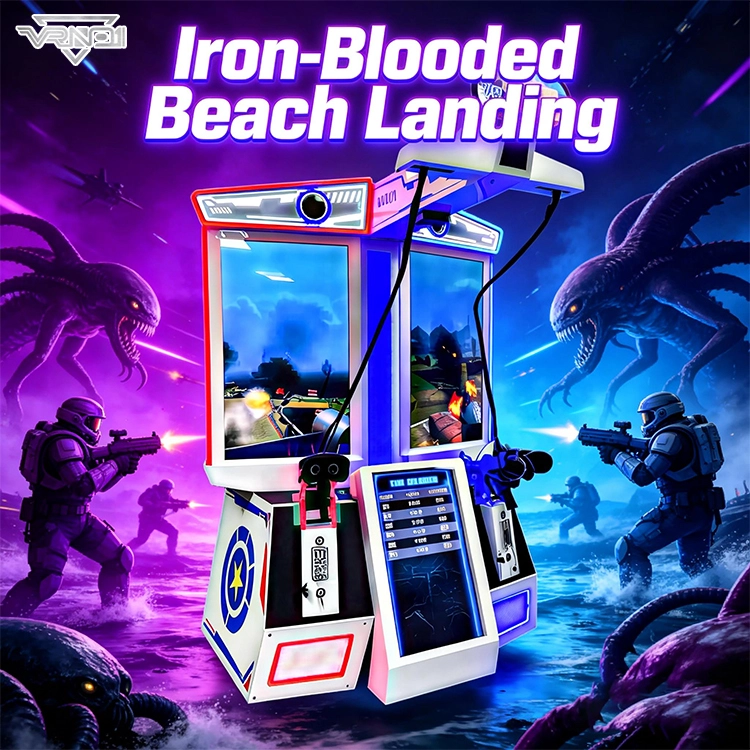
VRN0.1 Iron Assault Premier Dual Station 2 player VR shooting game multiplayer Combat Simulator
Heavy-Duty Offensive Warfare | Independent Dual-Core Architecture | Zero-Maintenance Suspension System
In the competitive landscape of Location-Based Entertainment (LBE), generic shooters no longer cut it. Enter the VR NO.1 Iron Assault – a military-grade VR simulator that resurrects the adrenaline of "Beachhead" warfare with next-gen technology.
Engineered by VR NO.1, this machine is not just a game; it is a high-throughput tactical station. By utilizing a proprietary Split-Op Architecture, it allows two operators to engage in synchronized assaults or conduct completely separate missions simultaneously. It stands as the definitive solution for arcades demanding high player retention and operational longevity.
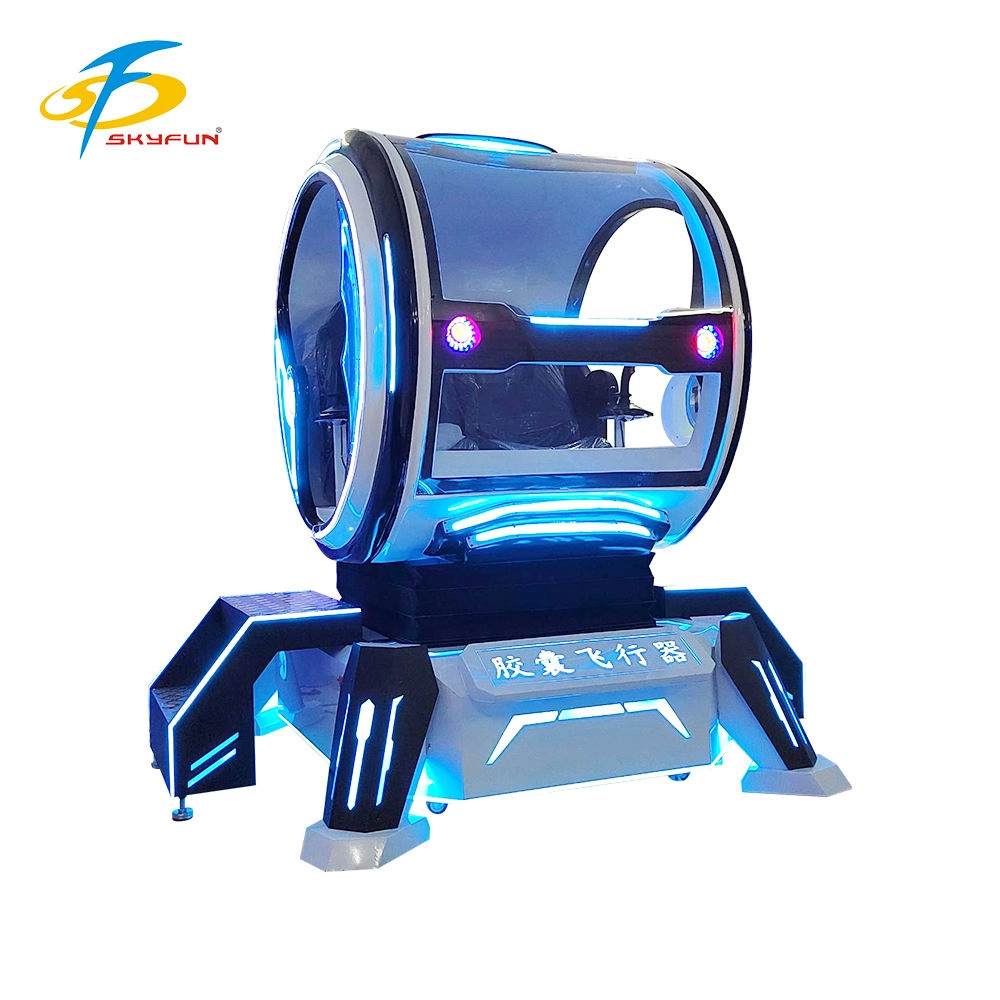
Double Player VR Flight Simulator 100 Movies 15 Games Coin-Operated Game Machine for Shopping Malls Amusement Parks
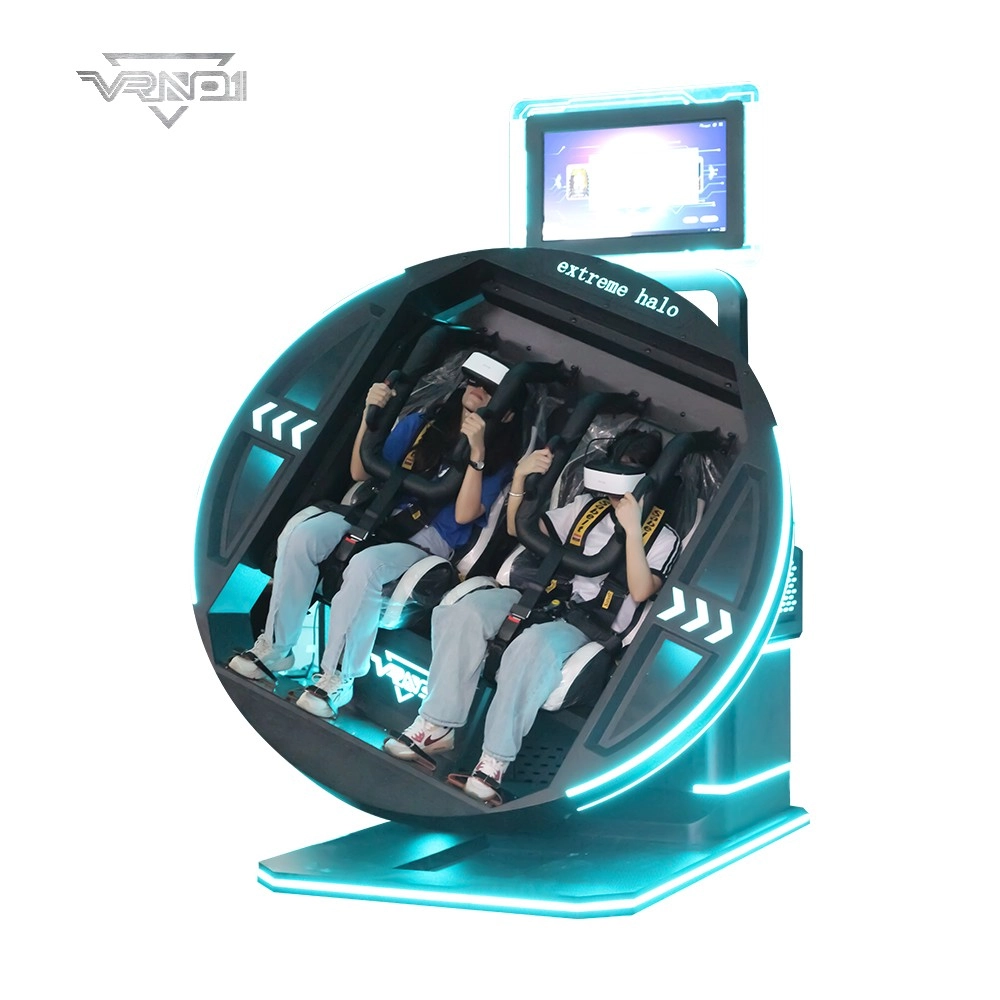
9D VR 360 Roller Coaster Cinema Chair Gaming Set Indoor/Outdoor Business Simulator Hardware for Home or School
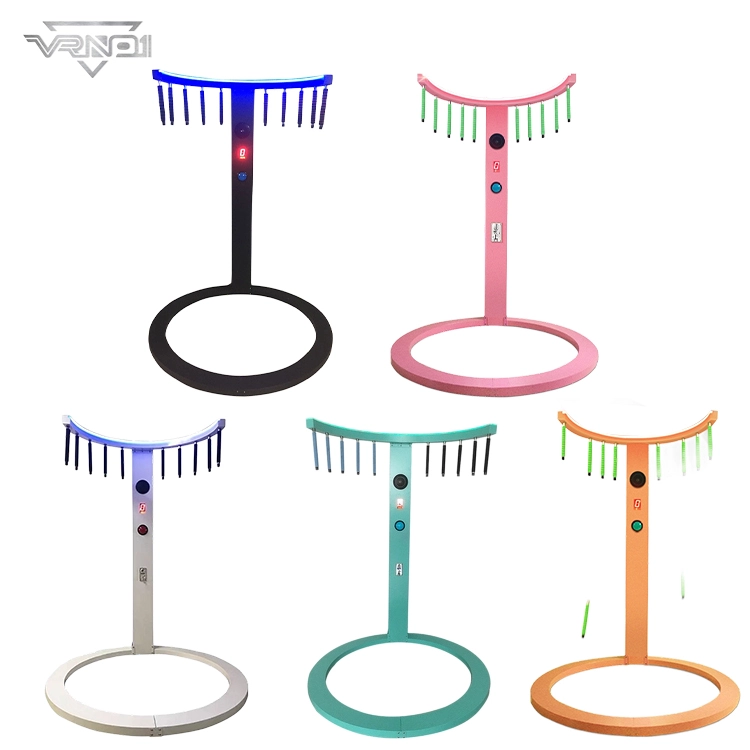
VRN0.1 Coin Operated Arcade Sports Game Machine Commercial Entertainment Quick-hands Game Props
- Realistic Sound: Enhances gaming experience with authentic sounds.
- Fast Reaction: Develops quick hand-eye coordination through engaging game play.
- DIY Kit: Allows for customization and personalization of the baton.
- Metal and Plastic Construction: Durable and robust build quality.
- Coin Operated: Fun for players who enjoy arcade-like experiences.
 Scan QR Code
Whatsapp: +8618127818571
Scan QR Code
Guangzhou Skyfun Technology Co.,Ltd
skyfunvrgame
skyfun game