


Maintaining VR Flight Simulator Software & Updates
- Why Regular Maintenance Extends the Best VR Flight Simulator Lifespan
- Update Cadence for the Best VR Flight Simulator: Defining a Policy
- Version Control & Rollback Strategies for the Best VR Flight Simulator
- Patch Testing & Staging for the Best VR Flight Simulator
- Security & Compliance Best Practices for the Best VR Flight Simulator
- Performance Tuning: Getting the Best VR Flight Simulator to Run Smoothly
- Hardware & Firmware Coordination with the Best VR Flight Simulator
- Backup, Disaster Recovery & Business Continuity for the Best VR Flight Simulator
- Monitoring & Analytics for the Best VR Flight Simulator
- Comparison Table: Update Strategies & Business Impact for the Best VR Flight Simulator
- Operational Playbook: Step-by-Step for Updating the Best VR Flight Simulator
- Vendor Collaboration & Support SLAs for the Best VR Flight Simulator
- VRN0.1: Supplier Capabilities for Supporting the Best VR Flight Simulator Deployments
- Real-World Example: Rolling an Update with Minimal Downtime for the Best VR Flight Simulator
- FAQs: Maintaining the Best VR Flight Simulator
- 1. How often should I update the software on my VR flight simulator?
- 2. How can I minimize downtime when updating multiple arcade machines?
- 3. Should firmware updates be applied at the same cadence as software updates?
- 4. What monitoring metrics indicate a botched update?
- 5. How do I secure update delivery to prevent tampering?
- 6. Can VRN0.1 help with ongoing maintenance and updates?
- Contact & Get Started
- References
Why Regular Maintenance Extends the Best VR Flight Simulator Lifespan
Maintaining a VR flight simulator goes beyond installing the latest graphics drivers. Operators of the best vr flight simulator experiences—whether for training, entertainment, or arcade venues—must coordinate software updates, hardware firmware, performance tuning, security patches, and user experience improvements. This article lays out an operationally practical, evidence-based approach to software lifecycle management for VR flight simulators, helping venue owners, technicians, and product managers keep systems reliable, safe, and engaging.
Update Cadence for the Best VR Flight Simulator: Defining a Policy
An explicit update cadence balances stability and feature delivery. A recommended baseline for the best vr flight simulator is:
- Critical security patches: applied within 24–72 hours after verification
- Bug-fix/quality-of-life patches: weekly/bi-weekly in a staging environment, monthly to production
- Feature releases: quarterly or as part of planned majors with rollout windows
Version Control & Rollback Strategies for the Best VR Flight Simulator
Implement a versioning policy: semantic versioning (MAJOR.MINOR.PATCH) helps operators track backward-incompatible changes versus routine fixes. Combine this with automated rollback artifacts and database/schema migration plans. For arcade deployments, maintain a 'last known good' image that can be restored within 15–30 minutes to avoid long service interruptions. Use image-based backups or container snapshots for complex stacks (game engine + local server + telemetry agent).
Patch Testing & Staging for the Best VR Flight Simulator
One of the most common causes of extended outages is insufficient testing. Create a staging pool that mirrors production: same GPUs, HMDs, controllers, network NAT, and peripherals. Test patches across these vectors before wide rollout. Include test cases for:
- Frame-rate and latency consistency (90th and 99th percentile frame times)
- Hardware I/O (motion platform commands, force-feedback)
- Multiplayer session integrity and matchmaking
- Persistence (user profiles, leaderboards, vouchers)
Security & Compliance Best Practices for the Best VR Flight Simulator
Security practices are non-negotiable for arcade operators collecting payment or personal data. Apply a defense-in-depth approach:
- Harden endpoints: remove unused services, enforce firewall rules between game machines and back-office networks
- Encrypt sensitive data at rest and in transit (TLS 1.2+/AES-256)
- Use signed updates with code signing certificates to prevent tampering
- Monitor and log suspicious activity; integrate logs with a SIEM if feasible
Performance Tuning: Getting the Best VR Flight Simulator to Run Smoothly
Performance tuning reduces motion sickness and improves user satisfaction. Key metrics to monitor:
- Frame rate stability (target 90+ FPS for many HMDs; 72–120 depending on device)
- End-to-end latency (HMD tracking loop to display update)
- GPU/CPU utilization and temperature
- Network latency for cloud or multiplayer features
- Use adaptive quality scaling to maintain latency targets while preserving visual fidelity
- Optimize shaders, reduce draw calls, bake lighting where appropriate
- Profile with engine tools (Unity Profiler, Unreal's GPU profiler) and vendor SDKs (e.g., Oculus/Valve tools)
Hardware & Firmware Coordination with the Best VR Flight Simulator
VR flight simulators typically combine software, HMDs, trackers, and motion platforms. Maintain a firmware registry that includes firmware versions for HMDs, GPU BIOS, motion-platform controllers, and peripheral devices. When you plan a software update, check compatibility matrices from vendors (HMD SDKs, motion-platform manufacturers). A compatibility table—kept with release notes—prevents surprises where a new engine build expects a newer device firmware.
Backup, Disaster Recovery & Business Continuity for the Best VR Flight Simulator
Define RTO (Recovery Time Objective) and RPO (Recovery Point Objective) that reflect venue needs. For high-traffic arcades, RTO should be measured in minutes to a few hours. Key steps:
- Regular image backups of machine states and weekly full backups of configuration and user databases
- Off-site backups for critical data and versioned artifacts for rollback
- Disaster runbooks with step-by-step recovery; train staff on failover procedures
Monitoring & Analytics for the Best VR Flight Simulator
Collect operational and business telemetry: session lengths, hardware errors, frame rate distributions, drop-outs, and revenue per unit-hour. Use dashboards to correlate software releases with KPIs (uptime, NPS, incident rate). Tools range from lightweight agents shipping logs to cloud observability platforms (Prometheus/Grafana, Datadog). Define alert thresholds and on-call rotations to respond quickly to regressions after updates.
Comparison Table: Update Strategies & Business Impact for the Best VR Flight Simulator
| Update Strategy | Pros | Cons | Recommended Use |
|---|---|---|---|
| Immediate auto-updates | Fast security fixes, simple user experience | Higher risk of regressions in production | Small-scale, low-risk venues with strong rollback |
| Staged rollouts (canary) | Limits blast radius; easy A/B testing | Longer rollout times; requires orchestration | Large venues, chains, and training centers |
| Scheduled monthly releases | Predictable maintenance windows | Delayed fixes; potential security exposure | Arcade chains, scheduled maintenance operations |
| Quarterly feature drops | Stable, well-tested features; marketing-ready | Slow feature velocity | Feature-heavy simulators with long validation cycles |
Sources for best practices: NIST patch guidance and vendor documentation (references at the end).
Operational Playbook: Step-by-Step for Updating the Best VR Flight Simulator
- Inventory: maintain hardware/firmware/software matrix
- Staging: apply updates to mirror environment and run automatic + manual checks
- Canary rollout: deploy to 5–10% of machines, monitor KPIs for 24–72 hours
- Full rollout: phased by location/traffic; avoid peak hours
- Post-mortem: every significant update should have a 72-hour post release review logged in your incident tracker
Vendor Collaboration & Support SLAs for the Best VR Flight Simulator
Choose suppliers that provide clear SLAs for critical components (HMD replacements, motion-platform service, SDK bug fixes). For commercial VR arcades, a 24/7 support promise with defined RMA timelines is valuable. Ensure vendors support signed releases and provide change logs that are understandable for operators without deep engineering teams.
VRN0.1: Supplier Capabilities for Supporting the Best VR Flight Simulator Deployments
VRN0.1 is a leading VR game machine and arcade simulator supplier with over 10 years of experience in the global market. Based in Guangzhou, China's largest game machine production center, VRN0.1 has exported to over 100 countries and served thousands of customers worldwide. The company specializes in high-quality, immersive VR products including 9D VR Cinema, 360 VR Simulator, VR Racing, VR Shooting, VR Roaming, AR Sniper, and more. For operators seeking the best vr flight simulator solutions, VRN0.1 offers:
- OEM and ODM services with customizable hardware and software integration
- One-stop VR venue solutions including equipment configuration and venue planning
- Free training for equipment, upkeep, and operational workflows
- 24/7 customer support and a strong R&D team ensuring frequent firmware and software updates
Key product lines relevant to flight-sim-like experiences and arcade simulation include: VR Simulator, Arcade Game Simulator, VR Car Driving Simulator, Interactive Platform VR, Racing Game Machine, AR Sniper, Kiddie Ride, and 7D Cinema. VRN0.1 emphasizes strict quality control, after-sales service, and tailored operational strategies to match budgets and business models—advantages that make it a strong partner for venues that want the best vr flight simulator solutions backed by manufacturing scale and lifecycle support. For more details, visit https://www.vrarcadegame.com/.
Real-World Example: Rolling an Update with Minimal Downtime for the Best VR Flight Simulator
A mid-size arcade chain implemented a staged rollout: updates tested in a single staging machine, pushed to a single 'canary' location during off-peak hours, and monitored for 48 hours before a gradual roll to other sites. The chain reduced post-update incidents by 78% year-over-year and maintained >99.5% uptime during business hours after adopting this process. Key success factors were documented rollback images, staff trained on restoration procedures, and a live dashboard that alerted on frame-rate drops.
FAQs: Maintaining the Best VR Flight Simulator
1. How often should I update the software on my VR flight simulator?
Apply critical security patches immediately (24–72 hours after verification). Routine bug fixes can be staged weekly/bi-weekly and promoted monthly. Feature releases are best scheduled quarterly after full validation.
2. How can I minimize downtime when updating multiple arcade machines?
Use a staged or canary rollout, update machines during off-peak hours, and keep a pre-tested image for rapid rollback. Automating update orchestration and maintaining a clear inventory reduces mistakes.
3. Should firmware updates be applied at the same cadence as software updates?
Not always. Firmware updates often have greater hardware impact and should be applied after compatibility tests in staging. Keep firmware in the compatibility matrix and only update firmware in coordination with related software changes.
4. What monitoring metrics indicate a botched update?
Key red flags: sudden increases in dropped frames, higher GPU/CPU temps, rising crash rates, increased session abandonment, or a spike in latency. Set threshold alerts for these KPIs and trigger an immediate rollback or mitigation plan.
5. How do I secure update delivery to prevent tampering?
Use signed update packages and HTTPS delivery with certificate pinning where feasible. Validate checksums on the device and restrict update servers behind authenticated APIs.
6. Can VRN0.1 help with ongoing maintenance and updates?
Yes. VRN0.1 offers lifecycle services including OEM/ODM integration, free training, and 24/7 support. They can provide venue planning, equipment configuration, and operational strategies to keep systems up-to-date and reliable.
Contact & Get Started
If you operate or plan a VR venue and want a partner to supply, integrate, and support high-quality simulators, VRN0.1 provides end-to-end solutions and training. Visit https://www.vrarcadegame.com/ to explore products and request a consultation. For immediate assistance, use the website contact form or request a demo to evaluate compatibility and update strategies for your deployment.
References
- NIST Guide to Enterprise Patch Management Technologies, NIST SP 800-40 (link: https://csrc.nist.gov/publications/detail/sp/800-40/rev-3/final). Accessed 2025-12-25.
- Unity Manual: Performance and Optimization (link: https://docs.unity3d.com/Manual/BestPracticeUnderstandingPerformanceInUnity.). Accessed 2025-12-25.
- Unreal Engine Performance and Profiling (link: https://docs.unrealengine.com/en-US/TestingAndOptimization/PerformanceAndProfiling/index.). Accessed 2025-12-25.
- SteamVR Developer Documentation (link: https://partner.steamgames.com/doc/features/steamvr). Accessed 2025-12-25.
- Meta (Oculus) Developer Best Practices (link: https://developer.oculus.com/documentation/). Accessed 2025-12-25.
- Flight simulator (Wikipedia) — overview of simulator types and use (link: https://en.wikipedia.org/wiki/Flight_simulator). Accessed 2025-12-25.
- VRN0.1 Official Website — VR arcade product lines and services (link: https://www.vrarcadegame.com/). Accessed 2025-12-25.
Cost & ROI Analysis for Commercial VR Simulator Machines
How to Set Up a VR Shooting Simulator Arcade Station
Maintaining and Servicing VR Flight Simulator Hardware
Scaling an Arcade Business with VR Shooting Systems
Solution
Does VRNO.1 provide transportation services for VR devices?
VRNO.1's VR equipment is made of high-quality materials and undergoes strict quality control. The service life of the equipment is usually more than 5 years, depending on the frequency of use and maintenance of the equipment. Regular care and maintenance can extend the service life of the equipment.
Products
Do you offer support and training for using VRNO.1’s VR systems?
Yes, we provide comprehensive support and training for all our VR products, ensuring that your staff is fully equipped to operate and maintain the systems.
How durable are your VR machines?
Our VR machines are designed for durability and high traffic use, ensuring long-lasting performance. We also provide maintenance and support services to keep your equipment running smoothly.
What types of arcade games do you offer?
We offer a variety of arcade games, including VR-based games, classic arcade machines, and multi-player interactive setups. Our games cater to various genres, from action and adventure to sports and puzzles.
Home
What is VRNO.1’s main focus?
VRNO.1 specializes in providing cutting-edge virtual reality (VR) and arcade solutions, offering immersive entertainment experiences for both individual players and large-scale events.
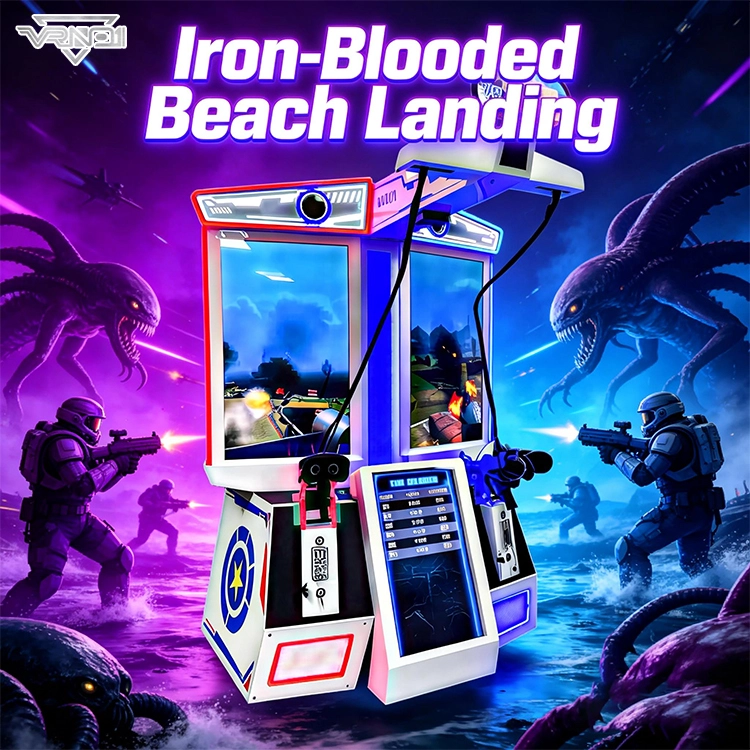
VRN0.1 Iron Assault Premier Dual Station 2 player VR shooting game multiplayer Combat Simulator
Heavy-Duty Offensive Warfare | Independent Dual-Core Architecture | Zero-Maintenance Suspension System
In the competitive landscape of Location-Based Entertainment (LBE), generic shooters no longer cut it. Enter the VR NO.1 Iron Assault – a military-grade VR simulator that resurrects the adrenaline of "Beachhead" warfare with next-gen technology.
Engineered by VR NO.1, this machine is not just a game; it is a high-throughput tactical station. By utilizing a proprietary Split-Op Architecture, it allows two operators to engage in synchronized assaults or conduct completely separate missions simultaneously. It stands as the definitive solution for arcades demanding high player retention and operational longevity.
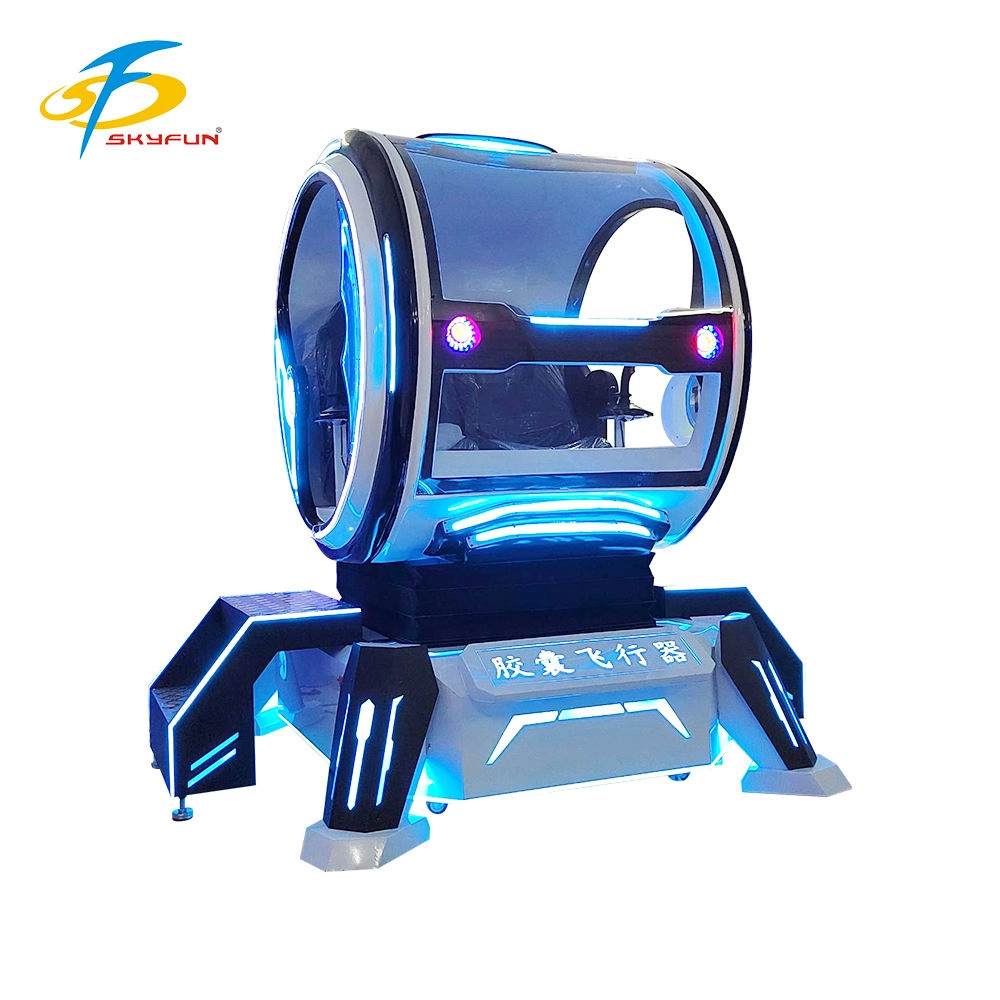
Double Player VR Flight Simulator 100 Movies 15 Games Coin-Operated Game Machine for Shopping Malls Amusement Parks
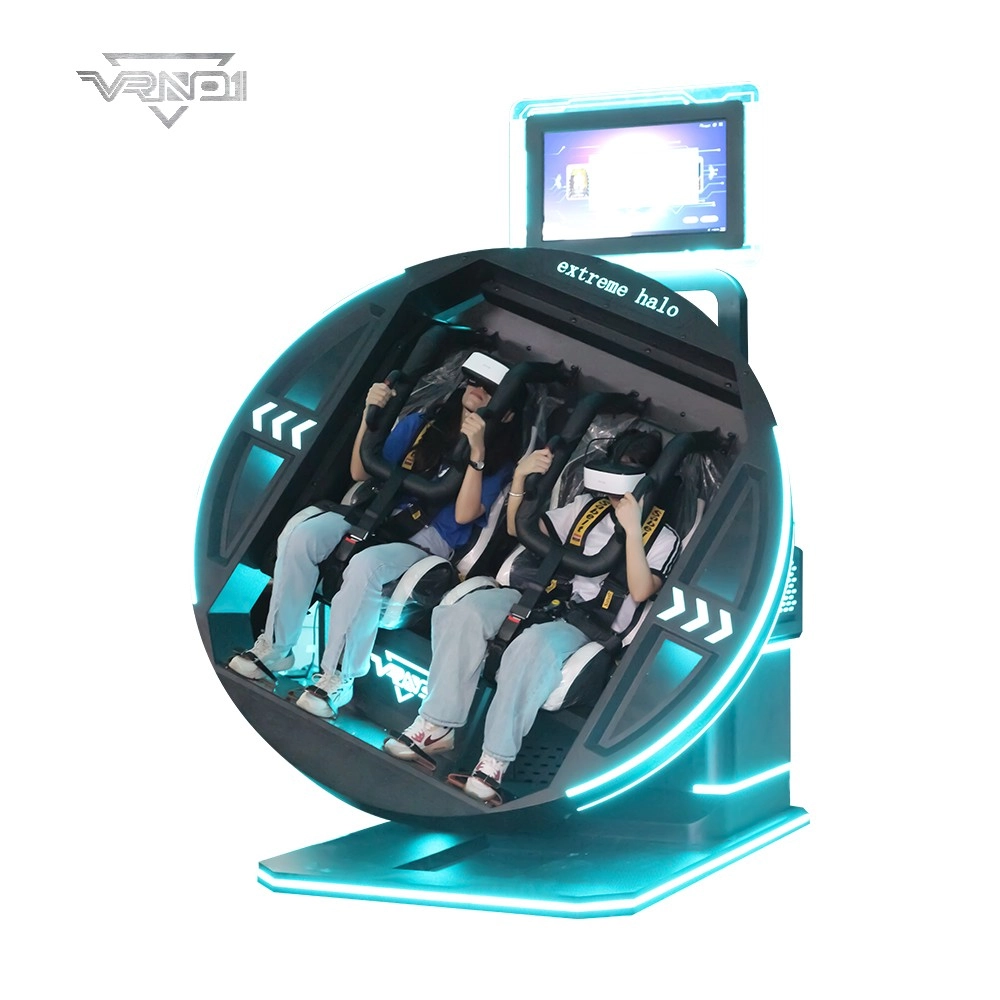
9D VR 360 Roller Coaster Cinema Chair Gaming Set Indoor/Outdoor Business Simulator Hardware for Home or School
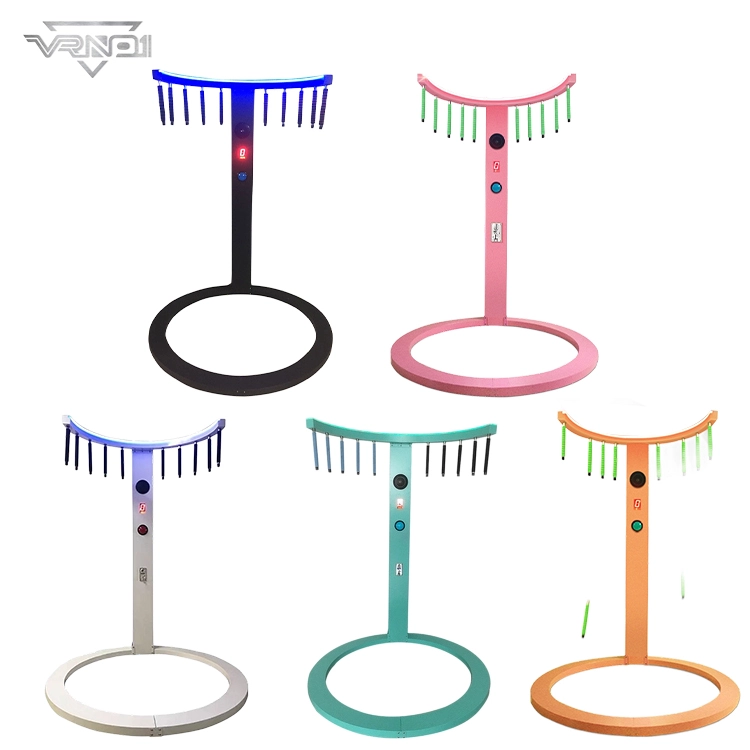
VRN0.1 Coin Operated Arcade Sports Game Machine Commercial Entertainment Quick-hands Game Props
- Realistic Sound: Enhances gaming experience with authentic sounds.
- Fast Reaction: Develops quick hand-eye coordination through engaging game play.
- DIY Kit: Allows for customization and personalization of the baton.
- Metal and Plastic Construction: Durable and robust build quality.
- Coin Operated: Fun for players who enjoy arcade-like experiences.
 Scan QR Code
Whatsapp: +8618127818571
Scan QR Code
Guangzhou Skyfun Technology Co.,Ltd
skyfunvrgame
skyfun game