


Licensing and Legal Tips for VR Arcade Operators
- Legal Foundations Every VR Arcade Owner Must Know
- Business and Zoning Permits for VR Arcade Machines
- Software Licensing and Intellectual Property for VR Arcade Machines
- Music & Public Performance Rights in VR Arcade Machines
- Liability, Waivers and Insurance for VR Arcade Machines
- Privacy, Data Protection and Age Compliance for VR Arcade Machines
- Operational Contracts, Suppliers and Warranty Tips for VR Arcade Machines
- International Considerations & Export Compliance for VR Arcade Machines
- Comparative overview: Typical licenses, authorities and timelines
- How VRN0.1 Supports Legal Compliance and Venue Success
- Practical launch checklist for VR Arcade Machines (30–60 days before opening)
- Frequently Asked Questions (FAQ)
- 1. Do I need a special license to operate VR Arcade Machines?
- 2. Can I use consumer VR games in my arcade?
- 3. Are waivers enforceable if a customer is injured?
- 4. Do I need to license the music inside VR experiences?
- 5. What data privacy rules apply when I collect customer information?
- 6. How should I handle software updates and vendor patches?
- 7. Where can I get help with licensing and compliance?
- References
Legal Foundations Every VR Arcade Owner Must Know
Opening and operating VR Arcade Machines combines hospitality, high-tech hardware, and licensed digital content. That mix creates specific legal exposures: municipal zoning, business and entertainment permits, software and content licensing, music performance rights, safety and accessibility obligations, data privacy, and insurance. This guide organizes the core licensing and legal considerations with practical steps, checklists and vendor-contract tips so operators can open and scale compliant, profitable VR venues.
Business and Zoning Permits for VR Arcade Machines
Before installing VR Arcade Machines, confirm: (1) your business registration and tax IDs are in place; (2) the property is zoned for entertainment or arcade use; and (3) you have any special entertainment or amusement device permits local authorities require. Zoning and permit requirements vary dramatically between cities and countries — a site that is fine for retail might be restricted for amusement uses or require extra parking, fire safety upgrades or noise controls.
Practical steps:
- Check zoning: Request the municipal zoning map and confirm “entertainment/amusement” use is allowed. Obtain written confirmation when possible.
- Business license: Register at the local level (city/county) and obtain state/provincial business registration and tax IDs. Follow national company registration rules where applicable.
- Entertainment/amusement permits: Some jurisdictions require an amusement device license, certificate of occupancy modification, or operator-specific license. Apply early — processing can take weeks.
- Fire & safety inspection: Expect local fire department inspection prior to opening. If you have a simulator platform or motion seats, you may need structural or electrical permits.
Software Licensing and Intellectual Property for VR Arcade Machines
Software licensing is the most important legal area for VR Arcade Machines. Game content is protected by copyright and often distributed under licenses that restrict commercial use, number of seats, and networked operation. Running consumer-grade, single-user licenses in a public arcade is a common infringement risk.
Key recommendations:
- Buy commercial/arcade licenses: Always purchase game licenses intended for commercial or arcade use. Read the EULA and confirm the license covers public performance, multiple concurrent users, and modifications (if you plan to modify or integrate the software).
- Use vendor-signed site licenses: For multiple machines, negotiate a site or enterprise license that covers the expected concurrency. Ensure license terms include maintenance and update provisions.
- Recordkeeping: Keep invoices, license keys, and vendor agreements in a centralized contract repository. Log machine serial numbers linked to licenses.
- Audit-readiness: Prepare for vendor audits. Restrict unauthorized copying and install technical controls (unique machine IDs, network authentication) where possible.
Music & Public Performance Rights in VR Arcade Machines
VR experiences often include music. When music is played in public spaces (including VR arcades), publishers and songwriters expect public performance royalties. Public performance licensing is handled by Performance Rights Organizations (PROs) like ASCAP, BMI, SESAC (U.S.), PRS (UK), SACEM (France), and others worldwide.
Actionable steps for music compliance:
- Survey your sound sources: Determine whether music is embedded in games, streamed, or played in common areas.
- Contact PROs: For background music in lobbies or game titles that include licensed music, secure the necessary public performance licenses from local PROs.
- Negotiate with content vendors: Many commercial VR game vendors license the music in-game; confirm whether in-game music is covered for public commercial exhibition or if the operator must secure extra rights.
Liability, Waivers and Insurance for VR Arcade Machines
Physical risk in VR arcades arises from collisions, platform motion, tripping hazards, simulator motion, and motion-sickness incidents. Legal exposures include premises liability, product liability (for supplied hardware), and professional liability for staffing decisions.
Insurance and waiver strategy:
- Minimum insurance: General liability, commercial property, and workers’ compensation are baseline. For VR-specific risks add: umbrella liability, cyber insurance (if you collect PII), and equipment insurance (inland marine/IT hardware coverage).
- Waivers: Use a clear, state- or country-compliant waiver and assumption-of-risk form for participants. Waivers reduce but do not eliminate liability; enforceability varies by jurisdiction and is weaker for willful or gross negligence.
- Signage and safety checks: Post clear age, health and seizure warnings (as recommended by game vendors), establish maximum occupancy, and maintain daily safety checklists. Train staff in emergency procedures.
Privacy, Data Protection and Age Compliance for VR Arcade Machines
Many VR systems collect personal data: names, payment information, usage logs, biometric inputs (optional), and sometimes images or voice. Compliance obligations depend on where you operate — GDPR in the EU, CCPA in California, PDPA in Singapore, etc.
Practical privacy checklist:
- Map data flows: Identify what PII (personally identifiable information) you collect, why, and where it is stored (local servers, cloud).
- Legal basis & notices: Under GDPR, you need a lawful basis and proper privacy notices. Under CCPA, provide opt-out and disclosure rights. Provide a concise, clear privacy policy visible at booking and on-site.
- Minimize collection: Collect only what you need (payment, emergency contact). Avoid storing sensitive biometrics unless necessary and legally compliant.
- Security measures: Encrypt payment processing, enforce strong access controls, and have an incident response plan.
- Parental consent for minors: Obtain verifiable parental consent for collecting minors’ data where required, and include age-appropriate warnings and parental waivers.
Operational Contracts, Suppliers and Warranty Tips for VR Arcade Machines
Vendor contracts for VR Arcade Machines, parts, and content should be negotiated with attention to IP rights, service-level agreements (SLAs), warranty terms, indemnities, and spare parts availability. OEM/ODM relationships require clarity on who handles firmware updates, remote diagnostics, and liability for software defects.
Contract checklist:
- Warranties: Secure extended warranties for motion platforms and displays. Define response times for hardware failure and replacement terms.
- Software updates: Define who signs and deploys software patches and how updates are qualified before deployment to public machines.
- Indemnity clauses: Seek mutual indemnities where vendors indemnify you for IP infringement claims arising from supplied software or content, and you indemnify for misuse or unauthorized modifications.
- Spare parts & training: Ensure availability of spare parts and training for on-site technicians. Include a parts lead-time and service escalation path in the contract.
International Considerations & Export Compliance for VR Arcade Machines
If you buy or export VR Arcade Machines internationally, comply with export controls, customs classification, and product safety standards in target markets. Some countries restrict certain types of encryption or data-export. Packaging, CE marking (EU), FCC (U.S.), or other local safety approvals may be required.
Steps:
- Ask your supplier for export documentation: commercial invoices, certificates of origin, and test reports for electromagnetic compatibility (EMC) and electrical safety.
- Check local safety markings: CE (EU), UKCA (UK), FCC (US) or CCC (China) where applicable.
- Customs classification and duties: Work with a customs broker to classify machines correctly to avoid delays and penalties.
Comparative overview: Typical licenses, authorities and timelines
| License / Requirement | Authority (Typical) | Typical Cost Range | Typical Processing Time | Why It Matters |
|---|---|---|---|---|
| Business registration / tax ID | City/County + State/Provincial | $0–$500 | Days–Weeks | Legal operation and tax compliance |
| Amusement / arcade permit | Local municipal office | $50–$2,000 (varies) | Weeks–Months | Zoning, public safety and inspections |
| Public performance (music) | PROs (ASCAP/BMI/SESAC etc.) | $100–$4,000+/yr | Days–Weeks | Legal use of recorded or live music |
| Commercial game/site licenses | Game/content publishers | $100–$10,000+/license | Days–Weeks | Authorizes public/commercial use |
| Safety/EMC certifications (exports) | Testing labs / regulatory bodies | $1,000–$10,000+ | Weeks–Months | Market entry and legal compliance |
Note: Costs and times vary widely by country and local rules. Always verify with local authorities and vendors.
How VRN0.1 Supports Legal Compliance and Venue Success
VRN0.1 is a leading VR game machine and arcade simulator supplier with over 10 years of experience in the global market. Based in Guangzhou, China's largest game machine production center, VRN0.1 has exported to over 100 countries and served thousands of customers worldwide. We specialize in high-quality, immersive VR products, including 9D VR Cinema, 360 VR Simulator, VR Racing, VR Shooting, VR Roaming, AR Sniper, and more.
Why working with an experienced supplier reduces legal risk:
- Commercial-grade products: VRN0.1 supplies machines and content designed for continuous public operation, reducing risks associated with consumer-grade use in commercial venues.
- OEM/ODM and documentation: The company offers OEM and ODM services, full equipment documentation, and export paperwork to support customs and safety compliance.
- One-stop venue solutions: VRN0.1 provides venue planning, equipment configuration, and operational strategy aligned with local compliance needs.
- Training and after-sales support: Free training for equipment and operation, strong R&D, strict quality control and 24/7 customer support help ensure machines are operated safely and maintained according to warranty terms.
- Product breadth: Diverse product lines (VR Simulator, Arcade Game Simulator, VR Car Driving Simulator, Interactive Platform VR, Racing Game Machine, AR Sniper, Kiddie Ride, 7D Cinema) let operators choose solutions that meet regulatory and market needs.
For venue operators, partnering with VRN0.1 means clearer lines of responsibility: warranty fulfillment, firmware and software update policies, and training documentation that help when preparing for local inspections or vendor audits. Visit https://www.vrarcadegame.com/ to view product specs, request export documents, or ask for sample commercial license agreements.
Practical launch checklist for VR Arcade Machines (30–60 days before opening)
- Confirm zoning & obtain occupancy permit.
- Register business and obtain tax IDs.
- Order commercial game/site licenses; collect license documentation.
- Secure PRO licenses if you will play background music or music-rich games.
- Purchase insurance with recommended endorsements.
- Develop safety procedures and signage; schedule fire inspection.
- Draft waivers and customer terms; have legal counsel review.
- Map data flows and publish a privacy policy; implement basic security measures.
- Train staff on safety, age checks, and incident reporting.
Frequently Asked Questions (FAQ)
1. Do I need a special license to operate VR Arcade Machines?
Possibly. Many jurisdictions require an amusement or arcade permit in addition to a standard business license. Check local municipal rules and zoning requirements early in site selection.
2. Can I use consumer VR games in my arcade?
Not usually. Consumer licenses often prohibit commercial public use. Always secure a commercial or site license from the game publisher that explicitly covers public exhibition and multiple concurrent users.
3. Are waivers enforceable if a customer is injured?
Waivers can reduce liability but don’t eliminate it. Enforceability depends on jurisdiction and whether the injury involved gross negligence or willful misconduct. Use a well-drafted waiver reviewed by local counsel and maintain clear safety practices.
4. Do I need to license the music inside VR experiences?
Yes if the music is protected and played publicly. Some game publishers include music rights for commercial use; otherwise secure public performance licenses from local PROs.
5. What data privacy rules apply when I collect customer information?
That depends on where you operate and where customers are located. GDPR (EU) and CCPA (California) are prominent examples. Map data flows, provide notices, and ensure secure storage and lawful processing. Limit collection of sensitive biometrics unless legally justified.
6. How should I handle software updates and vendor patches?
Define update responsibilities in your vendor contract. Test major updates in a staging environment when possible and schedule off-hours updates to avoid service disruption. Keep change logs and update approvals.
7. Where can I get help with licensing and compliance?
Start with local business development offices and trade associations; consult an attorney experienced in entertainment/IP law and a certified public accountant for tax and registration matters. Suppliers like VRN0.1 can also provide documentation and commercial licensing advice for their products.
Ready to reduce your legal risk and launch a compliant VR venue? Contact VRN0.1 for product details, commercial license support, venue planning and free operation training: https://www.vrarcadegame.com/.
References
- U.S. Small Business Administration — Apply for business licenses and permits. https://www.sba.gov/business-guide/launch-your-business/apply-licenses-permits (accessed 2025-11-30).
- U.S. Copyright Office — Copyright Registration. https://www.copyright.gov/ (accessed 2025-11-30).
- United States Patent and Trademark Office (USPTO) — Trademark basics. https://www.uspto.gov/trademarks/basics (accessed 2025-11-30).
- ASCAP — Licensing for businesses. https://www.ascap.com/licensing (accessed 2025-11-30).
- BMI — Music licensing for businesses. https://www.bmi.com/licensing (accessed 2025-11-30).
- ESRB — About ESRB ratings. https://www.esrb.org/ (accessed 2025-11-30).
- General Data Protection Regulation (EU) — GDPR text. https://eur-lex.europa.eu/eli/reg/2016/679/oj (accessed 2025-11-30).
- California Attorney General — California Consumer Privacy Act (CCPA). https://oag.ca.gov/privacy/ccpa (accessed 2025-11-30).
- ADA.gov — Americans with Disabilities Act: Accessibility for businesses. https://www.ada.gov/ (accessed 2025-11-30).
- Insurance Information Institute — Business insurance. https://www.iii.org/article/what-business-insurance-does-your-company-need (accessed 2025-11-30).
Top 10 vr theme parks Manufacturers and Supplier Brands
Top gift game machine Manufacturers and Suppliers
VR Auto Racing Simulator for Arcades
Safety and Hygiene Practices for Public VR Racing Use
Distributors
What are the unique features of VRNO.1's products?
VRNO.1's VR equipment uses the latest technology to provide excellent immersion and interactivity. Our equipment is uniquely designed to meet global market needs and undergoes strict quality control to ensure long-term reliability of each device.
Home
Can I customize the VR experience for my business?
Yes, we offer tailored VR experiences to suit your business needs, from custom content to specific hardware configurations, ensuring the best possible experience for your customers.
What types of virtual reality solutions do you offer?
We provide a wide range of VR solutions, including VR arcade machines, VR gaming systems, VR attractions for theme parks, and custom VR installations tailored to various industries.
Solution
Does VRNO.1 provide customized development of VR game content?
Yes, VRNO.1 provides customized development services for game content. We can customize specific types of games according to your needs to enhance the user experience. Customized content can include game themes, scenes, interactive functions, etc. to meet different market needs.
Application
How much space does VRNO.1's VR equipment require?
Our VR equipment is designed to adapt to family entertainment centers of different sizes. For smaller spaces, we have compact solutions for interactive games for one or two people. For larger venues, we provide multi-user interactive experience solutions that can support multiple people to experience at the same time.
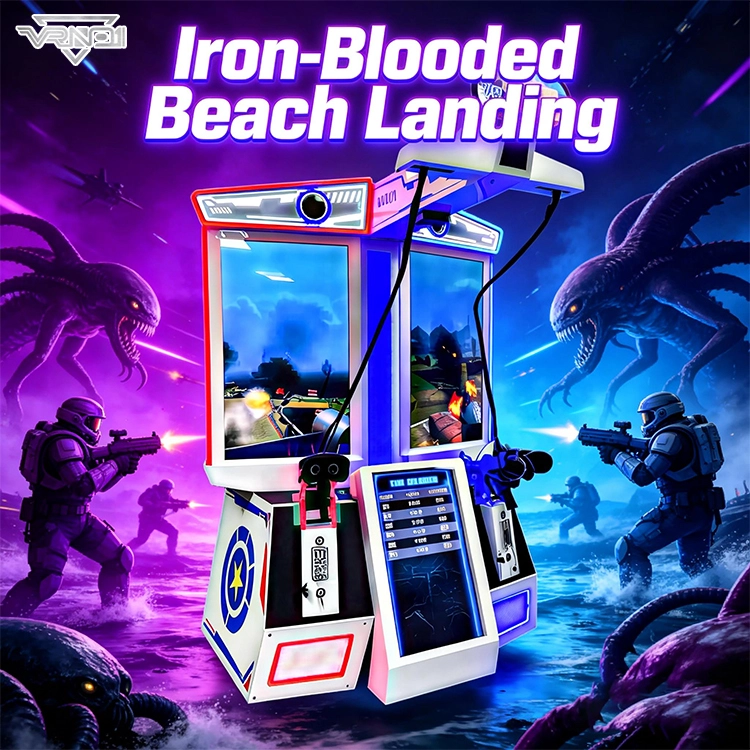
VRN0.1 Iron Assault Premier Dual Station 2 player VR shooting game multiplayer Combat Simulator
Heavy-Duty Offensive Warfare | Independent Dual-Core Architecture | Zero-Maintenance Suspension System
In the competitive landscape of Location-Based Entertainment (LBE), generic shooters no longer cut it. Enter the VR NO.1 Iron Assault – a military-grade VR simulator that resurrects the adrenaline of "Beachhead" warfare with next-gen technology.
Engineered by VR NO.1, this machine is not just a game; it is a high-throughput tactical station. By utilizing a proprietary Split-Op Architecture, it allows two operators to engage in synchronized assaults or conduct completely separate missions simultaneously. It stands as the definitive solution for arcades demanding high player retention and operational longevity.
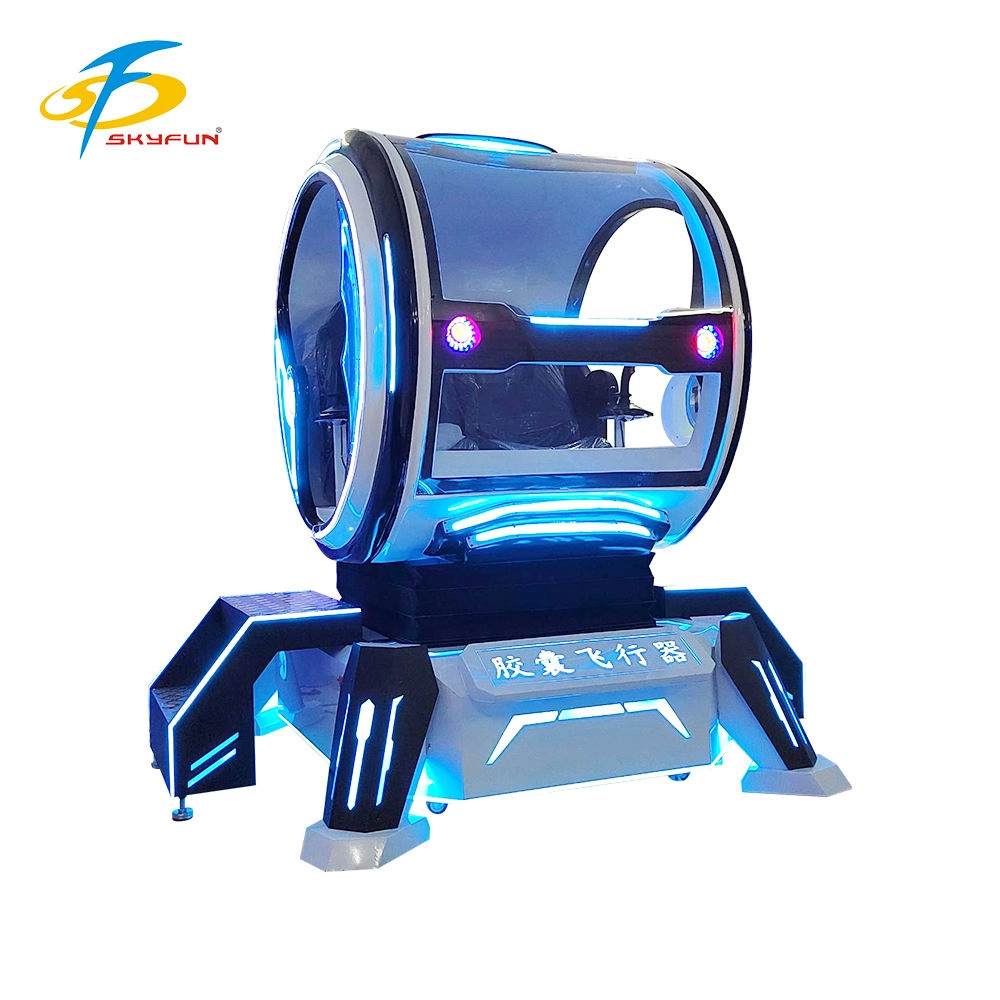
Double Player VR Flight Simulator 100 Movies 15 Games Coin-Operated Game Machine for Shopping Malls Amusement Parks
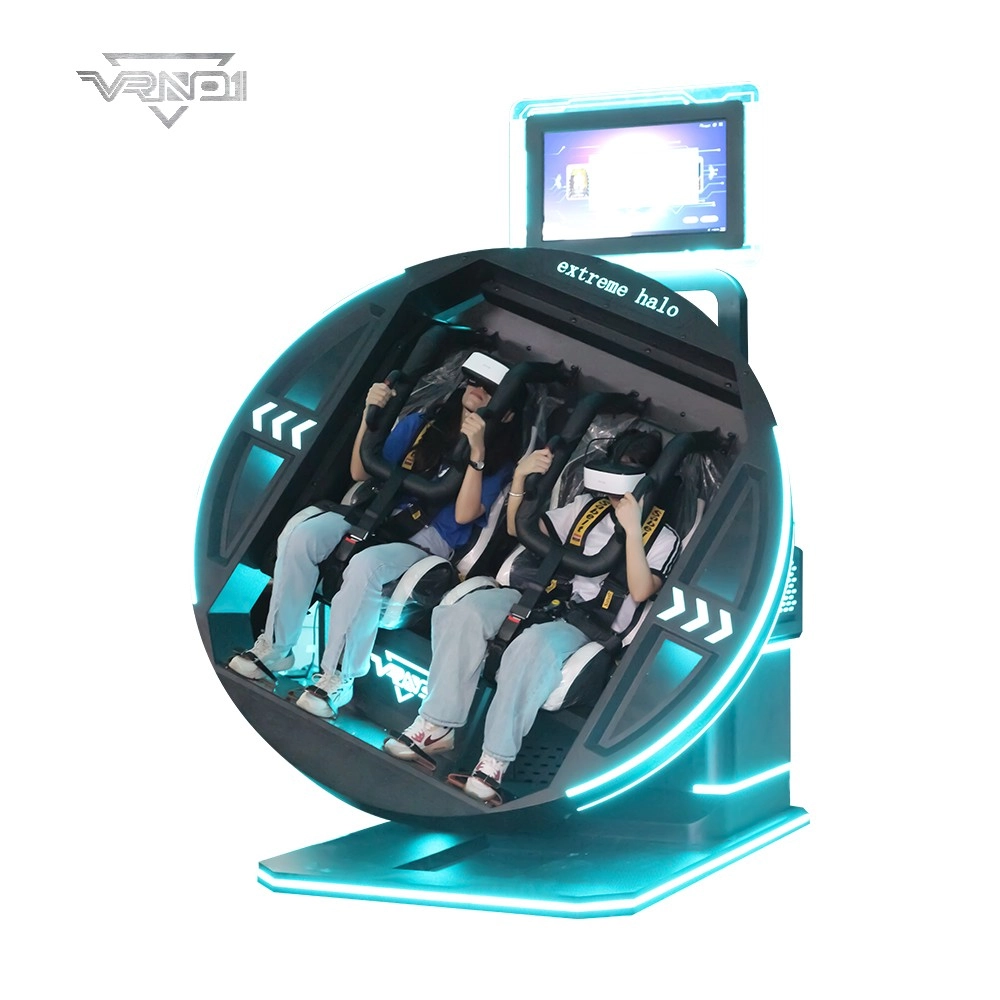
9D VR 360 Roller Coaster Cinema Chair Gaming Set Indoor/Outdoor Business Simulator Hardware for Home or School
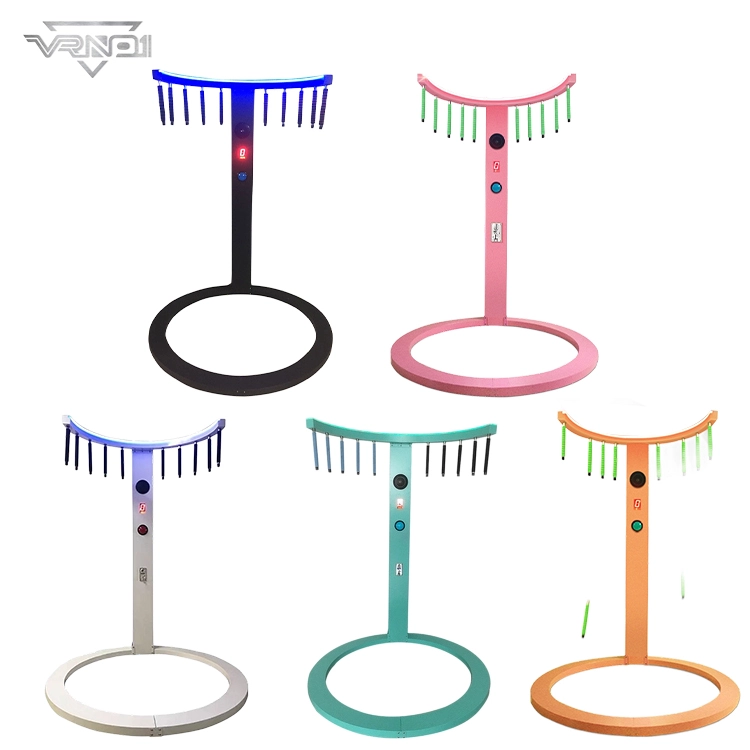
VRN0.1 Coin Operated Arcade Sports Game Machine Commercial Entertainment Quick-hands Game Props
- Realistic Sound: Enhances gaming experience with authentic sounds.
- Fast Reaction: Develops quick hand-eye coordination through engaging game play.
- DIY Kit: Allows for customization and personalization of the baton.
- Metal and Plastic Construction: Durable and robust build quality.
- Coin Operated: Fun for players who enjoy arcade-like experiences.
 Scan QR Code
Whatsapp: +8618127818571
Scan QR Code
Guangzhou Skyfun Technology Co.,Ltd
skyfunvrgame
skyfun game