


How to write compelling product descriptions for VR Simulators Machine
- Understanding your customer and market
- Buyer personas for VR arcade equipment
- Common motivations and decision triggers
- Pain points I address in descriptions
- How to structure compelling product descriptions for VR Simulators machine
- Start with an experience-focused lead
- Feature & benefit mapping (show, don't just tell)
- Use sensory and quantitative language
- Technical accuracy, trust signals, and verifiability
- Provide clear specifications and measurable claims
- Standards, safety, and references
- Evidence: testing, certifications, and case studies
- Optimization, localization, and conversion techniques
- SEO, , and schema considerations
- Localization and multilingual best practices
- A/B testing, analytics, and iterative improvements
- Practical templates and examples
- Short product blurb (for catalog cards)
- Long-form product page structure
- Support content and resources to include
- Manufacturer profile: why vendor transparency matters
- About VRN0.1 and what differentiates us
- Product range and services
- Competitive advantages and credibility
- Comparison: concise vs. detailed descriptions
- FAQ
- 1. What information should always appear first on a VR Simulators machine product page?
- 2. How do I make technical specs more persuasive?
- 3. Should I include ROI numbers on product pages?
- 4. How do I optimize descriptions for local markets and ?
- 5. What trust signals most influence procurement managers?
- 6. How often should product descriptions be updated?
- Contact and next steps
As a consultant and copywriter who has worked with VR arcades, operators, and OEMs for over a decade, I know that a well-crafted product description for a VR Simulators machine does more than list specs — it bridges imagination and decision. It answers venue owners' operational concerns, buyers' experiential expectations, and search engines' relevance algorithms. In this article I provide a structured, actionable method to write product pages and catalog copy that increase conversions, reduce support friction, and align with and E-E-A-T signals.
Understanding your customer and market
Buyer personas for VR arcade equipment
Before you write, I map the primary personas who will read the VR Simulators machine description: venue owners (arcade/entertainment center managers), investors/chain operators, procurement officers for family entertainment centers, and end-users who influence purchasing decisions. Each persona needs different cues: ROI and uptime for operators, safety and standards for procurement, and thrills and immersion for gamers. Tailor sections of your description to these audiences rather than producing one generic paragraph.
Common motivations and decision triggers
Decisions are commonly driven by: revenue per hour estimates, footprint and installation complexity, durability and maintenance, content variety, and safety/compliance. I always include quick-reference facts (e.g., throughput per hour, warranty length, spare-parts availability) up front because buyers scan for those numbers first.
Pain points I address in descriptions
Typical pain points include downtime, content obsolescence, upfront cost vs lifetime value, and staff training. A good description anticipates these and includes trust signals: warranty terms, training availability, remote diagnostics, modular parts, and positive case studies.
How to structure compelling product descriptions for VR Simulators machine
Start with an experience-focused lead
Open with a 1–2 sentence experience statement that answers What will the guest feel? and What will the operator achieve? For example: Deliver spine-tingling, realistic driving thrills to ten guests per hour in a single compact VR car rig — built for 24/7 arcade operations. This aligns with emotional and functional and improves click-through from SERPs.
Feature & benefit mapping (show, don't just tell)
List features, but pair each feature with a clear benefit. Instead of dual-force feedback steering, write dual-force feedback steering — delivers realistic resistance so racers experience true car handling, increasing guest satisfaction and repeat play. This technique reduces cognitive load and answers so what? for each spec.
Use sensory and quantitative language
When describing VR Simulators machine elements such as haptics, visual fidelity, or audio, combine sensory adjectives with measurable metrics: 4K stereoscopic visuals at 90 FPS reads stronger than high quality visuals. Quantified claims are more believable and searchable.
Technical accuracy, trust signals, and verifiability
Provide clear specifications and measurable claims
Include an easy-to-scan specification table with dimensions, power requirements, recommended space, throughput (plays per hour), weight, materials, and supported content formats. Measurable specs let procurement compare options quickly and reduce friction during RFPs.
| Specification | Example (VR Racing Simulator) |
|---|---|
| Footprint | 2.2m x 1.5m |
| Power | AC 110-240V, 600W |
| Throughput | Up to 12 plays/hour (5 min average) |
| Display | 2x 4K stereoscopic OLED, 90 Hz |
| Network | Ethernet/Wi-Fi, remote monitoring |
Standards, safety, and references
Claiming compliance is necessary but insufficient — link to standards and explain how the product meets them. For example, cite ergonomics and human factors standards relevant to displays and seating (ISO 9241) (ISO ergonomics standards). For general VR context and user effects, the Virtual Reality Wikipedia page offers technical background that can be linked for readers (Virtual reality — Wikipedia).
Evidence: testing, certifications, and case studies
Include test protocols and results where possible (MTBF, stress tests, safety interlock checks). Publish short case studies with measurable outcomes: revenue uplift percentage, utilization rates, or net promoter score improvements. Where third-party validation exists (lab tests, certifications), embed those badges or link to reports.
Optimization, localization, and conversion techniques
SEO, , and schema considerations
To rank for VR Simulators machine, integrate the keyword naturally across the title, H1, first paragraph, and . Use structured data (Product schema) to expose price, availability, and reviews to search engines. For (geographic and intent signals used by AI-driven search), localize content for target markets — include shipping info, local distributors, and local languages. Google’s guidance on structured data is helpful for implementation: Google Product structured data.
Localization and multilingual best practices
Translate and localize beyond words: adapt currency, units (metric/imperial), legal disclaimers, and cultural references. I recommend separate localized landing pages rather than client-side translation for SEO effectiveness. Use human translators experienced in gaming/arcade terminology, and maintain a glossary to keep technical terms consistent.
A/B testing, analytics, and iterative improvements
Test variations of the lead sentence, CTA wording, and spec table layout. Track metrics tied to business outcomes: lead form submissions, RFP downloads, and demo bookings. Use heatmaps to see if buyers scroll to specs or look for warranty info, then reorganize accordingly.
Practical templates and examples
Short product blurb (for catalog cards)
VR Racing Pro — Compact, high-throughput VR Simulators machine delivering breath-taking 4K VR racing experiences with industry-grade force-feedback controls. Designed for 24/7 arcades; average 12 plays/hour; included training and 2-year warranty.
Long-form product page structure
1) Experience lead (1–2 sentences). 2) Key specs table. 3) Feature-benefit bullets. 4) Use cases & case study. 5) Safety & standards. 6) Pricing and purchase options (or contact CTA). 7) Reviews and media. 8) FAQ. This structure supports both SEO and buyer decision flow.
Support content and resources to include
Offer downloadable PDFs with floor-planning diagrams, electrical schematics, and ROI calculators. These assets not only help buyers but also function as lead magnets when gated behind a contact form.
Manufacturer profile: why vendor transparency matters
About VRN0.1 and what differentiates us
As someone who has worked closely with manufacturers and operators, I value partners who combine manufacturing scale with R&D depth. VRN0.1 is a leading VR game machine and arcade simulator supplier with over 10 years of global experience. Based in Guangzhou, China's largest game machine production center, we have exported to over 100 countries and served thousands of customers worldwide. Our focus on high-quality, immersive VR products ensures reliable hardware, diverse content, and ongoing support.
Product range and services
We specialize in a broad portfolio: 9D VR Cinema, 360 VR Simulator, VR Racing, VR Shooting, VR Roaming, AR Sniper, and more. We provide OEM and ODM services, one-stop VR venue solutions, and free training for equipment and operation. Our diverse product line covers all mainstream VR arcade categories, allowing operators to standardize with a single supplier for hardware, content, and service.
Competitive advantages and credibility
Key strengths I recommend highlighting in descriptions: a dedicated R&D team that delivers frequent content updates; strict quality control and factory testing; 24/7 global customer support; and tailored venue planning with operational strategy consultancy. Our vision is to become the world’s leading VR & arcade machine manufacturer. Learn more at VRN0.1 website or contact us at sunnyzhang@skyfungame.com. Our main products include VR Simulator, Arcade game simulator, VR car driving simulator, Interactive Platform VR, Racing Game Machine, AR Sniper, Kiddie Ride, and 7D Cinema.
Comparison: concise vs. detailed descriptions
| Type | Best use | Key elements |
|---|---|---|
| Concise (catalog) | Trade shows, product listings | One-sentence lead, 3 specs, CTA |
| Detailed (product page) | Website, RFPs | Experience lead, full specs, case studies, downloads |
FAQ
1. What information should always appear first on a VR Simulators machine product page?
Start with an experience-focused lead and 3–5 quick facts: throughput (plays/hour), footprint, power requirements, and warranty. These are the most frequently scanned items by buyers.
2. How do I make technical specs more persuasive?
Pair each technical spec with a benefit (feature & benefit mapping), add measured values (e.g., 90 Hz, 4K), and reference any third-party tests or certifications. Include visual assets like annotated diagrams to reduce ambiguity.
3. Should I include ROI numbers on product pages?
Yes—if you can provide realistic, verifiable models based on average spend per guest and utilization rates. Offer an ROI calculator or downloadable case study to back claims.
4. How do I optimize descriptions for local markets and ?
Localize content (language, currency, units), create country-specific pages, include local distributors and shipping info, and use structured data (Product schema) to provide clear signals to search engines and AI-driven discovery platforms.
5. What trust signals most influence procurement managers?
Warranty terms, uptime/MTBF data, availability of spare parts, on-site training, certifications, and references/case studies from similar venues. Transparent shipping and after-sales policies also matter.
6. How often should product descriptions be updated?
Update whenever hardware revisions, pricing, or content availability change. I recommend a quarterly review process tied to product roadmap updates and market feedback.
Contact and next steps
If you need help writing or optimizing product descriptions for VR Simulators machine — from SEO and optimization to multilingual localization and technical spec sheets — I offer consulting and copywriting services tailored to arcade and entertainment suppliers. For turnkey hardware and site solutions, VRN0.1 provides a full product portfolio, OEM/ODM services, and global support. Visit our website https://www.vrarcadegame.com/ or email sunnyzhang@skyfungame.com to request demos, floor plans, or ROI calculators.
References: Virtual reality background (Wikipedia) https://en.wikipedia.org/wiki/Virtual_reality; ISO ergonomics overview https://www.iso.org/standard/16883.; Google Product structured data guide https://developers.google.com/search/docs/appearance/structured-data/product.
Best professional best vr driving simulator manufacturers and supplier brands in China
The latest trends for vr airplane simulator in us 2026 | VRN0.1 Ultimate Insights
Best basketball machine game manufacturers and supplier brands in us
Top 9d vr simulator chair Manufacturers and Suppliers in us
Application
What age groups are suitable for VR games in family entertainment centers?
VRNO.1's VR equipment supports a wide range of age groups, from children, teenagers to adults. We provide a variety of game types, including parent-child interactive games, adventure games, sports competitions, etc., to ensure that they are suitable for the needs of different family members.
Does the VR game support multi-person interaction on the same screen?
Yes, VRNO.1's VR gaming devices support multiplayer on-screen interaction. Family members can participate in multiplayer competitive games, cooperative adventure games, etc., to enhance the interaction and entertainment experience among family members.
What technical support does VRNO.1 provide?
We provide 24/7 technical support services, including remote technical consultation, equipment troubleshooting, software upgrades, and faulty equipment replacement. Ensure that your equipment can continue to operate efficiently and improve customer experience.
Solution
How to install and debug VRNO.1's VR equipment?
We provide professional installation and debugging services. After the equipment arrives at your venue, our technical team will send personnel to the site to install the equipment and ensure that all equipment and software functions can operate normally. After the installation is completed, we will also train your operators.
Distributors
What support does VRNO.1 provide after becoming a dealer?
We provide full support to dealers, including sales training, marketing materials, technical support and after-sales service. Our goal is to help you sell and operate our products successfully.
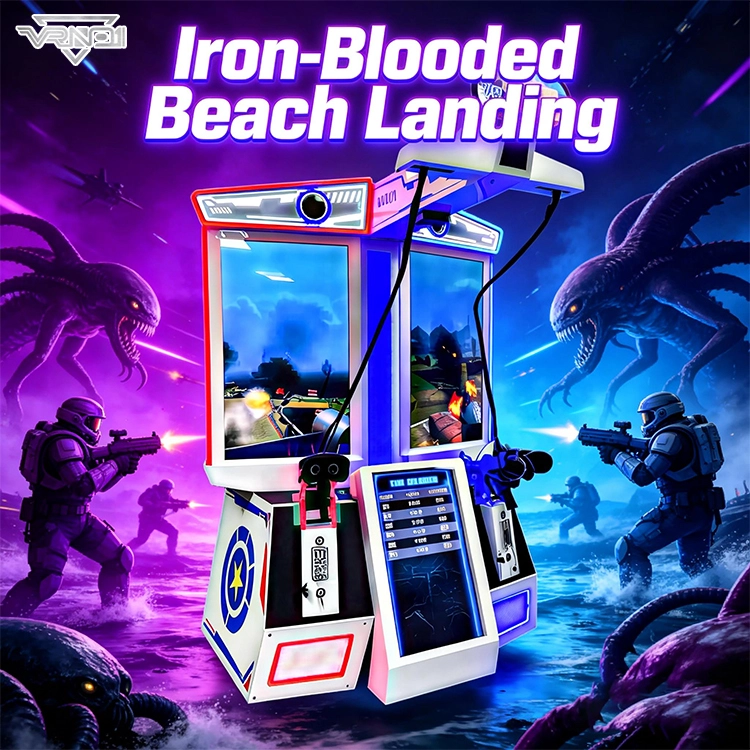
VRN0.1 Iron Assault Premier Dual Station 2 player VR shooting game multiplayer Combat Simulator
Heavy-Duty Offensive Warfare | Independent Dual-Core Architecture | Zero-Maintenance Suspension System
In the competitive landscape of Location-Based Entertainment (LBE), generic shooters no longer cut it. Enter the VR NO.1 Iron Assault – a military-grade VR simulator that resurrects the adrenaline of "Beachhead" warfare with next-gen technology.
Engineered by VR NO.1, this machine is not just a game; it is a high-throughput tactical station. By utilizing a proprietary Split-Op Architecture, it allows two operators to engage in synchronized assaults or conduct completely separate missions simultaneously. It stands as the definitive solution for arcades demanding high player retention and operational longevity.
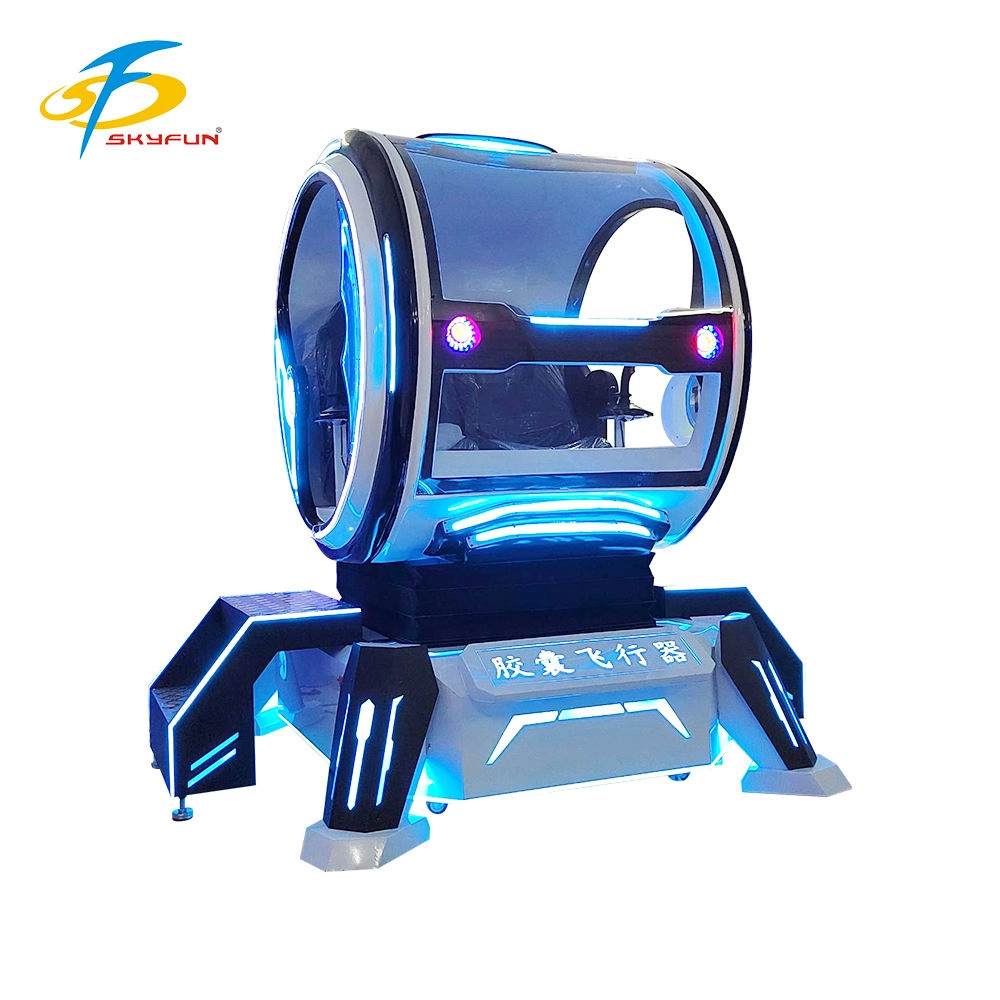
Double Player VR Flight Simulator 100 Movies 15 Games Coin-Operated Game Machine for Shopping Malls Amusement Parks
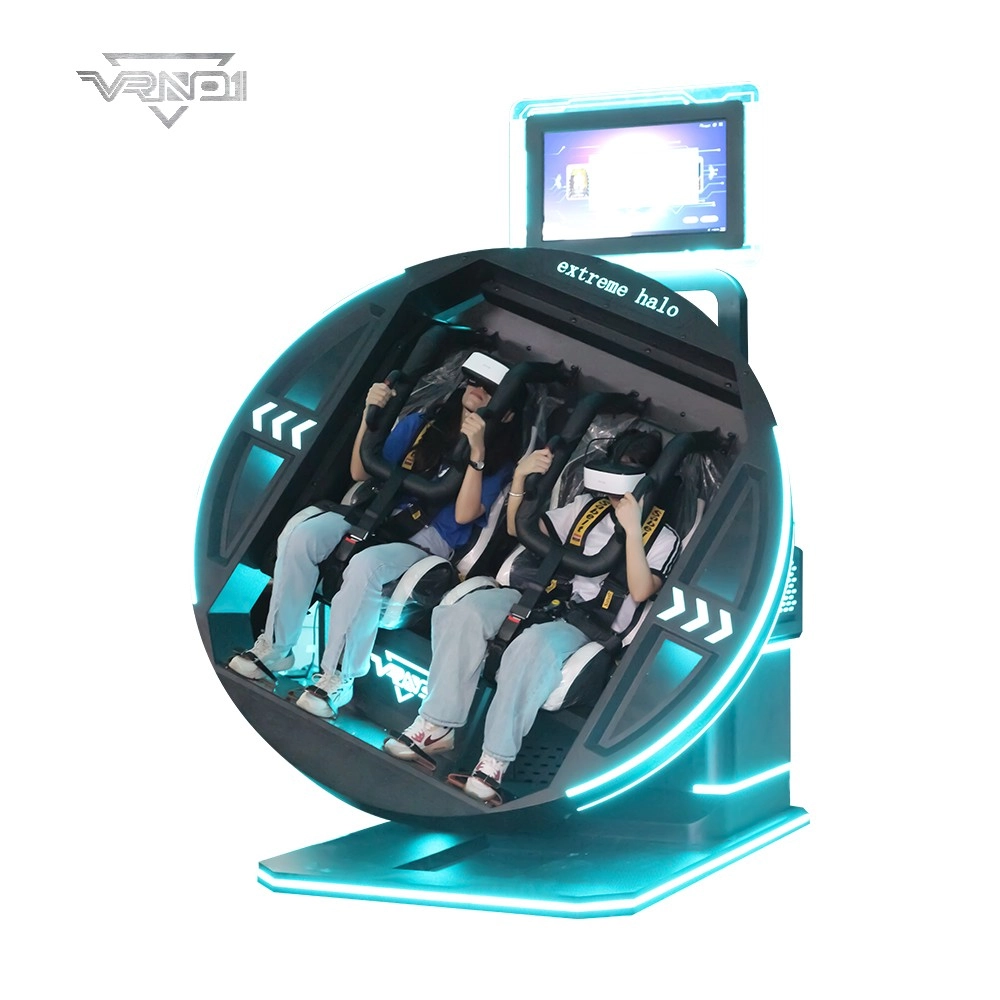
9D VR 360 Roller Coaster Cinema Chair Gaming Set Indoor/Outdoor Business Simulator Hardware for Home or School
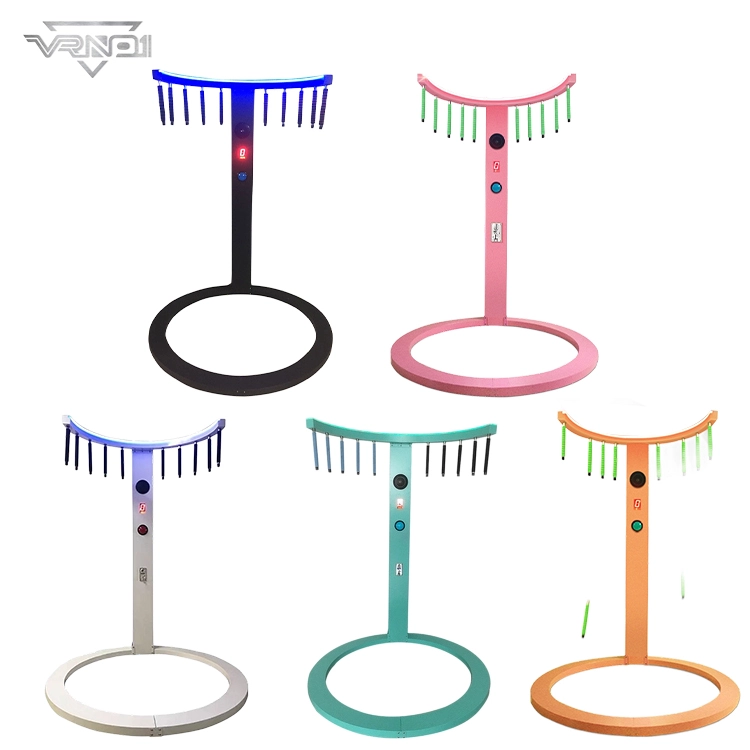
VRN0.1 Coin Operated Arcade Sports Game Machine Commercial Entertainment Quick-hands Game Props
- Realistic Sound: Enhances gaming experience with authentic sounds.
- Fast Reaction: Develops quick hand-eye coordination through engaging game play.
- DIY Kit: Allows for customization and personalization of the baton.
- Metal and Plastic Construction: Durable and robust build quality.
- Coin Operated: Fun for players who enjoy arcade-like experiences.
 Scan QR Code
Whatsapp: +8618127818571
Scan QR Code
Guangzhou Skyfun Technology Co.,Ltd
skyfunvrgame
skyfun game