


Hardware Specs Buyers Should Check in VR Simulators
- Why hardware specs determine success in VR arcades
- Immersion, throughput and revenue: the link
- Buyer risk areas: what typically goes wrong
- and local search considerations
- Core hardware components to check for VR shooting simulator performance
- Head-Mounted Display (HMD): resolution, FOV, refresh and durability
- GPU and graphics pipeline: frame stability vs peak frame rates
- CPU, memory and storage: ensuring low frame time variance
- Tracking, peripherals and physical integration
- Tracking systems: inside-out vs outside-in and occlusion risk
- Gun controllers, haptics and input fidelity
- Motion platforms and seating: when to include motion
- Performance benchmarks, durability and total cost of ownership
- Latency, frame timing and minimum acceptable thresholds
- Durability, MTBF and serviceability
- Comparing lifetime costs: a simple TCO table
- Selecting suppliers, warranties and deployment support
- What to request in RFPs and quotes
- Certifications, references and real installations
- Why choose a supplier with local presence or proven global support?
- VRN0.1: supplier profile and why their offering matters for buyers
- Company profile and global footprint
- Product strengths and support model
- Operational and technical differentiation
- Acceptance testing checklist and deployment best practices
- On-site acceptance tests to perform
- Operations: staff training, spare pool and monitoring
- Scaling considerations
- FAQs
- 1. What GPU is required for a VR shooting simulator?
- 2. Can consumer HMDs be used in arcades?
- 3. How important is tracking type for shooting accuracy?
- 4. What maintenance should I budget for annually?
- 5. How do I test a supplier’s claims?
- 6. Is motion necessary for VR shooting simulators?
- Next steps and contact
Choosing the right hardware for a VR shooting simulator is a business-critical decision: it affects immersion, reliability, customer throughput, maintenance costs and venue profitability. This article consolidates industry best practices, real-world benchmarks and verifiable references to help arcade owners, venue operators and procurement managers evaluate and specify hardware for VR shooting simulators and other immersive arcade experiences.
Why hardware specs determine success in VR arcades
Immersion, throughput and revenue: the link
For a VR shooting simulator, immersion is not optional—it's the product. High frame rates, low latency, precise tracking and convincing haptics directly influence user satisfaction and session duration. In an arcade environment, these factors also determine throughput (sessions per hour) and lifetime value per machine. Poor-spec systems cause motion sickness, hardware failures and increased downtime, all of which reduce revenue and harm reputation. Academic and industry sources highlight motion-to-photon latency and frame stability as primary contributors to simulator sickness (Wikipedia: Simulator sickness).
Buyer risk areas: what typically goes wrong
Common procurement mistakes include under-specifying GPUs/CPUs, choosing consumer-grade HMDs for heavy commercial use, ignoring tracking occlusion in multi-user arenas, and overlooking thermal design and serviceability. These lead to stuttering, overheating, frequent replacements and unpredictable operational costs. A realistic hardware checklist avoids these risks and helps you specify durable, serviceable solutions.
and local search considerations
When specifying systems for a local venue, buyers should consider not only global performance standards but also local factors: power availability, climate (affects cooling), local technical support and import/service lead times. Including precise model numbers and supplier credentials improves local SEO and ensures compatibility with local infrastructure and regulations.
Core hardware components to check for VR shooting simulator performance
Head-Mounted Display (HMD): resolution, FOV, refresh and durability
HMD selection is central. Key metrics:
- Resolution per eye: higher resolution reduces screen-door effect around crosshair—critical for aiming accuracy.
- Field of view (FOV): wider FOV increases situational awareness; 100 degrees+ preferred for competitive shooter sims.
- Refresh rate: 90 Hz is baseline; 120 Hz or higher reduces motion blur and perceived latency for rapid gunplay.
- Commercial rating: choose HMDs or modifications designed for continuous public use (robust straps, replaceable facial interfaces, antimicrobial foams).
Verified reference: general HMD characteristics and comparisons are summarized on the Virtual reality headset page.
GPU and graphics pipeline: frame stability vs peak frame rates
GPU choice impacts sustained frame rates at the resolution and refresh target. For VR shooting simulators you should prioritize consistent frame delivery over occasional peak FPS. Consider the following tiers (guideline):
| Use Case | GPU (recommended) | Target |
|---|---|---|
| Entry-level arcade (single-seat casual) | NVIDIA GTX 1660 Super / RTX 3050 | 90 Hz @ 1600x1440 effective |
| Standard commercial (multi-hour use) | NVIDIA RTX 3060 / RTX 3060 Ti | 90–120 Hz, stable frame delivery |
| High Quality competitive / high-FOV | NVIDIA RTX 3080 / RTX 4070 | 120 Hz+, high-res, multi-sensor environments |
SteamVR and major HMD manufacturers publish recommendations—consult SteamVR system info and vendor pages for exact rendering budgets (SteamVR).
CPU, memory and storage: ensuring low frame time variance
VR rendering is GPU-heavy, but CPU and I/O influence frame timing (microstutters). Practical guidance:
- CPU: modern 6–8 core CPUs (e.g., Intel i5/i7 or AMD Ryzen 5/7) are typically sufficient; prefer higher single-threaded performance.
- RAM: 16 GB minimum; 32 GB recommended for multi-instance or advanced AI/physics.
- Storage: NVMe SSDs for the OS and game catalogs reduce load times and improve reliability in multi-game venues.
Tracking, peripherals and physical integration
Tracking systems: inside-out vs outside-in and occlusion risk
Tracking quality affects aiming precision and multi-user setups. Two primary approaches:
- Inside-out tracking (cameras on HMD): easier setup, fewer external sensors, but suffers in complex occlusions and can struggle with fast weapon swings.
- Outside-in tracking (base stations / external sensors): generally more robust for precise positional tracking and multiple users in a shared space but requires more installation and calibration.
For VR shooting simulators where gun-to-target precision matters, outside-in solutions or hybrid systems with dedicated gun trackers often provide superior reliability.
Gun controllers, haptics and input fidelity
The gun controller is the product touchpoint. Check for:
- Weight balance and ergonomics for repeated use.
- Trigger and button durability (MTBF or rated cycles).
- Haptic feedback: vibration motors or tactile recoil mechanisms that simulate shot feel without excessive maintenance complexity.
- Interchangeable attachments for different game modes (rifle, shotgun, pistol).
Confirm whether controllers are wired or wireless and evaluate battery swap vs hot-swap solutions for continuous operation.
Motion platforms and seating: when to include motion
Motion adds immersion but increases mechanical complexity. For shooting simulators, low-degree-of-freedom recoil platforms or tactile seats can enhance realism with relatively low maintenance overhead. Fully dynamic motion platforms increase cost and maintenance; evaluate ROI based on target customer segments and throughput expectations.
Performance benchmarks, durability and total cost of ownership
Latency, frame timing and minimum acceptable thresholds
Motion-to-photon latency below 20 ms is ideal; many commercial systems aim for <20 ms to minimize sickness and improve accuracy. Monitor both average frame time and 95th/99th percentile frame times to catch microstutters. Use profiler tools (e.g., SteamVR performance HUD) during acceptance testing.
Durability, MTBF and serviceability
For arcade hardware, mean time between failures (MTBF) and Mean Time To Repair (MTTR) are as important as purchase price. Verify:
- Replaceable wear parts (facial pads, straps, trigger modules).
- Availability of spare parts and modular components for field repairs.
- Warranty terms and on-site service options.
Comparing lifetime costs: a simple TCO table
The following table is a simplified comparison example for three deployment tiers. Figures are illustrative but based on typical component price ranges and commercial maintenance assumptions.
| Category | Entry (per seat) | Standard (per seat) | High Quality (per seat) |
|---|---|---|---|
| Initial hardware cost | $2,500 | $5,000 | $9,000 |
| Annual maintenance & parts | $400 | $700 | $1,200 |
| Expected useful life (years) | 3 | 4 | 5 |
| Estimated TCO (5 yrs) | $4,500 | $8,500 | $15,000 |
When evaluating vendor quotes, ask for historical failure rates and service case studies. Pay attention to operational details that reduce downtime: hot-swappable batteries, local spare pool, and remote diagnostics.
Selecting suppliers, warranties and deployment support
What to request in RFPs and quotes
Include these items in any request for proposal (RFP): detailed spec sheets with model numbers, expected frame rates at target resolution, MTBF data, included spare parts, warranty length and terms, on-site or remote support SLA, training for staff, and optional OEM/ODM customization costs.
Certifications, references and real installations
Ask suppliers for reference sites in similar markets, evidence of export and customs compliance (if importing), and software update policies. Publicly verifiable reputation—including case studies and customer testimonials—reduces procurement risk.
Why choose a supplier with local presence or proven global support?
Local support shortens repair times and reduces logistics costs for spare parts. Suppliers with global reach can offer standardized training, venue planning, and proven revenue models. Check provider credentials and supplier longevity to ensure long-term partnership viability.
VRN0.1: supplier profile and why their offering matters for buyers
Company profile and global footprint
VRN0.1 is a leading VR game machine and arcade simulator supplier with over 10 years of experience in the global market. Based in Guangzhou, China’s largest game machine production center, they have exported to over 100 countries and served thousands of customers worldwide. Their product range includes 9D VR Cinema, 360 VR Simulator, VR Racing, VR Shooting, VR Roaming, AR Sniper, and more. Website: https://www.vrarcadegame.com/.
Product strengths and support model
VRN0.1 emphasizes high-quality, immersive VR products and offers OEM and ODM services, one-stop VR venue solutions, and free training for equipment and operation. They provide a diverse product line that covers mainstream VR arcade categories and a strong R&D team, strict quality control and 24/7 customer support. These features matter for buyers looking for turnkey deployments, predictable maintenance and local adaptation.
Operational and technical differentiation
Key differentiators for VRN0.1 include:
- Tailored venue planning and equipment configuration aligned to budget.
- Focus on commercial-grade hardware with attention to serviceability and spare parts.
- Proven export experience and a broad product catalog (VR Simulator, Arcade game simulator, VR car driving simulator, Interactive Platform VR, Racing Game Machine, AR Sniper, Kiddie Ride, 7D Cinema).
For enquiries contact: sunnyzhang@skyfungame.com.
Acceptance testing checklist and deployment best practices
On-site acceptance tests to perform
Before final acceptance, run these tests:
- Frame-rate stability test for a 10-minute high-action session; record 95th/99th percentile frame times.
- Latency and motion-to-photon checks with vendor tools or SteamVR HUD.
- Tracking occlusion test across the intended play area with multiple users.
- Gun controller stress test for trigger cycles and haptic feedback endurance.
- Thermal and noise test for continuous operation (4-8 hours).
Operations: staff training, spare pool and monitoring
Train staff on basic troubleshooting, hygiene swaps (facial pads), and quick part replacements. Maintain a small on-site spare pool for common failures (1-2 HMDs, 2–3 controllers, power supplies). Implement remote monitoring where possible to track uptime and detect performance regressions early.
Scaling considerations
When scaling from single seats to multi-station arenas, invest in robust networking infrastructure, centralized content management and license management systems. Plan power and airflow to minimize thermal throttling across racks of machines.
FAQs
1. What GPU is required for a VR shooting simulator?
It depends on your target experience: for reliable 90 Hz at commercial resolutions, an NVIDIA RTX 3060-class card is a solid baseline. For High Quality 120 Hz or high-FOV headsets, RTX 3080 or better is recommended. Consult SteamVR and your HMD vendor for exact rendering budgets (SteamVR).
2. Can consumer HMDs be used in arcades?
Sometimes, but consumer HMDs often lack commercial-grade components (durable straps, replaceable interface pads, warranties for heavy-use). For arcades, prioritize HMDs rated for continuous operation or commercial variants and verify supplier service terms.
3. How important is tracking type for shooting accuracy?
Very important. Outside-in tracking systems or hybrid solutions generally provide higher positional stability and less occlusion for fast aiming and multi-user setups. Choose a tracking solution matched to your play-area complexity.
4. What maintenance should I budget for annually?
Expect maintenance (parts, labor, consumables) between 8% and 20% of hardware cost annually depending on throughput and environment. Higher usage venues should budget on the upper end and maintain a local spare pool to reduce downtime.
5. How do I test a supplier’s claims?
Request live demos in similar venues, ask for customer references, run acceptance tests (frame stability, tracking, thermal endurance) and require detailed SLA terms and spare-part lists in your contract.
6. Is motion necessary for VR shooting simulators?
Not always. Low-degree-of-freedom recoil or haptics often provide sufficient realism for shooting experiences with less mechanical complexity than full motion platforms. Choose based on customer expectations and maintenance capacity.
Next steps and contact
If you are planning a VR arcade or upgrading existing VR shooting simulator stations, start with a hardware checklist aligned to your target audience (casual vs competitive). For turnkey solutions, venue planning and reliable supply chains, consider established suppliers with proven global experience.
VRN0.1 is ready to consult on equipment configuration, venue planning and training. Visit https://www.vrarcadegame.com/ or contact sunnyzhang@skyfungame.com for product catalogs and a free consultation. VRN0.1’s strengths: commercial-grade VR Simulator products, full OEM/ODM support, one-stop venue solutions, free operational training, global delivery and 24/7 support—helping operators reduce downtime and maximize revenue.
Key products: VR Simulator, Arcade game simulator, VR car driving simulator, Interactive Platform VR, Racing Game Machine, AR Sniper, Kiddie Ride, 7D Cinema.
What are the application scenarios of 9d vr egg chair?
Top PC VR Flight Simulators in 2026
The latest trends for best vr flight simulator
ROI Guide for Investing in VR Arcade Machines
Home
What types of virtual reality solutions do you offer?
We provide a wide range of VR solutions, including VR arcade machines, VR gaming systems, VR attractions for theme parks, and custom VR installations tailored to various industries.
Distributors
How does VRNO.1 support dealers' marketing efforts?
We provide a range of marketing materials, including product brochures, online advertising templates and promotional support. In addition, our team will help you develop a marketing strategy that suits the local market.
What are the unique features of VRNO.1's products?
VRNO.1's VR equipment uses the latest technology to provide excellent immersion and interactivity. Our equipment is uniquely designed to meet global market needs and undergoes strict quality control to ensure long-term reliability of each device.
What does VRNO.1's after-sales service include?
We provide comprehensive after-sales services, including installation support, technical troubleshooting and regular maintenance services. We also provide dealers with dedicated training and customer support to ensure the smooth operation of the equipment.
Products
Can I customize the VR experience for my business?
Yes, we offer tailored VR experiences to suit your business needs, from custom content to specific hardware configurations, ensuring the best possible experience for your customers.
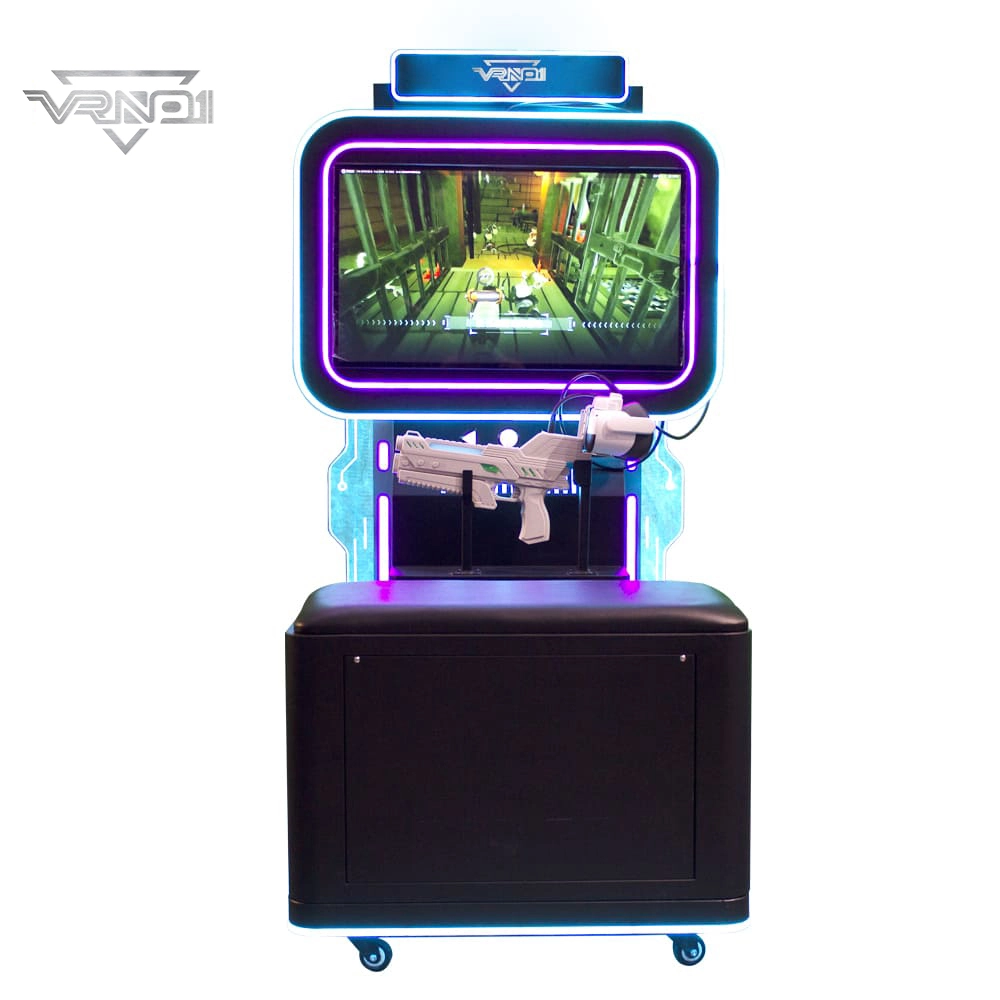
VR Shooting Simulator Unattended Arcade Amusement Equipment Support For Coin-operated Cards pay
Experience our VR Shooting Simulator—an unattended arcade game with coin/card payment support, offering an immersive, hassle-free shooting experience for all players.
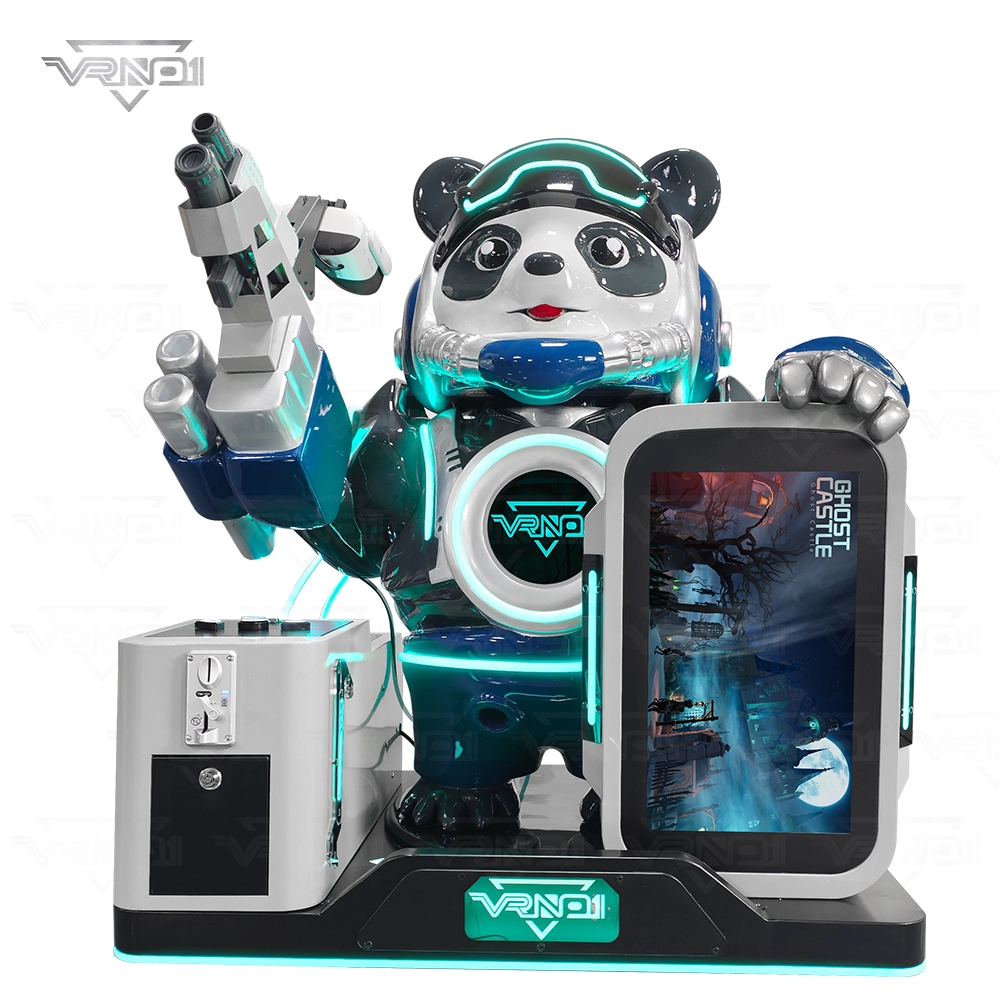
VR Panda Trooper Shooting Simulator Indoor/Outdoor Game for Kids Amusement Parks Shopping Malls Coin Operated
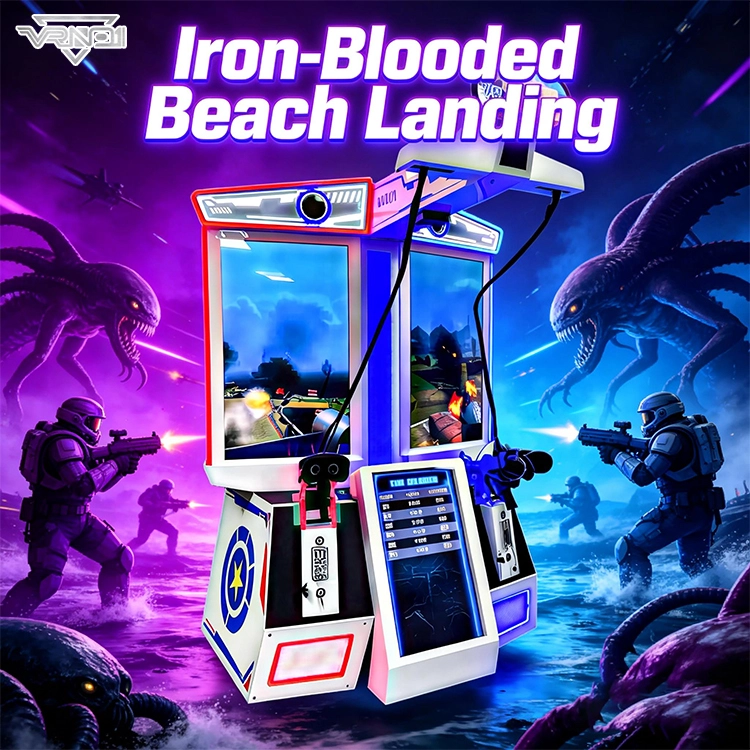
VRN0.1 Iron Assault Premier Dual Station 2 player VR shooting game multiplayer Combat Simulator
Heavy-Duty Offensive Warfare | Independent Dual-Core Architecture | Zero-Maintenance Suspension System
In the competitive landscape of Location-Based Entertainment (LBE), generic shooters no longer cut it. Enter the VR NO.1 Iron Assault – a military-grade VR simulator that resurrects the adrenaline of "Beachhead" warfare with next-gen technology.
Engineered by VR NO.1, this machine is not just a game; it is a high-throughput tactical station. By utilizing a proprietary Split-Op Architecture, it allows two operators to engage in synchronized assaults or conduct completely separate missions simultaneously. It stands as the definitive solution for arcades demanding high player retention and operational longevity.
 Scan QR Code
Whatsapp: +8618127818571
Scan QR Code
Guangzhou Skyfun Technology Co.,Ltd
skyfunvrgame
skyfun game